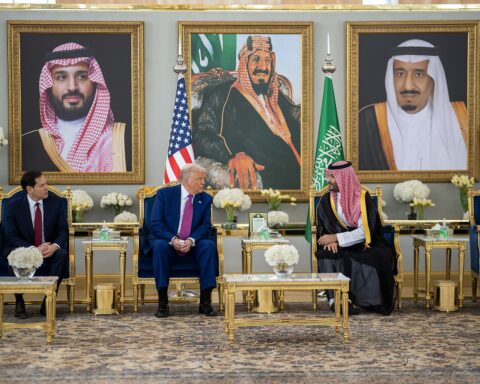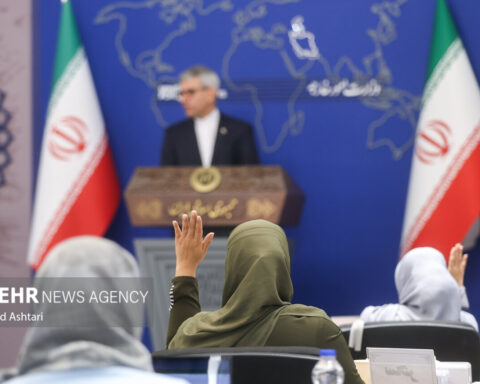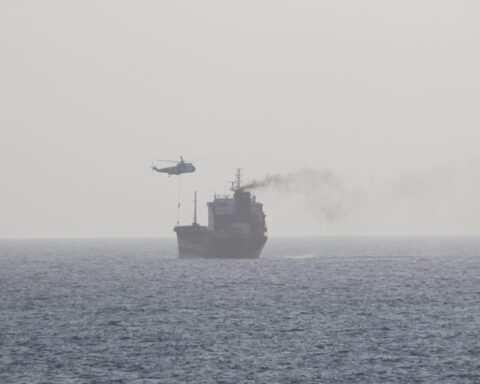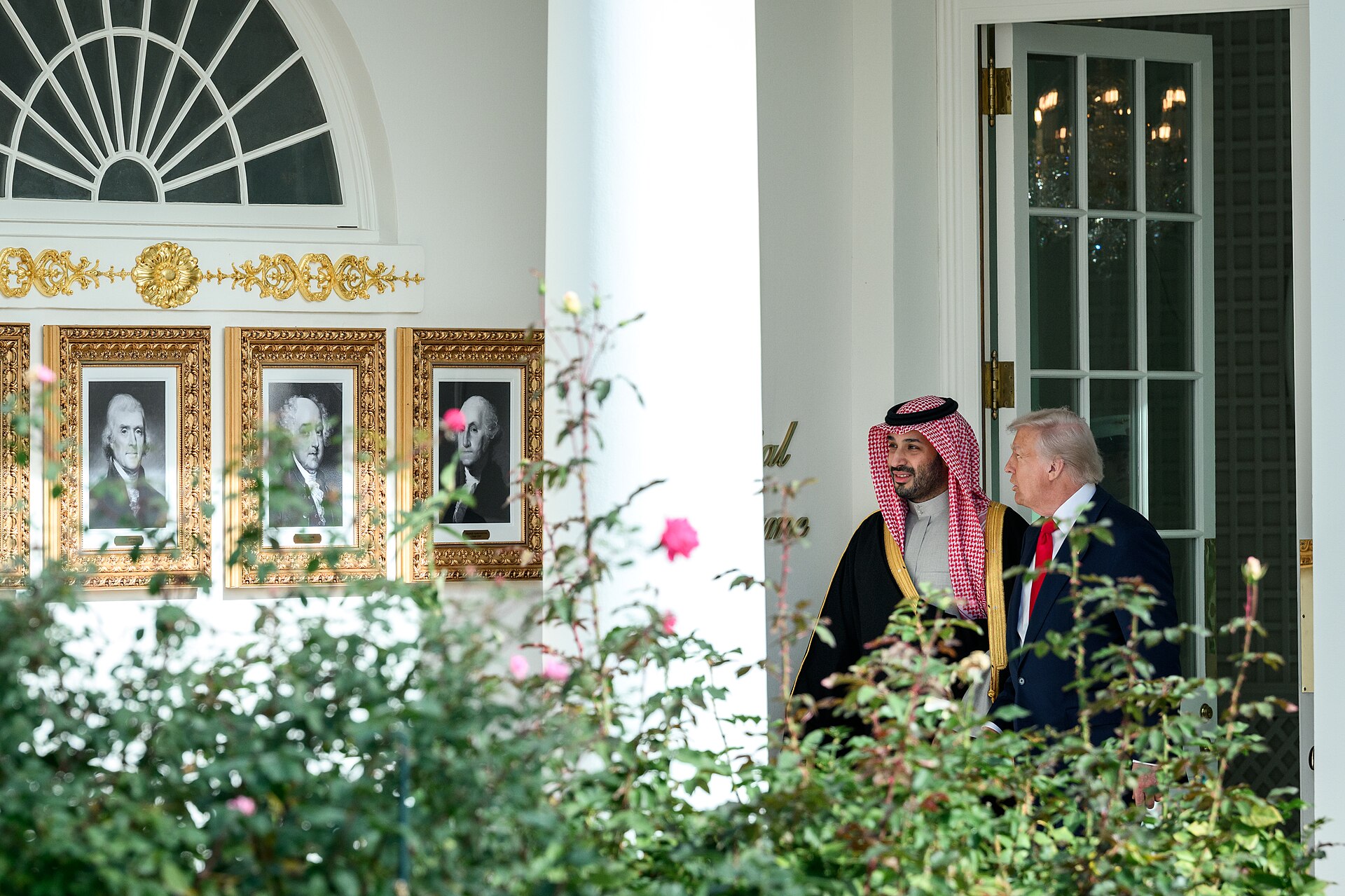

ISLAMABAD — Twenty-one hours of talks ended on Sunday with the United States demanding that Iran surrender its entire uranium enrichment programme, Iran refusing, and Saudi Arabia — which was not in the room — inheriting the security consequences of both positions simultaneously. The collapse of the Islamabad negotiations has done something no previous diplomatic failure managed: it has converted Mohammed bin Salman’s seven-year-old nuclear conditional from a hypothetical threat into an active policy variable, precisely because Washington wrote a peace condition that Tehran cannot structurally accept and Riyadh cannot afford to see abandoned.
The core asymmetry is now visible to every capital that matters. The Trump administration demands zero Iranian enrichment while simultaneously advancing a 123 agreement with Saudi Arabia that, for the first time in the history of US civilian nuclear cooperation in the Middle East, leaves the door open for Saudi uranium enrichment on Saudi soil — without requiring the enhanced IAEA monitoring that every previous administration insisted upon. The United States is building one country’s enrichment infrastructure while demanding the dismantlement of another’s, and calling it nonproliferation.
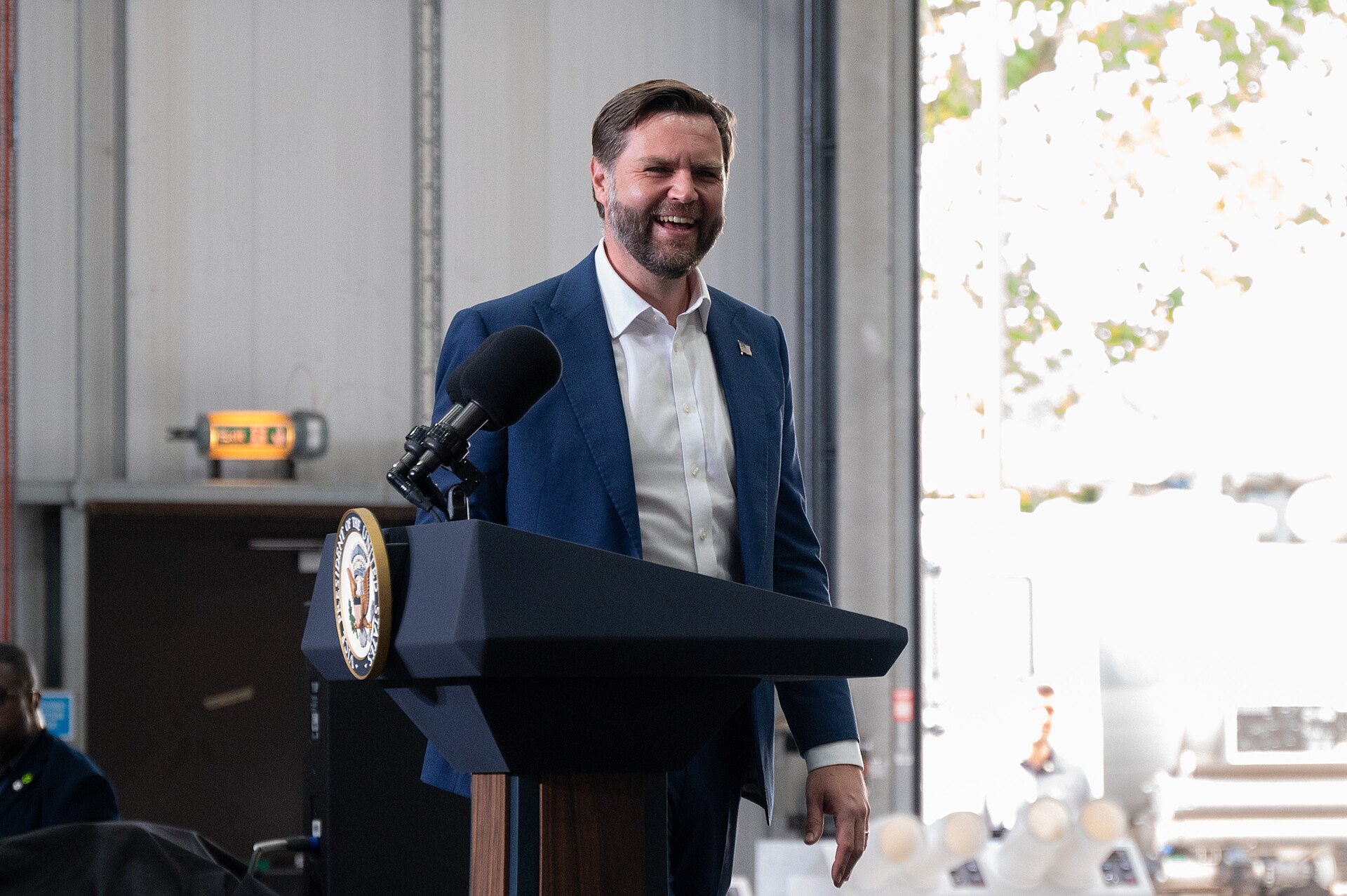
Table of Contents
- What Did Vance Actually Demand in Islamabad?
- Why Can Iran Not Accept Zero Enrichment?
- The MBS Conditional: Three Statements, Seven Years, One Doctrine
- How Does the 123 Agreement Create an Enrichment Asymmetry?
- The Pakistan Defence Pact and Its Structural Limits
- What Happens When the Interceptors Run Out?
- The Congressional Clock and the Markey Bill
- Threshold Forever: The Logic of Permanent Ambiguity
- Frequently Asked Questions
What Did Vance Actually Demand in Islamabad?
Vice President JD Vance demanded that Iran permanently eliminate its uranium enrichment programme — not cap it, not reduce it, but eliminate it entirely from Iranian soil. He called the offer “final and best,” left Pakistan, and within hours President Trump announced a US Navy blockade of the Strait of Hormuz. The demand goes beyond every prior framework, including the JCPOA and Trump’s own 2018 maximum pressure campaign.
Vance stood at a podium in Islamabad on Sunday and described what the United States required from Iran to end six weeks of war: “We need to see an affirmative commitment that they will not seek a nuclear weapon, and they will not seek the tools that would enable them to quickly achieve a nuclear weapon.” Trump himself had stated the terms days earlier: “There will be no enrichment of Uranium, and the United States will, working with Iran, dig up and remove all of the deeply buried Nuclear ‘Dust.’” White House spokesperson Karoline Leavitt confirmed that “the president’s red lines, namely the end of Iranian enrichment in Iran, have not changed.” Zero enrichment is not a ceiling, not a cap at 3.67 per cent (the JCPOA limit Iran blew past years ago), not a return to any prior framework. It is elimination.
The Iranian delegation’s counter-demands included the release of $6 billion in frozen assets, reparations, the right to charge ships transiting the Strait of Hormuz, and — the structural wall — formal recognition of Iran’s right to enrich uranium. Iran’s nuclear chief had declared before the talks even began that Iran “rules out any restrictions on its enrichment programme,” and Foreign Minister Abbas Araghchi stated that Iran has “every right to enjoy a peaceful nuclear energy, including enrichment.” These were not opening bids. They were floors.
Why Can Iran Not Accept Zero Enrichment?
Accepting zero enrichment would require Iran to surrender the only capability that, in Tehran’s direct experience, prevented the June 2025 strikes from becoming regime-ending rather than facility-degrading. The demand is not merely ambitious — it is structurally impossible because Iran’s deterrent is its enrichment programme, and the war proved that compliance with inspections does not prevent attack.
The Middle East briefing 3,000+ readers start their day with.
One email. Every weekday morning. Free.
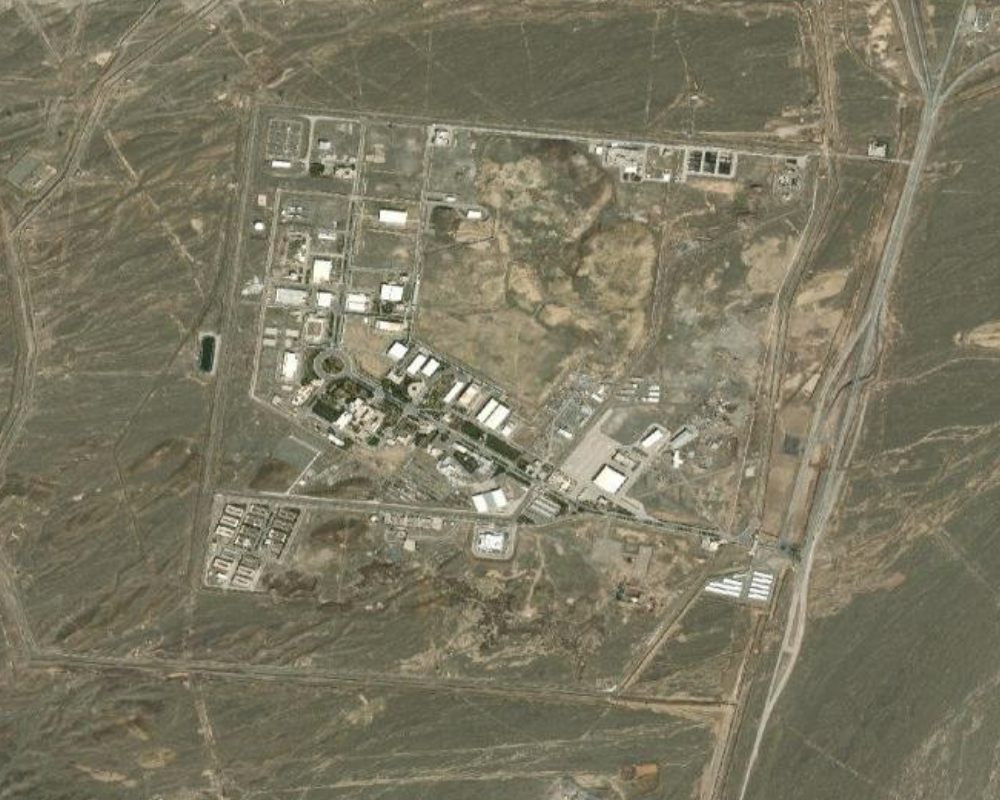
The arithmetic is worth spelling out because most coverage treats the demand as merely ambitious rather than structurally impossible. On the eve of the June 2025 US-Israeli strikes that began this war, Iran held 440.9 kilograms of uranium enriched to 60 per cent U-235, according to the IAEA’s September 2025 verification report — more than ten times the quantity at which weapons use cannot be excluded under IAEA safeguards definitions. A single cascade of 175 IR-6 centrifuges could produce enough weapons-grade material for one nuclear device every 25 days, according to a July 2025 analysis in the Bulletin of the Atomic Scientists. The June 2025 strikes degraded Iran’s declared enrichment facilities, but the knowledge base, the engineering cadre, and — if Iranian claims about dispersed and underground sites hold even partial truth — some production capacity survived.
This is the point that distinguishes the current demand from every prior nonproliferation negotiation with Iran. The 2015 JCPOA accepted enrichment at 3.67 per cent with verification. The Trump administration’s own 2018-era “maximum pressure” campaign sought to reduce enrichment, not eliminate it from Iranian soil permanently. The April 2026 demand asks Iran to surrender the only capability that, in Tehran’s reading of its own recent history, prevented the June 2025 strikes from becoming regime-ending rather than facility-degrading.
The Bulletin of the Atomic Scientists noted in April 2026 that the war itself “raises doubts that the NPT can hold as a central pillar of international security” — because Iran’s compliance with IAEA inspections before the war did not prevent military attack on its nuclear facilities. Compliance was punished, and only ambiguity about weapons capability generated deterrence.
Iran’s negotiators understand this logic with a clarity born of direct experience. Accepting zero enrichment would mean trusting the same countries that struck their facilities to guarantee their security afterward — a proposition that has no precedent in the nuclear age and no institutional mechanism to enforce it.
The MBS Conditional: Three Statements, Seven Years, One Doctrine
Mohammed bin Salman first stated his nuclear conditional on CBS’s 60 Minutes in March 2018: “Saudi Arabia does not want to acquire any nuclear bomb, but without a doubt if Iran developed a nuclear bomb, we will follow suit as soon as possible.” He repeated it through his foreign minister Prince Faisal bin Farhan in 2020, and then personally to Fox News in September 2023: “If Iran obtains a nuclear weapon, Saudi Arabia would have to get one, for security reasons, for balancing power.” Three statements across five years from the same principal, each time more precise, each time on the record to Western media — a pattern that looks less like improvisation and more like doctrinal messaging.
The conditional has always appeared deceptively simple. If Iran gets the bomb, Saudi Arabia gets the bomb. But the Islamabad collapse reveals the mechanism that makes it operationally live without the trigger condition ever being formally met. Iran does not currently possess a nuclear weapon, and the June 2025 strikes degraded its enrichment infrastructure, which — as War on the Rocks documented in November 2025 — technically removed the stated trigger for MBS’s conditional. The paradox seemed to dissolve the threat.
What Islamabad has done is reconstruct it. The US demand for zero enrichment is one Iran structurally cannot accept, which means Iran retains threshold status indefinitely — maintaining the knowledge, the engineering capacity, and potentially the dispersed infrastructure to reconstitute a weapons programme, while never formally crossing the line that would activate the MBS conditional in its literal form. Saudi Arabia is left in permanent proximity to a nuclear neighbour that is perpetually almost-but-not-quite a nuclear weapons state, with no resolution mechanism because the peace condition was designed (whether intentionally or not) to be unacceptable to the other side.
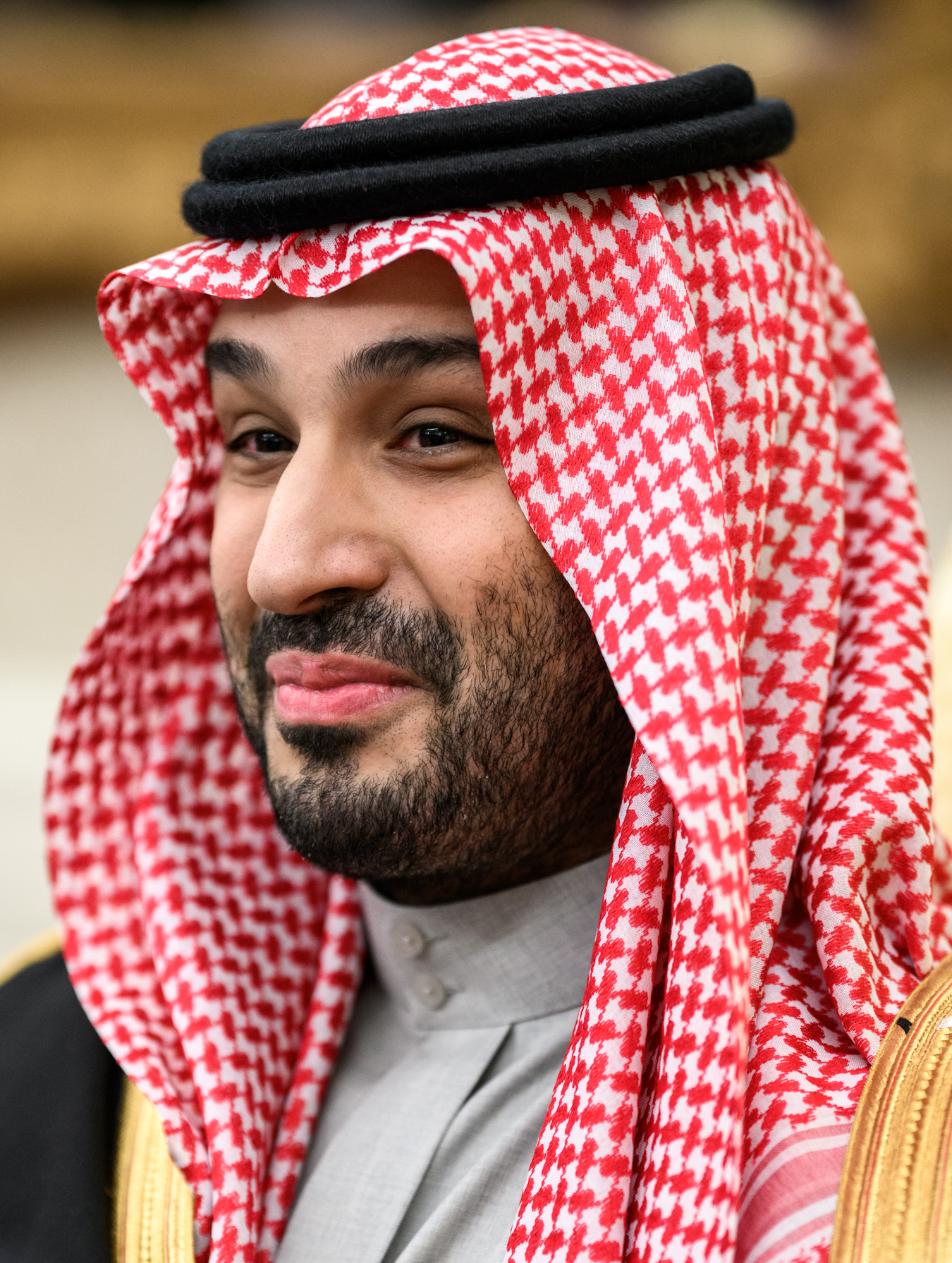
The Stimson Center’s Kaitlyn Hashem captured the shift in a March 2026 analysis: Saudi Arabia’s nuclear path “will not depend on Iran or the war’s outcome” but instead reflects “eroding U.S. security guarantees” as the primary driver. The conditional has mutated. It no longer requires Iran to test a weapon. It requires Saudi Arabia to lose confidence that anyone else will protect it — a condition the PAC-3 depletion rate, the $16.5 billion in emergency arms sales routed to the UAE, Kuwait, and Jordan rather than to Riyadh, and six weeks of Iranian missiles hitting Saudi civilian infrastructure have done considerable work to satisfy.
How Does the 123 Agreement Create an Enrichment Asymmetry?
The November 2025 US-Saudi 123 agreement permits Saudi enrichment under weakened safeguards while the US simultaneously demands Iran have zero enrichment capability. The agreement abandons the “gold standard” terms Washington imposed on every other Middle Eastern partner, does not require an Additional Protocol with the IAEA, and — in the language of the congressional report — presupposes enrichment will occur rather than prohibiting it.
On November 18, 2025, during MBS’s visit to Washington, the two sides signed a “Joint Declaration on Completion of Negotiations on Civil Nuclear Energy Cooperation.” The Arms Control Association published a detailed analysis in February 2026 laying out what the agreement does and — more consequentially — what it does not do. The draft 123 agreement does not expressly forbid Saudi uranium enrichment. It does not require Saudi Arabia to conclude an Additional Protocol with the IAEA, the enhanced monitoring arrangement that provides inspectors with broader access and that every US administration since 2009 had insisted upon as a condition for nuclear cooperation in the Middle East.
The departure from precedent is measurable. In 2009, the United Arab Emirates signed a “gold standard” 123 agreement that explicitly prohibited enrichment and reprocessing on Emirati soil. Saudi Arabia refused those same terms for seventeen years. The Trump administration’s agreement abandons them. The congressional report submitted in February 2026 describes “additional safeguards and verification measures” for “enrichment, conversion, fuel fabrication, and reprocessing” — language that, as the Arms Control Association noted, presupposes these activities will occur rather than prohibiting them.
Prince Abdulaziz bin Salman, the Saudi energy minister, left no ambiguity about the Kingdom’s intentions. In January 2025 he stated publicly: “We will enrich it and we will sell it and we will do a ‘yellowcake.’” He had said the same thing in 2019: “We want to go for the full cycle, from producing uranium, to enriching the uranium, to using the uranium.” The Kingdom has domestic uranium deposits, a $20 billion contract for two reactors at Khor Duweihin with four international bidders (KEPCO, CNNC, Rosatom, and EDF), and a long-term plan for sixteen reactors providing twenty per cent of national electricity.
Lay the two positions side by side. The United States demands that Iran have zero enrichment capability as a condition for ending a war. Simultaneously, the United States has signed an agreement that allows Saudi Arabia to develop enrichment capability under weakened safeguards, without the monitoring standards applied to every other regional partner. Whatever this is, it is not a nonproliferation framework. It is a proliferation architecture with a preferred customer.
| Parameter | US Demand on Iran | US 123 Agreement with Saudi Arabia |
|---|---|---|
| Enrichment | Zero — permanent elimination | Not prohibited; door left open |
| IAEA Protocol | Full compliance + dismantlement verification | Additional Protocol not required |
| Reprocessing | Prohibited | Not expressly prohibited |
| Precedent | Goes beyond JCPOA, NPT, and all prior frameworks | Abandons UAE “gold standard” (2009) |
| Congressional oversight | N/A (no agreement exists) | 90-day review from ~Feb 22, 2026 |
The Pakistan Defence Pact and Its Structural Limits
The Saudi-Pakistan Strategic Mutual Defence Agreement, signed September 17, 2025, was described by a Saudi official to Al Jazeera as “a comprehensive defensive arrangement encompassing all military means” — language calibrated to invoke without confirming a nuclear dimension. The phrase “all military means” does not appear accidentally in a defence treaty signed by a nation with nuclear weapons and a nation that has publicly stated its intent to acquire them if threatened. It was drafted to generate precisely the ambiguity it generates.
The ambiguity, however, is where the utility ends. Pakistan’s nuclear deterrent was designed for one adversary — India — and its delivery architecture reflects that orientation. Pakistani cruise missiles have ranges of approximately 450 kilometres, calibrated for the subcontinent, not the Gulf. Pakistan has no doctrine for extended nuclear deterrence, no forward-deployed weapons outside its own territory, and — as the CSIS Nuclear Network documented — no institutional framework for placing its arsenal under a partner’s operational control. The Belfer Center and CSIS both assess the nuclear extension possibility as more speculative than operational.
The war itself tested the pact and found it wanting. The Stimson Center’s Hashem wrote in March 2026 that the September 2025 defence agreement “proved largely symbolic” — Pakistan offered no tangible military support when Saudi civilian infrastructure was targeted by Iranian missiles. Pakistan’s role in the Islamabad talks was as venue and mediator, not as Saudi Arabia’s defence guarantor. Prime Minister Munir’s phone relay between the US and Iranian delegations was diplomatic choreography, not extended deterrence. The SMDA may have been the most important bilateral agreement Saudi Arabia signed in 2025, and by April 2026 its primary function was to remind both signatories of the distance between treaty language and operational reality.
What Happens When the Interceptors Run Out?
Saudi Arabia’s PAC-3 MSE stockpile has been depleted to approximately 400 rounds — down 86 per cent from pre-war levels — after intercepting 799 drones and 95 ballistic missiles between March 3 and April 7. The Camden, Arkansas production facility manufactures 620 PAC-3 MSE rounds per year. Full replenishment would take nearly four years at maximum output even if every unit went to Saudi Arabia, which it will not. Iran retains approximately 50 per cent of its pre-war missile arsenal.
The conventional security gap that makes the nuclear question urgent is not theoretical — it is arithmetic. Saudi Arabia burned through 894 total intercepts in six weeks, with the implied cost of PAC-3 MSE rounds at $3.9 million each running well above $3 billion for the ballistic missile intercepts alone. The $16.5 billion in emergency arms sales approved since the war began went to the UAE, Kuwait, and Jordan — not to Saudi Arabia. Poland refused a Patriot transfer request on March 31. The maths describe a country with no replenishment pipeline secured and an adversary that has not exhausted its offensive capability.
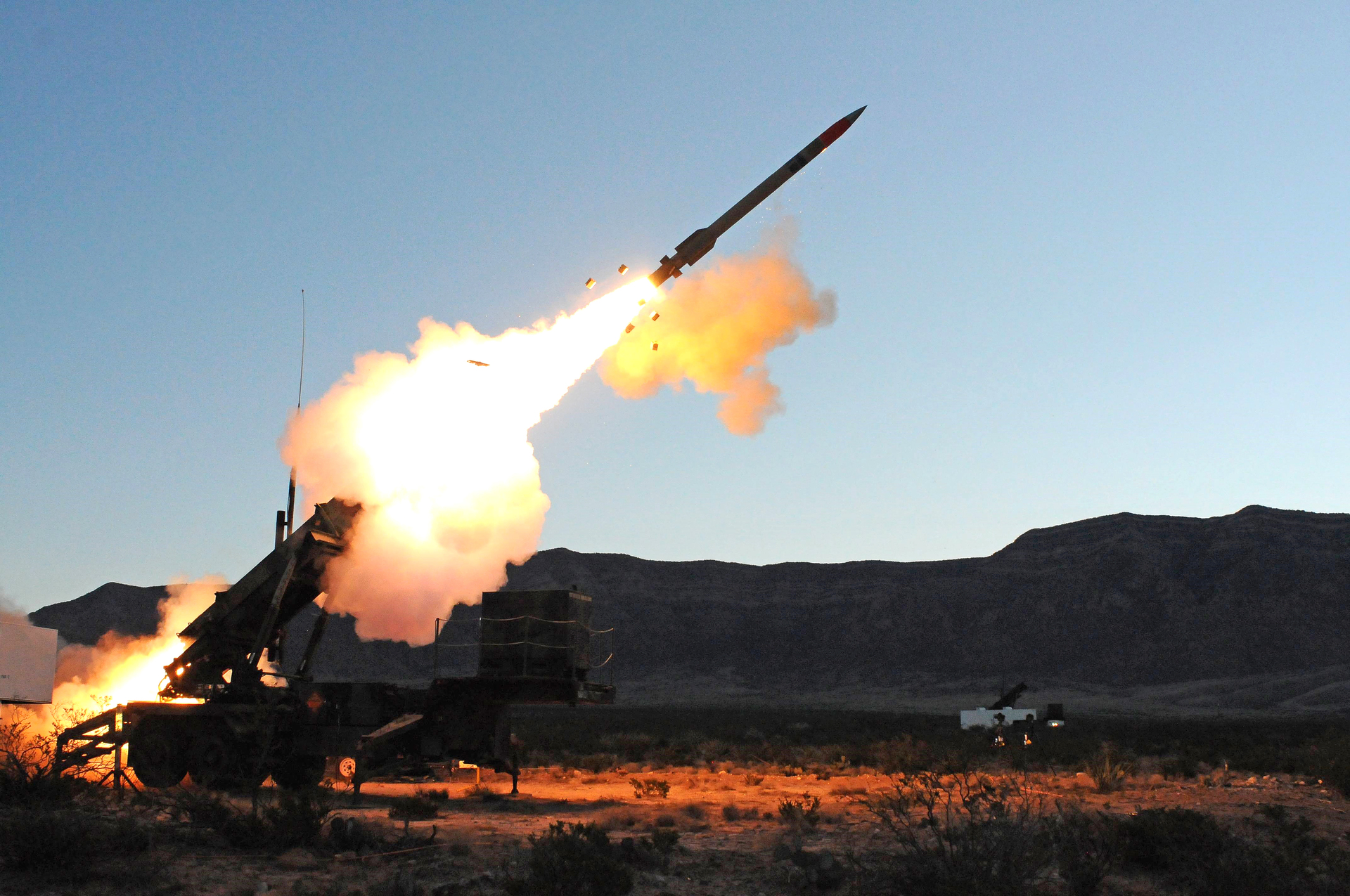
This is the material context in which the nuclear question operates. A country that cannot replace its conventional interceptors fast enough to survive another six-week campaign has a different relationship to nuclear deterrence than one with deep conventional reserves. MBS’s conditional was stated when Saudi Arabia’s air defences were fully stocked and untested. It is being re-evaluated now that they are nearly empty and proven insufficient to prevent strikes on oil infrastructure, industrial facilities, and civilian areas across the Eastern Province.
The Congressional Clock and the Markey Bill
Congress received the 123 agreement report around February 22, 2026, triggering a 90-day review period that expires in late May. On March 26, Senator Edward Markey and Senator Jeff Merkley reintroduced the No Nuclear Weapons for Saudi Arabia Act (S. 4243), legislation that would require any nuclear cooperation agreement with Saudi Arabia to receive an affirmative congressional vote and would mandate that the Kingdom renounce enrichment and reprocessing and conclude an Additional Protocol with the IAEA before any agreement takes effect. The bill has six cosponsors. It is unlikely to pass.
The political arithmetic in Congress mirrors the structural asymmetry of the 123 agreement itself. Senator Markey first introduced identical legislation in 2019, with then-Senator Marco Rubio as a cosponsor — bipartisan, principled, and ineffective. Rubio is now Secretary of State, the same Rubio who sat beside Trump and MBS for the November 2025 joint declaration. The bill’s existence is a marker of congressional concern; its legislative trajectory is a marker of congressional impotence. The 90-day review period is a clock, not a veto — if Congress does not act affirmatively to block the agreement, it takes effect by default.
Saudi Arabia, meanwhile, rescinded its Small Quantities Protocol with the IAEA on December 31, 2024, upgrading to a full Comprehensive Safeguards Agreement. This is a step toward nuclear maturity — it subjects more Saudi nuclear activity to IAEA reporting — but it is not an Additional Protocol, which would provide inspectors with the broader access rights that arms control experts consider essential for detecting undeclared nuclear activities. The Kingdom upgraded its inspection obligations just enough to qualify for the weakened 123 agreement, and not one measure further.
Threshold Forever: The Logic of Permanent Ambiguity
The structural outcome of the Islamabad collapse, if the current trajectories hold, is a Middle East with two threshold nuclear states and no resolution mechanism for either. Iran retains the technical capacity and strategic motivation to reconstitute its enrichment programme, and has been given — by the zero-enrichment demand — no pathway to a deal that preserves its deterrent while ending the war. Saudi Arabia is building enrichment infrastructure under a 123 agreement that does not prohibit it, with domestic uranium reserves, a $20 billion reactor programme, and a sitting crown prince who has stated three times on the record that Iranian nuclear capability triggers Saudi nuclear capability.
The MBS conditional was always understood as a deterrent statement — a warning to Iran and a signal to Washington. What the Islamabad collapse does is transform it from a statement about a hypothetical future into a description of an emerging present. Iran does not need to test a weapon for the conditional to activate in practice; it needs only to remain a permanent threshold state, which is exactly what the US zero-enrichment demand ensures by being structurally unacceptable. The condition that was supposed to prevent Saudi proliferation has become the mechanism that enables it, because the peace terms that would have resolved the ambiguity cannot be met.
The war has already demonstrated that the NPT provides no security guarantee for states that comply with it — a logic Saudi defence planners cannot ignore. Saudi Arabia joined the NPT in 1988. Article X permits 90-day withdrawal upon notification with a statement of “extraordinary events” justifying the decision. Six weeks of Iranian missiles striking Saudi territory while the United States routes emergency arms to neighbouring countries instead, followed by a failed peace process whose terms were designed to be unacceptable to the adversary, would constitute a plausible “extraordinary events” justification — not today, not this month, but as a structural option that grows more credible with every failed negotiation.
The question Saudi defence planners are processing this week is not whether Iran will test a weapon. It is whether the United States, having written a peace condition it knew would fail, having signed a nuclear cooperation agreement that permits Saudi enrichment, and having routed emergency arms sales away from the Kingdom whose territory is absorbing the strikes, has made a decision about Saudi Arabia’s nuclear future that Riyadh itself has not yet formally announced.
The infrastructure is being built, the safeguards have been weakened, and the conventional alternative is running out of ammunition at a rate of roughly 130 interceptors per week. The conditional is no longer conditional.
Frequently Asked Questions
Has Saudi Arabia begun constructing uranium enrichment facilities?
No enrichment facility currently exists on Saudi soil. The Kingdom’s nuclear programme is in the procurement phase, with four international bidders — KEPCO (South Korea), CNNC (China), Rosatom (Russia), and EDF (France) — competing for the $20 billion Khor Duweihin reactor contract. Saudi Arabia has domestic uranium deposits and has publicly stated its intent to pursue the full nuclear fuel cycle, including enrichment. The 123 agreement with the United States, unlike the 2009 UAE agreement, does not prohibit enrichment, meaning the legal framework for future construction is being established even as the physical infrastructure has not yet broken ground. The four bidders each bring different proliferation risk profiles — CNNC and Rosatom have historically imposed fewer safeguards conditions than Western suppliers, giving Saudi Arabia negotiating room on enrichment technology access regardless of which vendor wins the reactor contract.
Could Pakistan actually provide Saudi Arabia with nuclear weapons?
The operational barriers are higher than most analysis acknowledges. Pakistan’s nuclear arsenal is estimated at 170 warheads (SIPRI, 2025), designed and deployed exclusively for deterrence against India, with delivery systems calibrated for subcontinental ranges. Pakistan has never conducted extended nuclear deterrence for any partner, has no forward-deployment doctrine, and its civilian government does not exercise direct control over the arsenal — the National Command Authority, dominated by military leadership, retains sole authority. The September 2025 SMDA’s “all military means” language was drafted to generate ambiguity, but transferring nuclear weapons to a foreign state would violate Pakistan’s NPT obligations, trigger US sanctions under the Nuclear Non-Proliferation Act, and potentially rupture the country’s relationship with China, its primary strategic patron. The more plausible pathway is not weapon transfer but knowledge transfer — Pakistani nuclear scientists and engineers providing technical assistance to a Saudi programme, as occurred in the reverse direction when Saudi financial assistance supported Pakistan’s Project-706 in the 1970s.
What would happen to regional security if Saudi Arabia announced a nuclear programme?
A formal Saudi nuclear weapons declaration would transform the regional architecture beyond the current war. Israel, which possesses an undeclared arsenal estimated at 90 warheads (SIPRI), has historically acted to prevent regional nuclear proliferation — striking Iraq’s Osirak reactor in 1981 and Syria’s al-Kibar facility in 2007. A Saudi programme would force Israel to choose between its nonproliferation doctrine and its deepening strategic alignment with Riyadh against Iran, a dilemma that the Abraham Accords framework was not designed to resolve. Turkey and Egypt, both NPT signatories with latent nuclear ambitions, have previously indicated that Saudi weaponisation would trigger their own programmes — creating a four-state proliferation cascade that would effectively end the NPT as a functioning treaty regime in the Middle East.
Why did the US route $16.5 billion in emergency arms to neighbours rather than Saudi Arabia?
The arms packages approved for the UAE, Kuwait, and Jordan reflect a combination of existing Foreign Military Sales pipeline capacity, pre-positioned logistics agreements, and — less discussed publicly — a deliberate hedging strategy. Saudi Arabia’s existing air defence architecture uses PAC-3 systems that require specific integration and training; the Camden production line cannot accelerate beyond 620 rounds annually regardless of funding. The neighbouring states received systems that were either already in their procurement queues or could be operationally deployed faster due to existing US military presence (al-Udeid in Qatar, Arifjan in Kuwait, Muwaffaq al-Salti in Jordan). Congressional sources have also noted that Saudi Arabia’s ongoing use of US-origin weapons in a war it did not initiate, against an adversary the US is simultaneously bombing, creates legal complications under the Arms Export Control Act that do not apply to defensive-only sales to non-belligerent neighbours.
What is the timeline for Saudi Arabia to develop an independent nuclear weapon?
Estimates vary widely depending on assumptions about covert activity, but starting from a declared civil programme with enrichment capability, the technical timeline to a testable device is generally assessed at 7-15 years for a state without prior weapons design experience (Bulletin of the Atomic Scientists). Saudi Arabia could compress this significantly through knowledge transfer from Pakistan, procurement of dual-use technology through its reactor programme, or — if it chose to abandon the NPT — open acquisition from states outside the nonproliferation regime. The more relevant timeline may be political rather than technical: Saudi Arabia does not need a tested weapon to alter the regional security calculus. A credible enrichment programme, combined with MBS’s public statements and the weakened 123 agreement framework, would function as a deterrent signal well before any device was assembled — following the same threshold logic that has defined Iran’s programme for two decades.
The blockade announced on April 13 is best understood as the enforcement mechanism for the conditions examined here — a nine-day coercive instrument designed to extract concessions before the April 21 ceasefire expiry, not to replace diplomacy with military fait accompli. The full architecture of that argument, including why Pakistan’s continued mediation posture is the strongest available evidence, is laid out in The US Blockade of Iran Is Coercive Diplomacy, Not a Strategic Walkaway — and Pakistan Holds the Proof.
The structural incompatibility that underlies these dynamics — specifically the 20-year vs 5-year enrichment moratorium gap at the core of the Islamabad Round Two talks, and Saudi Arabia’s exclusion from the process — is examined in detail in a companion analysis.