China Sent Two Signals on Day One of the Hormuz Blockade — Neither Was an Accident
DUBAI — Within hours of the US naval blockade of the Strait of Hormuz taking effect on April 13, Beijing delivered a precisely calibrated pair of messages: Xinhua’s English-language wire amplified an IRGC commander’s threat of “unrevealed capabilities,” while a US-sanctioned Chinese tanker transited the strait outbound and unchallenged. Read separately, each event is unremarkable — a state wire reprinting a military quote, a tanker sailing through open water. Read together, on the same day, aimed at the same audience, they amount to a declaration: the blockade has seams, and China is already sitting inside them. The question facing Riyadh is not whether Beijing has picked a side. It is how much of Washington’s five-day coercive window — the April 13-17 period before Hajj raises the kinetic threshold — remains intact now that a third party has demonstrated, on Day 1, that enforcement is selective.
Table of Contents
- The Xinhua Wire: Nine Hours from Fars News to Global Amplification
- The Rich Starry Transit: A Sanctioned Ship Through an Open Door
- Why Did Beijing Send Both Signals on the Same Day?
- The Larak-Qeshm Corridor and the IRGC’s Silent Permission
- What Do the Fabricated Dong Jun Quotes Reveal About the Information Environment?
- Saudi Arabia’s Narrowing Window
- Lavrov in Beijing: The Third Signal
- How Much of Washington’s Coercive Window Survives Day One?
- Frequently Asked Questions
The Xinhua Wire: Nine Hours from Fars News to Global Amplification
IRGC Spokesperson Brigadier General Hossein Mohebbi’s statement first appeared on PressTV at 18:24 UTC on April 13 — the day the blockade was announced. The language was familiar IRGC register: “We haven’t yet used all our capabilities and if the war continues, we will unveil capabilities that the enemy does not have any perception about. We will unveil new warfare tactics that the enemy does not have the capability to counter.” Tasnim confirmed the statement on April 14. Standard Iranian domestic information operations.
What was not standard was the speed and editorial selection of Xinhua’s pickup. By 03:30 UTC on April 14, Xinhua’s English-language international wire — not the Chinese-language domestic service, not Global Times — published the Mohebbi quote inside a framing package that recruited four external analysts to argue the blockade was “unsustainable.” The wire sourced the Mohebbi statement to semi-official Fars News Agency, a layer of attribution that gives Beijing plausible distance from the IRGC while preserving the amplification.
The editorial selection matters. Iran’s messaging on April 13-14 split across three institutional tracks: Mohebbi’s military threat (IRGC), Brigadier General Reza Talaei Nik’s readiness statement that strategic reserves had been “fully replenished” (Defense Ministry), and Foreign Ministry Spokesman Esmaeil Baghaei’s characterization of the blockade as “revenge of choice” against the global economy. Xinhua chose the IRGC track — the one that stressed blockade fragility rather than diplomatic grievance or conventional military readiness.
The Xinhua explainer — headlined around sustainability and consequences — assembled Abu Bakr al-Deeb of the Cairo-based Arab Center for Research and Studies (“The United States can impose temporary or partial control, but it would face immense difficulty in transforming that control into a stable, long-term blockade”), Jorge Montepeque of Britain’s Onyx Capital Group (crude could reach $150 per barrel under full blockade), and Mohammed Al-Jubouri of al-Iraqia University in Baghdad (“Iran does not need to engage the U.S. fleet directly to undermine the blockade… fast-attack craft, naval mines, coastal missile batteries, or even proxy attacks”). A Saudi researcher, Abdulaziz Alshaabani of the Al Riyadh Center for Political and Strategic Studies, supplied the most measured version: “it is unlikely that the naval blockade would be complete or absolutely effective, given the complexities of maritime routes and the entanglement of international interests.”
Four analysts from four countries, all arriving at the same conclusion, published on an English wire aimed at non-Chinese audiences, with the IRGC threat as the capstone. This is not journalism. It is diplomatic communication conducted through the grammar of journalism.
The Middle East briefing 3,000+ readers start their day with.
One email. Every weekday morning. Free.
The Rich Starry Transit: A Sanctioned Ship Through an Open Door
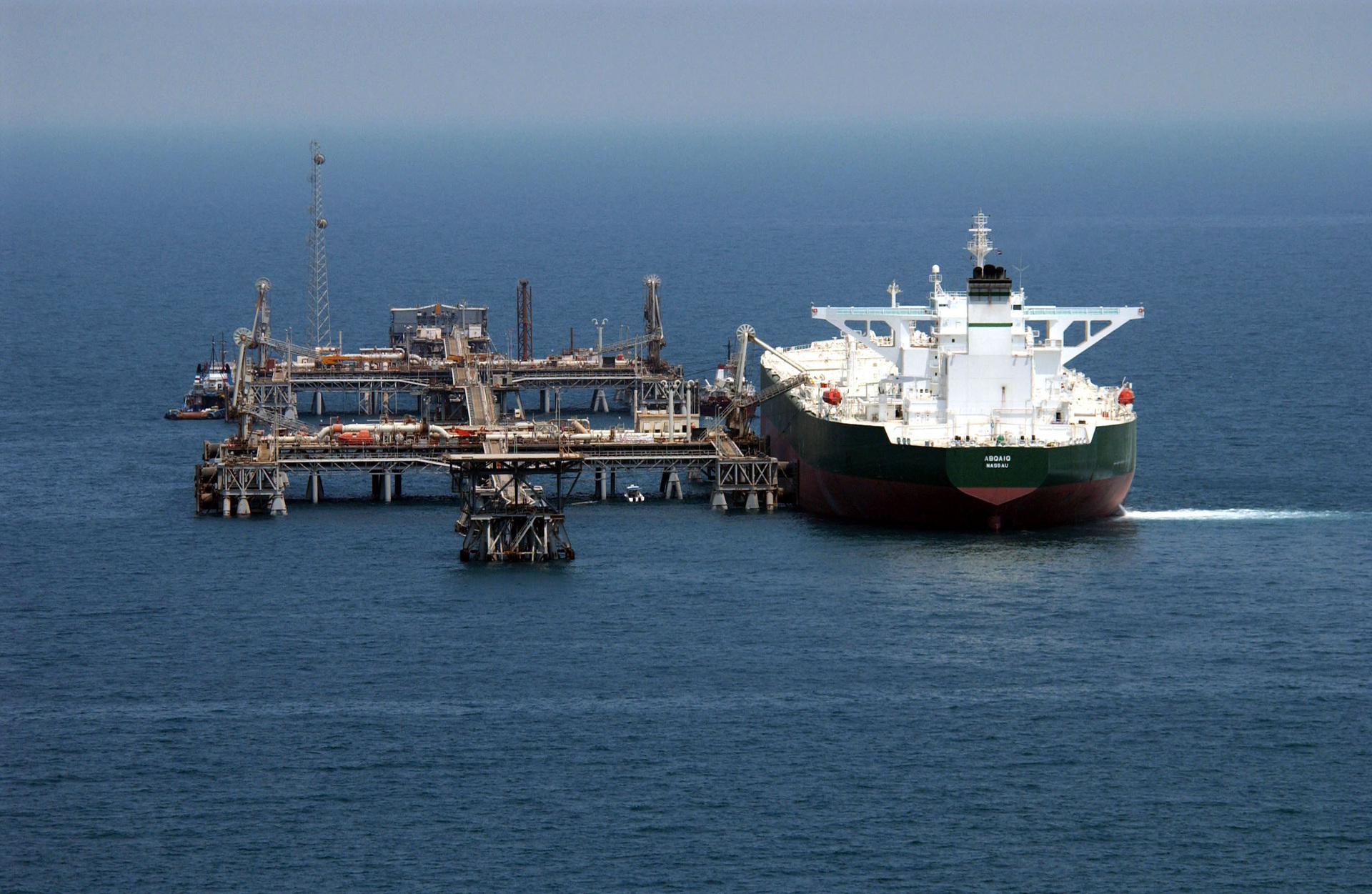
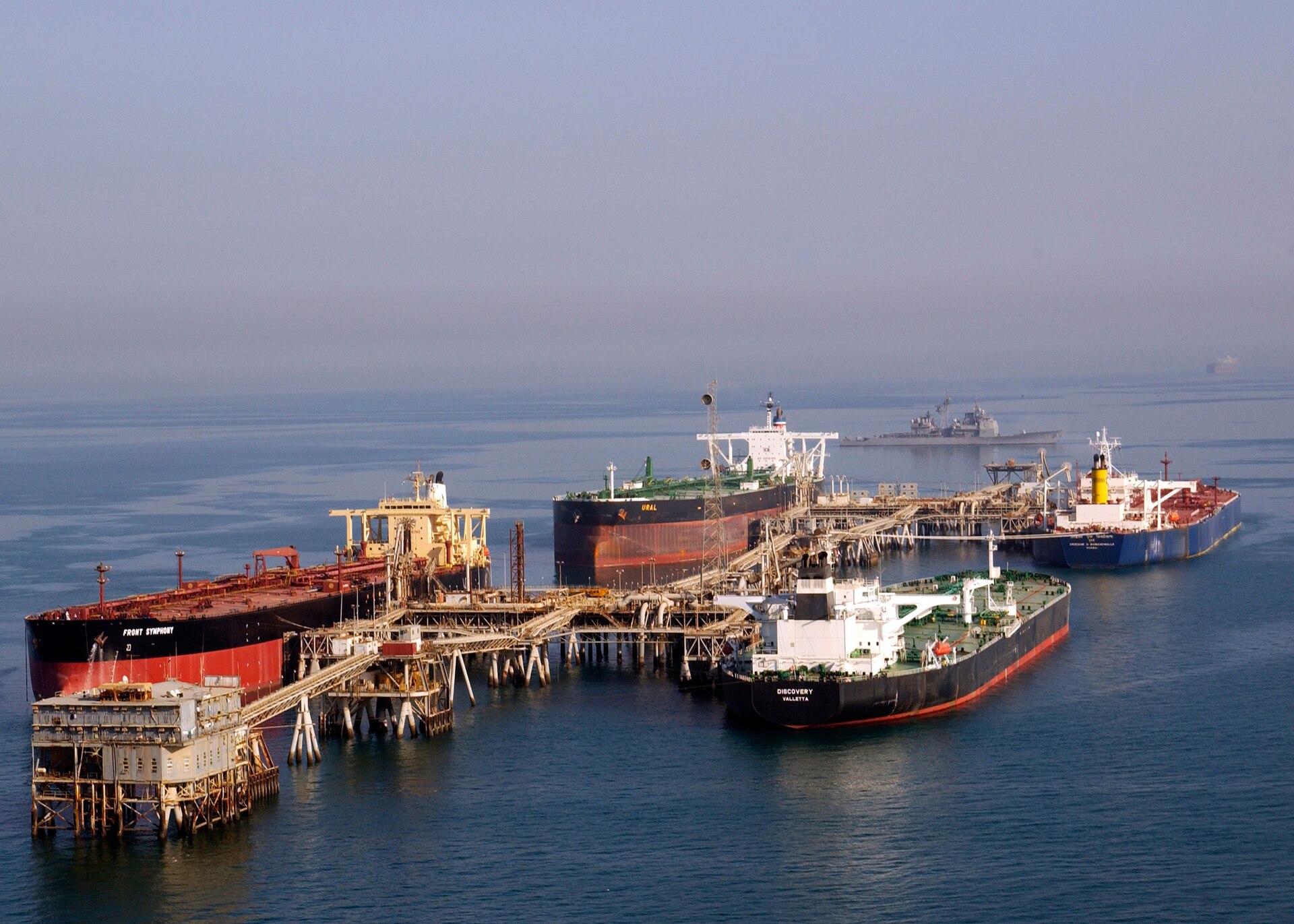
The Rich Starry (IMO 9773301, formerly Full Star, 36,000 dwt, built 2015, Malawi-flagged) passed through the Strait of Hormuz on April 14, becoming the first vessel to exit the Persian Gulf since the blockade took effect. It transited, as Lloyd’s List and Al Jazeera reported, “apparently unchallenged” by US Navy forces.
The vessel is owned by Full Star Shipping, which shares identical contact details with Shanghai Xuanrun Shipping Company Limited — sanctioned by OFAC in March 2023 under Iran-related authorities and listed on the Specially Designated Nationals list. Its cargo: approximately 250,000 barrels of methanol loaded at the UAE’s Hamriyah port in Sharjah.
CENTCOM’s blockade order targets vessels “entering and exiting Iranian ports.” CENTCOM stated explicitly: “CENTCOM forces will not impede freedom of navigation for vessels transiting the Strait of Hormuz to and from non-Iranian ports.” The Rich Starry loaded at Hamriyah, not at an Iranian terminal. By the letter of the enforcement architecture, it was clean.
By every other measure, it was a test. A vessel owned by an OFAC-sanctioned Chinese entity, with documented ties to Iranian oil logistics, transited on the first day of a blockade designed to pressure Tehran — and no US warship moved to intercept. Lloyd’s List reported that the Rich Starry initially approached the Larak-Qeshm passage, pulled back, then resumed and completed the transit in the early hours of April 14-15. The hesitation-and-resume pattern is consistent with a probe: approach the enforcement perimeter, gauge the response, proceed when none comes.
Two additional sanctioned tankers also transited on April 14. The Murlikishan, a Handy tanker heading to Iraq for fuel oil — previously used to transport Russian and Iranian crude, US-designated — and the Peace Gulf, Panama-flagged, heading to Hamriyah carrying what Al Jazeera described as apparent Iranian naphtha transshipped through non-Iranian Gulf ports for Asian export. Three sanctioned-linked vessels through the strait on Day 1. The first ship through the blockade was sanctioned.
Why Did Beijing Send Both Signals on the Same Day?
The dual signal works because the two halves communicate to different audiences through different registers while reinforcing the same message. The Xinhua amplification communicates to governments — to foreign ministries, to energy trading desks, to the Gulf states whose fiscal planning depends on blockade duration. Its message: the blockade is contested, experts agree it cannot hold, and IRGC capabilities remain in reserve. The Rich Starry transit communicates to the maritime industry — to shipowners, insurers, port authorities, and the commercial actors who will determine whether the blockade functions in practice. Its message: sanctioned vessels can pass, the enforcement architecture has a structural gap at non-Iranian ports, and the first entity to exploit it was Chinese.
Neither signal required Beijing to say anything inflammatory. Chinese Foreign Ministry Spokesman Guo Jiakun’s April 13 press conference was a study in calibrated restraint: “The Strait of Hormuz is an important international trade route for goods and energy. Keeping the area safe and stable and ensuring unimpeded passage serves the common interest of the international community.” He declined to state that China would stop buying Iranian oil. He attributed the disruption to “the military conflict” — language that delegitimizes the blockade without naming Washington. No escalation. No threat. Just framing.
The operational signal — the tanker — did the rest. Beijing did not need to declare that it would defy the blockade. It demonstrated that the blockade’s own terms permitted defiance, provided you loaded at the right port.
The Larak-Qeshm Corridor and the IRGC’s Silent Permission
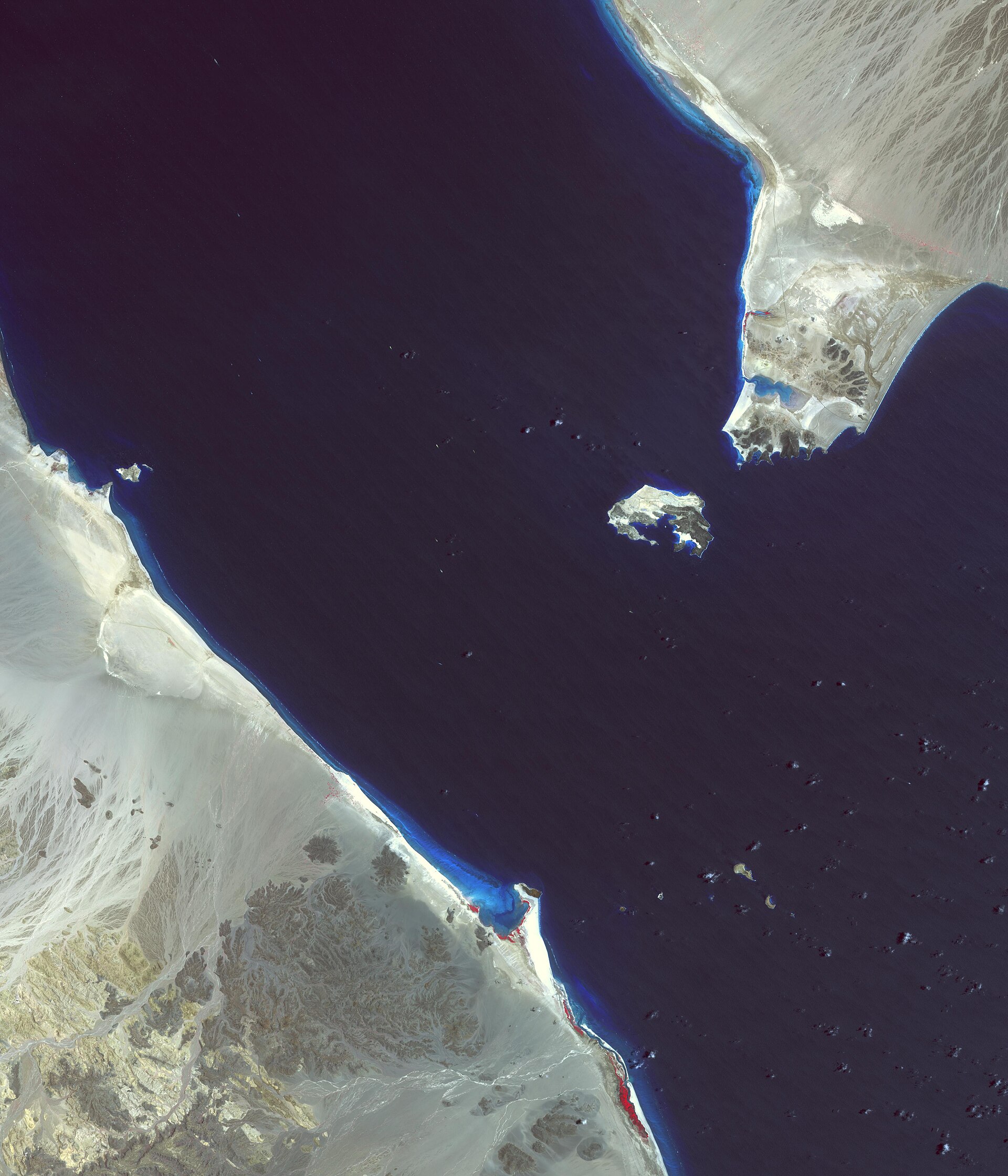
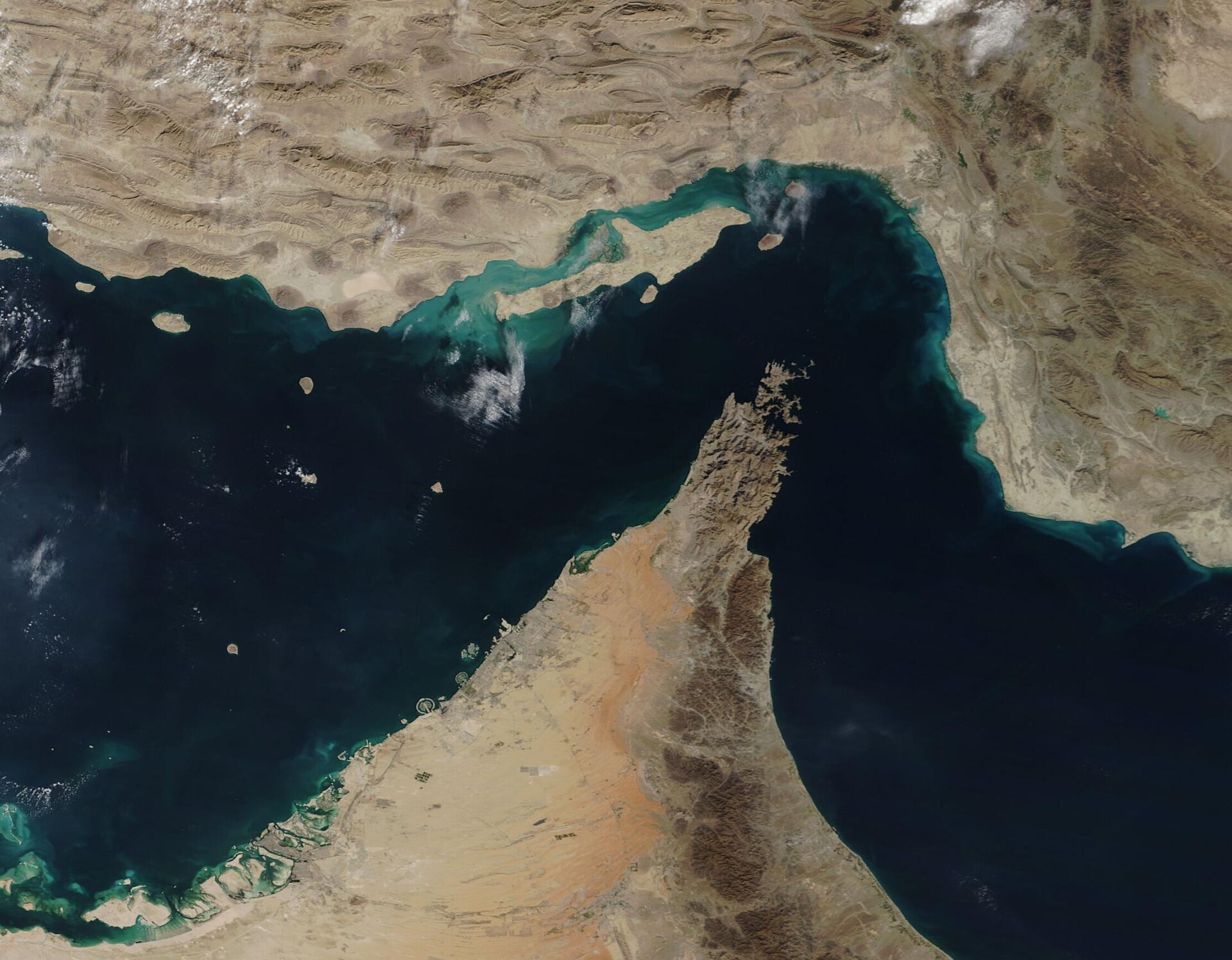
The Rich Starry’s transit route matters as much as its cargo origin. The vessel used the Qeshm-Larak passage — the narrow corridor between Qeshm Island and Larak Island that sits inside Iranian territorial waters. Since early in the war, the IRGC has declared the standard shipping lanes a “danger zone” and redirected traffic through this five-nautical-mile channel, where vessels transit under effective IRGC maritime control.
A Chinese-sanctioned vessel transiting through an IRGC-controlled corridor on the first day of a US blockade is, at minimum, an event that required IRGC acquiescence. The March 4 precedent established the template: when Iran imposed its own Hormuz restrictions in the war’s early weeks, Chinese vessels received preferential passage. The bulk carrier Iron Maiden (Cetus Maritime Shanghai Ltd.) transited on March 4-5 while broadcasting “CHINA OWNER” on its Automatic Identification System. Iran’s Foreign Minister Araghchi formally confirmed on March 26 that vessels owned by China, Russia, India, Iraq, and Pakistan would be permitted transit. Beijing as Hormuz operating system was established before the US blockade began.
The blockade did not disrupt this architecture. It layered a second permission system on top of it. Vessels transiting Hormuz now need clearance from two gatekeepers — Iran for the Larak-Qeshm corridor, the United States for the broader enforcement zone. As Al Jazeera analyst Malik Traina observed from Kuwait: “This complicates everything for commercial vessels stranded in the Gulf. They now need permission from Iran and the US,” creating a dual-permission regime that advantages precisely those actors who maintain working relationships with both sides.
China is the only major power that does.
What Do the Fabricated Dong Jun Quotes Reveal About the Information Environment?
Before examining what Beijing actually communicated, consider what it did not say — and what was invented to fill the gap. Widely circulated quotes attributed to Chinese Defense Minister Dong Jun (“Iran controls the Strait of Hormuz and it is open for us”) appeared in IBTimes UK, Asia Times, and Common Dreams before corrections were issued. Newsweek published a formal retraction: “A previous version of this article erroneously reported quotes which were attributed to China’s Defense Minister Dong Jun. There is no record of such statements.”
The fabricated quotes — likely generated or amplified through AI aggregation before human editorial review caught them — circulated faster and more widely than Beijing’s actual signals. They said what observers expected China to say: a blunt declaration of Hormuz transit rights. The Beijing Channel Newsletter’s fact-check confirmed no such Defense Ministry statement existed.
The fabrication gap is itself informative. Beijing’s real communication was more sophisticated than the fake version. A bombastic ministerial declaration would have forced Washington to respond publicly, escalating the confrontation. Instead, Beijing sent a state wire amplification and a sanctioned tanker — signals legible to governments and shipping desks but deniable in a press briefing. The fakes were louder. The real signals were more effective.
Saudi Arabia’s Narrowing Window
According to regional media citing the Wall Street Journal, Saudi Arabia was urging the United States on April 14 to lift the blockade, framing its concern around escalation risks and maritime trade destabilization. The report arrived on the same day as China’s dual signal — a coincidence of timing that compounds the pressure on Riyadh.
Saudi Arabia’s position in the blockade is structurally contradictory. The kingdom needs the blockade to succeed in pressuring Iran toward a ceasefire — the Hajj deadline of April 18, when the Umrah cordon seals and hundreds of thousands of pilgrims begin arriving, creates a hard ceiling on tolerable regional instability. But the kingdom also needs the blockade to end before it provokes the IRGC escalation that the IRGC Navy’s “full authority” declaration of April 5 and April 10 has promised. Saudi Arabia wants coercion without consequences — a position that depends entirely on the blockade being credible enough to force Iranian concessions but limited enough to avoid Iranian retaliation.
China’s Day-1 demonstration undermined the first condition. If a sanctioned Chinese tanker can transit unchallenged by loading at Hamriyah rather than Bandar Abbas, the blockade’s coercive pressure on Tehran is reduced by the width of that loophole. Iran’s oil revenue — 2.16 million barrels per day in February 2026, the highest since July 2018, virtually all of it bound for China via Kpler data — does not depend on Iranian port loading if transshipment through UAE, Omani, or Iraqi intermediaries remains viable. The structural logic behind that loophole — and what it means for Saudi Arabia’s dual-dependency on US security and Chinese energy offtake — is examined in detail in a separate analysis.
China imported approximately 1.4 million barrels per day of Iranian crude in 2025, representing around 13 percent of its total crude imports and 80-90 percent of Tehran’s oil export revenue. Roughly 45-50 percent of China’s total crude imports transit Hormuz. Beijing holds a strategic petroleum reserve of approximately 1.2 billion barrels — around 109 days of seaborne import cover — built substantially from below-market sanctioned Iranian and Russian crude. The buffer gives Beijing diplomatic runway that markets may not be pricing in. China’s vulnerability to the blockade is real but not acute.
| Metric | Value | Source |
|---|---|---|
| Iran crude exports, Feb 2026 | 2.16M bpd | Kpler / CNBC |
| Share of Iran exports to China | ~100% | Columbia CGEP |
| China imports via Hormuz | ~45-50% of total | Columbia CGEP |
| China SPR | ~1.2B barrels | Kharon analysis |
| SPR import cover | ~109 days | Kharon analysis |
| Iran share of China crude imports | ~13% | Al Jazeera / Columbia |
| Rich Starry cargo | ~250,000 bbl methanol | Lloyd’s List |
Lavrov in Beijing: The Third Signal
Russian Foreign Minister Sergey Lavrov arrived in Beijing on April 14 — the same day as the Rich Starry transit and the Xinhua amplification — for a two-day visit with Wang Yi focused on Iran and Ukraine. Lavrov had spoken with Iranian Foreign Minister Araghchi on April 13, the day the blockade was announced. The sequencing — Araghchi to Lavrov, Lavrov to Beijing, Beijing’s dual Hormuz signal — is not proof of trilateral coordination, but it is the behavioral pattern you would expect if Moscow and Beijing were aligning their Hormuz postures in real time.
Russia’s interest in the blockade is straightforward: every barrel of Iranian crude that reaches China under or around the blockade is a barrel that competes with Russian crude for Chinese refinery capacity, but every day the blockade persists is a day that elevates global oil prices and increases the value of Russian exports to non-Chinese buyers. Moscow’s optimal outcome is a blockade that is leaky enough to keep China supplied with discounted Iranian crude (preserving the bilateral relationship) but threatening enough to keep Brent elevated (boosting Russian revenue from European and Indian sales). A blockade with enforcement seams — exactly what Day 1 demonstrated — serves Russian interests more precisely than either full enforcement or full collapse.
Lavrov’s presence in Beijing on the day the seams became visible may be coincidence. The diplomatic calendar does not always coordinate with the maritime one. But the Lavrov-Wang Yi meeting gives both governments a venue to discuss Hormuz enforcement posture, Chinese tanker transit architecture, and the terms under which Russia’s own sanctioned fleet might test the same gaps that the Rich Starry exploited.
How Much of Washington’s Coercive Window Survives Day One?
The five-day coercive window — April 13 through April 17, before Hajj arrivals on April 18 raise the threshold for military escalation near Mecca — was always narrow. It assumed the blockade would function as intended: a pressure mechanism that constricts Iran’s economic lifeline enough to force concessions in the Islamabad negotiating track before the calendar closes the window.
Day 1 introduced three complications. First, the Hamriyah loophole: vessels loading at non-Iranian Gulf ports fall outside CENTCOM’s stated enforcement scope, regardless of their ownership, sanctions status, or ultimate cargo origin. The Rich Starry proved the loophole works. Every shipping desk in Singapore, Dubai, and Shanghai now knows it exists.
Second, the dual-permission architecture: the Larak-Qeshm corridor requires IRGC acquiescence, which China has secured and most Western-linked vessels have not. The blockade may end up constricting non-Chinese traffic more than Chinese traffic — the inverse of its intended effect. Third, the narrative environment: Xinhua’s Day-1 framing, distributed to a global English-language audience and sourced to four independent analysts, established the “unsustainable blockade” thesis before Washington had 24 hours to demonstrate sustainability.
Li Haidong of China Foreign Affairs University told Global Times on April 13 that the blockade would shift conflict consequences globally, affecting oil-importing nations in Europe and Southeast Asia. Qin Tian, deputy director of the Institute of Middle East Studies at CICIR (China Institutes of Contemporary International Relations), framed the strait as “one of the most effective tools in [Iran’s] confrontation with the US and Israel” — positioning Hormuz as a negotiating asset rather than a battlefield. Beijing’s analytical class, published through state-adjacent outlets, is building the intellectual infrastructure for a prolonged blockade challenge.
| Vessel | Type / DWT | Flag | Sanctions Link | Cargo / Destination | US Interception |
|---|---|---|---|---|---|
| Rich Starry (IMO 9773301) | Product tanker / 36,000 | Malawi | Shanghai Xuanrun (OFAC SDN, March 2023) | ~250K bbl methanol / ex-Hamriyah UAE | None |
| Murlikishan | Handy tanker | — | US-designated; Russian/Iranian oil history | Fuel oil / Iraq | None |
| Peace Gulf | Medium-range | Panama | Not directly sanctioned | Iranian naphtha (transshipped) / Hamriyah UAE | None |
The coercive window has not closed. But it has contracted. Washington retains the naval capacity to interdict any vessel in the strait — the question was never capability but will, and specifically the willingness to intercept a Chinese-owned ship carrying non-Iranian-port cargo in the middle of a war where Beijing is simultaneously the primary buyer of Iranian crude and the only power with working diplomatic channels to both Tehran and the IRGC. Intercepting the Rich Starry on Day 1 would have answered that question. Not intercepting it answered it differently.
Iran’s armed forces declared a “permanent mechanism” to control the strait on April 13, warning that if Iranian port security is threatened, “no port in the Persian Gulf and the Sea of Oman will remain safe.” Brigadier General Talaei Nik stated that strategic reserves including missiles and drones had been “fully replenished.” The IRGC’s messaging — amplified by Xinhua within nine hours — positions Iran not as a besieged state but as a power with options. Whether those options are real or performative matters less, for the purpose of blockade credibility, than whether the audience believes them. Xinhua’s four-analyst explainer was designed to ensure they do.
Saudi Arabia’s reported request that Washington lift the blockade suggests Riyadh has already begun calculating that the blockade’s costs — in escalation risk, in Chinese positioning, in IRGC provocation — may exceed its coercive benefits before the Hajj deadline arrives. If that calculation is correct, the five-day window was a three-day window, and one of those days is already spent.
Frequently Asked Questions
Was the Rich Starry carrying Iranian oil?
No. The vessel loaded approximately 250,000 barrels of methanol at Hamriyah port in Sharjah, UAE — not at an Iranian terminal. However, the vessel’s owner, Full Star Shipping (linked to Shanghai Xuanrun Shipping Company Limited), was sanctioned by OFAC in March 2023 specifically under Iran-related sanctions authorities. The transit tested the blockade’s entity-versus-port enforcement distinction: CENTCOM targets port of origin, not vessel ownership. Hamriyah has functioned throughout the crisis as a transshipment hub where sanctioned-origin cargo can be reloaded onto vessels that then transit under the non-Iranian-port exemption — a structural gap in the enforcement architecture that maritime lawyers had identified before Day 1 but that the Rich Starry was the first to demonstrate operationally.
Has China officially opposed the Hormuz blockade?
Not in direct terms. Foreign Ministry Spokesman Guo Jiakun’s April 13 statement avoided naming the United States or the word “blockade,” instead attributing the disruption to “the military conflict” and calling for “calm and restraint.” This formulation — delegitimizing the blockade by refusing to acknowledge it as a discrete policy choice — mirrors Beijing’s approach to South China Sea freedom-of-navigation operations, where China frames US patrols as destabilizing provocations rather than lawful exercises. The distinction matters for legal positioning: by not formally protesting the blockade, China preserves the option to treat its own vessels’ transits as routine commerce rather than acts of defiance, reducing the political cost of each passage through the strait.
Why did Xinhua amplify the IRGC statement rather than the Iranian Foreign Ministry’s response?
The split between Xinhua’s English international wire and Global Times reflects audience-specific tasking. Global Times — aimed at Chinese domestic and regional Asian readers — carried Iran’s Foreign Ministry track, the “revenge of choice” economic framing that positioned the blockade as a grievance. Xinhua’s English wire, aimed at Western governments, Gulf capitals, and global trading desks, chose the IRGC military track. The distinction is not purely editorial: by routing the military capabilities message through the outlet read by the policy communities that assess blockade viability, Beijing ensured that the audience most capable of influencing US enforcement decisions received the message that Iran retains unused options. The Foreign Ministry’s diplomatic protest would not have reached the same rooms.
Could the US Navy have legally intercepted the Rich Starry?
Under CENTCOM’s own stated enforcement terms, interception would have been difficult to justify — the vessel loaded at a UAE port, not an Iranian one. Under broader US sanctions authorities (OFAC SDN list), the US could have imposed consequences on the vessel, its owners, or entities facilitating its cargo — but physical interception of a vessel in international or disputed waters, owned by a sanctioned entity of a major power, on the first day of a new enforcement regime, carries escalation risks that extend well beyond the Hormuz theater. The precedent of the March 4 “CHINA OWNER” AIS broadcast by the Iron Maiden suggests that Chinese-linked vessels have been testing US interception willingness for weeks, and the pattern of non-interception has been consistent. The Rich Starry transit may have been the most visible test, but it was not the first.
What happens if more sanctioned vessels use the Hamriyah route?
The route creates a structural challenge for CENTCOM that scales with volume. If one sanctioned vessel can load at Hamriyah and transit unchallenged, ten can. The enforcement options narrow to either expanding the blockade’s scope beyond Iranian ports — which would mean intercepting UAE-origin cargo and directly implicating a US ally — or applying secondary sanctions pressure on Hamriyah and similar transshipment hubs, which would disrupt legitimate UAE commerce and strain the US-UAE relationship at a moment when Washington needs Gulf state cooperation for the broader Iran campaign. Neither option is cost-free, and the longer the Hamriyah gap remains open, the more commercial actors will route through it. Insurance and classification societies will be the leading indicators: if P&I clubs begin offering coverage for Hamriyah-loaded transits through the blockade zone, the gap will have been institutionalized. The strategic framing within which this enforcement gap sits — three competing Hormuz security architectures, none of which Saudi Arabia can safely join — is examined in Three Frameworks, One Strait. A third Chinese signal that preceded both the blockade and the dual messages by weeks was operational rather than diplomatic: TEE-01B, the Chinese commercial satellite the IRGC used to image Prince Sultan Air Base, had been under IRGC Aerospace Force control since September 2024, providing targeting intelligence before the KC-135 strikes that reshaped the base’s operational posture.