
Mandi is the dish that every visitor to Saudi Arabia eventually sits on the floor to eat. A mound of long-grain basmati rice cooked in spiced meat stock, topped with a whole chicken leg, a lamb shank, or a full goat shoulder, and carried out on a shared platter the size of a car wheel — it is as close as Saudi dining gets to a national ritual, even though its origins are Yemeni. This page is part of our wider Saudi Arabia food guide and is written for travellers who want to eat well on a first visit without getting stuck with the airport-hotel buffet. It lists restaurants that are genuinely loved by Saudis themselves — the household-name chains, the Hadhrami speciality houses, and a few quieter favourites in Riyadh, Jeddah, Mecca, Medina, Dammam, and Khobar — with prices in Saudi riyals, what to order, and how to eat it without embarrassing yourself.
Best Time to Visit: Year-round — mandi is served lunchtime through late evening every day
Getting There: Every major Saudi city has mandi restaurants; most chains deliver via HungerStation and Jahez
Visa Required: Yes — tourist e-visa
Budget: SAR 20–30 (chicken mandi quarter) to SAR 300+ (whole lamb shoulder for a group); typical solo meal SAR 35–70
Must-Try: Chicken mandi at Najd Village (Riyadh), lamb mandi at Al Seddah (Jeddah), Hadhrami-style mandi at Mandi World
Avoid: Ordering a full goat when you are two people — portions are enormous and waste is socially frowned on
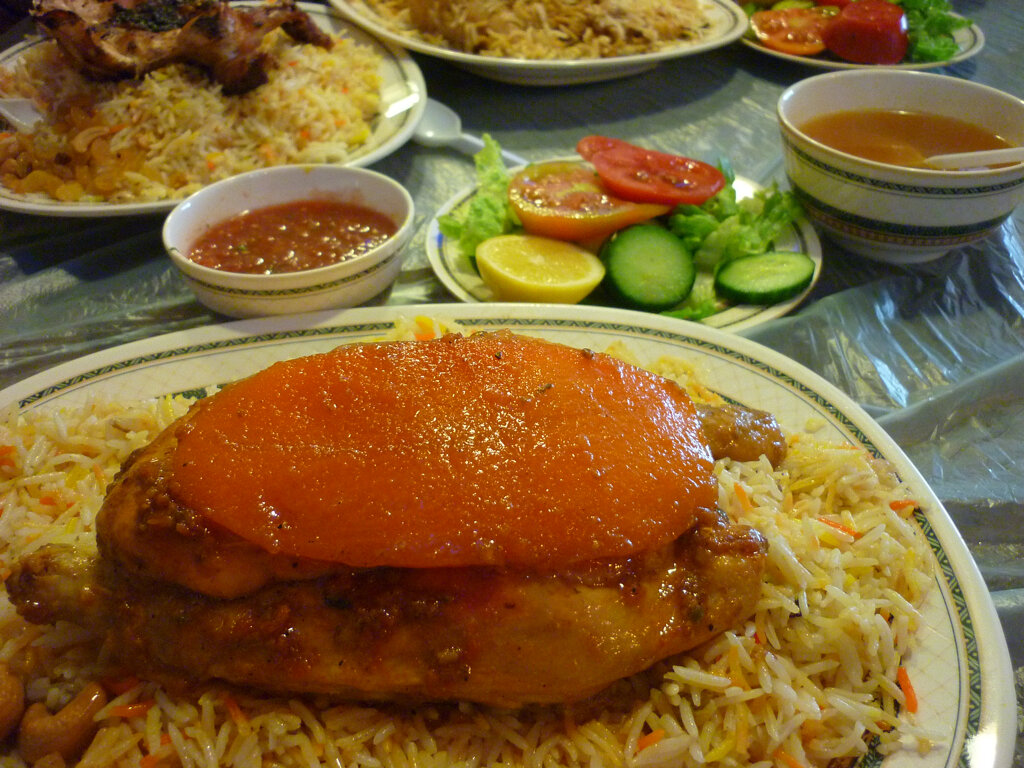
What Mandi Is — and Why It Is Everywhere in Saudi Arabia
Mandi (Arabic: mandī) is a rice-and-meat dish from the Hadhramaut region of Yemen, refined over centuries by desert communities who cooked meat in underground clay ovens known as a taboon or tandoor. The word itself comes from the Arabic nada, meaning “dew” — a reference to the faint moisture that clings to the meat after it has hung suspended above slow-burning wood for hours, basting the rice below with its drippings.
The method is the whole point. Dry hardwood — traditionally samar or ghada, both desert woods — is burned down to charcoal inside a pit or heavy pot. Whole chickens, lamb shoulders, or goat haunches are rubbed with a spice blend (hawaij: cumin, cardamom, black pepper, cloves, turmeric) and lowered into the tandoor on hooks, where they roast above a pot of parboiled basmati rice seasoned with the meat’s spiced stock. The oven is sealed with clay or a damp cloth, and the whole thing cooks for four to eight hours. The result is smoke-infused rice and meat that falls off the bone without the dryness of a standard roast.
Mandi arrived in Saudi Arabia with Hadhrami traders and labour migration, and by the 1970s it had become so well-entrenched in Riyadh and Jeddah that many Saudis no longer think of it as foreign. It is now one of the two default celebration dishes of the Kingdom — the other being kabsa, the national dish. Weddings, family gatherings on Friday afternoons, work lunches, and iftar during Ramadan all tend to revolve around a large platter of mandi set on a floor cloth called a sufra.
Mandi vs Kabsa vs Madhbi vs Madfoun
Every Saudi restaurant menu you will see has a small family of rice-and-meat dishes that look almost identical to the untrained eye. They are not. The differences come down to how the meat is cooked.
| Dish | Origin | Cooking Method | Flavour |
|---|---|---|---|
| Mandi | Hadhramaut, Yemen | Meat hung in a sealed tandoor oven over charcoal; rice cooked beneath in meat stock | Smoky, mellow, aromatic |
| Kabsa | Najd, Saudi Arabia | Meat and rice cooked together in one pot on the stove with loomi (dried lime) and tomato | Tart, savoury, darker colour |
| Madhbi | Yemen | Meat grilled on a hot stone (madhabi) set over charcoal, served with rice alongside | Char-grilled, drier |
| Madfoun | Saudi Arabia / Yemen | Meat buried in hot sand or coals (madfoun = “buried”) and cooked for hours | Deeply smoky, very tender |
| Zurbian | Hadhramaut, Yemen | Biryani-like: meat, rice, and yogurt-tomato sauce layered and slow-cooked | Spiced, slightly tangy, softer |
If you order mandi in Saudi Arabia and the rice is tangy or sharp, the kitchen has quietly sold you kabsa. Mandi rice should taste of cardamom, black pepper, and smoke — never of dried lime.
How to Eat Mandi Without Embarrassing Yourself
Mandi is the floor-seating dish of Saudi Arabia. In traditional restaurants, you remove your shoes at the entrance, walk across carpet, and sit cross-legged around a low circular platter set on a plastic sheet. The platter arrives communal: one mound of rice, one or more pieces of meat resting on top, and a small dish of hot tomato-chilli sauce (salata hara or sahawiq) on the side. There is often a bowl of plain meat broth (maraq) passed separately for spooning over the rice.
Eating is done with the right hand. You pull a small piece of meat with your fingertips, compress it against a palm-sized scoop of rice, and lift it to your mouth without the rice touching your palm. Left hand stays at your side. Sharing is the convention — you eat from the section of the platter nearest to you, and it is rude to reach across. Cutlery is always available on request and no one will judge a foreign visitor for asking for a fork, but the textures make more sense by hand.
For deeper conduct notes — shoes, greetings, photography, tipping — see our Saudi etiquette guide. On the food side, most traditional Saudi mandi houses are family-segmented: a men’s section at the front and a family section (women, mixed couples, children) behind a screen or in private dining rooms called majlis. Solo women travellers will be ushered to the family section without question.
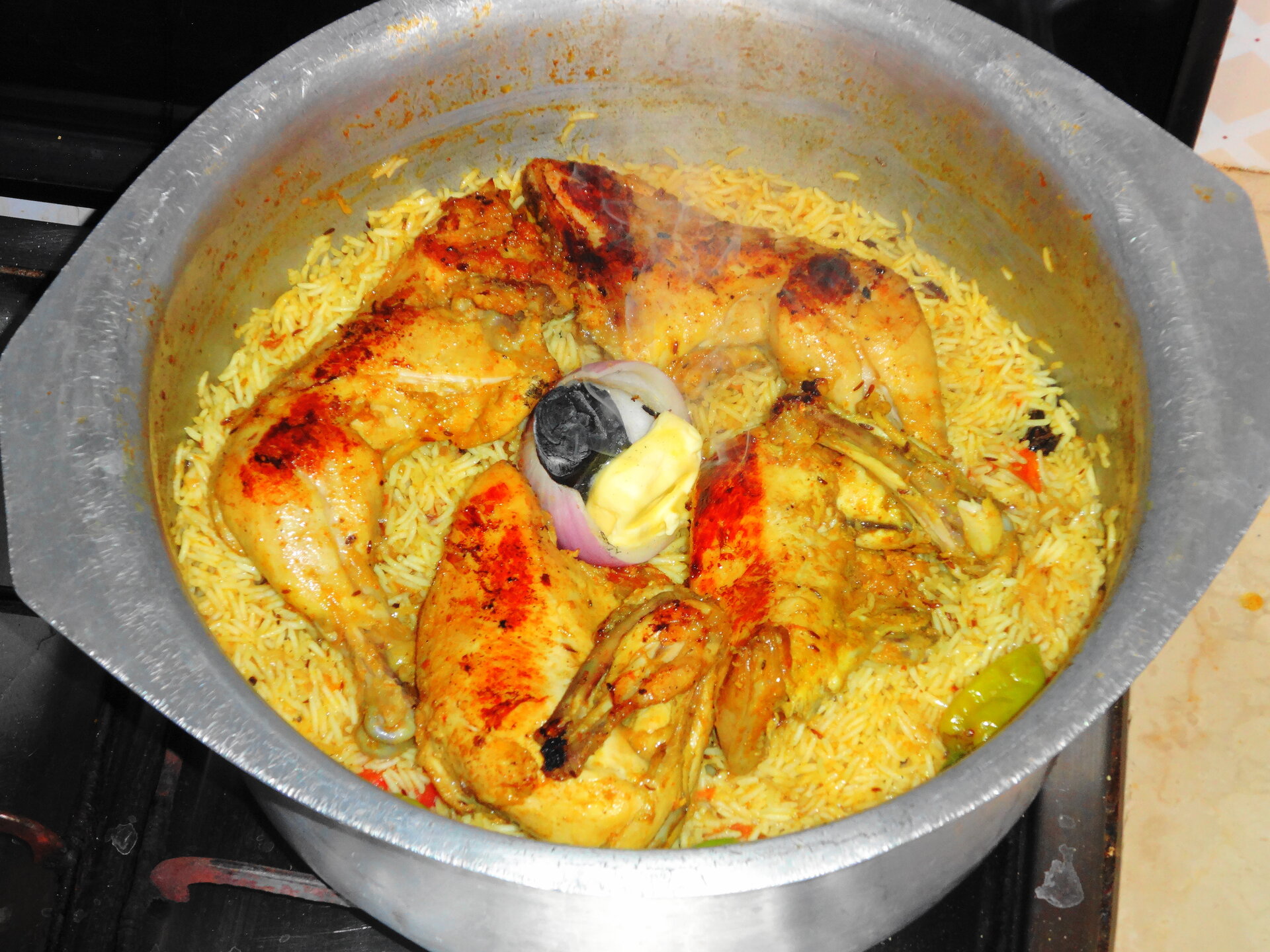
Best Mandi Restaurants in Riyadh
Riyadh has the deepest bench of mandi houses of any Saudi city — a reflection of both its size and the scale of internal migration from Hadhramaut and Asir. If you are basing yourself in the capital, a mandi lunch fits neatly between sightseeing at Diriyah and an afternoon in the Diplomatic Quarter. The city is also the best place in the country to compare styles side by side, and many of the chains below began here before opening branches across the Kingdom.
Najd Village (Al Qaryah Al Najdiyyah)
Riyadh’s marquee traditional restaurant, housed in a three-storey reconstructed Najdi mud-brick fort on Takhassusi Street in Olaya, with further branches on Abu Bakr As Siddiq Road and King Abdulaziz Road in Al Yasmin. Najd Village is marketed to Saudis as a heritage experience and to visitors as a first-night bucket-list dinner. Private majlis rooms with hand-woven carpets, brass coffee pots, and low benches surround a central courtyard. The chicken mandi is currently SAR 65, lamb kabsa SAR 85, and starters like hummus najdi and sambousak sit at SAR 25–30. The rice is lighter and less smoky than Hadhrami versions — this is Najdi-style mandi, slightly adapted — and the bread is baked to order on a central saj.
Why go: the atmosphere is irreplaceable and the setting makes the meal feel like an event. Reserve ahead on weekends (Thursday and Friday nights) — walk-ins routinely wait 45 minutes.
Al Romansiah (Al-Rumansiah)
The Walmart of Saudi traditional food — Al Romansiah now has well over thirty branches across Riyadh, Al-Kharj, Qassim, Al-Ahsa, Dammam, Jeddah, Medina, Mecca, and Bahrain. It is priced for everyday Saudis, not tourists: a quarter chicken mandi is around SAR 22–28, and a half chicken with rice, salad, and bread comes in under SAR 40. The menu runs the full traditional gamut — mandi, madhbi, madfoun, shawaya, zurbian, maqluba, kabsa, jareesh — with chicken, lamb, and hashi (young camel). Interiors are bright and modern, with family rooms separated from the main hall, and drive-through windows at suburban branches.
Why go: if you want to understand what a normal Saudi eats on a Tuesday, this is it. Not the finest mandi in the city, but probably the most representative.
Al Nadeg (Al Naddeq)
A strong Riyadh chain focused specifically on mandi and madhbi, with locations in Al Malqa, Hittin, Al Rawdah, and Al Olaya. Al Nadeg runs a more restrained menu than Romansiah — basically mandi, madhbi, and a few sides — and does it very well. The chicken mandi rice has a distinctly smokier nose than chain rivals, and the grilled lamb madhbi is carved off the stone at the table. Expect SAR 28 for a chicken mandi quarter, SAR 70–90 for lamb.
Mandi World (Mandi Worldwide)
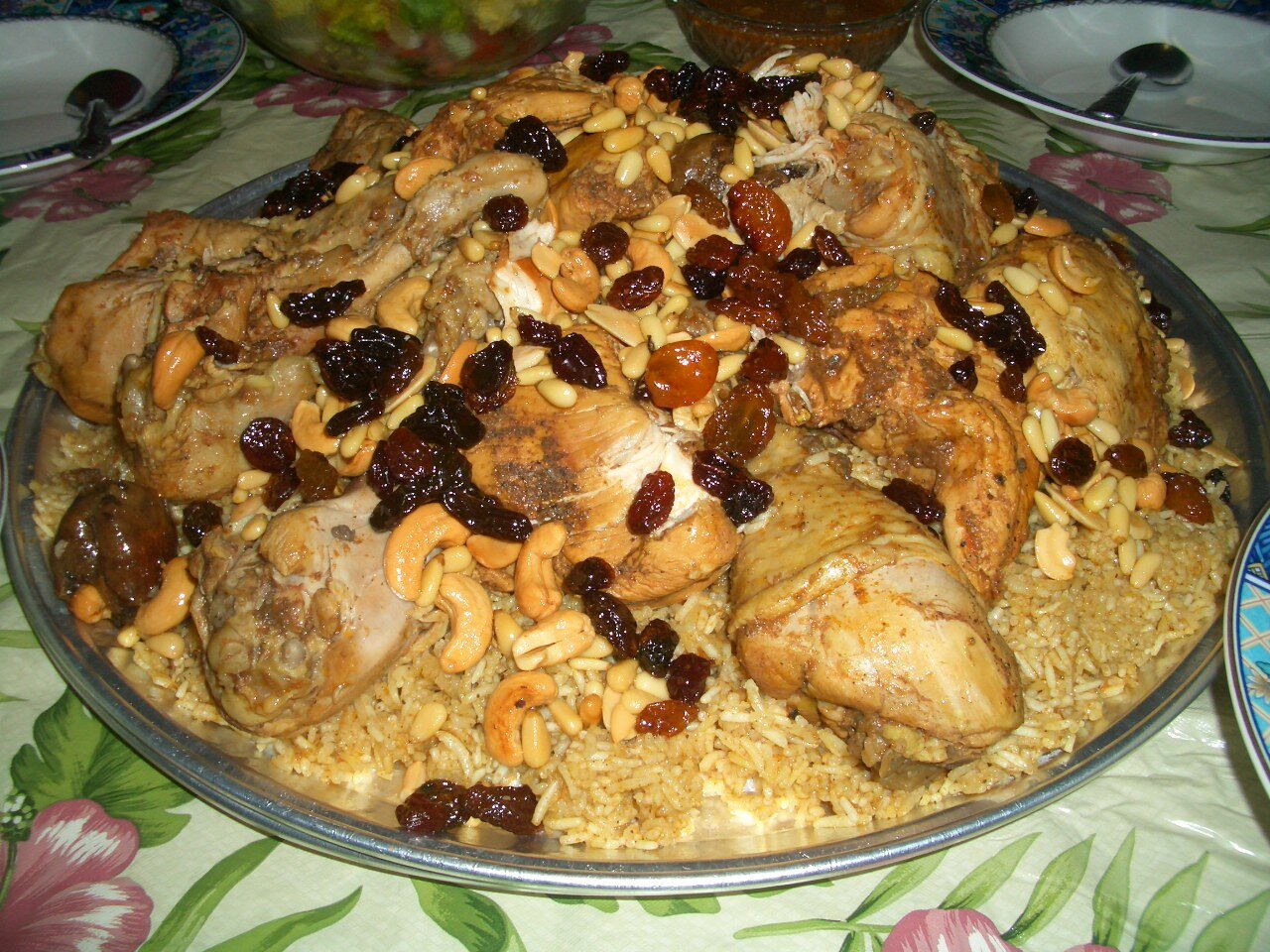
A specialist chain launched in the mid-2000s that positions itself as the most authentic Hadhrami-style mandi in the Kingdom. Riyadh has multiple branches; the Al Malqa and Al Yarmuk outlets are the most popular. The rice is noticeably darker and smokier than Najdi versions, and the chicken comes with the skin lightly browned and a dusting of raisins and pine nuts on top. Prices sit between Romansiah and Najd Village — expect SAR 35 for chicken, SAR 95–120 for a lamb shoulder for two.
Al Khanin and Al Saddah
Al Khanin is a long-running Riyadh institution near Ishbiliyah, popular for hashi (camel) mandi — a speciality younger Saudis have rediscovered in the last decade. Al Saddah (not to be confused with Jeddah’s Al Seddah) is known for chicken mandi and madghoot, a close cousin in which the meat is cooked directly in the rice pot. Both skew older and quieter than Najd Village; go for the food, not the ambience.
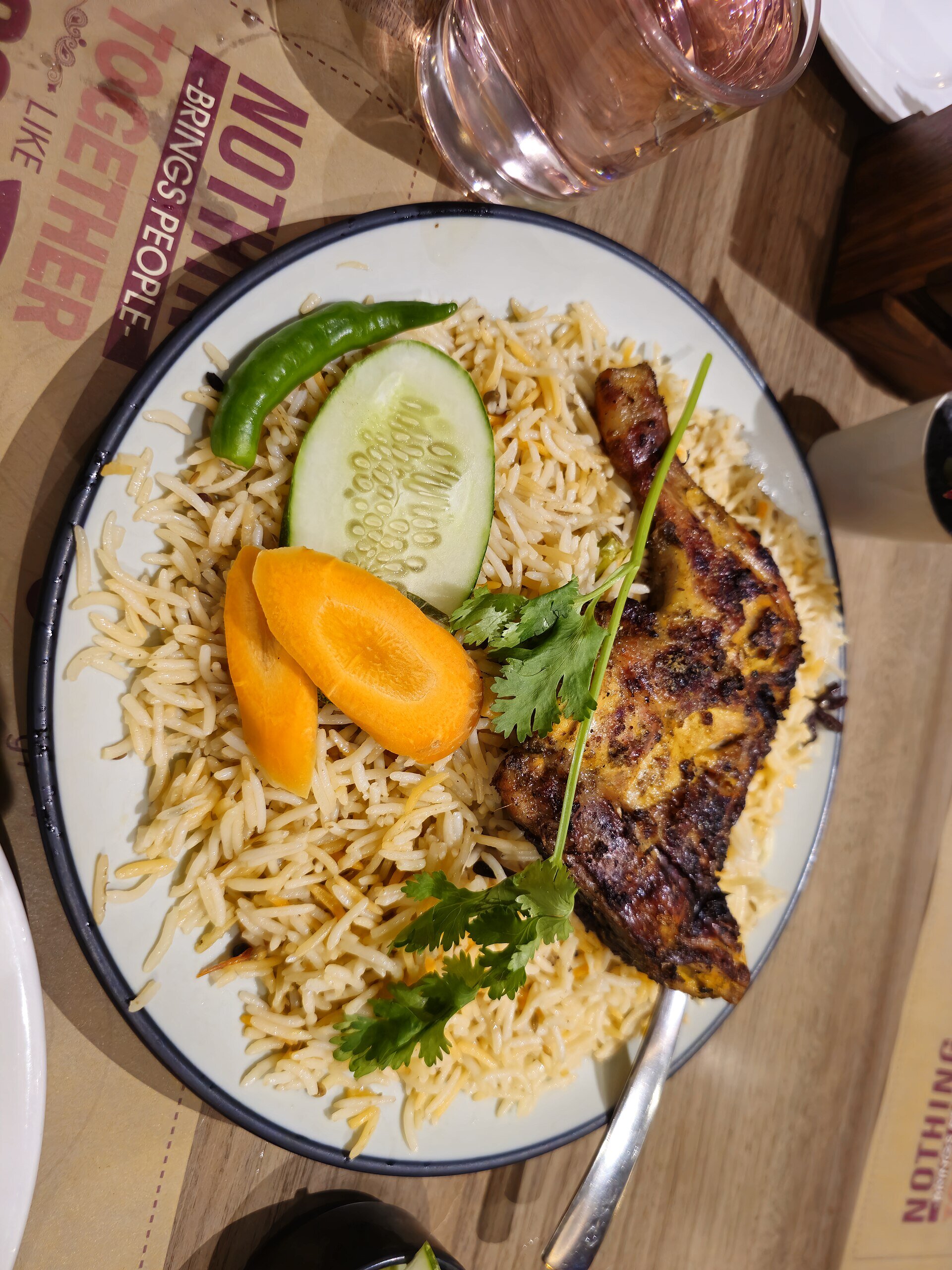
If you want more options across Riyadh’s food scene beyond mandi, our Riyadh street food guide covers mutabbaq, shawarma, and the late-night stalls where locals actually eat.
Best Mandi Restaurants in Jeddah
Jeddah’s mandi culture is closer to its Hadhrami roots than Riyadh’s — unsurprising given that the city was historically the landing point for Yemeni traders and pilgrims, and that many of the oldest mandi houses in Saudi Arabia are clustered in and around Al-Balad, the UNESCO-listed old town. Rice here tends to be smokier and the presentation more communal than in Riyadh.
Al Seddah Restaurant
A Jeddah favourite since the 1990s with branches across the city, including a well-known location on Prince Sultan Road. Al Seddah is where Jeddah families go for a Friday lunch that stretches into the afternoon. The mandi is served in the full traditional style — platter on the floor, bowls of broth, hot chilli sauce, and warm khubz bread — and the lamb is consistently rated the best chain lamb mandi in the Kingdom. Expect SAR 30 for a chicken quarter and SAR 110–160 for a lamb or goat shoulder.
Mandi World — Jeddah (Hamad Al Jaser Road)
The flagship branch of the Mandi World chain, on Hamad Al Jaser Road in the Ar Rawdah district, is widely cited by Jeddah residents as the single best mandi experience in the city. Rice is smokier than at the Riyadh outlets; the sahawiq (Yemeni hot sauce) is not for the faint-hearted.
Raydan
An old-school chain with branches scattered across Jeddah, Raydan is the value option: chicken mandi at around SAR 22 and mutton mandi at SAR 80 for a full leg. The interiors are simple — fluorescent lighting, plastic table covers — but the food is consistent and the portions generous.
Al Khulaqi
Jeddah’s oldest named mandi restaurant, with branches that have been open since the 1980s in the Al Balad and Al Safa neighbourhoods. Al Khulaqi specialises in Hadhrami-style mandi and also serves hawari lamb — a speciality of leg meat cooked on a vertical spit alongside the tandoor. The menu is short, the queues long.
Al Romansiah — Jeddah
The same chain logic as Riyadh — cheap, reliable, family-friendly, and everywhere. Several branches across the city including Madinah Road and Prince Sultan Road. Good if you want the mandi experience without the full traditional commitment.
Beyond mandi, Jeddah’s food scene stretches into seafood, Egyptian street staples, and the Hejazi speciality saleeg. Our Jeddah street food guide covers the places Saudis actually queue for, and our Al-Balad walking guide includes several mandi stalls inside the historic quarter.
Best Mandi Restaurants in Mecca and Medina
The two holy cities have their own distinctive mandi traditions, shaped by the fact that millions of pilgrims from Hadhramaut, Indonesia, Pakistan, and India pass through every year. Mandi restaurants here skew larger, cheaper, and more cosmopolitan than elsewhere in the Kingdom. Note that both cities have restricted-access zones — most of the restaurants below are open to all, but a few inside the Masjid al-Haram compound are Muslim-only. Non-Muslim travellers should consult our non-Muslim travel guide for routing around the Haram boundary.
Mecca
Al-Atbaq — a culinary institution in Mecca for more than thirty years, serving mandi, kabsa, and Hejazi specialities to pilgrims and locals. The branch near the clock tower is usually rammed during Umrah season.
Al Romansiah Mecca — the national chain’s Mecca branch near the Masjid al-Haram compound is one of the highest-volume mandi kitchens in the Kingdom. Prices are identical to the rest of the chain, which makes it cheap by pilgrim-district standards.
Al Tazaj — technically a grilled-chicken chain rather than a mandi house, but the mandi side-menu is solid and the branches are placed along every major Mecca hotel corridor.
Medina
Al Seddah — Medina branch — consistently rated the best lamb mandi near the Prophet’s Mosque, with platters large enough to feed a family of six for under SAR 200.
Bukhari House — a Medina speciality rather than a pure mandi house, but the chicken mandi here is cooked in the Bukhari-Uzbek style, with rice that uses raisins and carrots alongside the spice mix. It is a minority style, but a good one for variety.
Al Romansiah Medina — there are three branches inside the city, including one near the haramain station. Reliable, fast, and a good late-night option after taraweeh prayers during Ramadan.
For pilgrims who want to dig further into Medina’s food and lodging, our best hotels for Umrah and Hajj pilgrims guide lists hotels within walking distance of most of the mandi restaurants above.
Best Mandi Restaurants in Dammam and Al Khobar
The Eastern Province has a distinct mandi culture of its own, heavily shaped by its proximity to Bahrain and the large Shia population in Qatif and Al-Hasa. Dammam and Khobar mandi tends to be milder in spice and lighter in smoke than Jeddah-style, with a stronger focus on seafood and camel alongside the standard chicken and lamb.
Zad Al Sultan (Dammam)
A long-running Arabic restaurant in Dammam known for rice-and-meat dishes. The mandi lamb is tender to the point of falling apart with a spoon, and the saffron rice is noticeably more perfumed than at the national chains. Expect SAR 45 for a chicken quarter, SAR 130–180 for lamb shoulder.
Al Romansiah — Dammam, Al Khobar, and Dhahran
Three large branches serving the full Romansiah menu; the Dhahran location has a strong following among Aramco families. Delivery is operational across the Eastern Province via the chain’s own app and via HungerStation.
Mandi Al-Kabsa (Khobar)
A Khobar speciality house with an unusual dual focus on mandi and Saudi-style kabsa. Popular with the expat oil-and-gas crowd for weekend dinners, with outdoor seating that works well from November to March. A full lamb mandi here runs around SAR 150 for four people.
Bait Shawaya and other chains
Bait Shawaya is a national chain with 90+ branches that specialises in grilled meat and mandi. In the Eastern Province it is a dependable mid-tier option. For a deeper dive on where Eastern Province locals actually eat, see our Dammam restaurants guide and Al Khobar restaurants guide — both cover non-mandi options as well.
What to Expect to Pay
Mandi is one of the cheaper substantial meals you can eat in Saudi Arabia, especially compared with Gulf averages. Prices vary more by restaurant tier than by city, though Mecca and Medina tend to run 10–15% cheaper than Riyadh due to high pilgrim throughput. The table below is a rough snapshot based on 2026 menus.
| Tier | Example | Chicken Mandi (solo) | Lamb Mandi (whole shoulder) | Whole Goat (group) |
|---|---|---|---|---|
| Budget chain | Al Romansiah, Raydan, Al Tazaj | SAR 22–30 | SAR 90–140 | SAR 250–300 |
| Mid-tier specialist | Al Nadeg, Mandi World, Bait Shawaya | SAR 30–45 | SAR 120–180 | SAR 320–420 |
| Heritage / destination | Najd Village, Al Seddah, Al Khulaqi | SAR 50–75 | SAR 160–220 | SAR 420–600 |
| Hotel / mall | Hilton, Sheraton in-house | SAR 85–130 | SAR 260–380 | SAR 700+ |
A 15% VAT is applied to all restaurant bills in Saudi Arabia and is almost always included in menu prices. A service charge is rarely added — rounding up or leaving small change for the waiter is appreciated but not expected. Tipping culture is discussed in more depth in our Saudi etiquette guide.
What to Order If You Have Only One Mandi Meal
If you are only in Saudi Arabia for a short trip — say four or five days across Riyadh and Jeddah — and have one mandi lunch to spare, the playbook is:
- Start with lentil soup (shorbat adas) and a small plate of tabbouleh or fattoush to clear your palate.
- Order chicken mandi by the quarter or half rather than lamb if it is your first time — the smoke and spices come through more cleanly on chicken, and the portions are more manageable.
- Ask for maraq (meat broth) on the side — it is sometimes not brought automatically for tourists. Pour it over the rice in small amounts.
- Try the sahawiq cautiously — Yemeni-style green chilli sauce is genuinely hot, and the red tomato-chilli version at most restaurants is milder but still assertive.
- Skip dessert at the restaurant. Mandi places rarely have good sweets — finish with Arabic coffee (gahwa) and dates, then find a separate stop for kunafa or luqaimat.
- Saudi Arabia Food Guide — The complete guide to Saudi cuisine, from kabsa to kunafa
- Saudi Kabsa: The National Dish Explained — Everything to know about Saudi Arabia’s other great rice-and-meat dish
- Jeddah Street Food Guide — Kabsa, mutabbaq, seafood and where to actually queue
- Riyadh Street Food Guide — Late-night stalls and capital-city classics
- Best Restaurants in Dammam — Eastern Province eating beyond mandi
- Best Restaurants in Al Khobar — Where Aramco families and locals eat
- Saudi Cooking Classes — Learn to make mandi, kabsa and more
- Saudi Arabia Travel Guide 2026 — The complete guide to visiting the Kingdom
- Saudi Arabia Visa Guide — Every visa type explained
Traveller tip: mandi is a genuinely heavy meal — rice, fat, and slow-cooked meat in large portions. Pair it with light sightseeing in the afternoon rather than a hike or a desert trip. Many Saudis follow a mandi lunch with an hour of tea and conversation before resuming the day, which is a habit worth copying.
Mandi for Dietary Restrictions
Mandi is naturally halal — the meat is always slaughtered according to Islamic rules at any mainstream restaurant — but it is rarely gluten-free (the bread and some spice blends contain wheat), and it is almost never vegetarian. A few restaurants now serve a mushroom or aubergine “mandi” that uses the spiced rice only with roasted vegetables on top, but it is uncommon. Vegetarians and vegans will find more options in Jeddah’s international restaurant scene than in a traditional mandi house. Travellers with serious allergies (nuts are a common garnish; dairy appears in the yogurt-based sauces at some chains) should ask explicitly — English-menu translations do not always flag these ingredients.
How to Take Mandi Home — Delivery and Cooking Classes
Every major Saudi mandi chain is on the main two delivery apps: HungerStation and Jahez. Both apps support English, both accept international cards, and both reliably deliver mandi hot within 30–45 minutes in Riyadh, Jeddah, and the Eastern Province. Al Romansiah and Al Tazaj additionally operate their own apps with in-house delivery. If you are in a serviced apartment in Riyadh or Jeddah, ordering a full lamb platter for a group of four is both cheaper and more impressive than eating out.
Travellers who want to learn the dish rather than just eat it can book a Saudi cooking class — several operators in Riyadh, Jeddah, and AlUla now run half-day sessions that cover mandi and kabsa from start to finish, including the spice grinding and the correct fire temperature for a small home tandoor. For a broader food-focused itinerary, our Saudi food tours page lists multi-city operators who build full trips around the national dishes.
Practical Details for Mandi Tourism
None of the restaurants above require reservations on a weekday, but Najd Village, Al Seddah’s Jeddah flagship, and Mandi World on Hamad Al Jaser Road all fill up on Thursday and Friday evenings. Book through the restaurant’s own WhatsApp number (the standard Saudi reservation channel) if you can find it, or turn up before 19:30. Dress is smart-casual — men in trousers and a collared shirt, women in loose-fitting clothing that covers shoulders and knees. A headscarf is not required for women in any mainstream mandi restaurant, though many Saudi women continue to wear one by choice.
Most mandi restaurants in Saudi Arabia are open from around 12:00 to 23:30 daily, with a short afternoon closure between 15:00 and 17:00 at older traditional houses. During Ramadan the schedule shifts: restaurants close for most of the day and reopen for iftar at sunset, staying open until 02:00 or later. If you are visiting during Ramadan, iftar at a mandi house is one of the most rewarding meals you can have in the Kingdom — the silence before the call to prayer, the first date, then the platters arriving at once.
Before you travel, confirm your entry paperwork — our Saudi Arabia visa guide covers the tourist e-visa, the Umrah visa, and the GCC resident entry route. Mandi is available in every major city you are likely to visit, so you can skip this guide and still eat well, but knowing what to order and where will save you from a mediocre first meal in a country where the good food is sometimes hidden behind a plain shopfront.