
Riyadh has transformed into one of the Middle East’s most exciting fine dining destinations. Over the past three years, a wave of international celebrity chefs and homegrown Saudi culinary talent have turned the Saudi capital into a serious rival to Dubai and Doha for upscale restaurants. Whether you are building a broader Saudi Arabia travel itinerary or visiting the capital specifically for its food scene, this guide covers the best upscale restaurants in Riyadh — from Michelin-selected French and Japanese concepts to elevated Saudi cuisine that reinterprets centuries-old Najdi recipes.
Best Time to Visit: October to March (cooler weather, peak restaurant season)
Getting There: King Khalid International Airport (RUH), 35 km north of KAFD
Visa Required: Yes — tourist e-visa
Budget: SAR 250–500 per person (USD 65–135) at most fine dining venues
Must-Try: Maiz at Bujairi Terrace, Zuma, Julien at Four Seasons
Avoid: Arriving without a reservation — top restaurants book out days in advance, especially Thursday evenings
How Riyadh Became a Fine Dining Capital
Saudi Arabia’s restaurant revolution is inseparable from Vision 2030. As the Kingdom opened to international tourism and relaxed entertainment regulations, global restaurant groups saw Riyadh’s affluent, young population — over 70 per cent of Saudi citizens are under 35 — as a major untapped market. The arrival of the MICHELIN Guide Saudi Arabia in late 2025, covering Riyadh with 33 restaurant selections including Bib Gourmand awards, cemented the capital’s place on the global culinary map.
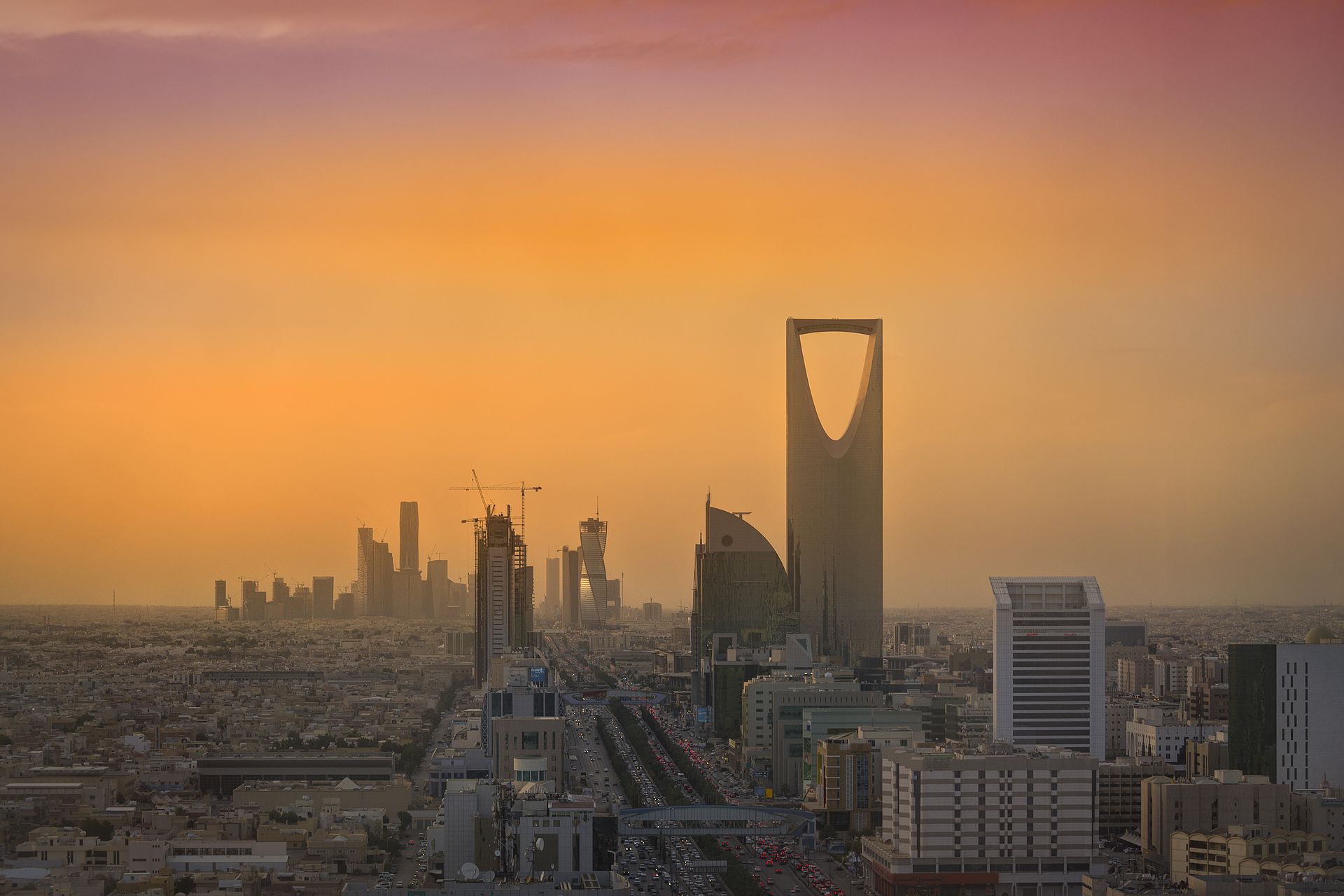
Three dining districts now anchor the city’s upscale restaurant scene: the King Abdullah Financial District (KAFD), the luxury complex VIA Riyadh on the Northern Ring Road, and Bujairi Terrace in the historic Diriyah quarter. Each offers a different atmosphere — glass-tower glamour, curated luxury retail paired with world-class kitchens, or heritage-district dining overlooking UNESCO-listed mud-brick palaces.
The Best Fine Dining Restaurants in Riyadh
Zuma — Contemporary Japanese Izakaya
Zuma won Restaurant of the Year at the 2025 FACT Dining Awards and remains the standard-bearer for fine dining in Riyadh. The sleek, warm interior centres on an open robata grill and sushi counter. Signature dishes include yellowtail sashimi with yuzu, truffle and ponzu, and the legendary black cod with miso. Zuma occupies a prime position in KAFD and draws a well-dressed crowd, particularly on Thursday and Friday evenings. Expect to spend SAR 350–500 per person.
Tip: Book at least a week in advance for Thursday dinner. Walk-ins are possible Sunday through Tuesday for lunch service.
Julien — Ultra-Intimate French Chef’s Table
Julien at the Four Seasons Hotel Riyadh is the city’s most exclusive dining experience. With just ten seats, this chef’s table is helmed by Chef Thierry Motsch, who crafts a multi-course French tasting menu that changes with the seasons. It won Best Newcomer at the 2025 FACT Dining Awards. The intimate format means diners interact directly with the chef — every course is explained and served personally. Reservations are essential and often booked out two to three weeks ahead. Budget SAR 500+ per person for the full experience.
Gymkhana — Michelin-Starred Indian Fine Dining
Gymkhana at VIA Riyadh brought its Michelin-starred London pedigree to the Kingdom, the first time the concept ventured outside Mayfair. The menu features contemporary North Indian cuisine — wild muntjac biryani, tandoor-grilled lamb chops, and signature kid goat methi keema — served in interiors inspired by colonial-era Calcutta sporting clubs. It has become one of the most celebrity-frequented restaurants in the Saudi capital.
Scott’s — British Seafood Institution
Scott’s, the legendary Mayfair seafood restaurant, occupies a stunning space in VIA Riyadh. The menu centres on oysters, Dover sole, caviar, and the freshest shellfish, flown in regularly. The art-deco-inspired interior features leather banquettes and a prominent raw bar. Scott’s has quickly established itself as the go-to for business entertaining in Riyadh.
La Petite Maison — Niçoise Mediterranean
La Petite Maison (LPM) has been a Riyadh favourite since its arrival. The concept, born in Nice, emphasises ingredient-led Niçoise cuisine — think crispy courgette flowers, burrata with pesto, and whole grilled fish dressed with olive oil and lemon. The bright, airy interior and buzzing atmosphere make it a popular choice for long weekend lunches. Budget SAR 300–400 per person.
Benoit — Classic French Bistro by Alain Ducasse
World-famous chef Alain Ducasse brought Benoit to KAFD, transplanting shimmering chandeliers, white tablecloths, and red banquettes straight from the Parisian original. The menu is unapologetically classical — terrines, roasted duck, and chocolate profiteroles — executed with the precision you would expect from a Ducasse kitchen. Black-and-white photographs of Paris line the walls.
Il Baretto — Italian Glamour
Il Baretto in KAFD has won Best Italian at the FACT Dining Awards three consecutive years. The restaurant delivers polished Italian glamour with handmade pastas, vitello tonnato, and an encyclopaedic Italian beverage list. The interior is richly appointed — dark wood, marble, and soft lighting create an atmosphere that would not be out of place in Milan.
Chotto Matte — Nikkei Fusion
Chotto Matte brings Nikkei energy to KAFD, pairing Japanese technique with Peruvian brightness. The space is dramatic — graffiti-art walls, lush greenery, and a central robata grill where Australian Jack’s Creek beef and Japanese A5 Wagyu are prepared. The ceviche and tiradito dishes are standout starters. It was named Favourite Newcomer at the 2025 FACT Awards.
Spago by Wolfgang Puck — California-International
Spago brings Wolfgang Puck’s California-international concept to Riyadh with an open hearth and peak-produce focused menu. The fried blooming whole seabass has become a signature in the Riyadh outpost, alongside wood-fired pizzas and Puck’s famous smoked salmon pizza. Recognised in MENA’s 50 Best Restaurants rankings.
Marble — Steakhouse Minimalism
Marble Steakhouse takes the opposite approach to most fine dining: a deliberately limited menu with just four main courses. Every cut is prepared over an open fire, and the focus is entirely on the quality of the meat. It has earned MENA’s 50 Best recognition and appeals to diners who value substance over spectacle.
Pampas — Latin American at Altitude
Pampas sits on the 17th floor of the Assila, a Luxury Collection Hotel, and specialises in Latin American flavours with a focus on steaks cooked over Acacia wood. The elevated perch offers sweeping views of the Riyadh skyline, making it a top choice for a memorable evening out.
Saudi Fine Dining — Elevated Local Cuisine
The most exciting trend in Riyadh’s restaurant scene is the rise of elevated Saudi cuisine — chefs taking traditional Najdi, Hejazi, and Southern recipes and presenting them with fine dining technique and plating. If you are visiting Saudi Arabia for the first time and want to understand the country through its food, these restaurants are essential. For a deeper dive into Saudi culinary traditions, see our guide to kabsa and our mandi restaurant guide.
Maiz at Bujairi Terrace — The Standard-Bearer
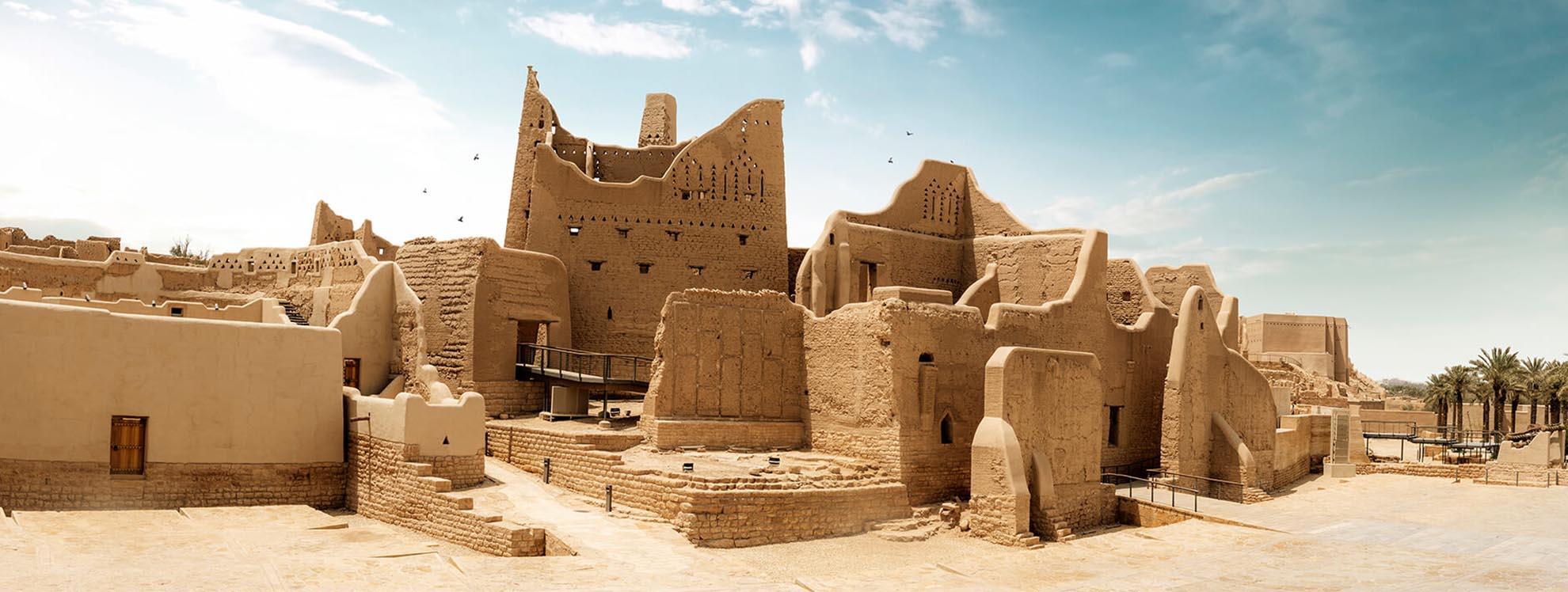
Maiz is the restaurant that put Saudi fine dining on the international map. Located at Bujairi Terrace in Diriyah — overlooking the UNESCO-listed At-Turaif district — Maiz reimagines Saudi heritage dishes with contemporary technique. Traditional ingredients like fermented wheat (jareesh), dried yoghurt (jameed), and Najdi spice blends are presented in tasting-menu format. The terrace seating, with views of the 18th-century mud-brick palaces, is among the most atmospheric dining settings in the entire Gulf.
Suhail — Heritage With Polish
Suhail celebrates Saudi cuisine with a modern, elegant presentation. Heritage dishes are translated into a refined setting — think lamb haneeth slow-cooked for twelve hours and served with saffron rice, or a jareesh risotto that bridges Najdi grain cookery and Italian technique. The interior blends traditional Saudi design motifs with contemporary luxury.
Taleed by Michael Mina — Mediterranean Meets Hejazi
Taleed, also at Bujairi Terrace in Diriyah, is the Saudi concept from celebrated American-Egyptian chef Michael Mina. The menu harmonises Mediterranean flavours with Hejazi influences, using locally sourced Saudi ingredients alongside globally inspired techniques. The Diriyah setting adds historical weight to every meal.
Mirzam — Michelin Bib Gourmand
Mirzam earned a Bib Gourmand in the 2025 MICHELIN Guide Saudi Arabia, a recognition of its modern Saudi menu that delivers exceptional value relative to quality. It is proof that elevated Saudi cuisine can compete with international imports on a level playing field.
Where to Find Riyadh’s Best Restaurants by District
| District | Character | Top Restaurants | Best For |
|---|---|---|---|
| KAFD | Glass towers, modern, corporate | Zuma, Benoit, Il Baretto, Chotto Matte | Business dinners, late-night dining |
| VIA Riyadh | Curated luxury complex | Gymkhana, Scott’s | Special occasions, international cuisine |
| Bujairi Terrace, Diriyah | Heritage quarter, UNESCO views | Maiz, Taleed by Michael Mina | Saudi cuisine, atmospheric settings |
| Olaya / King Fahd Road | Hotel dining corridor | Julien (Four Seasons), Pampas (Assila) | Hotel-based fine dining, skyline views |
| Diplomatic Quarter (DQ) | Leafy, upscale residential | Spago, LPM | Weekend brunch, family-friendly upscale |
If you are staying near the centre, consider a hotel in the KAFD or Olaya corridor — see our guide to the best hotels in Riyadh for recommendations near each dining district. If you prefer a shorter commute to Bujairi Terrace, the Diriyah area has newer boutique options covered in our Saudi boutique hotels guide.
What to Expect at a Riyadh Fine Dining Restaurant
Dress Code
Most upscale restaurants in Riyadh enforce a smart-casual to smart dress code. For men, this typically means trousers (no shorts), closed shoes, and a collared shirt or smart top. Many Saudi diners wear a well-pressed thobe. For women, there is no mandatory dress code beyond general modesty — abayas are common but not required. Some venues like Julien and Gymkhana lean more formal, and you will feel underdressed in casual attire.
No Alcohol
Saudi Arabia does not serve alcohol. Fine dining restaurants compensate with sophisticated mocktail programmes, premium teas, specialty Arabic coffee, and curated non-alcoholic beverage pairings. Zuma and Gymkhana both offer creative zero-proof cocktail menus that have earned praise in their own right.
Reservations
Booking is essential at almost every restaurant listed here. Thursday evening — the start of the Saudi weekend — is the hardest reservation in the city. Most restaurants accept bookings through their own websites, OpenTable, or through hotel concierge services. For Julien’s ten-seat chef’s table, booking two to three weeks in advance is common.
Tipping and Service Charge
Most upscale restaurants add a 15 per cent VAT to the bill. A service charge is not always included. Tipping 10–15 per cent on top is appreciated and increasingly expected at fine dining venues, though not mandatory. Saudi diners frequently round up generously.
Budget Guide: How Much Does Fine Dining in Riyadh Cost?
| Category | Price Range (SAR per person) | Price Range (USD) | Examples |
|---|---|---|---|
| Ultra-Premium | SAR 500+ | $135+ | Julien, Gymkhana (with full courses) |
| Premium Fine Dining | SAR 300–500 | $80–135 | Zuma, Scott’s, Il Baretto, Maiz |
| Upscale Casual | SAR 200–300 | $55–80 | Benoit, LPM, Spago, Chotto Matte |
| Elevated Local | SAR 150–250 | $40–65 | Suhail, Mirzam, Najd Village |
Compared to equivalent restaurants in London, New York, or Dubai, Riyadh fine dining offers strong value. The absence of alcohol on the bill is a significant factor — a dinner that might run £300 per person at Gymkhana Mayfair with wine pairings typically costs SAR 350–450 (£75–95) in Riyadh.
Best Time to Visit for Food Lovers
The ideal months for a Riyadh food trip are October through March, when temperatures drop to a comfortable 15–25°C and the city’s social calendar is at its busiest. Riyadh Season — the annual entertainment festival — typically runs from October to March and brings pop-up dining events, celebrity chef appearances, and food festivals to venues across the city.
Ramadan (expected late February to late March in 2027) transforms the dining scene entirely. Most restaurants close during daylight hours but offer spectacular iftar (sunset breaking-of-fast) and suhoor (pre-dawn) menus that are worth experiencing. Fine dining iftar buffets at hotels like the Ritz-Carlton and Four Seasons are major social events.
Summer (June–August) sees temperatures above 45°C, and while restaurants remain open, the city quietens significantly as residents travel abroad.
Getting to Riyadh’s Dining Districts
International visitors will arrive at King Khalid International Airport (RUH), which is served by direct flights from London, Paris, Dubai, Istanbul, Mumbai, and most major Asian and European hubs. Saudia, the national carrier, and several low-cost carriers like flynas and flyadeal connect Riyadh with other Saudi cities for travellers exploring Riyadh’s street food or the wider Kingdom.
Within the city, ride-hailing apps Uber and Careem are the most convenient way to reach restaurants. The Riyadh Metro, which began operations in late 2024, connects several key areas but does not yet serve all dining districts directly. KAFD has its own metro station on the Orange Line, making it the most transit-accessible fine dining cluster.
All international visitors require a visa — the Saudi tourist e-visa is available online for citizens of 49+ countries and typically processes in minutes. See our complete Saudi visa guide for eligibility and application details.
Riyadh Fine Dining: New Openings to Watch in 2026
The pipeline of international restaurants heading to Riyadh shows no signs of slowing. Notable openings confirmed or expected for 2026 include:
- Amazónico — the luxury Latin American seafood, grill, and sushi concept from London and Dubai, arriving in Riyadh with a dramatic jungle-themed interior
- Alaya by Chef Izu Ani — the celebrated Dubai-based Mediterranean concept with Middle Eastern influences, set to open in Riyadh
- The Vinyl Ember — an American open-fire grill with moody lighting and a chef’s counter in KAFD
- Isabel Mayfair — Gatsby-era glamour with Mediterranean-inspired cuisine
- Weekend timing: The Saudi weekend is Friday–Saturday. Thursday night is when Riyadh goes out for dinner — expect the busiest restaurants and highest prices for prix fixe menus.
- Prayer times: Restaurants may pause service briefly during prayer times (five times daily). Most fine dining venues handle this discreetly, but it is worth being aware of.
- Family sections: Many restaurants have separate family and singles sections, though this practice has relaxed considerably since 2019. Most upscale restaurants now offer open seating.
- Cash vs card: Card payment is universal at fine dining venues. Apple Pay and mada (the Saudi debit system) are widely accepted.
- Combine with culture: A dinner at Bujairi Terrace pairs naturally with a visit to the At-Turaif UNESCO site in Diriyah. Book a late-afternoon heritage tour and transition to dinner.
- Also try the casual scene: Riyadh’s street food and third-wave cafe scene are equally impressive and give you a different perspective on the city’s food culture.
- Breakfast matters: Many fine dining hotels serve outstanding morning meals — see our Saudi breakfast guide for what to expect.
- Saudi Arabia Travel Guide 2026 — The complete guide to visiting the Kingdom
- Riyadh Street Food Guide — The best spots and what to order on the streets of the capital
- Best Cafes in Riyadh — Third-wave coffee and Instagrammable spots across the city
- Saudi Kabsa Guide — Everything you need to know about the national dish
- Mandi in Saudi Arabia — Best mandi restaurants ranked by city
- Best Hotels in Riyadh — Top picks for every budget near dining districts
- Saudi Arabia Visa Guide — Every visa type explained
The pace of openings reflects Saudi Arabia’s broader ambition to position Riyadh as one of the world’s great dining cities by 2030, alongside the Kingdom’s preparations for hosting major international events including Expo 2030 and the 2034 FIFA World Cup.