DUBAI — Approximately two dozen bulk carriers and oil tankers began advancing toward the Strait of Hormuz on April 18 then reversed course roughly four hours into their approach, according to AIS tracking data reviewed by NBC News and MarineTraffic — a mass U-turn that neither Iran’s foreign ministry nor US Central Command can coherently explain. The day before, Iranian Foreign Minister Abbas Araghchi had declared the strait “completely open for all commercial vessels”; the day before that, CENTCOM had claimed credit for turning back just 14 ships total since its blockade began April 13.
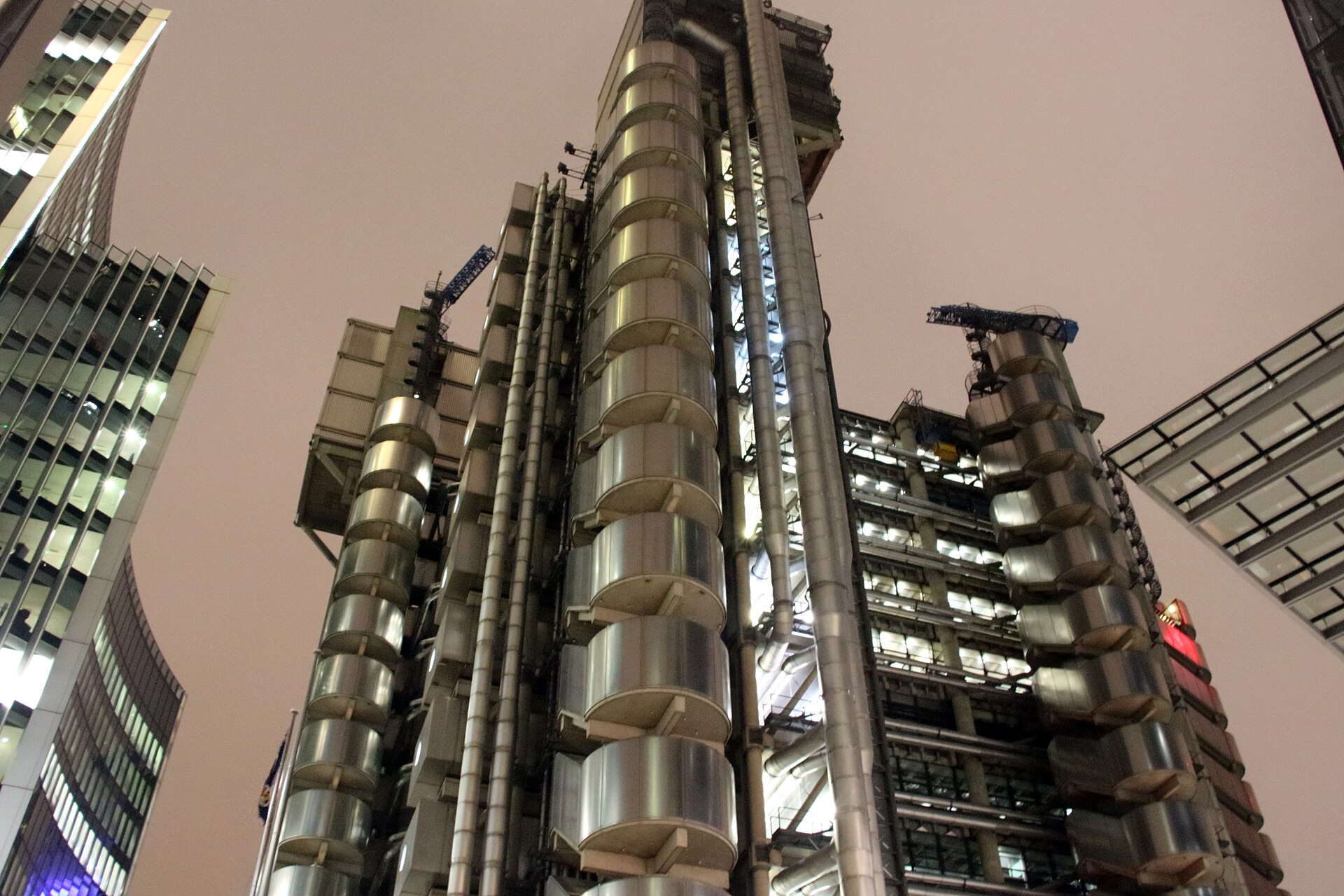
The vessels were not, for the most part, interdicted by American warships or threatened by Iranian patrol boats. They were overwhelmingly third-country commercial operators — Greek, Emirati, Chinese-chartered tonnage — responding to a force more powerful than either navy: the insurance market. With war-risk premiums running at 15 times pre-conflict levels, seven of 12 major P&I clubs having cancelled Gulf war cover, and Lloyd’s Joint War Committee having designated the entire Persian Gulf a listed area since March 3, the strait is functionally closed by underwriters in London, not by admirals in Bahrain or commanders in Bandar Abbas.
Table of Contents
- What Happened on April 18
- Who Actually Closed the Strait of Hormuz?
- The Double Blockade: Why No Ship Can Satisfy Both Sides
- What Does It Cost to Transit Hormuz Right Now?
- The Rich Starry Problem
- The $40 Billion Facility Nobody Wants
- Background: How Insurance Became a Weapon of War
- Frequently Asked Questions
What Happened on April 18
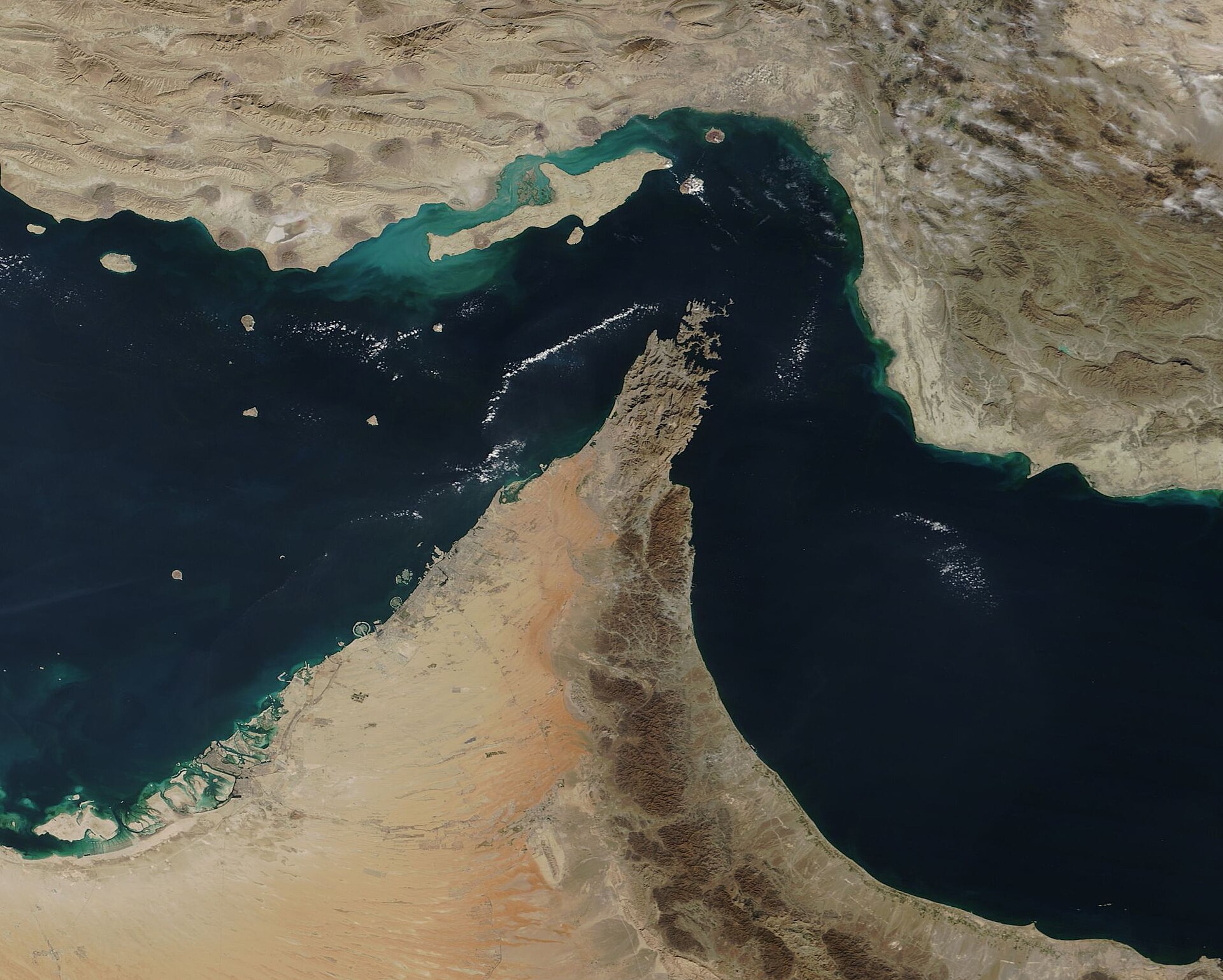
The reversals followed a pattern that AIS analysts have tracked since the US blockade declaration on April 13. Ships departed ports in the UAE, Oman, and India bound for Gulf loading terminals. They entered the approaches to Hormuz — the channel between Iran and Oman where roughly 20 percent of the world’s traded oil moved before the war. Then, hours into their transit, they turned around. Not one or two stragglers. Nearly two dozen in a single day, according to NBC News citing MarineTraffic data.
The scale dwarfs CENTCOM’s own count. As of April 16, US military officials told CNBC and the Jerusalem Post that 14 vessels total had been turned back under the blockade. The April 18 figure — approximately 24 in a single day — suggests either that CENTCOM’s earlier numbers dramatically understated the disruption, or that the reversals are accelerating as insurance conditions tighten further. CENTCOM itself acknowledged the blockade targets only vessels “entering or leaving Iranian ports and coastal areas” and explicitly stated it “will not impede freedom of navigation” for non-Iranian port traffic.
That distinction matters enormously. The ships turning back on April 18 were not, in the main, trying to reach Bandar Abbas or Kharg Island. They were heading for Fujairah, Jebel Ali, Ras Tanura, Jubail — ports that CENTCOM says it is not blocking. Yet they turned back anyway. The only vessels confirmed as successfully transiting since Araghchi’s “completely open” declaration were three Iranian-flagged tankers carrying a combined five million barrels, all operating under IRGC authorization — precisely the category of traffic that the US blockade is designed to stop.
Who Actually Closed the Strait of Hormuz?
The answer, according to the Lloyd’s Market Association itself, is the insurance industry. An 80 percent collapse in Hormuz transit traffic occurred before Iran’s formal blockade measures — driven entirely by commercial insurance withdrawal. “The underwriters closed the strait before the admirals did,” wrote Laurence B. Mussio and Jessica M. Lomas in the Globe and Mail, in what has become the defining summary of this crisis.
The Middle East briefing 3,000+ readers start their day with.
One email. Every weekday morning. Free.
The timeline is stark. On March 1, 2026 — two days after the war began — at least five of the world’s largest Protection and Indemnity clubs issued 72-hour cancellation notices for war-risk cover in Iranian waters, the Persian Gulf, and the Gulf of Oman. Gard, Skuld, NorthStandard, the London P&I Club, and the American Club all set the same effective date: 00:00 GMT on March 5; two further clubs followed within 48 hours, bringing the total to seven of 12. Two days after the first wave, on March 3, Lloyd’s Joint War Committee published JWLA-033, expanding its high-risk listed area to cover the entire Persian Gulf. Under this designation, any vessel entering the zone automatically breaches its standard hull trading warranty and must negotiate a separate Additional Premium — which underwriters can simply decline to quote.
The reason ships are not moving is not through a lack of insurance; it is a question of the risk to crew and vessel safety being assessed by the ship masters and owners as too high.
— Lloyd’s Market Association, official statement, March 23, 2026
That statement captures the LMA’s careful semantic position: cover is technically available (88 percent of marine war market participants told the LMA they continue underwriting hull war risks), but availability at $3 million per single Hormuz transit is functionally identical to unavailability for most commercial operators. The distinction matters to London’s regulators. It does not matter to a shipowner in Piraeus deciding whether to send a crew of 25 into a waterway where the US Navy has warned that “mine threats in strait portions are not fully understood.”
BIMCO, the world’s largest international shipping association, went further. Chief Safety Officer Jakob Larsen said bluntly: “The status of mine threats… is unclear and BIMCO believes shipping companies should consider avoiding the area.” That recommendation — from the body representing owners controlling roughly 60 percent of world tonnage — carries more operational weight than any CENTCOM press release or Araghchi tweet. When BIMCO says avoid, owners avoid.
The Double Blockade: Why No Ship Can Satisfy Both Sides
The April 18 reversals cannot be understood without grasping the impossible compliance bind that commercial operators now face. Two contradictory authorization regimes govern the same 21 miles of water, and no ship can satisfy both simultaneously.
On one side, CENTCOM’s blockade — effective April 13 — requires vessels to demonstrate they are not bound for Iranian ports, not carrying Iranian cargo, and not operating under Iranian coordination. A UK Maritime Trade Operations advisory (UKMTO Advisory 035-26, April 13) noted that “additional guidelines for mariners regarding how these measures will be applied in practice, including routing, verification, and authorised transit procedures are in development” — meaning the rules of compliance were still being written on the blockade’s first day. On the other side, the IRGC Navy declared a “new order” on April 17 requiring “explicit authorization of the IRGC’s naval forces” for all transiting vessels and mandating use of IRGC-designated routes only. Iranian Foreign Ministry spokesperson Esmaeil Baghaei reinforced this: maritime traffic must “strictly follow routes designated by Tehran and operate under full Iranian coordination.”
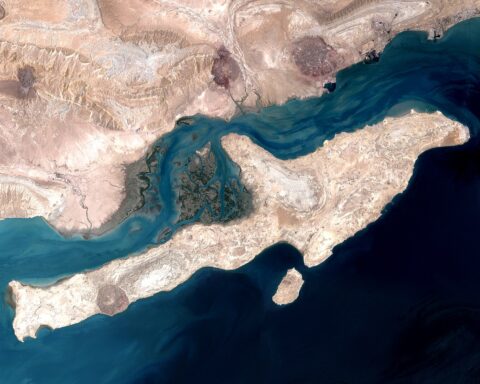
The trap is structural. The IRGC’s designated corridor runs through a 5-nautical-mile channel between Qeshm and Larak islands, inside Iranian territorial waters — a route the IRGC published on its own chart between February 28 and April 9, marking the standard Traffic Separation Scheme lanes as a “danger zone.” Kpler lead freight analyst Matt Wright noted that this corridor “would present navigational challenges even if vessels were not required to pay a toll and would raise questions regarding compliance and insurance.” A vessel that obtains IRGC authorization and uses the Larak corridor is, by CENTCOM’s definitions, operating “under Iranian coordination” — potentially triggering interception by American warships. A vessel that refuses IRGC authorization and uses the standard TSS lanes is navigating what the IRGC has declared a danger zone, with uncleared mines and no Iranian cooperation if something goes wrong.
No safe-passage document exists that both sides recognize. No flag state has negotiated dual clearance. The result: commercial operators, unable to comply with both regimes and unwilling to choose which navy to defy, simply turn their ships around.
What Does It Cost to Transit Hormuz Right Now?
| Metric | Pre-War (Feb 2026) | Peak (March 2026) | Current (April 13-18) |
|---|---|---|---|
| VLCC war-risk premium per transit | $150,000–$250,000 | $10–14 million | ~$3 million (single passage) |
| Rate as % of hull value ($100M VLCC) | 0.15%–0.25% | 7.5%–10% | 1%–3% |
| Increase factor vs pre-war | — | ~50x | ~15x |
| P&I clubs with active Gulf war cover | 12 of 12 | 5 of 12 | 5 of 12 |
| Hormuz traffic vs pre-war baseline | 100% | ~10% | ~5-10% |
George Grishin, chairman of Lloyd’s broker Oakeshott Insurance Group, described the market in terms that explain the April 18 reversals better than any military briefing. “War risk insurance for physical damage has remained available in many cases, but often at a higher cost and with tighter conditions,” he told Argus Media on April 13. The critical qualifier: “Insurers may refuse to quote altogether” when pricing accurate risk becomes commercially impossible. For the vessels that turned back on April 18, the question was not whether insurance existed in theory but whether any underwriter would write a binding policy for a transit through a waterway with uncleared mines, two competing navies, and no agreed routing.
The numbers tell the story of a market that has not banned Hormuz transits but has priced them into near-impossibility. A VLCC operator paying $3 million in war-risk premium for a single passage — on top of standard hull and cargo insurance — faces a cost that wipes out the economics of most cargo runs. At $96 per barrel Brent (the April 18 benchmark), a fully laden VLCC carrying two million barrels represents roughly $192 million in cargo value. A $3 million insurance surcharge amounts to 1.6 percent of cargo value for the transit alone — a cost that did not exist eight weeks ago and that no freight contract signed before March 2026 anticipated.
The market is facing what is essentially a de facto close of the Strait of Hormuz, based primarily around perception of threat rather than a tangible blockade.
— Munro Anderson, Vessel Protect, marine war insurance specialist
Anderson’s formulation — “perception of threat rather than a tangible blockade” — is the most precise description available of what happened on April 18. The ships did not encounter a tangible blockade. No American destroyer crossed their bow. No IRGC fast boat fired a warning shot. They encountered a market consensus, expressed in premium rates and P&I exclusion clauses, that the strait is too dangerous to transit. The perception is the blockade.
The Rich Starry Problem
One vessel illustrates the dysfunction better than any aggregate statistic. The Rich Starry (IMO 9773301), a 36,031-deadweight-ton bulk carrier operated by Shanghai Xuanrun Shipping, transited Hormuz on April 13 carrying approximately 250,000 barrels of methanol loaded at Hamriyah in the UAE. It made it through. Then, on April 15, it reversed course — unable to complete its passage under the blockade, according to AIS data tracked by Pole Star Global and reported by Seatrade Maritime and Lloyd’s List.
The Rich Starry was transmitting a Malawi flag — a detail that would be comic if it were not symptomatic. Malawi is a landlocked country in southeastern Africa. It has confirmed it never issued the flag. The vessel was, in regulatory terms, sailing under a fictitious nationality, which strips it of the protections of any flag state and renders its insurance status effectively void. That a vessel with no legitimate flag, no verifiable insurance, and a cargo of Iranian-origin methanol could transit Hormuz at all on April 13 — and then be forced to reverse two days later — captures the gap between what military commands claim to control and what actually happens in the strait.
The Rich Starry is not an outlier — it is a preview. As conventional commercial operators withdraw and insurance becomes prohibitively expensive, the vessels still attempting Hormuz transits are increasingly those operating at the margins of the regulatory system — ships with opaque ownership chains, flags of convenience from countries with no maritime capacity, and insurance arrangements that may not survive a claim. The legitimate market has already left.
The $40 Billion Facility Nobody Wants
The Trump administration recognized the insurance problem early enough to attempt a solution. The Development Finance Corporation was directed to partner with Chubb, Travelers, Liberty Mutual, Berkshire Hathaway, AIG, Starr Companies, and CNA Financial to create a $40 billion rolling maritime reinsurance facility, according to a Reuters report on April 14 — an extraordinary use of a development-finance institution as a wartime insurance backstop. As of mid-April, the facility has attracted zero confirmed takers.
The failure is instructive. The LMA’s March 23 statement explained why in a single sentence: the problem is not a lack of insurance but that “the risk to crew and vessel safety” is “too high.” A government backstop can absorb financial loss. It cannot absorb a mine strike, an IRGC boarding, or a CENTCOM interception. Shipowners are not refusing to transit because they cannot find a policy. They are refusing because no policy makes a 25-person crew safe in a waterway where the US Navy itself acknowledges mine threats “not fully understood” and four Avenger-class mine countermeasure ships were decommissioned from Bahrain just seven months ago, in September 2025.
Norwegian Shipowners’ Association CEO Knut Arild Hareide captured the industry’s position after Araghchi’s reopening declaration: “If this represents a step towards an opening, it is a welcome development.” The hedge in that sentence — “if” — is doing all the work. Hareide’s members need clarification on mines, Iranian conditions, and implementation before any of them will order a vessel into the strait. IMO Secretary-General Arsenio Dominguez was similarly noncommittal, stating on April 17 that the organization is “currently verifying the recent announcement related to the reopening of the Strait of Hormuz, in terms of its compliance with freedom of navigation.” Verification, not endorsement. The maritime establishment is not buying what either belligerent is selling.
Hapag-Lloyd, one of the world’s largest container lines, said it was working for ships to transit “as soon as possible” but gave its crisis committee 24 to 36 hours to assess conditions — a timeline that runs directly into the final days before the ceasefire expires on April 21-22. The window for commercial reopening, if it exists at all, is measured in days.
Background: How Insurance Became a Weapon of War
The insurance industry’s role as a de facto arbiter of maritime conflict is not new, but its speed and decisiveness in 2026 are unprecedented. During the 1980-88 Tanker War, both Iran and Iraq attacked more than 400 commercial vessels. Insurance rates for Kharg Island loadings reached 7.5 percent of hull value by May 1984 — roughly the same peak rate seen in March 2026. Total claims exceeded $2 billion, half absorbed by Lloyd’s. After the war ended, rates did not return to pre-war levels for two to three years.
The 2019 Gulf attacks — the Kokuka Courageous and Front Altair limpet mine incidents, the IRGC seizure of the Stena Impero — triggered a JWC listed-area extension and premium spikes, but nothing approaching the 2026 P&I cancellations. The structural difference is scale: 2026 combines a US military blockade, an IRGC closure declaration, and confirmed mine-laying into three simultaneous risk factors. In 2019, there was one. The insurance market’s response has been proportional to the difference.
The consequences for the Gulf’s oil exporters are already visible. Saudi Arabia’s March production fell to 7.25 million barrels per day, down from 10.4 million in February — a 30 percent crash driven largely by the inability to load tankers at Eastern Province terminals accessible only through Hormuz. The East-West Pipeline to Yanbu provides a bypass, but its effective loading ceiling of 4 to 5.9 million barrels per day leaves a structural gap of 1.1 to 1.6 million barrels per day below pre-war Hormuz throughput. The expiry of OFAC General License U on April 19 — with no renewal — adds a sanctions layer on top of the insurance layer, further narrowing the universe of operators willing to approach the Gulf.
Grishin offered the market’s forward view: “Insurance will remain costly, selective, and highly conditional until ceasefire stability is verified.” With the ceasefire expiring in days and no extension mechanism in place, that verification is not coming soon. The ships that turned back on April 18 will not be the last.
Frequently Asked Questions
Why did the ships turn back if CENTCOM says its blockade does not target non-Iranian port traffic?
CENTCOM’s blockade formally applies only to vessels bound for Iranian ports. But the insurance market does not make the same distinction. The JWC listed area (JWLA-033) covers the entire Persian Gulf, meaning any vessel transiting Hormuz — regardless of destination — breaches its hull trading warranty and must negotiate a separate war-risk premium. With those premiums running at $3 million per single Hormuz passage and P&I war-risk cover cancelled by seven of 12 major clubs, the commercial incentive to avoid the strait applies equally to ships heading for Fujairah and ships heading for Bandar Abbas. The blockade’s practical reach extends far beyond its stated scope because the insurance architecture does not track CENTCOM’s legal distinctions.
Could a shipowner self-insure to bypass the premium problem?
In theory, a large fleet operator or state-backed shipping company could self-insure hull war risk and proceed without Lloyd’s market cover. In practice, this is nearly impossible for international trade. Without valid P&I cover, most destination ports will refuse entry. Without hull war-risk cover, the vessel’s mortgage holder (if any) will call the loan. And without cargo insurance, the shipper will not load. The interlocking requirements of modern maritime commerce mean that no single actor — not even a sovereign wealth fund — can simply write a check and restore normal operations. China’s partial success in shepherding select LNG tankers through the strait relied on state-to-state arrangements with Iran, not on self-insurance.
What happens to Hormuz traffic when the ceasefire expires on April 21-22?
Araghchi’s “completely open” declaration was explicitly conditional: it applies only “for the remaining period of ceasefire.” Once the ceasefire expires — and no extension mechanism exists, as the Soufan Center has noted — the legal basis for even the conditional reopening vanishes. Insurance underwriters, who price risk forward, are already factoring the expiry into current quotes. The 24-to-36-hour assessment window that Hapag-Lloyd’s crisis committee set on April 17 runs directly into this deadline, suggesting that even optimistic operators see the reopening window as days, not weeks. Post-expiry, the insurance market is likely to tighten further, and the IRGC’s “explicit authorization” requirement will lack even the ceasefire’s thin legal framework.
How does the 2026 Hormuz crisis compare to the 1980s Tanker War in insurance terms?
The 1980s Tanker War saw hull insurance rates climb to 7.5 percent of vessel value for Kharg Island loadings over a period of months. The 2026 crisis reached comparable peak rates — 7.5 to 10 percent — within days. The key structural difference is speed and scope: in the 1980s, P&I clubs maintained war-risk cover (at elevated premiums) throughout the conflict. In 2026, seven major P&I clubs cancelled Gulf war cover entirely within 72 hours of the war’s outbreak. The 1980s also lacked the dual-blockade problem — Iraq and Iran attacked shipping, but neither imposed a formal authorization-and-routing regime. Total Tanker War insurance claims exceeded $2 billion; 2026 claims data is not yet available, but the rate of premium escalation suggests the eventual total will be substantially higher.
What is the Joint War Committee and why does its designation matter more than a naval blockade?
The Joint War Committee is a panel within the Lloyd’s Market Association comprising representatives from Lloyd’s syndicates and IUA company market insurers. When it designates an area as “listed” (the current term replacing the older “war-risk zone”), every vessel entering that area triggers a hull insurance warranty breach. The owner must separately notify their underwriter, negotiate an Additional Premium, and receive explicit approval — or sail uninsured. Unlike a naval blockade, which can be physically circumvented, a JWC designation operates through contract law: it makes the financial infrastructure of shipping unavailable for the designated area. A navy can interdict a ship. The JWC can make a ship unable to sail in the first place.