JEDDAH — The first international pilgrims for Hajj 2026 landed in Makkah and Madinah on April 18-19 under the Makkah Route Initiative, with flights confirmed from Turkey, Pakistan, Bangladesh, India, and Malaysia, according to Asharq Al-Awsat and Saudi state media. The arrivals begin a five-week inflow that will place an estimated 1.2 to 1.5 million foreign nationals on Saudi soil by the time Hajj rites commence May 24 — with the Iran-US ceasefire set to expire in 72 hours, on April 22, and no extension mechanism in place.
The pilgrim presence converts Saudi Arabia’s Custodian of the Two Holy Mosques title — assumed by King Fahd on October 27, 1986, and held by every Saudi monarch since — from a theological credential into an operational constraint. With PAC-3 interceptor stocks at approximately 400 rounds, or 14 percent of the pre-war inventory of 2,800, according to Saudi Ministry of Defence data published by Newsweek, Riyadh must now allocate depleted air defenses between economic infrastructure and holy-site protection. Iran, which suspended all Hajj visas at the start of hostilities on February 28, has zero pilgrims inside Saudi Arabia — a structural inversion of the 1987 Mecca incident, in which 275 Iranian pilgrims were among the 402 dead.
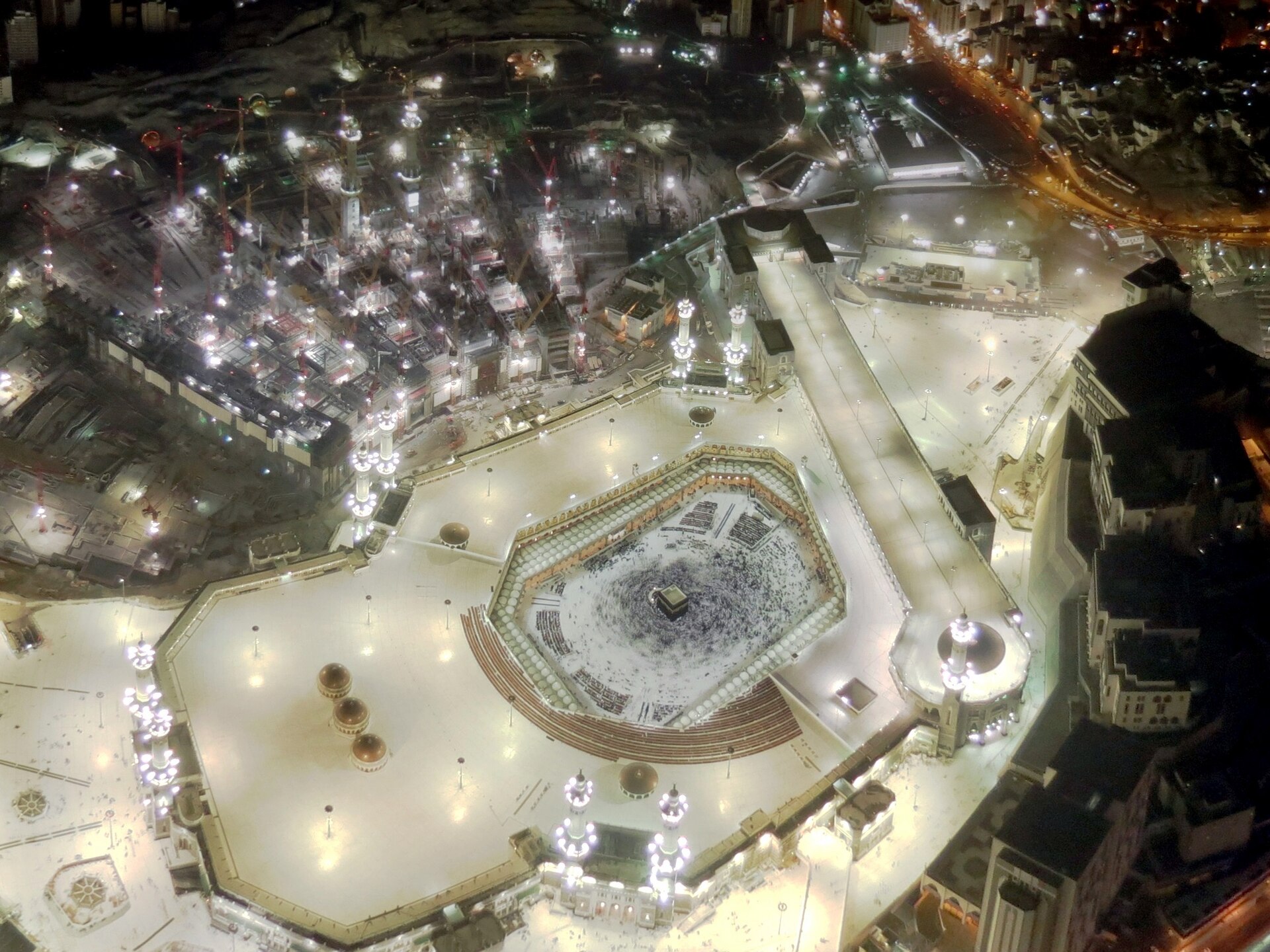
Table of Contents
- Who Has Arrived and How Many Are Expected?
- The Makkah Cordon and Airspace Restrictions
- Can Saudi Air Defenses Cover Both Pilgrims and Oil?
- The Zero-Pilgrim Inversion
- Pakistan’s Triple Bind
- What Happens When the Ceasefire Expires April 22?
- Background: The Custodian Title as Political Architecture
- FAQ
Who Has Arrived and How Many Are Expected?
Pakistan’s Hajj quota for 2026 stands at 179,210 pilgrims, to be transported on 468 flights over 34 days, with the first flights departing April 18, according to Hajj Reporters. India holds a quota of 175,025, confirmed by the Saudi Ministry of Hajj. Indonesia’s 221,000-strong contingent — the largest single-country allocation — is scheduled for first departure on April 22, the same day the ceasefire expires, across 548 flights.
“As of now, everything is still on schedule. Hopefully there will be no changes leading up to the first departure on April 22,” Indonesian Minister of Religious Affairs Irfan Yusuf told Antara News on April 19.
Saudi Ambassador to Indonesia Faisal bin Abdullah Al-Amudi confirmed the Kingdom’s position the same day: “The situation in Saudi Arabia is still under control and all preparations are going as planned by the local government.”
The Saudi Ministry of Hajj has not published a single-day aggregate arrival count for April 19. Total international pilgrim numbers are expected to reach 1.2 to 1.5 million, with density peaking at 1.8 million on the Day of Arafah, May 26, according to ministry estimates. The Makkah Route Initiative — which pre-clears passports, health screening, and customs at airports of origin — processed the first wave from Turkey, Pakistan, Bangladesh, India, and Malaysia, Asharq Al-Awsat reported.
The Middle East briefing 3,000+ readers start their day with.
One email. Every weekday morning. Free.
The US Overseas Security Advisory Council (OSAC) issued an advisory titled “Saudi Arabia, Reconsider Participating in Hajj 2026,” a designation one step below “Do Not Travel.” No sending country has cancelled or suspended its Hajj program in response.
The Makkah Cordon and Airspace Restrictions
The Makkah cordon sealed on April 18. Under Saudi Ministry of Hajj regulations, only holders of valid Hajj permits may enter the city; Umrah, tourist, and business visa holders are barred. The cordon transforms the city into a controlled security zone for the duration of the pilgrimage season.
Pilgrim flights are not following standard commercial routes. The European Union Aviation Safety Agency (EASA) Conflict Zone Information Bulletin CZIB 2026-03-R6, valid through April 24, advises operators to avoid Saudi airspace except through a southern corridor at flight level 320 and above. Iranian, Iraqi, and Syrian airspace closures have forced rerouting through southern Indian Ocean and East African corridors, adding hours and fuel costs to every inbound flight.
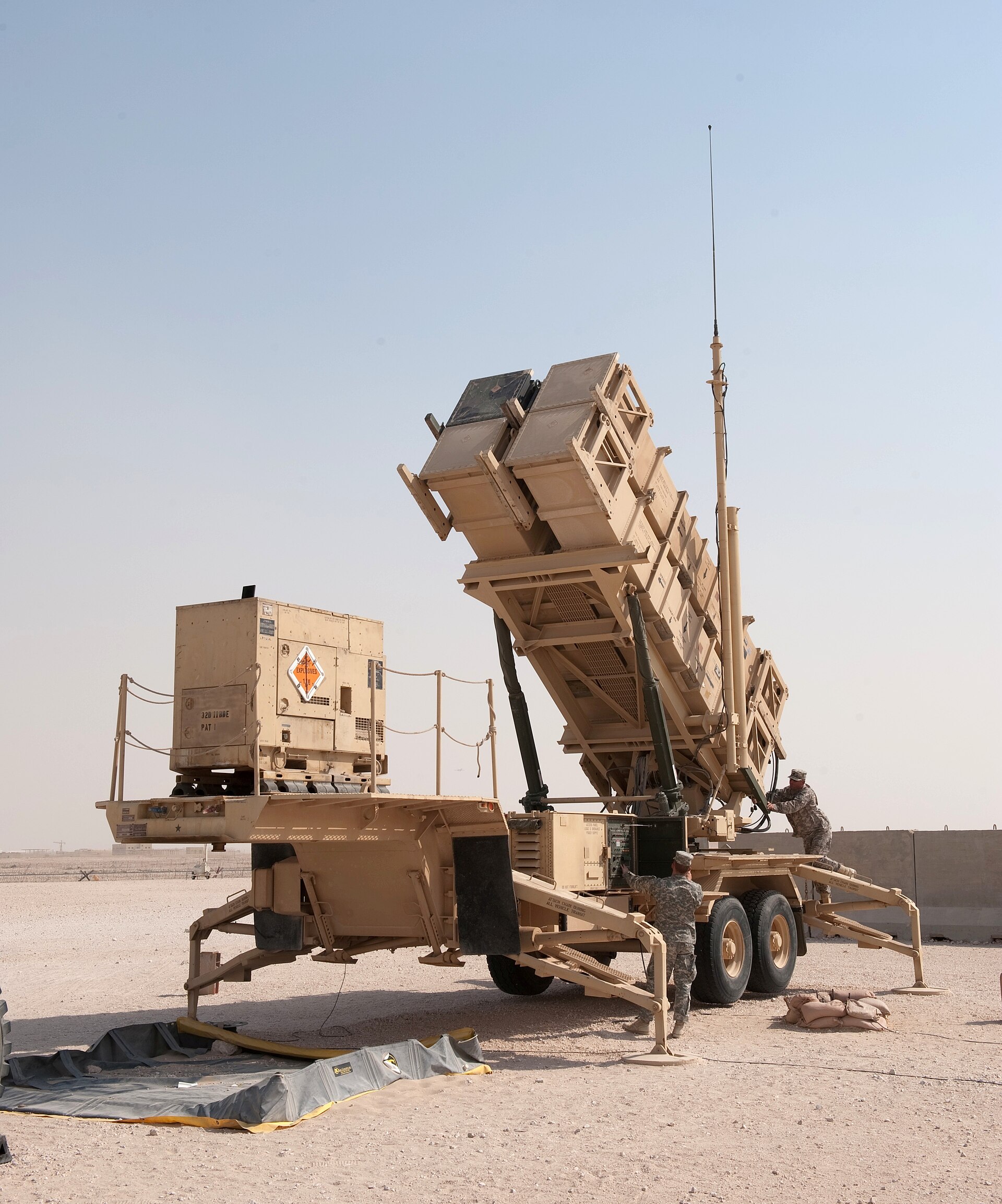
The Saudi Ministry of Defence released photographs of PAC-3 launchers positioned near Makkah and Madinah but withheld interceptor counts, Newsweek reported. The five-layer air defense architecture — THAAD, PAC-3, South Korean KM-SAM, directed-energy laser systems, and Skyguard close-in defense — is deployed around both holy cities, according to Saudi MoD disclosures. The disclosure of launcher positions is itself a deterrence signal: Saudi Arabia wants adversaries to know the holy cities are defended, while concealing how thinly.
Can Saudi Air Defenses Cover Both Pilgrims and Oil?
Between March 3 and April 7, Saudi air defenses intercepted 799 drones and 95 ballistic missiles, according to Saudi MoD figures published by Newsweek. That campaign consumed approximately 2,400 of the Kingdom’s pre-war PAC-3 stockpile of 2,800 rounds — an 86 percent depletion rate in 38 days.
A $9 billion PAC-3 sale was approved by the US State Department in January 2026. The missiles have not been delivered. Lockheed Martin’s contract timeline runs through June 30, 2030, according to State Department filings. No emergency delivery acceleration has been publicly announced.
The interceptor arithmetic creates a zero-sum allocation problem. Every PAC-3 battery positioned around Makkah and Madinah is a battery not covering Ras Tanura, Abqaiq, or the East-West Pipeline — infrastructure that generates the revenue Saudi Arabia needs to fund its own defense. Saudi production has already crashed from 10.4 million barrels per day in February to 7.25 million bpd in March, a 30 percent drop, according to the International Energy Agency. The five-layer defense architecture around the holy cities is the most concentrated air defense deployment in the Kingdom’s history, but concentration by definition means thinning elsewhere.
The IRGC has made no explicit threats against Mecca or Madinah. Its declared target set, according to statements carried by Tasnim and Fars News, comprises US military installations and energy infrastructure. The passive strategic effect does not require threatening holy cities: continuing strikes on economic targets forces Saudi Arabia to choose between pilgrim protection and revenue protection with a finite interceptor supply that is not being replenished.
The Zero-Pilgrim Inversion
In July 1987, political demonstrations during Hajj led to a stampede and clashes that killed 402 people — 275 Iranian pilgrims, 85 Saudi security personnel, and 42 other nationals, according to contemporary accounts in the Washington Post. Saudi Arabia severed diplomatic relations with Iran. Iran was barred from Hajj for three years. The quota was cut 87 percent.
The 1987 deterrence structure ran in both directions: Iran had pilgrims inside Saudi territory, giving Riyadh a form of leverage; Saudi Arabia had custodial responsibility for Iranian citizens, giving Tehran a grievance mechanism. In 2026, that symmetry is broken. Iran suspended all Hajj visas when hostilities began February 28. Zero Iranian pilgrims are on Saudi soil.
The inversion means deterrence runs only one way. Saudi Arabia bears custodial obligations to between 1.2 and 1.5 million pilgrims from 57 Muslim-majority countries. Iran bears none. Any military escalation — whether initiated by Saudi Arabia, invited from the United States, or provoked by ceasefire collapse — carries pilgrim-safety risk that falls entirely on Riyadh. Tehran absorbs no equivalent exposure.
The Institute for the Study of War (ISW) assessed on April 19 that “the IRGC appears to be controlling Iranian decision-making instead of Iranian political officials who are engaging with the United States in negotiations, particularly Foreign Affairs Minister Abbas Araghchi,” according to Euronews. The IRGC’s pattern of overriding Foreign Minister Araghchi — including the reversal of his Hormuz “completely open” declaration within hours on April 17 — means the entity controlling Iran’s military posture has no institutional investment in pilgrim safety and no political cost from pilgrim harm.
The IRGC declared the entire Persian Gulf a targeting zone on April 18, with a public warning that “no vessel should make any movement from its anchorage in the Persian Gulf and the Sea of Oman,” NBC News and The National reported. The declaration came the same day the Makkah cordon sealed and the first pilgrim flights landed.
Pakistan’s Triple Bind
Pakistan occupies three roles simultaneously as of April 19: the only ceasefire mediator Tehran has accepted, Saudi Arabia’s deployed military ally, and a pilgrim-sending state with 179,210 nationals entering Saudi territory.
Under the Saudi-Pakistan Mutual Defense Agreement (SMDA), signed September 17, 2025, Pakistan has deployed 13,000 troops and more than 10 jets to King Abdulaziz Air Base in Saudi Arabia’s Eastern Province as of April 11, according to Al Jazeera and Saudi Press Agency reporting. Pakistan Army Chief General Asim Munir visited Khatam al-Anbiya headquarters — the IRGC command structure headed by General Gholamali Abdollahi, the same faction that blocked progress at the Islamabad talks — on April 16.
“Pakistan is walking a tightrope” between mediation and Saudi defense commitments, said Umer Karim, a researcher at the King Faisal Center for Research and Islamic Studies. “This strategy may work till US-Iran talks continue but could collapse if hostilities restart.”
Azeema Cheema of Verso Consulting told Al Jazeera that Pakistani military restraint in the Saudi deployment reflects “the price of significant restraint shown by the Saudis” — a framing that treats Pakistani moderation as compensation for Saudi forbearance, not independent policy.
The financial architecture reinforces the bind. A $5 billion Saudi loan to Pakistan matures in June 2026. Pakistan’s 27th Constitutional Amendment consolidated foreign-policy authority under the military establishment, making ceasefire diplomacy General Munir’s operation rather than the elected government’s. Munir is simultaneously commanding troops defending Saudi oil infrastructure, mediating between Washington and Tehran, and overseeing the safe transit of 179,000 Pakistani pilgrims into a country under active missile threat.
What Happens When the Ceasefire Expires April 22?
The ceasefire, brokered through the Islamabad Accord framework, expires April 22. The Soufan Center and multiple analysts have confirmed no extension mechanism exists within the agreement’s text. The April 20 Islamabad negotiating round has been cancelled: Iran said no date has been set and no framework has been agreed, Al Jazeera reported on April 19.
Iran’s Foreign Ministry said it is “studying fresh US proposals,” with back-channel communication reportedly active, according to the Irish Times on April 18. But the ISW assessment that the IRGC — not Araghchi or President Pezeshkian — controls military decision-making means diplomatic engagement and operational reality may be running on separate tracks. The IRGC Navy’s declaration of “full authority” over the Strait of Hormuz, issued while Araghchi was negotiating in Islamabad, is the precedent.
PRIO analysts described the situation on April 17 as a “three-day countdown” to ceasefire expiry with no new talks scheduled, according to Science Norway. Supreme Leader Ali Khamenei has been publicly absent for 44 or more days, according to multiple tracking reports. The IRGC command structure has lost at least 11 senior members since February 28, including IRGC Navy commander Alireza Tangsiri, killed March 30, with no named successor announced in 20 days.
The convergence of dates is precise: April 22 is both ceasefire expiry and the scheduled first departure of Indonesia’s 221,000 pilgrims. If hostilities resume, Indonesian pilgrims would be boarding flights into a country at war. If the ceasefire holds through informal restraint without formal extension, Saudi Arabia enters a period of ambiguity in which the legal framework for the pause no longer exists but the political cost of resumption — with hundreds of thousands of pilgrims in country — is prohibitive.
Rabia Akhtar of the Belfer Center at Harvard Kennedy School has framed the emerging post-war architecture as “security based on managed vulnerability” — deconfliction mechanisms substituted for trust. The pilgrim presence is the most concrete expression of that vulnerability: Saudi Arabia’s obligations to 57 countries’ citizens physically inside its borders constrain its military options in ways that no treaty or diplomatic agreement could.
Background: The Custodian Title as Political Architecture
King Fahd adopted the title Custodian of the Two Holy Mosques on October 27, 1986, replacing “His Majesty” as the sovereign’s primary honorific. The move was a direct response to two events: the 1979 Iranian revolution, in which Ayatollah Khomeini charged the House of Saud with being unfit to administer Islam’s holiest sites, and the November 1979 Grand Mosque seizure by Juhayman al-Otaybi’s militants, which killed over 400 people and required French special forces to resolve.
The title asserts that Saudi legitimacy derives from custodianship — from the physical act of protecting and administering the Hajj. Every Saudi king since Fahd has maintained it. Crown Prince Mohammed bin Salman’s Vision 2030 modernization program, his diplomatic overtures to Israel, and his consolidation of power have all been conducted under the title’s implicit promise: whatever else changes, the holy sites are safe.
In 2026, with 400 interceptors covering both pilgrims and petroleum infrastructure, with a ceasefire expiring and no renewal in sight, and with an adversary that has deliberately ensured it has no pilgrims at risk, that promise is being tested under conditions Fahd never anticipated when he took the title 40 years ago. Saudi Arabia has refused US use of its airspace or bases for strikes on Iran, the Christian Science Monitor reported on April 1 — a refusal that becomes operationally locked once pilgrims are present, because any US kinetic action launched from Saudi soil would make the Kingdom a co-belligerent responsible for pilgrim safety in an active war zone.
FAQ
When do Hajj rites actually take place in 2026?
The core Hajj rites run May 24-29, 2026, with the Day of Arafah — when pilgrim density peaks at an estimated 1.8 million — falling on May 26. The April 18-19 arrivals are the beginning of a five-week inflow; pilgrims arriving now will spend weeks in Makkah and Madinah before the rites begin, meaning Saudi Arabia bears custodial responsibility for an expanding foreign population across the entire ceasefire-expiry window and beyond.
Has any country cancelled or delayed its Hajj program?
No sending country has cancelled its 2026 Hajj program as of April 19. The US OSAC issued an advisory recommending Americans “reconsider participating,” but this falls short of a travel ban. Indonesia, the largest single-country contingent, has maintained its April 22 first-departure date. The Saudi Ambassador to Indonesia publicly confirmed operations are proceeding as planned. Cancellation would carry domestic political costs in Muslim-majority sending countries that no government has been willing to absorb.
What is the EASA airspace restriction and when does it expire?
EASA Conflict Zone Information Bulletin CZIB 2026-03-R6 advises commercial operators to avoid Saudi airspace except through a southern corridor at flight level 320 (approximately 32,000 feet) and above. The bulletin is valid through April 24 — two days after ceasefire expiry. If hostilities resume on April 22, the bulletin would likely be extended or upgraded to a full airspace closure, potentially stranding pilgrims already in-country and preventing further arrivals.
Could the IRGC strike Makkah or Madinah?
The IRGC has made no explicit threat against the holy cities. Its declared target set comprises US military installations and energy infrastructure. Striking Makkah or Madinah would trigger condemnation from all 57 Muslim-majority countries and likely unite the Islamic world against Iran — a cost no Iranian faction, including the IRGC, has shown willingness to absorb. The strategic benefit to Iran lies not in threatening the holy cities but in forcing Saudi Arabia to defend them at the expense of economic infrastructure, using a finite interceptor supply against a continuing drone and missile threat.
What happens to pilgrims if the ceasefire collapses and airspace closes?
If Saudi airspace closes fully upon ceasefire expiry, pilgrims already in-country would be unable to leave, and scheduled arrivals — including Indonesia’s 221,000-strong contingent departing April 22 — would be grounded at origin. Saudi Arabia would bear responsibility for housing, feeding, and protecting a foreign population of potentially hundreds of thousands with no exit route, under active missile threat, with 14 percent of its pre-war interceptor stock remaining. The Kingdom has made no public contingency disclosures for this scenario.