Table of Contents
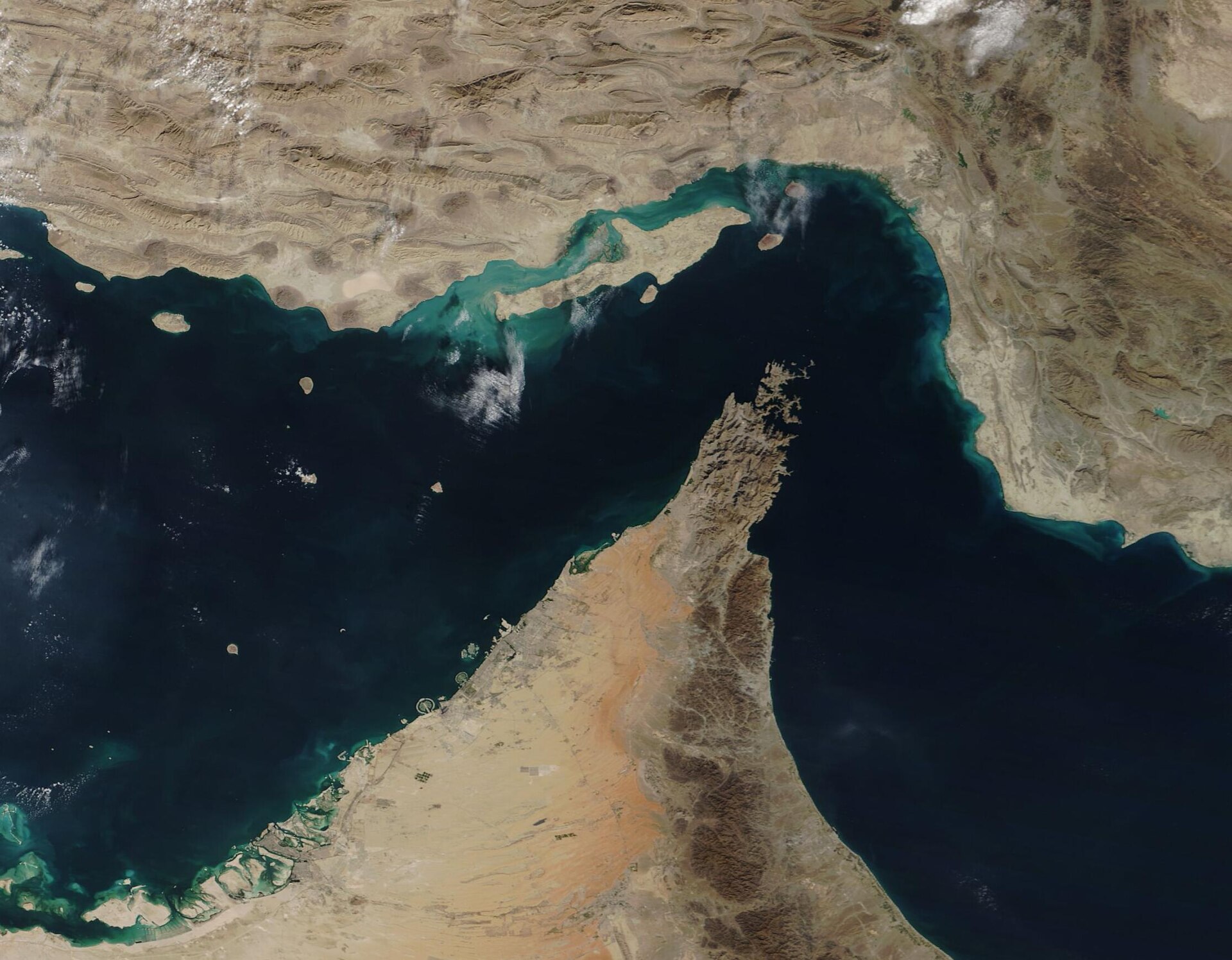
WASHINGTON — The US military has turned back 31 vessels attempting to reach Iranian ports since the naval blockade began on April 13, most of them oil tankers, according to CENTCOM figures released April 23. The same week, President Trump told Fox News there is “no time frame” and “no time pressure” for ending the war with Iran. The two announcements, delivered within hours of each other, transform what began as a coercive squeeze with an implicit expiry date into something closer to the 13-year maritime interdiction the United States ran against Iraq after 1990 — except this time without UN authorization, without coalition partners beyond Israel, and against an adversary that controls one side of the world’s most important oil chokepoint.
The 31 vessels represent roughly 20 days of Iranian export capacity turned back in cumulative cargo terms, draining an estimated $150 million per day from Tehran’s oil revenues according to Kpler data reported by The National. Iran’s response came not through diplomats but through the IRGC Navy, which seized two commercial ships in the Strait of Hormuz on April 22 and fired on a third — hours after the ceasefire expired and on the same day Indonesia’s 221,000 Hajj pilgrims began arriving in Saudi Arabia.
What Does 31 Vessels Actually Mean?
CENTCOM’s figure — 31 vessels directed to turn around or return to port, most of them oil tankers — requires translation into barrels before it means anything. The dominant vessel class in the Iran-China crude trade is the Suezmax, which carries approximately one million barrels per cargo according to EIA standard classifications. If most of the 31 redirected ships were loaded or intended for loading at that scale, the blockade has intercepted the equivalent of roughly 31 million barrels, or about 20 days’ worth of Iran’s pre-blockade export rate of 1.45 to 1.55 million barrels per day as tracked by Kpler’s trailing three-month average.
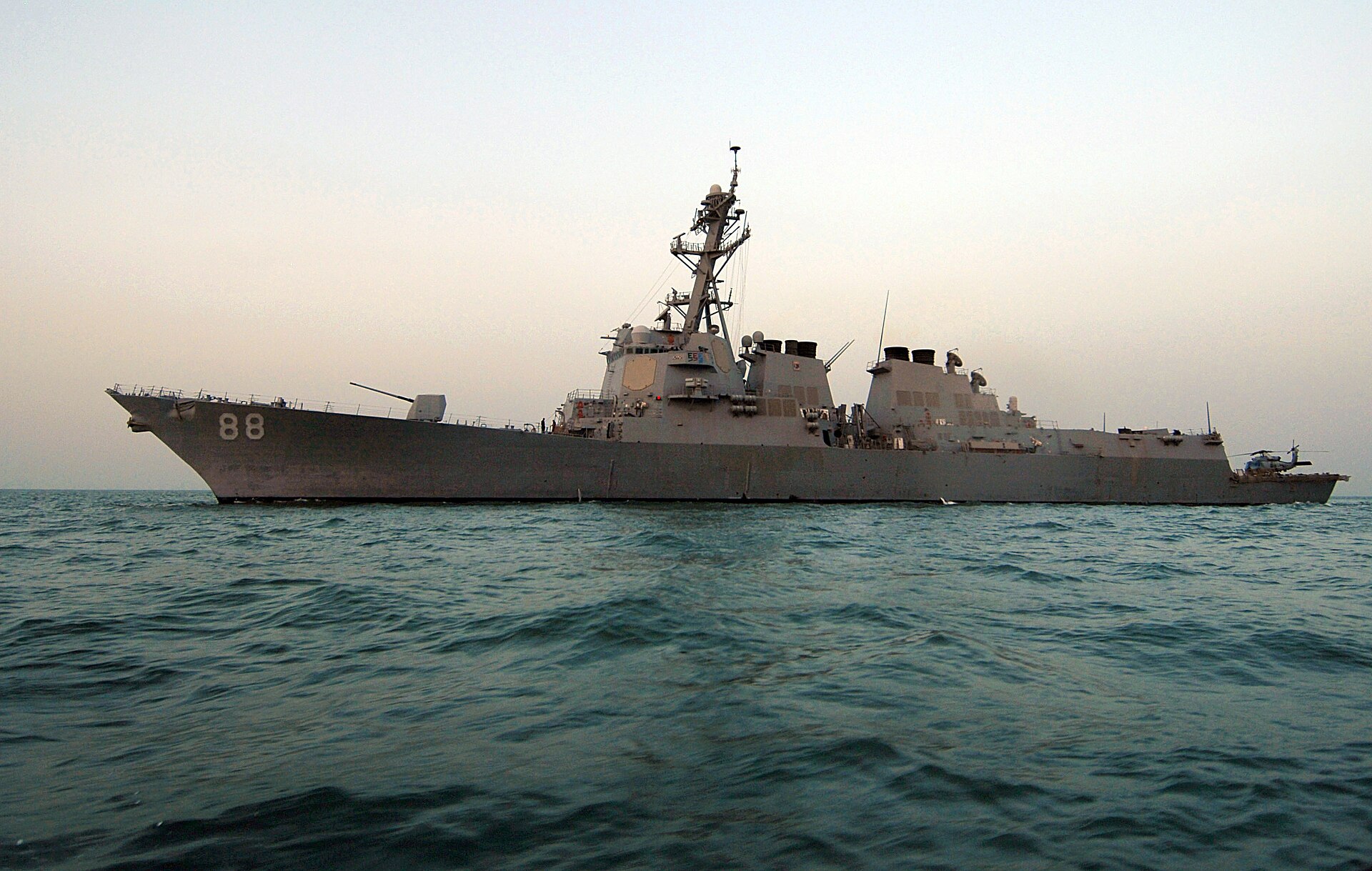
The progression tells its own story: 10 vessels by April 15, 13 by April 16, 23 by April 18, 27 by April 20, 29 by April 22, 31 by April 23. That is a rate that has not slowed since the blockade’s first week, which suggests the deterrence signal — the threat of interception by a force of 16 warships, 100-plus aircraft, and over 10,000 personnel under Admiral Brad Cooper — is working mechanically even as it fails to produce a diplomatic result.
Homayoun Falakshahi, senior oil analyst at Kpler, told The National on the blockade’s first day that Iranian exports “will fall to zero effectively,” and projected the conflict would resolve within a month because Trump’s planned May meeting with Xi Jinping acts as a political deadline even if no formal one exists. Ten days into the blockade, the exports have not reached zero — Iran still had approximately 190 million barrels of floating inventory at sea as of mid-April, worth over $15 billion — but the pipeline of new cargoes leaving Iranian terminals has been choked to a trickle. The Foundation for Defense of Democracies estimates the total economic damage to Iran, including lost imports and industrial disruption, at $435 million per day.
Trump Kills the Clock
Trump’s coercive strategy against Iran has operated on a series of deadlines — the April 6 ultimatum, the extension to April 13 when the blockade launched, the “unified proposal” demand delivered through Islamabad, and most recently a loosely defined 3-to-5-day response window issued April 21. Every one of those deadlines came with an implicit threat: produce a deal or face escalation. On April 22, Trump abandoned the entire framework, telling Fox News there was “no time frame” for ending the conflict and adding, unprompted, that “people say I want to get it over because of the midterms — not true.”
The Middle East briefing 3,000+ readers start their day with.
One email. Every weekday morning. Free.
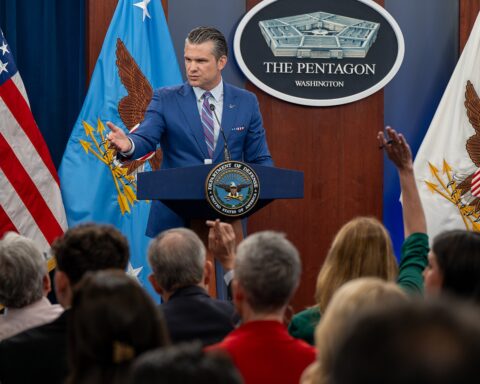
Defense Secretary Pete Hegseth reinforced the shift, telling reporters the administration “wouldn’t want to set a definitive timeframe” and that only the president would decide when operations conclude. The language matters because deadlines were the primary lever Washington had been using to empower Iran’s civilian negotiating faction against IRGC hardliners — the argument inside Tehran being that time was running out and a deal had to be struck before the next round of strikes. By removing the deadline, Trump has paradoxically reduced the urgency that gave civilian negotiators like Foreign Minister Araghchi their only institutional argument against the IRGC’s preference for indefinite resistance.
Iran’s hardline Judiciary Chief Gholam-Hossein Mohseni-Ejei captured the inversion immediately, telling state media on April 22 that the “enemy is not in a position to set a time for us” — reframing Trump’s removal of the deadline not as patience but as exhaustion. President Pezeshkian, operating from what CNN’s sources describe as a government where “neither side has access to the supreme leader, who is not responsive,” offered only that “the solution to the problems lies not in increasing tensions but in reason, dialogue and avoidance.” Both statements arrived the same day, from the same capital, aimed at opposite audiences.
The IRGC Answers Within Hours
The IRGC did not wait to see whether the removed deadline meant less pressure or more. On April 22 — hours after Trump’s Fox News interview aired and the ceasefire formally expired — IRGC naval forces seized the MSC Francesca, a Panamanian-flagged container ship, and the Epaminondas, a Liberian-flagged vessel, in the Strait of Hormuz, claiming both had operated “without required authorization” and had “manipulated navigation systems.” A third vessel was fired upon in the same action. The IRGC said it was retaliating for what it described as an American capture of an Iranian commercial vessel, framing the seizures as reciprocal rather than escalatory. The White House subsequently ruled that the seizures did not constitute ceasefire violations — a classification that preserves the fiction of a ceasefire that expired the same day the ships were taken.
The seizures fit a pattern that predates the blockade but has accelerated since. Mahdi Mohammadi, strategic affairs adviser to Parliament Speaker Ghalibaf, called the blockade itself a casus belli on April 22, declaring that “the continuation of the siege is no different from bombardment and must be met with a military response.” IRGC Aerospace Chief Majid Mousavi warned that if Gulf states’ “territories and facilities are used for more attacks against Iran, they must say goodbye to oil production.” And the Khatam al-Anbiya Central Headquarters — the IRGC’s joint command — announced that Iranian armed forces have their “fingers on the trigger” to respond with attacks “stronger than before.”
Ghalibaf himself struck a more complicated note, telling Iranian media that “we are not stronger than the US in military power” while insisting Iran remains “victors in the field.” The split between Ghalibaf’s acknowledgment of military reality and Mohammadi’s demand for kinetic retaliation — from the same parliamentary bloc — illustrates the fractured command structure that US officials have described privately. Can Kasapoglu, a senior fellow at the Hudson Institute, warned on April 13 that while “a successful blockade could significantly intensify pressure on Iran’s leadership,” the IRGC “continues to possess anti-ship missile systems and naval-drone capabilities” that make the operation inherently escalatory.
Saudi Arabia’s Indefinite Arithmetic
For Riyadh, Trump’s removal of a deadline converts a crisis with a visible endpoint into an open-ended fiscal emergency. Saudi Arabia’s March 2026 production fell to 7.25 million barrels per day, down from 10.4 million bpd before the war — a 30 percent drop that the IEA called “the largest disruption on record.” The Petroline running from the Eastern Province to Yanbu on the Red Sea coast was restored to its full 7 million bpd capacity on April 12 after an Iranian drone attack had reduced throughput by 700,000 bpd, but the pipeline’s capacity is not the binding constraint. The binding constraint is Yanbu’s port.
Vortexa estimates Yanbu’s actual loading ceiling under wartime conditions at roughly 3 million bpd, against a nominal combined terminal capacity of 4 to 4.5 million bpd. Windward’s maritime AI tracking shows Yanbu exports have already surged to approximately 2.47 million bpd — more than triple pre-war levels — meaning the port is operating at roughly 82 percent of its practical maximum with no room for the kind of rapid scaling that an indefinite blockade and ongoing Bab el-Mandeb threat would require. The structural gap between what the pipeline can deliver and what Yanbu can load — roughly 4 million bpd — represents barrels that simply cannot reach market as long as Hormuz remains contested.
Brent crude closed at $101.73 on April 22, up 3.30 percent on the day but still $6 to $9 below the $108 to $111 per barrel that Bloomberg estimates Saudi Arabia needs to balance its budget once PIF commitments are included. Goldman Sachs projects a war-adjusted fiscal deficit of 6.6 percent of GDP, nearly double the official 3.3 percent forecast. An indefinite blockade at current prices means Saudi Arabia runs an indefinite deficit — with no mechanism to close it through increased production because the export infrastructure caps out below what the fields can pump. The following day, Trump’s April 23 shoot-on-sight order added a new dimension to the same arithmetic — a rule of engagement whose failure mode is a dead Iranian crew and a Brent spike that still does not close the break-even gap at 3.33 million bpd; the three-way bind that doctrine creates for Riyadh is examined in Trump’s Hormuz Shoot-on-Sight Order Leaves Saudi Arabia With No Script.
Hajj, Ceasefire Expiry, and the Same Calendar Square
April 22, 2026, was not one event but three layered on top of each other. The ceasefire expired. The IRGC seized two ships. And Indonesia — which sends 221,000 pilgrims on 548 chartered flights, the largest single national contingent — began its Hajj departures. The collision was not accidental on any side; the ceasefire had been pegged to expire on that date since the Islamabad talks, and Iran’s zero Hajj stake (Iranian pilgrims have been barred since the war began, echoing the three-year boycott after the 1987 Mecca incident that killed 402) means the IRGC faces no domestic political cost from actions that raise the threat level in the Kingdom during the pilgrimage season.
The Makkah cordon sealed to non-permit holders on April 13 — the same day the blockade launched. Umrah has been suspended from April 18 through May 31. First international pilgrims arrived April 18, and the numbers will build steadily toward the Day of Arafah on May 26, when approximately 1.8 million international pilgrims plus 200,000 domestic worshippers will be concentrated in the holiest sites. Trump’s removal of a deadline means there is now no formal mechanism requiring the conflict to de-escalate before that peak, and IRGC Aerospace Chief Mousavi’s warning about Gulf oil production applies to territory where millions of civilians will be gathered under Saudi Arabia’s Custodian-of-the-Two-Holy-Mosques obligation to protect them.
Is This a Blockade America Can Sustain?
The Iraq Maritime Interception Force — the closest precedent for what the United States is now running against Iran — began as a US-only operation on August 12, 1990, gained UN authorization under Security Council Resolution 665 thirteen days later, and eventually grew into a 30-plus nation coalition that intercepted thousands of merchant vessels over its 13-year run. The Iran blockade, by contrast, has no UN mandate, no coalition beyond Israel, and the Atlantic Council estimates it is absorbing 75 percent of available US carrier capacity and 66 percent of the Navy’s mine-countermeasure-capable littoral combat ships.
Max Boot, the Jeane J. Kirkpatrick Senior Fellow at the Council on Foreign Relations, has identified what he calls the core asymmetry: the administration calculates “Iran will buckle under economic pressure before the global energy crisis forces the United States to back down,” but “Iran is a dictatorship with proven sanctions resilience, while the US faces domestic political constraints as rising gas prices fuel inflation before midterm elections.” Daniel Byman, who directs the irregular threats program at CSIS, frames it more starkly — “for the Iranian regime, the conflict is existential, while for most Americans, it is best over and forgotten.”
War risk insurance premiums, which spiked from roughly 0.05 percent of vessel value to over 5 percent within 48 hours of the February 28 strikes — a hundredfold increase — have settled to approximately 1 percent with partial no-claim bonuses for ships staying in the Gulf, according to Argus Media. That stabilization means the market is pricing in an extended conflict, not a short one. The IRGC retains approximately 50 percent of its fast-attack boat fleet, half its missile launchers, and thousands of drones according to CFR’s assessment, and Iran’s nuclear program — 440.9 kilograms of uranium enriched to 60 percent, enough for multiple devices with further enrichment — operates on its own timeline entirely independent of the blockade. Noam Raydan of the Washington Institute warned when the blockade launched that enforcement logistics remain unclear and flagged the potential for Iranian retaliation — a warning that the April 22 ship seizures have already begun to vindicate.
PressTV, Iran’s English-language state broadcaster, published an analysis on April 21 headlined “Iran’s strategic leverage shatters US’s illusion of blockade,” claiming Tehran retains the ability to reopen or close Hormuz at will. The framing is self-serving, but the underlying point — that a unilateral blockade without allied burden-sharing puts the full logistical and political cost on Washington alone — is one that Boot, Byman, and the Atlantic Council have each made from the opposite analytical direction. Trump insists the midterms are irrelevant. The insurance market, the defense analysts, and Iran’s hardliners are all betting otherwise.
Background
The US-Iran war began with American strikes on February 28, 2026, and has now entered its 54th day. The naval blockade of Iranian ports launched April 13 under CENTCOM command. Ceasefire negotiations collapsed at the Islamabad talks when, according to Iranian President Pezeshkian’s own public accusation, IRGC figures Vahidi and Abdollahi deviated from the negotiating mandate.
Frequently Asked Questions
How many US Navy ships are enforcing the blockade?
CENTCOM has deployed 16 warships — 11 destroyers, one aircraft carrier, one littoral combat ship, and three amphibious assault ships — supported by over 100 aircraft and more than 10,000 personnel. The Atlantic Council notes this represents 15 percent of the total deployed US Navy fleet and consumes 75 percent of available carrier capacity, raising questions about readiness elsewhere, particularly in the Western Pacific.
What happens to oil that is already at sea in Iranian floating storage?
Iran had approximately 190 million barrels of crude in floating storage as of mid-April, according to The National, with roughly 140 million barrels east of Singapore (mostly China-bound) and 50 million barrels west. This inventory, worth over $15 billion at the discounted prices Iranian crude commands under sanctions, represents a buffer that allows some Iranian revenue to continue flowing even under blockade conditions, though the logistics of transferring cargo between vessels to avoid interdiction grow more difficult as insurance costs remain elevated at 20 times pre-war baselines.
Has the blockade affected global oil prices?
Brent crude stood at $101.73 on April 22, which reflects the war premium but remains below the $108 to $111 per barrel Saudi fiscal break-even estimated by Bloomberg. War risk insurance premiums have stabilized at roughly 1 percent of vessel value — still 20 times the pre-war baseline, according to Argus Media — a level that signals markets are pricing in a prolonged conflict rather than an imminent resolution.
How sensitive oil markets have become to Iran’s authorization ceiling was demonstrated when Brent spiked above $105 on a single unsourced report that Ghalibaf had resigned under IRGC pressure — with the denial from Foreign Minister Araghchi, a civilian with no IRGC authority, failing to fully reverse the move, as analysed in Brent Tops $105 on Ghalibaf Resignation Rumour as Markets Price Iran’s Authorization Ceiling Over Any Denial.
Could the blockade receive UN authorization like Iraq’s did?
The Iran blockade has no prospect of UN authorization: both Russia and China hold Security Council vetoes and have signalled opposition, foreclosing the path the Iraq Maritime Interception Force used in 1990 to build a 30-plus nation coalition. NATO allies and Australia have explicitly refused to participate, making this a US-unilateral operation with only Israeli support — a coalition structure with no post-1945 precedent for a naval blockade of this scale.
What is the IRGC’s remaining military capability in the Strait?
The Council on Foreign Relations estimates the IRGC retains approximately 50 percent of its fast-attack boat fleet, half its missile launchers, and thousands of drones despite weeks of US strikes. The four US Avenger-class mine countermeasure ships previously stationed in Bahrain were decommissioned in September 2025, leaving a single LCS with mine-clearing capability in the theater — a gap that would matter acutely if the IRGC chose to mine shipping lanes, an operation CSIS has estimated would require 51 days to clear based on the 1991 Kuwait benchmark.
The diplomatic significance of Trump’s April 23 “don’t rush me” statement — which removed the deadline pressure behind the blockade documented here — and its downstream consequences for Saudi fiscal planning are analyzed in “Don’t Rush Me” — Trump Converts Saudi Arabia’s Short War Into an Open-Ended Fiscal Emergency.
The bilateral track was not limited to Tokyo: South Korea dispatched its Presidential Chief of Staff directly to Riyadh in the same week, securing 273 million barrels of crude routed via Yanbu — a parallel negotiation that operated entirely outside the US-led pressure framework CENTCOM’s blockade was designed to enforce.