
ISLAMABAD — Iran’s Foreign Ministry spokesman Esmaeil Baghaei stood before reporters on Monday and declared that Tehran had “no plans for the next round of negotiation.” Hours earlier, two senior Iranian officials told the New York Times that a delegation was expected in Islamabad by Tuesday morning. Both statements were true. The denial described the Foreign Ministry’s institutional authority — which is near zero on matters touching the IRGC. The leak described the Supreme Leader’s operational instruction, which is the only authorization that moves Iranian delegations across borders. The distance between these two facts is the entire question of whether the ceasefire, set to expire on April 22, survives the week.
What matters is not whether Iran sends negotiators. It is what they are authorized to concede. And on that question, the evidence points in two directions at once — by design.
Table of Contents
- The Dual-Track Signal: Denial and Dispatch
- Did Khamenei’s Approval Override the IRGC Veto?
- Vahidi’s Institutional Position
- What Does the Delegation’s Composition Tell Us?
- The Larijani Gap
- Why Would Iran Deny Talks It Intends to Attend?
- Three Structural Readings
- Can the Ceasefire Survive Past April 22?
- Saudi Exposure and the Antalya Framework
- Frequently Asked Questions
The Dual-Track Signal: Denial and Dispatch
The pattern is not new. On April 17, Foreign Minister Hossein Amir-Abdollahian’s successor Abbas Araghchi declared the Strait of Hormuz “completely open.” Within hours, the IRGC reversed the statement, and the IRGC’s broadcast on April 18 made the reversal explicit: “The Strait of Hormuz is still closed. We will open it by the order of our leader, Imam Khamenei, not by the tweets of some idiot.” The Foreign Ministry spoke for the Foreign Ministry. The IRGC spoke for the state.
Monday’s contradiction reproduced this architecture precisely. Baghaei told Al Jazeera and ABC7 that “no decision has been made” regarding further talks. He cited the US seizure of the MV Touska and the naval blockade, calling them “war crime and crime against humanity.” The grievance was real. The conclusion drawn from it — that Iran would not negotiate — was not.
The New York Times’s sourcing was specific: two senior Iranian officials, not anonymous “people familiar with the matter.” Iran International, citing the Times, reported the delegation was expected Tuesday morning Gulf time. Pakistan’s own diplomatic preparations — PM Shehbaz Sharif had already publicly “thanked Leader Khamenei and the Iranian president for sending a high-ranking delegation to Islamabad” — confirmed the operational track.
IRNA, the official state wire, offered a third register. The blockade, it said, had “violated the ceasefire understanding” and “had so far prevented progress in negotiations.” This was neither denial nor confirmation. It was a precondition statement — framing attendance as contingent, preserving optionality in both directions.
The Middle East briefing 3,000+ readers start their day with.
One email. Every weekday morning. Free.
Did Khamenei’s Approval Override the IRGC Veto?
On April 7, Mojtaba Khamenei — Iran’s Supreme Leader, now operating exclusively through audio-only communications after more than 44 days absent from public view — instructed negotiators “for the first time since the war began, to move towards a deal.” That instruction, reported by Axios and confirmed by The Week India, broke an internal deadlock that had persisted since the war’s opening weeks. Without it, there would have been no Islamabad I, no ceasefire, and no Ghalibaf-Vance meeting.
The precedent is operative. Under Article 176 of Iran’s constitution, Supreme National Security Council decisions take effect “only after the confirmation by the Supreme Leader.” All standing military commanders, including the IRGC commander-in-chief, are appointed directly by the Supreme Leader under Article 110. The constitutional architecture is unambiguous: Khamenei’s word overrides Vahidi’s position.
But constitutional authority and operational control are different instruments. The Institute for the Study of War assessed on April 19 that Iranian political negotiators do not have the authority to independently determine Iran’s negotiating positions — that ISW was describing a condition, not a theory, is evident from what followed. The April 20 drone strikes on US Navy vessels in the Sea of Oman — reported as the first kinetic action since the ceasefire began — were operational evidence that IRGC field commanders retain autonomous action capacity regardless of what the Supreme Leader has authorized diplomatically.
The question, then, is not whether Khamenei approved the Islamabad II delegation. The sourcing strongly suggests he did. The question is whether his approval included an override of the five red lines the IRGC enforced at Islamabad I — or merely authorized another round of exploration within the same constraints that produced 21 hours of deadlock and no deal on April 11-12.
Vahidi’s Institutional Position
Ahmad Vahidi was appointed IRGC commander-in-chief on March 1, 2026. His biography is the argument against optimism. He served as Quds Force commander from 1988 to 1997 — Qasem Soleimani’s direct predecessor — and as defense minister from 2009 to 2013. An Argentine INTERPOL red notice for his alleged role in the 1994 AMIA bombing in Buenos Aires remains active.
ISW’s reporting, corroborated by Fox News and Al Jazeera profiles, describes Vahidi as “practically controlling the country.” He blocked President Pezeshkian’s appointment of a new intelligence minister. He demanded that Ali Zolghadr — his chosen representative — be placed on the Islamabad I negotiating team. When Pezeshkian publicly named Vahidi and IRGC general Abdollahi as the officials who wrecked the ceasefire talks, it was a confession of institutional impotence, not a power move. Article 110 means the president has zero authority over the IRGC.
At Islamabad I, the US presented five red lines: end all uranium enrichment, dismantle enrichment facilities, remove the 440.9 kg HEU stockpile from Iran, end funding of regional proxies, and fully reopen the Strait of Hormuz without the proposed $2 million per-ship toll. Iran rejected all five. The rejection was not Araghchi’s decision. It was Vahidi’s floor.
| US Demand | Iranian Institutional Owner | Can MFA Concede? | Status |
|---|---|---|---|
| End all enrichment | SNSC / Supreme Leader | No | Rejected |
| Dismantle enrichment facilities | AEOI / SNSC | No | Rejected |
| Remove 440.9 kg HEU stockpile | SNSC / Supreme Leader | No | Rejected |
| End proxy funding | IRGC Quds Force / Supreme Leader | No | Rejected |
| Reopen Hormuz without toll | IRGC Navy / Supreme Leader | No | Rejected |
None of the five items falls within the Foreign Ministry’s remit. Every one requires either SNSC confirmation (which requires Khamenei’s sign-off) or direct IRGC operational compliance (which requires Vahidi’s cooperation). This is why Baghaei’s denial, while operationally misleading, was institutionally accurate. The Foreign Ministry genuinely has no plans, because the Foreign Ministry genuinely has no authority.
What Does the Delegation’s Composition Tell Us?
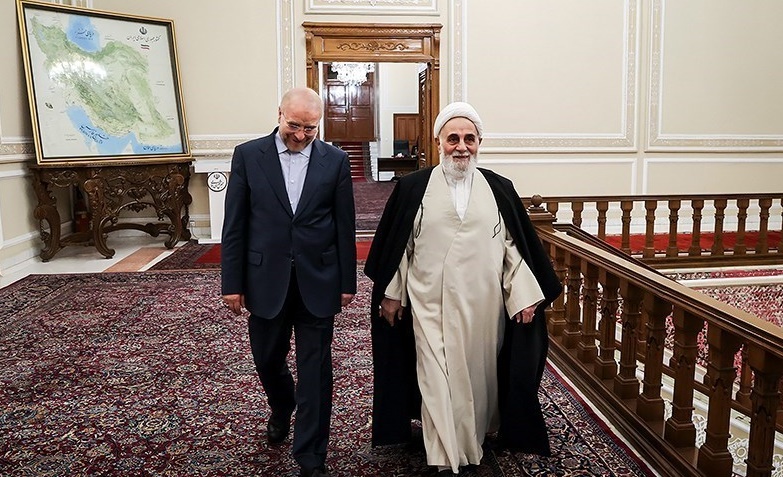
The composition of the Islamabad II delegation — if it arrives as sourced — will be the single most reliable indicator of whether the authorization ceiling has moved. At Islamabad I, the 70-member Iranian delegation was led by Parliament Speaker Mohammad Bagher Ghalibaf, a former IRGC Aerospace Force commander (1997-2000), alongside Araghchi. The dual leadership was itself a signal: Ghalibaf’s IRGC credentials were meant to convey that the delegation carried institutional weight beyond the MFA.
Iran International reported on April 20 that Ghalibaf has conditioned his attendance at Islamabad II on Vice President Vance’s presence. This is not protocol vanity. Ghalibaf’s insistence on rank symmetry is a demand for the kind of direct US-Iran engagement that Islamabad I produced — the first face-to-face talks since 1979 — and a signal that he views himself as negotiating on behalf of the state, not the Foreign Ministry.
If the delegation arrives led by Araghchi alone, the reading is different. It signals MFA-level exploration — authorized enough to keep the channel open, insufficient to close on any of the five red-line items. If Vahidi’s representative Zolghadr is again on the team, the IRGC’s veto travels with the delegation regardless of its nominal leadership.
The Larijani Gap
The figure who might have resolved this ambiguity is dead. Ali Larijani — former nuclear negotiator, former SNSC secretary, former parliament speaker — was killed in an Israeli airstrike in early March 2026. His career had been defined by a specific institutional function: bridging the IRGC and MFA tracks, translating between military imperatives and diplomatic possibilities. During the JCPOA negotiations (2013-2015), it was this bridging function that allowed Iran to maintain internal coherence while negotiating externally.
No replacement has emerged. Ghalibaf lacks Larijani’s diplomatic relationships. Araghchi lacks Larijani’s IRGC credibility. Pezeshkian, as his own public accusations demonstrated, lacks institutional authority entirely. The dual-track signal — FM denial, operational dispatch — is partly a consequence of this gap. In a system where the institutional mediator has been eliminated, signals propagate through separate channels without reconciliation.
Why Would Iran Deny Talks It Intends to Attend?
The denial serves at least three simultaneous functions, each aimed at a different audience. The first is domestic. Kayhan editor Hossein Shariatmadari — the hardline press’s most reliable weathervane — had already criticized Ghalibaf for accepting negotiations rather than continuing “war until victory.” Tasnim and Fars, both IRGC-aligned outlets, cited anonymous sources on April 20 saying “the overall atmosphere cannot be assessed as very positive” and that lifting the blockade was a precondition for talks. The FM denial gives the hardline press its headline while the delegation boards its flight.
The second function is bargaining. By maintaining the official position that Iran is not attending, Tehran preserves the ability to extract a concession — even a symbolic one, such as a US statement on the blockade — as the apparent price of attendance. The arrival then becomes a gesture of flexibility rather than an obligation.
The third function is insurance. If Islamabad II collapses as Islamabad I did, the Foreign Ministry can point to Monday’s press briefing and say it never committed to the process. Baghaei’s denial becomes retroactive truth. The IRGC-aligned media ecosystem — Tasnim, Fars, Mehr — can frame any failed outcome as evidence that Iran attended under duress or as a goodwill gesture, not as a negotiating failure.
Mohammad Javad Zarif, the pragmatist former foreign minister, had already framed the internal debate with unusual candor: continuing the fight would be “psychologically satisfying” but strategically counterproductive. The denial lets Iran pursue the strategically productive path while publicly honoring the psychologically satisfying one.
Three Structural Readings
Reading One: The Ceiling Cracked
Under this interpretation, Khamenei’s approval of the Islamabad II delegation constitutes the same kind of directive that produced the ceasefire on April 7 — a direct command that binds the IRGC operationally. The JCPOA precedent supports this reading. During Rouhani’s presidency, IRGC commanders opposed the nuclear deal and President Rouhani himself described “disharmony and sabotage” from within the government. The IRGC accepted the 2015 deal once Khamenei endorsed it. The endorsement mechanism, when fully activated, has historically been decisive.
If this reading is correct, the delegation arrives with authority to move on at least some of the five red-line items — most likely Hormuz reopening and enrichment monitoring, the two items where partial concessions are structurally possible without dismantling the IRGC’s institutional position. Vahidi’s veto is suspended, not eliminated, but suspended is enough for a ceasefire extension.
Reading Two: Authorized Exploration, Intact Constraints
Under this interpretation, Khamenei approved MFA attendance but did not override IRGC operational constraints. The delegation can negotiate but cannot commit. ISW’s April 19 assessment — that political negotiators “do not have the authority to independently determine Iran’s negotiating positions” — describes exactly this condition. The April 20 drone strikes on US Navy vessels, occurring after Khamenei’s reported approval, suggest IRGC field commanders retain autonomous action capacity that diplomatic authorization does not constrain.
Baghaei’s denial, under this reading, was accurate about operational authority even if inaccurate about travel logistics. The Foreign Ministry genuinely has no plans because the Foreign Ministry genuinely cannot make plans on items controlled by the SNSC and IRGC. The delegation arrives, talks for another 21 hours, and the same five red lines remain untouched.
“The IRGC’s consolidation of control over Iranian decision-making indicates that the Iranian political officials currently negotiating with the United States do not have the authority to independently determine Iran’s negotiating positions.”
— Institute for the Study of War, assessment, April 19, 2026
Reading Three: Ambiguity as Instrument
The contradiction is the product. Iran signals enough to keep Vance in Islamabad — preventing the US from declaring talks dead and resuming strikes — while preserving the IRGC’s right to call the FM denial “the official position” if talks collapse. This is the same architecture that produced the Araghchi-IRGC Hormuz split on April 17-18: one track for external consumption, another for internal legitimacy, with the Supreme Leader’s ambiguity serving as the connective tissue.
The Soufan Center’s assessment that Iran seeks to “cement strategic gains” at Islamabad, interpreting the ceasefire as validation that “airpower achieved military, but not strategic, gains,” supports this reading. Iran does not need a deal. It needs the appearance of a deal process — long enough to run out the ceasefire clock, long enough to complicate US domestic politics, long enough to let the blockade’s $400 million daily cost to Iranian exports become a US political liability rather than an Iranian one.
The tell, again, is delegation composition. If Ghalibaf leads with IRGC co-signatories, Reading One gains weight. If Araghchi arrives with Zolghadr shadowing, Reading Two. If Araghchi arrives alone or with a reduced team and no IRGC principals, Reading Three — the delegation is a placeholder, not a negotiating body.
Can the Ceasefire Survive Past April 22?
The ceasefire expires Wednesday morning Gulf time. Trump told Bloomberg on April 20 that an extension was “highly unlikely” and that it “ends Wednesday evening.” No extension mechanism exists within the original framework. The Soufan Center noted the absence of any renewal clause. If both sides want to extend, they must negotiate a new instrument — which requires the same authorization cycle that produced the original ceasefire, including Khamenei’s sign-off.
The timeline is punishing. If the delegation arrives Tuesday morning as sourced, it has roughly 24 hours to produce either a deal or an extension framework before the ceasefire lapses. Islamabad I lasted 21 hours and produced nothing. The five red lines remain unchanged. Vahidi’s institutional position has, if anything, strengthened — the April 20 drone strikes demonstrated that the IRGC retains kinetic options regardless of diplomatic tracks.
| Date/Time | Event | Implication |
|---|---|---|
| April 20, morning | Baghaei denial at FM press briefing | Official position: no talks planned |
| April 20, same day | NYT sources: delegation confirmed for Tuesday | Operational track contradicts FM position |
| April 20 | IRGC drone strikes on US Navy, Sea of Oman | IRGC retains autonomous kinetic capacity |
| April 20 | Trump: extension “highly unlikely” | US positioning for post-ceasefire escalation |
| April 22, morning | Ceasefire expiry | No extension mechanism in original framework |
| April 22 | Indonesia Hajj first departure (221,000 pilgrims) | Kinetic threshold rises with pilgrim presence |
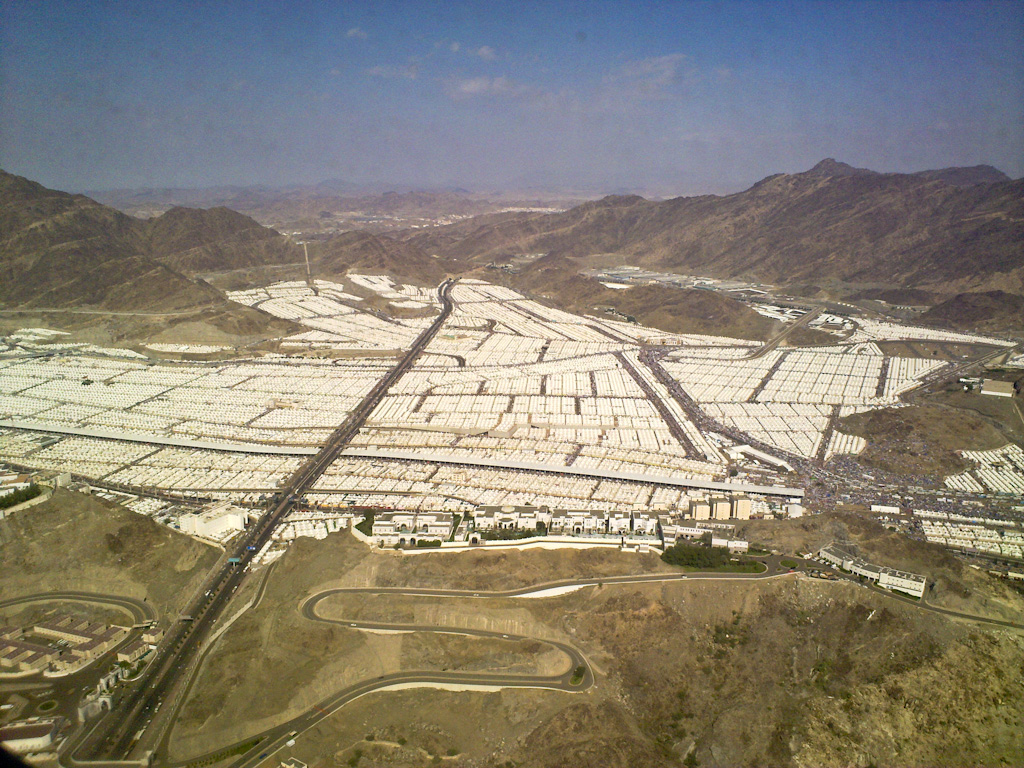
The Hajj calendar complicates every scenario. Over 750,000 pilgrims are already in Saudi dormitories as of April 21. Indonesia’s 221,000 pilgrims begin departing April 22 — the same day the ceasefire expires. Pakistan’s 119,000 arrived April 18. Any resumption of hostilities with this density of civilian presence in the theater transforms a military conflict into a humanitarian crisis that neither side can politically survive. This is the Hajj wartime trap operating as designed — raising the cost of failure for every party simultaneously.
Vahid Ahmadi, a member of Iran’s parliamentary national security commission, provided the clearest statement of the IRGC’s fallback position. If the United States rejected Iran’s demands, he told reporters, “they would continue the war.” The conditional is doing work. It frames the resumption of hostilities as an American choice, not an Iranian one — a framing that the FM denial reinforces by attributing the breakdown to the blockade and the Touska seizure rather than to any Iranian decision. The language of potential failure has been constructed to place the decision for resumption on Washington, not Tehran.
The Christian Science Monitor’s assessment — “In Iran, the regime has indeed changed: it’s less restrained, more hard-line” — captures the structural shift that separates Islamabad II from the JCPOA-era precedent. In 2015, the IRGC accepted a deal it opposed because the civilian government retained enough institutional weight to implement it. In 2026, the civilian government has been hollowed out.
Pezeshkian cannot appoint an intelligence minister. Araghchi’s public statements are reversed within hours. The FM spokesman’s denial is contradicted by the Supreme Leader’s operational authorization on the same day. The question is not whether Iran’s government has two tracks. It is whether the tracks still connect to the same locomotive.
Saudi Exposure and the Antalya Framework
Saudi Arabia’s position has narrowed to a corridor between two unacceptable outcomes. A ceasefire collapse resumes the war that has already cut Saudi production from 10.4 million barrels per day in February to 7.25 million in March — a 30 percent drop, the largest disruption the IEA has called “on record.” A deal that legitimizes Iran’s Hormuz toll architecture or leaves the IRGC’s “full authority” declaration intact permanently constrains the Yanbu bypass ceiling of 4-5.9 million barrels per day as Saudi Arabia’s structural export maximum.
The Islamabad Quartet — Pakistan, Saudi Arabia, Turkey, and Egypt — met at the Antalya Diplomacy Forum on April 18-19 to coordinate a post-war framework. Saudi Arabia’s exclusion from the bilateral Islamabad talks (both rounds) has pushed Riyadh toward this multilateral instrument as its primary channel. The Quartet framework is MBS’s hedge: if bilateral US-Iran talks produce a deal, the Quartet shapes implementation; if they fail, the Quartet becomes the alternative architecture.
Araghchi’s behavior on April 13 — calling both the Saudi FM and French FM on the day the US blockade began — suggests Iran’s own parallel track recognizes Saudi Arabia as a necessary party to any durable arrangement. The FM denial on April 20 was addressed to Washington and to the Iranian domestic audience. It was not addressed to Riyadh, which operates on a different informational channel entirely.
Goldman Sachs’s war-adjusted fiscal deficit estimate of 6.6 percent of GDP — against the official Saudi projection of 3.3 percent — puts a price on ambiguity. Every day without a deal or a credible ceasefire extension costs Saudi Arabia revenue it cannot recover through the Yanbu bypass alone. The June OSP reset of +$3.50 per barrel, down $16 from May’s war-premium +$19.50, already prices in the market’s judgment that the crisis is not resolving quickly.
The Euronews framing — “Hormuz Standoff Reignites as the IRGC Appears to Now Shape Iran’s Decisions” — published April 19, captures what the Antalya Quartet must now price into its framework. Any post-war security architecture that depends on Iranian compliance requires identifying which Iranian institution is capable of delivering it. The MFA can sign. The SNSC can ratify. Only the IRGC Navy’s “full authority” declaration over Hormuz can be operationally reversed — and that reversal requires either Khamenei’s direct order or Vahidi’s consent. The Quartet’s April 18-19 meetings were an attempt to build an architecture around this fact rather than despite it.
Frequently Asked Questions
What happened at Islamabad I and why did it fail?
The first round of US-Iran talks in Islamabad on April 11-12 lasted 21 hours and ended without agreement. A 70-member Iranian delegation led by Ghalibaf and Araghchi faced a significantly larger US delegation led by Vice President Vance. Iran rejected all five US demands. The Soufan Center reported that Zolghadr’s deviation from the delegation’s mandate — inserting IRGC preconditions mid-negotiation — triggered Vance’s walkout. Araghchi later said the sides were “inches away” from a memorandum of understanding.
Who is Mojtaba Khamenei and why does his absence matter?
Mojtaba Khamenei succeeded his father as Supreme Leader and is the sole constitutional authority who can ratify SNSC decisions and command the IRGC. He has been absent from confirmed public appearances for over 44 days as of April 17, communicating only through audio messages. This absence creates an authorization bottleneck: field commanders default to existing orders rather than seeking updated guidance, and the IRGC’s decentralized command structure operates with greater autonomy. The Foundation for Defense of Democracies identified “5 men running Iran” — none of them Pezeshkian.
What is the JCPOA precedent for resolving IRGC-MFA splits?
During the 2013-2015 JCPOA negotiations, President Rouhani described “disharmony and sabotage” from IRGC commanders who opposed the nuclear deal. The IRGC accepted the 2015 agreement only after Khamenei (Ali, the father) fully endorsed it — a process that took over 18 months of internal negotiation in parallel with the external talks. The current timeline — less than 24 hours before ceasefire expiry — does not accommodate that kind of internal reconciliation. The structural difference: in 2015, Larijani brokered between factions. In 2026, Larijani is dead.
What role does Pakistan play if talks resume?
Pakistan has evolved from venue provider to the ceasefire’s sole enforcement mechanism. PM Sharif’s public thanking of Khamenei was diplomatic language confirming Pakistan’s direct channel to the Supreme Leader’s office. Army Chief Munir visited Khatam al-Anbiya headquarters — IRGC General Abdollahi’s command — on April 16, establishing a military-to-military channel that bypasses the MFA entirely. Pakistan’s $5 billion Saudi loan maturing in June 2026 and the September 2025 Saudi Military Defense Agreement make Islamabad simultaneously Tehran’s interlocutor and Riyadh’s treaty ally — a dual position that gives it singular influence and singular exposure.
How does the US blockade affect Iran’s negotiating calculus?
The CENTCOM blockade, effective April 13, applies to Iranian ports and toll-collecting vessels but not all Hormuz transit. The Foundation for Defense of Democracies estimated the cost at $400 million per day in lost Iranian export revenue. Iran’s OFAC General License U expired on April 19 with no renewal, cutting off the legal framework that had allowed limited Iranian oil sales. The blockade creates a five-day coercive window (April 13-17) before the Hajj pilgrim presence raises the kinetic threshold — a window that has now closed, moving the primary US instrument from military pressure to economic attrition. Iran’s Central Bank internal memo, referenced by Pezeshkian, projected 180 percent inflation and a 12-year recovery timeline if the war continues.