
RIYADH — Iran fired more than 150 missiles and 500 drones at the United Arab Emirates in the first days of the war, and aimed precisely two at Saudi Arabia — a ratio of roughly 325 to 1 that tells you more about the real structure of Gulf politics than any communiqué issued from the GCC’s secretariat in the past decade. Tehran, whatever else it got wrong in this war, read the Gulf’s internal fracture with clinical accuracy: Abu Dhabi was a co-belligerent through its Abraham Accords military integration, and Riyadh was something else entirely — a state that expelled some Iranian diplomats but kept its embassy in Tehran open, maintained foreign-minister-to-foreign-minister contact with Araghchi through the blockade, and quietly facilitated the Pakistan-led ceasefire talks that became the war’s only diplomatic track. That military integration reached its operational apex when Israel secretly deployed an Iron Dome battery with IDF operators to the UAE — the first foreign combat use of the system — while Saudi Arabia hosted no Israeli systems and no IDF personnel.
The divergence is not new. But the war made it structural, measurable, and — for the first time — impossible for both capitals to pretend otherwise.
Table of Contents
- The December Trigger: Yemen as Prologue
- Why Did Iran Treat the UAE as a Co-Belligerent and Saudi Arabia as a Negotiating Partner?
- Two Doctrines, One Peninsula
- Can OPEC+ Survive a Saudi-UAE Split?
- The Hub Wars: Jeddah vs. Dubai in a Post-Hormuz Economy
- Sudan, Somalia, and the Proxy Map
- How Do the Abraham Accords Divide the Gulf?
- Bypass Arithmetic: Who Survives Without Hormuz?
- Is the UAE Becoming the New Qatar?
- FAQ
The December Trigger: Yemen as Prologue
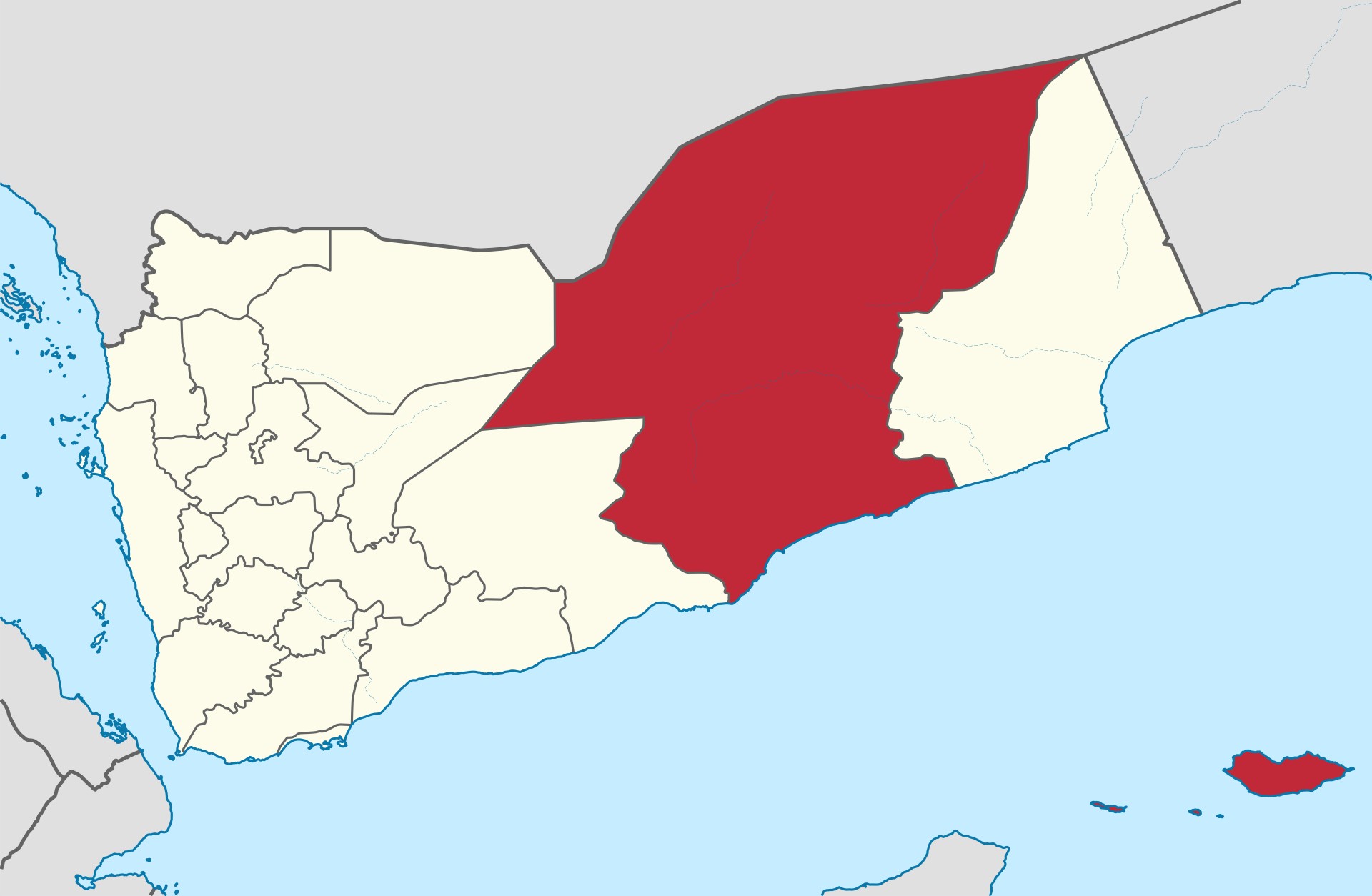
Before a single Iranian missile crossed the Gulf, Saudi Arabia and the UAE were already at war with each other by proxy in southern Yemen. In December 2025, the UAE-backed Southern Transitional Council seized six governorates including oil-rich Hadramout and al-Mahra — the latter sharing a direct border with Saudi territory and its eastern oil infrastructure. Riyadh’s response was immediate and kinetic: on December 30, Saudi jets struck UAE-linked weapons shipments at Mukalla port. Saudi-backed forces retook the territory within days, and the STC formally dissolved on January 9, 2026.
Giorgio Cafiero of Gulf State Analytics, writing for Arab Center DC, captured the doctrinal split with precision: “Saudi Arabia seeks to preserve state sovereignty and territorial integrity while supporting ‘legitimate’ national institutions in fragile Arab states, whereas the UAE emphasizes ideological and proxy-driven influence via non-state actors in societies vulnerable to high risks of fragmentation.” This was not an argument over tactics in Yemen. It was a disagreement about what states are for — and whether the Gulf’s smallest federation had the right to arm non-state actors on the Saudi border.
The STC episode mattered because it established, before the Iran war began, that the two states were already operating under incompatible security doctrines. When Iran struck on February 28, the question was not whether Saudi Arabia and the UAE would respond differently — December had already answered that. The question was whether the GCC’s institutional architecture could absorb the strain, or whether the machinery of consensus would simply stop functioning under load.
Why Did Iran Treat the UAE as a Co-Belligerent and Saudi Arabia as a Negotiating Partner?
Iran’s targeting logic on the opening day of the war was the most consequential intelligence assessment published in 2026 — and it was published in missile trajectories, not white papers. The same opening salvo that produced that 325-to-1 ratio hit UAE targets across a 48-hour window while Saudi Arabia received two strikes. Fars News confirmed what the attack pattern already demonstrated: Abu Dhabi was categorised as a co-belligerent because of Abraham Accords military integration, US base hosting at Al Dhafra, and Israeli intelligence cooperation channelled through CENTCOM.
The Middle East briefing 3,000+ readers start their day with.
One email. Every weekday morning. Free.
Saudi Arabia’s different treatment was not mercy. It was calculation. Riyadh hosted US forces too — Prince Sultan Air Base lost an E-3G Sentry on the ground — but Saudi Arabia had not signed the Abraham Accords, had not integrated its air defence network with Israel’s, and had conditioned any normalisation on Palestinian statehood since the 2003 Arab Peace Initiative. Iran drew its targeting distinction along this line, and the distinction held throughout the war’s first weeks. The UAE closed its embassy in Tehran on March 1 — Day 1 — and shut down Iranian schools and cultural centres. MBZ publicly called Iran an “enemy.” Saudi Arabia maintained its Tehran embassy, kept FM-to-FM contact, and positioned itself inside the Pakistan-led mediation.
Luca Nevola, senior analyst at ACLED, documented the divergence in operational terms: Saudi Arabia was “closely aligned with Pakistan, the key mediator in the ceasefire talks” and prioritised “supporting the talks, with the minimum aim of reopening the Strait of Hormuz.” The UAE demanded “long-lasting guarantees for regional stability beyond a nuclear deal” including “dismantling of Iran’s long-range capabilities and proxy networks” — and could “potentially play a spoiler role by slowing negotiations if the US pursues a minimal deal.” Two GCC members, two war aims, no mechanism for reconciling them.
Two Doctrines, One Peninsula
H.A. Hellyer of RUSI and the Center for American Progress gave the divergence its sharpest label in War on the Rocks: Saudi Arabia operates under “de-escalatory developmentalism” — prioritising Vision 2030, conflict reduction, and border insulation — while the UAE pursues “pre-emptive activism,” intervening externally to reshape regional order before deterioration occurs. These are not variations of the same strategy. They are different theories of survival, and they produce opposite responses to the same threat.
When Hormuz closed, Saudi Arabia’s instinct was to route around the crisis. The Petroline bypass to Yanbu became the kingdom’s wartime lifeline, and Riyadh’s diplomatic energy went into keeping the Pakistan-led ceasefire talks alive — because every day Hormuz stayed shut cost the kingdom hundreds of millions of dollars in lost export revenue beyond what the bypass could handle. The UAE’s instinct was to escalate toward resolution: declare a military contribution to reopen the strait, deepen the Israeli security relationship, and position Abu Dhabi as Washington’s indispensable regional partner in any post-war architecture.
Hesham Alghannam of the Carnegie Middle East Center framed the Saudi shift historically: “Riyadh has moved away from large-scale expeditionary warfare toward a model focused on deterrence, selective pressure, and political outcomes.” The Yemen intervention that began in 2015 was the last major Saudi expeditionary campaign, and MBS has spent the years since extracting the kingdom from it. The UAE, by contrast, withdrew its main forces from Yemen in 2019 but continued arming the STC — and in December 2025, those proxies seized territory bordering Saudi Arabia. Pre-emptive activism, applied to Saudi Arabia’s own border.
Kristian Coates Ulrichsen of the Baker Institute at Rice University judged that the UAE had reached a structural limit: “The UAE may be approaching a tipping point in its ability to balance its regional relationships with key partners such as Saudi Arabia and Egypt with its support for armed non-state actors.” The question he raised was not whether the balance was difficult. It was whether it was still possible at all.
Can OPEC+ Survive a Saudi-UAE Split?
ADNOC has the capacity to produce roughly 4.85 million barrels per day. The UAE’s OPEC+ baseline quota stands at 3.519 million bpd. That structural gap of approximately 1.3 million barrels per day in stranded capacity has been the single most persistent source of friction inside OPEC+ for years, and the war turned it from a negotiating irritant into an existential question. Saudi Arabia bears around 45 percent of total OPEC+ voluntary cuts — a burden Riyadh accepted because it could compensate through pricing power and market discipline. Abu Dhabi accepted its quota because it had no political alternative, but the resentment compounded with every barrel left in the ground.
The war scrambled the maths. Saudi production crashed to 7.25 million bpd in March 2026, down from 10.4 million bpd in February — a 30 percent collapse driven by infrastructure damage and the Hormuz closure’s throttling effect on eastern exports. The kingdom’s OPEC+ quota of 10.2 million bpd suddenly sat three million barrels above actual output. UAE Fujairah exports via the ADCOP bypass pipeline surged 38 percent — from 1.17 million bpd in February to 1.62 million bpd in March — demonstrating Abu Dhabi’s determination to capture every barrel of market share the crisis made available, even as drone attacks disrupted Fujairah port loadings.
For the first time, the two states’ production trajectories moved in opposite directions during a crisis that demanded coordination. Saudi Arabia was producing below quota because of war damage. The UAE was producing toward quota because it finally could. The OPEC+ framework assumes the two largest Gulf producers share a basic interest in output restraint. That assumption no longer holds when one member is losing production to missile strikes and the other is gaining market share from the same conflict.
| Metric | Saudi Arabia | UAE | Source |
|---|---|---|---|
| Pre-war production (Feb 2026) | 10.4M bpd | ~3.5M bpd | IEA |
| March 2026 production | 7.25M bpd | ~3.5M bpd + Fujairah surge | IEA / CNBC |
| OPEC+ quota | 10.2M bpd | 3.519M bpd | OPEC+ |
| Installed capacity | ~12.5M bpd | ~4.85M bpd | World Oil |
| Bypass pipeline capacity | Petroline (Yanbu): 5-7M bpd | ADCOP (Fujairah): ~1.5-1.8M bpd | EIA / CNBC |
| Share of OPEC+ voluntary cuts | ~45% | Smallest among major Gulf producers | Middle East Insider |
The Hub Wars: Jeddah vs. Dubai in a Post-Hormuz Economy
The economic competition between Riyadh and Abu Dhabi predates the war by several years, but it was always possible to describe it as complementary — two Gulf capitals building different niches in the same regional economy. The war ended that fiction. Saudi Arabia’s Regional Headquarters Program had attracted 675 multinational companies to Riyadh by October 2025, a programme designed explicitly to challenge Dubai’s entrepôt model by requiring any firm doing business with the Saudi government to base its regional operations in the kingdom. Jeddah port capacity doubled to four million TEU in 2025. The PIF’s wartime pivot toward industrial transformation accelerated the timeline.
The UAE’s economic model rests on fundamentally different foundations. UAE-India bilateral trade under the CEPA crossed $100 billion in FY 2024-25, up 19.6 percent year-on-year, making India the anchor of Abu Dhabi’s post-oil gravity model alongside Israel and global financial networks. UAE-Israel trade exploded from $200 million in 2020 to over $3 billion by 2024, following the Abraham Accords FTA enacted in April 2023. And the Iran re-export trade — $7.2 billion in Iranian non-oil goods flowing into the UAE, $21.9 billion in UAE goods and re-exports flowing back to Iran, with Jebel Ali serving as Tehran’s primary gateway for sanctions evasion — formed a third pillar that the war obliterated overnight.
Dubai’s International Financial Centre had 7,700 active companies by mid-2025, growing at 25 percent year-on-year, and the emirate’s pitch to global capital remained compelling: lighter regulation, deeper liquidity pools, and a time-zone arbitrage between London and Singapore that Riyadh cannot replicate through mandate alone. But the war exposed what Dubai’s model requires — stability in the strait, functional Iran trade corridors, and a security environment that does not force foreign firms to choose between Gulf hubs on the basis of missile risk rather than tax treatment.
Sudan, Somalia, and the Proxy Map
The Saudi-UAE proxy competition extends well beyond Yemen. In Sudan, Saudi Arabia backs the Sudanese Armed Forces while the UAE supports the Rapid Support Forces, which controls the country’s informal gold trade — a revenue stream worth an estimated $2 billion annually that operates entirely outside the formal banking system. Cinzia Bianco of the European Council on Foreign Relations documented the escalation: Saudi Arabia pressed Egypt to restrict airspace for Emirati cargo flights suspected of supplying the RSF with weapons, and at the 2026 African Union summit, the Saudi-Emirati rivalry over Sudan and the Horn of Africa dominated proceedings to the point of overshadowing the institution’s own agenda.
The pattern replicates across the Horn. The UAE operates a military facility in Somaliland — the breakaway republic that no UN member had recognised until Israel did so in exchange for military access, a move Saudi Arabia publicly condemned. Somalia disavowed its UAE agreements and aligned with Riyadh in early 2026, calculating that Saudi investment in port infrastructure and development aid offered more than the Emirati model of military-base agreements and proxy relationships. MBS’s hosting of Sudan’s Burhan in Jeddah was the public display of where the kingdom’s proxy alliances now ran.
Emadeddin Badi, an armed groups analyst, warned of the structural implications: “If this coalition against the UAE crystallises, then that’s an unprecedented geopolitical shift in how virtually most of the Middle East power dispensations are structured.” The coalition he described — Saudi Arabia, Egypt, Somalia, and elements of the Sudanese military — does not share an ideology or a coordinated strategy, but it shares a common concern: the UAE’s willingness to arm non-state actors in fragile states where other Gulf powers have staked their stability on central government partnerships.
How Do the Abraham Accords Divide the Gulf?
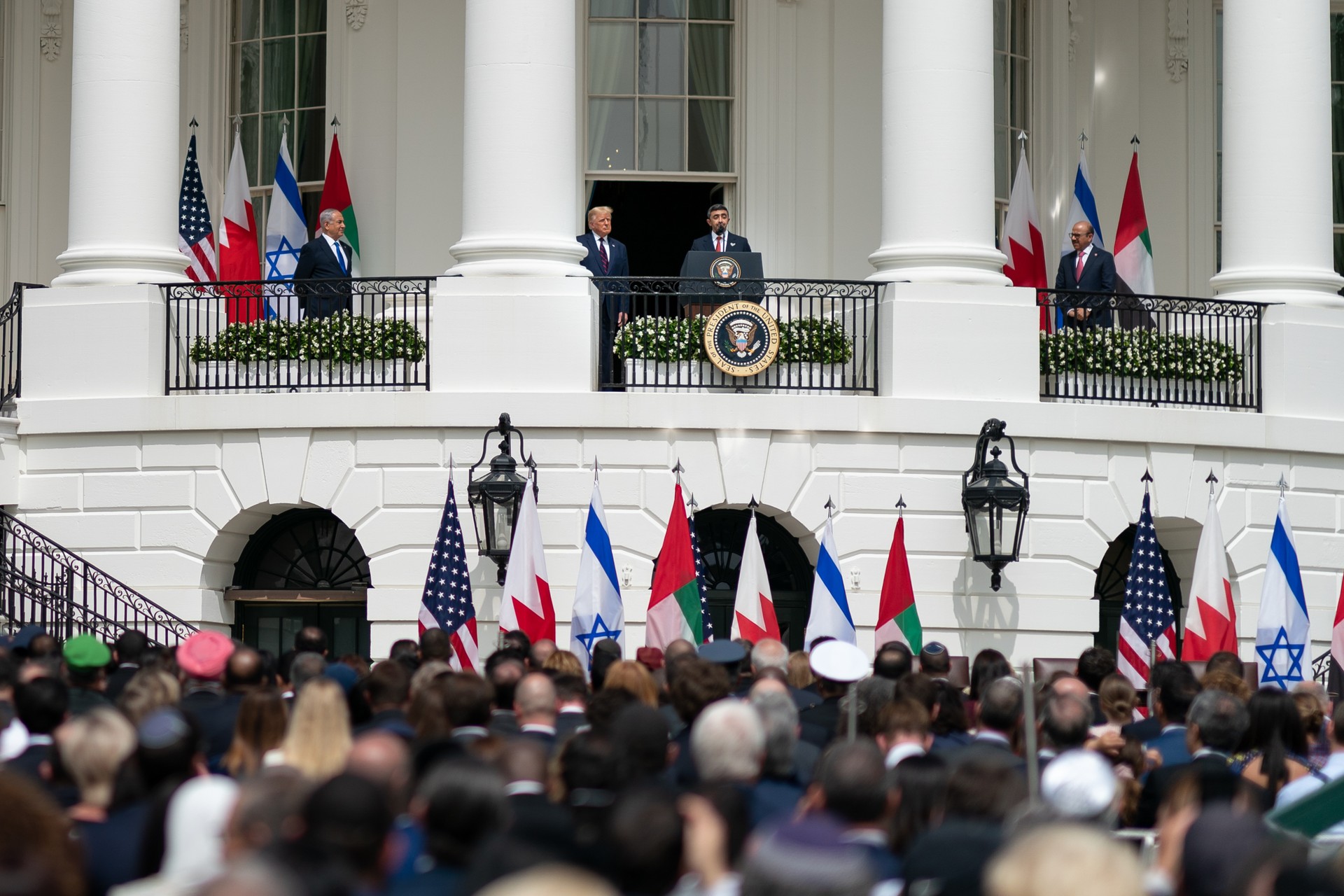
The Abraham Accords were supposed to build a regional security architecture against Iran. Instead, they became the single clearest dividing line within the GCC — the feature that caused Iran to categorise the UAE as a target and Saudi Arabia as a potential interlocutor. Andrew Leber and Sam Worby of the Carnegie Endowment captured the political toxicity in an April 2026 analysis: competing narratives now see the UAE “painting Saudi Arabia as eager to partner with extremists” while the Saudis suggest the UAE is “an Israeli stooge.” These are not anonymous social media jibes. They are characterisations circulating at senior policy levels in both capitals.
The US Senate’s Abraham Accords Defense Cooperation Act, introduced in March 2026 by Senators Budd and Ernst, made the institutional split explicit. The bill was framed around Iran deterrence and targeted Abraham Accords partners specifically — excluding Saudi Arabia by design. Washington was building a security framework for the Gulf that formally treated the GCC’s two largest military powers as belonging to different categories. Kristin Diwan of the Arab Gulf States Institute observed that “the Emiratis have leaned into their accommodation with the Israelis since the Abraham Accords,” while Saudi Arabia found itself unable to follow due to the Gaza war and the ICJ genocide proceedings that made normalisation politically impossible.
Carnegie’s analysis went further, noting that the UAE intends to “deepen cooperation with Israel following the war” — a trajectory that “could polarize other Gulf states where public opinion is increasingly anti-Israel” and “force Crown Prince Mohammed bin Salman to again say no to Trump on normalization and even create a new incentive for the kingdom to reach accommodations with Tehran.” The Abraham Accords, designed to unite the Gulf against Iran, had instead created a mechanism for dividing it — with Saudi Arabia pushed closer to Iran diplomatically by the very alliance structure that was supposed to contain Tehran.
Bypass Arithmetic: Who Survives Without Hormuz?
The combined Saudi and UAE bypass pipeline capacity — the Petroline to Yanbu and ADCOP to Fujairah — can move between 5.5 and 7.5 million barrels per day under wartime conditions. Pre-war Hormuz throughput ran at approximately 20 million bpd. The gap of roughly 12-14 million barrels per day falls entirely on third parties — Iraq, Kuwait, and Qatar — who have no bypass infrastructure and are therefore hostage to the political dynamic between the two states that do. The exclusion of Gulf states from US-Iran direct talks compounded the dependency: states without bypass capacity had no alternative to the strait and no seat at the table where the strait’s future was being negotiated.
Saudi Arabia’s Petroline runs from the Eastern Province to Yanbu on the Red Sea with a theoretical capacity of seven million bpd, though wartime loadings at Yanbu have consistently hit a practical ceiling of four to 5.9 million bpd — well below the pipeline’s nameplate capacity due to loading-berth constraints and the Bab el-Mandeb vulnerability at the Red Sea’s southern exit. The divergence between Saudi and UAE bypass geography matters here: Iran’s dual-chokepoint strategy targets Bab el-Mandeb as Saudi Arabia’s last export corridor — a threat that hits Yanbu-routed Saudi crude directly while leaving Fujairah-routed UAE barrels on a different exit vector entirely. The failure of Iran’s Hormuz toll to collect a single dollar in 36 days did not reopen the strait. It simply confirmed that the bypass states — Saudi Arabia and the UAE — were the only Gulf producers still exporting at meaningful volumes, and that their bilateral relationship now determined how much Gulf oil reached the global market.
The UAE’s ADCOP pipeline from Habshan to Fujairah carried 1.62 million bpd in March, a surge from February’s 1.17 million bpd, but Fujairah port itself took drone hits that disrupted loadings and demonstrated the bypass’s vulnerability to the same Iranian strikes the pipeline was supposed to circumvent. Neither bypass is a full substitute for the strait. But the two states’ combined control of the only functioning alternatives gave them a joint chokepoint advantage that their political relationship was no longer structured to exercise jointly.
Is the UAE Becoming the New Qatar?
Carnegie’s Leber and Worby raised the most provocative comparison available in Gulf politics: the UAE as “a new Qatar” — a state pursuing aggressive foreign policy in direct conflict with its neighbours’ interests. The 2017 Qatar blockade, which Saudi Arabia and the UAE jointly led, was premised on exactly this accusation: that Doha’s support for the Muslim Brotherhood, its Al Jazeera coverage, and its independent diplomatic relationships with Iran and Turkey constituted a threat to GCC consensus. The Al-Ula Declaration of January 2021 ended the blockade on Saudi terms, but the crisis established a template — and the template now fits Abu Dhabi more accurately than it fits Doha.
The parallels are specific. Qatar maintained an independent relationship with Iran that its neighbours considered threatening; the UAE now maintains an independent military relationship with Israel that Saudi Arabia considers strategically hostile. Qatar armed non-state actors (or was accused of doing so) in Libya and Syria; the UAE armed the STC in Yemen, the RSF in Sudan, and proxy forces across the Horn of Africa. Qatar used Al Jazeera as a regional influence tool; the UAE has deployed a digital influence architecture — from the DarkMatter surveillance programme to social media operations documented by multiple Western intelligence agencies — that is arguably more sophisticated and certainly less transparent.
Carnegie went further, suggesting that other GCC members could “potentially serve as Iranian financial hubs to distinguish themselves from Abu Dhabi” — a scenario in which the UAE’s maximalism on Iran pushes its own neighbours toward accommodation with Tehran as a competitive differentiator. Bianco’s characterisation was direct: “A once tightly coordinated Arab Gulf partnership has given way to a geopolitical competition playing out across the Middle East, Africa and the Red Sea, with the two countries now competing for control of economic, mineral and energy resources — and for crucial technologies, such as AI.” She added a sentence that Riyadh would have drafted itself: “Saudi Arabia is resisting pressure to normalise relations with Tel Aviv and believes strategic alignment between the UAE and Israel amounts to attempted encirclement.”
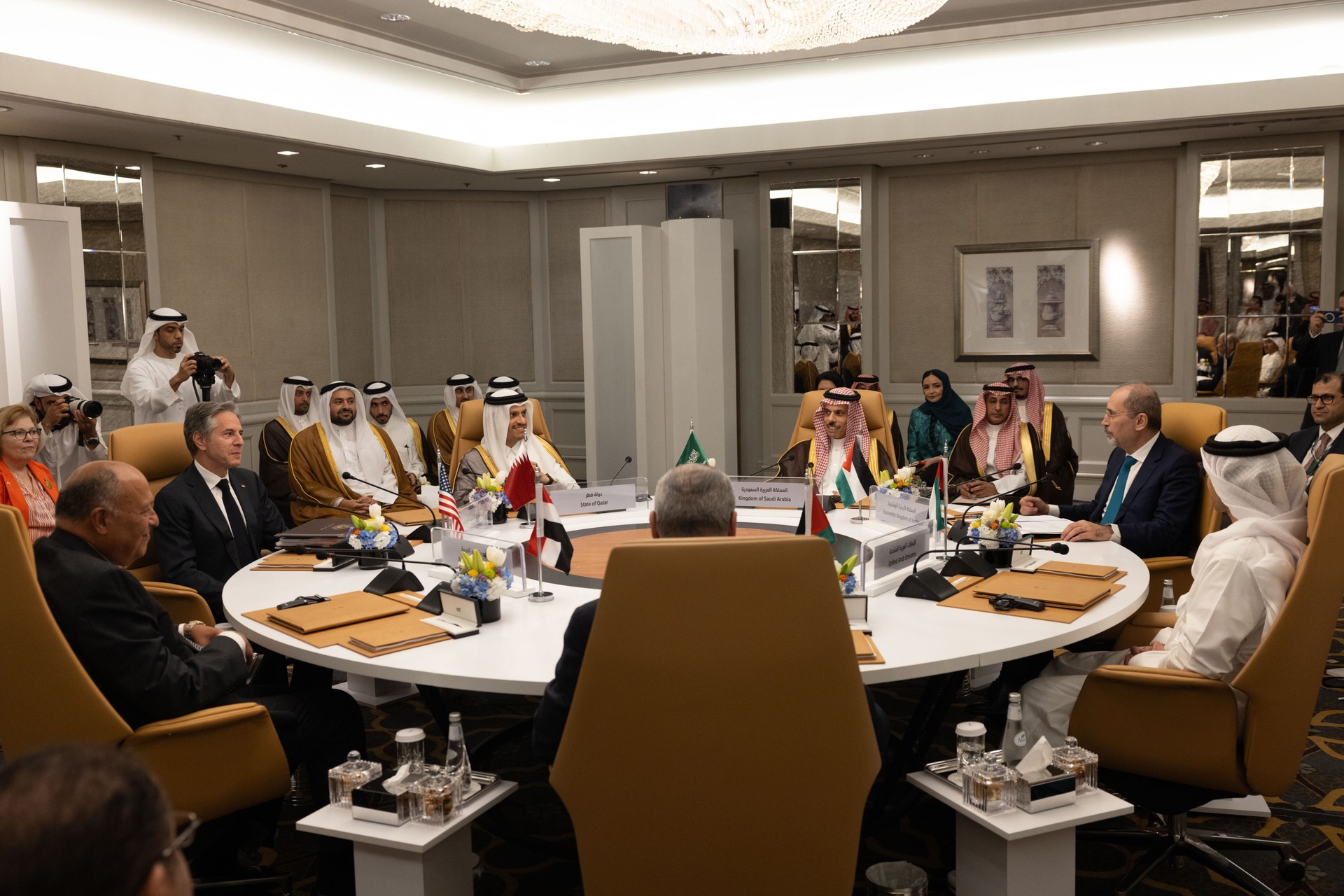
Coates Ulrichsen’s assessment was that “while diverging approaches had persisted for years, containment measures were no longer working.” The GCC’s consensus machinery — built for an era when Saudi Arabia set direction and smaller members fell in line, or at most carved out niches that did not threaten the core — cannot process a situation in which the federation’s second-largest military power is simultaneously an Abraham Accords partner, an Iranian target, a proxy rival to its largest partner, and a potential spoiler to the only ceasefire process the region has produced. Leber and Worby concluded that “Saudi Arabia’s regional competition with the UAE is only temporarily on hold, making strengthened GCC security cooperation a distant prospect.”
The war did not create the Saudi-UAE divergence. December 2025 in Yemen did not create it. The Abraham Accords did not create it. What the war did was eliminate the strategic ambiguity that allowed both states to operate under different assumptions while pretending to share a common framework. Anwar Gargash, the UAE’s presidential adviser, offered a sentence that works as the divergence’s epitaph and its future operating manual simultaneously: “The UAE does not close the doors of diplomatic communication, but we judge by actions, not words.” Riyadh, having watched UAE-backed forces seize its border territory in December, absorbed 325 times fewer Iranian missiles in February, and observed Abu Dhabi surge Fujairah exports while Saudi production collapsed by 30 percent in March, had already started judging by actions. The GCC secretariat still schedules its summits. Whether it schedules anything that matters is a different question, and one that neither capital is currently inclined to answer.
FAQ
What role does the UAE’s Jebel Ali port play in Iran sanctions evasion, and how has the war affected it?
Before the war, Jebel Ali was Iran’s primary re-export gateway for circumventing international sanctions. Iran exported $7.2 billion in non-oil goods to the UAE while receiving $21.9 billion in UAE goods and re-exports — a combined trade flow of $29.1 billion annually that OFAC sanctioned Emirati entities for facilitating as recently as November 2025. The war severed this corridor entirely when the UAE closed its Tehran embassy and shut Iranian commercial institutions on March 1, 2026, destroying a revenue stream that both countries had quietly maintained through every previous round of sanctions.
How does the Saudi Regional HQ Program directly threaten Dubai’s financial centre model?
The programme requires any multinational doing business with the Saudi government to establish its regional headquarters in Riyadh — a mandate that had attracted 675 companies by October 2025. Dubai’s DIFC, with 7,700 active firms growing at 25 percent annually, still leads on regulatory flexibility and financial liquidity. But Saudi Arabia’s advantage is scale: its government procurement budget and PIF investment pipeline dwarf what Dubai can offer through tax incentives alone. The war added a security dimension — firms now factor missile risk into hub decisions, and Riyadh took a fraction of the strikes that hit Abu Dhabi and Dubai.
Could the GCC impose another blockade, this time on the UAE?
The institutional precedent exists from the 2017 Qatar crisis, and Carnegie’s analysis explicitly flags the “new Qatar” parallel. However, the UAE’s military capabilities, economic entanglement with GCC neighbours through trade and investment, and its hosting of major US military assets at Al Dhafra and other facilities make a formal blockade far more disruptive than the Qatar episode. The more likely trajectory is what Bianco describes as a progressive hollowing out of GCC coordination mechanisms, with Saudi Arabia and Qatar building parallel diplomatic channels with Iran while the UAE deepens its Abraham Accords security architecture — two blocs within one institution, cooperating on process while competing on substance.
What happens to Iraq, Kuwait, and Qatar if the Saudi-UAE bypass duopoly holds?
These three states exported a combined 7-8 million bpd through Hormuz before the war and have zero bypass pipeline capacity. Their entire export revenue — Iraq’s roughly $80 billion in annual oil income, Kuwait’s roughly $50 billion, Qatar’s roughly $85 billion in LNG and condensate (IEA/EIA estimates) — depends on the strait’s reopening or on securing transit through the Saudi and UAE bypass systems, neither of which is structured for third-party access at the volumes required. This dependency gives Riyadh and Abu Dhabi structural power over their neighbours that no GCC charter provision anticipated or can constrain.
Is there a historical precedent for this level of intra-GCC strategic divergence?
The 2017 Qatar crisis involved four GCC states (Saudi Arabia, UAE, Bahrain, Egypt) blockading a fifth (Qatar) over policy disagreements — but in that episode, Saudi Arabia and the UAE were on the same side. The current divergence is between the GCC’s two most powerful members, which makes it structurally unprecedented. The closest regional analogy is Egypt-Saudi Arabia in the 1960s, when Nasser’s interventionism in Yemen clashed with Faisal’s conservative monarchy — a rivalry that consumed both states’ resources for a decade and was only resolved by the 1967 war’s reshuffling of regional priorities. The GCC was founded in 1981 precisely to prevent this kind of intra-Gulf rupture. Forty-five years later, it is being tested by exactly the scenario it was designed to make impossible.
One dimension of Saudi Arabia’s independent geopolitical positioning is the Jeddah meeting with Ahmad Al Shara — MBS staking the Kingdom’s claim over post-Assad Syria while the Iran war is still being managed hour by hour. That meeting is examined in Al Shara in Jeddah: MBS Stakes Saudi Claim Over Post-Assad Syria.