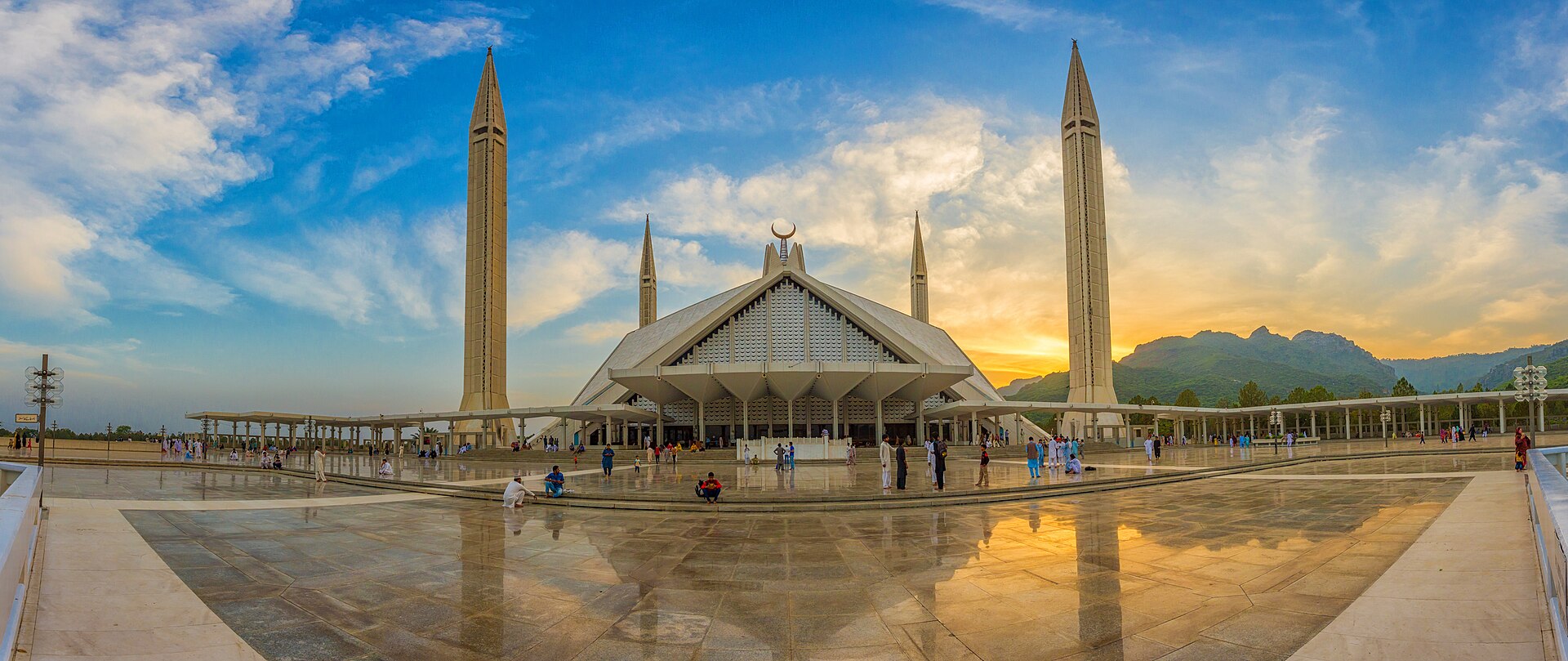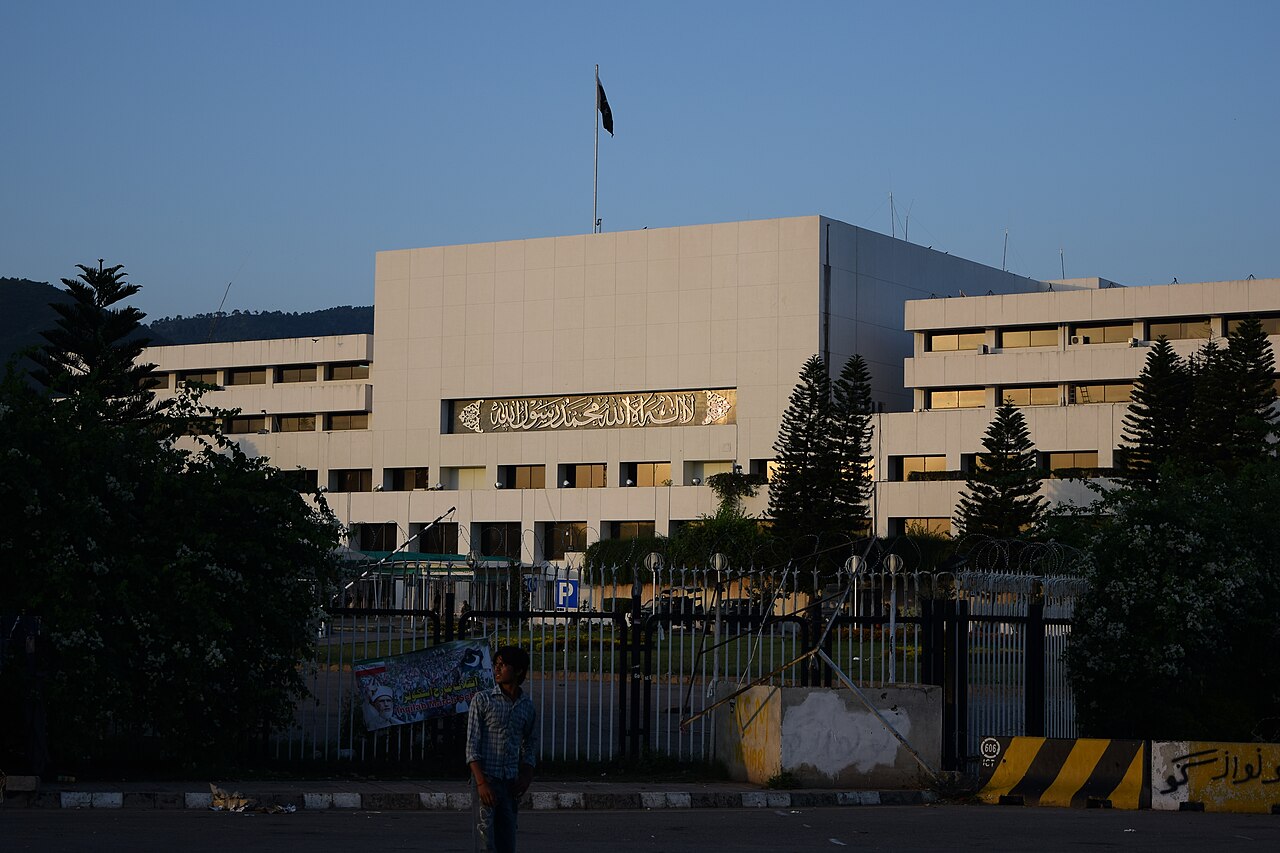

ISLAMABAD — At 3:59 PM Geneva time on April 20, Tasnim — the IRGC’s preferred newswire — told the world Iran “has not changed its decision to abstain from upcoming negotiations.” Less than two hours later, the New York Times reported that a delegation led by Mohammad Bagher Ghalibaf was packing its bags for Islamabad. Both stories were true, which is the entire problem.
That two-hour gap between Tasnim’s denial and the NYT’s confirmation is not confusion, diplomatic fog, or competing leaks from a disorganized government. It is the factional architecture of the Islamic Republic made visible in real time — the IRGC’s media arm projecting refusal while Ghalibaf, a man whose entire career was built inside the Revolutionary Guards, boards a plane to do exactly what Tasnim said would not happen. What followed was not a reversal of Iran’s position. It was a controlled deployment of attendance designed to ensure that when the April 22 ceasefire expires without a deal — and it will expire without a deal — Tehran is not the party holding the visible knife.
Table of Contents
- What happened in the 24 hours between “no plans” and “delegation en route”
- Who is Ghalibaf, and why does it matter that he is going?
- What does “not at any cost” actually mean?
- Why can Ghalibaf go without Vahidi’s concessions?
- What changed between April 20 and April 21?
- What is the realistic outcome of Islamabad Round 2?
- The Rouhani precedent
- Frequently asked questions
What happened in the 24 hours between “no plans” and “delegation en route”
The timeline matters because the sequence is the argument. On the morning of April 20, Iranian Foreign Ministry spokesman Esmaeil Baghaei told Al Jazeera that Iran had “no plans for the next round of negotiations,” citing three specific grievances: the US naval blockade imposed April 13, the seizure of the cargo ship Touska by USS Spruance on April 19, and Trump’s threats to bomb Iranian energy infrastructure. This was not vague displeasure — it was a structured case for non-attendance, delivered through the foreign ministry channel that answers to Araghchi and, by extension, to Pezeshkian’s civilian government.
At 3:59 PM Geneva time, Tasnim went further. “Informed sources” told the IRGC-aligned agency that Tehran “has not changed its decision to abstain.” The language was categorical: not hedged, not conditional, not “under review.” By 5:50 PM, the New York Times had two senior Iranian officials on record saying a delegation was preparing to travel Tuesday, led by Ghalibaf, conditional only on Vance’s attendance. The Wall Street Journal confirmed independently that Iran had “informed mediators” it would send a team.
We don’t believe in deadlines or ultimatums to secure Iran’s national interests. As of now, no plans for the next round of negotiations.
Esmaeil Baghaei, Iranian FM spokesman, April 20 — hours before delegation confirmed
The HOS Daily BriefThe Middle East briefing 3,000+ readers start their day with.
One email. Every weekday morning. Free.
By April 21, the delegation had arrived. Pakistani sources told reporters the refusal was “mere posturing to extract maximum advantage,” and Hamidreza Azizi of the German Institute for International and Security Affairs characterized the entire day’s oscillation as “a deliberate effort to shape the terms under which Iran” enters talks. Four US government aircraft with communications equipment and motorcade support had already landed at Nur Khan air base in Rawalpindi on Sunday — Washington, at least, was never in doubt about whether Iran would show.
Who is Ghalibaf, and why does it matter that he is going?
Western media has settled on a convenient shorthand for Mohammad Bagher Ghalibaf: “parliamentary speaker.” It is technically accurate and functionally misleading, like describing Vladimir Putin as a former civil servant. Ghalibaf joined the IRGC at 19 during the Iran-Iraq War, rose to managing director of Khatam al-Anbiya — the Guards’ construction and engineering conglomerate that Georgetown’s Mehran Kamrava has called “the central key security decision-making” institution within the IRGC — and was appointed commander of the IRGC Aerospace Force by Khamenei personally in 1996, a position he held until 2000.
The career path that followed — police chief, Tehran mayor, parliament speaker — is the trajectory of an IRGC figure who moved into civilian institutions without leaving the network. When Ghalibaf sits across from JD Vance in Islamabad, as he did during Round 1’s 21-hour marathon on April 11-12, he is not a civilian politician deployed to make peace. He is a creature of the IRGC institutional structure wearing a parliamentary title, and his presence signals that the Guards have sanctioned attendance — not that they have sanctioned concessions.
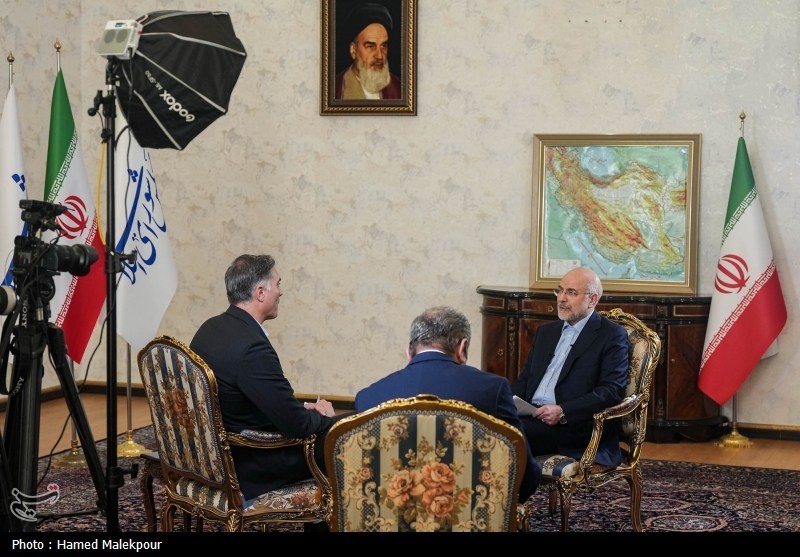
This distinction is load-bearing. After Round 1 collapsed without a deal or even a memorandum of understanding, Ghalibaf told Al Jazeera: “There has been progress in talks but there are many gaps and some fundamental points remain. We are still far from the final discussion.” That phrasing — “far from the final discussion,” not “far from a deal” — positions the entire exercise as preliminary, which is precisely how the IRGC-aligned faction needs it framed. Round 2 under Ghalibaf is not a negotiation toward agreement. It is an IRGC-credentialed performance of diplomatic seriousness calibrated to expire when the ceasefire does.
What does “not at any cost” actually mean?
Ebrahim Azizi — head of the Iranian Parliament’s National Security Committee and himself a former IRGC commander — gave the game away in an April 20 interview with Al Jazeera, though you have to read his language against the institutional grammar to hear it. “Iran’s decision to continue talks does not mean to negotiate at any cost,” he said, adding that engagement requires “positive signals” from the United States and that Iran’s “red lines must be observed.” The phrase “not at any cost” is doing extraordinary structural work: it authorizes presence while pre-emptively excusing the absence of outcomes.
But Azizi’s most revealing line was this: “We see the current negotiations as a continuation of the battlefield, and we see nothing other than the battlefield in this.” This is not diplomatic rhetoric. This is the IRGC’s doctrinal position rendered in plain language — that Islamabad is an extension of the war by diplomatic means, and that attendance is a tactical action in an ongoing military campaign rather than a move toward its resolution. If the talks “yield achievements that sustain those of the battlefield,” Azizi continued, “then the negotiation arena is also an opportunity for us. But not if the Americans intend to turn this into a field of excessive demands, based on their bullying approach.”
We see the current negotiations as a continuation of the battlefield, and we see nothing other than the battlefield in this.
Ebrahim Azizi, head of Iran’s Parliamentary National Security Committee, April 20
Read the structure: attendance is conditional on talks serving IRGC interests; if they do not, non-attendance was always the default position. “Not at any cost” is not a negotiating stance — it is a pre-loaded exit ramp, designed to be activated the moment Washington tables anything that would require Vahidi or the Supreme National Security Council to actually authorize a concession. Azizi has told you, in the clearest possible terms, that the delegation will sit at a table, perform engagement, and leave without signing anything that costs the IRGC a single centrifuge or a single nautical mile of Hormuz sovereignty.
Why can Ghalibaf go without Vahidi’s concessions?
The answer lies in what Iranian constitutional scholars call the authorization ceiling — the structural gap between who can attend talks and who can authorize what those talks produce. Under Article 110 of the Iranian constitution, the president has zero authority over the IRGC; only the Supreme Leader can command the Guards. Khamenei has been absent from public view for 44 days and counting, with his son Mojtaba communicating only via audio. No public orders from the Supreme Leader authorizing concessions on Hormuz sovereignty, the nuclear program, or the IRGC’s military posture have been issued or credibly reported.
The Institute for the Study of War assessed on April 19 that IRGC commander Ahmad Vahidi and his inner circle have assumed “temporary dominance” over Iran’s military operations and negotiating stance, with civilian figures including Foreign Minister Araghchi “effectively sidelined.” This is the same Vahidi who carries an active INTERPOL red notice for the 1994 AMIA bombing in Buenos Aires, who Pezeshkian publicly accused on April 4 of derailing the ceasefire — and against whom the president has no constitutional instrument to act. When Pezeshkian named Vahidi and Abdollahi as the men who wrecked the Islamabad mandate, he was simultaneously confessing that he could not stop them.
Ghalibaf’s presence at Round 2 does not breach this ceiling. He can attend, listen, relay positions, and report back — none of which requires Vahidi to authorize a single concession. The ISW’s precise language is instructive: “temporary dominance” means the IRGC faction controls not just military operations but the parameters of what any negotiator is permitted to agree to. Ghalibaf walks into Islamabad with an IRGC-stamped permission slip to be present. He does not walk in with permission to sign anything.
What changed between April 20 and April 21?
No US concession on the Touska seizure has been documented. No Oman-mediated signal has been confirmed. The naval blockade that Iran cited as a ceasefire violation remains in place — Trump told Bloomberg on April 20 that Hormuz “stays shut” until a deal is signed. The three grievances Baghaei cited as reasons for non-attendance on the morning of April 20 were all still operative by the afternoon when the NYT reported the delegation was preparing to travel. What changed was not the conditions but the calculation.
The Touska seizure itself deserves closer scrutiny, because its timing is not incidental to this reversal. On April 19, USS Spruance intercepted the Iranian-flagged cargo vessel in the north Arabian Sea — CENTCOM reported that Touska’s crew refused repeated warnings before the Navy disabled the ship and Marines boarded at night. The vessel had departed Shahid Rajaee in February, made port calls at Zhuhai and Shanghai, then went dark for two and a half days before attempting to return to Iran. CENTCOM described it as the first physical seizure since the blockade began on April 13.
Iran responded on April 20 with drone strikes against US naval vessels in the Sea of Oman — the first Iranian kinetic action against American assets since the ceasefire took effect on April 8. The IRGC faction now had both a grievance and a demonstration of military willingness: the precise combination for attending talks from a position of performed strength rather than perceived capitulation.
Three factors converge. First, Pakistan’s General Munir — who has emerged as the sole enforcement mechanism for any ceasefire arrangement — reportedly visited Khatam al-Anbiya headquarters on April 16, appealing directly to Abdollahi’s command structure rather than routing through Pezeshkian’s civilian government. Munir understands something Western diplomats keep failing to internalize: you negotiate with the people who have the guns, not the people who have the titles. Second, the ceasefire expires on April 22, and 1.2 to 1.5 million Hajj pilgrims are beginning to congregate in Makkah — with Indonesia’s first departure of 221,000 pilgrims scheduled for the same day the ceasefire lapses. Global media attention is at its annual peak for the Islamic world.
Third, and most consequentially, the IRGC faction calculated that absent Iranian participation, Tehran bears visible and exclusive blame for the ceasefire’s collapse — with the world watching pilgrims arrive in Saudi Arabia on the day the guns can legally restart. Controlled attendance with Azizi’s “not at any cost” framework shifts the narrative architecture: if talks fail, it is Washington’s “excessive demands” — the Touska not returned, the blockade not lifted, the bombing threats not withdrawn — that bear diplomatic weight. Iran shows up, performs seriousness, and leaves with the blame parcel redistributed. The cost of attendance is zero; the cost of visible absence, in the 24 hours before a deadline with every camera pointed at the Gulf, was unacceptably high.
What is the realistic outcome of Islamabad Round 2?
Pakistan is pursuing a memorandum of understanding that would extend the negotiating window by up to 60 days, according to CNBC — a framework that would buy time without requiring either side to concede on the structural deadlocks of Hormuz sovereignty and Iran’s 440.9 kilograms of highly enriched uranium at 60 percent enrichment. Trump’s Bloomberg interview, however, called a ceasefire extension “highly unlikely,” and his quiet shifting of the deadline to “Wednesday evening Washington time” — roughly 24 hours later than the original Tuesday expiry — suggests the White House sees the talks as a window for posturing rather than a window for agreement.
The structural obstacles are unchanged from Round 1, and in some respects have hardened. Iran’s ten-point plan requires IRGC “coordination” over Hormuz as a treaty condition — effectively demanding sovereignty recognition as a precondition for Phase 1, which makes Phase 1 impossible if the US maintains its UNCLOS freedom-of-navigation position. The US proposed a 20-year enrichment moratorium during the Round 1 back-channel; Iran countered with monitored down-blending, and Araghchi was reportedly “inches away” from an MoU before Vance walked out — a near-miss that evaporated because even Araghchi’s negotiating mandate was, as ISW documented, subject to IRGC veto. Since Round 1, the US has imposed a naval blockade, seized the Touska, and watched the OFAC General License U expire without renewal on April 19 — each step ratcheting the pressure but also giving Tehran additional grievances to cite as evidence of American bad faith.
The most probable outcome is procedural rather than substantive: enough diplomatic activity to generate headlines about “progress” and “continued engagement,” insufficient authorization from the IRGC-dominated command structure to produce any binding commitment. Saudi Arabia remains excluded from the table despite being the party most affected by any Hormuz arrangement — a structural absence that guarantees any framework produced in Islamabad lacks the consent of the Gulf’s largest oil exporter. If the talks collapse, the blame distribution will depend entirely on which side’s narrative travels faster: Iran’s “excessive American demands” or Washington’s “Iran refused to negotiate seriously.” Ghalibaf’s physical presence in the room tilts that contest measurably in Tehran’s favor, which is precisely why he is there.
The Rouhani precedent
In September 2013, Hassan Rouhani flew to New York for the United Nations General Assembly and did something no Iranian president had done in 34 years: he engaged directly with the Western diplomatic establishment, smiled for cameras, and projected reasonableness. The actual nuclear concessions under the JCPOA did not materialize for another two years — years during which Iran’s centrifuge count actually expanded — and the deal itself was made possible only because Khamenei personally authorized the Foreign Ministry to negotiate within parameters he set. What Rouhani purchased at the UN was not a deal — it was narrative advantage, a perception of Iranian willingness that shifted the diplomatic burden onto Washington and bought Tehran time to negotiate from a position of perceived good faith rather than visible intransigence.
Ghalibaf’s Islamabad attendance operates on the same logic, with one critical difference: Rouhani was a genuine moderate operating with Khamenei’s explicit authorization, while Ghalibaf is an IRGC-credentialed figure operating without clear authorization from an absent Supreme Leader. The Islamic jurisprudential concept of hudna — a temporary truce that does not require concessions and is not peace — maps onto what Ghalibaf is performing in Islamabad more accurately than any Western diplomatic framework. A hudna is a tactical pause, not a strategic shift, and Ghalibaf’s IRGC background means he understands this distinction with a precision that Western interlocutors consistently miss.
The US blockade costs Iran an estimated $435 million per day, the IMF has revised Iran’s 2026 GDP forecast to a contraction of 6.1 percent, and the Central Bank’s own memo estimates a 12-year recovery timeline with inflation running at 180 percent. The economic pressure is real, severe, and accelerating. But economic pressure and diplomatic concessions are not connected by a straight line in the Iranian system — they are mediated by the authorization ceiling, by Vahidi’s “temporary dominance,” by a Supreme Leader who has been silent for 44 days, and by an IRGC institution that would rather absorb economic collapse than surrender its hold over the strait it has spent decades building. Ghalibaf’s reciprocity doctrine demands American concessions before Iranian ones, and the Touska seizure — the first physical interdiction of an Iranian vessel since the blockade began — gave the hardliners exactly the grievance they needed to frame attendance as conditional and any failure as Washington’s fault.
Saeid Golkar, a professor of political science at the University of Tennessee Chattanooga and author of studies on IRGC political penetration, offered the most concise diagnosis: “Because the main arbitrator is gone, the fight between different factions has started.” That fight is not between war and peace. It is between factions that agree on strategic objectives and disagree only on tactics — and the faction with the guns, the constitutional authority, and the absent Supreme Leader’s implicit mandate is the one that decided Ghalibaf could go to Islamabad, decided what he is not authorized to concede, and will decide when to pull him back.
The assumption that sufficient economic pain produces diplomatic concessions has failed every time it has been tested against the IRGC’s institutional logic — from the 2012-2015 sanctions to the post-JCPOA collapse. What the Guards have built at Hormuz is not a bargaining chip; it is the institution’s core strategic asset, and institutions do not trade their core assets for relief packages. Ghalibaf’s controlled attendance in Islamabad is how that asset gets deployed in the diplomatic domain — not to produce an agreement, but to consume the deadline without leaving fingerprints on its failure.
Frequently asked questions
Is Iran’s attendance at Islamabad Round 2 a sign the ceasefire will be extended?
Almost certainly not. Trump told Bloomberg on April 20 that an extension is “highly unlikely,” and Iran’s attendance is structured around Azizi’s “not at any cost” framework, which pre-authorizes departure without concessions. Pakistan is pursuing a 60-day extension MoU, but this requires both parties to agree on terms that the IRGC-dominated command structure has shown no willingness to accept. The most realistic scenario is that talks produce enough activity to generate headlines about “continued dialogue” while the ceasefire quietly lapses. There is no extension mechanism built into the current framework — the Soufan Center has confirmed no automatic rollover clause exists — meaning the moment the deadline passes, neither side faces a procedural requirement to hold fire.
Why did Trump shift the ceasefire deadline from Tuesday to Wednesday evening?
Trump’s Bloomberg interview specified “Wednesday evening Washington time” as the expiry, roughly 24 hours later than the original April 22 deadline. This quiet extension has not been formally announced or widely analyzed, but it serves a dual purpose: it gives the Islamabad talks an extra day of runway while allowing Trump to claim he gave diplomacy every possible chance before resuming military operations. The shift also aligns the effective expiry with prime-time US news coverage on Wednesday evening, maximizing the domestic political impact of whatever happens next.
What role is Pakistan playing beyond hosting the talks?
Pakistan has evolved from venue provider to active mediator with unique institutional access. Muhammad Faisal, a Pakistani security analyst at the University of Technology Sydney, described the strategy as “dual-tracked: PM Sharif is reassuring Gulf allies while CDF Munir is engaged in hard negotiations between the two sides to narrow gaps.” Munir’s April 16 visit to Khatam al-Anbiya headquarters — Abdollahi’s IRGC command — demonstrates that Pakistan is engaging directly with the military decision-makers rather than relying on civilian channels. Pakistan simultaneously serves as Iran’s protecting power in the United States (a role it has held since 1992) and as a Saudi treaty ally under the September 2025 SMDA, with a $5 billion Saudi loan maturing in June 2026 — a structural position that gives Islamabad both access and vulnerability.
What happens to the Strait of Hormuz if the ceasefire expires without a deal?
The US naval blockade, effective since April 13, applies to Iranian ports and toll-collecting vessels rather than all Hormuz transit. If the ceasefire lapses, the IRGC — which declared “full authority to manage the Strait” on April 5 and again on April 10, while its Navy commander position remains unfilled 22 days after Tangsiri’s killing — would likely resume aggressive enforcement of its self-declared “danger zone” across standard shipping lanes. The global economic exposure is staggering: SolAbility estimates prolonged Hormuz closure costs $20 billion per day in global GDP, and with four Avenger-class mine countermeasure ships decommissioned from Bahrain in September 2025, the US has limited capacity to guarantee safe passage through IRGC-mined waters.
Could Ghalibaf negotiate a deal even if he wanted to?
No. Under Article 110 of Iran’s constitution, only the Supreme Leader can command the IRGC. Khamenei has been absent from public view for over 44 days, with no public orders authorizing concessions on Hormuz, the nuclear program, or military posture. Vahidi’s “temporary dominance” (ISW’s term) means the IRGC controls not just military operations but the parameters of permissible negotiation. Round 1’s 71-member Iranian delegation — which arrived in Islamabad with no signed output and no shared communiqué — is the structural template: large enough to signal seriousness, authorized only to listen. Ghalibaf can relay positions and generate diplomatic activity, but nothing binding can emerge without authorization from a command structure whose principal has been silent for over six weeks.