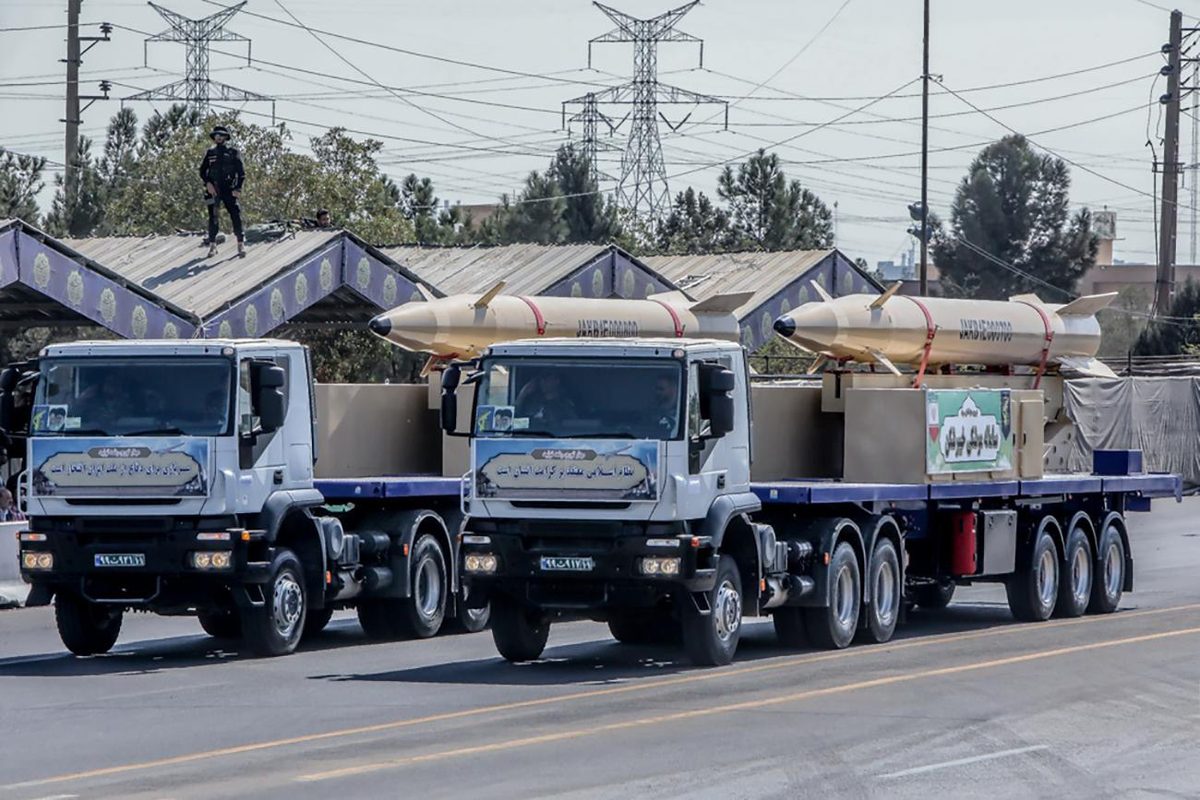

TEHRAN — The commander of the IRGC Aerospace Force told Iranians on April 19 that the ceasefire has not slowed Iran’s missile and drone rearmament but accelerated it, releasing video of underground launcher overhauls and taunting the United States for being forced to “bring in ammunition from the other side of the world in a trickle.” Brigadier General Seyed Majid Mousavi’s statement, distributed through the Supreme National Security Council’s house channel Nour News, is the first senior-level public declaration that the eight-day pause since April 11 has been an active rearmament window rather than a diplomatic breathing space — and it arrived three days before the ceasefire is due to expire.
For Riyadh, that is not rhetoric. Saudi Arabia ended the first phase of the war with roughly 400 PAC-3 MSE interceptors in its national stock, down from a pre-war GCC combined pool of about 2,800; at the ~63 rounds-per-day depletion rate recorded in the final week before the April 11 pause, those 400 rounds cover fewer than seven days of sustained combat. If Mousavi is even half right about what is coming off Iran’s production lines this month, the arithmetic of Eastern Province defence breaks before the weekend.
Table of Contents
What Mousavi actually said
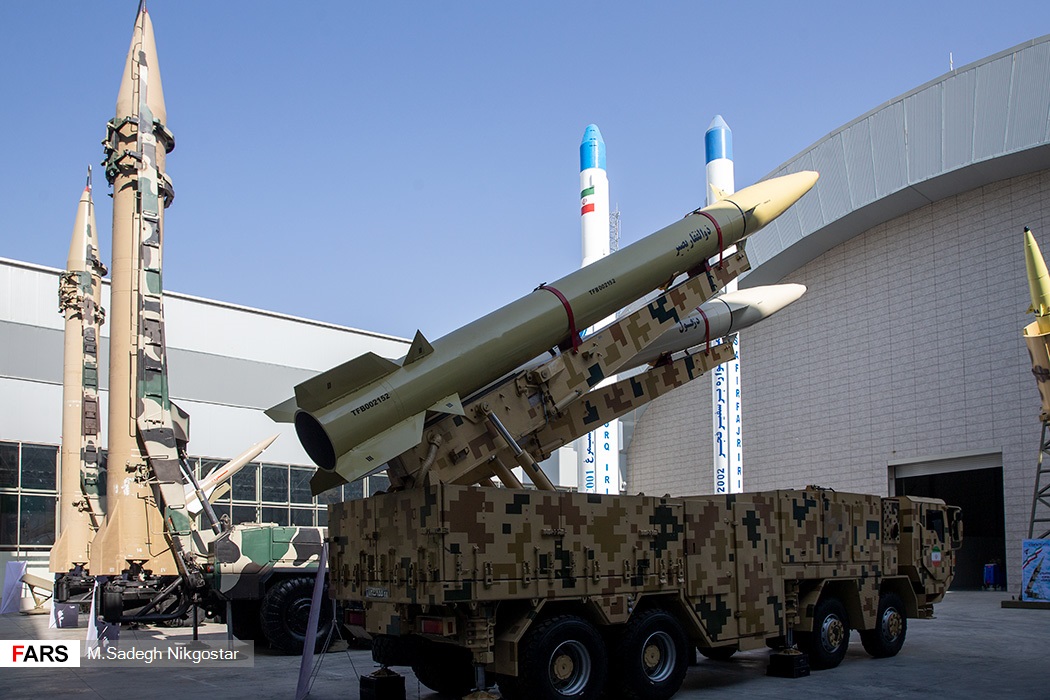
The video went out on Nour News on Sunday and was picked up by Tasnim and PressTV within the hour. It shows technicians moving inside a tunnel complex around transporter-erector-launchers in various stages of refit, with Mousavi’s voiceover making three claims in quick succession — that Iran’s ceasefire rearmament speed is higher than its pre-war rate, that the enemy is “incapable of creating such conditions for themselves during the ceasefire,” and that the United States has been reduced to airlifting munitions from the continental United States in small batches because its regional stocks have failed.
“In the ceasefire period, our speed in updating and refilling missile and drone launch platforms is higher than before the war,” Mousavi said in the clip carried by PressTV. He then delivered the line the IRGC clearly wanted travelling: “They have lost this phase of the war as well. They have lost the Strait, they have lost Lebanon, and they have lost the entire region.”
Mohammad Reza Naqdi, senior adviser to the IRGC commander, carried the message into a second register the same day. In a line relayed by Seoul Economic Daily in Korean-language translation, Naqdi said “if hostilities resume, we can launch the latest missiles and drones manufactured this month” — a quote whose translation chain the Jerusalem Post flagged as not independently verifiable, but whose thrust the Iranian state-media chorus corroborated within hours. The claim is qualitative, not quantitative — no production volumes, no launcher counts, no inventory baselines — and reads as textbook information operation; harder to dismiss as signal, because the physical evidence assembled over the past four weeks has been moving in the same direction.
Is any of this verifiable?
Some of it is, and some of it remains a claim that sits behind the Iranian state’s own distribution channels. The Jerusalem Post, which ran the Mousavi story late on April 19, noted flatly that it “could not independently verify the footage’s legitimacy” — Nour News is the SNSC’s own platform, not a neutral outlet, and tunnel footage shot under IRGC conditions tells you only what the IRGC wants seen.
The Middle East briefing 3,000+ readers start their day with.
One email. Every weekday morning. Free.
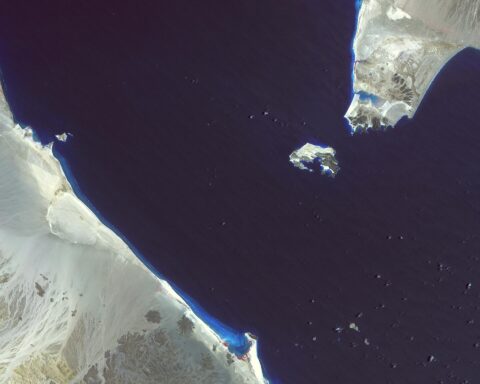
The satellite picture tells a different, harder story. Commercial imagery captured on April 10 and published by CNN five days later shows front-end loaders, excavators, and dump trucks clearing debris from tunnel entrances at Iran’s underground ballistic-missile base near Khomein, in Markazi Province — activity that predates Mousavi’s announcement by more than a week, and which the James Martin Center for Nonproliferation Studies read as textbook dig-out behaviour. “Their concept of operations is simple,” Sam Lair, a research associate at the centre, told VOR News: “absorb the first attack, dig yourself out, and then launch again.”
US intelligence assessments circulating on April 19, reported by SOF News, placed Iran’s residual capacity at roughly 40 percent of its pre-war long-range attack-drone inventory and around 60 percent of its ballistic and cruise missile launcher capacity — figures that are both higher than a Soufan Center estimate from April 6, which put surviving launcher capacity closer to 50 percent, and consistent with a battlefield in which the pressure has come off. By day ten of the conflict, Iran had fired roughly 2,410 ballistic missiles and 3,560 drones, per Jerusalem Post accounting; its peak daily launch rate of 480 on February 28 had collapsed to 40 by March 9, a 92 percent drop. Since April 11, that rate has been zero — which is exactly the interval Mousavi says has been used for refit.
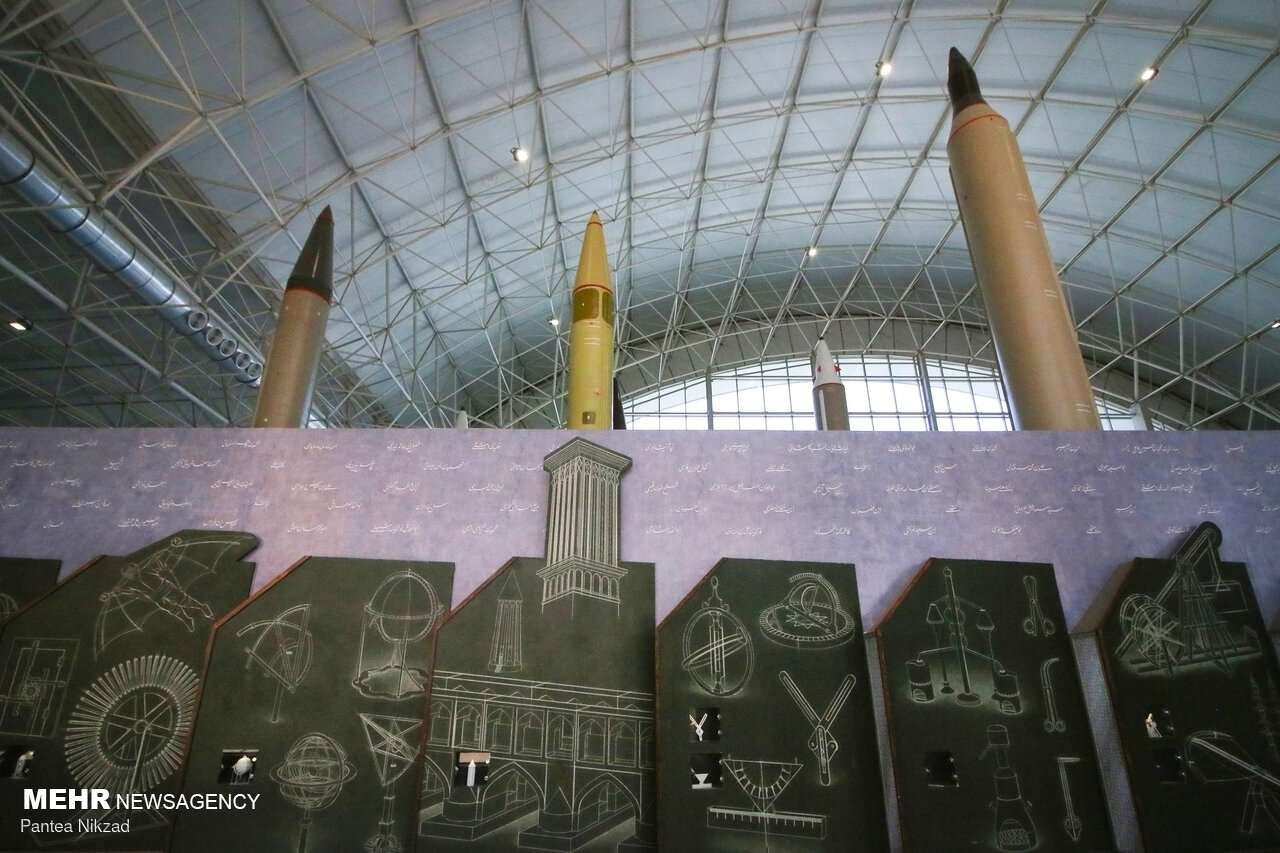
The Hudson Institute’s Can Kasapoglu, who has tracked the IRGC Aerospace Force more closely than any Western analyst this cycle, wrote in his “Tehran Reloads” assessment that the IRGC began the 12-Day War of June 2025 with 480 TELs and ended it with roughly 100, and that the surviving cadre of hardened underground facilities — some extending 1,500 feet into granite — means “hiding missiles and launchers underground can ensure that at least a small number survive even the heaviest strikes and that mass salvos can either penetrate or attrit US and allied air and missile defenses.” The Soufan Center counted 77 percent of visible tunnel entrances hit during the winter campaign; activity continued inside within hours.
The Chinese ships that arrived before the ceasefire
The strongest single piece of evidence that Iran’s rearmament is a scheduled operation rather than an opportunistic response to the April 11 pause sits in the shipping data, and it does not flatter the diplomatic narrative out of Washington. Five Iran-linked vessels — the Hamouna, Barzin, Shabdis, Rayen, and Zardis — departed Gaolan port at Zhuhai in southern China between late February and mid-March, carrying cargo the Washington Post, The Telegraph, and 19FortyFive identified as suspected sodium perchlorate, a solid rocket-fuel precursor used in medium-range ballistic missiles.
Four docked near Chabahar; one near Bandar Abbas. First arrivals began March 22. That is seventeen days before the ceasefire was agreed on April 8, and twenty days before it took effect on April 11.
The combined cargo, according to analysis cited by 19FortyFive, could theoretically support production of approximately 785 additional ballistic missiles — enough to sustain between ten and thirty launches per day for roughly a month. Kasapoglu, writing before this most recent tranche arrived, had already identified a separate Chinese shipment of sodium perchlorate through Bandar Abbas in September–October 2025 sufficient for “several hundred medium-range ballistic missiles.” Iran’s baseline pre-war output, by Army Recognition’s reading, ran at roughly 3.3 ballistic missiles and 6.7 drones per day; the regime has claimed a tenfold increase in drone production since escalation began.
None of this requires the ceasefire to work. The propellant arrived in Iranian ports before anyone in Islamabad was drafting ceasefire language; the TELs were being refitted before Mousavi put out his video; the Khomein satellite evidence predates the announcement by nine days. The reading that fits the evidence is the one the IRGC itself volunteered on April 19 — the pause is being used, not observed. It was always going to be.
Why Mojtaba Khamenei’s navy line matters
Mousavi’s statement did not land in a vacuum. Twenty-four hours earlier, on Army Day, Mojtaba Khamenei — whose 44-day absence from any form of public appearance beyond written Telegram statements has been the most durable authorization-ceiling problem in every mediator’s file since Islamabad — issued a written message that did three things at once.
It invoked drones (“in the same way that Iran’s drones strike the US and the Zionist murderers like lightning”). It pivoted explicitly to the navy (“its valiant navy is also ready to inflict new bitter defeats on its enemies”). And it ran the same day as the IRGC’s reversal of Foreign Minister Araghchi’s “completely open” Hormuz declaration, in which the IRGC joint command — via Tasnim — returned the Strait to “strict management and control” within hours of the diplomatic tweet.
The written Mojtaba line, the IRGC joint command statement, and the Mousavi video compose a single message aimed at three audiences: a domestic base told the war has gone well, a mediator pool told the authorization structure has not shifted, and a Saudi and Emirati leadership told, in the least ambiguous Persian military register available, that the drone force has been refreshed and the navy is ready. “Courageously defending the land, water, and flag that belong to it,” Mojtaba’s statement read, against “the two leading armies of disbelief and Arrogance.”
Can Saudi air defences hold for a week?
The answer depends entirely on whether the ceasefire extends past April 22, and on whether the rearmament claim is directionally real. If it is, the Eastern Province calculus looks worse than at any point in the first phase.
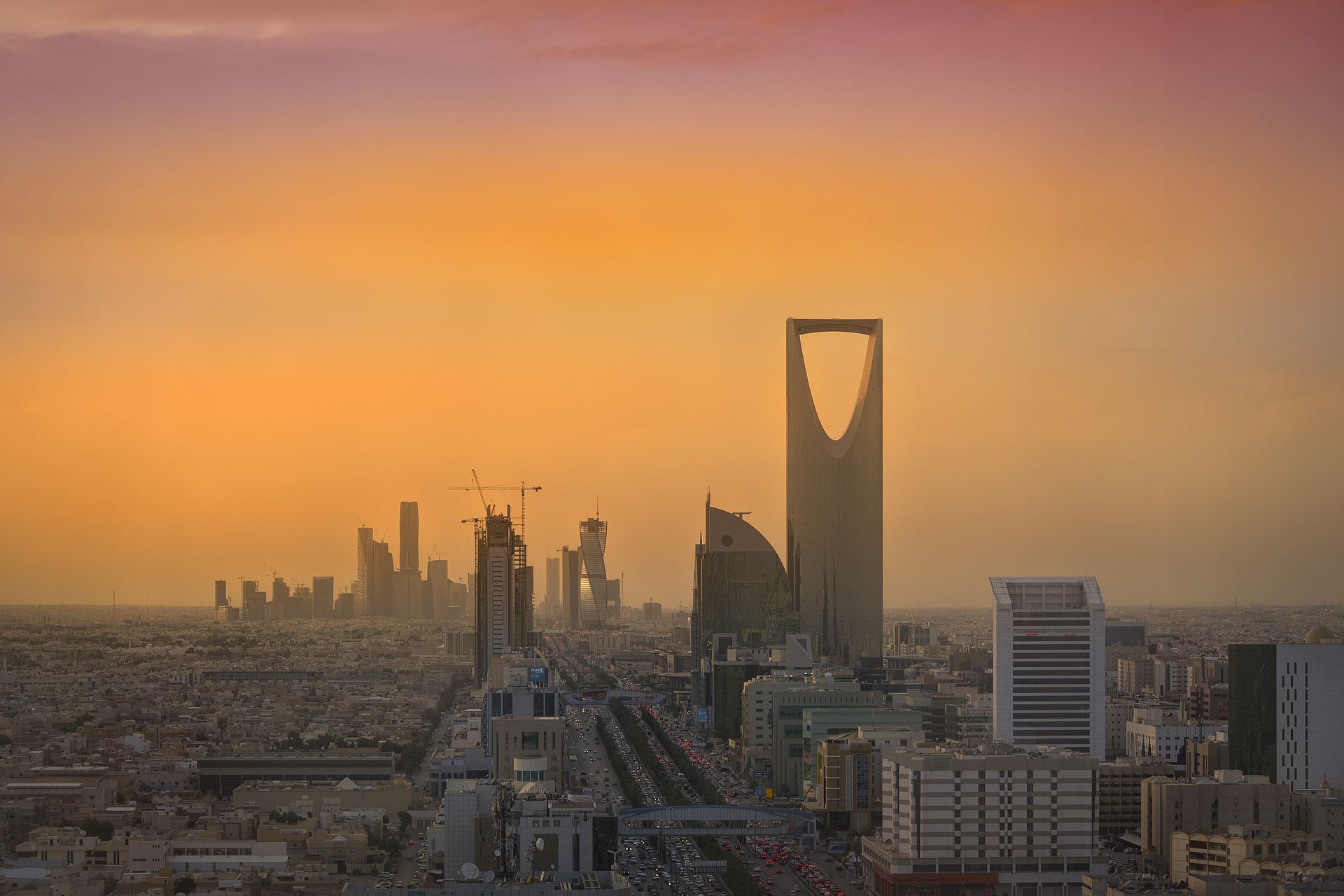
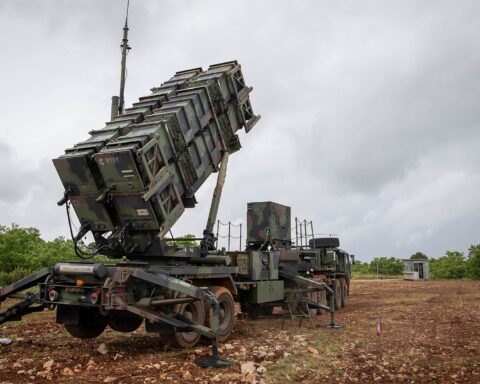
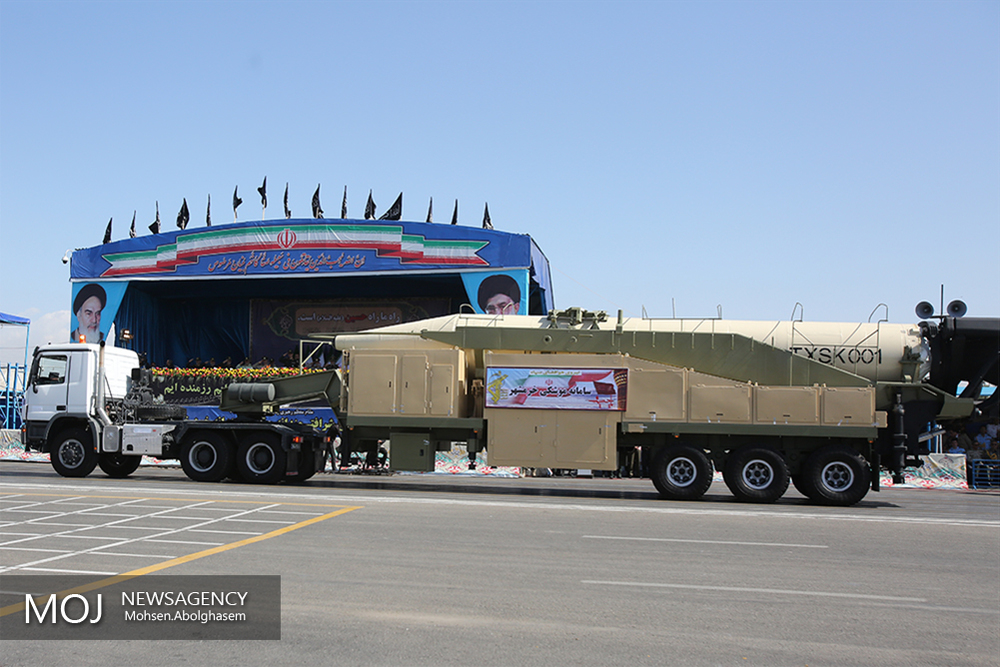
Saudi Arabia entered the conflict in February with the largest PAC-3 MSE inventory in the Gulf; by April 11, its national stock had been drawn down to roughly 400 rounds — approximately 14 percent of the pre-war combined GCC stockpile of around 2,800, representing an 86 percent depletion across the bloc. Much of that was absorbed by batteries defending Ras Tanura, Jubail, Khurais, and the Jeddah port complex. At a ~63 rounds-per-day consumption rate observed in the final week before the pause, the 400 remaining interceptors cover fewer than seven days of sustained combat against a force the Pentagon now assesses retains 60 percent of its launcher capacity.
The replenishment arithmetic works against Riyadh. The United States approved a $9 billion Foreign Military Sale of 730 additional PAC-3 interceptors in February 2026, but that programme’s delivery timeline runs 18 to 36 months; Raytheon’s Camden, Arkansas line peaks at roughly 550 rounds per year industry-wide, against global demand that now includes Ukraine, Taiwan, Japan, South Korea, Israel, Poland, and Germany. Iran, per Mousavi’s claim, is producing at higher than pre-war rates from underground facilities the US air campaign has repeatedly struck without silencing. The “trickle” taunt has a real logistics basis, whatever one thinks of its messenger.
Khurais remains offline, with roughly 300,000 barrels per day absent since the February strike and no restoration timeline announced. Ras Tanura, which handles the single largest share of Saudi crude exports, has resumed loadings but is operating with reduced redundancy. The Eastern Province industrial belt — Ras Tanura, Abqaiq, Jubail, Khurais — sits within range of Iranian medium-range ballistic missiles fired from the same Khomein base CNN watched being cleared. If the ceasefire expires Wednesday without extension, that is the arithmetic that will govern the first 72 hours.
The Pentagon’s answer — and its limits
Defense Secretary Pete Hegseth has given one on-record response to the reconstitution narrative, and it is six words long: “You can dig out for now, but you can’t reconstitute.” The distinction he is drawing is between debris-clearing, which the satellite evidence confirms, and re-establishing the production lines, supply chains, and skilled technical cadre required to rebuild at scale. On paper, that distinction has merit; the June 2025 Israeli campaign reportedly killed General Amir Ali Hajizadeh, the previous Aerospace Force commander, and eliminated substantial segments of the missile-programme technical leadership in a single weekend, forcing Khamenei’s appointment of Mousavi — then Hajizadeh’s deputy — on June 14.
The structural problem with the Hegseth line is that it treats the supply chain as vulnerable, when the evidence of the past four weeks is that it is not. Chinese propellant precursor has moved through Bandar Abbas and Chabahar in at least two separate documented tranches — September–October 2025 and February–March 2026. The hardened facilities the campaign struck were designed, by Iranian missile-programme founder Hassan Tehrani Moghaddam, to be reconstituted from inside; Mousavi worked directly under Moghaddam for years before the latter’s death in the 2011 Bidganeh explosion, and Kasapoglu reads Mousavi’s appointment as a deliberate continuity signal from Khamenei, not a caretaker posting.
“Tehran views its ballistic missile force as a strategic priority and is prepared to absorb heavy diplomatic and economic penalties” to rebuild it, Kasapoglu wrote. That has been the pattern across 180 percent inflation, the IRGC Navy’s full-authority declaration over Hormuz, and the collapse of the Islamabad talks. There is no evidence the calculus has changed.
Background: Mousavi, missile cities, and the 12-Day War
Seyed Majid Mousavi spent sixteen years as Hajizadeh’s deputy before Khamenei’s June 14, 2025 appointment to the top Aerospace Force post. The US State Department had sanctioned him in December 2024, while he was still deputy, citing his role in Iranian ballistic missile and drone development. A direct protégé of Tehrani Moghaddam, the father of Iran’s missile programme, his elevation after the Israeli decapitation strikes was read across the intelligence community as a signal that programme continuity was intended to survive the leadership loss.
The “missile cities” doctrine those two men built extends tunnel complexes into granite mountains to depths of more than 1,500 feet. It was designed specifically for the scenario now playing out: absorb the first campaign, reconstitute inside the mountain, and relaunch. The IRGC entered the 12-Day War of June 2025 with approximately 480 TELs and exited with roughly 100 — a 79 percent attrition rate Iranian planners had war-gamed and accepted as a survivability threshold — and the programme’s internal architecture recovered anyway.
The reading Mousavi is inviting Riyadh to make is not that Iran’s force was unscathed; it is that the collapse from 480 to 40 daily launches by March 9 was the launcher pool exhausting itself, and the eight weeks since — including the Salalah retaliation sequence — have been used to refill it. That was the doctrine’s design from the beginning.
FAQ
Did Iran actually rearm faster during the ceasefire than before the war?
There is no independently verified production volume to confirm or reject the claim. What is verifiable: satellite imagery from April 10 shows active clearance at the Khomein underground missile base; US intelligence on April 19 assessed Iran retains roughly 40 percent of its pre-war long-range attack-drone inventory and 60 percent of its ballistic and cruise missile launcher capacity; Chinese vessels carrying suspected sodium perchlorate arrived at Chabahar and Bandar Abbas from March 22, seventeen days before the ceasefire was agreed. The claim cannot be confirmed at the volumes Mousavi implies, but the underlying supply chain and reconstitution activity are both documented.
Why was the footage released through Nour News rather than IRNA or PressTV first?
Nour News is directly affiliated with the Supreme National Security Council and has historically been used for messages requiring SNSC endorsement. Given the authorization-ceiling problem that has dogged Islamabad and Oman negotiations, routing the rearmament claim through Nour News signals it was cleared above the IRGC Aerospace Force command alone. PressTV and Tasnim amplified within the hour, but the initial routing is the part worth noting.
What is the status of Saudi Arabia’s $9 billion PAC-3 order?
The Foreign Military Sale, approved in February 2026, covers 730 additional PAC-3 MSE interceptors. Production capacity at roughly 550 rounds per year industry-wide — against demand from Ukraine, Taiwan, Japan, South Korea, Israel, Poland, and Germany — puts the delivery timeline at 18 to 36 months. None of the new interceptors will reach Saudi batteries before any renewed phase of the current war.
Has the IRGC ever made rearmament claims that turned out to be inflated?
Regularly. CENTCOM has denied six separate IRGC claims of US aircraft destruction since the start of the war; NewsGuard tracked more than 50 Iranian state-media disinformation items across a 25-day window; the INSS assessed 37,000 AI-generated information-operation content pieces reached 145 million views, with 72 percent running on TikTok. The Mousavi claim should be weighed in that context. The Khomein satellite imagery, the Chinese propellant shipments, and the US intelligence assessment of surviving launcher capacity are not IRGC claims — they come from sources with no interest in inflating Iranian capability.
What happens if the ceasefire expires on April 22 without extension?
The first 72 hours determine whether Saudi PAC-3 stocks can absorb a renewed barrage until US and allied resupply reaches theatre. At 63 rounds-per-day depletion against pre-pause launch tempo, the 400 remaining Saudi interceptors deplete inside seven days. Eastern Province industrial targets — Ras Tanura, Jubail, Abqaiq, a Khurais complex already 300,000 barrels per day offline — remain within range of the same class of missile whose launchers CNN watched being restored at Khomein. Whether Iran has actually produced the volumes Mousavi claims is, at that point, a question answered by incoming fire, not open-source intelligence.