
RIYADH — King Salman and Crown Prince Mohammed bin Salman issued a joint directive on April 20 ordering government agencies to strengthen strategic food reserves and supply networks — 48 hours before the Iran-war ceasefire expires on April 22. The directive is not an administrative exercise. It is the clearest signal yet that the Saudi leadership is pre-positioning for resumed hostilities, not betting on an extension that no mechanism exists to deliver.
The order activated the General Food Security Authority, the Agricultural Development Fund, the National Development Fund, and the Ministry of Environment, Water and Agriculture. No specific tonnage targets or timelines were published. That vagueness is itself the message: a kingdom that imports 80% of its food and has lost access to its entire eastern port infrastructure is building reserves at a pace it does not want adversaries to calibrate.
The same week, Finance Minister Mohammed Aljadaan told the IMF Spring Meetings in Washington that even if hostilities ended immediately, Gulf output recovery would take “weeks if not months.” Tanker logistics normalization, he added, might not arrive until “the end of June.” The directive and the testimony form a single governance signal issued through two channels — one domestic, one international.
Table of Contents
- What the Directive Orders — and What It Withholds
- How Vulnerable Is Saudi Arabia’s Food Supply?
- The Jeddah Bottleneck
- Why 2026 Is Not 1991
- The Aljadaan Parallel Track
- What Does Full Hormuz Closure Mean for Saudi Food Imports?
- The Fertilizer Multiplier
- The Fiscal Bind: Reserves Against a Deficit
- Can Saudi Arabia Feed Itself During a Prolonged Conflict?
- Frequently Asked Questions
What the Directive Orders — and What It Withholds
The April 20 directive tasked five institutions with executing what the official readout described as “an integrated framework designed to raise the efficiency of supply networks and bolster strategic reserves.” The agencies — GFSA, the Agricultural Development Fund, the National Development Fund, the Ministry of Environment, Water and Agriculture, and the Ministry of Finance through its joint oversight role — span the full chain from procurement to logistics to financing.
Minister of Environment and GFSA Chairman Abdulrahman Al-Fadli confirmed the directives “reflect the leadership’s commitment to addressing the economic pressures affecting regional food supply chains.” He added that the Kingdom “has successfully navigated similar challenges previously,” citing COVID-19 and the Russia-Ukraine crisis as reference points. Neither comparison holds. COVID slowed supply chains without closing a physical chokepoint. Russia-Ukraine disrupted sourcing but not delivery routes. Hormuz closure eliminates an entire corridor.
The directive’s most conspicuous feature is what it omits. No metric tonnes. No reserve targets. No procurement ceilings. “Further details on the implementation roadmap are expected to be published by the relevant authorities in the coming days,” the readout stated. In a kingdom that publishes granular detail on Vision 2030 project milestones, this opacity is deliberate. Publishing reserve targets during an active chokepoint crisis would hand Iran’s IRGC a logistics intelligence briefing — how much Saudi Arabia has, how long it can hold, and when pressure begins to bite.
The Middle East briefing 3,000+ readers start their day with.
One email. Every weekday morning. Free.
Khalid Al-Falih, Minister of State, visited GFSA headquarters to review its newly upgraded Early Warning Center, which uses real-time data analytics to track global and domestic food supply indicators. The visit — by a minister whose portfolio spans investment and industrial strategy, not agriculture — confirms the directive is being treated as a national security operation, not a food ministry exercise.
How Vulnerable Is Saudi Arabia’s Food Supply?
The numbers are unambiguous. Saudi Arabia imports approximately 80% of its food requirements. The dependency is not evenly distributed across commodities — it is concentrated in the staples that populations cannot substitute away from.
| Commodity | Import Dependency | Primary Sources | Hormuz Exposure |
|---|---|---|---|
| Rice | 100% | India, Pakistan, Thailand | High — eastern port delivery |
| Soybeans | 95% | Brazil, Argentina, US | Mixed — Atlantic + Asian routes |
| Vegetable oils | 91% | Indonesia, Malaysia, Ukraine | High — SE Asian routes via Hormuz |
| Corn | 89% | Brazil, Argentina, US | Mixed |
| Wheat | 74–75% | EU, Australia, Black Sea, Americas | Moderate — Australia via Hormuz |
Local wheat production sits at approximately 1.1 million metric tonnes against total demand of 4.2 million MT. Before the April 20 directive, GFSA had already contracted 2.051 million MT of wheat for delivery through April 2026, at an average price of $262.30 per tonne. The January 2026 tender alone secured 907,000 MT — a product of the diversification strategy Saudi Arabia accelerated after Russia’s invasion of Ukraine disrupted Black Sea grain routes that had supplied 20–30% of Gulf wheat.
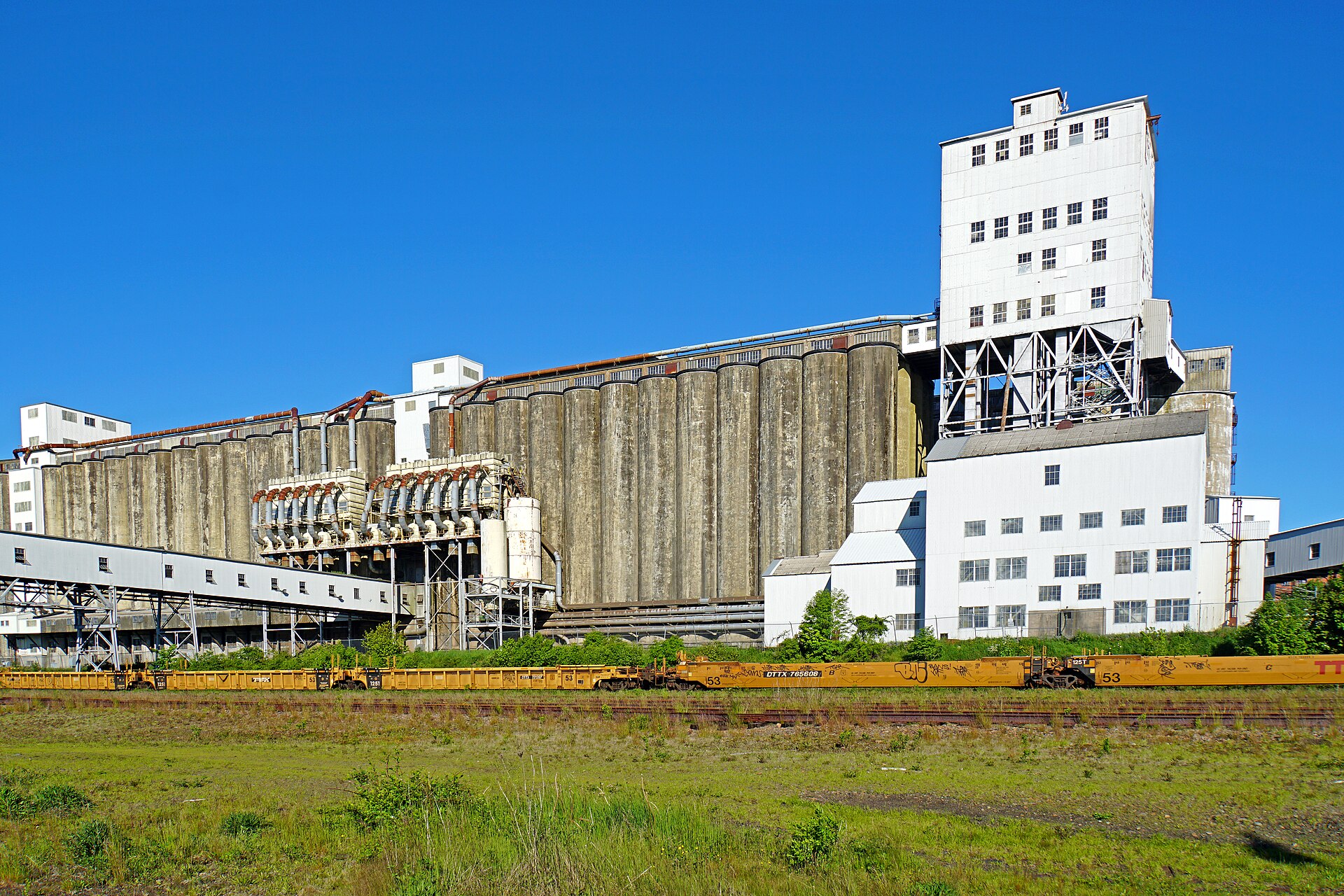
The strategic wheat reserve stands at approximately four months of national consumption, or roughly 1.5 million MT. That buffer was designed for supply chain disruptions — delayed shipments, crop failures, price spikes. It was not designed for a scenario in which 40% of the country’s containerized food imports are physically severed by the closure of a maritime chokepoint.
The Jeddah Bottleneck
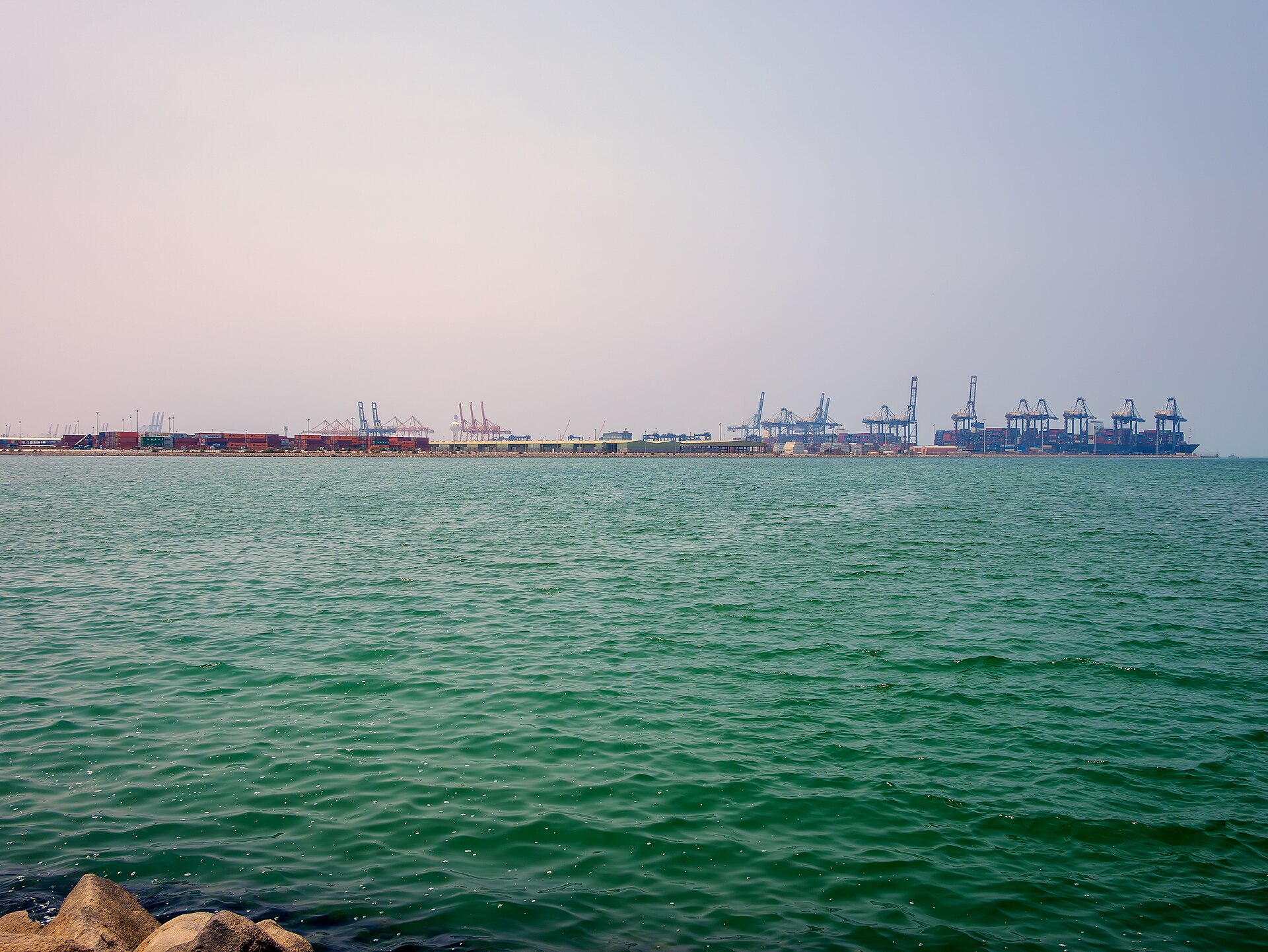
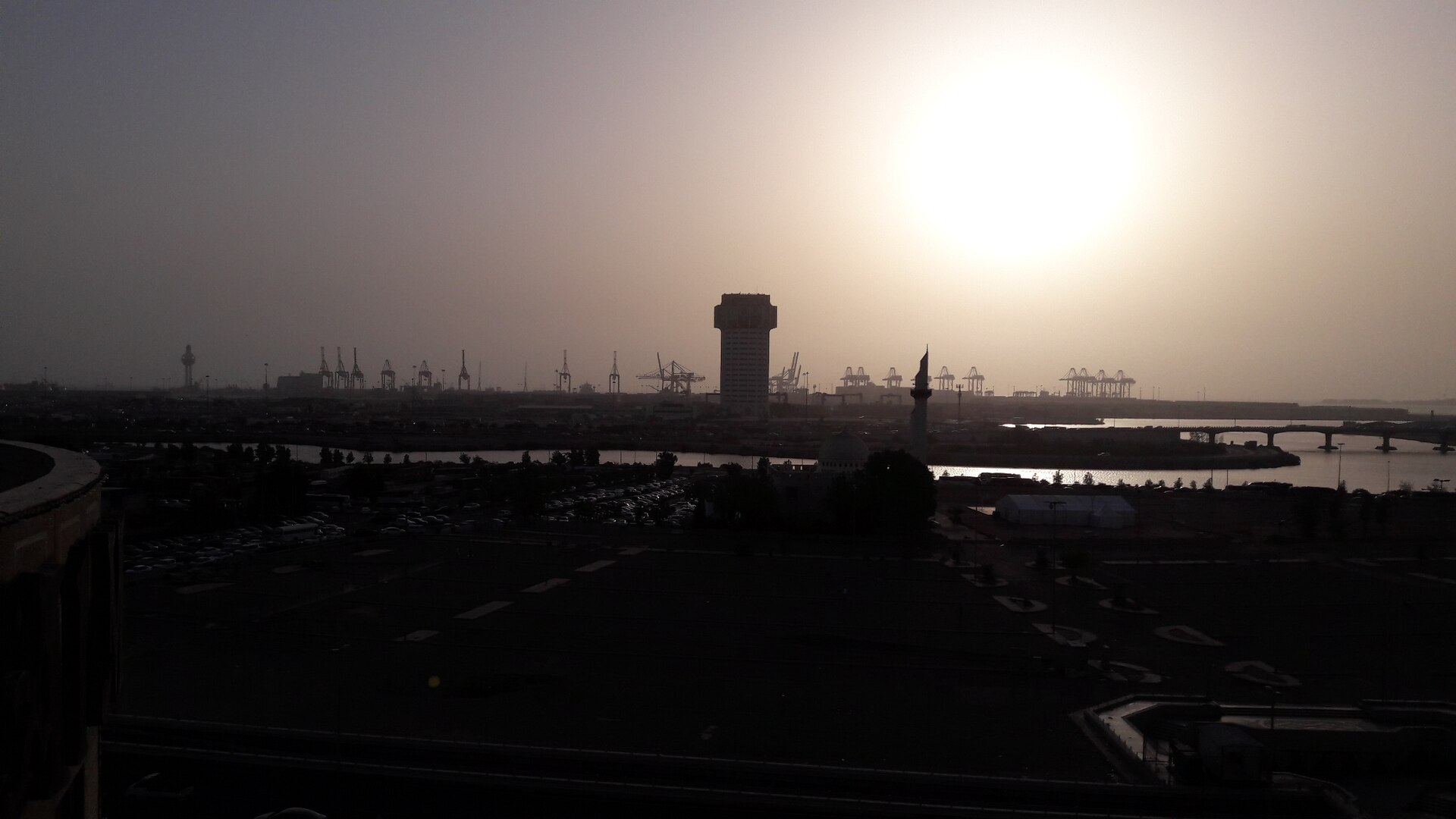
Before the war, Jeddah Islamic Port handled 64% of all ship calls to Saudi Arabia. With eastern ports — Dammam, Jubail, and the facilities that processed over 25% of pre-war imports — cut off by the Hormuz closure, Jeddah’s share has risen to 76%. Officials braced for a 50% surge in arrivals. What arrived instead was a systemic bottleneck.
Average ship wait times at Jeddah have doubled. Berth stay times are up approximately 33%. Kpler analyst Ronan Boudet described the situation in terms that infrastructure planners in Riyadh would find difficult to dismiss: “Jeddah is genuinely the single load-bearing port for Saudi imports right now. The system is visibly straining.”
The concentration creates a compounding vulnerability. Jeddah sits on the Red Sea, which means its supply lines run through Bab al-Mandab — the strait that Houthi forces have been interdicting since their “Hour Zero” declaration on March 14. Maersk’s regional managing director Charles van der Steene framed the triage already underway: “Food and medicine are the priority … Whether it is for the UAE, whether it’s for Saudi, whether it’s for Bahrain or Kuwait.”
Why 2026 Is Not 1991
The instinctive comparison is to the 1990–91 Gulf War, when Iraq’s invasion of Kuwait placed Saudi Arabia under direct military threat. But that comparison obscures more than it reveals. In 1991, Saudi Arabia was the world’s sixth-largest wheat exporter. The kingdom had spent the 1980s subsidizing domestic wheat production at $1,000 per tonne — roughly six to ten times the prevailing international price — and had achieved genuine self-sufficiency in its primary staple grain. No food reserve directive was needed because the food was already there, grown on Saudi soil, stored in Saudi silos.
That era ended between 2008 and 2016, when the government phased out domestic wheat production after recognizing that the subsidy program was depleting non-renewable aquifer reserves at an unsustainable rate. The decision was rational on water-security grounds. Its consequence was to convert Saudi Arabia from a food exporter to one of the world’s most import-dependent large economies in barely eight years.
The 2008 global food crisis prompted the first institutional response to this new vulnerability. King Abdullah launched the Saudi Agricultural Investment Abroad initiative, redirecting food security strategy from domestic production subsidies to overseas farmland acquisition in Sudan, Ethiopia, and Brazil. The logic was sound: if you cannot grow it at home, secure it at the source. But overseas farmland does not help when the shipping corridor between source and consumer is closed.
The 2019 Abqaiq-Khurais attack — the most severe strike on Saudi energy infrastructure before the current war — triggered an emergency response focused entirely on oil. No food reserve directive was issued because Hormuz remained open and import logistics were unaffected. The attack demonstrated vulnerability in energy infrastructure. It did not test food infrastructure because the supply chain’s critical dependency — open chokepoints — remained intact.
What makes 2026 different from any prior disruption: a kingdom that dismantled its domestic food production capacity a decade ago now faces simultaneous closure or threatened closure of both maritime corridors through which its imported food arrives. The 1972 Royal Decree that established what is now GFSA set a six-month wheat reserve as the strategic objective. The current reserve of approximately four months falls short of that original design — and four months assumes uninterrupted resupply, which is precisely what the Hormuz closure denies.
The Aljadaan Parallel Track
Finance Minister Mohammed Aljadaan’s appearance at the IMF Spring Meetings in Washington on April 17 — three days before the directive — delivered the same message to a different audience. His language was calibrated for an international financial audience, but the substance was unmistakable.
“Even if hostilities ended immediately, it would take weeks if not months for Gulf output of energy, fertilizers, and industrial inputs to recover. Tanker scheduling normalization — possibly to the end of June. This will take longer than you expect.”
Aljadaan’s ministry is not a bystander to the food security directive. The GFSA-Ministry of Environment nexus includes joint financial oversight by the Minister of Environment and the Minister of Finance — meaning Aljadaan’s ministry is a co-executing authority for the reserve build the directive orders. His IMF testimony and the King’s directive are not parallel events. They are coordinated outputs from the same decision-making process.
The physical oil market data Aljadaan referenced reinforces the point. Physical crude is trading at $120–160 per barrel while futures hover around $90. That $30–70 spread between physical and paper markets represents the actual cost of moving molecules through a war zone — and the same spread applies, with less visibility, to the cost of moving grain, rice, and cooking oil through the same disrupted corridors. Saudi March production fell to 7.25 million bpd from a pre-war 10.4 million bpd — a 30% drop that constrains the revenue available to fund emergency procurement.
What Does Full Hormuz Closure Mean for Saudi Food Imports?
Before the war, approximately 40% of Saudi Arabia’s containerized food imports transited the Strait of Hormuz, arriving at eastern ports from India, Pakistan, Southeast Asia, and Australia. Since the IRGC declared Hormuz effectively closed on April 18, those supply lines are severed. Windward maritime intelligence confirmed zero tanker crossings on April 20.
The rerouting arithmetic is straightforward but punishing. Food shipments from India and Pakistan that previously arrived at Dammam in 3–5 days via Hormuz must now circumnavigate Africa or transit the Suez Canal to reach Jeddah — adding 15–25 days to transit times and arriving at a port already operating beyond designed capacity. Shipments from Southeast Asia and Australia face similar diversions.
Karim Elgendy of the Carboun Institute captured the gap between appearance and reality: “Shelves in Dubai or Riyadh look normal because these countries have several months’ worth of reserves and are drawing on those now, not because disruption isn’t happening.” The reserves are being consumed. They are not being replenished at the rate they are being drawn down. The directive is an attempt to change that equation before the arithmetic becomes visible on store shelves.
The supply chain normalization timeline, even under optimistic assumptions, is severe. Industry analysis projects 4–6 weeks for initial stabilization after a hypothetical Hormuz reopening, and 8–13 weeks for full normalization. Aljadaan’s “end of June” estimate for tanker scheduling alone aligns with the lower bound. If the ceasefire collapses on April 22, normalization does not begin — the clock resets.
The Fertilizer Multiplier
The food security directive addresses import logistics. It does not address the second-order effect that will determine food prices for the next planting cycle regardless of what happens at Hormuz: fertilizer.
Between 27% and 30% of globally traded nitrogen fertilizers transit the Strait of Hormuz. Since the conflict began, Middle East urea prices have risen 19% — $90 per metric tonne — in a single week. DAP (diammonium phosphate) prices at the US Gulf are up 5%, or $30 per MT. Fertilizer represents up to 25% of agricultural commodity production costs globally, according to IFPRI data.
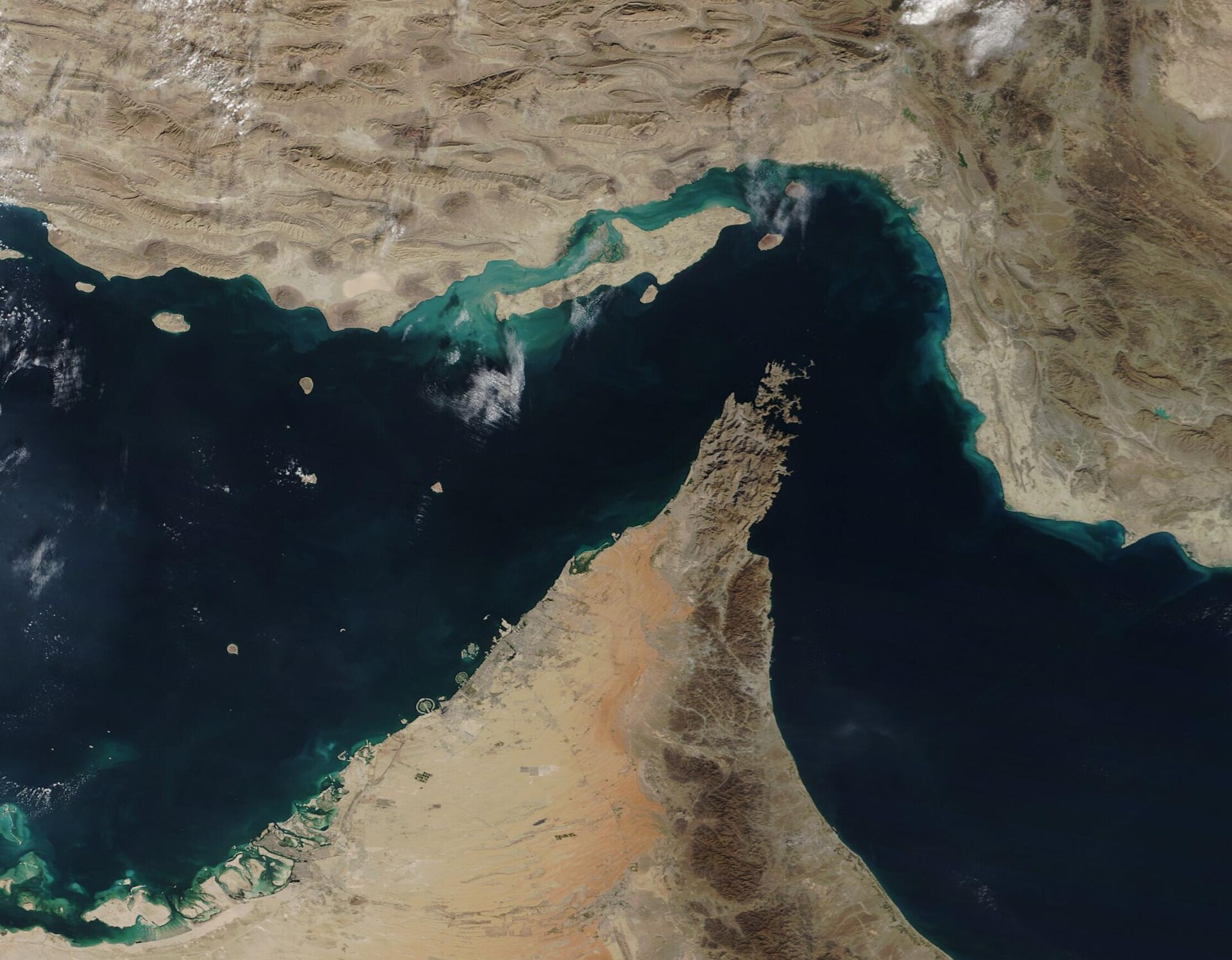
This is not a Saudi-specific problem. It is a global food-cost problem that compounds Saudi Arabia’s import dependency. When fertilizer prices rise 19% in a week, the cost of the wheat Saudi Arabia imports at $262.30 per tonne does not remain at $262.30. The next tender — whenever GFSA issues it — will reflect both the direct cost of disrupted shipping and the indirect cost of disrupted inputs to the farms that grow the grain.
Bram Govaerts of CIMMYT and Sharon Burke, former US Assistant Secretary of Defense, quantified the regional exposure in Project Syndicate: 70% of food consumed across Bahrain, Kuwait, Qatar, the UAE, Saudi Arabia, and Iraq flows through Hormuz. The daily food requirement to replace disrupted imports across those six countries combined is 191.3 million pounds. For context, the UN World Food Programme delivered only 15 million pounds daily across 71 countries in 2024. The gap between need and available humanitarian logistics capacity is not a rounding error. It is an order of magnitude.
The Fiscal Bind: Reserves Against a Deficit
The directive orders a reserve build. Building reserves costs money. Saudi Arabia is running out of both the fiscal space and the revenue stream to fund it.
The IMF cut Saudi Arabia’s 2026 growth forecast to 3.1% from 4.5%. Goldman Sachs estimates a war-adjusted fiscal deficit of 6.6% of GDP — approximately $80–90 billion — against the official projection of 3.3%. The gap is driven by two converging pressures: oil production has fallen 30% to 7.25 million bpd, and Brent crude trades at roughly $90–95 per barrel against a Saudi fiscal break-even estimated at $108–111 when PIF commitments are included.
| Metric | Pre-War (Feb 2026) | Current (April 2026) | Gap |
|---|---|---|---|
| Oil production | 10.4M bpd | 7.25M bpd | -30% |
| Brent crude | ~$82/bbl | ~$90–95/bbl | Below $108–111 break-even |
| Fiscal deficit (official) | 3.3% GDP | 3.3% GDP (unchanged) | — |
| Fiscal deficit (Goldman est.) | — | 6.6% GDP | ~$80–90B |
| Asia oil exports | Baseline | -38.6% (Kpler) | Revenue loss |
| Khurais field | 1.5M bpd capacity | Offline (300K bpd affected) | No timeline |
Every tonne of wheat GFSA procures — at $262.30 pre-war or whatever the war-premium price is at the next tender — comes from a treasury that is spending more than it earns, producing less oil than it can sell, and selling that oil below the price it needs to balance its budget. The East-West Pipeline bypass has restored some export capacity through Yanbu, but the pipeline’s effective ceiling of 4–5.9 million bpd against pre-war Hormuz throughput of 7–7.5 million bpd leaves a structural gap of 1.1–1.6 million bpd that no infrastructure fix can close without Hormuz.
Aljadaan’s “weeks if not months” recovery timeline, delivered at the IMF three days before the directive, framed international expectations for a prolonged period of constrained Saudi economic performance — and implicitly, constrained Saudi ability to fund the very reserves the directive demands.
Can Saudi Arabia Feed Itself During a Prolonged Conflict?
The short answer is: not from domestic production, and not indefinitely from reserves. The four-month wheat buffer assumes steady drawdown without resupply disruption. With Hormuz closed and Jeddah operating at strained capacity through a potentially interdicted Red Sea corridor, the resupply rate is uncertain. The directive is an attempt to extend the buffer, but extending a buffer and replenishing a buffer are different operations. One requires money and storage. The other requires open sea lanes.
Saudi Arabia’s domestic agricultural capacity is a fraction of what it was when the kingdom exported wheat in the 1980s. The aquifer depletion that forced the 2008–2016 production phase-out has not reversed. The Agricultural Development Fund, one of the agencies activated by the directive, can accelerate financing for local production — but local production cannot scale to replace 80% import dependency in weeks or months. The structural vulnerability the directive responds to is one that Saudi policy created deliberately over eight years, for sound reasons, and that cannot be reversed on a wartime timeline.
The Bab al-Mandab compound risk makes the question more acute. If Houthi forces escalate interdiction of Red Sea shipping — and the “Hour Zero” declaration suggests that intent — then even the Jeddah corridor narrows. Saudi Arabia’s food supply would then depend on overland routes (limited to what can transit Jordan and Iraq), air freight (prohibitively expensive for bulk commodities), and whatever stockpiles GFSA has managed to build before both chokepoints close.
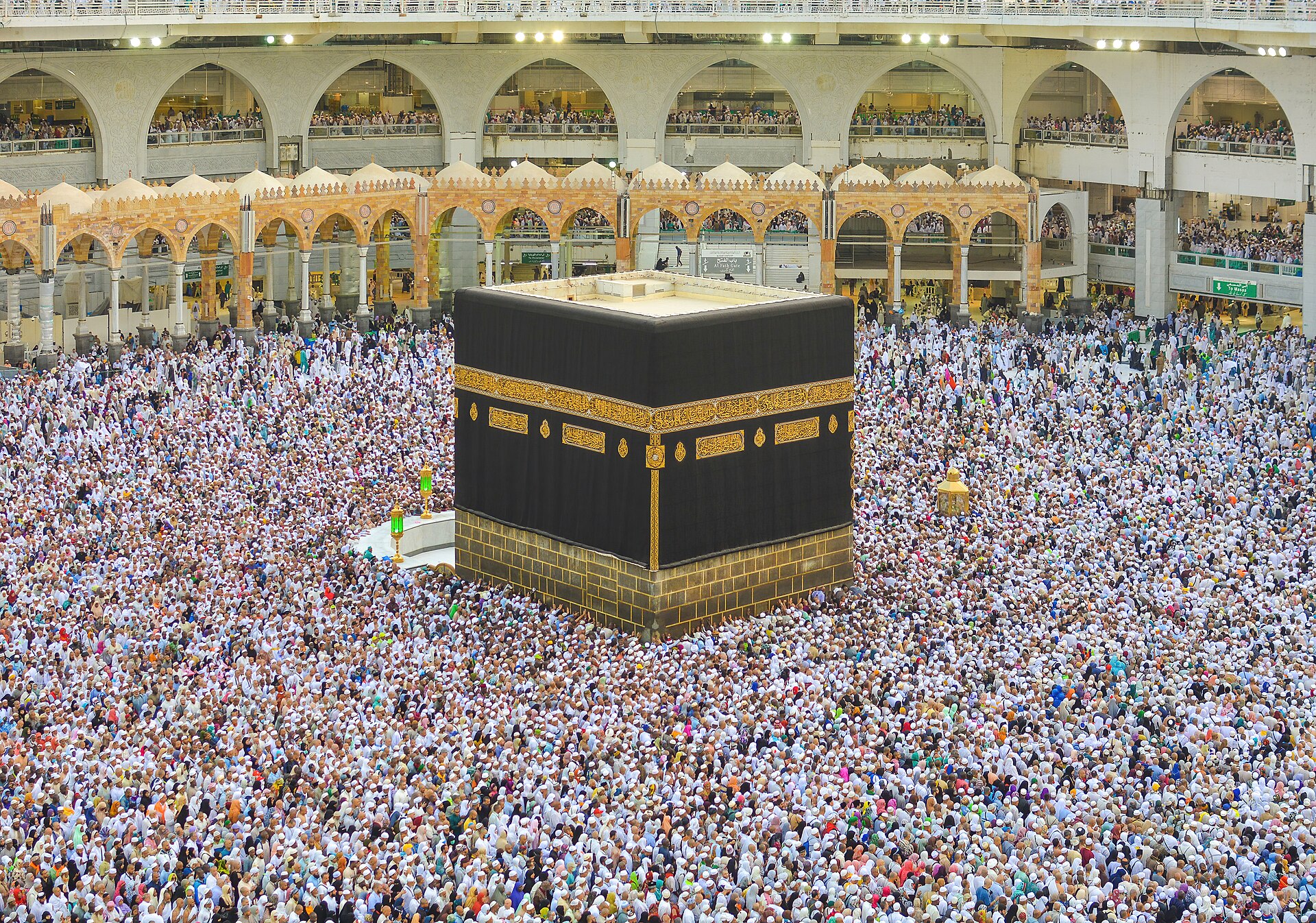
The Hajj timeline adds a non-negotiable demand spike. Indonesia’s 221,000 pilgrims begin departing April 22 — the day the ceasefire expires. Pakistan’s 119,000 pilgrims arrived starting April 18. Between 1.2 and 1.5 million pilgrims will be in the Kingdom through the Day of Arafah on May 26, requiring food, water, and medical supplies at a scale that draws on the same strained logistics infrastructure. Feeding Hajj is not optional — it is a covenant obligation embedded in the Custodian of the Two Holy Mosques title that King Fahd assumed in 1986 precisely to assert Saudi stewardship of the holy sites.
What the Directive Reveals
Governance signals in Saudi Arabia are read through a specific grammar. Joint directives from the King and Crown Prince — as opposed to ministerial orders or GFSA operational decisions — carry the weight of sovereign command. They are issued when the leadership wants both domestic institutions and external observers to understand that a matter has been elevated to the highest decision-making level.
The timing eliminates any reading of the directive as routine. Forty-eight hours before a ceasefire expiry, with no extension mechanism in place, with the IRGC declaring full authority over Hormuz and zero vessels transiting, with Iran’s toll scheme collecting zero revenue after 36 days — the directive is the Saudi state acknowledging, in the language of executive orders, that it expects the ceasefire to fail.
Iran’s position reinforces this reading. The IRGC has maintained maximum coercive pressure at negative economic return — 60 permits issued, 8 payment requests, zero collected. Tehran’s own population faces 40–42% year-on-year food price inflation, according to IFPRI data from September 2025. The Iranian leadership is absorbing domestic economic pain to maintain the Hormuz closure, and nothing in the IRGC’s April posture suggests that is about to change.
The authorization ceiling problem — the structural inability of Iran’s civilian government to deliver a ceasefire that its military establishment will honor — remains unresolved. President Pezeshkian publicly accused SNSC Secretary Vahidi and Khatam al-Anbiya commander Abdollahi of derailing the Islamabad talks. But Article 110 of Iran’s constitution gives Pezeshkian zero authority over the IRGC. Naming the problem did not solve it.
Aljadaan put the timeline at “end of June” for tanker scheduling normalization — and that assumes hostilities end immediately. If the ceasefire collapses on April 22, that clock does not start. The directive does not solve the supply chain problem. It buys time while the problem continues.
Frequently Asked Questions
How large are Saudi Arabia’s current strategic food reserves?
The strategic wheat reserve holds approximately 1.5 million metric tonnes, equivalent to roughly four months of national consumption. This baseline was established before the April 20 directive, which orders an expansion whose targets have not been publicly disclosed. The reserve was designed under Royal Decree No. M/14 in 1972 with a six-month target — the current four-month level represents a gap from the original design standard that the directive implicitly acknowledges. GFSA’s pre-war January 2026 tender secured 907,000 MT of wheat alone, the largest single procurement in recent years.
What happens to Saudi food supply if both Hormuz and Bab al-Mandab are closed simultaneously?
Simultaneous closure of both straits would reduce Saudi Arabia to overland supply routes through Jordan and Iraq — neither of which has the freight rail or trucking capacity to substitute for containerized maritime imports at scale — and air freight, which costs roughly 10–15 times more per tonne-kilometre than sea freight. The kingdom’s 1.5 million MT wheat reserve would become the primary buffer, with no maritime resupply pathway. Gulf states collectively require 191.3 million pounds of food daily to replace disrupted Hormuz imports alone, according to CIMMYT and former US DoD analysis — a figure that dwarfs available overland and airlift capacity.
How does Saudi food vulnerability in 2026 compare to the 1990–91 Gulf War?
There is no meaningful comparison. In 1991, Saudi Arabia was the world’s sixth-largest wheat exporter, producing enough grain domestically to be self-sufficient in its primary staple. The government had subsidized wheat production at $1,000 per tonne through the 1980s. The phase-out of domestic production between 2008 and 2016 — driven by aquifer depletion — converted the kingdom from exporter to 75% import-dependent for wheat in under a decade. The 2026 vulnerability is a direct consequence of that deliberate policy shift, which traded water security for food security exposure.
Why did Saudi Arabia stop growing its own wheat?
The subsidy program that made Saudi Arabia a wheat exporter was depleting the Saq and overlying aquifers — non-renewable fossil water deposits with no natural recharge cycle — at rates that threatened long-term water availability for the entire kingdom. The government announced a phased reduction beginning in 2008, with domestic wheat production eliminated as a strategic objective by 2016. The Agricultural Investment Abroad initiative launched simultaneously to secure overseas farmland as a substitute supply source. The trade-off was explicit: accept food import dependency to preserve water for a population projected to reach 40 million by 2030.
What is the GFSA and when was it created?
The General Food Security Authority is the successor to the Grain Silos and Flour Mills Organization (GSFMO), which was established by Royal Decree No. M/14 in 1972. GSFMO was renamed GFSA in January 2023 to reflect an expanded mandate covering all food commodities, not just grain. The Cabinet approved GFSA’s organizational framework in August 2025 — meaning the April 2026 directive is the first major operational test of the institution’s new architecture under wartime conditions. GFSA’s Early Warning Center, which Minister of State Al-Falih visited in April 2026, uses real-time analytics to monitor global and domestic supply indicators.