
WASHINGTON — Donald Trump announced on April 16 that Iran agreed to surrender its enriched uranium stockpile. Iran has said nothing. The silence is not diplomatic ambiguity or a communications lag. It is the structural output of a government in which the only person constitutionally authorized to ratify such an agreement — the Supreme Leader — has not been seen or heard from in 48 days, and the military commander who controls the nuclear file has accused his own negotiators of treason.
Trump’s “nuclear dust” claim — posted on Truth Social and repeated to reporters — describes a deal with a signatory that does not exist. Iran’s Article 110 assigns sole authority over the armed forces, war, and peace to the Supreme Leader. That office is vacant in all but name. The IAEA’s last verified accounting confirmed 440.9 kg of 60%-enriched uranium hexafluoride in tunnels beneath Isfahan, unmonitored since the June 2025 strikes. The gap between Trump’s public commitment and Iran’s constitutional incapacity is where the next phase of this crisis will be decided.
What follows maps the exact chain of authority failures that make Iran incapable of delivering what Trump says it promised: the Khamenei absence, the Article 110 ceiling, Vahidi’s sabotage of his own delegation, Zolghadr’s recall order, the operational impossibility of extracting buried uranium hexafluoride, and the historical pattern of American presidents announcing deals that their Iranian counterparts could not ratify.
Table of Contents
- What Did Trump Claim Iran Agreed To?
- Why Has Iran Not Confirmed the Deal?
- The Article 110 Ceiling
- Vahidi’s Betrayal Accusation and the Zolghadr Recall
- Where Is the 440.9 kg Stockpile Now?
- Can the United States Physically Retrieve Iran’s Enriched Uranium?
- The Hormuz Toll Precedent
- Reagan, Obama, Singapore — When Presidents Announce Deals That Cannot Be Delivered
- What Happens When the Ceasefire Expires on April 22?
- Frequently Asked Questions

What Did Trump Claim Iran Agreed To?
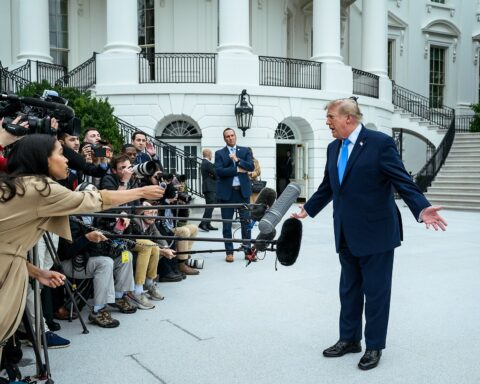
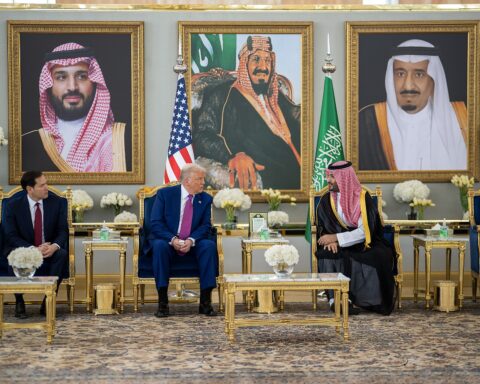
Trump made two public statements on April 16, 2026, asserting that Iran had agreed to surrender its enriched uranium. Both were specific, emphatic, and unilateral.
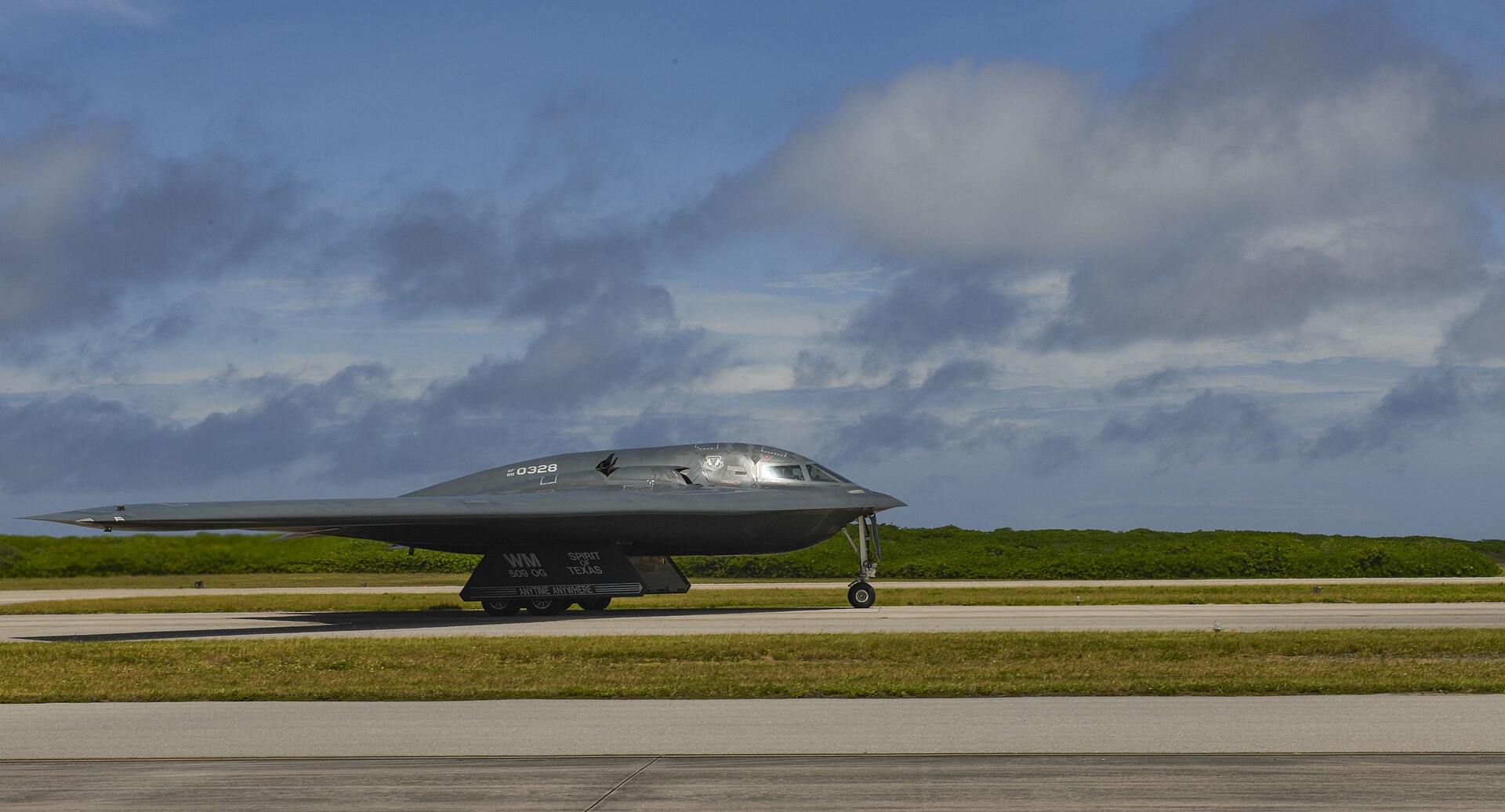
To reporters, Trump said: “They’ve agreed to give us back the nuclear dust that’s way underground because of the attack we made with the B-2 bombers.” On Truth Social, he expanded the claim: “There will be no enrichment of Uranium, and the United States will, working with Iran, dig up and remove all of the deeply buried (B-2 Bombers) Nuclear ‘Dust.’ It is now, and has been, under very exacting Satellite Surveillance (Space Force!). Nothing has been touched from the date of attack.”
The statement contains three distinct commitments attributed to Iran: an end to all uranium enrichment, consent for American personnel to enter Iranian territory, and physical cooperation in excavating buried nuclear material from the Isfahan tunnel complex. Each commitment would individually require the highest level of Iranian state authority to authorize. Combined, they describe a capitulation more comprehensive than the 2015 JCPOA, which took 20 months of negotiations and preserved Iran’s right to enrich to 3.67%.
The Middle East briefing 3,000+ readers start their day with.
One email. Every weekday morning. Free.
Defense Secretary Pete Hegseth reinforced the framing the same day. “Under the terms, any nuclear material…they should not have will be removed,” Hegseth told reporters, adding: “If we have to do something else ourselves, like we did in Midnight Hammer…we reserve that opportunity” (Newsweek, April 16, 2026). The conditional threat embedded in the confirmation — Midnight Hammer as fallback — signals that Washington itself does not treat the deal as settled.
No text, no framework document, no memorandum of understanding has been published. The deal exists, as of April 17, only in Trump’s words.
Why Has Iran Not Confirmed the Deal?
As of 48 hours after Trump’s claim, no Iranian official, institution, or state media outlet has confirmed any agreement to hand over enriched uranium. The silence is total and uniform across every layer of the Iranian state.
IRNA, the official state news agency, has not acknowledged the claim. Tasnim, the IRGC-affiliated outlet, has published no reaction to the specific nuclear surrender assertion. Fars News — which during the Islamabad talks reported that no formal negotiations had taken place, contradicting its own government’s participation — has said nothing about the April 16 announcement. Foreign Minister Abbas Araghchi, who posts prolifically on X, has not addressed Trump’s statement. President Masoud Pezeshkian, who publicly accused IRGC Commander Ahmad Vahidi on April 4 of “acting unilaterally and driving escalation” (ynetnews, April 4, 2026), has been silent on the nuclear claim.
The Supreme National Security Council confirmed entering negotiations but issued a statement emphasizing that the ceasefire “does not signify the termination of the war” (ABC News, April 16, 2026). This is not confirmation of a nuclear deal. It is the opposite — a restatement of the IRGC’s position that no binding concessions have been made.
Iran’s active counter-position remains unchanged from the Islamabad round. Tasnim has continued to insist that Iran maintains its right to enrich uranium domestically and that American proposals aim to “sow division within Iran” (Tasnim, April 15, 2026). During the Islamabad talks, Iran countered the US demand for a 20-year enrichment moratorium with an offer of five years — which Washington rejected (Time, April 13, 2026). No Iranian delegation agreed to end enrichment. No Iranian delegation agreed to allow American military personnel access to Isfahan. No Iranian delegation agreed to the physical removal of fissile material from Iranian soil.
Russia reinforced this position on April 15, when Foreign Minister Sergei Lavrov publicly backed Iran’s “inalienable right” to uranium enrichment (PressTV, April 15, 2026). Moscow’s statement was calibrated to the same news cycle — diplomatic cover for whatever Iran decides not to do.

The Article 110 Ceiling
The Iranian constitution is unambiguous about who authorizes military and strategic concessions. Article 110 assigns the Supreme Leader — not the president, not the foreign minister, not the SNSC secretary — “supreme command of the Armed Forces,” the power to declare war and peace, and sole authority to appoint or dismiss the commander of the Islamic Revolutionary Guard Corps (Constitution of Iran; CFR backgrounder).
The IRGC controls Iran’s nuclear infrastructure. Its Aerospace Force, which Mohammad Bagher Ghalibaf commanded from 1997 to 2000, manages the missile program. The Atomic Energy Organization of Iran operates enrichment facilities under SNSC oversight, which answers to the Supreme Leader. Every node in the chain of authority for nuclear concessions terminates at one office.
That office has been functionally vacant since February 28, 2026. A diplomatic intelligence memo shared between US, Israeli, and Gulf allied services assessed that “Mojtaba Khamenei is being treated in [the Iranian city of] Qom in a severe condition, unable to be involved in any decision-making by the regime” (Times of Israel; Euronews, April 7, 2026). Mojtaba’s absence from governance has now stretched past 48 days. Foreign Minister Araghchi insists the Supreme Leader is in “perfect health.” No public appearance, audio recording, or verified written statement has emerged to support that assertion.
Pezeshkian confronted this reality directly on April 4 when he accused Vahidi and IRGC Deputy Commander Abdollahi of “acting unilaterally and driving escalation through attacks on regional countries,” adding that their policies “had destroyed any remaining chance of a ceasefire” (ynetnews; ibtimes, April 4, 2026). The accusation was constitutionally irrelevant. Under Article 110, the president has zero authority over IRGC commanders. Pezeshkian’s public frustration was a confession of powerlessness, not an exercise of power.
The authorization ceiling that has defined this entire crisis is not a negotiating tactic. It is a constitutional fact. Iran’s negotiators in Islamabad could discuss, propose, and signal flexibility. They could not commit. The person who commits is either dead, incapacitated, or unreachable — and no one in Tehran will say which.
The Obama administration’s JCPOA succeeded in 2015 precisely because Khamenei was alive, operational, and had authorized the negotiating parameters through the SNSC with President Rouhani’s direct mandate. The architecture of that deal rested on Khamenei’s Article 110 authority to command the military establishment to comply. That authority chain is broken. Trump is announcing a deal with the office while the officeholder is silent and his principal intermediary — Mojtaba — is reported incapacitated in Qom.
Vahidi’s Betrayal Accusation and the Zolghadr Recall
The Islamabad talks did not fail because of a policy disagreement between Washington and Tehran. They failed because Iran’s military commander accused his own civilian negotiators of treason before they could deliver a result.
IRGC Commander Ahmad Vahidi accused both Araghchi and Ghalibaf of “betraying Ali Khamenei” by sitting with the US delegation, according to Iran International reporting cited by the Jerusalem Post (April 10, 2026). Vahidi demanded that Mohammad Bagher Zolghadr, the SNSC Secretary and an IRGC-aligned figure, be inserted into the negotiating team. He ordered the delegation to refuse all discussion of Iran’s missile program.
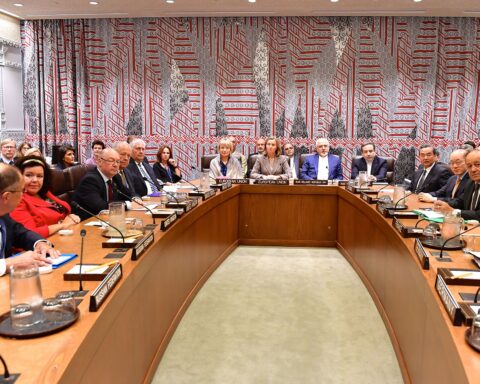
The Vance-Ghalibaf face-to-face in Islamabad — the first direct US-Iran talks since 1979 — produced 21 hours of negotiation across April 11-12. Araghchi later described the collapse on X: “We encountered maximalism, shifting goalposts, and blockade” (Time, April 13, 2026). Separately, he characterized the gap as “inches away” from a memorandum of understanding before the process disintegrated.
What killed those inches was not American maximalism alone. It was Zolghadr’s recall order. On April 14, Iran International reported that Zolghadr filed a report citing “engagement in discussions beyond the leadership’s directives.” The trigger was Araghchi’s flexibility on reducing Hezbollah support — a topic outside his authorized negotiating scope. Following consultations with Hossein Taeb, the supreme leader’s adviser, the delegation was ordered back to Tehran on April 12.
The sequence is documented and precise: Araghchi moved toward a deal. Vahidi labeled the movement betrayal. Zolghadr documented it as an unauthorized deviation. Taeb — speaking for an absent supreme leader — issued the recall. The civilian negotiators were pulled out of the room by the military structure that Article 110 places above them.
Trump’s April 16 claim that “they’ve agreed” requires that this chain of command reversed itself in four days, with no public indication, no personnel change, and no statement from any IRGC figure. IRGC-affiliated media’s position has not softened since the recall. Tasnim maintained its framing that Washington aims to “sow division within Iran.” Fars News reported that no formal negotiations had taken place — a public posture that denies the premise of any agreement. Hardliners criticized Ghalibaf for accepting talks at all.
Where Is the 440.9 kg Stockpile Now?
The IAEA’s last verified accounting of Iran’s highly enriched uranium, published in GOV/2026/8 on February 27, 2026, confirmed a stockpile of 440.9 kg enriched to 60% — sufficient, if further enriched to weapons-grade 90%, for approximately 9-10 nuclear weapons. The separative work required: 564 SWU per weapon, achievable with a single cascade of 175 IR-6 centrifuges in approximately 25 days (Axios, April 13, 2026; ISIS-Online, September 2025).
IAEA Director General Rafael Grossi specified the location in a March 10, 2026 interview: “Isfahan had until their last inspection a bit more than 200kg, maybe a little bit more than that, of 60 percent uranium” (The National News, March 10, 2026). Satellite imagery from June 9, 2025, showed a truck carrying 18 containers transporting HEU to Isfahan’s south tunnel entrance before Operation Midnight Hammer’s B-2 strikes (Bulletin of the Atomic Scientists, March 2026).
Iran has not permitted IAEA access to the bombed facilities since June 2025. The material exists as uranium hexafluoride gas stored in metal canisters inside a tunnel complex that sustained at least 14 strikes from 30,000-lb Massive Ordnance Penetrators delivered by seven B-2 Spirit bombers. The structural integrity of the tunnels, the condition of the canisters, and the current state of the UF6 are unknown to any international body.
Joseph Rodgers, Deputy Director at CSIS, stated the core problem: “The longer the location of this highly enriched uranium stockpile remains unknown, the greater the potential for a proliferation crisis” (CSIS Nuclear Network). The material is simultaneously too dangerous to leave in place and too dangerous to extract without extraordinary precautions. UF6 reacts violently with moisture and is acutely toxic. Ruptured canisters in a collapsed tunnel represent a radiological hazard that cannot be resolved by satellite surveillance, regardless of what Trump’s Truth Social post asserts about Space Force monitoring.

Can the United States Physically Retrieve Iran’s Enriched Uranium?
The operational requirements for recovering buried uranium hexafluoride from a bombed tunnel complex inside a sovereign nation that has not granted access are, by any military or technical assessment, extreme. Three pathways exist. None can be executed against the current institutional reality in Tehran.
A retired US admiral, speaking at the Foreign Affairs Forum on April 2, 2026, described the potential military seizure as “the largest special forces operation in history,” estimating a minimum of 1,000 special forces personnel would be required. Senator Richard Blumenthal (D-CT) stated: “Bombing alone can’t accomplish any of President Trump’s objectives here, whether it’s regime change or controlling the enriched uranium” (Newsweek, April 16, 2026). Military extraction would require air superiority over Isfahan, a logistics corridor from the nearest friendly base, and a radiation-safe extraction chain — all while the ceasefire expires in five days.
On-site dilution — reducing enrichment levels in situ by blending down the 60% material — would require nuclear specialists operating inside Iranian facilities with sustained access, laboratory-grade equipment, and Iran’s active cooperation. This is the JCPOA model compressed into a collapsed tunnel under wartime conditions, with an IRGC that has barred even IAEA inspectors for ten months.
Negotiated transfer to a neutral custodian, most plausibly Russia, is the only procedurally viable option. Moscow performed this role under the original JCPOA for Bushehr reactor fuel. But a custodial transfer of weapons-usable material would require formal authorization from the Supreme Leader’s office, a functioning SNSC decision chain, and IAEA verification protocols. Russia’s April 15 public statement backing Iran’s enrichment rights makes Moscow an unlikely facilitator under current conditions.
| Extraction Option | Minimum Requirement | Current Status (April 17) |
|---|---|---|
| Military seizure | 1,000+ special forces, weeks of tunnel access | No IRGC cooperation; ceasefire expires April 22 |
| On-site dilution | Foreign nuclear engineers inside IRGC facilities | IAEA barred since June 2025; no access agreement |
| Neutral custodian transfer (Russia) | Article 110 authorization, SNSC order, IRGC compliance | Supreme Leader incapacitated; SNSC fractured; Lavrov backed enrichment rights |
The Hormuz Toll Precedent
The same Iranian institutional structure that Trump expects to deliver a nuclear surrender has already failed to execute a far simpler administrative task: collecting money from ships passing through waters Iran physically controls.
Iran International reported on April 16, 2026, that the SNSC-overseen Hormuz toll scheme has issued approximately 60 permits, sent 8 payment requests, and collected zero revenue. Officials are discussing removing Zolghadr from oversight of the program — the same Zolghadr who filed the report that killed the Islamabad talks, the same SNSC administrative layer that would be required to coordinate nuclear material transfer.
The toll scheme required no military extraction, no international cooperation, no constitutional authorization beyond what the SNSC already claimed. It required Iran to send an invoice and receive a bank transfer. The coercive architecture the US built around Hormuz met an Iranian state apparatus that could not even monetize the leverage it held at the chokepoint.
If Iran cannot collect a toll from a tanker, the premise that it will coordinate the excavation of weapons-grade uranium from a bombed tunnel complex — involving American military personnel on Iranian soil, IAEA verification, and a multi-week logistics operation — requires a theory of Iranian state capacity that the Hormuz data flatly contradicts. Sixty permits, eight invoices, zero dollars collected. That is the operational baseline for the institution Trump expects to deliver 440 kg of enriched uranium.
Reagan, Obama, Singapore — When Presidents Announce Deals That Cannot Be Delivered
Trump’s unilateral announcement follows a pattern with precise American precedents, each distinguished by the same structural defect: an American president personalized a negotiation with a fragmented adversary and announced an outcome that the adversary’s internal structure could not ratify.
In 1986, National Security Adviser Robert McFarlane flew secretly to Tehran carrying a Bible signed by Ronald Reagan and a key-shaped cake. Reagan pre-announced hostage releases that did not materialize. The operation was exposed by the Lebanese magazine Ash-Shiraa and became the Iran-Contra affair. The structural lesson was specific: Reagan treated Iran as a unitary actor, announced a result, and discovered that the interlocutors he dealt with could not deliver what they appeared to promise because they did not control the institutions that held the hostages.
The 2015 JCPOA succeeded precisely because the authorization chain was intact. Khamenei authorized the parameters; Rouhani held the mandate; Zarif operated within both. The JCPOA’s enrichment limits rested on Khamenei’s Article 110 authority to bind the IRGC. Without that authority, a negotiator’s signature is decorative — exactly the structural problem Araghchi ran into in Islamabad.
The closest structural parallel is the Singapore Summit of June 12, 2018. Trump announced that Kim Jong Un had agreed to “complete denuclearization.” The words “verifiable” and “irreversible” were absent from the signed document. The Hanoi Summit collapsed eight months later because North Korean interlocutors stopped short of confirming what Kim had apparently offered — suggesting the negotiating team had engaged beyond their mandate. The parallel to Araghchi’s unauthorized flexibility on Hezbollah, which triggered the Zolghadr recall, is structural: in both cases, a negotiator moved beyond the line drawn by the military establishment, and the military establishment pulled the delegation back.
The difference in 2026 is that even the Reagan and Singapore failures had identifiable counterparties. Reagan’s interlocutors were operational Iranian officials acting under Khomeini’s tacit authorization. Kim Jong Un was alive, present, and in undisputed command. Trump’s “nuclear dust” deal is addressed to an authority structure that is not merely unwilling but incapacitated — a supreme leader absent with no public statement, his son and principal intermediary reported in severe condition in Qom, and an IRGC commander who regards the negotiators as traitors to the absent leader they serve.

What Happens When the Ceasefire Expires on April 22?
The ceasefire expires on April 22 — six days from Trump’s April 16 announcement. No extension mechanism exists. The Soufan Center’s analysis confirmed that the agreement contains no procedural framework for renewal.
April 18 marks the opening of the Hajj arrival corridor. Pakistan’s 119,000 pilgrims begin arriving the same day. Indonesia’s 221,000 pilgrims depart April 22 — the day the ceasefire ends. The convergence of the Hajj calendar with the ceasefire expiry places between 1.2 and 1.5 million pilgrims inside Saudi Arabia’s air defense perimeter during the period of maximum military uncertainty. Pakistan, the sole enforcement mechanism for the ceasefire, lacks the institutional authority to adjudicate violations — and three have already occurred: Lebanon strikes, the Lar drone launch, and the enrichment ban breach.
Hegseth’s “reserve that opportunity” statement on April 16 is a public commitment to resume Midnight Hammer-scale operations if the nuclear deal does not materialize. But the deal has no Iranian signatory, no enforcement mechanism, no timeline, and no institutional pathway for execution. The IRGC command structure that rejected the April 6 deadline has not changed personnel, posture, or public position in the eleven days since.
The five-day window between the announcement and the ceasefire expiry is not a negotiating period. The Islamabad format collapsed. Araghchi was recalled. Vance left. The blockade imposed April 13 converted economic pressure into military posture. What remains is an American president’s public statement and an Iranian silence that constitutes, under the weight of every institutional signal available, the IRGC’s constitutional verdict.
Iran’s architecture has delivered its answer to Trump’s nuclear dust claim. The answer is not “no.” The answer is that no one in Tehran possesses the authority to say “yes.” Vahidi cannot ratify a deal because he rejected the premise. Pezeshkian cannot because Article 110 bars him from commanding the IRGC. Araghchi cannot because Zolghadr recalled him for trying. And the Supreme Leader — the sole constitutional authority who could bridge the gap between a Truth Social post and a signed agreement — has not spoken in 48 days. The uranium remains underground. The clock runs.
Frequently Asked Questions
What is “nuclear dust” in Trump’s statement?
Trump uses “nuclear dust” to describe uranium hexafluoride (UF6) residue buried in the Isfahan tunnel complex after the B-2 strikes of Operation Midnight Hammer. UF6 is a crystalline solid at room temperature that sublimes into gas — it is not dust in any physical sense. The term appears to be Trump’s colloquial shorthand for the enriched uranium that the IAEA last verified at 440.9 kg. Whether the material remains in intact canisters or has dispersed through tunnel damage is unknown to any external party, since Iran has denied IAEA access since June 2025. Arms control specialists use “residual fissile material” to describe post-strike nuclear remnants.
Could a back-channel agreement exist that Iran has not publicly acknowledged?
Back-channel commitments between Washington and Tehran have precedent — the 2016 prisoner exchange involved Swiss intermediaries and parallel cash transfers that neither side initially disclosed. The structural difference in April 2026 is that any back-channel commitment still requires authorization from the Supreme Leader’s office under Article 110. The Zolghadr recall of April 12 specifically documented and terminated unauthorized flexibility by civilian negotiators. Any post-recall back-channel agreement would require either Vahidi’s reversal or a direct order from the supreme leader — and no reporting from any intelligence service or media outlet has indicated either event occurred between April 12 and Trump’s April 16 announcement.
What role does Russia play in the enriched uranium question?
Russia is the only state with operational experience as custodian of Iranian nuclear fuel, having agreed in 2005 to supply and repatriate Bushehr reactor fuel. Moscow’s April 15 statement backing Iran’s “inalienable right” to enrichment positions Russia as a potential spoiler to any American-designed extraction framework. China, which brokered the Qatar LNG transit through Hormuz earlier in April, has not commented on the nuclear material. A negotiated transfer to either country would require the same SNSC-to-Supreme-Leader authorization chain that is currently broken — and Russia’s public posture suggests it would demand significant concessions from Washington as a precondition for facilitating.
How does Iran’s 440.9 kg stockpile compare to North Korea’s nuclear inventory at the time of the Singapore Summit?
At the time of the June 2018 Singapore Summit, US intelligence estimated North Korea possessed 20-60 kg of weapons-grade plutonium and an unknown quantity of highly enriched uranium — enough for an estimated 20-60 nuclear weapons according to the Stockholm International Peace Research Institute. Iran’s 440.9 kg at 60% enrichment is below weapons-grade but represents a faster breakout timeline: 25 days per weapon using a single IR-6 cascade versus North Korea’s already-weaponized stockpile. The decisive difference is institutional: Kim Jong Un had uncontested command authority, while Iran’s program answers to an IRGC commander who has rejected the negotiating process and a supreme leader who cannot issue orders.
What legal tools does the IAEA have if Iran refuses access to the bombed Isfahan facilities?
The IAEA’s options without Iranian cooperation are limited to political escalation, not enforcement. Under the Additional Protocol, the Agency can report non-compliance to the Board of Governors, which can refer the matter to the UN Security Council — the mechanism used in 2006, ultimately producing six rounds of sanctions. The IAEA cannot physically enter a member state’s facilities without consent. With IAEA access suspended since June 2025 and the Board’s referral powers already exhausted diplomatically, the practical constraint is that satellite surveillance can confirm activity but cannot account for material inside collapsed tunnels. Grossi has publicly stated the Agency “cannot guarantee” the stockpile’s location or condition under current access restrictions (The National News, March 2026).