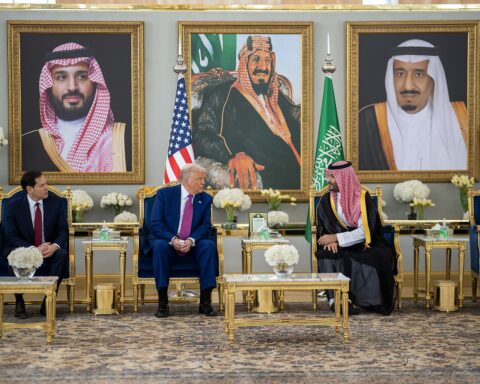
BEIJING / RIYADH — Chinese President Xi Jinping told Crown Prince Mohammed bin Salman on April 20 that “the normal passage through the Strait of Hormuz serves the common interests of regional countries and the international community” — the first time Beijing has publicly contested Iran’s control of the waterway at presidential level, and a statement the IRGC cannot wave away with the contempt it reserves for Western demands, because China buys roughly 90 percent of Iran’s crude exports and underwrites what remains of its war-damaged economy. The call, which came 51 days into the conflict and just 13 days after China and Russia vetoed a Gulf-states UN Security Council resolution demanding the same thing, marks the sharpest public pivot in Beijing’s posture since US-Israeli strikes began on February 28 — from quiet facilitator to open demander, from vetoing Western Hormuz language at the UN to using near-identical language through a bilateral Saudi channel.
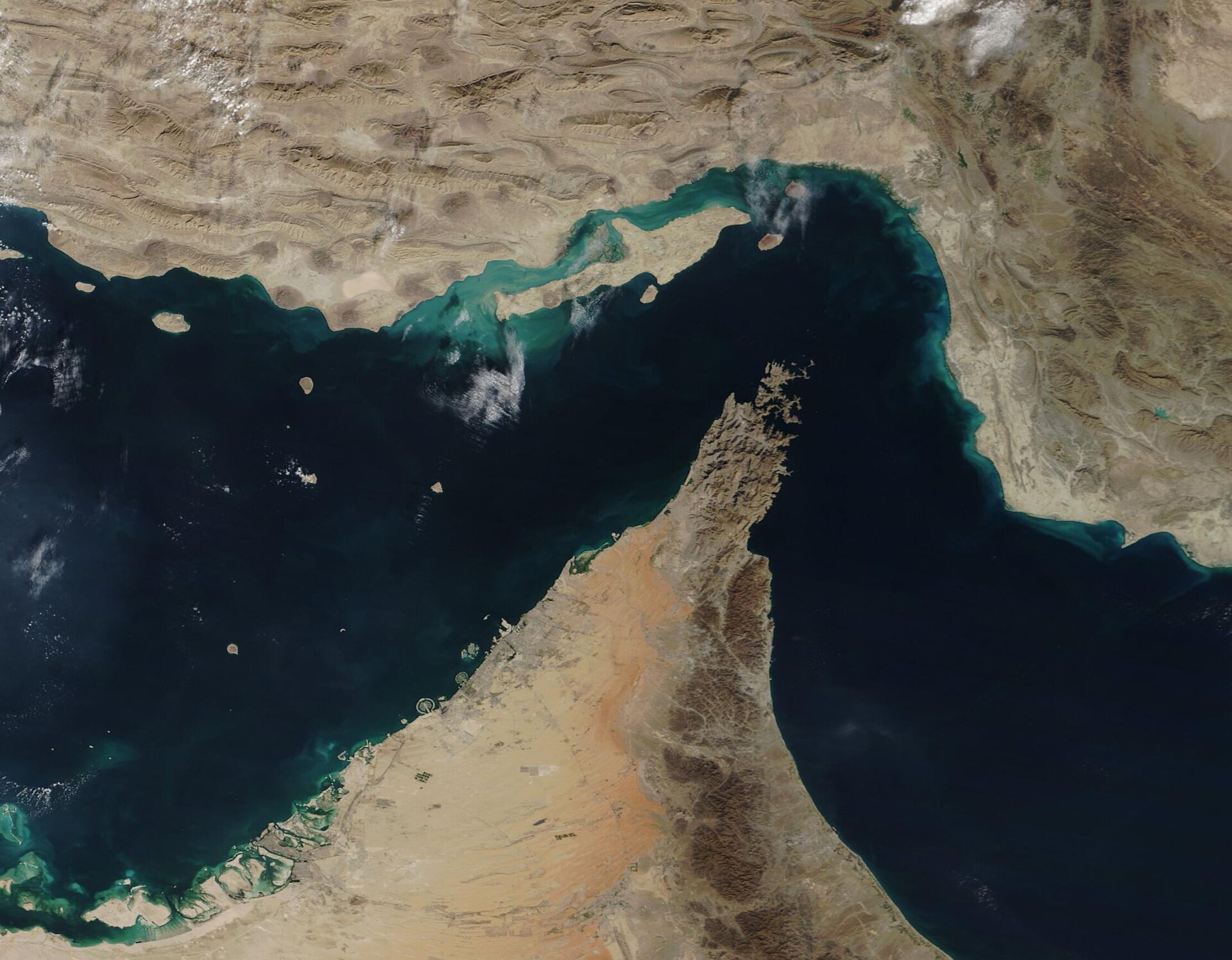
What makes Xi’s intervention different from the dozens of Western statements demanding open transit is not the words themselves but the weight behind them. China takes 5.4 million barrels per day through Hormuz — 38 percent of its total oil imports and 23 percent of its LNG — and holds roughly 1.3 billion barrels in strategic reserves, enough for about three months of import cover. Tehran cannot dismiss Beijing the way it dismissed the 40-nation Northwood coalition formalized in Paris three days earlier, because China is not threatening naval force; it is threatening something the IRGC cannot shoot at — the withdrawal of the economic oxygen Iran needs to survive a war now in its eighth week.
Table of Contents
- The 13-Day Escalation: From Veto to Presidential Demand
- What Did Xi Actually Say — and What Did He Leave Out?
- Why Didn’t MBS Mirror the Hormuz Language?
- Why Can’t Iran Dismiss This the Way It Dismisses the West?
- From Al Daayen to Open Demand: China’s Posture Shift
- Tehran’s Non-Response
- Background
- FAQ
The 13-Day Escalation: From Veto to Presidential Demand
The trajectory from April 7 to April 20 tells a story Beijing would rather not have spelled out so clearly. On April 7, China and Russia vetoed a Gulf-states UN Security Council resolution calling for open passage through Hormuz, with Chinese Ambassador Fu Cong telling the chamber the draft “failed to capture the root causes and the full picture of the conflict in a comprehensive and balanced manner.” Thirteen days later, Xi Jinping used language on a phone call with MBS that could have been lifted directly from the resolution Beijing killed.
The middle step came on April 16, when Foreign Minister Wang Yi called Iranian Foreign Minister Abbas Araghchi with what amounted to a private warning shot. “The freedom and security of navigation in the internationally accessible strait should also be guaranteed,” Wang told Araghchi, according to the Chinese MFA readout — though he balanced it with a line acknowledging that “Iran as a country bordering the Strait of Hormuz deserves respect.” That diplomatic cushion was gone four days later when Xi took the demand public and presidential, routing it through Riyadh rather than Tehran.
The sequencing matters because it reveals Beijing tried the private channel first and either got nothing back or decided Tehran’s response was insufficient. Drew Thompson of the S. Rajaratnam School of International Studies has described China’s broader approach as seeking to be “a peacemaker without underwriting the peace process,” given the Middle East is “far from a core interest” — but the escalation from veto to FM call to presidential demand suggests the economic stakes have pushed Hormuz closer to a core interest than Beijing’s strategic ambiguity playbook was designed to handle. The gap between vetoing Western Hormuz language at the Security Council and issuing near-identical language through a bilateral Saudi channel 13 days later is not hypocrisy so much as a structural response to shifting commercial realities — and to the quiet recognition that China’s selective-access arrangement with the IRGC was no longer delivering the protection Beijing required.
What Did Xi Actually Say — and What Did He Leave Out?
Xi’s language, per the Xinhua and CGTN readouts, operated on two tracks simultaneously. On Hormuz, the formulation — “the normal passage through the Strait of Hormuz serves the common interests of regional countries and the international community” — is deliberately multilateral in framing, avoiding the bilateral trade-dependency argument that would have been more honest but less diplomatically useful. On the conflict itself, Xi called for “an immediate and comprehensive ceasefire and cessation of hostilities” and said China “supports all efforts conducive to restoring peace” — boilerplate that commits Beijing to nothing operationally while positioning it as the responsible party in a room full of combatants.
The Middle East briefing 3,000+ readers start their day with.
One email. Every weekday morning. Free.
What Xi did not say is at least as instructive. There was no mention of the US blockade that Chinese Foreign Ministry Spokesperson Guo Jiakun had called “dangerous and irresponsible” just days earlier, no reference to the IRGC’s mine-laying or toll regime, no explicit threat. He did not mention Sinopec’s public retreat from Iranian crude, did not reference the five Shandong teapot refineries that had already halted Iranian oil purchases by early April, did not invoke the OFAC General License U expiry that had cut off the legal framework for most Iranian oil transactions. The pressure was communicated by the fact of the call itself, not by anything Xi threatened inside it.
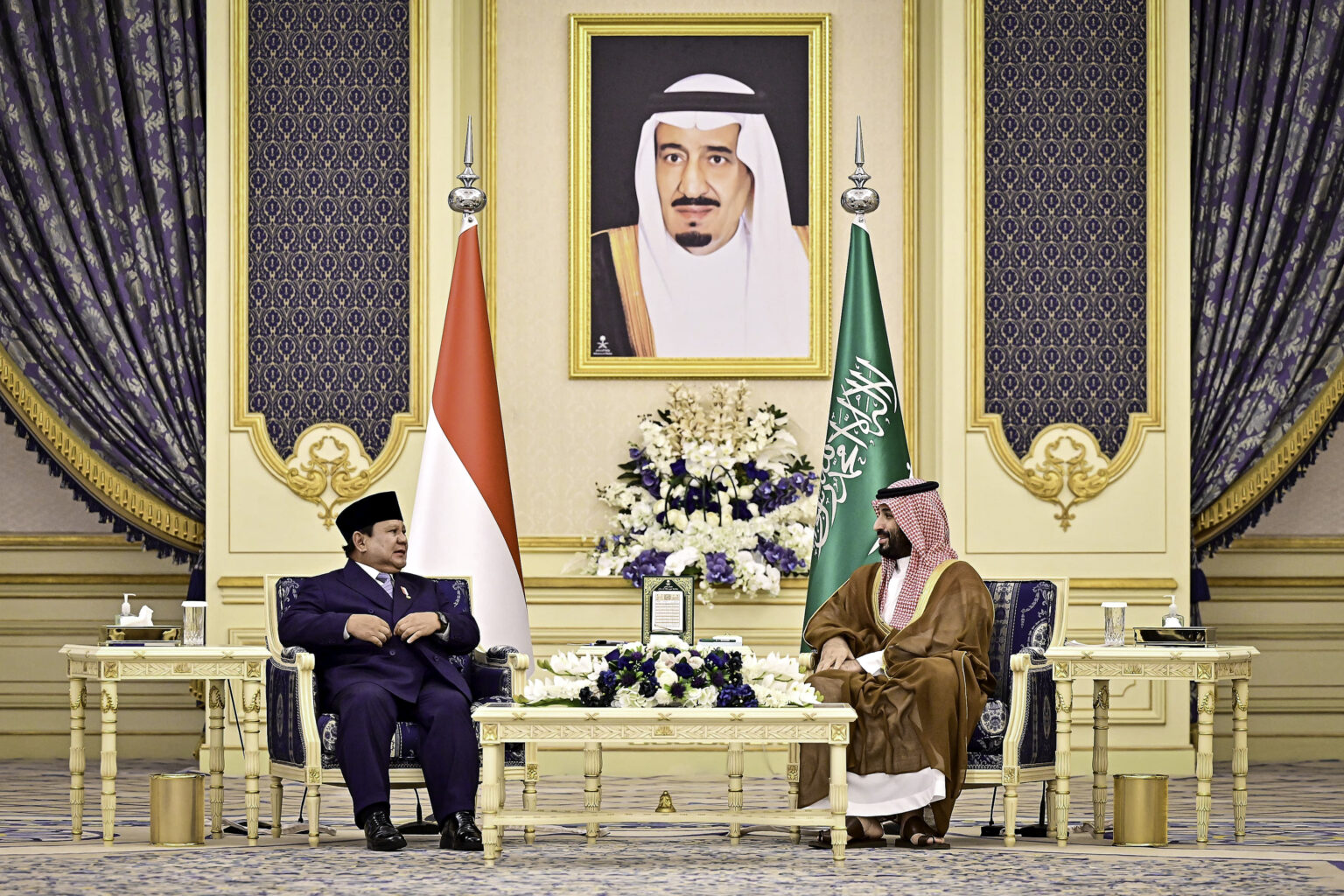
Xi also bundled the Hormuz demand with an invitation that appealed directly to MBS’s strategic self-image, telling the crown prince that “China supports countries in the Middle East taking their future and destiny into their own hands.” That line converts MBS from a passive recipient of Chinese preferences into an active agent of regional order — a framing calibrated to a leader who has spent a decade positioning Saudi Arabia as a sovereign power broker rather than an American client state. The call was wrapped in the 10th anniversary of the China-Saudi comprehensive strategic partnership, giving both sides a diplomatic occasion that made the conversation look routine rather than reactive.
Why Didn’t MBS Mirror the Hormuz Language?
The Saudi readout of the same call is a study in what diplomats leave on the table. MBS called China “a responsible major country” and characterized the Saudi-China relationship as “strategic in nature” — language that, in the Gulf’s diplomatic grammar, is about as warm as it gets without an actual defense pact. He told Xi that “the current tensions in the Middle East is damaging the security of the Gulf states” and said Saudi Arabia “stands ready to strengthen communication and coordination with China to maintain the ceasefire.” But he did not echo Xi’s explicit Hormuz language, and the Saudi readout contains no direct reference to the strait by name.
The omission is deliberate, not accidental. Saudi Arabia has been absent from the Northwood/Paris 40-nation coalition and has avoided any public statement that could be read as endorsing military enforcement of Hormuz transit — a position that reflects Riyadh’s calculation that it cannot afford to be seen as part of a Western-led naval confrontation with Iran while its own Eastern Province oil infrastructure remains within range of IRGC ballistic missiles. MBS’s framing — “security of the Gulf states,” “dialogue,” “coordination” — keeps the demand for open passage implicit rather than explicit, outsourcing the confrontational language to Beijing while retaining deniability.
The operational logic is sound even if the diplomacy looks evasive. Saudi Arabia wants exactly what Xi demanded — universal Hormuz reopening — but wants the demand attributed to China rather than to Riyadh, because a Saudi-attributed call for open passage gives the IRGC a Saudi target to escalate against. By letting Xi carry the explicit language, MBS achieves the policy outcome he wants without providing the Revolutionary Guards with a fresh justification for the kind of strikes that have already knocked Saudi production from 10.4 million barrels per day to 7.25 million since February. That same silence calculus deepened on April 23, when Trump issued a Truth Social order to shoot and kill any vessel observed laying mines in the strait — placing Riyadh in the bind analyzed in Trump’s Hormuz Shoot-on-Sight Order Leaves Saudi Arabia With No Script: endorsing the doctrine risks IRGC targeting exposure; opposing it risks rupturing the security umbrella; and silence on a rule of engagement that could produce dead Iranian crews is not indefinitely sustainable.
Why Can’t Iran Dismiss This the Way It Dismisses the West?
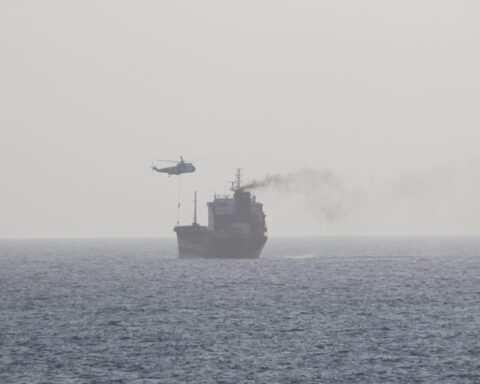
When the Northwood coalition formalized its Hormuz enforcement posture on April 17, Iran’s response was to seize two commercial vessels within 72 hours. When Washington imposed its blockade on April 13, IRGC Navy commanders issued “last warning” radio calls to US destroyers. The pattern is consistent: Western pressure on Hormuz triggers IRGC escalation, because the Revolutionary Guards treat any concession on the strait as an existential threat to their operational authority — the same authorization ceiling that President Pezeshkian publicly denounced when he accused SNSC Secretary Vahidi and Khatam al-Anbiya commander Abdollahi of wrecking the Islamabad ceasefire talks.
China operates on a different circuit entirely. Iran’s crude exports — roughly 1.38 million barrels per day in 2025 — flow almost exclusively to Chinese buyers, making up about 10 percent of China’s total crude imports but approximately 90 percent of Iran’s export revenue. The five Shandong teapot refineries that halted purchases in early April did more damage to Iran’s war economy than any single Western sanction since February 28, and Sinopec’s public retreat sent a signal that Beijing’s state-owned enterprises were no longer willing to absorb the compliance risk. Alicia García-Herrero, a senior fellow at Bruegel, has calculated that a 25 percent oil price increase correlates with a 0.5 percent reduction in Chinese GDP — meaning Beijing’s own growth target of 4.5 to 5 percent is under direct threat from the disruption Iran’s Hormuz posture is causing, giving China a self-interested motive for demanding change that no amount of IRGC bluster can invalidate.
“The normal passage through the Strait of Hormuz serves the common interests of regional countries and the international community.”
— Xi Jinping, to Crown Prince Mohammed bin Salman, April 20, 2026 (Xinhua readout)
The IRGC’s toll regime has collected exactly zero dollars in more than 36 days of operation — 60 permits issued, eight payment requests sent, nothing paid — making the economic argument for Hormuz control increasingly hollow even within Tehran’s own bureaucracy. China does not need to threaten military action; it needs only to continue the withdrawal of commercial participation that is already underway, and the IRGC’s economic rationale for the strait posture collapses under its own weight. Iran’s Central Bank has circulated an internal memo projecting 180 percent inflation and a 12-year recovery timeline — numbers that make China’s implicit threat of further disengagement existentially consequential in a way that Western naval deployments, however large, simply are not.
From Al Daayen to Open Demand: China’s Posture Shift
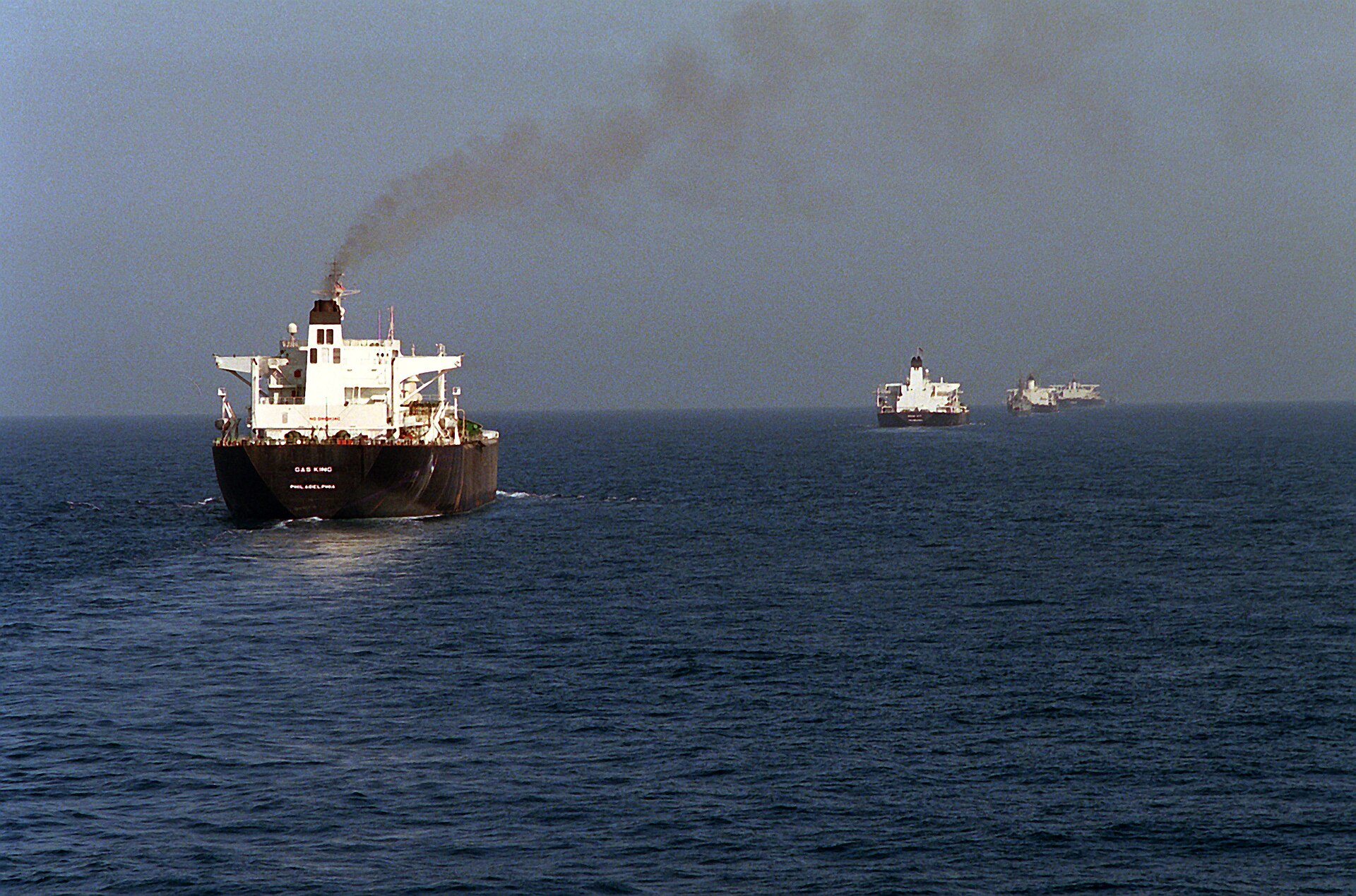
Two weeks before Xi’s call with MBS, China’s Hormuz posture looked entirely different. On April 6, Beijing quietly intermediated the transit of the Al Daayen, a Qatari LNG carrier that passed through the strait at 8.8 knots bound for China — the first laden LNG exit since the IRGC declared the shipping lanes a danger zone. That transit was facilitated through a yuan-via-Kunlun-Bank mechanism outside the SWIFT system, with CNPC and Sinopec’s 8 million tonnes per annum contracted offtake and 5 percent North Field East equity providing the commercial motivation. It was covert facilitation, not public contestation — Beijing operating as Hormuz’s back-channel operating system rather than its loudest critic.
The shift from intermediary to demander reflects a calculation that quiet facilitation was not scaling. Saudi Arabia shipped roughly 40 million barrels to China in April; that figure is expected to drop to about 20 million barrels in May, a 50 percent reduction driven directly by Hormuz disruption. Ma Xiaolin of Zhejiang International Studies University captured the balancing act with unusual candor when he told Al Jazeera that “China keeps good relations with the US, Israel, Iran and the Gulf Arab states — all those countries are our friends, even if they are enemies.” But friendship with everyone becomes untenable when one friend’s military posture is halving the oil supply from another friend, and Xi’s decision to go public suggests Beijing concluded the back-channel approach had run its course.
Yun Sun, director of the China Program at the Stimson Center, has described Beijing’s Middle East approach as “shuttle diplomacy” conducted through its Special Envoy for Middle Eastern Affairs, noting that China’s dependence on Iran limits its pressure capacity. The Xi-MBS call tests that limit, because it puts Beijing’s presidential credibility behind a demand that Iran has so far refused to accept from anyone — and the $400 billion, 25-year cooperation agreement signed in March 2021 gives Tehran reason to believe China’s economic pressure is a bluff Beijing cannot afford to execute without damaging its own strategic hedge against Western energy supply chains.
Tehran’s Non-Response
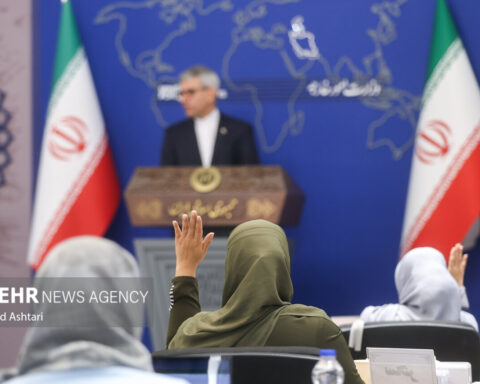
No named Iranian official has publicly responded to the Xi-MBS call’s Hormuz content, and the silence is itself a diplomatic signal. IRNA, the state news agency, pointed to the US blockade and “unreasonable and unrealistic demands” without addressing Beijing by name. PressTV ran Ghalibaf’s characterization of Hormuz control as Iran demonstrating its “indispensable role in the global energy equation” — framing that treats the strait posture as a feature rather than a bug, without acknowledging that the country underwriting Iran’s energy equation had just publicly asked it to stop.
When Wang Yi called Araghchi on April 16, the Iranian foreign minister’s reply was to request that China “play an active role in promoting peace and ending the conflict” — reframing Beijing as a mediator against American aggression rather than a party with its own legitimate grievance about Hormuz access. The diplomatic redirect is familiar from Tehran’s playbook: absorb the pressure, reframe the conversation, and count on the interlocutor’s own interests to prevent follow-through. MEPEI analysis has noted that the 25-year cooperation agreement’s language may allow Iran to invoke a separation between Chinese transit rights and general Hormuz opening, arguing that the clause on strait passage safety “does not apply to nations currently engaged in hostilities” — a loophole that would give Beijing its own ships’ passage while leaving the broader blockade intact.
Gedaliah Afterman of the Abba Eban Institute for Diplomacy and Foreign Relations has observed that “China is gaining not by doing any dramatic moves but waiting and seeing — letting the Americans deal with the mess.” The Xi-MBS call complicates that assessment, because it is the first time Beijing has attached presidential credibility to a specific operational demand on the strait. Whether China follows through — by sustaining the Sinopec retreat, by pressuring additional refiners to halt Iranian purchases, by conditioning future cooperation agreement commitments on Hormuz compliance — or retreats to the strategic ambiguity that has served it for 51 days of conflict will determine whether Xi’s Hormuz language was a genuine inflection point or another entry in the war’s growing archive of statements that changed nothing on the water.
Background
China brokered the March 2023 Saudi-Iran normalization agreement that restored diplomatic relations after a seven-year rupture, an achievement the current conflict has effectively dismantled. The $400 billion China-Iran cooperation agreement, signed in March 2021, locked Iran into below-market oil prices in exchange for Chinese infrastructure investment, but the agreement carries no formal mechanism for Beijing to influence IRGC operational decisions and none of the investment commitments have materialized at the scale originally envisioned.
The conflict, which began with US-Israeli strikes on February 28, has produced the IRGC’s progressive tightening of Hormuz control, the collapse of multiple ceasefire frameworks, and cascading economic damage to Gulf oil exporters and global energy markets. The ceasefire nominally agreed at Islamabad expired on April 22 with no extension mechanism in place, and no new negotiating framework has emerged to replace it. Supreme Leader Khamenei has been absent from public view for more than 50 days, the IRGC Navy has operated under declared “full authority” with no named commander since Admiral Tangsiri was killed on March 30, and President Pezeshkian’s public accusation that IRGC commanders wrecked the ceasefire has exposed a command structure in which the civilian government can diagnose the problem but lacks the constitutional authority to fix it.
FAQ
Has China ever publicly pressured Iran on a specific military issue before?
Not at this level. Beijing’s 2023 Saudi-Iran normalization deal involved structural diplomacy, not demands related to active military operations. The Xi-MBS call is the first instance of a Chinese president publicly framing an Iranian military posture — the Hormuz restrictions — as contrary to shared international interests. Previous Chinese statements on Iran’s military activities, including its nuclear program, have been routed through the Foreign Ministry or UN ambassador level, not through presidential public communications tied to a specific bilateral call.
Could China actually cut off Iranian oil purchases entirely?
Total cessation is unlikely because it would eliminate China’s primary commercial hold over Tehran and remove a discounted crude supply Chinese refiners have grown dependent on. But the direction of travel matters more than the destination: Sinopec’s public retreat, the five Shandong teapot refinery halts, and the OFAC GL U expiry have already reduced Iranian crude volumes reaching China. A sustained 30 to 40 percent reduction — achievable without any formal policy announcement, simply through continued corporate compliance decisions — would be economically devastating for Iran given that Chinese buyers account for approximately 90 percent of Iranian crude exports.
What would it take for Iran to actually comply with Xi’s demand?
Compliance would require a decision at the SNSC level — effectively from IRGC commanders, not President Pezeshkian, who has zero constitutional authority over IRGC operations under Article 110. With Supreme Leader Khamenei absent from public view for more than 50 days and no named IRGC Navy commander since Admiral Tangsiri was killed on March 30, the chain of authorization for any Hormuz concession runs through an institution that has treated every prior demand as confirmation of its operational indispensability. Iran agreeing to open Hormuz in response to Chinese pressure would require the IRGC to accept that its most potent coercive tool has been surrendered — not to a military threat, but to a commercial one from its primary buyer.
What is the 25-year China-Iran cooperation agreement, and does it give Beijing influence?
Signed in March 2021, the agreement outlined $400 billion in Chinese investment across Iranian energy, transport, and manufacturing in exchange for discounted oil supply over 25 years. In practice, sanctions and the current conflict have prevented most investment from materializing. The agreement gives Beijing economic weight in the sense that Iran’s export revenue depends overwhelmingly on Chinese purchases, but it contains no formal mechanism for China to influence IRGC military decisions — and the IRGC, not the civilian government, controls Hormuz operations.
Does MBS’s silence on Hormuz in the Saudi readout mean Riyadh disagrees with Xi?
No — it means Riyadh wants the demand made without its fingerprints on it. Saudi Arabia’s Eastern Province oil infrastructure remains within IRGC missile range, and Riyadh has avoided language that could be construed as endorsing military enforcement of Hormuz transit. By letting Xi carry the explicit Hormuz language while MBS confined himself to “security of the Gulf states,” Saudi Arabia achieves the policy outcome it wants — public Chinese pressure on Iran — without providing the IRGC with a Saudi-attributed statement to use as justification for further escalation against Saudi targets. The structural geometry that makes Beijing indispensable to both Tehran and Riyadh — China’s equity in Iranian energy, its dominance as the buyer of Saudi crude, and its yuan settlement infrastructure — is analyzed in Beijing Didn’t Choose to Broker the Hormuz Crisis — the Crisis Chose Beijing. Xi’s call to MBS came on the same day the M/V Touska seizure triggered Iran’s retaliatory ship confiscations, making Beijing’s public demand on Hormuz an immediate response to a 72-hour cascade — detailed in One Ship, 72 Hours, Three Crises: The M/V Touska Seizure.