JEDDAH — Saudi Arabia has killed a $1.5 billion Pakistani arms sale to Sudan by withdrawing the financing that made it possible, two Pakistani security sources told Reuters on April 20 — a move that exposes the structural veto Crown Prince Mohammed bin Salman now holds over Pakistan’s entire Arab-world weapons export program. The timing is not coincidental: the freeze surfaced within 48 hours of Pakistan’s Army Chief Field Marshal Asim Munir concluding a three-day visit to IRGC headquarters in Tehran, and three days before Oman technical talks opened a new chapter in the US-Iran ceasefire Pakistan brokered.
The deal’s collapse reveals something more consequential than a single arms contract gone cold. Sudan’s economy is so thoroughly wrecked — tens of thousands dead, 12 million displaced since civil war erupted in April 2023 — that Khartoum cannot pay for weapons without a Saudi guarantee. That makes MBS the gatekeeper: he can activate Pakistani arms exports when they serve Riyadh’s interests (as he did for Libya’s Haftar, financing five cargo flights of weapons into Benghazi in March 2026) or shut them down when Islamabad’s diplomacy drifts too close to Tehran. Pakistan’s defense industry, riding high after the May 2025 India-Pakistan confrontation proved its JF-17 fighters and drones in live combat, just discovered the ceiling on its export ambitions has a Saudi lock on it.
Table of Contents
What Was in the $1.5 Billion Package?
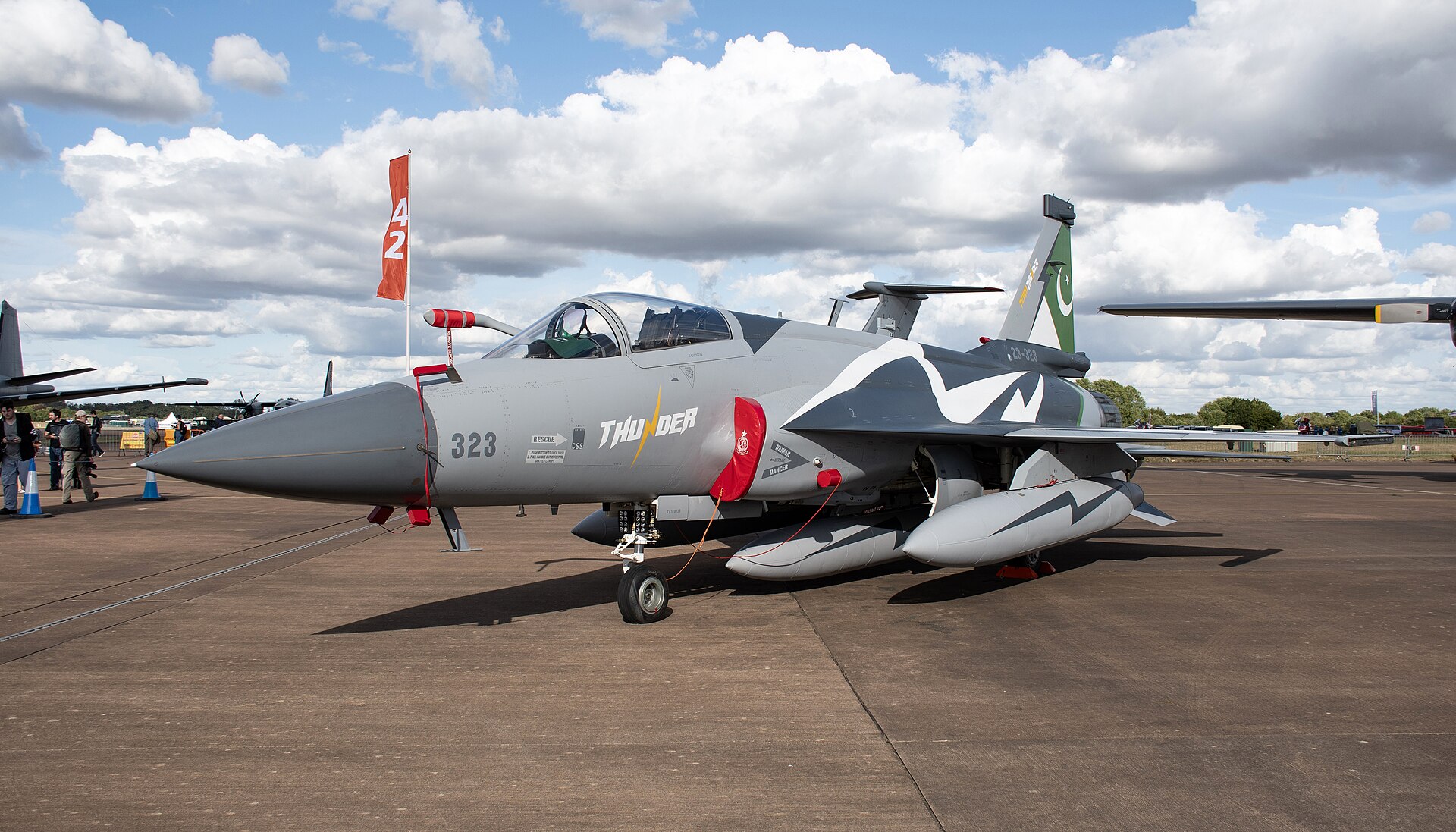
The arms deal, first reported by Reuters on January 9, 2026 and described as “effectively finalized” by early February, would have been Pakistan’s largest single defence export. The package included 10 Karakoram-8 light attack aircraft, more than 200 reconnaissance and kamikaze drones, advanced air defense systems, Super Mushshak trainer aircraft, and potentially several JF-17 Thunder multirole fighters — the same jets that performed in live combat during the May 2025 India-Pakistan confrontation, according to Military.Africa and Arab News reporting from January and February 2026.
The JF-17 is the commercial heart of Pakistan’s export pitch. At $25–42 million per unit, according to Al Jazeera, it undercuts the F-16 Block 70 ($70–100 million) and the Rafale ($90–130 million) while offering a genuine multirole capability. Pakistan manufactures 58 percent of each airframe at its Kamra facility, with China supplying the remaining 42 percent, and can produce 20–25 frames annually — enough to supply multiple export customers simultaneously, as Middle East Eye reported in January 2026.
Former Pakistan Air Force Air Commodore Adil Sultan told Al Jazeera in January that such deals “enhance interoperability of both the air forces and would be mutually beneficial.” For Sudan’s army, the SAF, the package was existential — a fighting chance against the paramilitary Rapid Support Forces that have torn the country apart. For Pakistan, it was proof that its defence industry could compete in the Arab market on price, performance, and political alignment.
How Did Saudi Arabia Kill It?
“Saudi Arabia has signaled that Pakistan should terminate the deal after it dropped the idea of financing it,” two anonymous Pakistani security sources told Reuters, as reported by The Star on April 20. The mechanism was elegant and deniable: Saudi Arabia did not veto the sale, did not issue a public demand, and did not threaten Pakistan directly. It simply withdrew the money — and since Sudan’s economy has effectively collapsed, removing Saudi sovereign financial backing removed the only viable payment mechanism.
The Middle East briefing 3,000+ readers start their day with.
One email. Every weekday morning. Free.
The decision was made at a March 2026 meeting in Riyadh between Sudanese army leaders and Saudi authorities, according to Defence Security Asia and Darfur24 reporting from April 21. The public rationale, per Reuters’ Pakistani security sources, was that Western countries had “advised Riyadh to stay away from proxy wars in Africa.” That framing gives MBS diplomatic cover while obscuring the more immediate calculus: Pakistan’s ceasefire brokering between the United States and Iran had placed Islamabad in a position of diplomatic leverage that Riyadh needed to constrain.
Pakistan’s military, air force, and foreign ministry issued no public comment on the freeze, Reuters and Pakistan Today confirmed through April 2026. That absence of response is itself data — it suggests Pakistan understood the signal and chose not to escalate publicly, absorbing the financial hit rather than risking the broader Saudi relationship that underwrites its economy.
Why Does the Timeline Matter?
The chronology compresses into a sequence too tight to be coincidental. On April 8, Pakistan brokered the US-Iran ceasefire that brought Vice President Vance and Iranian Parliament Speaker Ghalibaf into the same room in Islamabad — the first direct US-Iran talks since 1979. Saudi Arabia was excluded from that room. On April 13, the US naval blockade of Iranian ports began, and Pakistan’s Foreign Minister Dar promised “new dialogue in coming days,” positioning Islamabad as the indispensable channel.
Then came the move that appears to have triggered Riyadh’s response. From April 16 to 18, Field Marshal Munir flew to Tehran and walked into Khatam al-Anbiya Central Headquarters — the IRGC’s operational nerve center — where he met Major General Ali Abdollahi. This was the same commander that President Pezeshkian had publicly accused on April 4 of wrecking the Islamabad ceasefire, naming Abdollahi and SNSC Secretary Vahidi as the men who deviated from the delegation’s mandate. Pakistan Today and WANA described Munir’s visit as the first by a foreign military chief since the ceasefire began.
Within 48 to 72 hours of Munir leaving Tehran, two things happened simultaneously on April 20: MBS received Sudan’s army chief Burhan in Jeddah, and Reuters published the exclusive confirming the arms deal freeze. By April 21, Trump extended the ceasefire indefinitely “at Pakistan’s request,” per NPR and Euronews — and by April 23, Oman technical talks between the US and Iran opened in Muscat, the next milestone on the diplomatic runway Pakistan had built.
The message from Riyadh to Munir reads clearly through the sequence: your diplomatic runway for Iran exists only as long as Saudi Arabia allows it. Pakistan’s role as ceasefire enforcer depends on maintaining credibility with both sides, but the financial architecture that makes that role possible — the loans, the arms export financing, the SMDA framework — runs through Riyadh.
The SMDA Trap
The Strategic Mutual Defence Agreement signed on September 17, 2025, by MBS and Prime Minister Shehbaz Sharif at Al-Yamamah Palace committed both countries to treating aggression against one as aggression against both. When Iran’s war with the US-Saudi coalition escalated, Pakistan invoked the SMDA and deployed approximately 13,000 troops and at least ten fighter jets to King Abdulaziz Air Base in the Eastern Province on April 11, according to Pakistan Today. It was the largest Pakistani military deployment to the Gulf since the 1991 war.
But the SMDA did more than create a military obligation — it converted Saudi financial dependency into strategic leverage. Saudi Arabia and Qatar confirmed $5 billion in financial support to cover Pakistan’s external obligations through June 2026, including a $1.3 billion Eurobond maturity and $3.5 billion owed to the UAE, as ProPakistani and Business Recorder reported on April 11–12. Saudi Arabia separately extended an additional $3 billion deposit. The loans carry approximately 4 percent interest, according to Pakistan Observer.
Umer Karim of the King Faisal Center for Research and Islamic Studies captured the structural bind when he told Al Jazeera on April 14: “Pakistan is walking a tightrope with regards to both the mediation responsibilities it has taken upon itself and the commitments towards Saudi Arabia’s defence.” That tightrope has a financial wire running through it. Discussions between Riyadh and Islamabad had included a proposal to convert $2 billion of existing Saudi loans into a JF-17 procurement package, with an additional $2 billion in commitments — a total arrangement of $4 billion that would have made Saudi Arabia both Pakistan’s largest creditor and its largest defence customer, according to Middle East Eye and Defence Security Asia reporting from January 2026.
Azeema Cheema, founder of Verso Consulting, told Al Jazeera that the SMDA troop deployment reflected “significant restraint shown by the Saudis” and represented a pre-agreed arrangement signaling Pakistan’s seriousness to Iran. The restraint she described, however, cuts both ways — Saudi Arabia could have demanded more troops, more jets, or a harder line against Tehran. Instead, it chose a subtler instrument: the arms export veto, which punishes Pakistan’s Iran engagement without triggering a public rupture that would compromise the ceasefire process Riyadh also needs.
Burhan Comes to Jeddah
Sudan’s army chief Abdel Fattah al-Burhan arrived in Jeddah on April 20 to make a direct appeal to MBS to revive the deal. The Saudi side assembled its full national security architecture for the meeting: the Defence Minister, Foreign Affairs Minister, National Security Advisor, intelligence officials, and the Saudi Ambassador to Sudan, according to the Saudi Press Agency readout carried by Asharq Al-Awsat. The official language was anodyne — leaders “emphasized the importance of ensuring Sudan’s security and stability” and discussed “preserving its sovereignty, unity and territorial integrity.”
But Burhan did not fly to Jeddah for platitudes. Sudanese officials viewed the arms package as “critical in their fight” against the RSF, Dr. Mansour Al-Maswari of Columbia University’s Global Center in Amman told Al Bawaba in April. The SAF has no independent capacity to finance a $1.5 billion weapons purchase — Sudan’s economy has been in freefall since the civil war began, with basic services collapsed across much of the country. Al-Monitor reported on April 20 that Burhan came specifically to press Saudi Arabia to restore the financing, making the Jeddah meeting less a summit than a supplication.
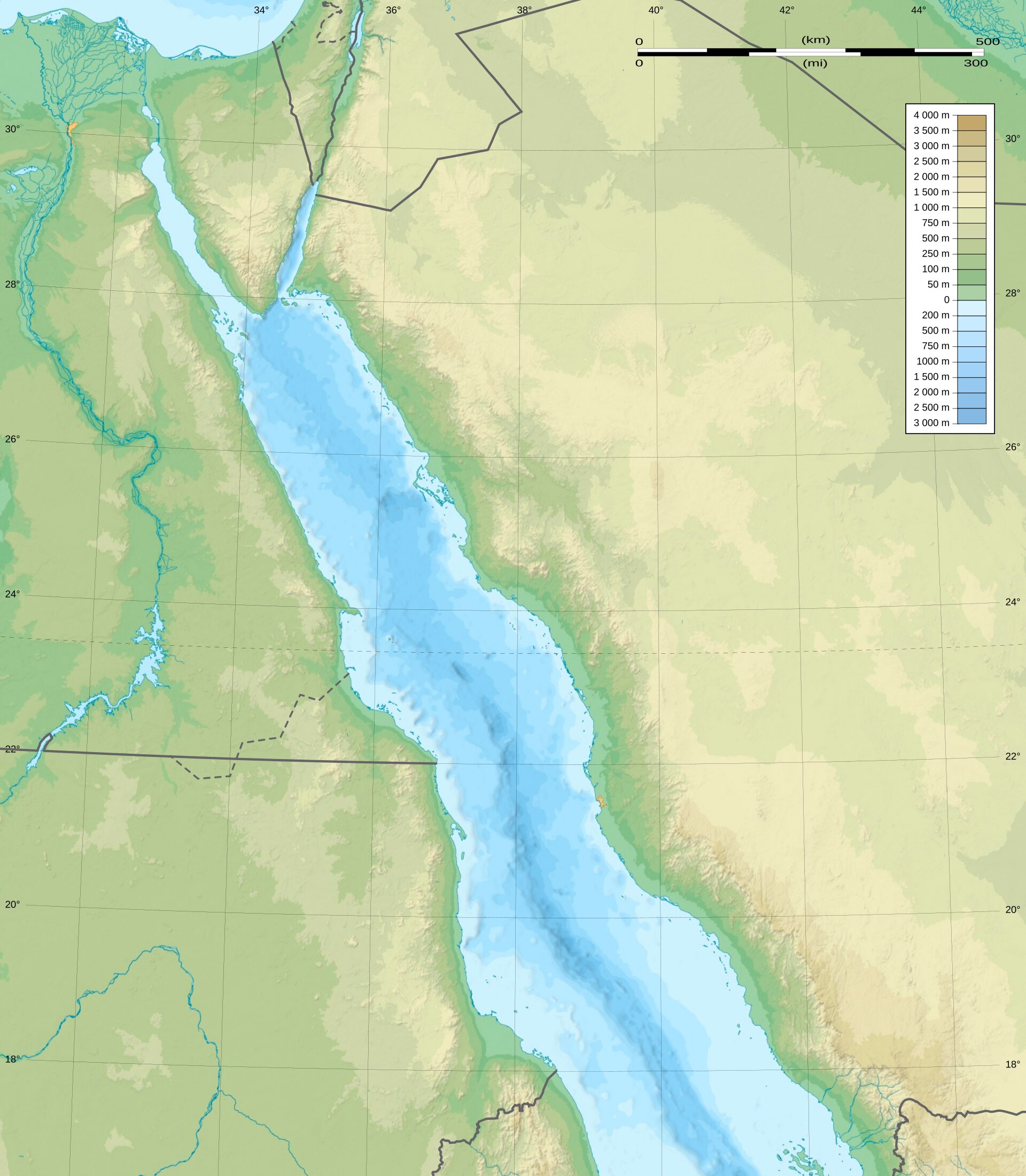
The meeting also reportedly addressed the Russian naval base question. Moscow had proposed a 25-year facility at Port Sudan — 300 personnel, up to four warships including nuclear-powered vessels — and Burhan had previously frozen the agreement under Saudi pressure, according to Sudan Tribune and RUSI analysis from 2025–2026. Port Sudan sits directly across the Red Sea from Jeddah. Arab Progress reported that Burhan renewed the freeze commitment at the April 20 meeting, giving Saudi Arabia a second strategic concession from a supplicant who left without the weapons he came for.
The Libya Domino
The Sudan freeze is not isolated. Reuters and ProPakistani reported on April 21 that a $4 billion Pakistan-Libya National Army arms deal signed in December 2025 is also at risk because Saudi Arabia is “revisiting their strategy” in both Sudan and Libya. Pakistan has already delivered weapons to Khalifa Haftar’s forces via at least five cargo flights into Benghazi — part of a Saudi-financed deal, according to The Intel Drop’s reporting from April 21.
The Libya situation reveals the full architecture of Saudi control over Pakistani arms exports to the Arab world. When MBS wanted Haftar armed, Saudi financing activated the pipeline and Pakistani cargo planes flew into Benghazi. When MBS wanted the Sudan deal frozen, the financing disappeared and the pipeline shut down. Pakistan’s defence industry may manufacture the weapons, but Saudi Arabia decides who receives them — a structural arrangement that gives Riyadh veto power over Islamabad’s most lucrative new export market without ever appearing on a single arms contract.
Mohammed Alhamed, a Saudi geopolitical analyst, told The Media Line in January that “Pakistan’s arms deal with Sudan was finalized with Saudi Arabia’s facilitation, underscoring Riyadh’s intent to bolster Sudan’s security.” He identified Saudi envoy Nawaf Al-Maliki as “pivotal” in originally steering the deal. The same facilitation infrastructure that assembled the deal now serves as the mechanism for dismantling it.
Areig Elhag of the Washington Institute for Near East Policy warned that Pakistan operates within “a broader network of defense understandings” with Saudi Arabia — and added a caution that applies to the entire Saudi-financed arms architecture: “Weapons rarely remain instruments of political pressure for long — they rapidly become fuel for expanded warfare.”
Background: Sudan, the Red Sea, and Saudi Strategy
Saudi Arabia’s interest in Sudan is not charitable. Port Sudan’s position on the Red Sea, directly opposite Jeddah, makes the country’s alignment a first-order security concern for Riyadh. The Saudi-UAE rivalry adds another layer: the UAE is widely accused of financing and arming the RSF, the paramilitary force fighting Burhan’s SAF. Saudi Arabia backs the SAF. The European Council on Foreign Relations and Horn Review reported in January 2026 that Riyadh had blocked UAE aircraft bound for the Kufrah airbase in Libya and coordinated with Egypt to disrupt RSF supply chains — making the Sudan arms deal part of a broader proxy contest between Gulf powers.
Defence Security Asia reported an additional trigger for the Saudi pullback: a video of Sudanese Brigadier General Tariq al-Hadi Kajab, linked to former dictator Omar al-Bashir’s network, in which he praised Iran and allegedly called for attacks on Gulf desalination infrastructure. The video, cited by Reuters’ sources, provided Riyadh with a specific security justification for withdrawing financing — though the timing suggests it was a convenient accelerant rather than the primary cause.
A retired Pakistani general, speaking anonymously to Al Jazeera on April 14, argued that Pakistan can maintain its dual role as Saudi military ally and Iran ceasefire broker only if operations remain “strictly defensive, time-bound, and transparently limited.” The Sudan arms freeze suggests MBS disagrees — or at minimum, that he intends to define those limits himself rather than leave them to Islamabad’s judgment. With the US naval blockade compressing Iran’s options and Oman talks now underway, the question for Munir is whether the diplomatic credibility he built in Tehran survives a financial architecture that runs entirely through Riyadh.
FAQ
Could Pakistan finance the Sudan deal independently, without Saudi backing?
Almost certainly not at this scale. With its own external debt covered by Saudi and Qatari support through June 2026, Islamabad cannot simultaneously extend $1.5 billion in sovereign-backed credit to a country whose economy has effectively collapsed. The discussions to convert $2 billion of existing Saudi loans into JF-17 procurement, reported by Middle East Eye, show how deeply Pakistan’s defence export ambitions depend on Saudi capital — even when the end customer is Pakistan’s own military partner. There is no alternative financing architecture in view: the IMF does not backstop arms deals, and China’s interests in Sudan involve hedging both sides of the civil war, not underwriting Pakistani export credit.
Does China have a role in the JF-17 export decision?
China manufactures 42 percent of each JF-17 airframe and supplies the RD-93 engine (originally Russian-designed, now produced under Chinese license). Beijing has not publicly commented on the Sudan deal freeze, but any JF-17 export requires Chinese component supply chain cooperation. China’s interests in Sudan run through infrastructure investments and oil concessions predating the civil war, and Beijing has maintained relations with both the SAF and RSF — a hedging strategy that gives it no obvious incentive to pressure Riyadh on Pakistan’s behalf.
What happens to Sudan’s air capability without the Pakistani package?
The SAF’s existing air fleet is aging and attrition-depleted after nearly two years of civil war. Without the K-8 light attack aircraft and potential JF-17s, Khartoum’s close air support and air defense capabilities remain critically degraded. Turkey has provided some Bayraktar TB2 drones to the SAF, and Egypt has supplied limited materiel, but neither country has offered the comprehensive package — attack aircraft, drones, air defense, trainers — that the Pakistani deal represented. The RSF, meanwhile, continues to receive equipment through networks the UAE is accused of maintaining.
How does this affect the broader JF-17 export campaign?
Pakistan had been marketing the JF-17 aggressively across the Middle East and Africa following its May 2025 combat debut. Defence Security Asia assessed that the Sudan freeze damages Pakistan’s credibility as a reliable supplier — potential customers in Iraq, Azerbaijan, and Nigeria will note that a “finalized” deal was unwound by a third party’s financial withdrawal. The $4 billion Libya deal now also at risk compounds the reputational damage. Production capacity at Kamra means nothing if the financing architecture for every Arab customer runs through a single external guarantor with its own strategic priorities.
Could the deal be revived if the ceasefire holds?
Theoretically, yes — Saudi Arabia withdrew financing rather than imposing a formal ban, leaving the commercial relationship between Pakistan and Sudan technically intact. If the Oman technical talks produce a durable framework and Pakistan’s mediation delivers results Riyadh values, MBS could restore financing as easily as he pulled it. But that conditionality is precisely the point: the deal’s revival depends on Pakistani behaviour that satisfies Saudi interests, converting what was once a bilateral arms export into an instrument of Saudi foreign policy calibration. That instrument sits inside a broader wartime arrangement: Saudi Arabia’s financial leverage over Pakistan’s export program is one pillar of the STEP quartet’s wartime architecture — the informal Saudi-Turkey-Egypt-Pakistan bloc that has no treaty but has already shaped a ceasefire.
The full architecture of that financial leverage — how the Sudan deal freeze, $8 billion in SBP deposits, and the SMDA treaty obligation combine to define Pakistan’s ceasefire role — is examined in Saudi Arabia’s financial capture of Pakistan and what it costs the Iran ceasefire.