NEW DELHI — India became the first state actor to suffer a documented legal injury from Iran’s authorization ceiling on April 18, when IRGC gunboats fired on the Indian-flagged VLCC Sanmar Herald less than 36 hours after Foreign Minister Abbas Araghchi declared the Strait of Hormuz “completely open” to commercial shipping. The vessel’s captain, captured on bridge audio transmitted during the attack, said what no diplomat has yet managed to articulate: “You gave me clearance! You gave me clearance to go! My name is second on your list. You are firing now!” New Delhi summoned Iran’s ambassador the same day, and NSA Ajit Doval was in Riyadh within 24 hours. The sequence — written clearance, reliance, gunfire, audio proof — transforms the authorization ceiling from an abstract structural problem into an actionable grievance with a specific injured party, a specific document trail, and a specific set of consequences India is now calibrating.
Table of Contents
- The Clearance and the Gunfire
- What Did the Bridge Audio Prove?
- Araghchi’s Concession and the Command Split on the Record
- Why Was India the First to Hold a Paper Trail?
- Doval in Riyadh: Replacing the Worthless Clearance
- The 1988 Inversion: IRGC Claims Khamenei to Override the FM
- Can Any Ceasefire Text Survive the Authorization Ceiling?
- The April 22 Seizures and the Escalation Pattern
- Frequently Asked Questions
The Clearance and the Gunfire
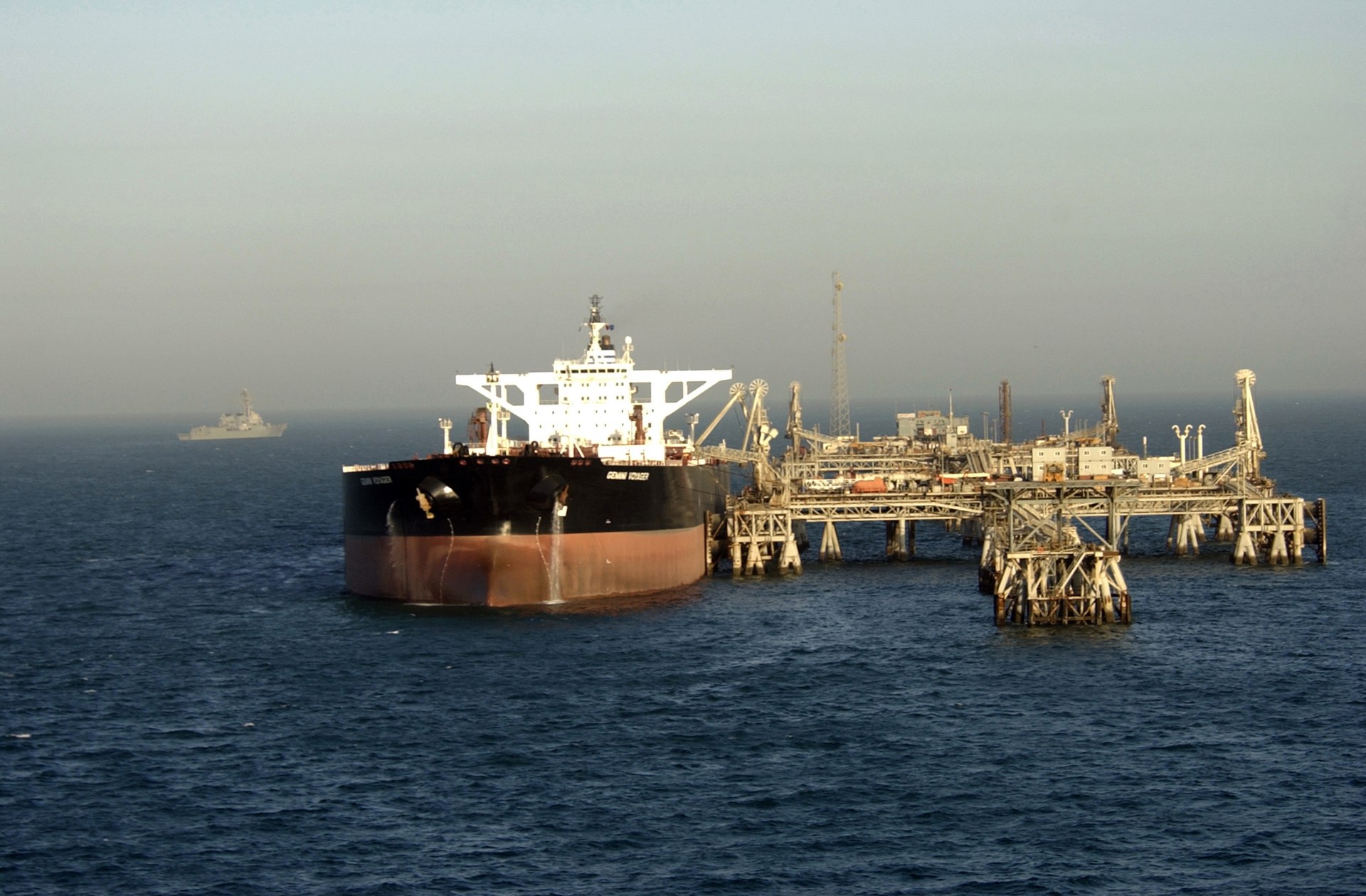
On April 17, Araghchi announced that the Strait of Hormuz was open to all commercial vessels following designated transit corridors established by Iran’s Ports and Maritime Organisation. The declaration was specific: ships were to follow approved routes, and the FM’s office had issued individual clearances to named vessels. The Sanmar Herald — a VLCC crude oil tanker, IMO 9330563, 159,027 gross tonnage, 320,475 deadweight tonnes, built 2007, Indian flag — was on the list. So was the Jag Arnav, an Indian-flagged bulk carrier (IMO 9705354) sailing from Saudi Arabia’s Al Jubail.
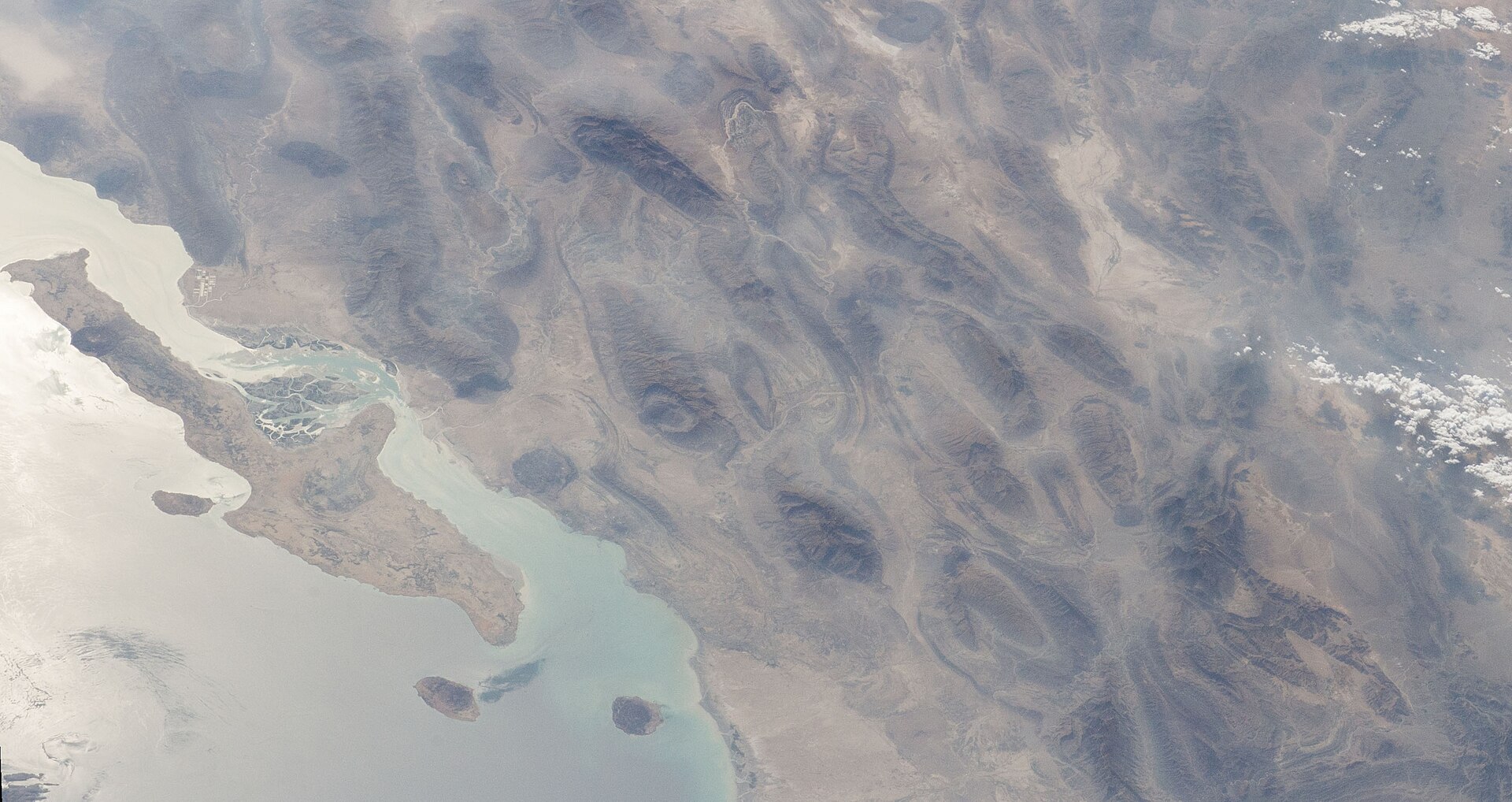
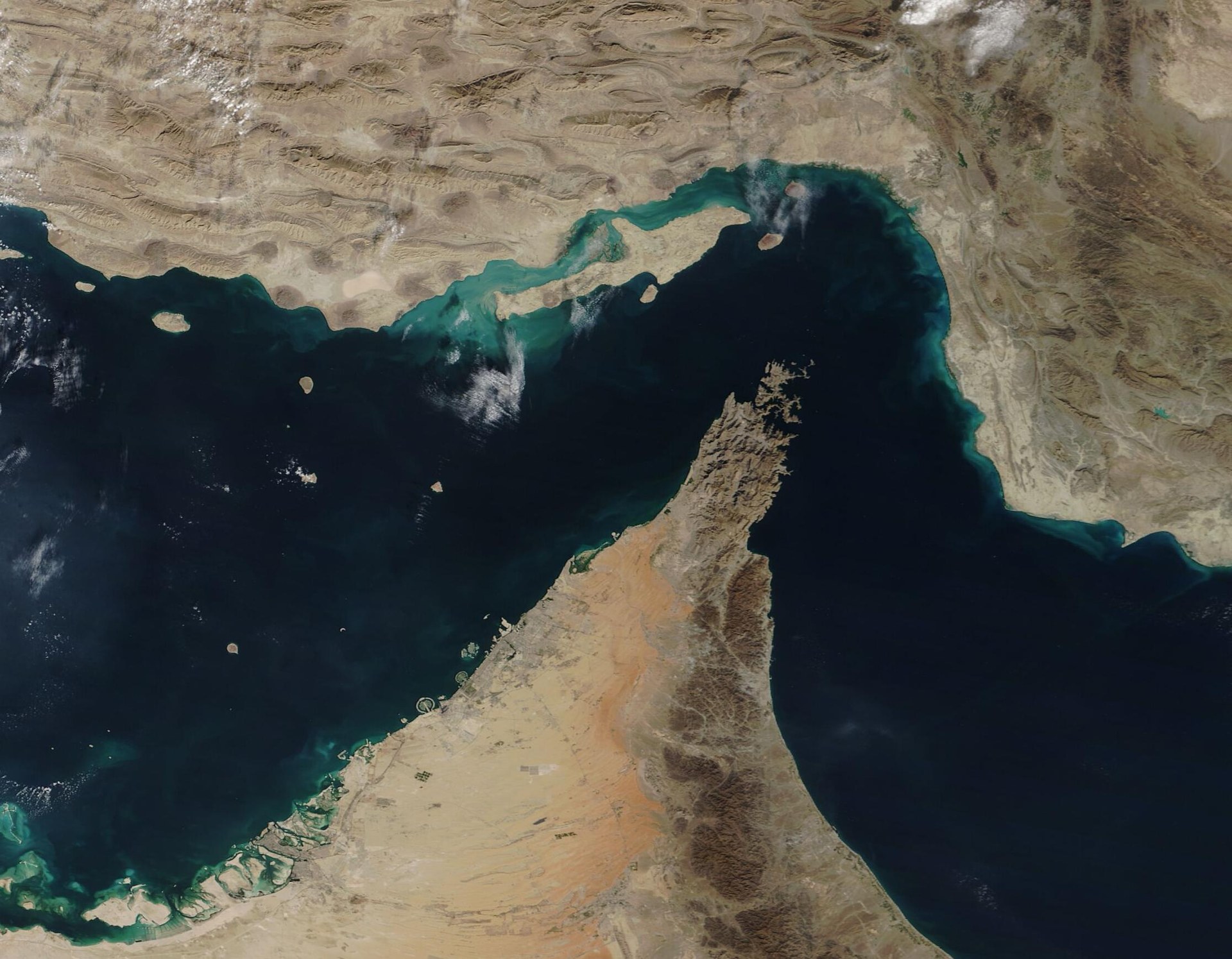
At approximately 09:20 UTC on April 18, two IRGC gunboats fired on the Sanmar Herald roughly 20 nautical miles northeast of Oman, south of Larak Island. The vessel was carrying between 1.848 and 2 million barrels of Iraqi crude loaded at Al Basrah Anchorage — a neutral cargo, from a third country, aboard a vessel with explicit FM clearance. The Jag Arnav, travelling from Al Jubail, made a sudden U-turn and returned westward. No crew casualties were reported on either vessel, according to The Quint and Tribune India.
Before the gunfire, an IRGC patrol unit identifying itself as “Iranian Sepandavi” had broadcast on VHF Channel 16, the international maritime distress and calling frequency monitored by every coast guard, commercial vessel, and naval intelligence unit in the Persian Gulf. The broadcast, per Arutz Sheva and Fortune: “The Strait of Hormuz is still closed. We will open it by the order of our leader, Imam Khamenei, not by the tweets of some idiot.” The Channel 16 transmission was made while Araghchi’s clearance was still nominally in effect.
Tasnim, the IRGC-affiliated news agency, offered a different account. The vessels had “ignored warnings issued by Iran’s forces,” Tasnim reported, and the IRGC stated that “approaching the Strait of Hormuz will be considered cooperation with the enemy, and any violating vessel will be targeted.” No IRGC-aligned outlet addressed the existence of the FM clearance. No PressTV, IRNA, or Tasnim report engaged with the bridge audio.
What Did the Bridge Audio Prove?
The bridge audio proves that a named vessel relied on a written Iranian government clearance, that a military unit of the same government fired on the vessel during transit, and that the vessel’s crew invoked the clearance in real time while under fire. The audio is not a diplomatic summary — it is a primary evidentiary record of the authorization ceiling operating as a lethal gap.
The Middle East briefing 3,000+ readers start their day with.
One email. Every weekday morning. Free.
The audio from the Sanmar Herald’s bridge, captured during the incident and reported by The Week India, IBTimes India, DNA India, and IranWire, is not a secondhand diplomatic summary. It is a real-time record of a ship’s officer invoking a specific Iranian government document while under fire from a different arm of the same government. The captain was speaking to the IRGC patrol unit, and the patrol unit was shooting at a vessel whose name appeared on a list issued by the Foreign Ministry.
The evidentiary sequence is specific enough to matter in a legal proceeding, not merely in an editorial. A state issued a written clearance to a named vessel. The vessel relied on that clearance to enter a transit corridor. A military unit of the same state fired on the vessel during transit. The vessel’s crew invoked the clearance in real time. Audio of that invocation exists.
Under UNCLOS Article 38, ships enjoy unimpeded transit passage through international straits. Iran has not ratified UNCLOS, but transit passage through Hormuz reflects customary international law, as legal scholars at Just Security and the University of Western Australia have noted. A lawful blockade must be directed against an enemy, not neutral commercial shipping. India is not a belligerent in this conflict. The Sanmar Herald was carrying Iraqi crude. The legal exposure for Iran is not abstract — it is documented, specific, and attached to a vessel with an IMO number and a flag state with a seat on the UN Security Council rotation.
Araghchi’s Concession and the Command Split on the Record
The most remarkable development of the 48 hours following the incident was not India’s diplomatic response. It was Araghchi’s own. The Iranian Foreign Minister, speaking to Euronews and The Defense News on April 19, made what amounts to the most senior official acknowledgment of the authorization ceiling ever recorded: “Our military units are now, in fact, independent and somewhat isolated, and they are acting based on general instructions given to them in advance.”
The sentence repays close reading. “Independent” — operating outside the FM’s command chain. “Isolated” — not receiving updated instructions. “General instructions given to them in advance” — pre-delegated rules of engagement that the civilian government cannot override in real time. The FM of the Islamic Republic, the official responsible for Iran’s diplomatic positioning to the world, told a European news outlet that he cannot control what his own military does in the Strait his government claims to administer.
Fortune’s April 18 reporting quoted an unnamed analyst: “The fight between different factions has started.” South China Morning Post, a day later, posed the question that Indian shipping executives were already asking their insurers: “Can Iran protect friendly shipping?” Defense News described the structural failure as two command loops — one issuing transit clearances, one pulling triggers — operating inside the same institution with no single officer bridging the gap.
The answer, based on the evidentiary record of April 18, is no. Iran’s Foreign Ministry can issue a clearance. It cannot ensure the clearance is honoured by the units patrolling the water the clearance covers.
Why Was India the First to Hold a Paper Trail?
India was the first state to hold a named-vessel FM clearance because India was exposed on three simultaneous axes: as a buyer of Iranian crude under a US licence expiring April 19, as a transporter of Iraqi crude through Iranian-claimed waters, and as a country for which 50 percent of crude imports and 90 percent of LPG imports transit Hormuz. No other state carried that convergence of documented exposure.
India’s position is unique among states affected by the Hormuz crisis, and the April 18 incident is a product of that uniqueness rather than an accident. Approximately 50 percent of India’s crude oil imports and 90 percent of its LPG imports transit the Strait of Hormuz, according to EIA and India Briefing data. India is the world’s third-largest oil importer. Before US sanctions forced a complete cutoff in 2018, India was Iran’s second-largest crude buyer at 518,000 barrels per day, according to EIA data.
The relationship had just resumed. In April 2026, Indian Oil Corporation purchased 2 million barrels of Iranian crude — the first Iranian purchase in seven years — under OFAC General License U. Indian refiners settled the payment in yuan via ICICI Bank Shanghai, not in rupees through UCO Bank as earlier waivers had envisaged. The GL U expired at 12:01 AM EDT on April 19 — the day after the IRGC fired on the Sanmar Herald. India’s last Iranian oil purchase under US licence was aboard a vessel at sea when the IRGC opened fire on a different Indian vessel in the same waterway.
This timing is not incidental. India needed written assurance from Tehran because all three axes of exposure converged on the same two-day window: the GL U expiry, the Iraqi crude shipment in transit, and the Hormuz dependence that could not be hedged away before the expiry hit.
The result: India obtained a document that no other state appears to have obtained — a specific, named-vessel FM clearance — and that document was rendered worthless within 36 hours. The injury is not merely to Indian shipping. It is to the concept of Iranian governmental assurance as a tradeable instrument. China, which brokered the Al Daayen LNG transit in early April and maintains operational relationships with both IRGC Navy and the FM’s office, has not produced evidence of a similar FM clearance for its transits. Beijing’s corridor through Hormuz appears to run through IRGC channels directly — a tacit acknowledgment, visible in the routing, that the FM’s office is not the authority that matters.
Doval in Riyadh: Replacing the Worthless Clearance
On April 18, within hours of the IRGC attack, Foreign Secretary Vikram Misri summoned Iranian Ambassador Dr Mohammad Fathali. Misri conveyed India’s “deep concern,” emphasised the safety of Indian seafarers, stated that the Strait of Hormuz is an international trade route that must remain open to all commercial shipping, and — per Business Standard and The Wire — told Iran explicitly: “There will be consequences.”
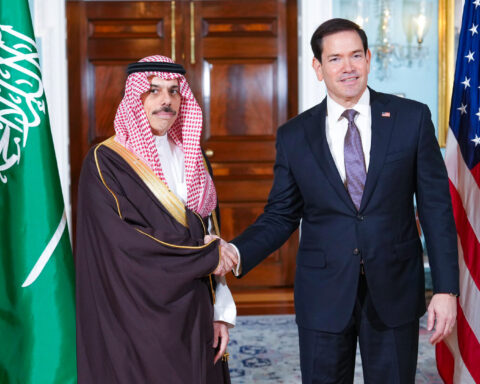
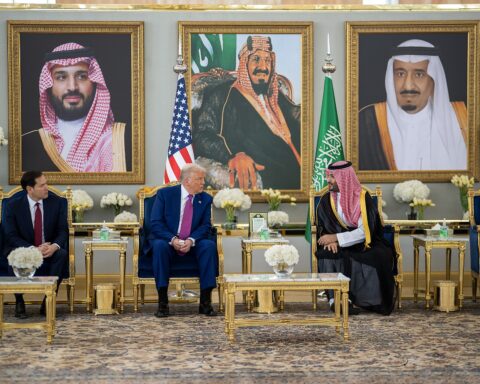
The next day, NSA Ajit Doval arrived in Riyadh on what was described as a “surprise” one-day visit. He met four counterparts: Saudi Energy Minister Prince Abdulaziz bin Salman, Foreign Minister Prince Faisal bin Farhan, and NSA Musaed Al-Aiban, according to Business Standard, Tribune India, and ANI. The four pillars of discussion, per official readouts: stable supply chains despite threats to global trade routes; Hormuz and broader Persian Gulf security; intelligence sharing and coordination; and strengthened economic ties.
The reporting frames this as an “energy security” visit. The operational logic points elsewhere. Doval was not in Riyadh to discuss abstractions. He was there to replace the instrument that had just been destroyed. The FM clearance — the document India relied on to move ships through Hormuz — was worthless. The Doval visit was about securing an alternative: a Saudi supply guarantee, routed through the East-West Pipeline to Yanbu, bypassing Hormuz entirely, with Indian Navy escorts under Operation Urja Suraksha covering the Red Sea and Gulf of Oman segments.
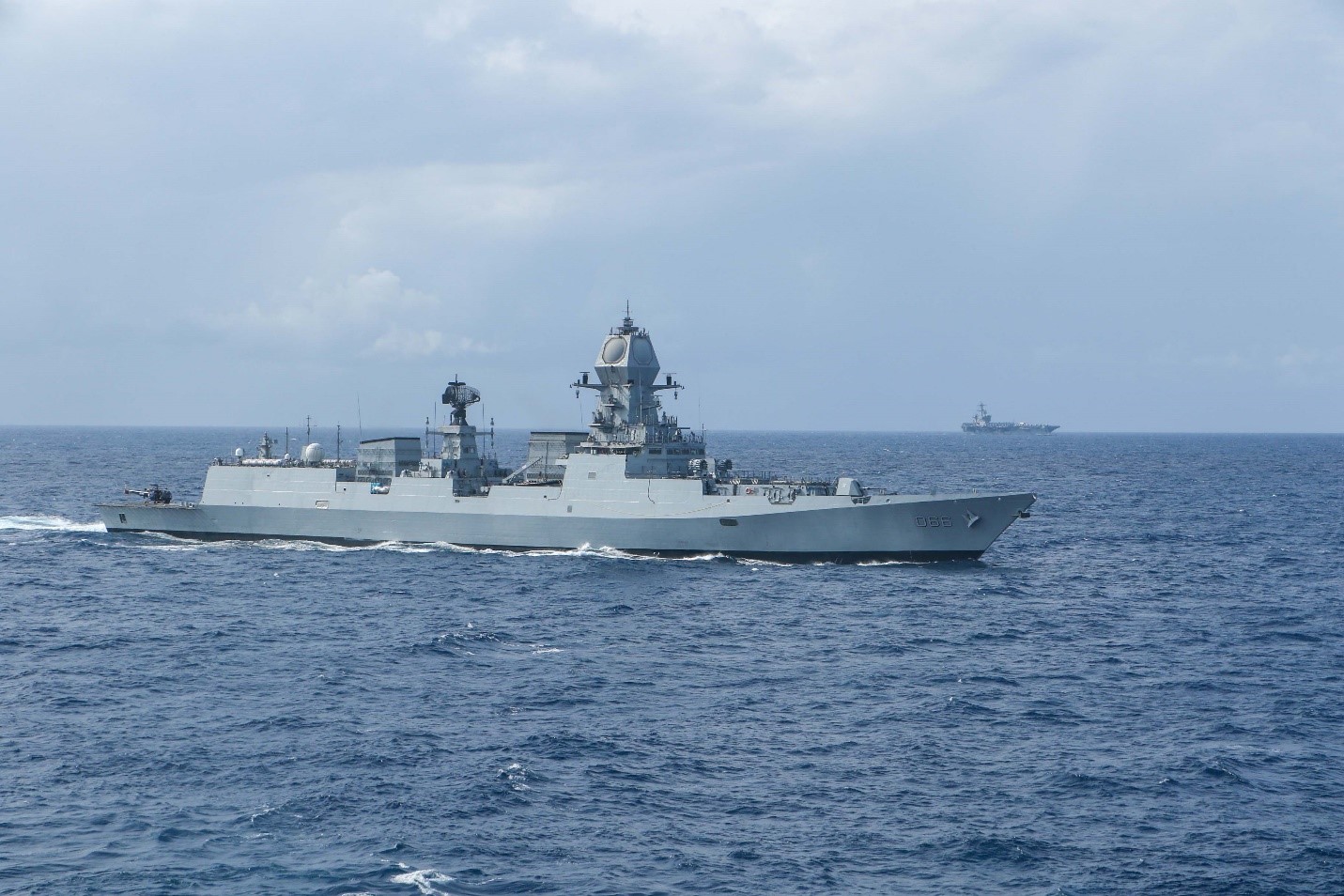
Operation Urja Suraksha had been running since March 25: five or more frontline warships, including Visakhapatnam-class destroyers and frigates, deployed to the Gulf of Oman, escorting 22 priority vessels carrying LNG, LPG, and crude oil, per Marine Insight and Maritime Executive. None of those warships had entered the Strait itself. They operated at the terminus, assuming escort duties once vessels exited Hormuz. The April 18 incident exposed the gap: Indian naval power ends where Iranian IRGC patrols begin, and the FM clearance was supposed to bridge that gap. It did not.
The 1988 Inversion: IRGC Claims Khamenei to Override the FM
On July 20, 1988, Ayatollah Ruhollah Khomeini addressed the Iranian nation by radio and accepted UN Security Council Resolution 598, ending the Iran-Iraq War. He compared the decision to “drinking from a poisoned chalice.” The mechanism worked. The IRGC obeyed. Guns went silent across the front.
That mechanism depended on three conditions. Khomeini was alive and publicly audible — the Supreme Leader spoke in his own voice, in real time, to the entire country. The IRGC was institutionally subordinate to a direct spoken order from the Supreme Leader. And no competing faction within the state claimed the authority to override or reinterpret that order.
All three conditions are absent in April 2026. Ali Khamenei has been absent from public view for more than 50 days as of late April 2026. The IRGC is not receiving direct orders from the Supreme Leader’s office — it is invoking the Supreme Leader’s name on VHF Channel 16 to override the civilian Foreign Minister. The “Iranian Sepandavi” broadcast did not say “we are acting on standing orders from the Supreme Leader.” It said the Strait would be opened “by the order of our leader, Imam Khamenei,” positioning Khamenei’s absent authority as the ceiling that Araghchi’s active authority could not reach.
The inversion is structural, not rhetorical. In 1988, the Supreme Leader used his authority to compel IRGC compliance with a ceasefire. In 2026, the IRGC uses the Supreme Leader’s name to justify noncompliance with the FM’s clearance. The direction of authority has reversed. The Foundation for Defense of Democracies identified “five men running Iran” in April 2026; Pezeshkian was not among them. The Supreme National Security Council, which under Article 176 is supposed to coordinate military and diplomatic policy, has been run since the Islamabad framework collapsed by Zolghadr — whom Pezeshkian’s own government accused on April 14 of “deviation from the delegation’s mandate” during ceasefire talks.
The 1988 precedent is the only functioning model for IRGC compliance with a diplomatic commitment. It required a single authoritative voice issuing an unambiguous command. In 2026, the voice is silent, the IRGC is broadcasting in its name, and the FM has publicly conceded that military units are “independent and somewhat isolated.” President Pezeshkian, on April 4, named IRGC Coordinator Vahidi and IRGC Commander Abdollahi as the officers blocking ceasefire compliance. Under Article 110 of Iran’s constitution, the president has zero authority over IRGC operational command. The officers Pezeshkian accused are the same officers Pakistan’s NSA Munir visited at Khatam al-Anbiya headquarters on April 16 — the ceasefire enforcement architecture runs directly through the command structure the civilian government has publicly accused of sabotaging it.
Can Any Ceasefire Text Survive the Authorization Ceiling?
No ceasefire text can survive the authorization ceiling in its present form. A ceasefire requires that the signatory can bind the forces under its command. The Sanmar Herald incident proved on the record that Iran’s Foreign Ministry cannot. Until a single authoritative voice — equivalent to Khomeini in 1988 — issues a direct, public order to the IRGC, any ceasefire text Iran signs carries the same structural gap as the FM clearance given to the Sanmar Herald.
The April 18 incident transforms the authorization ceiling from a diplomatic abstraction into a demonstrated operational failure with an evidentiary record. Every future negotiating team, every mediator, and every insurer now has a primary-source document — bridge audio, IMO number, FM clearance on file — to put on the table.
The enforcement architecture for any future ceasefire depends on Pakistan, which has positioned itself as the sole mediator with operational access to both sides. Pakistan’s NSA Munir has been the relay point between Washington and Tehran since the Islamabad Accord framework collapsed. But Munir’s enforcement leverage runs through the same officers who, on the evidentiary record, operate outside the FM’s authority — the same command Pezeshkian publicly accused of ceasefire sabotage. The authorization ceiling is not a problem Pakistan can solve by shuttling between Islamabad and Tehran. It is a problem inside Iran’s command structure that no external mediator has the tools to repair.
The ceasefire that expired on April 22 had no enforcement clause, a structural deficiency multiple analysts identified before it lapsed. Any replacement text faces the same problem, amplified by the April 18 evidence. A signatory state whose FM acknowledges his military units are “independent and isolated” cannot credibly commit to a ceasefire. A mediator state whose enforcement visits are directed at the very command structure that ignores the FM cannot credibly guarantee compliance. The April 18 audio is, in diplomatic terms, a recording of the gap between signature and performance — the distance between what Iran’s civilian government promises and what Iran’s military apparatus does.
India’s response to this gap has been structural, not rhetorical. Misri’s demarche included the phrase “there will be consequences.” Doval’s Riyadh visit, the next day, was the first visible consequence: a pivot from Iranian clearance to Saudi supply guarantee, from Hormuz to Yanbu, from a broken instrument to an alternative corridor. The Saudi side has its own incentive to accommodate: Saudi March production fell to 7.25 million barrels per day, according to the IEA, down from 10.4 million bpd in February — a 30 percent drop that left Saudi oil revenue $93 million a day below pre-war baseline. Replacing lost Hormuz-dependent customers with pipeline-routed supply through Yanbu offers Riyadh a partial recovery of export volume without Hormuz risk.
The insurance market has already priced the authorization ceiling into Hormuz transit. War-risk premiums for the Strait have risen to levels not seen since the 1987-88 Tanker War, when the US Navy reflagged Kuwaiti tankers under Operation Earnest Will. Lloyd’s underwriters now face a specific evidentiary problem: a vessel with explicit state clearance was fired upon by a different arm of that state. The FM clearance, which might previously have mitigated risk assessments, is now evidence of the opposite — that holding Iranian government permission does not reduce the probability of IRGC interdiction.
The April 22 Seizures and the Escalation Pattern
Four days after the Sanmar Herald incident, the IRGC seized two vessels: MSC Francesca and Epaminondas. The Epaminondas was en route to Gujarat, India, from Jebel Ali, Dubai. The IRGC cited “tampering with navigation systems” and operating without permits, per Al Jazeera and Lloyd’s List. The seizures occurred the same day Trump extended the ceasefire at Pakistan’s request — a coincidence of timing that repeated the April 18 pattern: diplomatic gesture from one part of the international system, kinetic action from the IRGC that contradicts it.
The Epaminondas seizure added a second Indian-linked grievance to the April 18 attack. A vessel bound for an Indian port, sailing from a UAE port through international waters, was seized by the same force that had fired on an Indian-flagged vessel four days earlier. The IRGC’s justification — navigation system tampering, missing permits — did not reference the ceasefire extension, the FM’s prior clearance framework, or any communication with India’s Foreign Ministry.
The ceasefire’s expiry on April 22 coincided with the opening of the Hajj arrival window and the sealing of the Makkah Umrah cordon. Indonesia’s 221,000 pilgrims began departing the same day. The IRGC’s seizure of two commercial vessels on a day of maximum diplomatic sensitivity — ceasefire expiry, Hajj opening, Trump extension — is consistent with the pattern established on April 18: IRGC operational decisions do not correlate with the diplomatic calendar maintained by Iran’s civilian government or its international interlocutors.
For India, the pattern has produced a specific policy conclusion. The Indian Navy’s Operation Urja Suraksha cannot extend into the Strait. The FM clearance cannot be trusted. The IRGC’s own permits appear to exist in a parallel system that the FM’s office does not control. The remaining options are supply-chain diversification — the Doval-Riyadh track — and multilateral naval escort, which the 30-nation Hormuz coalition coordinating from Northwood is attempting to operationalise.
Frequently Asked Questions
Did the IRGC acknowledge the FM clearance before firing on the Sanmar Herald?
No. IRGC-affiliated media, including Tasnim, Fars, and PressTV, reported that the vessels had “ignored warnings” but made no reference to the FM-issued clearance. The IRGC’s VHF Channel 16 broadcast stated the Strait would be opened only “by the order of our leader, Imam Khamenei,” positioning the FM’s authority as irrelevant. Iran’s state media strategy has been to validate the IRGC’s authority claim and treat the FM clearance as though it does not exist.
What legal remedies does India have under international maritime law?
India can pursue claims under the International Tribunal for the Law of the Sea (ITLOS) for violation of transit passage rights, even though Iran has not ratified UNCLOS, because transit passage through international straits reflects customary international law binding on all states. India may also pursue state responsibility claims under the International Law Commission’s Articles on State Responsibility, which hold a state liable for acts of its organs regardless of internal command fragmentation. The P&I insurance implications are immediate: vessels transiting Hormuz with FM clearance now face a demonstrated gap between documented permission and physical safety, which war-risk underwriters at Lloyd’s have already priced into Hormuz transit premiums.
How does Operation Urja Suraksha compare to other naval escort missions in the region?
India’s deployment of five-plus frontline warships to the Gulf of Oman since March 25 is the largest Indian naval operation in the Persian Gulf region since the 1990-91 Gulf War evacuation of 111,000 Indian nationals from Kuwait. Unlike the US-led Combined Maritime Forces or the new Northwood-coordinated 30-nation coalition, Operation Urja Suraksha operates independently and does not enter the Strait itself — Indian warships take over escort at the Gulf of Oman terminus. Japan’s Maritime Self-Defense Force deployed two destroyers in a similar terminus-escort model in March 2026, and South Korea stationed the Choi Young destroyer group at the same boundary.
What happened to India’s Iranian crude imports after GL U expired?
OFAC General License U expired at 12:01 AM EDT on April 19, 2026, with no renewal. Treasury’s Bessent confirmed non-renewal on April 15-16. India’s IOC had purchased 2 million barrels aboard the VLCC Jaya with an unusual 95 percent pre-payment structure, settled in yuan via ICICI Bank Shanghai. Reliance Industries rejected two Iranian cargoes — the Derya and Lenore — on compliance grounds before the expiry. India’s path back to Iranian crude is now closed by US sanctions, and the April 18 IRGC attack on a non-Iranian crude shipment (Iraqi Basrah crude) demonstrated that even non-sanctions-linked Indian vessels face IRGC targeting in Hormuz.
Has Khamenei issued any statement on the Hormuz situation since the IRGC began restricting transit?
No verified statement from Khamenei has addressed the FM-IRGC split, the Hormuz restrictions, or the ceasefire framework since the crisis began. His last known public positioning predates the IRGC’s Hormuz restrictions. The IRGC invokes his name on Channel 16, but that invocation functions as a claim of authority, not evidence of direction. Iranian constitutional scholars note that Article 110 grants Khamenei supreme command of the armed forces — meaning only a direct, public Khamenei directive could legally compel the IRGC to honour an FM clearance. None has been issued. Absent that directive, every FM clearance Iran issues carries the same structural flaw as the one given to the Sanmar Herald.