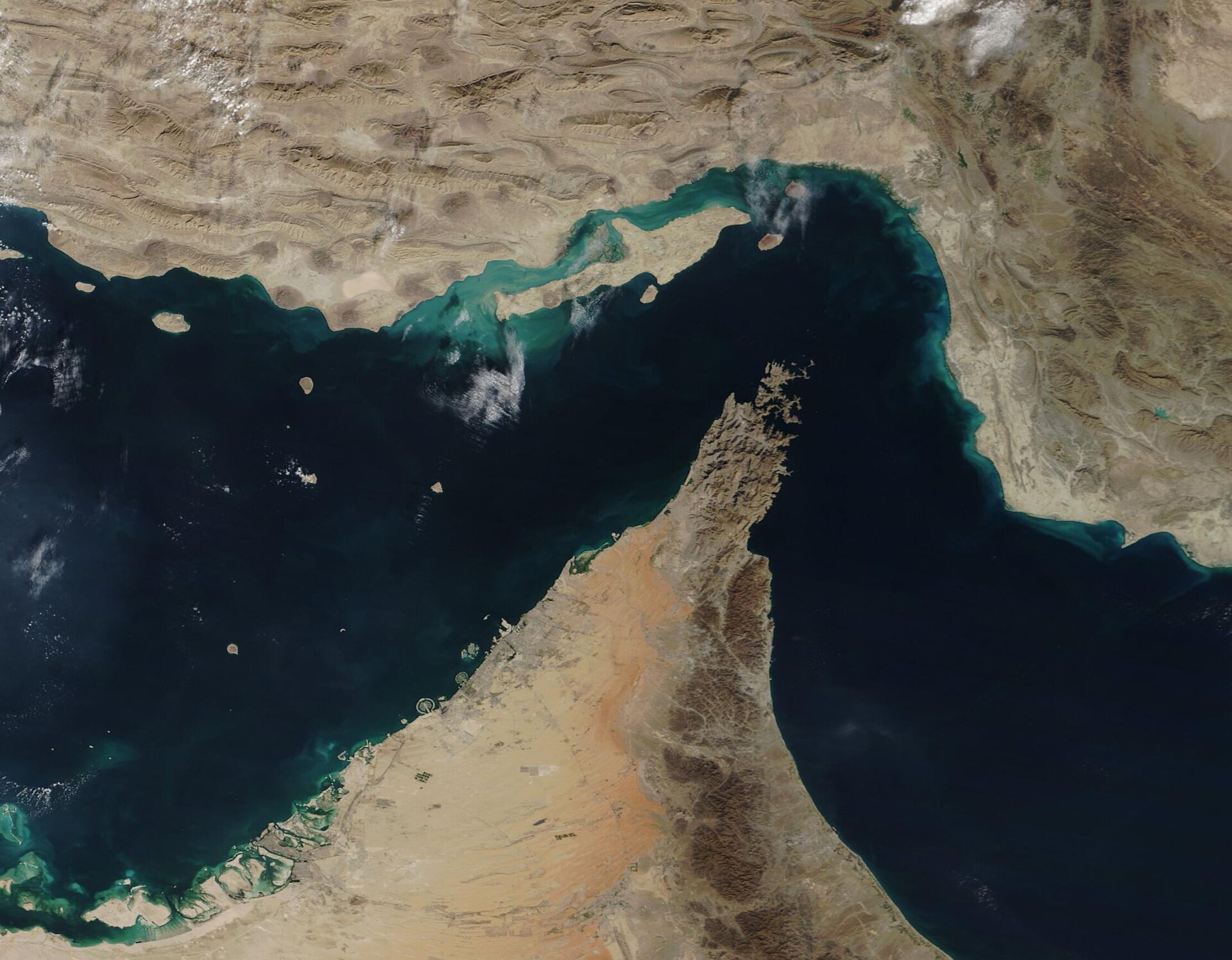
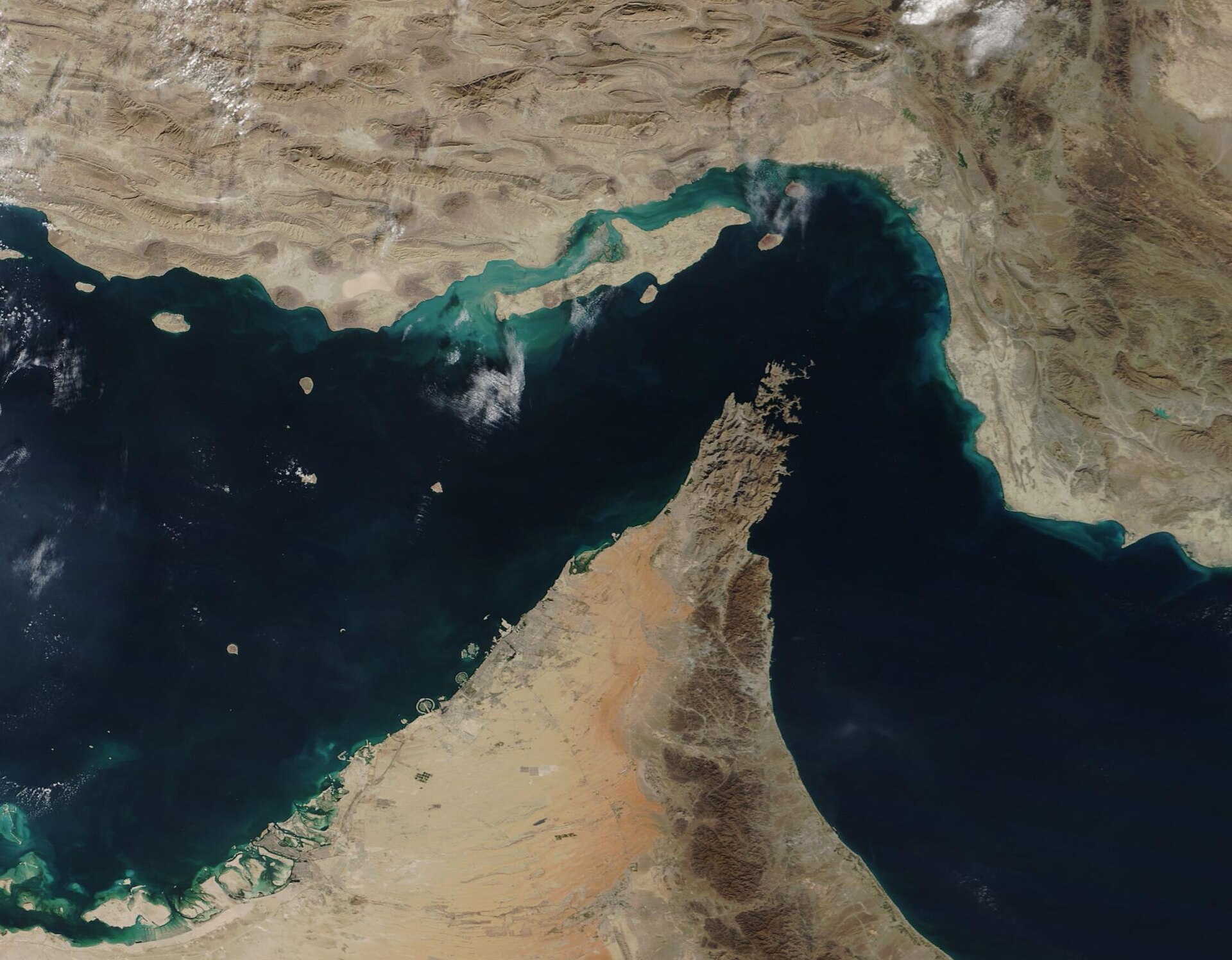
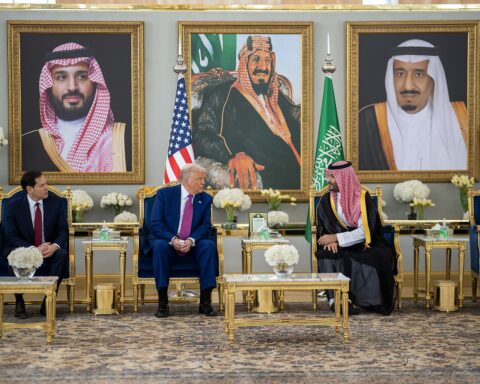
RIYADH — China did not volunteer to become the mediator of the Hormuz crisis. The structural geometry of the war — Beijing’s equity in Iranian energy, its dominance as the buyer of Saudi crude, and its yuan settlement infrastructure through Kunlun Bank — made it the only power simultaneously indispensable to both Tehran and Riyadh. When Xi Jinping called Mohammed bin Salman on April 20, 2026, the day the ceasefire expired, and publicly demanded that “the Strait of Hormuz should maintain normal passage,” he was not brokering a deal so much as announcing a position that neither side could afford to ignore. The call, framed around the tenth anniversary of the China-Saudi comprehensive strategic partnership, was the first time Xi had publicly called for Hormuz to be reopened at presidential level.
Table of Contents
- The Geometry That Made Beijing Indispensable
- Wang Yi’s 26 Phone Calls
- Did China Actually Broker Anything?
- The Rich Starry and the Limits of the Blockade
- Why Does Saudi Arabia’s Oil Revenue Now Depend on Beijing’s Preferences?
- Can the US Security Compact Survive a War Washington Cannot End Alone?
- Beijing’s Iran Problem — and Tehran’s Beijing Problem
- What Does Hormuz Tell Us About a Pacific War?
- Frequently Asked Questions
The Geometry That Made Beijing Indispensable
Before the war, China received approximately 5.35 million barrels per day through the Strait of Hormuz. By mid-April, under the US naval blockade, that figure had collapsed to roughly 1.22 million bpd — a 77% drop in the single most concentrated energy dependency of any major power. Over 40% of China’s total oil imports transit the strait. Iran alone supplied 1.38 million bpd to Chinese refiners in 2025, a year in which China’s crude imports hit a record 11.55 million bpd. China absorbs more than 80% of Iran’s oil exports.
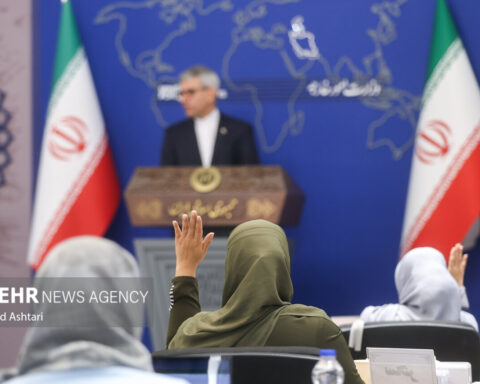
Those numbers explain why Wang Yi called Iranian Foreign Minister Araghchi on April 16 and explicitly asked Tehran to ensure “freedom and safety of international navigation through the strait” — calling it “a shared call of the international community.” They also explain why Araghchi, who had spent weeks deflecting American pressure, told Wang he was “open to seeking a rational and realistic solution through peaceful negotiations.” Iran’s response to a Chinese demand was categorically different from its response to an American one.
On the Saudi side, the dependency runs through a different channel but arrives at the same destination. Saudi Arabia sent 25.6% of its crude exports to China in the first half of 2025. Aramco’s May 2026 allocations to Chinese buyers fell to approximately 20 million barrels — down from 45 million barrels monthly in January and February, a record low representing a 56% halving. The collapse in Saudi oil revenue, running $93 million per day below pre-war baseline, is concentrated overwhelmingly in lost Asian — and specifically Chinese — demand.
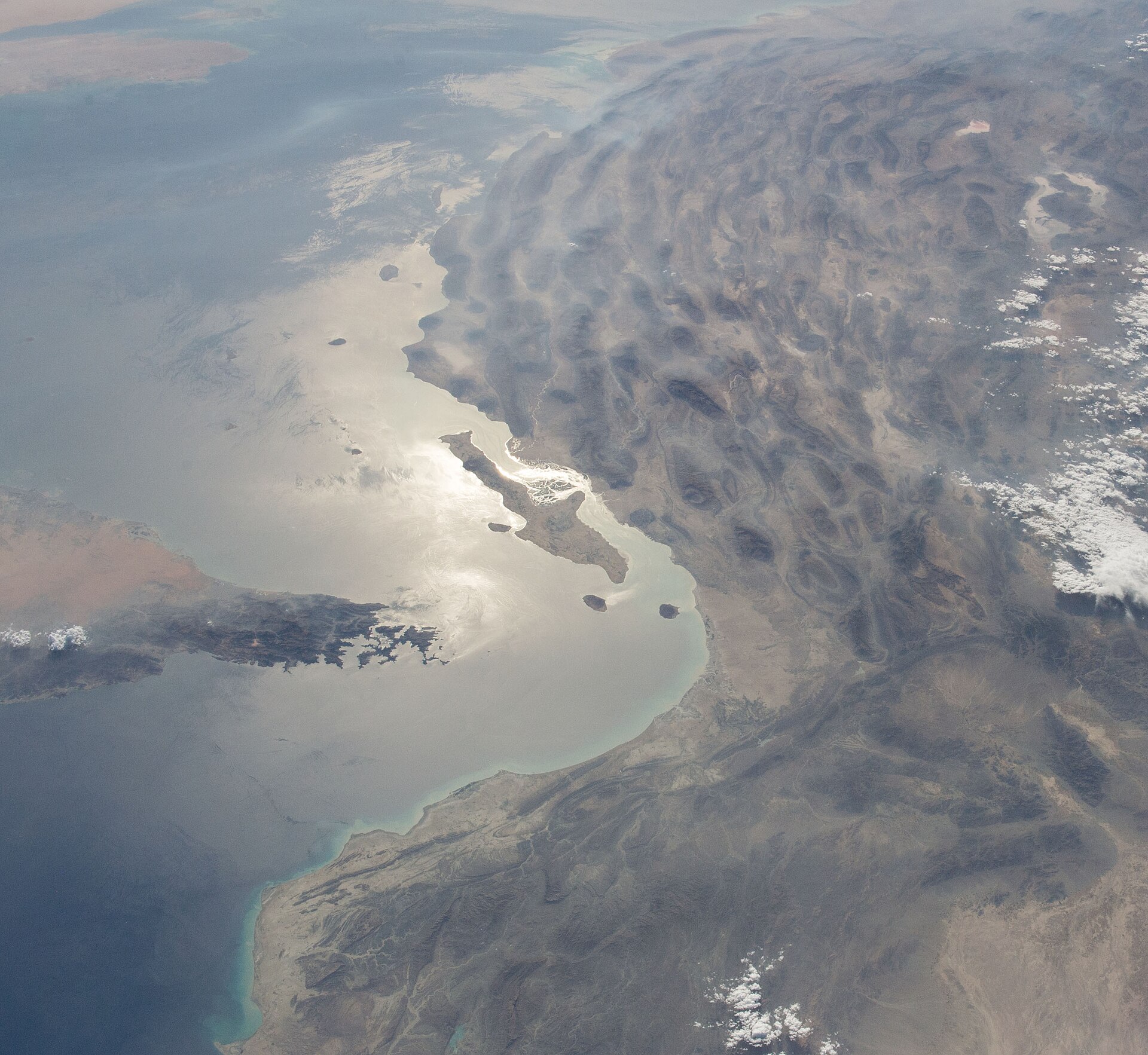
Clayton Seigle, who holds the James R. Schlesinger Chair in Energy and Geopolitics at CSIS, put it plainly in mid-April: the Iran war “can’t end soon enough for China.” China “has a lot to lose” if Hormuz remains closed. A disinterested mediator carries no weight. A mediator whose economy bleeds every day the strait stays shut is a different proposition — one whose motivation both sides can read without being told.
Wang Yi’s 26 Phone Calls
China’s diplomatic footprint during the crisis was far larger than the Xi-MBS call alone. Chinese Foreign Ministry spokesperson Mao Ning disclosed that Wang Yi made 26 phone calls to counterparts during the conflict. Beijing deployed Special Envoy Zhai Jun for shuttle diplomacy across the region and co-published a joint peace plan with Pakistan in late March — a document that predated any American-backed framework by weeks.
The Middle East briefing 3,000+ readers start their day with.
One email. Every weekday morning. Free.
Wang Yi’s April 16 call to Araghchi was the most operationally consequential. His language — “the current situation has reached a critical stage of transition between conflict and peace, and a window for peace is opening” — was calibrated to give Tehran a face-saving frame. Iran was not capitulating to American pressure. It was responding to a Chinese request rooted in shared interests. The distinction matters because Iran’s internal authorization architecture — the IRGC’s veto power over the civilian government, the authorization ceiling that Pezeshkian himself publicly identified — makes the framing of any concession as consequential as the concession itself.
At the UN Security Council, China blocked — alongside Russia — a draft resolution presented by Gulf states on Hormuz closure. That veto served a dual function: it protected Iran from formal multilateral condemnation while preserving Beijing’s position as the indispensable bilateral channel. Had the resolution passed, China’s role as mediator would have been subordinated to a multilateral framework that Washington could dominate. By killing it at the Security Council, China ensured that the path to reopening Hormuz ran through Beijing.
Dr. Nadia Helmy, associate professor at Beni Suef University, described the posture as “active neutrality — adopting a balanced position. It emphasizes the necessity of keeping the strait open, in its own interests, while maintaining a special relationship with Iran and avoiding direct confrontation with Washington.” The American policy establishment had no ready name for what Beijing was doing. Helmy supplied one.
Did China Actually Broker Anything?
Jonathan Fulton, a nonresident senior fellow at the Atlantic Council who tracks China-Middle East relations more closely than almost anyone in the Western policy world, is skeptical. His reading of the April 20 call is that China “got the headline rather than orchestrating events.” Iran, in Fulton’s assessment, accepted the ceasefire from a position of perceived strength — having “achieved a win” — rather than because Beijing pressured it. Washington, Fulton argues, was “desperate for an exit strategy” and welcomed the Beijing-as-broker narrative because it provided one.
The skepticism has merit on the agential question. There is no public evidence that Xi delivered an ultimatum or that China threatened to cut off yuan settlement or reduce crude purchases. Beijing’s 26 phone calls were diplomatic in register, not coercive. The China-Iran 25-year Comprehensive Strategic Partnership, signed in March 2021 and committing China to approximately $400 billion in investment, is a framework of mutual dependency, not a hierarchy of command. China cannot order Iran to do anything, and Iran’s IRGC — which operates with autonomous authority that the civilian president cannot override — has historically ignored external pressure from closer allies than Beijing.
But the structural argument does not depend on Chinese agency. Even if Beijing made no decisive call, Washington acknowledged China’s position by framing the ceasefire breakthrough as dependent on Xi’s intervention. That acknowledgment is itself the story. When the American president’s team signals that a Gulf crisis cannot be resolved without Chinese participation, the architecture of regional security has already shifted — regardless of what actually happened in the phone calls. The perception, once ratified by both sides, becomes the operating reality for the next crisis.
Yun Sun at the Stimson Center identified the deeper problem before the crisis confirmed it. China, she wrote, “couched its contingency planning on the assumption that a major regional conflict will neither be likely nor sustainable.” A prolonged Hormuz closure beyond three months would represent “a serious test” to that longstanding theory. The war lasted long enough to force China off the sidelines — but not long enough to break the theory entirely. Beijing’s position is that it can remain the Gulf’s indispensable economic partner without assuming the military obligations that role has historically required. The war tested that proposition without refuting it.
The Rich Starry and the Limits of the Blockade
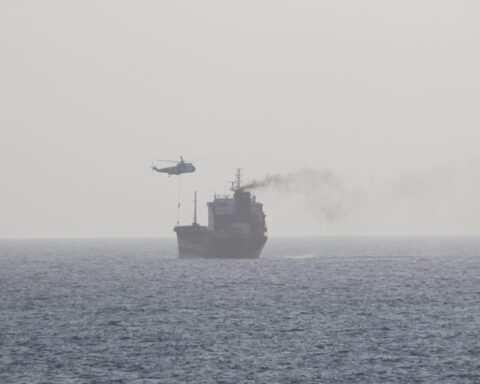
On or around April 14, the Chinese-owned tanker Rich Starry — operated by Shanghai Xuanrun Shipping, a company sanctioned by the US Treasury since 2023 — transited the Strait of Hormuz through the US naval blockade. CENTCOM declined to comment. The incident received scattered coverage in Salon, Newsweek, and Al Jazeera, but its implications were structural rather than tactical.
The blockade, effective since April 13, applied to Iranian port traffic and vessels paying Iran’s toll. It was not a total closure of the strait — commercial shipping unrelated to Iran continued, and the Al Daayen LNG carrier had already demonstrated that Chinese-intermediated transits were operationally possible as early as April 6. But the Rich Starry crossing was different. This was a sanctioned vessel, owned by a sanctioned company, transiting under what amounted to a US combat patrol. CENTCOM’s silence was the message: the US Navy was not going to fire on Chinese-flagged shipping.
That single transit revealed the blockade’s structural limitation. A naval cordon that cannot be enforced against the world’s largest oil importer is a cordon with a Chinese-shaped hole in it. The RealClearDefense assessment published April 16 — “The Hormuz Blockade Is Not About Iran — It’s About China” — argued that the blockade was primarily a US strategic signal to Beijing about energy chokepoint control. If so, the Rich Starry’s passage was Beijing’s reply.
Why Does Saudi Arabia’s Oil Revenue Now Depend on Beijing’s Preferences?
Saudi Arabia’s wartime oil economics expose a dependency that predates the crisis but which the crisis made impossible to ignore. Saudi March 2026 production fell to 7.25 million bpd, down from 10.4 million bpd in February — a 30% drop that the IEA called “the largest disruption on record.” The East-West Pipeline bypass through Yanbu has a practical ceiling of 4 to 5.9 million bpd against 7 million bpd of pre-war Hormuz throughput, leaving a structural gap of 1.1 to 1.6 million bpd that no routing can close while the strait remains contested.
The pricing compounded the volume problem. Aramco’s May 2026 Arab Light Official Selling Price to Asia was set at a record +$19.50 per barrel above the Oman/Dubai benchmark — a $17 per barrel increase in a single month. That premium, designed to capture wartime scarcity rents, instead drove Chinese refiners away. Sinopec and Rongsheng sharply reduced liftings. The $93 million daily revenue shortfall is concentrated in the one market — China — that Saudi Arabia cannot replace.
| Metric | Pre-War / Baseline | War Period (March-May 2026) | Change |
|---|---|---|---|
| Aramco monthly China allocations | ~45M barrels | ~20M barrels (May) | -56% |
| Saudi production | 10.4M bpd (Feb) | 7.25M bpd (Mar) | -30% |
| Arab Light OSP to Asia | +$2.50/bbl | +$19.50/bbl (May) | +$17/bbl |
| China’s share of Saudi exports | 25.6% (H1 2025) | Declining | Record lows |
| Saudi Asia exports (Kpler) | Pre-war baseline | March 2026 | -38.6% |
The table describes a market in which Saudi Arabia’s largest buyer is also the country most capable of resolving the crisis that destroyed Saudi export volumes. Beijing did not engineer this dependency. Saudi Arabia’s eastward pivot in crude export geography — a two-decade trend accelerated by declining Western demand growth and OPEC+ quota management — created it. But the war converted a commercial relationship into a strategic one. When your largest customer is also the only country that can reopen your primary export route, pricing and diplomacy become the same conversation.
MBS acknowledged this directly. In the April 20 call with Xi, Saudi Arabia expressed readiness to coordinate with China on “ceasefire maintenance, preventing resumption of hostilities, and ensuring safety and freedom of navigation.” MBS told Xi that “growing ties with China is of vital importance to Saudi Arabia.” The language of the Chinese MFA readout — which is the only public record of the call — frames the relationship as one of coordination between equals. The framing is generous. The underlying arithmetic is not.
Can the US Security Compact Survive a War Washington Cannot End Alone?
The question that the Xi-MBS call poses for Saudi Arabia’s security architecture is not whether Riyadh should replace Washington with Beijing. That framing — a binary swap of patrons — misreads both the Saudi position and the Chinese one. China has no mutual defense treaty with Saudi Arabia, no forward-deployed forces in the Gulf, no expeditionary capability that could substitute for CENTCOM’s regional infrastructure. Beijing blocked a UNSC resolution that would have helped Saudi Arabia. The 30-nation Hormuz coalition assembled at Northwood was a Western-led formation. China was not in the room.
Max Becker-Hicks at the New Lines Institute frames the structural shift more precisely: Saudi Arabia will “continue to look to the United States for some support, but will have to complement that by deepening its regional alliance with Egypt, Pakistan, and Turkey — and pursuing a greater reliance on China.” No formal US-Saudi mutual defense treaty comparable to NATO exists. The September 2019 Abqaiq strikes — when Iranian-attributed drones and missiles hit Saudi Aramco’s most critical processing facility and the United States did not respond militarily — already “changed the dynamics between the two countries and marked the beginning of a new era” in Saudi assessment of the American guarantee, as Becker-Hicks’s institute documented.
The Iran war extended that reassessment. Jeffrey Taliaferro at Tufts identified four ways the conflict weakened the US in great-power competition: losing Middle East influence, diverting strategic attention from the Indo-Pacific, producing disproportionate economic fallout that favored Russia and China, and allowing Beijing to capture the global leadership narrative. “Iran just needed to survive to serve the interests of Washington’s main geopolitical rivals,” Taliaferro wrote. Iran survived. Washington ended up welcoming Chinese diplomatic participation to convert its blockade into a political outcome.
Saudi Arabia’s response has been to multiply its security relationships without abandoning the American one. The Pakistan nonbinding mutual defense accord signed in September 2025, Turkish technology transfers, joint naval exercises with China — these are hedges, not replacements.
Hedging is itself a structural change. A security architecture built on a single patron requires trust that the patron will act; one built on diversification assumes no single patron will. The 2019 Abqaiq precedent established the doubt. The 2026 Hormuz crisis — in which Washington achieved a blockade but required Chinese diplomatic participation to convert military pressure into a political outcome — confirmed it. The question for Saudi defense planners is no longer whether the American guarantee is absolute but how many parallel relationships are needed to compensate for the margin of uncertainty.
Beijing’s Iran Problem — and Tehran’s Beijing Problem
China’s position as Hormuz broker depends on maintaining influence with Tehran, and that influence is more constrained than the Western narrative suggests. The 25-year Comprehensive Strategic Partnership commits China to $400 billion in investment, but actual disbursement has lagged far behind the headline figure. China-Iran bilateral trade reached $13.37 billion in 2024 — a fraction of the framework’s ambition. Approximately 30% of Iran’s total international trade is with China, a concentration that gives Beijing theoretical pressure but also makes any Chinese withdrawal an act of economic warfare against a partner Beijing needs.
Iran’s Hormuz toll architecture — the IRGC’s attempt to extract transit fees from commercial shipping — collected $0 in 36 days despite 60 permits issued and 8 payment requests. That failure increased Beijing’s hand with Tehran by demonstrating that the IRGC’s unilateral economic strategy was producing nothing. But it also revealed the limits of Chinese influence: Beijing could not prevent the IRGC from implementing the toll scheme in the first place, and the IRGC’s autonomous command structure — operating without a named successor to Tangsiri, killed March 30 — makes Chinese preferences one input among several in Iranian decision-making.
Chinese FM spokesperson Guo Jiakun called the US blockade “a dangerous and irresponsible act that will further enflame tensions in the region” on April 13. That statement protected Iran rhetorically while Chinese diplomats worked privately to convince Tehran to accept terms. The dual posture — public solidarity, private pressure — is sustainable only as long as Iran’s civilian government retains enough authority to act on Chinese preferences. Pezeshkian’s public accusation that IRGC commanders Vahidi and Abdollahi sabotaged the ceasefire suggests the civilian channel is narrower than Beijing requires.
What Does Hormuz Tell Us About a Pacific War?
Vivian Balakrishnan, Singapore’s foreign minister, delivered the sharpest external assessment of the crisis’s global implications at CNBC’s Converge Live event on April 22. “What you are seeing in the Strait of Hormuz will be a dry run” if a US-China war breaks out in the Pacific, he said. Singapore, Balakrishnan added, will “refuse to choose” between Washington and Beijing.
The statement was addressed to both capitals simultaneously. To Washington: Asian allies are watching how the US handles chokepoint conflicts and calibrating their own hedging accordingly. To Beijing: China’s Hormuz role has established a template — economic indispensability converting to diplomatic centrality without military commitment. Singapore, whose entrepôt economy depends on Malacca remaining open, watches that template more carefully than most.
China’s oil import geography underlines the stakes. Russia holds the top position at 17.4% of Chinese crude imports, followed by Saudi Arabia at 14% and Iran at 12-13%. Approximately 42% of China’s crude comes from the Middle East, most of it transiting Hormuz. A Pacific conflict that disrupted Malacca would threaten a different set of flows but the same underlying vulnerability: China’s industrial economy runs on imported energy moving through narrow waterways that hostile navies can contest. Hormuz demonstrated that China can convert economic dependency into diplomatic weight. Whether that conversion scales to a theater where the US Navy’s advantages are far greater is the question Balakrishnan was pointing at.
The Iranian threat to extend disruption to Bab el-Mandeb — Saudi Arabia’s last alternative export corridor — added a second dimension to the chokepoint calculus. If both Hormuz and Bab el-Mandeb can be contested simultaneously, the pipeline bypass through Yanbu becomes the sole Saudi export route, and China’s willingness to keep buying through disrupted markets becomes the load-bearing variable in Saudi fiscal survival.
Frequently Asked Questions
How does China’s 2023 Iran-Saudi normalization deal relate to Beijing’s Hormuz role?
In March 2023, China brokered four days of talks in Beijing between Iran’s Ali Shamkhani and Saudi Arabia’s Musaad Al-Aiban, producing the diplomatic restoration agreement. Georgetown’s Journal of International Affairs called it a “new precedent in Chinese foreign policy.” The Hoover Institution assessed that “only China possesses the will and the leverage required to guarantee a deal between the region’s two most powerful competitors. The United States could not have brokered this agreement because it does not have direct contact with Iran.” The 2023 deal established the precedent; the 2026 Hormuz crisis tested whether the precedent was structural or opportunistic. Beijing’s ability to repeat the mediator role under wartime conditions — rather than peacetime estrangement — suggests the former.
What is China’s Strategic Petroleum Reserve capacity and how does it affect Beijing’s Hormuz calculations?
China’s SPR holds approximately 1.2 billion barrels, equivalent to roughly 109 days of import cover at 2025 consumption rates. That buffer gave Beijing time to pursue diplomacy rather than escalation during the Hormuz disruption — a luxury that smaller Asian importers like South Korea and Japan, with 90 and 133 days of reserves respectively but far less diplomatic weight with Tehran, did not enjoy. The SPR’s size also means that a short-duration closure is manageable for China in ways it is not for Gulf producers who lose revenue immediately. That asymmetry is visible at the diplomatic level: Japan PM Takaichi called MBS directly to request expanded oil supply, leveraging its status as Saudi Arabia’s largest customer — a request the Yanbu terminal ceiling cannot fulfil even if Beijing’s brokerage secures resumed Hormuz transit for Chinese cargoes.
Did any other country’s shipping companies successfully transit Hormuz during the blockade?
China was notable as one of the few countries whose shipping companies successfully transited the strait during the blockade period, as CSIS’s Clayton Seigle observed. Reports indicated Beijing pressed Tehran to protect Chinese-flagged shipping specifically. Indian refiners, by contrast, relied on pre-blockade cargoes and yuan-denominated settlement through ICICI Bank’s Shanghai branch — a payment rail that itself depends on Chinese banking infrastructure. The transit asymmetry between Chinese and non-Chinese vessels became a visible marker of Beijing’s differential access.
What is the five-point peace initiative China co-presented with Pakistan?
The China-Pakistan joint peace plan, co-published in late March 2026, called for an immediate ceasefire, restoration of normal Hormuz navigation, protection of civilian infrastructure, a framework for follow-on negotiations, and regional economic stabilization measures. The plan predated the US-backed Witkoff framework by several weeks and reflected Pakistan’s dual role as Iran’s protecting power in the United States since 1992 and Saudi Arabia’s treaty partner under the September 2025 mutual defense accord. The joint authorship gave the plan simultaneous credibility in Tehran and Islamabad — two capitals where American-drafted proposals carried no weight.
How has the war affected China’s crude oil sourcing from non-Hormuz suppliers?
Russia displaced Saudi Arabia as China’s top crude supplier in 2023 and maintained that position through the war, providing 17.4% of Chinese imports via Pacific and Arctic routes entirely outside the Hormuz chokepoint. Brazil, West Africa, and Guyana have also increased share. The war accelerated a pre-existing Chinese diversification strategy, but Middle Eastern crude — particularly the heavy-sour grades that Chinese refineries are optimized to process — cannot be fully substituted. The 42% Middle East share of Chinese imports reflects refinery configuration, not just price or politics.
Seoul adopted the same logic: rather than routing through Beijing or Washington, South Korea sent its Presidential Chief of Staff directly to Riyadh, securing 273 million barrels via Yanbu in a deal that required no Chinese intermediation and no multilateral architecture — a reminder that bilateral capital-to-capital diplomacy remained available to US allies willing to move fast enough.