
NEOM and The Line represent the most ambitious — and most controversial — construction project in modern history. Announced in 2017 as the centrepiece of Saudi Arabia’s Vision 2030 transformation, NEOM was conceived as a $500 billion megacity in the northwestern desert of Tabuk Province, with The Line as its headline attraction: a 170-kilometre-long, 500-metre-tall mirrored city stretching from the Red Sea coast deep into the Saudi interior. As of 2026, the reality on the ground looks very different from the original renders. Construction on The Line was suspended in September 2025, and the broader NEOM project has been restructured around industrial and energy uses rather than the futuristic residential vision that captured global attention. This guide explains what has actually been built, what the current status is, and what visitors to the region can realistically expect.
Best Time to Visit: October to March (mild desert temperatures, 20–28°C)
Getting There: NEOM Bay Airport (NUM) with Saudia and Flydubai flights; or Tabuk Regional Airport (TUU), 179 km south
Visa Required: Yes — tourist e-visa available
Budget: $150–300/day (limited accommodation options in the region)
Must-See: Gulf of Aqaba coastline, Wadi Disah, Tabuk Province desert landscapes
Avoid: Expecting to visit The Line construction site — it is closed to the public and construction is suspended
What Is The Line? The Original Vision
The Line was formally announced in January 2021 by Crown Prince Mohammed bin Salman as a linear city that would redefine urban living. The concept was staggering in scale: two parallel mirror-clad buildings running 170 kilometres from the Gulf of Aqaba coast inland through mountains and desert, standing 500 metres tall and just 200 metres wide. The mirrored exterior was designed to reflect the surrounding landscape, making the structure appear to blend into the desert and mountains.
The planned city would have no cars, no streets, and no carbon emissions. All transport would run underground via high-speed rail, while services, shops, and nature would be accessible within a five-minute walk at every point along the structure. Three vertical layers — a pedestrian surface level, an underground services layer, and a deep transport network — would allow up to 9 million residents to live in a footprint of just 34 square kilometres.
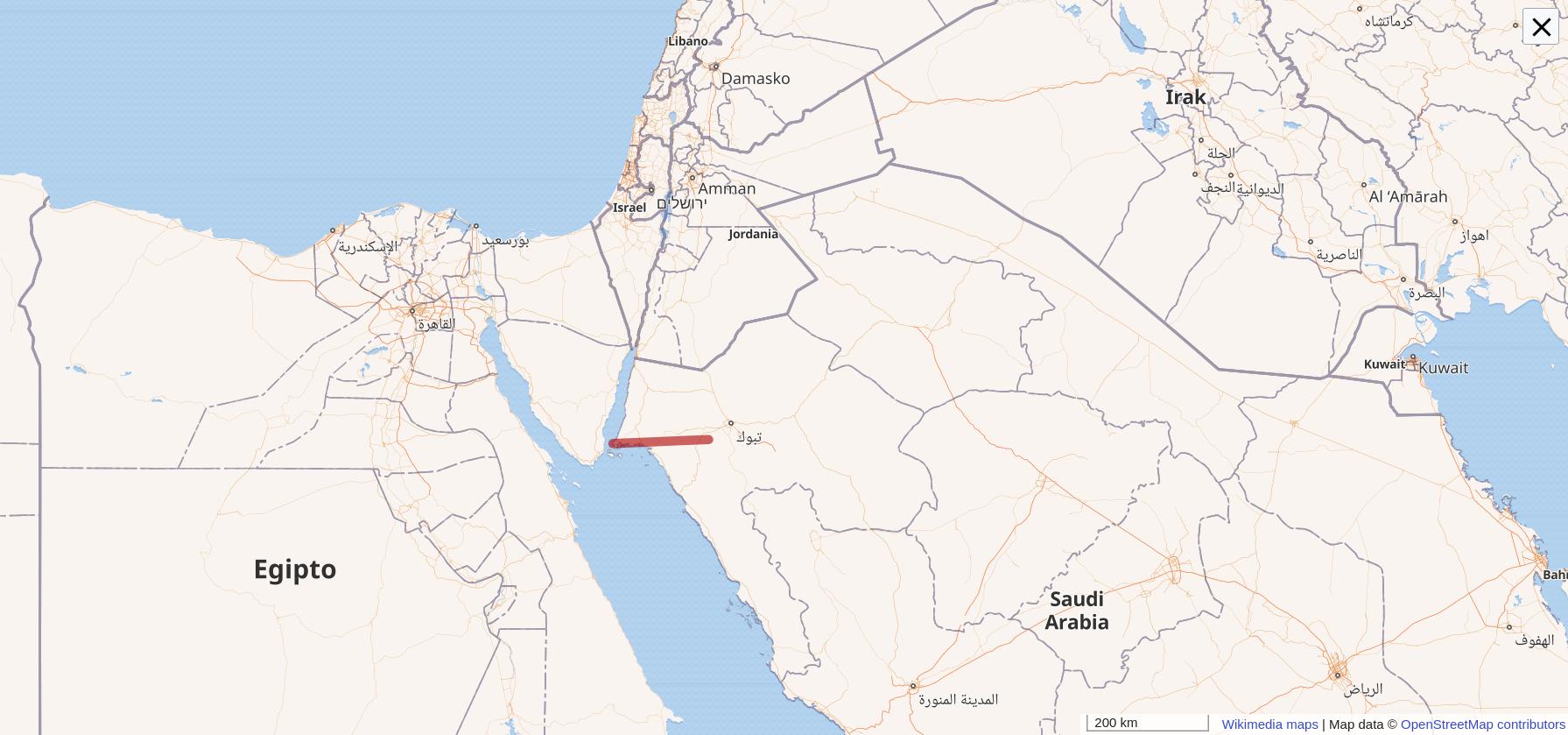
The design called for 2.1 million square metres of mirrored glass cladding, artificial intelligence managing everything from climate control to transport scheduling, and a digital twin of the entire city running in real time. Population density at full capacity would have reached 260,000 people per square kilometre — roughly six times denser than Manila, currently the world’s most densely populated city.
Construction Status: What Has Actually Been Built
The gap between the original vision and current reality is significant. Construction on The Line was officially suspended by the Public Investment Fund (PIF) in September 2025, and as of April 2026, work has not resumed.
Before the suspension, the project completed approximately 2.4 kilometres of foundation work out of the planned 170 kilometres — roughly 1.4 per cent of the total length. No above-ground superstructure has been erected. No mirror facade panels have been installed. Drilling rigs, pile-driving equipment, and concrete-batching plants remain on site but idle.
The workforce, which peaked at over 100,000 workers in October 2024, has been significantly reduced. NEOM job postings dropped 74.6 per cent between January and December 2025, and over 1,000 NEOM employees were relocated from the site to Riyadh in January 2026 for centralised oversight.
Key fact: An internal audit leaked to the Wall Street Journal in March 2025 projected that completing The Line to its original specification would cost approximately $8.8 trillion and would not be finished until 2080. The PIF subsequently wrote down $8 billion from the project in August 2025.
The current scaled-back target is a 2.4-kilometre segment designed to accommodate around 300,000 people, though even this reduced timeline remains uncertain. The project has spent an estimated $50 billion to date across all NEOM components.
The Broader NEOM Project: Sub-Components
NEOM was always more than just The Line. The 26,500-square-kilometre development zone in Tabuk Province includes several distinct sub-projects, each at different stages of progress.
Oxagon — The Industrial Port City
Oxagon is the most strategically coherent component of NEOM. Conceived as an octagonal floating industrial complex, it has attracted $9.3 billion in awarded contracts. While the offshore marine platform construction has been pushed to the early 2030s, the onshore industrial zone is advancing. A $5 billion partnership with DataVolt for an AI data centre campus was announced in February 2026, targeting operations by 2028. An industrial gases facility also began construction in early 2026. Oxagon represents NEOM’s strategic pivot from residential megacity toward industrial and technology infrastructure.
Trojena — The Mountain Ski Resort
Trojena was intended to host the 2029 Asian Winter Games and serve as a year-round mountain tourism destination at elevations between 1,500 and 2,600 metres. The project has faced severe setbacks. The Winter Games were indefinitely postponed in January 2026 and reassigned to Almaty, Kazakhstan. In March 2026, NEOM terminated $6 billion in Trojena contracts, including WeBuild’s $4.7 billion dam project and Eversendai’s structural steel contract for the ski village. Oversight has been transferred to the Ministry of Sport and Qiddiya Investment Company.
Sindalah — The Luxury Island
Sindalah, a luxury island resort in the Red Sea, held a grand opening event in October 2024 but remains effectively closed to the general public as of early 2026. The project is reportedly $4 billion over budget and three years behind schedule. Management has been transferred to Red Sea Global, a separate PIF subsidiary. Limited private or invitation-only access may be available through luxury travel agencies, but conventional resort bookings are not being accepted.
ENOWA Green Hydrogen — The Success Story
The single most successful NEOM component is the green hydrogen plant, an $8.4 billion joint venture between NEOM, ACWA Power, and Air Products. Construction was 80 per cent complete by early 2025, with the facility designed to produce 600 tonnes of carbon-free hydrogen daily using 4 gigawatts of renewable solar and wind generation. Green ammonia exports are expected to begin in early-to-mid 2027. This component has tangible, measurable progress — a sharp contrast to The Line.
Where Is NEOM? Geography and Location
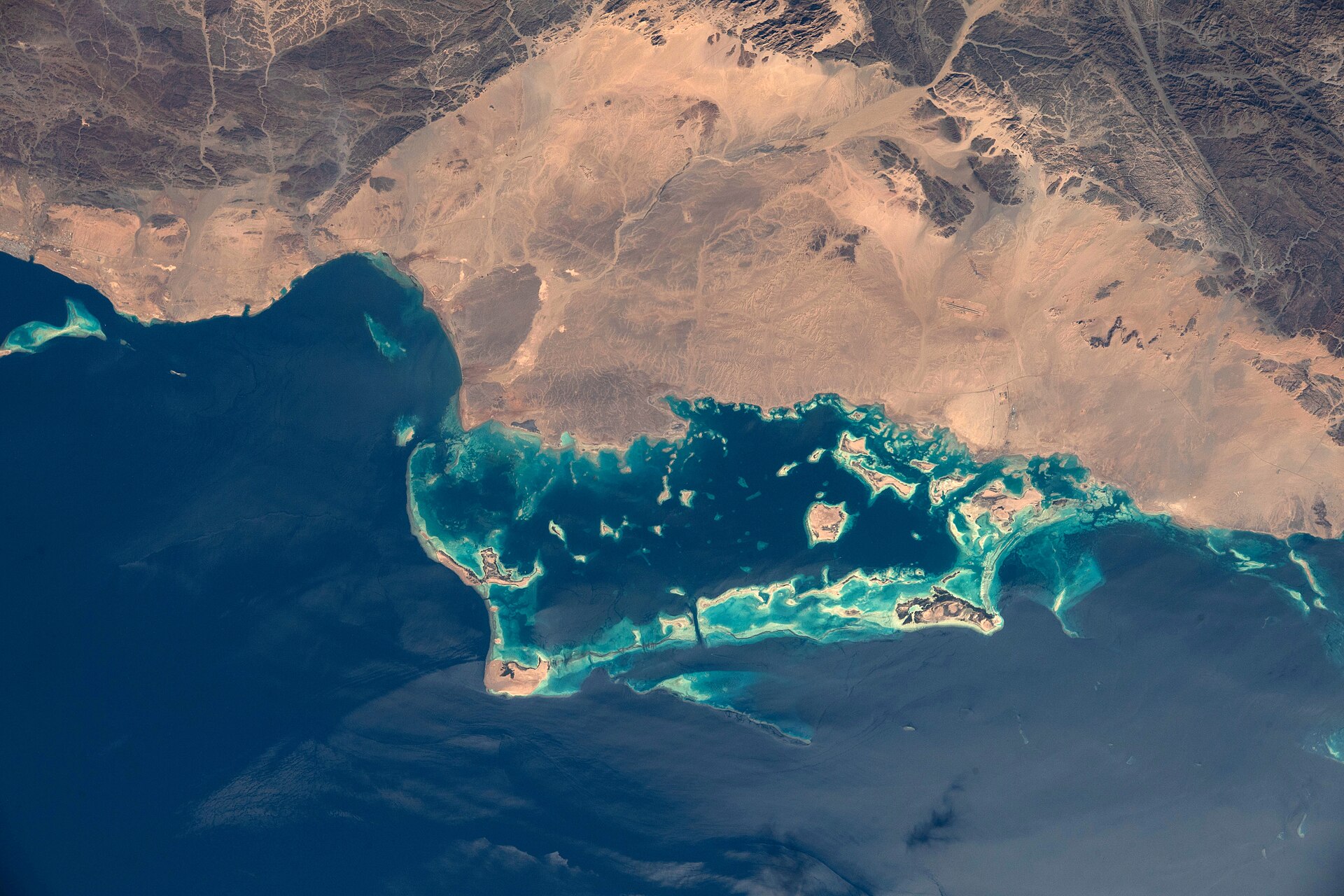
NEOM occupies a vast zone in Tabuk Province, Saudi Arabia’s northwestern region. The site stretches from the Red Sea coast near the town of Sharma, inland through the Hejaz Mountains, to the desert interior. The coordinates are approximately 28°06’N, 35°18’E.
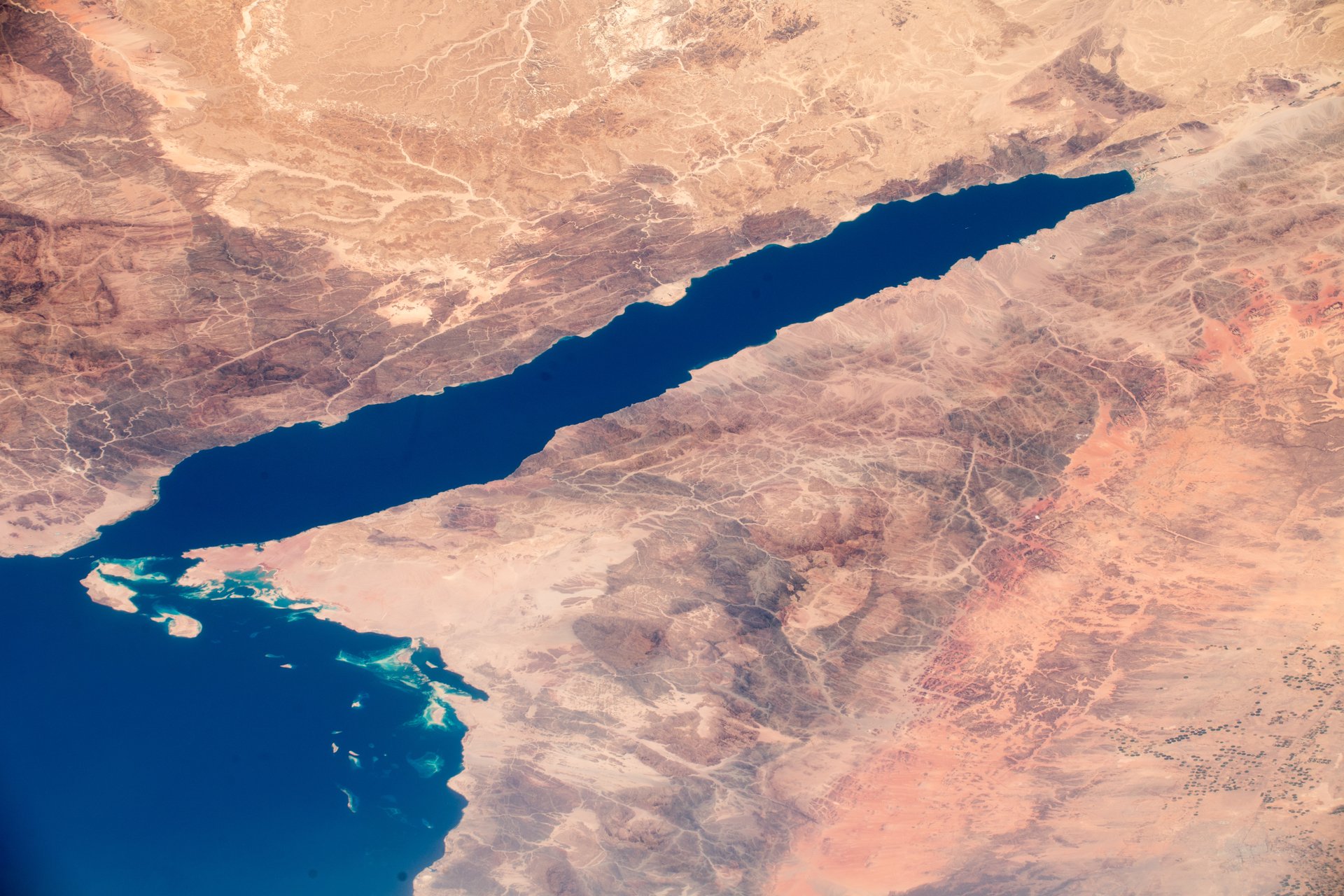
The region sits just 48 kilometres across the Red Sea from Sharm El Sheikh, Egypt. To the north lies the Gulf of Aqaba and Jordan’s port city of Aqaba. The landscape is dramatic: arid desert gives way to rugged mountains exceeding 2,500 metres, then drops to pristine Red Sea coastline with coral reefs and turquoise waters.
For travellers exploring Saudi Arabia’s northwest, Wadi Disah — sometimes called Saudi Arabia’s Grand Canyon — lies within Tabuk Province and offers one of the Kingdom’s most spectacular natural landscapes. The broader Tabuk region includes ancient Nabataean trade route sites that connect to the wider Nabataean heritage found at Hegra and Dadan further south.
Getting to the NEOM Region
By Air
NEOM Bay Airport (NUM) is operational, located near the coastal town of Sharma. Saudia and Flydubai operate commercial flights, though services primarily cater to project workers and officials. Flight availability may be limited and subject to change given the project suspension.
Tabuk Regional Airport (TUU) is the more established alternative, approximately 179 kilometres (2–2.5 hours by road) from the NEOM zone. Saudia operates domestic flights to Tabuk from Riyadh, Jeddah, and other Saudi cities.
By Road
Driving from Tabuk city is the primary land route. The highway north toward the Jordanian border passes through the NEOM zone. Travellers doing a border crossing from Jordan via the Haql crossing enter Saudi Arabia close to the NEOM area. From Riyadh, the drive to Tabuk is approximately 1,200 kilometres (12–14 hours). From Jeddah, it is around 700 kilometres (7–8 hours).
Visa Requirements
All international visitors need a valid Saudi visa. The tourist e-visa is available to citizens of over 60 countries and can be obtained online in minutes. It permits stays of up to 90 days and covers tourism throughout the Kingdom, including the Tabuk region.
Can You Visit NEOM or The Line in 2026?
The honest answer is: not really. The Line is a suspended construction site with no public access, no visitor centre, and no tours. There is no mirrored city to see — only foundation trenches and idle machinery behind security perimeters.
Some private tour operators advertise “NEOM tours,” but these are essentially drives through the surrounding desert landscape rather than access to any construction or development zones. The NEOM region itself is strikingly beautiful — the meeting point of desert, mountains, and Red Sea — but there are no purpose-built tourist facilities.
For travellers genuinely interested in Saudi Arabia’s megaproject ambitions, the Red Sea Project resorts and AMAALA further south along the Red Sea coast are at more advanced stages of development, with some properties actually accepting guests.
Practical advice: If you are drawn to the northwestern Saudi landscape that attracted NEOM’s planners, visit Tabuk and Wadi Disah instead. The natural scenery is extraordinary, and you can actually access it. The Tabuk region’s ancient rock art and heritage villages offer far more rewarding experiences than trying to glimpse a construction site.
The History of NEOM: A Timeline
Understanding NEOM requires understanding the political and economic context that produced it. The project is inseparable from Vision 2030, Crown Prince Mohammed bin Salman’s plan to diversify Saudi Arabia’s economy away from oil dependence.
| Date | Event |
|---|---|
| October 2017 | Crown Prince MBS announces NEOM at the Future Investment Initiative conference in Riyadh. Initial budget: $500 billion. |
| January 2021 | The Line concept formally unveiled — a 170 km linear city with zero cars and zero emissions. |
| July 2022 | Full design reveal: two parallel mirrored buildings, 500 m tall, 200 m wide, housing 9 million people. |
| 2020–2023 | Forced displacement of the Howeitat tribe from NEOM land. Multiple arrests and reported death sentences for residents who refused to relocate. |
| October 2024 | Peak workforce exceeds 100,000. Sindalah island holds private opening event. |
| November 2024 | Founding CEO Nadhmi Al-Nasr departs; replaced by Aiman Al Mudaifer from PIF. |
| March 2025 | Wall Street Journal reports leaked internal audit: $8.8 trillion full cost, 2080 completion date. |
| August 2025 | PIF writes down $8 billion from NEOM. PIF announces 15% capex reduction across all giga-projects for 2026–2030. |
| September 2025 | Construction on The Line suspended. |
| January 2026 | 2029 Asian Winter Games at Trojena indefinitely postponed, reassigned to Kazakhstan. NEOM restructured as part of Vision 2030 overhaul. Over 1,000 staff relocated to Riyadh. |
| March 2026 | $6 billion in Trojena contracts terminated. NEOM pivots toward industrial, energy, and AI data centre uses. |
What Went Wrong? Understanding the Scale-Back
Several factors converged to force the dramatic reduction of NEOM’s ambitions.
Engineering Reality
The Line’s design required solving problems that have no precedent in construction history. Building a 500-metre-tall, 170-kilometre-long mirrored structure across varied terrain — from sea level to mountain passes — presented engineering challenges that existing technology and construction methods could not deliver at the projected cost or timeline. The internal audit’s $8.8 trillion estimate made the original plan effectively impossible.
Financial Pressure
Saudi Arabia’s giga-project ambitions coincided with volatile oil markets. The Kingdom’s fiscal break-even oil price has risen above $100 per barrel, and the PIF’s investment portfolio faced write-downs across multiple megaprojects. The 15 per cent capex reduction announced in August 2025 reflected a pragmatic recalibration, with resources redirected toward projects with clearer commercial returns — particularly those supporting Saudi Arabia’s tourism sector and Expo 2030 in Riyadh.
Leadership Changes
The departure of founding CEO Nadhmi Al-Nasr in November 2024 signalled a strategic shift. His replacement, Aiman Al Mudaifer, brought a finance background from PIF rather than the visionary engineering approach that defined NEOM’s early years. The restructuring transferred several NEOM components to other government entities — Trojena to the Ministry of Sport, Sindalah to Red Sea Global — fragmenting the unified megaproject vision.
The NEOM Region: What Is Worth Visiting
While The Line itself offers nothing for tourists, the Tabuk Province region that NEOM occupies is genuinely spectacular. This is some of Saudi Arabia’s most dramatic landscape, and it has been attracting adventurous travellers long before NEOM was announced.
Tabuk City
The provincial capital has a 3,500-year history. Tabuk Castle, a restored Ottoman-era fort, marks a stop on the historic Hajj pilgrimage route from Damascus to Medina. The Hejaz Railway station, part of the Ottoman rail network built in the early 1900s, is another historical landmark. Tabuk also serves as a practical base for exploring the wider region, with hotels, restaurants, and car rental agencies.
Wadi Disah
Often called Saudi Arabia’s Grand Canyon, Wadi Disah features towering sandstone pillars, palm-lined gorges, and natural pools. It is one of the most photogenic landscapes in the Kingdom and lies within Tabuk Province, making it an obvious addition to any northwest itinerary. The wadi is accessible by 4×4 vehicle, and hiking trails wind through the canyon floor.
Gulf of Aqaba Coast
Saudi Arabia’s stretch of the Gulf of Aqaba coast features pristine coral reefs, clear water, and virtually no development. For diving and snorkelling, the reefs here rival those across the water in Egypt’s Red Sea Riviera. The town of Haql, near the Jordanian border, is the closest settlement to this coastline.
Desert Landscapes
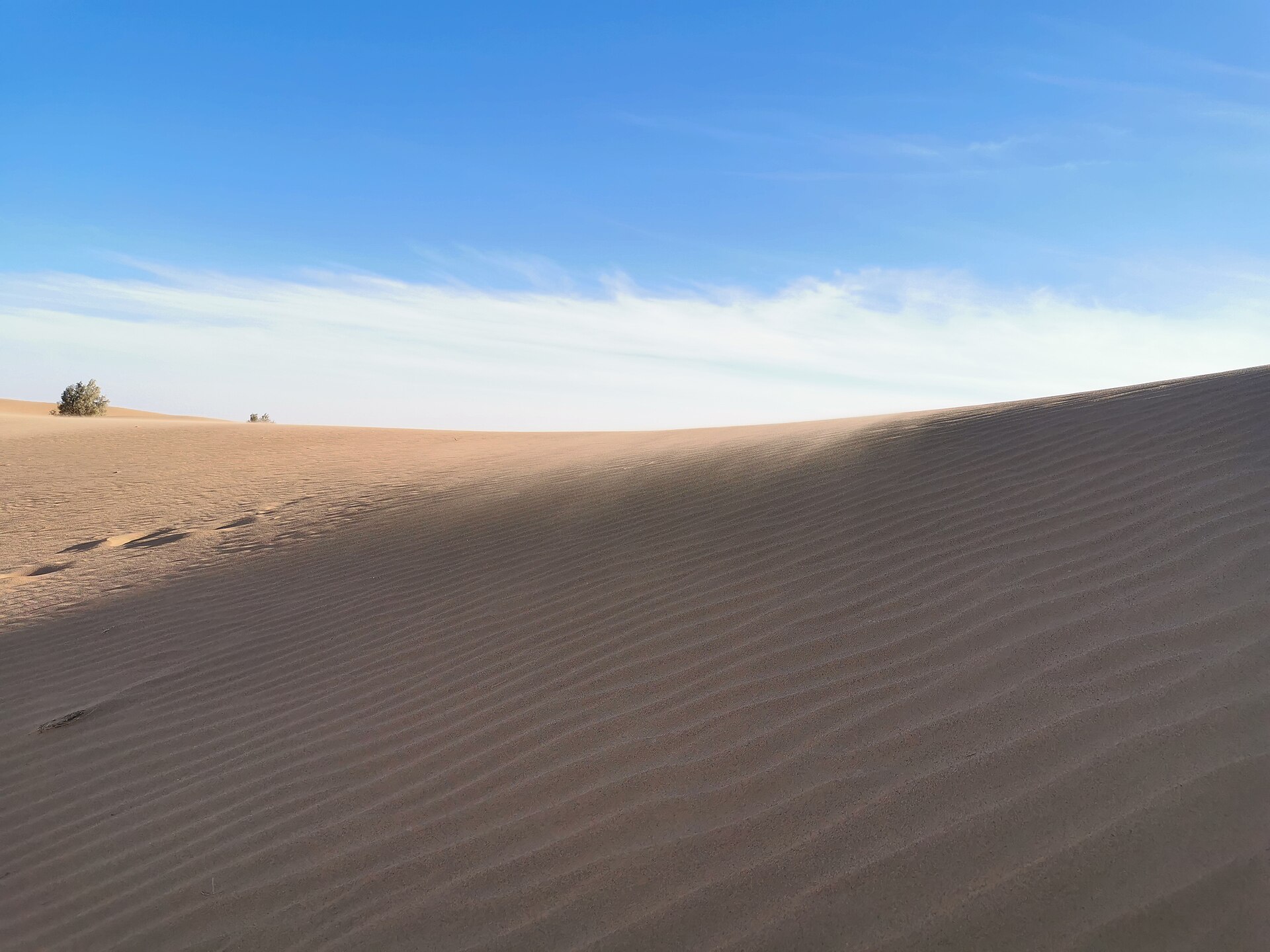
The desert terrain around Tabuk Province includes dramatic rock formations, volcanic lava fields (harrats), and vast sand dunes. The Saudi lava fields offer an otherworldly landscape that few tourists have seen. Desert glamping operators are beginning to offer experiences in this region, though facilities remain limited compared to more established tourism areas.
Environmental and Human Rights Concerns
Any honest guide to NEOM must address the controversies that have surrounded the project.
The Howeitat Displacement
Beginning in 2020, approximately 20,000 members of the indigenous Howeitat tribe were forcibly displaced from land designated for NEOM development. Abdul Rahim al-Huwaiti was killed by Saudi security forces in April 2020 after publicly opposing the displacement through social media videos. At least 47 tribe members were arrested or detained, and three — Shadli, Ibrahim, and Ataullah al-Huwaiti — received death sentences in October 2022 for refusing to vacate their homes. Human rights organisations including ALQST, Together for Justice, and ECDHR have called for suspension of international investment until these issues are addressed.
Worker Conditions
Investigative reporting, including an ITV News undercover investigation, documented workers enduring 16-hour shifts for 14 consecutive days, with an unpaid three-hour daily bus commute leaving approximately four hours for sleep. Workers, primarily from South Asia and Africa, operate under the kafala sponsorship system that ties them to their employer. Pakistani civil engineer Abdul Wali Skandar Khan died on site in December 2023 after a guardrail collapsed.
Environmental Impact
A 170-kilometre wall of glass and steel cutting across a desert ecosystem would bisect migratory routes for birds moving between Africa and Eurasia. Research published in early 2024 concluded that The Line would pose “substantial risk to migratory species.” The reflective glass facade presented a particular collision hazard for birds. While the project’s suspension has paused these concerns, any future construction would face the same ecological objections.
NEOM’s Future: What Happens Next
As of April 2026, NEOM is being repositioned rather than abandoned. The strategic pivot is toward industrial infrastructure, AI data centres, and green energy rather than the residential megacity that dominated headlines. Key indicators to watch include whether the scaled-back 2.4-kilometre Line segment receives a construction restart, whether Oxagon’s industrial zone attracts further investment, and whether the green hydrogen plant begins commercial exports on schedule in 2027.
For Saudi Arabia’s broader tourism ambitions, the focus has shifted to projects with faster returns: Expo 2030 infrastructure in Riyadh, FIFA 2034 stadium construction, the Red Sea Project resorts, and established destinations like AlUla that already welcome international visitors. NEOM’s tourism component — once projected to attract millions of visitors — has been indefinitely deferred.
Practical Information for the Tabuk Region
When to Go
October through March offers the most comfortable temperatures, with daytime highs of 20–28°C. Summer temperatures regularly exceed 40°C. The region receives minimal rainfall, though flash flooding in wadis is possible during the November–February wet season — check conditions before entering canyons like Wadi Disah.
Where to Stay
Tabuk city has the region’s most reliable accommodation, ranging from international hotel chains to local guesthouses. Options near the NEOM zone itself are extremely limited. Some glamping operators offer desert camp experiences, and Airbnb-style rentals may be available in smaller towns. Check the Saudi Airbnb guide for current availability.
What to Bring
- Sun protection — the desert sun is intense year-round
- Plenty of water — facilities outside Tabuk city are sparse
- A 4×4 vehicle if exploring off-road areas like Wadi Disah
- Cash — card payment is not always available in smaller settlements
- An eSIM or local SIM card — mobile coverage can be patchy outside urban areas
- Saudi Arabia Travel Guide 2026 — The complete guide to visiting the Kingdom
- Wadi Disah Guide — Saudi Arabia’s Grand Canyon explored in detail
- Red Sea Project Resorts — AMAALA, Sindalah and Shura Island resort guide
- AMAALA Resort Guide — Saudi Arabia’s ultra-luxury Red Sea destination
- Nabataean History in Saudi Arabia — Hegra, Dadan and the ancient trade routes
- Saudi Arabia Visa Guide — Every visa type explained
Combining with Other Destinations
The Tabuk region pairs well with a broader northwest Saudi itinerary. From Tabuk, it is approximately 300 kilometres south to AlUla and its UNESCO-listed Hegra tombs. The ancient incense trade routes that once crossed this region connect the archaeological sites from Tabuk through AlUla to Medina. For travellers crossing from Jordan, the Tabuk region serves as a natural entry point into the Kingdom.