
A Saudi wedding is one of the most spectacular cultural events a visitor to the Kingdom can witness. Far more than a union between two people, it is a multi-day celebration woven from centuries of tribal custom, Islamic tradition, and lavish hospitality. Whether you have been invited to attend a celebration in Riyadh, Jeddah, or a remote village in the Asir highlands, understanding Saudi wedding traditions will deepen your appreciation of the country’s social fabric. This guide — part of our comprehensive Saudi Arabia travel guide — walks you through every stage, from proposal to post-wedding feast, and explains what foreign visitors need to know about etiquette, dress, and the unforgettable experiences that await.
Best Time to Visit: October–March (cooler wedding season; peak in Shawwal, the month after Ramadan)
Getting There: Major airports in Riyadh (RUH), Jeddah (JED), and Dammam (DMM) — visa required
Visa Required: Yes — tourist e-visa available for 49+ nationalities
Budget: Attending is free (you are a guest); gift budget $50–$200 USD
Must-See: Ardha sword dance, henna night celebration, grand kabsa feast
Avoid: Wearing revealing clothing, bringing alcohol-related gifts, or attempting to enter the opposite gender’s celebration hall
How a Saudi Wedding Unfolds: The Complete Journey
A Saudi wedding is not a single event but a sequence of ceremonies stretching over days or weeks. Each step carries deep social and religious significance, and understanding the order helps visitors appreciate the gravity of what they are witnessing.
Talab Al-Arousa: The Formal Proposal
The process begins with Talab Al-Arousa, the formal request for the bride’s hand. The groom, accompanied by a senior male relative — typically his father or uncle — visits the bride’s family home. This is a solemn occasion: Arabic coffee (qahwa) and dates are served, and conversation centres on the families’ compatibility. If you are travelling in Saudi Arabia and learning about Saudi culture, you will notice that family honour and lineage remain deeply important in this initial stage.
The Fatiha: Blessing the Union
Once both families agree, the Fatiha — a recitation of the opening verse of the Quran — is performed by a family elder or imam. This spiritual blessing serves as the official engagement announcement. From this moment, the couple is considered betrothed, though the formal contract has not yet been signed.
The Shoufah: The Permissible Glance
Before proceeding, Islamic custom allows the Shoufah — a chaperoned meeting where the couple may see each other. This brief, supervised encounter ensures both parties consent to the match. It is a reminder that, despite Western misconceptions, the bride’s willingness is a prerequisite in Islamic marriage law.
Shabka and Mahr: Engagement Gifts and Dowry
The Shabka is the engagement ceremony where the groom presents the bride with jewellery — often a gold set including the engagement ring, which is traditionally worn on the right hand’s index finger. Alongside the shabka comes the mahr (dowry), a monetary gift from the groom to the bride. Mahr amounts vary widely: a “reasonable” mahr might be SR 70,000 (approximately $18,700 USD), though amounts in wealthy families can be far higher. The total cost of Saudi weddings — including mahr, furnishing the marital home, and honeymoon — ranges from SR 145,000 to SR 850,000 ($38,600–$226,600 USD), according to Arab News reporting.
Katb Al-Kitab: The Marriage Contract
The legal heart of the wedding is the Katb Al-Kitab (also called Milkah or Nikah). An imam presides as the marriage contract is signed in the presence of the fathers of both families and two witnesses from each side. This ceremony typically takes place in a home, mosque, or court. Once signed, the couple is legally married under Islamic law — the wedding celebration that follows is the social event, not the legal one.
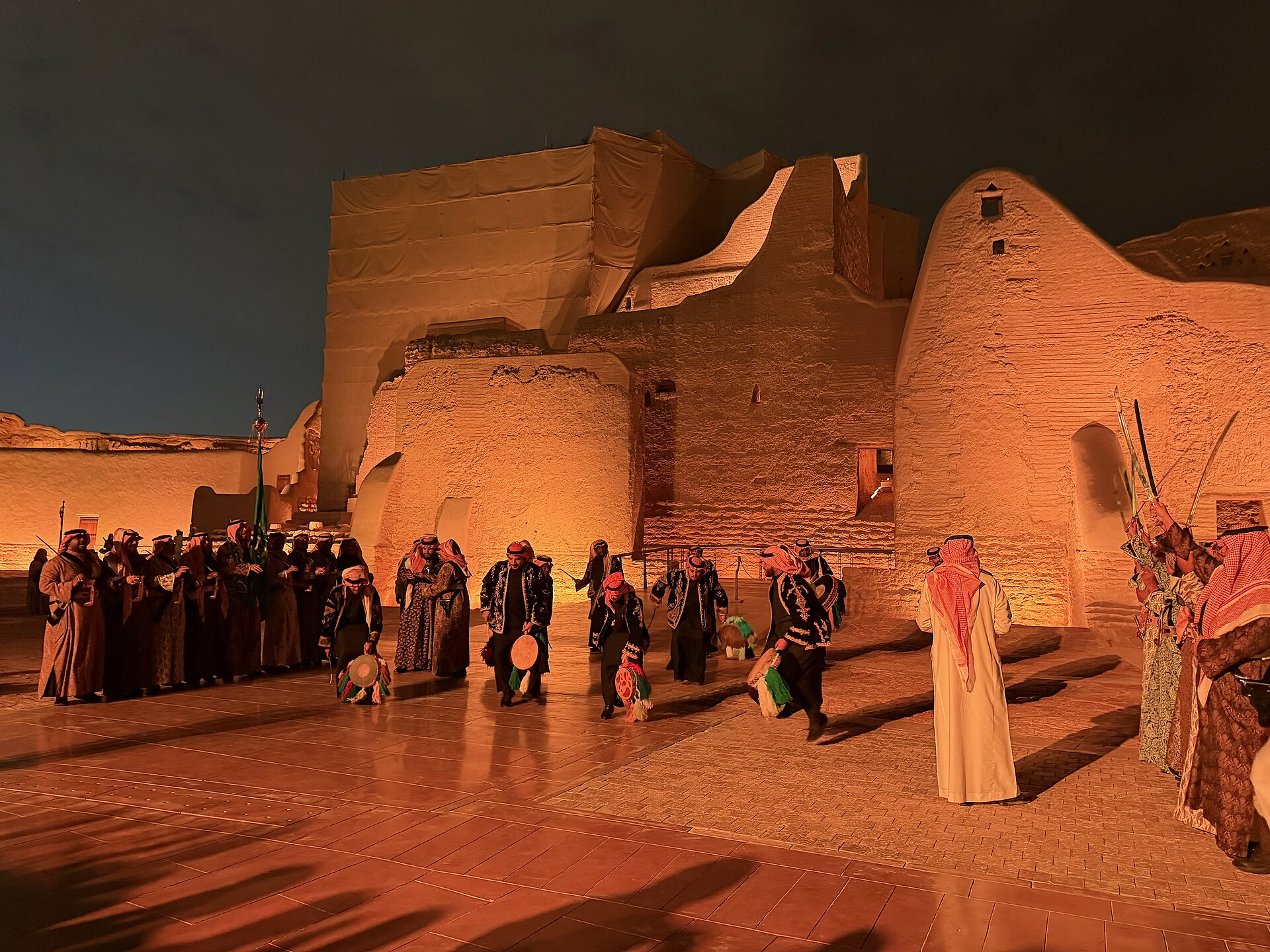
The Ardha and Mizmar: Music and Dance at Saudi Weddings
No Saudi wedding is complete without traditional performing arts. Two UNESCO-inscribed traditions dominate the men’s celebration, and they are among the most electrifying cultural experiences a visitor to the Kingdom can encounter.
Ardha Alnajdiyah: The Najdi Sword Dance
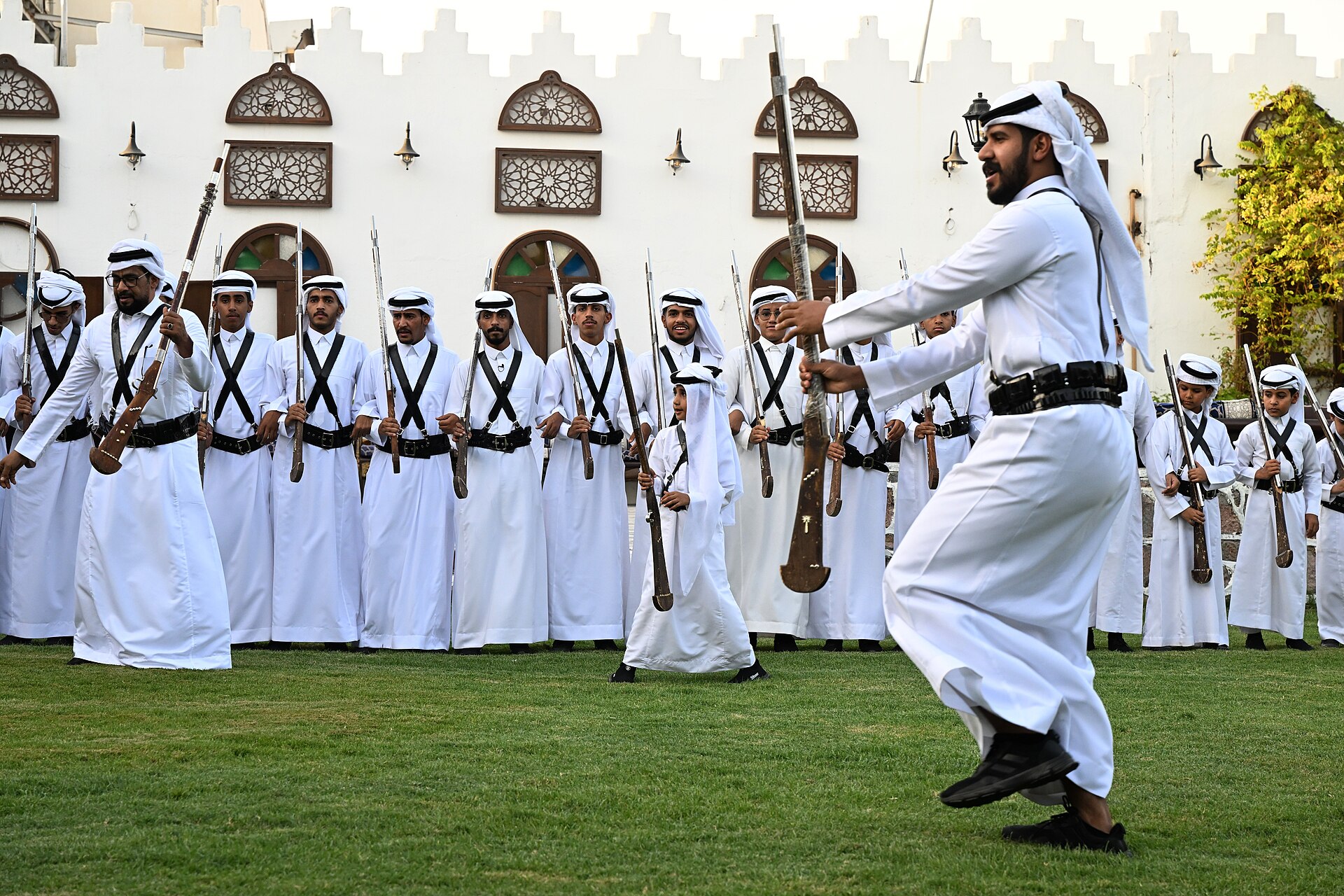
Inscribed on UNESCO’s Representative List of the Intangible Cultural Heritage of Humanity in 2015, the Ardha Alnajdiyah is the signature performance art of central Saudi Arabia. Males of all ages and social statuses stand shoulder to shoulder in two facing rows, carrying light swords. Drummers position themselves between the rows, beating large and small drums. A poet chants occasion-specific verses in a loud voice, which are sung antiphonally — call-and-response — by participants. All performers rock back and forth, moving their swords up and down in rhythmic harmony with the drumbeats. The effect is hypnotic: dozens of men moving as one, voices and steel rising together. If you are visiting historic Diriyah or attending a heritage village festival, you may also witness the Ardha outside of a wedding context.
Almezmar: The Hijazi Stick Dance
In the western Hijaz region — encompassing Jeddah, Makkah, and Madinah — the dominant wedding performance is the Almezmar, also a UNESCO Intangible Cultural Heritage element. Between 15 and 100 practitioners dress in long white garments and stand in two facing rows, clapping and chanting songs about gallantry, generosity, or love. Two performers enter the centre and twirl large sticks in quick, graceful moves. The mizmar — a traditional wind instrument made of hollow wood with finger holes — provides the melody and is one of the oldest instruments in Saudi folk arts. The Almezmar most commonly accompanies wedding processions (the zaffa) and is the sound that fills Jeddah’s streets when a groom is paraded to his bride’s home.
Women’s Entertainment
In the women’s hall, the atmosphere is equally vibrant but distinct. Professional female singers perform, and in some modern weddings, live bands play in adjacent rooms with live telecasts to the women’s celebration. Dancing is central — the women’s side of a Saudi wedding is where you will see the most joyous, uninhibited celebration, away from the formal restraint of the men’s gathering.
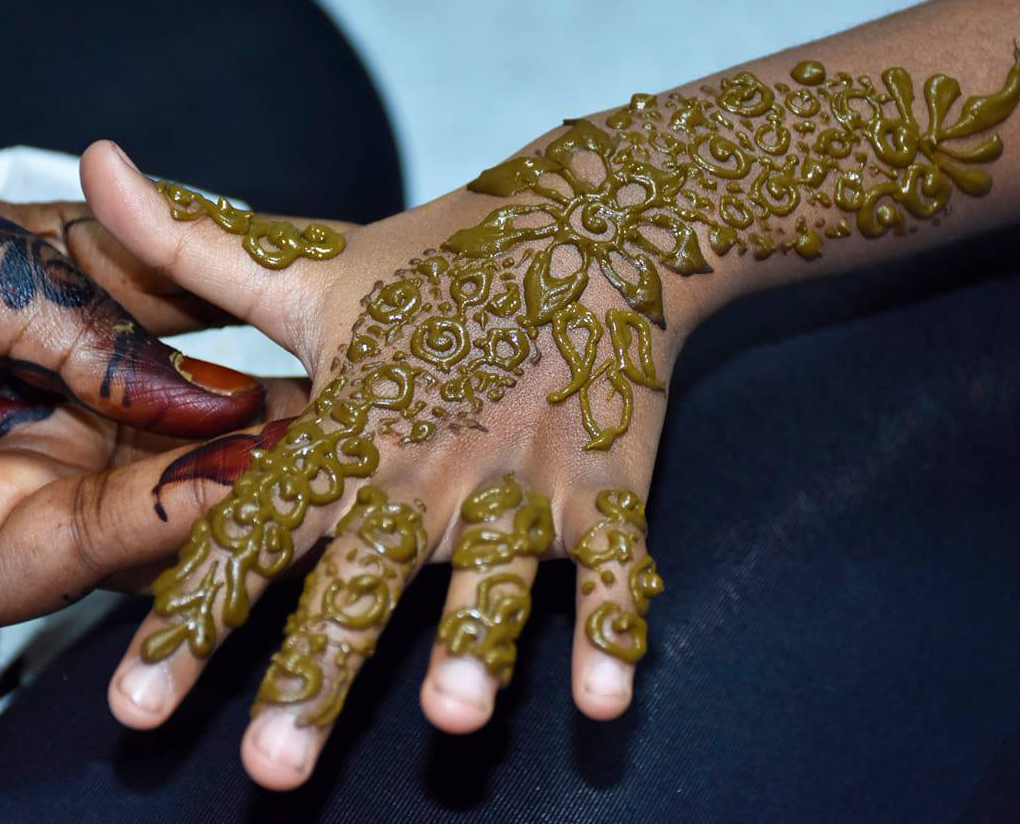
Laylat al-Henna: The Henna Night
One to two weeks before the wedding, the bride hosts the Ghumra — also called Laylat al-Henna or Samra Night. A professional henna artist applies intricate, temporary designs on the bride’s hands, wrists, and feet using henna paste. Female guests also have their palms and feet decorated. The evening is exclusively for women: the bride’s female relatives and friends attend with food, music played by female musicians, and dancing.
Meanwhile, the groom has his own parallel gathering. A close male friend or relative shaves his face in a ceremonial act, and his male companions dance to traditional music. This parallel structure — men and women celebrating the same milestone in separate spaces — is a defining feature of Saudi social life.
Regional note: Henna nights are NOT typical of Najdi (central region) wedding traditions. They are most associated with Hijazi, Southern, and Eastern Province customs. If you are attending a wedding in Riyadh, do not expect a henna night as a given.
The Wedding Night: What to Expect
Gender-Segregated Celebrations
The Hiflat-Al-Zaffaf (wedding reception) is the main event, and it is always gender-segregated in Saudi Arabia. The celebration typically runs from 10 PM to 4 or 5 AM, held in two separate halls — one for men, one for women. As a foreign visitor, you will attend the celebration corresponding to your gender. Understanding this structure is essential: there is no mixed celebration at a traditional Saudi wedding, and attempting to enter the wrong hall would be a serious social misstep.
The Bride’s Entrance
In the women’s hall, the bride enters around midnight — “never before, lest she seem too excited for her own wedding,” as National Geographic photographer Tasneem Alsultan documented. The bride walks down the aisle in a procession lasting approximately four to five minutes, often in a spectacular designer gown. Later, the groom enters the women’s hall briefly with close male relatives for group photographs. During this moment, all women cover themselves to observe purdah; veils are removed after the men depart.
The Men’s Celebration
The men’s hall features the Ardha or Mizmar performances, Arabic coffee service, and lavish dining. The atmosphere is formal: men wear the white thobe and ghutra headcovering, and conversation is warm but restrained. For a visitor interested in Saudi social etiquette, the men’s wedding celebration is a masterclass in formal Saudi hospitality.
Regional Wedding Traditions Across Saudi Arabia
Saudi Arabia’s vast geography produces striking regional variations. What a visitor experiences at a wedding in Riyadh will differ markedly from one in Jazan or Al-Ahsa.
Najdi Weddings (Riyadh and Central Region)
Najdi weddings are defined by the Ardha sword dance and a formal, somewhat austere aesthetic. Notably, henna nights are not a standard Najdi tradition. After the wedding, two distinctive follow-up events occur: the Tehwal, a dinner party at the groom’s house the day after the wedding where guests welcome the bride, and the Zowarah, a celebration held after the newlyweds return from their honeymoon. The groom’s family traditionally gifts the bride’s mother gold jewellery as part of the shabka.
Hijazi Weddings (Jeddah, Makkah, Madinah)
Music is the beating heart of a Hijazi wedding. The Mizmar and Samri songs are staples, and the zaffa procession through the streets is an open, communal spectacle. If you are visiting Jeddah during wedding season, you may well encounter a zaffa procession in the old Al-Balad quarter — drums pounding, sticks twirling, the groom surrounded by a moving wall of white-clad dancers.
Asir and Southern Weddings
In the Asir highlands and the southern provinces, weddings feature dramatic performances with swords, sticks, and even ceremonial gunfire. The wedding meal is called the Wasl, provided by the groom’s family, and includes a signature dish called Arika — a fragrant preparation of wheat, ghee, and honey. In the far south, in Jazan province, the bride must be adorned with jasmine from head to toe.
Eastern Province Weddings (Dammam, Al-Ahsa, Qatif)
The Eastern Province carries Gulf cultural influences from centuries of pearl diving and trade. Wedding attire often includes a crocheted skullcap, and the groom may wear a bisht — a fine ceremonial cloak for which Al-Ahsa is the Kingdom’s premier weaving centre, crafted from wool with gold, silver, or white zari edging. The region’s Shia minority (about 10% of Saudi citizens, predominantly in the Eastern Province) introduces additional variation in religious observance at weddings.
The Wedding Feast: What You Will Eat
The food at a Saudi wedding is an event in itself. Hospitality demands abundance, and guests are fed lavishly — often twice, with a dinner and a late-night spread.
Kabsa: The Centrepiece
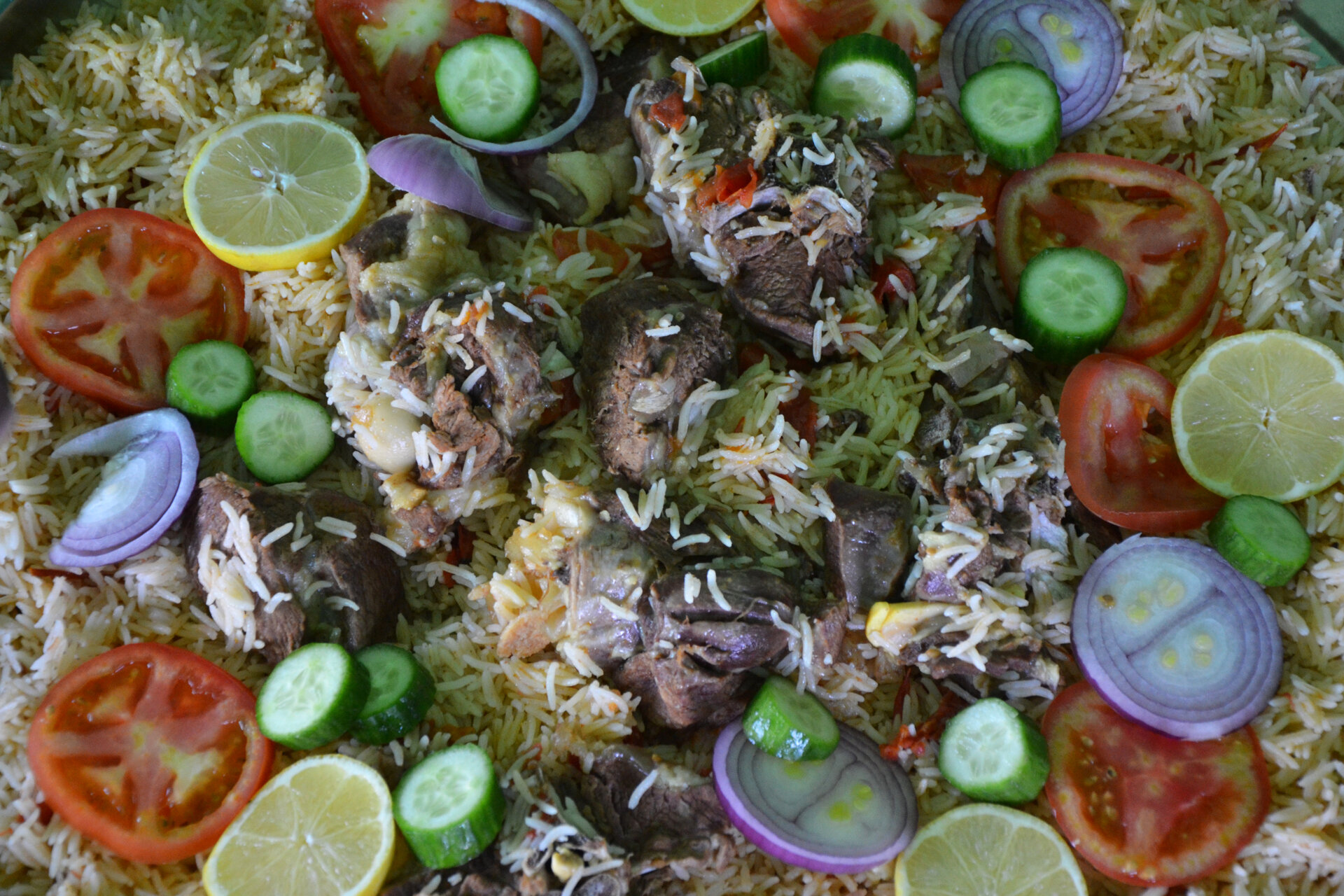
Kabsa is the signature Saudi dish and the anchor of every wedding feast. Long-grain basmati rice is cooked in a spiced broth of cardamom, cinnamon, cloves, black lime, bay leaves, and nutmeg, served with chicken, lamb, beef, or camel meat. At grand weddings, kabsa is presented with a whole roasted goat or lamb on oversized platters, garnished with golden raisins, fried onions, and roasted almonds. If you have visited a kabsa restaurant in Riyadh or Jeddah, multiply the experience by a factor of fifty — that is a Saudi wedding feast.
Mandi and Other Main Dishes
Mandi — lamb or chicken cooked in an underground pit oven above the rice, producing a distinctive smoky flavour — is widely served alongside kabsa. Roasted baby camel over rice is the most prestigious centrepiece at wealthy celebrations, and Jareesh (a savoury wheat porridge) is traditionally served the morning after.
Desserts and Beverages
Expect kunafa (shredded pastry with cheese and syrup), basbousa (semolina cake), and honey-drenched pastries. Silver pots of tea and cardamom-spiced Arabic coffee are served continuously. Sambousa (stuffed pastries) appear as side dishes. No alcohol is served at any Saudi celebration — non-alcoholic drinks are the standard throughout the Kingdom.
What Visitors Should Know: Etiquette and Dress Code
If you have been invited to a Saudi wedding, you are receiving a significant honour. Saudi hospitality will take care of you — but respecting the customs shows gratitude and cultural awareness.
Dress Code
Modesty is essential. For women: cover shoulders, arms, and legs. An abaya is no longer legally mandatory in all contexts under Vision 2030 reforms, but wearing one to a traditional wedding remains appropriate and will be appreciated. For men: long trousers and shirts with sleeves. A traditional Saudi thobe is ideal if attending the men’s celebration — your hosts may well offer you one. For detailed guidance, see our Saudi Arabia dress code guide.
Gifts
Bring a simple, thoughtful gift: high-quality dates, chocolates, desserts, or flowers. Avoid anything associated with alcohol, pork products, or gold jewellery for men (gold jewellery is traditionally reserved for women in Islamic culture). When offering a gift, use the right hand or both hands — never the left hand alone, which is considered unclean in Arab culture.
Arrival and Greetings
Arabic coffee and dates are served upon arrival — accept graciously with the right hand. Men should not attempt to shake hands with women unless she extends her hand first. Remove your shoes if entering a private home or traditional venue where shoes are left at the door. Greet your hosts warmly: “As-salamu alaykum” (peace be upon you) is always appropriate.
During the Celebration
Prepare for a late night. Saudi wedding celebrations typically begin at 10 PM and can continue until 4 or 5 AM. Pacing yourself is wise. Photography rules vary: always ask before photographing, especially in the women’s hall, where cameras may be restricted. Showing excessive emotion publicly is uncommon in Saudi culture — enjoy the celebrations, but take your cues from the locals around you.
Visitor tip: If you are a foreign woman invited to the women’s celebration, this is a rare and privileged glimpse into Saudi female social life. The atmosphere is often more relaxed and joyous than the men’s side — enjoy it fully.
Modern Saudi Weddings: Vision 2030 and the Changing Landscape
Saudi Arabia’s wedding industry is booming. The wedding planning services market was valued at $3.04 billion in 2024 and is projected to reach $4.77 billion by 2032, growing at 5.8% annually. Destination weddings within the Kingdom — particularly at luxury resorts in Jeddah, the Red Sea coast, and AlUla — are seeing a 12% annual increase in bookings.
Luxury Venues
Palace-style hotel weddings have become the norm for affluent families. The Ritz-Carlton Riyadh, set on 52 acres of gardens with 600-year-old olive trees, offers 62,000 square feet of event space with grand ballrooms accommodating up to 2,000 guests each. Venue rental and decoration alone can reach $53,000 at upscale hotels. For visitors interested in luxury experiences in Saudi Arabia, attending or even glimpsing one of these events is unforgettable.
The Cost Debate
Rising wedding costs are a growing social concern. With average salaries for younger Saudis ranging from SR 4,000 to SR 7,000 per month ($1,070–$1,870), the gap between cultural expectations and economic reality is widening. Religious and community leaders increasingly promote smaller, more modest weddings. According to the 2023 Saudi Youth Report, 65.3% of Saudis aged 15–34 are single, and the total fertility rate fell from 2.8 in 2011 to 2.0 in 2024 — rising marriage costs are widely cited as a contributing factor.
New Venue Regulations (2025)
In May 2025, the Ministry of Municipal and Rural Affairs and Housing introduced new regulations for wedding venues, covering design standards, accessibility requirements, and mandatory partnerships with licensed food-waste-prevention organisations. Venues can now operate as standalone buildings and may include hospitality lounges, children’s play zones, and underground parking — reflecting the professionalisation of the Saudi wedding industry.
Planning Your Trip Around Saudi Wedding Season
While weddings occur year-round, the peak season traditionally follows Ramadan. The month of Shawwal (the Islamic month after Ramadan) is considered the most auspicious time for marriage. The cooler months from October through March are also popular, as outdoor elements of celebrations are more comfortable. Summer weddings in the Hijaz and Asir highlands avoid the extreme heat of Riyadh and the Eastern Province.
If you are planning a trip to Saudi Arabia and hoping to experience wedding culture, the best approach is to cultivate local connections. Saudi hospitality is famously generous — a genuine interest in the culture often leads to invitations. Your hotel concierge, tour guide, or Saudi colleagues may be your best path to this extraordinary experience.
Before travelling, ensure your visa arrangements are in order. The tourist e-visa, available for 49+ nationalities, is valid for one year with multiple entries and allows stays of up to 90 days.
Planning a honeymoon? If you are visiting Saudi Arabia for your own wedding celebration or honeymoon, see our dedicated Saudi Arabia honeymoon guide for romantic destinations from AlUla to the Red Sea.
Explore More Saudi Arabia Travel Guides
- Saudi Arabia Travel Guide 2026 — The complete guide to visiting the Kingdom
- Understanding Saudi Arabian Culture — A complete guide for visitors navigating Saudi customs and values
- Saudi Arabia Dress Code Guide 2026 — What to wear as a tourist, from abayas to business attire
- Saudi Arabia Honeymoon Guide — Romantic destinations across the Kingdom
- Saudi Business Etiquette — Social customs every visitor should know
- Saudi Arabia Visa Guide — Every visa type explained