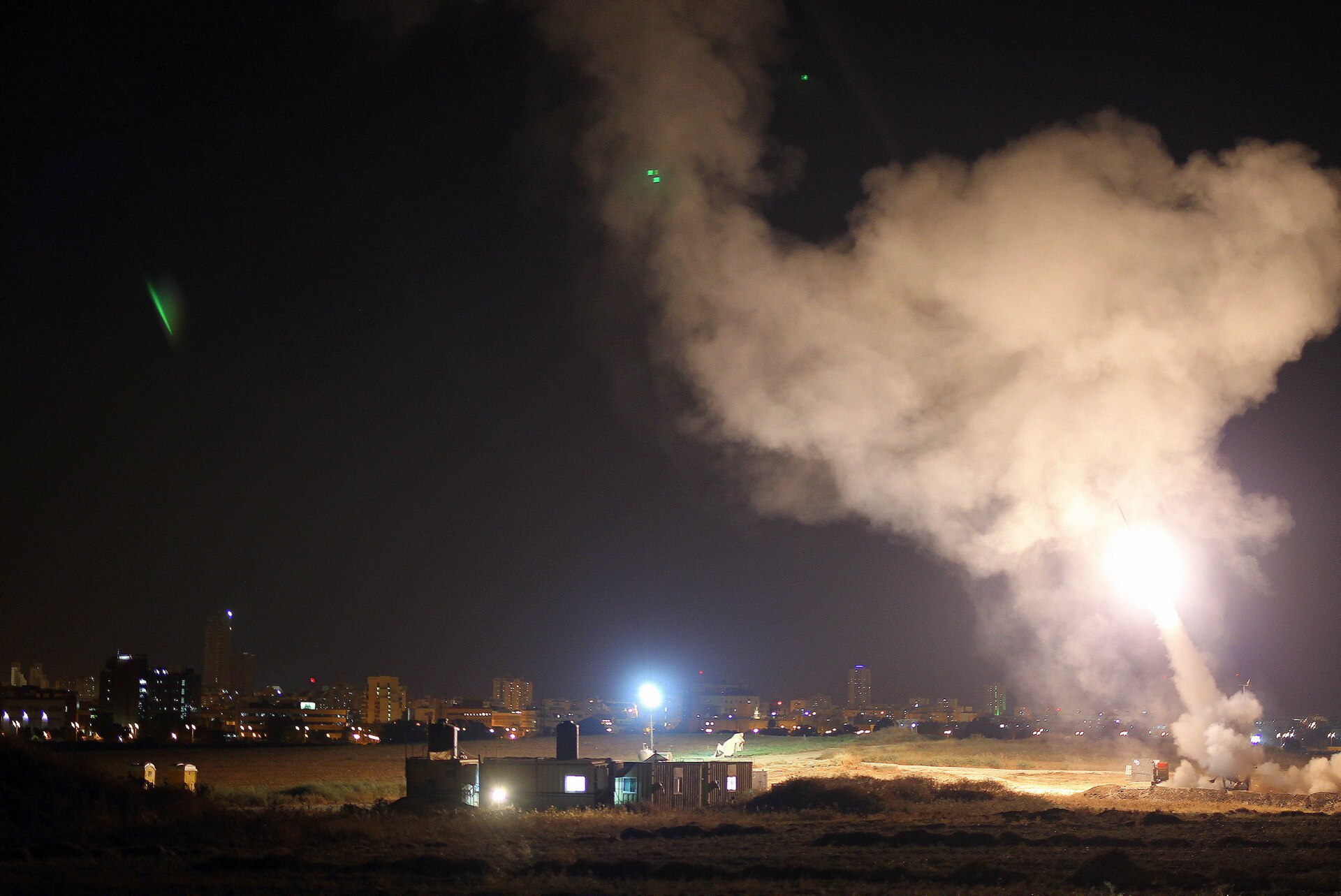

ABU DHABI — Israel secretly deployed a full Iron Dome battery with several dozen IDF operators to the United Arab Emirates during the Iran war, marking the first time the system has operated in combat outside Israeli territory, according to Israeli and American officials cited by Axios on April 26, 2026. The battery intercepted dozens of incoming Iranian missiles targeting Emirati strategic infrastructure, though neither Jerusalem nor Abu Dhabi has publicly confirmed the deployment.
The disclosure exposes a two-tier defense architecture across the Gulf Cooperation Council defined entirely by normalization status. Saudi Arabia — which bore the heaviest sustained bombardment of any Arab state, depleted roughly 86% of its PAC-3 interceptor stockpile, and hosts British and Pakistani military personnel — has zero Israeli systems and zero IDF operators on its soil. The Iron Dome deployment is not an arms sale or a technology transfer. It is an operational military alliance activated under fire, and Riyadh is not in it.
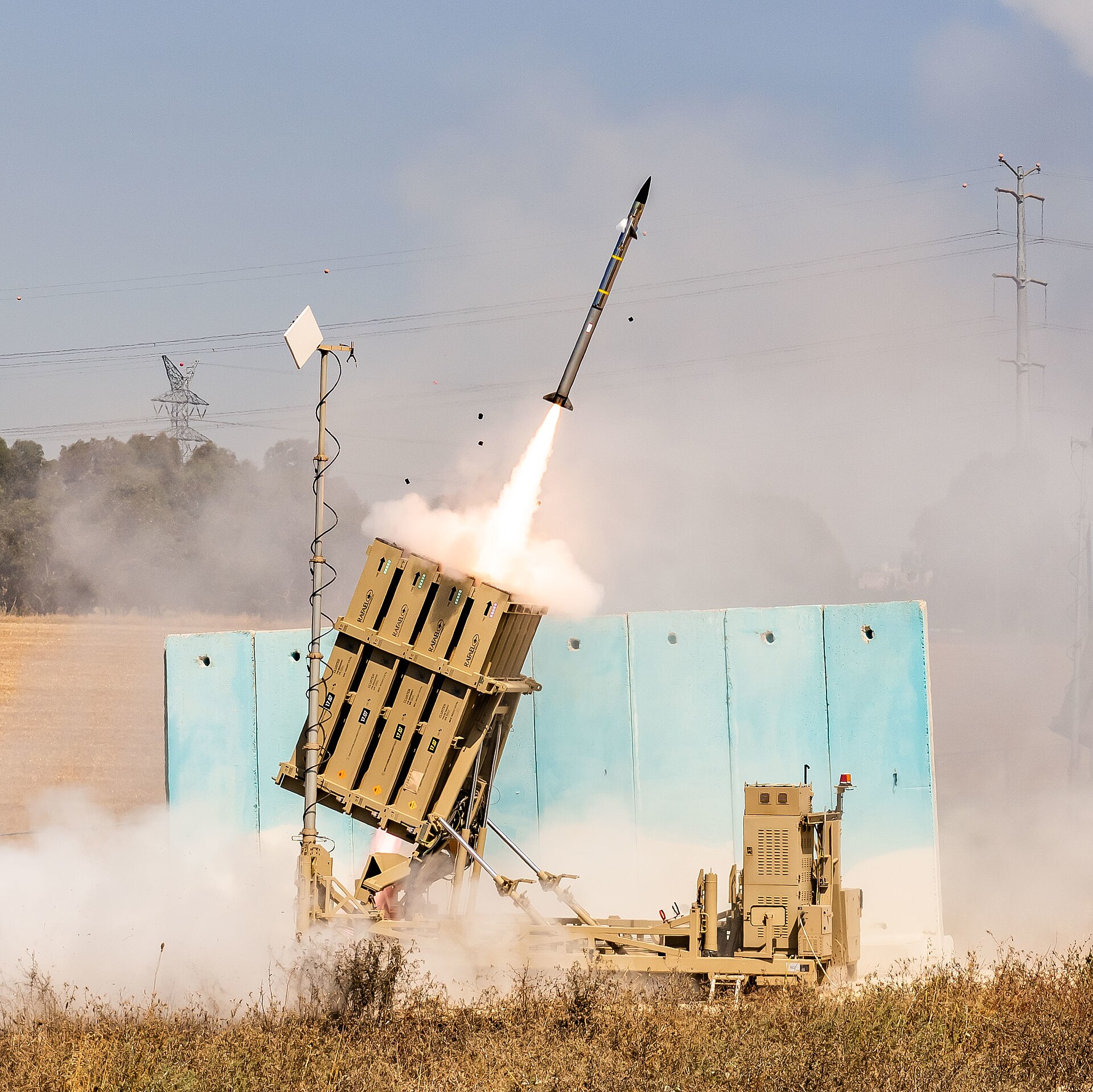
Table of Contents
What Did Israel Deploy to the UAE?
Israel deployed a complete Iron Dome battery — consisting of three to four launchers carrying 20 Tamir interceptors each, for a ready inventory of 60 to 80 missiles — along with the ELM-2084 multi-mission radar and several dozen IDF operators. The order came directly from Prime Minister Benjamin Netanyahu following a phone call with UAE President Mohammed bin Zayed, according to Axios. No public treaty or legislative framework was cited. The deployment was authorized at the executive level bilaterally.
The Iron Dome’s engagement envelope of 4 to 70 kilometers fills a specific gap in the UAE’s existing air defense stack. The Emirates already operates American-made Patriot and THAAD systems optimized for medium- and high-altitude ballistic threats. Iron Dome covers the short-range, low-altitude layer — cruise missiles, large-caliber rockets, and slower drones that slip beneath THAAD engagement altitudes. One battery defends approximately 150 square kilometers.
The UAE deployment broke two ceilings simultaneously: hardware export to an Arab state and IDF combat operators on Arab soil. The United States Marine Corps had purchased Iron Dome batteries under the SkyHunter variant designation, but those had not been used in combat. No other country had received both the system and Israeli personnel to operate it.
The Middle East briefing 3,000+ readers start their day with.
One email. Every weekday morning. Free.
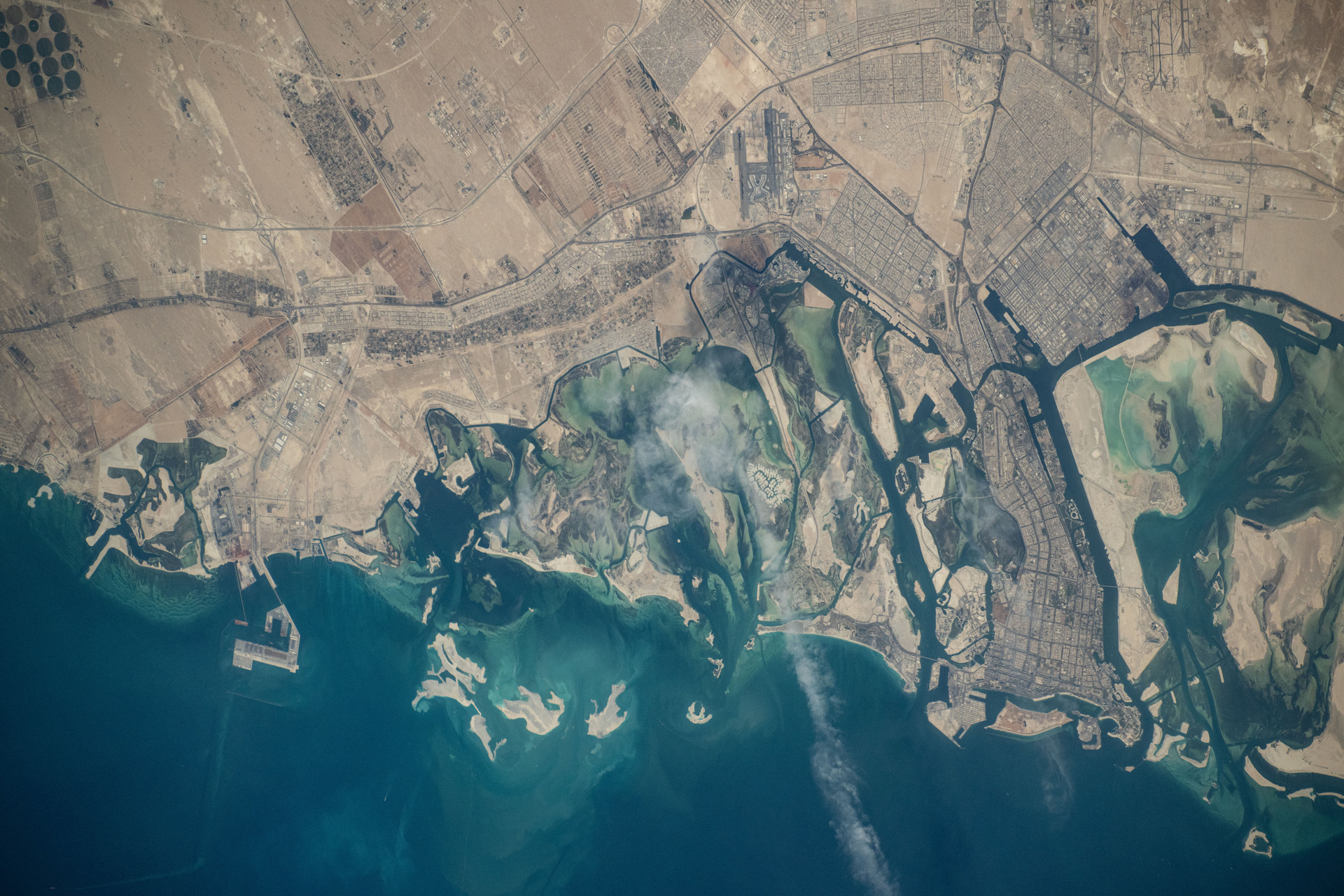
Defence Security Asia reported that the battery protected “strategic nodes” including Al Dhafra Air Base — the joint US-UAE facility in Abu Dhabi — along with oil export terminals, airports, and ports. The Axios report confirmed the system intercepted “dozens of incoming Iranian missiles,” though neither government has provided specific intercept tallies or engagement dates.
Why Did the UAE Need Iron Dome?
Iran directed approximately 550 ballistic and cruise missiles and more than 2,200 drones at UAE targets over the course of the conflict — more projectiles than Iran fired at Israel itself. The UAE absorbed roughly 48% of all Iranian munitions targeting Arab states combined, according to figures compiled from UAE Ministry of Defence disclosures and Breaking Defense reporting.
The bombardment was not symbolic. Iran targeted Dubai Airport, Jebel Ali port, ADNOC oil infrastructure, and aluminum production facilities. The UAE — the world’s fifth-largest aluminum producer — declared force majeure on energy infrastructure exports, according to Newsweek and Euronews.
The Emirates’ own interception record was strong but showed signs of strain. As of March 8, 2026 — the last date Abu Dhabi released detailed figures — UAE forces had intercepted 1,342 of 1,422 drones detected, a 94.4% rate, and downed all eight cruise missiles engaged, according to the UAE Ministry of Defence. After that date, the UAE stopped differentiating between “detected” and “intercepted” munitions in public statements, switching to reporting only “engagements.” Brian Carter, writing in Breaking Defense, assessed the shift as an operational security measure: “Each ‘intercepted’ munition means one less interceptor for Iran to worry about.” Jean Loup Samaan, a defense analyst, told Breaking Defense that air defense systems were “struggling in terms of depletion” after two weeks of sustained combat.
The depletion problem drove the request. Iron Dome does not replace Patriot or THAAD — it supplements them by handling the lower tier of the threat spectrum, freeing premium interceptors for ballistic missiles that Iron Dome cannot reach. With Iranian attack waves mixing drones, cruise missiles, and ballistic missiles simultaneously, a layered defense architecture was not a luxury. It was a rate-of-fire problem.
The Abraham Accords as Operational Infrastructure
The deployment did not happen in a vacuum. It landed on infrastructure built systematically since the Abraham Accords were signed in September 2020. Israel’s transfer from US European Command to Central Command in January 2021 — a direct structural consequence of the Accords — created the operational wiring that made rapid deployment possible: shared threat assessments, deconfliction protocols, logistics corridors, and a common US command umbrella linking Israeli and Gulf forces.
Before the war, the Israel-UAE defense relationship had already reached a depth without precedent between Israel and any Arab state. Israel approved the UAE’s acquisition of the SPYDER mobile air defense system in September 2022, partly in response to Houthi drone and missile attacks on Emirati territory. The Barak air defense system followed in October 2022. Elbit Systems awarded a $53 million contract to its EDGE Group partnership in the UAE. Israel and the UAE conducted their first bilateral naval exercise in February 2023 and jointly unveiled an unmanned maritime vessel. A cybersecurity intelligence platform, reportedly nicknamed “Crystal Ball,” linked the two countries’ threat-sharing architectures. As recently as April 2025, UAE Mirage 2000-9 aircraft participated in a multilateral exercise with Israel in Greece.
The Iron Dome deployment was the qualitative leap beyond hardware sales. SPYDER and Barak are systems the UAE can operate independently. Iron Dome arrived with IDF personnel who remained on UAE soil throughout combat operations. That is not a procurement relationship. It is a wartime alliance.
On March 26, 2026 — one month before the deployment became public — Senators Todd Budd and Joni Ernst introduced the Abraham Accords Defense Cooperation Act, mandating the Pentagon to build counter-drone and ground-based air defense cooperation among Accords signatories. “The Abraham Accords delivered what Iran fears most, a united front committed to peace instead of chaos,” Ernst said in her press statement. The legislation described exactly what Israel had already done covertly. The law was catching up to the battlefield.
Why Is Saudi Arabia Absent from This Architecture?
Saudi Arabia’s exclusion from the Israeli defense umbrella is not incidental. It is structural. The Kingdom never signed the Abraham Accords. Normalization talks, which had progressed significantly before the conflict, remain formally suspended. Saudi Foreign Minister Prince Faisal bin Farhan has stated publicly that normalization is “not on the table” without Palestinian statehood — framed as a “strategic principle, not a bargaining tactic.”
Public opinion reinforces the diplomatic freeze. A Washington Institute survey in August 2025 found 99% of Saudi respondents opposed normalizing relations with Israel. Support for the Abraham Accords among Saudis dropped from 41% in 2020 to 13% in 2025. Crown Prince Mohammed bin Salman, who in March 2023 told Fox News that Saudi Arabia was getting “closer every day” to normalization, reversed course by November 2024, characterizing Israeli actions as “genocide against the Palestinians” in a statement to the Shura Council.
The discomfort runs deeper than public polling. Former Shura Council member Ahmad bin Othman al-Tuwaijri publicly described the UAE as a “Zionist Trojan horse” in January 2026 — weeks before the war began. The comment, reported by the Institute for National Security Studies, reflected a strain of Saudi establishment opinion that views Abu Dhabi’s security integration with Israel as a threat to Gulf solidarity rather than a model to emulate.
Saudi Arabia has instead built a parallel defense coalition without Israeli components. The Kingdom deepened its defense pact with Pakistan through the Saudi-Pakistan Mutual Defense Agreement signed in September 2025. It hosts a UK Royal Artillery Sky Sabre battery with British operators — deployed in late March 2026 — with an effective range of just 8 kilometers. Pakistani fighter aircraft and air defense personnel operate from Saudi bases. Turkey supplies drone technology and defense-industrial cooperation.
The result is that Saudi Arabia’s PAC-3 MSE inventory sits at roughly 400 rounds — approximately 86% depleted from a pre-war stockpile of around 2,800 — and the Kingdom’s layered defense depends on systems from four countries (the US, UK, Pakistan, and Turkey), none of which is Israel. The UAE, by contrast, now operates Israeli, American, and its own indigenous systems under a defense architecture that includes real-time Israeli operator presence during combat.
How Does Iran Frame the Deployment?
Tehran’s response inverted the narrative entirely. Iranian state media, led by PressTV, framed the Iron Dome deployment not as an alliance milestone but as evidence of Israeli weakness. The argument: “sustained barrages of Iranian missiles and drones pushed Israel’s anti-missile systems beyond their limits,” forcing a desperate diversion of assets to prop up a failing ally. PressTV highlighted that Iran had conducted “100-plus waves of missile and drone strikes” across the region — positioning the deployment as proof that Iranian offensive capability had overwhelmed the combined US-Israel-Gulf defense architecture.
PressTV also issued a direct threat: “Any country facilitating aggression against the country will be held directly responsible.” The formulation deliberately conflates hosting a defensive system with facilitating aggression — a rhetorical framing designed to raise the cost of future Israeli deployments to any Gulf state considering similar arrangements.
The Iranian framing is self-serving but not entirely without analytical substance. The deployment does confirm that the UAE’s existing air defense stack — including American Patriot and THAAD batteries — was insufficient to manage the volume of Iranian attacks without supplementary systems. That is a meaningful intelligence disclosure, even if Iran’s characterization of it as “desperation” overstates the case.
Russia and China reinforced the adversary narrative from a different angle. Moscow and Beijing jointly requested a UN Security Council session on “threats to international peace and security” tied to Iranian strikes on Gulf countries, framing the US-Israel-Gulf coalition response as escalatory rather than defensive. China, which maintained a stated “objective, just and balanced” posture while Foreign Minister Wang Yi conducted 26 phone calls with all parties, views Abraham Accords expansion as a US-sponsored counterweight to Sino-Russian regional influence.
Hussein Aboubakr Mansour of the Jewish Institute for National Security of America assessed the broader pattern: “Tehran’s punitive message is that there is no neutral position.” Iran’s targeting of the UAE — despite Abu Dhabi’s diplomatic engagement with Tehran through the pre-war period — underscored that normalization with Israel carried kinetic consequences, but so did proximity to American military infrastructure regardless of normalization status.
The Two-Tier GCC
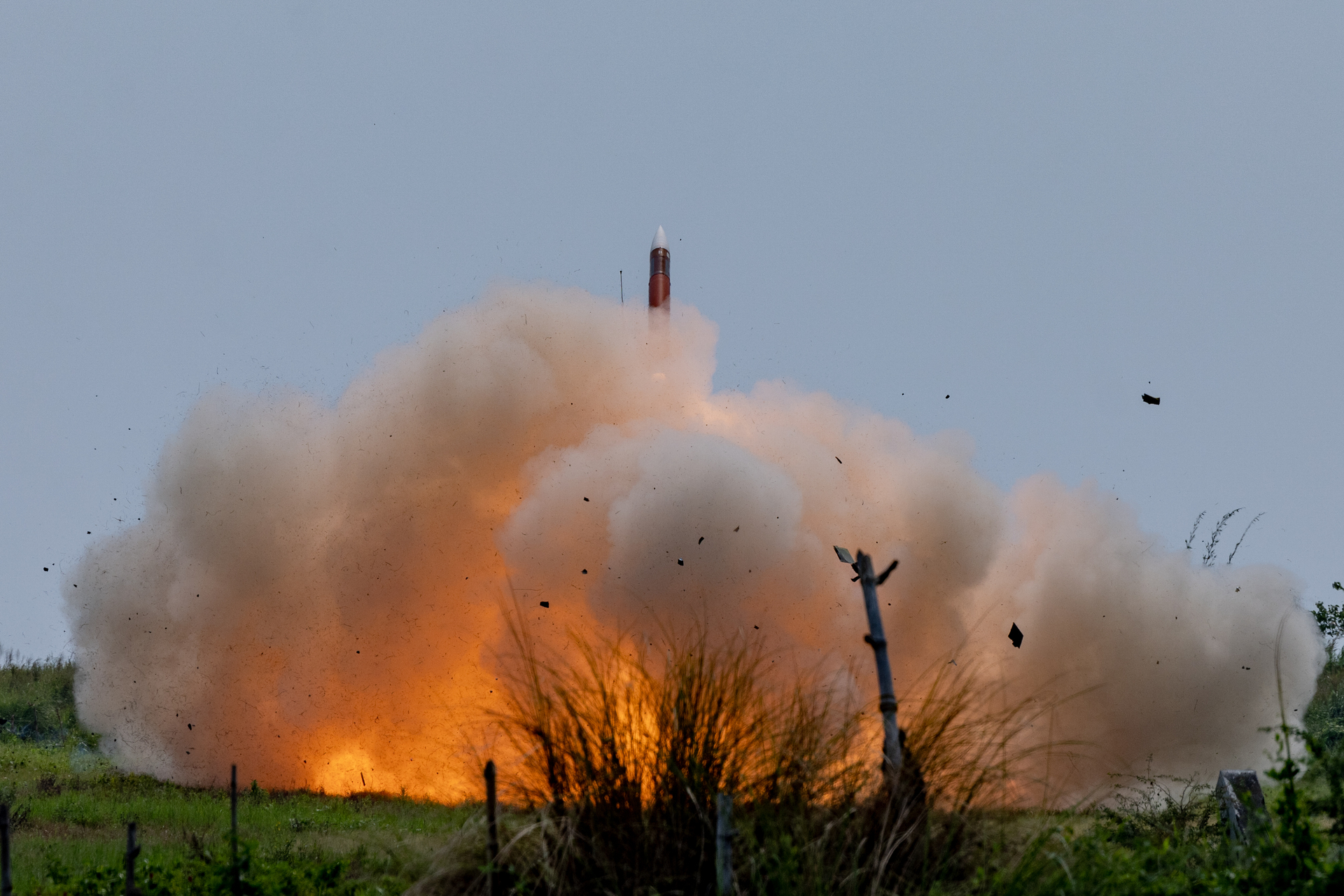
The Iron Dome deployment crystallizes a divide that predated the war but had not been tested under fire. The GCC now contains two distinct defense architectures separated by a single variable: normalization with Israel.
The UAE and Bahrain — the only GCC Abraham Accords signatories — have access to Israeli defense technology, Israeli intelligence sharing, Israeli operator presence during combat, and the institutional wiring of CENTCOM integration that links Israeli and Gulf military operations under a shared American umbrella. The Iran war transformed this from a diplomatic arrangement into a tested military alliance.
Saudi Arabia, Kuwait, Qatar, and Oman operate outside this structure. Their defense relationships run through the United States bilaterally, through individual European suppliers, and through regional partnerships — but without the Israeli layer. Saudi Arabia’s air defense architecture is arguably more diverse in its supplier base (American, British, Pakistani, Turkish) but lacks the integration density that CENTCOM-mediated Israel-UAE cooperation provides.
Anwar Gargash, the UAE’s Presidential Adviser, captured Abu Dhabi’s post-war posture in two separate statements. Speaking to the Carnegie Endowment and Asharq Al-Awsat, he claimed regional states “prevailed through an epic national defense.” At a JINSA forum, he was blunter about Iran: “With this regime, there is no trust.” An unnamed Emirati official, quoted by the Arab Gulf States Institute via Axios, said of the Iron Dome intervention: “We are not going to forget it.”
Andrew Leber of the Carnegie Endowment assessed that the UAE might pursue “occasional skirmishes against Iran, in tacit coordination with Israel,” while other GCC members negotiate separate accommodations with Tehran. The analysis suggests the two-tier split is not temporary — it reflects fundamentally different strategic orientations that the war has hardened into operational reality.
Dr. Yoel Guzansky, head of Gulf research at Israel’s Institute for National Security Studies and a former National Security Council coordinator for Iran and Gulf affairs, assessed that Saudi normalization reversal would persist absent “fundamental Israeli political change or dramatic regional rebalancing.” Mansour of JINSA noted that Emirati intelligence-operational alignment with Israel “predated the 2020 Abraham Accords by years” — suggesting the formal agreements ratified an existing covert relationship rather than creating a new one.
For Riyadh, the strategic calculation remains unchanged. The Kingdom cannot sign the Abraham Accords without a Palestinian statehood framework without risking domestic legitimacy — the Washington Institute’s 99% opposition figure is not a number any government ignores. But the war has demonstrated that non-normalization carries its own cost: when interceptor stocks deplete and the threat volume exceeds defensive capacity, the phone call Netanyahu made to MBZ is a phone call MBS cannot make.
The Abraham Accords were signed as diplomatic agreements. They have now been tested as a military alliance under sustained combat conditions. The Iron Dome battery in the UAE — crewed by IDF operators, authorized by a phone call between two heads of state, disclosed by neither government — is the physical evidence of that transformation. Saudi Arabia’s absence from it is not a policy choice that can be reversed by a single diplomatic gesture. It is a structural condition with material consequences measured in interceptor inventories, operator presence, and the speed at which a defense system can arrive when the missiles are already in the air.
FAQ
Has any country other than the US purchased Iron Dome?
No. The United States is the only country that has purchased Iron Dome batteries, acquiring them under the SkyHunter designation for the US Marine Corps. The UAE Iron Dome deployment was an operational loan with Israeli operators, not a sale. Cyprus, Romania, and Azerbaijan have previously expressed interest in Iron Dome procurement but no contracts were signed as of April 2026. Israel has kept the system tightly controlled precisely because its technical specifications — particularly the ELM-2084 radar’s discrimination algorithms — represent core intelligence about Israeli air defense doctrine.
What air defense systems does Saudi Arabia currently operate?
Saudi Arabia operates a mix of American, British, Pakistani, and South Korean systems. The primary layer is the US-made Patriot PAC-3 MSE, now at roughly 400 rounds from a pre-war stock of approximately 2,800. The Kingdom also fields the South Korean KM-SAM (Cheolmae-2) for medium-range threats, the UK Royal Artillery’s Sky Sabre short-range system with British operators, and undisclosed Pakistani air defense contributions. Saudi Arabia has no THAAD batteries of its own, unlike the UAE, which operates both Patriot and THAAD — a gap that further widens the capability differential between the two Gulf states.
Could Israel deploy Iron Dome to Saudi Arabia without formal normalization?
Technically, the UAE deployment was conducted without any public treaty or legislative framework — authorized through a direct call between Netanyahu and MBZ. A similar executive-level arrangement with Saudi Arabia is theoretically possible but politically implausible. The 1945 founding charter of the Arab League, to which Saudi Arabia remains bound, contains provisions against bilateral security arrangements with Israel absent a comprehensive Arab-Israeli peace. Any disclosed IDF presence on Saudi soil would trigger a domestic legitimacy crisis that no interceptor stockpile can offset.
What is the Tamir interceptor’s unit cost compared to Patriot PAC-3 MSE?
A single Tamir interceptor costs approximately $50,000 to $80,000, according to Rafael and US Congressional Research Service estimates. A Patriot PAC-3 MSE round costs approximately $4 million per interceptor. The cost asymmetry is the core logic of layered defense: using a $50,000 Tamir against a $20,000 Iranian drone is expensive but sustainable; using a $4 million PAC-3 round against the same drone is economically ruinous at scale. Saudi Arabia’s PAC-3 depletion reflects this cost-mismatch problem — the Kingdom lacks a cheap lower tier equivalent to absorb high-volume, low-cost threats.
Did the Iron Dome deployment violate any international agreements?
No binding international agreement explicitly prohibits the deployment. The UAE is a sovereign state entitled to invite foreign military personnel under bilateral arrangements, and Israel faces no treaty restriction on deploying defensive systems abroad. The Missile Technology Control Regime (MTCR) governs missile and drone exports but does not cover defensive interceptor systems. The more relevant legal question is domestic: Israel’s Defense Export Controls Law requires Ministry of Defense authorization for any military system deployment abroad, and the Knesset Foreign Affairs and Defense Committee typically reviews such decisions — though wartime executive authority provisions may have been invoked. Neither government has disclosed the legal mechanism used.
The Iron Dome deployment is one expression of the strategic autonomy Abu Dhabi has been building independently of Riyadh throughout the war. That autonomy reached its sharpest institutional form on April 28, when the UAE withdrew from OPEC without consulting Saudi Arabia hours before MBS’s wartime GCC summit — a sequence analysed in The UAE Did Not Consult Saudi Arabia.