
RIYADH — The Public Investment Fund sold 70 percent of Al-Hilal Club Company to Kingdom Holding in April for SAR 840 million — roughly $224 million. Al-Hilal’s annual player wage bill runs to €323.7 million. The kingdom’s sovereign wealth fund priced a crown jewel of Saudi football at less than the cost of keeping its roster employed for twelve months.
Days earlier, PIF’s board — chaired by Crown Prince Mohammed bin Salman — approved a 2026–2030 strategy that lists six priority ecosystems. Sport is not among them. LIV Golf, the $5.3 billion experiment in access diplomacy through professional golf, will lose PIF funding after the 2026 season ends. The Esports Olympics hosting deal with the IOC has been abandoned. The 2029 Asian Winter Games, postponed indefinitely. ATP and WTA World Tour Finals in the kingdom, expected to be the last editions for the foreseeable future. Plans for the 2035 Rugby World Cup, scrapped.
What remains is the 2034 FIFA World Cup — a $200–300 billion infrastructure commitment already awarded and too embedded in Vision 2030’s construction pipeline to reverse — and an 80 percent stake in Newcastle United that PIF sources describe as unchanged. Everything else in Saudi Arabia’s sports portfolio, the apparatus assembled after the murder of Jamal Khashoggi to rehabilitate the kingdom’s global reputation, is being liquidated or left to expire. The question is not whether the sportswashing era is ending. It ended the week PIF’s board published a strategy document that pretends it never happened.
The House of Saud Daily Briefing
Saudi Arabia's news in 3 minutes, every morning. Free. See today's issue
Table of Contents
- A Club Worth Less Than Its Wage Bill
- Who Buys a Crown Prince’s Castoff
- What Did $5.3 Billion in Golf Actually Buy?
- The Strategy Document That Erased Sport
- Why Can’t PIF Fund Both Soft Power and Air Defense?
- Did Sportswashing Work?
- The 2034 World Cup Is the Last Asset Standing
- Newcastle and the Question Nobody in Riyadh Will Answer
- FAQ
A Club Worth Less Than Its Wage Bill
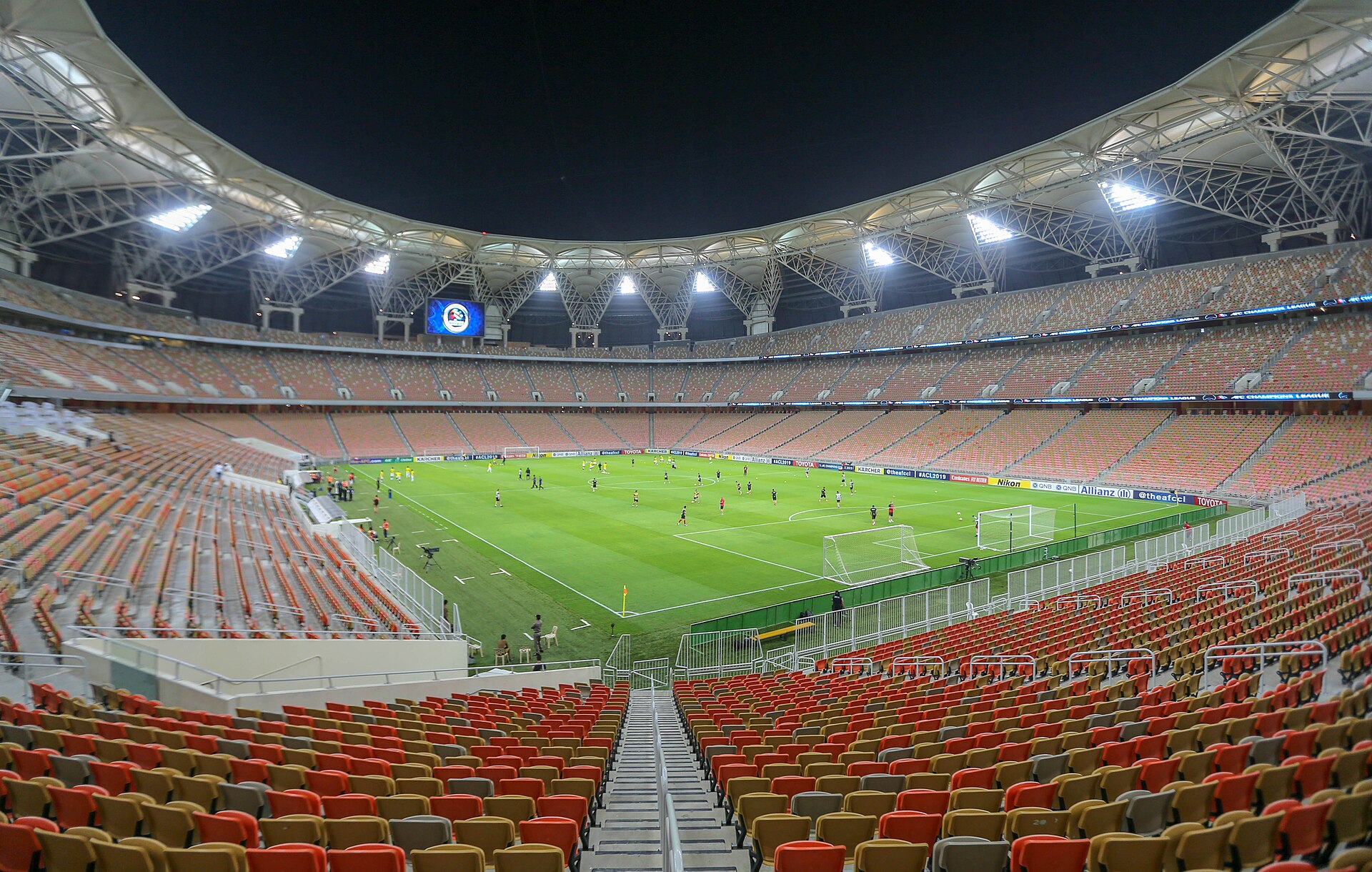
In the summer 2023 transfer window alone, Al-Hilal spent €353.1 million on player acquisitions — the second-largest outlay by any club in the world that window. Neymar’s total package from Paris Saint-Germain reportedly reached €400 million when salary was included. The transfer fee alone, roughly €90 million, represented nearly a quarter of what Kingdom Holding just paid for a controlling stake in the entire club.
The wage data is more damning. Capology’s figures for the 2025–26 season put Al-Hilal’s gross fixed salary commitments at €323.7 million, or approximately $352 million per year. PIF sold 70 percent of a club whose annual payroll exceeds the total price Kingdom Holding paid for its majority stake. No buyer pays that ratio for a growing asset. That ratio is what you accept for an asset you need to move.
PIF’s press release framed the transaction within the Saudi Sports Clubs privatization initiative — a programme launched in 2023 to transition the four PIF-owned clubs (Al-Hilal, Al-Ahli, Al-Ittihad, Al-Nassr) into commercially viable private entities. The language was templated: “natural progression,” “long-term sustainable growth,” “contribution to the Saudi sports ecosystem.” PIF had always characterised its club ownership as transitional. The timing, however, was not part of any announced privatisation schedule. It came six weeks into a war that had already cut Saudi oil production by 30 percent and five days after PIF’s own board approved a strategy that removed sport from its priority list.
Who Buys a Crown Prince’s Castoff
The buyer matters as much as the price. Kingdom Holding Company is controlled by Prince Alwaleed bin Talal, who owns more than 78 percent of the firm. KHC’s market capitalisation sits at approximately $7.89 billion; its underlying portfolio — stakes in Citigroup, JD.com, Elon Musk’s xAI — carries an estimated net asset value closer to $19 billion. Alwaleed’s personal fortune is pegged by Bloomberg at roughly $20 billion, making him the wealthiest Saudi royal outside the direct line of succession.
He is also a man whose relationship with Mohammed bin Salman has a specific history. On November 4, 2017, Alwaleed was among the princes, ministers, and businessmen detained in the Ritz-Carlton Riyadh during MBS’s anti-corruption purge. He was held for 83 days. Released on January 27, 2018, he told Bloomberg Television he had not been mistreated and that he and the government had reached a “confidential” understanding. The financial terms of that understanding have never been disclosed. By 2025, he was seated near MBS at Riyadh investment summits — a visible demonstration that compliance produces rehabilitation.
The Al-Hilal transaction is legible on two levels simultaneously. Commercially, KHC is absorbing a PIF-divested entertainment asset, consistent with a pattern: in April 2026, Alwaleed also consolidated a battery-electric-vehicle stake under the KHC umbrella. PIF already holds just under 17 percent of Kingdom Holding itself, which means the sovereign fund is selling to a company it partly owns. The capital does not fully leave the PIF ecosystem. It circulates within it, which limits the genuine external value extraction but preserves the appearance of privatisation.
Politically, the signal is different. MBS is allowing a once-detained prince to acquire a national prestige asset — Al-Hilal is the most decorated club in Saudi football — at a price that represents a fraction of the capital PIF poured into it. Inside World Football was the only outlet to note that the buyer was a “former MBS opponent.” The transaction functions as a public marker of restored standing, granted at the crown prince’s discretion, through a deal whose commercial terms favour the buyer. That combination — discounted asset, rehabilitated purchaser, sovereign seller — does not appear in normal M&A. It appears in systems where commercial transactions carry political freight.
What Did $5.3 Billion in Golf Actually Buy?
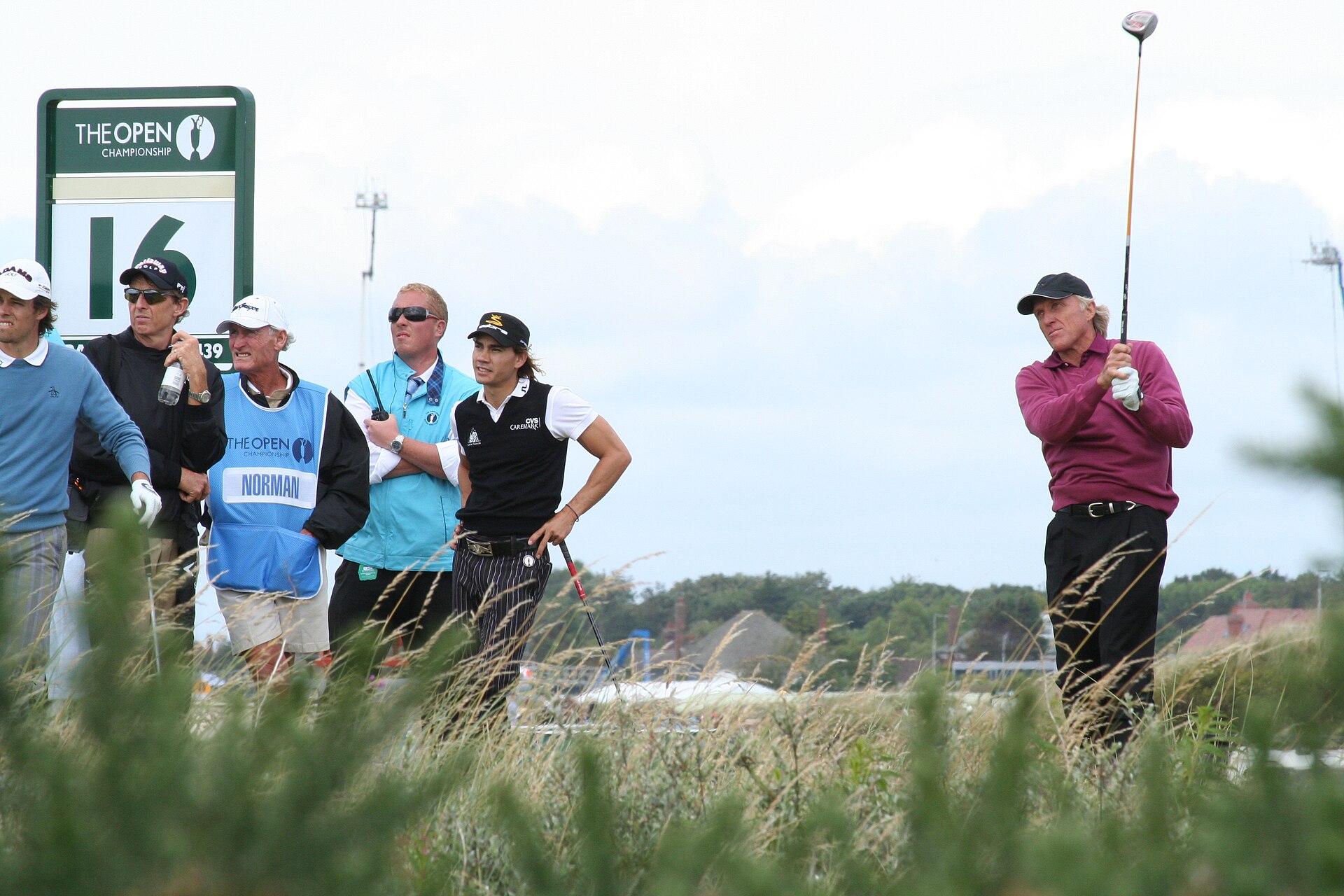
LIV Golf launched in 2022 with Greg Norman as commissioner and a thesis that professional golf could serve as a gateway to the boardrooms and political networks that mattered to Saudi Arabia’s international positioning. PIF and Governor Yasir Al-Rumayyan saw the sport as, in the fund’s own framing, “a pathway to connect with many of the world’s most influential business leaders and politicians.” The access-diplomacy rationale was always more explicit than the public-facing brand messaging suggested.
The financial trajectory tells a clean story. Operating losses ran $244 million in 2022, $394 million in 2023, and share issuances of $424 million in 2024. Total PIF investment since launch reached $5.3 billion, including a final $266.6 million capital injection approved by Al-Rumayyan for the 2026 season. Monthly burn rates averaged $100 million in 2024–25 according to Financial Times reporting. Prize money per event rose to $30 million for 2026, up from $25 million, and total player earnings since the league’s founding exceeded $1.39 billion — money that flowed overwhelmingly to a small roster of established American, European, and Australian players. Bryson DeChambeau’s four-year contract alone is believed to exceed $125 million.
The framework agreement with the PGA Tour, announced in June 2023 to widespread shock, never converted into a merger. Two years of negotiations — including two White House meetings facilitated by Donald Trump — collapsed by late 2025. The PGA Tour closed a separate $3 billion strategic investment deal, removing the financial pressure that had made a merger attractive. By early 2026, players were reading the trajectory: Brooks Koepka requested release from his LIV contract; Patrick Reed did not renew.
LIV CEO Scott O’Neil’s communications in April 2026 captured the terminal phase with unintentional precision. In a staff email reported by Golf Digest, he wrote: “I want to be crystal clear: Our season continues exactly as planned, uninterrupted and at full throttle.” In a video that was subsequently deleted, he acknowledged that beyond 2026 the organisation would have to “work like crazy” to continue. The New York Times, the Athletic, the Wall Street Journal, and the Financial Times all independently confirmed that PIF would not fund LIV beyond the current season. Al-Rumayyan himself, in an Al Arabiya English interview, said PIF was “reviewing its investments and deals” and “reassessing its priorities,” citing the impact of the war on Iran.
Sportico’s epitaph was the most precise: “LIV Golf, which has done nothing but lose money in a foreign market that largely rejected it, was never going to survive that audit.” The audit in question was PIF’s new domestic-return mandate — 80 percent of deployable capital directed inward — against which an annual nine-figure loss in a sport that generated more negative press coverage about Saudi Arabia than positive brand equity could not be justified under any scenario, let alone a wartime one.
The Strategy Document That Erased Sport
On April 15, 2026, PIF published its 2026–2030 strategy. The document lists six priority ecosystems for the fund’s next phase. None of them include sport, entertainment, or anything adjacent to the soft-power portfolio that consumed a measurable share of PIF’s international deployment between 2021 and 2025. The previous five-year strategy — covering 2021–2025 — had listed sports and entertainment among 13 strategic sectors. The demotion is not rhetorical. It is structural, documented, and board-approved.
The capital allocation shift is equally explicit. The new strategy directs 80 percent of PIF’s deployable capital to domestic investment, up from approximately 70 percent in the prior period. International exposure drops from a peak of 30 percent to a target range of 18–20 percent. PIF’s assets under management stand at $925 billion, but the liquidity picture is tighter than the headline suggests: cash reserves fell to approximately $15 billion in late 2024, the lowest level since 2020, according to Middle East Briefing reporting.
Al-Rumayyan’s framing of the new strategy was characteristically forward-looking: “a natural next step in PIF’s growth journey.” The phrasing was designed to suggest continuity. The substance — sport deleted from the priority list, domestic allocation increased, international exposure cut by a third — describes a pivot executed under fiscal and military pressure. The board meeting that approved the strategy took place 46 days into a war that had reduced Saudi oil output from 10.4 million barrels per day to 7.25 million, a 30 percent decline documented by the International Energy Agency. Vision 2030 turned ten the same week the blockade was confirmed — and PIF’s strategy refresh read less like a celebration than a triage document.
Why Can’t PIF Fund Both Soft Power and Air Defense?
The arithmetic is straightforward. Saudi Arabia’s fiscal break-even oil price — the level at which government revenue covers government spending, including PIF’s capital requirements — sits at $108–111 per barrel when PIF commitments are included, according to Bloomberg’s calculations. Brent crude trades at approximately $105. That gap, narrow in percentage terms, is enormous in absolute terms when applied to a budget designed around 10.4 million barrels per day of production that now operates on 7.25 million.
Against that revenue picture, the spending demands are concrete. On January 30, 2026 — four weeks before the Iran war began — the Defense Security Cooperation Agency approved a $9 billion foreign military sale to Saudi Arabia for 730 PAC-3 MSE interceptors, launcher conversion kits, spare parts, and logistics support. The unit cost runs approximately $12 million per interceptor at full programme loading. Lockheed Martin’s Camden, Arkansas production line manufactures roughly 620 rounds per year across all global customers. Not a single missile from the Saudi order will arrive for at least eighteen months. A framework agreement to triple output to approximately 2,000 rounds per year over seven years exists on paper but has not yet increased actual throughput.
Sportico put the comparison plainly: PIF’s $5.3 billion cumulative investment in LIV Golf represents 59 percent of the $9 billion PAC-3 restocking package. The kingdom spent more subsidising a golf league that never achieved commercial viability than it will pay for the majority of its next-generation air defense interceptors — interceptors whose current stockpile is critically depleted under active wartime conditions. Saudi Arabia’s 2025 defence budget stood at $72.5 billion, with 2026 allocations running between $64 billion and $80 billion depending on which security ministries are included, representing roughly 7.3 percent of GDP.
PIF’s $15 billion cash reserve figure from late 2024 — before the war began consuming capital at wartime rates — explains why the fund cannot simply absorb the losses. Fifteen billion dollars in liquid reserves against $925 billion in total assets is a 1.6 percent cash ratio. That is a fund that was already fully deployed before the first Iranian missile hit Ras Tanura. The war did not create PIF’s liquidity constraint. It made an existing constraint impossible to ignore, and eight-figure annual sports subsidies became the most politically defensible line items to cut.
Did Sportswashing Work?
The term itself has always been contested, and the most honest answer is that it worked for purposes other than the ones critics assumed. Karim Zidan of Sports Politika, who has tracked Saudi sports investment more closely than any independent analyst, argues the label is reductive. The strategy was “part of a complex political agenda to expand the kingdom’s global image, assert regional supremacy, especially with its rival the UAE, and create a bubble of patriotic distraction to occupy its young population.” Image rehabilitation after Khashoggi was one objective among several, and possibly not the primary one.
On the international image front, the evidence is mixed to negative. LIV Golf generated substantially more coverage of Saudi human rights practices than it deflected. The Boston Globe published a characteristic assessment in September 2022: “If the LIV Golf series is an attempt at Saudi sportswashing, it isn’t working.” Every press conference Greg Norman held about golf became a press conference about Khashoggi, about the Saudi legal system, about the PGA Tour’s resistance. The New Republic’s description — “grotesque sportswashing” — was representative of the median Western media treatment. NUFC Fans Against Sportswashing, an advocacy group formed specifically in response to PIF’s Newcastle acquisition, has grown into a sustained pressure campaign that tracks and publicises the ownership’s political context.
On the domestic front, the calculus was different. The Saudi Pro League’s brief era of global stars — Neymar, Karim Benzema, Cristiano Ronaldo at Al-Nassr — generated genuine excitement among Saudi Arabia’s overwhelmingly young population, whose median age is 31.8 years according to UN demographic data. Attendance rose. Social media engagement surged. The patriotic dimension Zidan identified — Saudis seeing their clubs compete for global talent — had a real domestic constituency. Whether that effect persists as the stars’ contracts expire and PIF withdraws its subsidy is an open question. The data suggests it was purchased engagement, not organic growth, and purchased engagement has the shelf life of the cheque that funds it.
On the access-diplomacy front — the original LIV thesis — the returns are hardest to measure and easiest to overstate. Saudi Arabia’s diplomatic relationships with the United States, Britain, and France did not meaningfully improve because PIF owned a golf league or a Premier League club. The Abraham Accords framework, the defence partnerships, the energy-market coordination — these moved on geopolitical logic that had nothing to do with sport. The argument that golf opened doors to influential networks is unfalsifiable in the way that all soft-power claims are unfalsifiable. What is falsifiable is the financial return, and the financial return was negative $5.3 billion.
The 2034 World Cup Is the Last Asset Standing
FIFA awarded the 2034 World Cup to Saudi Arabia in a process that attracted no competing bids — a structural advantage of committing to host a mega-event when no other country wants the financial burden. The estimated total cost runs between $200 billion and $300 billion according to IMF projections, encompassing 15 stadiums (10 new, 5 renovated), transport infrastructure, and hospitality capacity across Riyadh, Jeddah, Khobar, NEOM, and Abha. The stadium programme alone is budgeted at $20–25 billion. NEOM’s planned “sky stadium,” suspended 350 metres above the desert floor, carries a budget exceeding $1 billion by itself.
The World Cup is qualitatively different from everything PIF is shedding. It is infrastructure, not subsidy. The stadiums, roads, rail lines, and hospitality stock feed directly into Vision 2030’s diversification targets — the same domestic-investment mandate that PIF’s new strategy prioritises. Sportcal’s assessment, the most sober of the industry analyses, concluded that “all hope for this image lies in the World Cup and F1.” That framing is too generous to the image thesis and too dismissive of the economic one. The World Cup is retained because its spending is capital expenditure that builds permanent assets. LIV Golf, Al-Hilal’s wage bill, the Esports Olympics — these were operating expenditure that built nothing durable. Under peacetime liquidity conditions, a sovereign wealth fund can afford both. Under wartime fiscal compression, only the capex survives.
Sportcal also noted a broader Gulf contraction: the Iran war has “shifted economic resources within countries like Qatar, UAE and Saudi Arabia,” suggesting the Saudi retreat is part of a regional pattern rather than a kingdom-specific pivot. Qatar’s LNG revenue disruptions — half of its export capacity transits a strait that is now effectively double-blockaded — and the UAE’s exposure to regional trade disruption both constrain the financial base that underwrote Gulf sports investment over the past decade.
Newcastle and the Question Nobody in Riyadh Will Answer
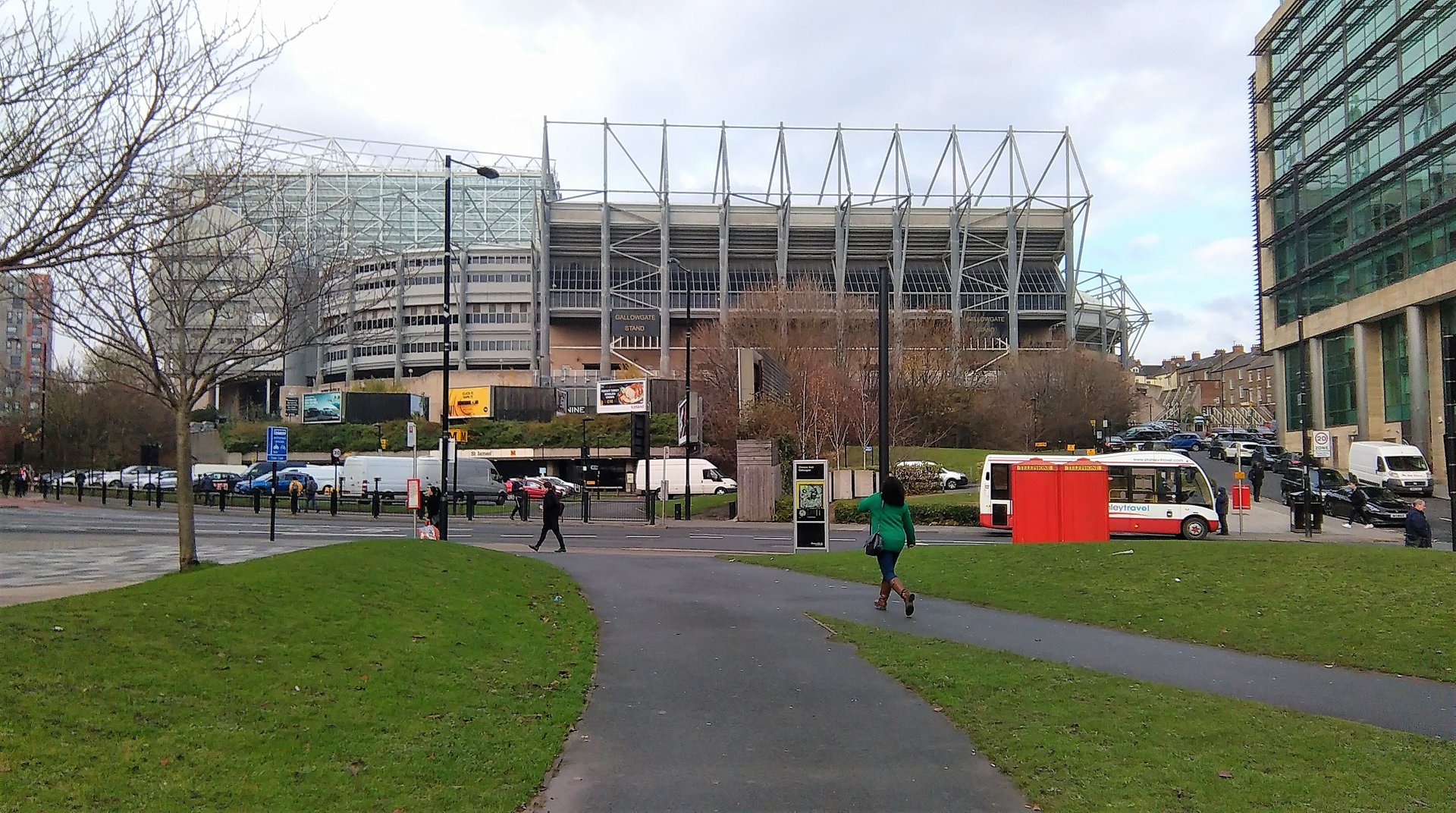
PIF holds 80 percent of Newcastle United, acquired in October 2021 for £305 million. Forbes valued the club at £820 million in May 2025 — a return on paper that makes Newcastle PIF’s only sports investment with positive equity performance. Sources close to PIF described the ownership position as “adamant” that there is “absolutely no change” in the long-term plan for Newcastle. The same language, almost verbatim, was used about LIV Golf’s future six months before PIF confirmed its exit.
The strategic logic for retaining Newcastle differs from the logic that protected the World Cup. Newcastle is not infrastructure. It does not feed Vision 2030’s domestic construction pipeline. It is a Premier League club in a foreign market — precisely the category of international soft-power asset that PIF’s new strategy deprioritises. What Newcastle has that Al-Hilal lacked is a credible path to commercial self-sufficiency: Premier League broadcast revenues, matchday income from a 52,000-seat stadium in a football-obsessed city, and a brand value that appreciates with on-pitch performance rather than requiring annual subsidy injections.
The test will be whether PIF’s ownership of Newcastle can survive the same audit that killed LIV. If the club requires net capital injections from PIF to compete at the upper end of the Premier League — as it almost certainly will, given Financial Fair Play constraints and the spending levels of Manchester City and Chelsea — then the same fiscal logic applies. A sovereign fund with $15 billion in cash reserves and an 80 percent domestic mandate cannot justify nine-figure annual net outflows to a football club in northeast England, regardless of how the brand-equity case is framed. The “absolutely no change” assurance holds only as long as Newcastle remains a performing asset that draws more capital in than it requires out. The moment it tips into a net cost, it joins the same category as Al-Hilal.
FAQ
What happens to Al-Hilal’s player contracts under Kingdom Holding ownership?
Kingdom Holding inherits the existing contract obligations, including the €323.7 million annual wage structure. KHC’s market capitalisation of $7.89 billion and Alwaleed’s $20 billion personal fortune provide a financial backstop, but the club’s wage-to-revenue ratio is structurally unsustainable without subsidy. The most expensive contracts — negotiated during PIF’s 2023 spending spree — expire between late 2026 and mid-2027. Industry analysts expect KHC to let marquee deals lapse rather than renew at comparable terms, effectively downsizing the roster to a commercially viable payroll within 18 months of the acquisition.
Could LIV Golf survive without PIF funding after 2026?
LIV CEO Scott O’Neil’s deleted-then-reported comment that the organisation would need to “work like crazy” to continue after 2026 points to the structural problem: monthly burn rates averaging $100 million, no broadcast deal generating comparable revenue, and a PGA Tour that closed its own $3 billion investment deal rather than merge. LIV’s player-contract structure — multi-year guaranteed deals signed in 2022–23, with the largest expiring at the end of 2026 — means the league’s most marketable names could depart simultaneously. Without PIF’s underwriting, LIV would need a replacement investor willing to absorb nine-figure annual losses in a sport whose audience demographics skew older and whose sponsorship market is already allocated to the PGA Tour ecosystem. No such investor has been publicly identified.
How does Saudi Arabia’s sports retreat compare to the UAE and Qatar?
The UAE’s sports portfolio — anchored by Manchester City’s City Football Group and Abu Dhabi’s Formula 1 Grand Prix — has been insulated by the UAE’s lower direct military exposure in the Iran conflict. However, Sportico reported that the war has “shifted economic resources” across all three Gulf states, and the UAE’s trade-dependent economy faces its own compression from regional shipping disruptions. Qatar’s situation is more directly constrained: the double blockade of the Strait of Hormuz threatens approximately 12.8 million tonnes per annum of LNG capacity that underwrites Qatar’s sovereign wealth. The 2022 World Cup’s legacy venues are fully built, insulating Qatar from construction-phase exposure, but future sports hosting ambitions face the same revenue uncertainty affecting Riyadh.
What is the total amount Saudi Arabia has spent on sports investments since 2018?
Comprehensive figures are not publicly audited, but the identifiable components include: $5.3 billion on LIV Golf (PIF direct), £305 million ($375 million) for the Newcastle United stake, estimated combined investment of $2–3 billion in the four Saudi Pro League clubs during 2023–25 (transfer fees, wages, infrastructure), and undisclosed hosting fees for ATP/WTA Finals, Formula E, boxing events, and the abandoned Esports Olympics IOC deal. Conservative estimates from sports industry analysts place cumulative Saudi sports spending since 2018 in the range of $10–15 billion, excluding the 2034 World Cup infrastructure pipeline. That figure represents roughly 1–1.6 percent of PIF’s current AUM but a far larger share of its actual liquid capital.
Does the Al-Hilal sale signal that other Saudi Pro League clubs will also be sold?
The privatisation framework announced in 2023 always envisioned PIF transitioning out of direct club ownership. Al-Nassr, Al-Ahli, and Al-Ittihad — the three remaining PIF-majority clubs — are expected to follow a similar path, though no timelines have been announced. The Al-Hilal precedent establishes a valuation benchmark that will concern potential buyers: if the most successful club in Saudi football commands a sale price below its annual wage bill, the others will price at substantial discounts. The buyer pool is likely to remain within the Saudi business elite — families and holding companies with political incentives to acquire assets the crown prince is releasing — rather than international sports investment groups accustomed to higher-margin ownership structures.
The fiscal constraint tightening around PIF’s sports portfolio has a structural dimension that extends beyond the war’s duration: Saudi Arabia’s 30% production crash has transferred swing-producer leverage — and with it the pricing power that funded PIF’s expansion — to US shale operators who did not fire a single missile to acquire it. The argument that this transfer is permanent is set out in Saudi Arabia Lost Its Swing-Producer Crown to a War It Wanted.
The House of Saud Daily Briefing
Saudi Arabia's news in 3 minutes, every morning. Free. See today's issue