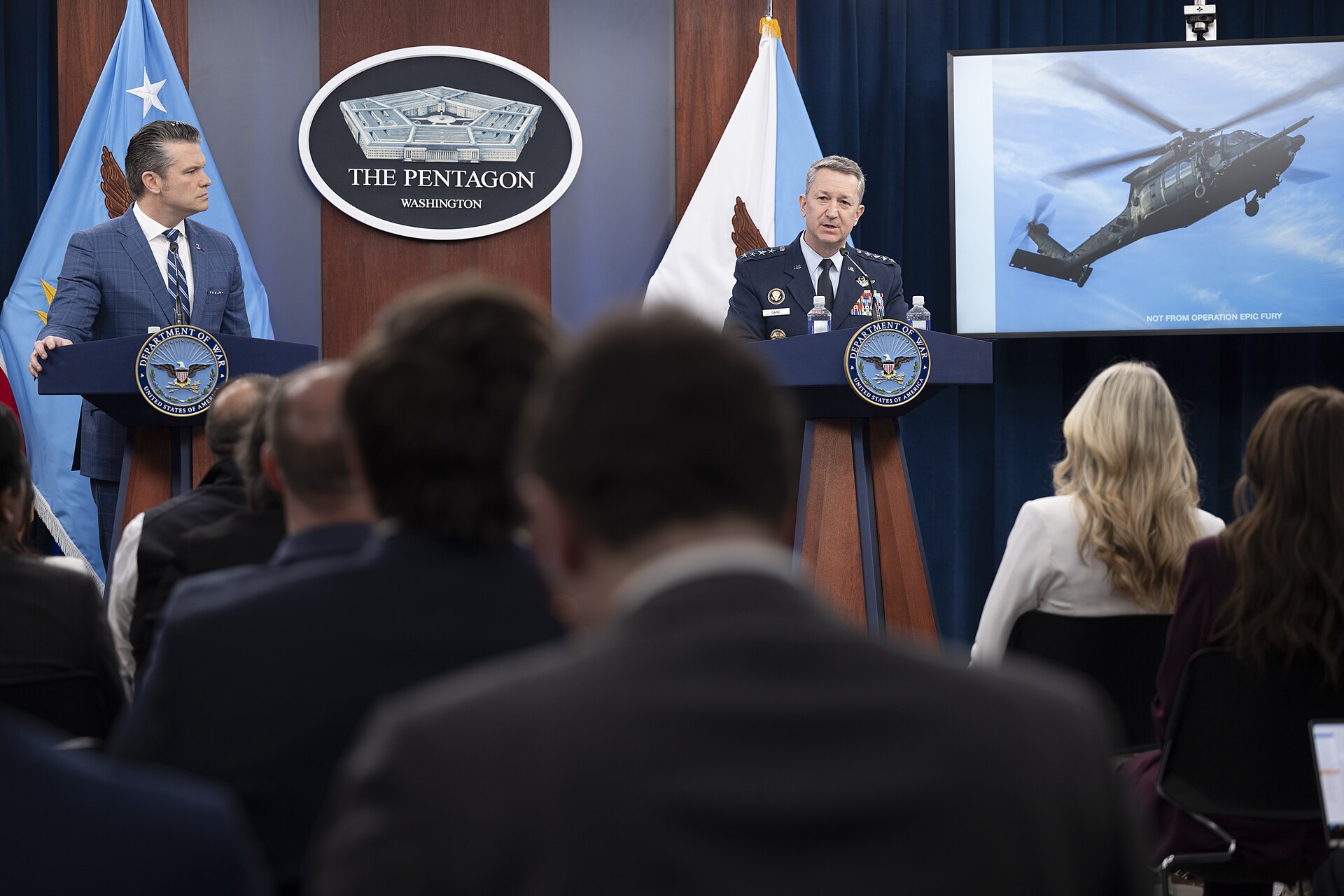

WASHINGTON — On April 16, Defense Secretary Pete Hegseth stood at the Pentagon podium and said out loud what classified intelligence assessments had been showing for days: Iran was digging out its surviving missile launchers and moving them to new firing positions. “You can move things around,” he told reporters, “but you can’t actually rebuild.” That sentence was meant as a taunt. It was also the first official US admission that the ceasefire Washington brokered had given Tehran exactly what it needed — time to turn immobilized weapons back into operational ones.
Five days later, Trump gave Iran another 3-5 days to negotiate or face resumed strikes. But the target set that Operation Epic Fury hit on Day 1 no longer exists in the same form. Launchers that were buried under collapsed tunnel entrances are being excavated. Fast attack boats that were never touched are cycling through underground coastal bases. And the Pentagon is now drafting an entirely different kind of strike plan — one built around “dynamic targeting” of dispersed, mobile assets near Hormuz, a mission profile that carries far higher risk of US casualties than anything in the opening campaign. The 3-5 day ultimatum is not a threat backed by the same military option. It is a bluff underwritten by a degraded one.
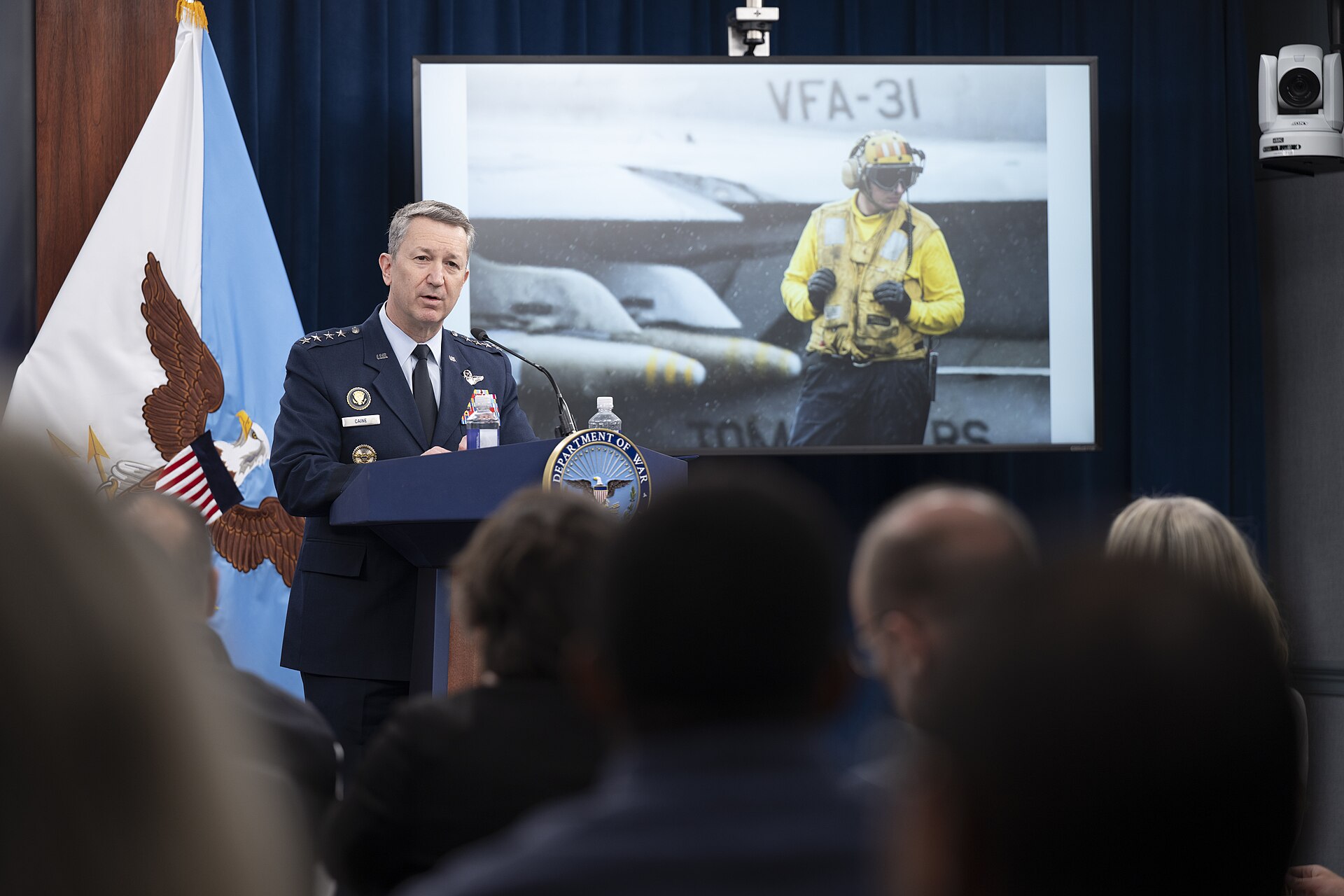
Table of Contents
- What Hegseth Actually Admitted — and What He Tried to Bury
- Khomein: How Iran Dug Out Its Launchers in Broad Daylight
- Why Did Epic Fury Leave 60% of Iran’s Fast Attack Fleet Untouched?
- The Battle Damage Gap: 85% Destroyed or 50% Surviving?
- What Does “Dynamic Targeting” Around Hormuz Actually Mean?
- Five Deadlines, Zero Concessions: Can Trump’s Ultimatum Pattern Hold?
- Who Authorized a Ceasefire While Watching Iran Reposition?
- The May 1 Wall: War Powers and the Escalation Calendar
- Frequently Asked Questions
What Hegseth Actually Admitted — and What He Tried to Bury
Hegseth’s April 16 briefing was calibrated to project dominance. “You are digging out your remaining launchers and missiles with no ability to replace them,” he said, speaking directly to Tehran. “You have no defense industry, no ability to replenish your offensive or defensive capabilities.” The intended message was irreversible degradation. The actual content was something else: a confirmation, from the US Defense Secretary’s own mouth, that Iran was actively recovering military hardware during a ceasefire the United States had agreed to.
CENTCOM Commander Admiral Brad Cooper reinforced the point at the same briefing, stating that Iranian forces had been “rearming, retooling and adjusting” throughout the ceasefire period. Neither man was asked the obvious follow-up: if the US had real-time intelligence showing Iranian military repositioning — and both men’s language confirmed they did — why was the ceasefire not conditioned on a freeze in military movements? Why was there no verification mechanism, no inspection regime, no satellite-monitored compliance baseline?
The answer may be that Washington calculated repositioning was acceptable because the weapons being moved couldn’t be replenished. Hegseth’s framing hinges on the word “rebuild” — Iran can shuffle surviving assets but cannot manufacture new ones. This is true for advanced ballistic missiles and certain drone platforms whose supply chains run through sanctioned components. But it misses the operational point entirely. A mobile ballistic missile launcher doesn’t need to be rebuilt. It needs a new GPS coordinate, fresh camouflage, and a crew that knows the terrain. Repositioning is reconstitution for mobile launchers. Hegseth admitted the action while denying the consequence.
Tasnim, the IRGC’s primary media outlet, was less coy. By April 21, it reported through “informed sources” that Iran had “conducted certain military redeployments and prepared new target lists accordingly” and was “fully prepared for the possibility of a new war.” A missile displayed in Enghelab Square during a Khatam al-Anbiya weapons parade bore coordinates for Qatar’s Ras Laffan LNG complex — a facility Iran had already struck on March 18. The signal was unambiguous: Tehran was advertising surviving inventory, not concealing it. The ceasefire had given Iran time to turn wreckage into a fresh order of battle.
The Middle East briefing 3,000+ readers start their day with.
One email. Every weekday morning. Free.
Khomein: How Iran Dug Out Its Launchers in Broad Daylight
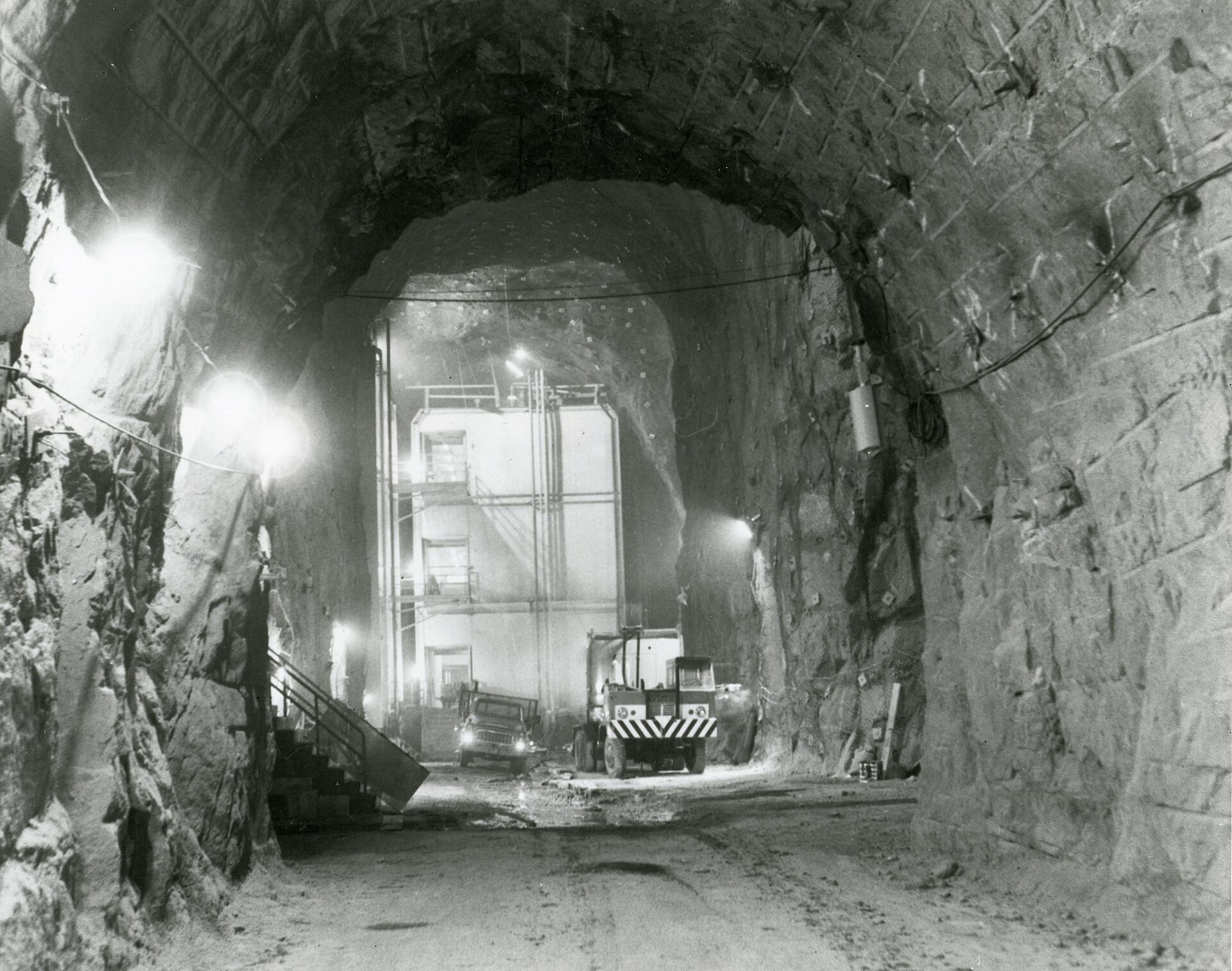
Commercial satellite imagery from April 10 — three days after the ceasefire took nominal effect — showed front-end loaders, excavators, and dump trucks working the collapsed tunnel entrances at the Khomein underground ballistic missile base in Markazi Province. The images, first reported by CNN and analyzed by Carnegie Endowment’s Karim Sadjadpour on air, revealed an industrial-scale recovery operation in progress. This was not covert. The equipment was commercial-grade, visible from space, and operating in daylight.
The Khomein imagery exposes a structural flaw in Epic Fury’s design. The US-Israeli strike strategy deliberately targeted tunnel entrances to collapse access points rather than attempting to destroy the launchers stored deep inside the mountain. The logic was sound on Day 1: deny access, and the weapons become irrelevant without the multi-month engineering effort needed to clear hundreds of meters of rubble. But that logic assumed the access denial would persist — that either the war would resume before Iran could excavate, or a ceasefire agreement would include provisions preventing it. Neither happened.
Iran’s underground missile infrastructure — the “missile cities” the IRGC has built over two decades — consists of vast tunnel networks bored hundreds of meters into mountain rock. The launchers inside were never destroyed; they were entombed. And entombment, unlike destruction, is reversible with enough heavy equipment and enough time. The ceasefire provided one and the IRGC provided the other. Hegseth’s briefing confirmed the outcome. Sadjadpour, reviewing the imagery for CNN, noted that the digging was “exactly what you’d expect if the assets inside survived intact” — because the strike designers always knew they would.
This raises a question that no US official has addressed: was the ceasefire offered with the understanding that Khomein and similar sites would be excavated? If so, it was a calculated concession — trading Iranian tactical reconstitution for the diplomatic opening at Islamabad. If not, it was a planning failure of the first order. Either answer changes the meaning of every Trump deadline that followed.
Why Did Epic Fury Leave 60% of Iran’s Fast Attack Fleet Untouched?
Epic Fury prioritized strategic threats — ballistic missiles, air defenses, drone factories — over Iran’s dispersed maritime asymmetric capability. The IRGC’s mosquito fleet sheltered in dozens of underground coastal harbors with concealed water-level access points that proved too distributed for a stand-off campaign to collapse systematically.
The Wall Street Journal reported on April 13 that approximately 60% of the IRGC’s fast attack boat fleet remained sheltered in underground coastal bases, stored inside natural rock formations along Iran’s southern coastline. Former British Navy officer Chris Long described the scale: “hundreds of small attack boats in underground facilities along Iran’s rocky coastline, complicating efforts to target them.” These are the vessels that constitute the primary mine-laying and swarm-attack threat to Hormuz navigation — and Epic Fury barely touched them.
The explanation is partly geographic, partly doctrinal. The IRGC’s “mosquito fleet” — fast inshore attack craft armed with anti-ship missiles, mines, and in some cases torpedoes — is dispersed across dozens of small underground harbors carved into coastal rock. Unlike a ballistic missile base with identifiable tunnel entrances, these facilities have multiple concealed water-level access points that are difficult to identify from satellite imagery and nearly impossible to collapse without sustained precision strikes against each opening. Epic Fury prioritized the strategic threat: ballistic missiles, air defenses, drone production. The maritime asymmetric threat was deferred.
That deferral now defines the military problem. The IRGC proved on April 22 — hours after Trump announced the ceasefire extension — that its naval forces remained fully operational. IRGC units seized two MSC-linked container vessels, the Francesca and the Epaminondas, in the Strait of Hormuz. UKMTO had told the Epaminondas it had transit permission. The seizures demonstrated something more than piracy: they showed that Iran’s maritime interdiction capability was intact, organized, and answering to IRGC command rather than civilian government direction. Hegseth called the IRGC naval forces “pirates.” Pirates don’t coordinate vessel seizures across the width of a strategic strait within hours of a presidential announcement.
The fast attack fleet’s survival compounds a problem Washington created for itself eight months earlier. In September 2025, the US Navy decommissioned its four Avenger-class mine countermeasures vessels from their Bahrain homeport. These were the only dedicated mine-hunting ships in the Fifth Fleet’s area of operations. As Hegseth himself acknowledged when pressed on mine clearance timelines, the assets needed to address the IRGC’s primary Hormuz weapon no longer exist in theater. The mosquito fleet survived Epic Fury. The ships designed to counter it didn’t survive a Pentagon budget decision.
The Battle Damage Gap: 85% Destroyed or 50% Surviving?
The White House claimed Operation Epic Fury destroyed “85% or more” of Iran’s military capability. US intelligence assessments shared with CNN in early April told a different story: approximately 50% of Iran’s ballistic missile launchers survived. By April 19, a more granular assessment put the numbers at 40% of pre-war long-range attack-drone inventory retained and 60% of ballistic and cruise missile launcher capacity intact. The gap between the podium and the classified briefing is not a rounding error. It is the difference between a disarmed adversary and one that retains meaningful strike capacity.
Both numbers can technically be true if you define “capability” broadly enough. Epic Fury destroyed the bulk of Iran’s air defense network, most of its known drone production facilities, and a substantial portion of its fixed missile infrastructure. If you count radar installations, command nodes, and production capacity alongside launchers, you can approach 85% of total military “capability.” But launchers are what kill people. A country with no air defenses and 60% of its launcher fleet is not 85% disarmed. It is a country that can’t defend itself but can still attack — which is arguably more dangerous, not less, because the remaining military option is purely offensive.
DefenseScoop captured this tension as early as April 8, noting that “Pentagon brass tout destruction of Iran’s drone arsenal, but questions linger about what’s left.” The questions have since been answered by classified assessments and by Iran’s own behavior. Maj. Gen. Ali Abdollahi, commander of Khatam al-Anbiya Central Headquarters, responded to Trump’s April 21 ceasefire extension by declaring that Iran’s armed forces had their “fingers on the trigger” and were “prepared and determined to monitor the behaviour and movement of the enemies in the region.” That is not the language of a military at 15% capacity. It is the language of a force that knows what it still has.
| Asset Category | White House Claim | US Intelligence Assessment | Source |
|---|---|---|---|
| Overall military capability | 85%+ destroyed | Not assessed as single figure | White House / CNN |
| Ballistic missile launchers | Not specified | ~50% survived | CNN, April 2-3, 2026 |
| Ballistic/cruise launcher capacity | Not specified | 60% retained | US intel, April 19, 2026 |
| Long-range attack drones | Not specified | 40% inventory retained | US intel, April 19, 2026 |
| IRGC fast attack boats | Not specified | 60% in underground bases | WSJ, April 13, 2026 |
| HEU stockpile (60% enrichment) | N/A | 440.9 kg | IAEA, June 2025 (last access) |
What Does “Dynamic Targeting” Around Hormuz Actually Mean?
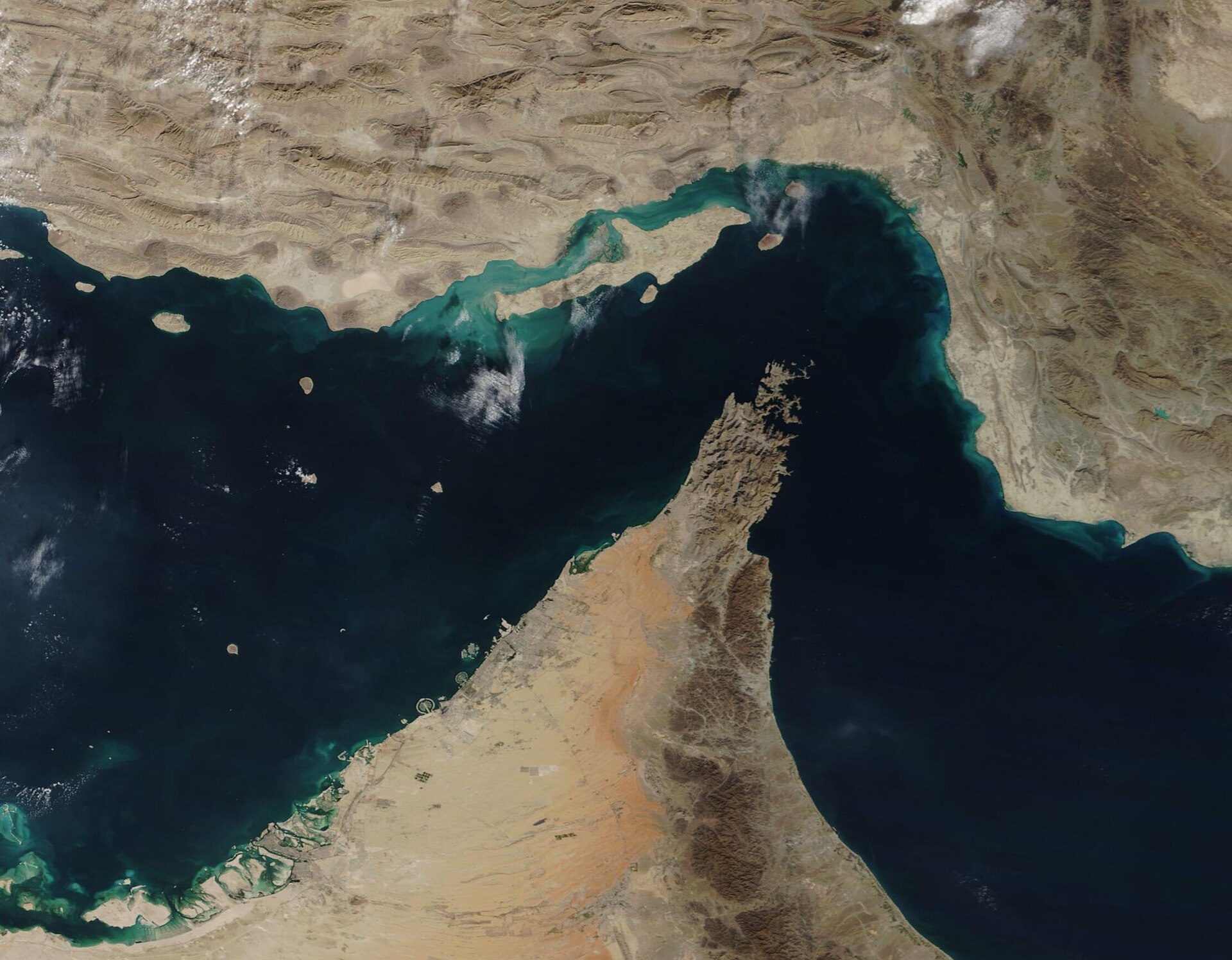
Dynamic targeting around Hormuz means close-in strikes against small, mobile, dispersed assets — fast attack boats, coastal missile batteries, mine-laying craft, and mobile launchers — in confined 21-nautical-mile waters where Iran has spent decades building asymmetric defenses. It is the opposite of the stand-off campaign that characterized Epic Fury.
CNN reported on April 23 that US military planners were developing contingency strike plans centered on “dynamic targeting” around the Strait of Hormuz. The targets: fast attack boats, minelaying vessels, coastal defense missile batteries, mobile launchers, and drones. Additional options included individual targeting of named military leaders, with IRGC commander Ahmad Vahidi specifically identified as a strike option. This is not a resumption of Epic Fury. This is an entirely different war.
Epic Fury was a stand-off campaign. B-2 bombers, cruise missiles, and long-range precision munitions struck fixed targets from beyond Iranian defensive range. Pilot risk was minimized by distance. The targets were large, static, and identifiable months in advance — air defense radars, known missile bases, drone factories. Dynamic targeting around Hormuz inverts every one of those characteristics. The targets are small, mobile, dispersed, and often underground until the moment they emerge to fire or lay mines. Engaging them requires close-in naval and air operations in confined waters where the IRGC has spent decades preparing asymmetric defenses.
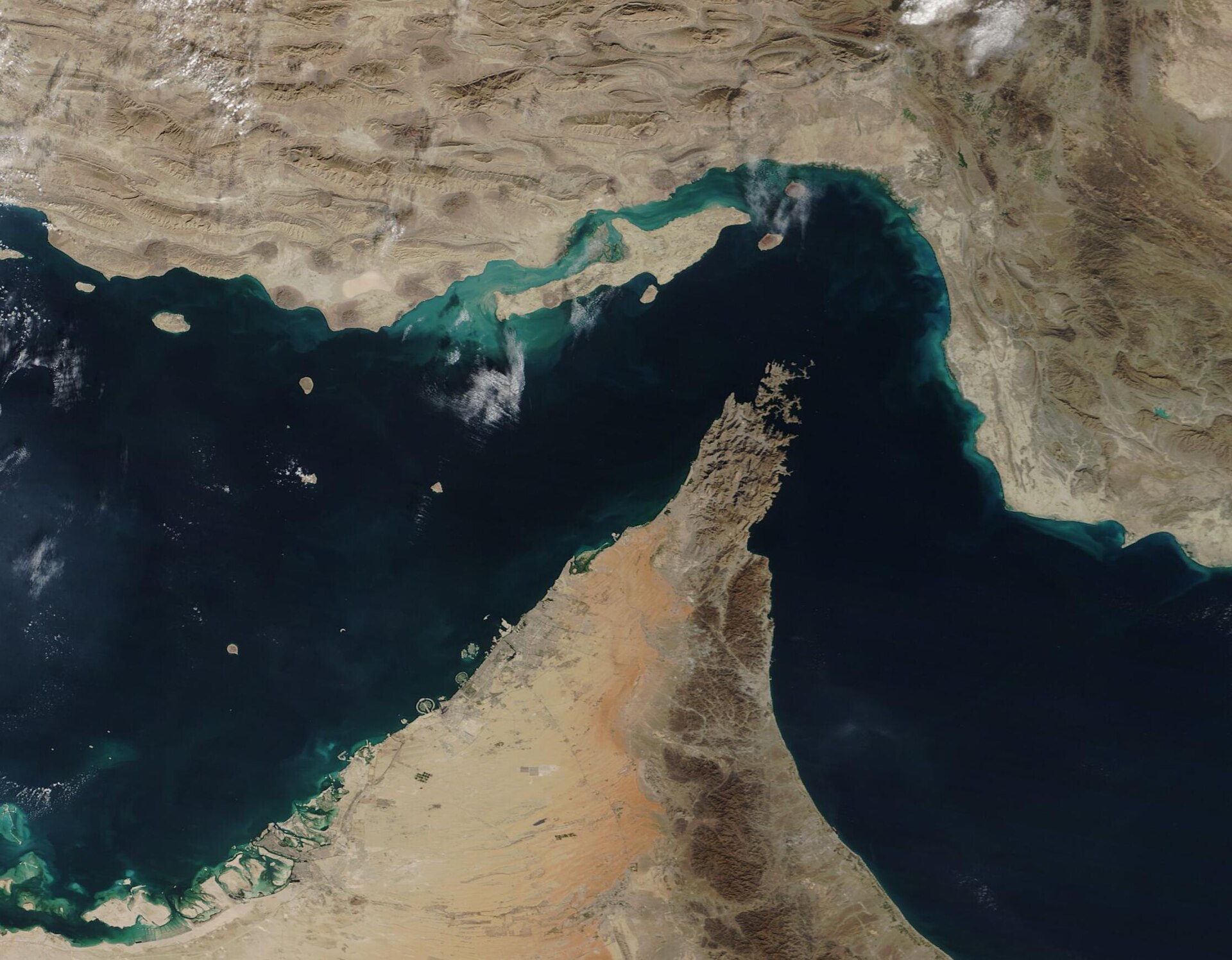
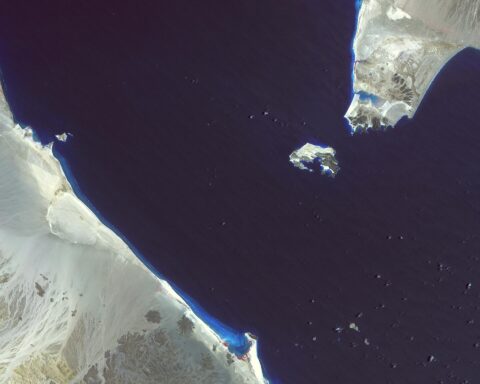
The Strait of Hormuz is 21 nautical miles wide at its narrowest point, with shipping lanes running through a channel less than 6 miles across. Three US carrier strike groups sit in the broader Middle East theater, but none can enter the Persian Gulf without transiting that channel under the guns of the coastal batteries and fast attack craft that are the proposed targets. The 19 US warships currently in the Middle East, with another 7 in the Indian Ocean, provide substantial firepower — but firepower in confined waters against swarm tactics is a fundamentally different equation than stand-off strikes against fixed sites.
The inclusion of Vahidi as a named individual target adds a decapitation dimension that was absent from Phase 1. Epic Fury was industrial — destroying capability, not killing commanders. Targeting Vahidi personally crosses into assassination of a senior government official (he holds the IRGC commander role with cabinet-level authority), which carries escalation risks that stand-off strikes against empty buildings do not. And the practical problem persists: Vahidi’s removal does not remove the fast attack fleet from its underground harbors. The IRGC’s maritime asymmetric capability is institutional, not personal. Killing Vahidi may satisfy a political need in Washington. It does not clear a single mine from Hormuz.
Five Deadlines, Zero Concessions: Can Trump’s Ultimatum Pattern Hold?
The pattern is structurally compromised. Five deadlines between March 21 and April 21 expired without Iranian concessions and were each extended. The sixth ultimatum demands engagement rather than specific behavioral change — a diluted threshold that Iran, having watched five consecutive deadlines dissolve, has calculated carries no military consequences it cannot absorb.
Between March 21 and April 21, Trump issued five separate deadlines to Iran — each framed as final, each expired without Iranian concessions, each extended. CNN’s April 22 analysis identified this directly as a pattern that undermines the credibility of the latest 3-5 day ultimatum, and the pattern is worth examining in detail because it reveals a structural constraint on US policy, not merely a negotiating style.
Trump’s April 21 Truth Social post acknowledged the contradiction in real time. He wrote that Iran “has Violated the Cease Fire numerous times” while simultaneously extending it, citing Iran’s “seriously fractured” government as justification for patience. The 3-5 day window was framed not as a deadline for compliance but as a deadline for engagement — Iran must enter negotiations or face resumed strikes. This is a softer demand than any of the five previous deadlines, each of which required specific behavioral changes (Hormuz reopening, nuclear access, hostage releases). The demand has been diluted from actions to conversations.
Iran’s response to the extension was immediate and physical. Within hours of Trump’s announcement, IRGC naval forces had seized two MSC-linked vessels and Khatam al-Anbiya headquarters was staging a weapons parade in Enghelab Square displaying missiles with coordinates of previously struck targets. None of this is the behavior of a government that believes the 3-5 day window carries consequences. The IRGC has watched five deadlines dissolve and concluded, with available evidence, that the sixth will follow the same trajectory.
Daniel Byman of CSIS and Georgetown offered perhaps the most precise framing: the ceasefire may be “the settlement itself” rather than a prelude to peace, with “underlying drivers” that “remain not only intact but, in some cases, intensified.” This matches the “hudna” analysis that INSS analyst Moshe Sabti applied after the Vance-Ghalibaf Islamabad meeting — a tactical Islamic ceasefire understood by both parties as operational breathing space, not peace. If Byman is right, Trump’s deadlines are not failed ultimatums. They are the sound of a permanent low-grade confrontation establishing its rhythm. And the IRGC, having used the breathing space to reconstitute, is comfortable with that rhythm in a way the US political calendar may not allow.
Who Authorized a Ceasefire While Watching Iran Reposition?
No US official has answered this publicly. CENTCOM had real-time imagery of Iranian excavation operations at Khomein within three days of the ceasefire. The decision to hold the ceasefire anyway points to Steve Witkoff and the Islamabad diplomatic channel — but whether the trade-off between diplomatic access and tactical reconstitution was ever formally weighed remains undisclosed.
This is the question no reporting has answered. The United States had real-time satellite coverage of Iranian military movements. Hegseth and Cooper both confirmed awareness of repositioning. The intelligence community was producing classified assessments of surviving launcher capacity within days of the ceasefire taking effect. Someone in the US decision-making chain saw Iran digging out its launchers and decided the ceasefire should hold anyway. Who?
The reporting trail leads in two directions. The Islamabad diplomatic channel, brokered primarily through Pakistan with Witkoff as the US point man, required a ceasefire to function. Iran would not negotiate under active bombardment — a position it maintained consistently. Pakistan’s role as the sole viable intermediary gave Islamabad the standing to demand a halt in strikes as a precondition for hosting talks. Witkoff, who had been in direct text contact with Araghchi, appears to have accepted this precondition. But accepting a ceasefire and accepting military repositioning during a ceasefire are two different decisions, and no source has explained who weighed the trade-off between diplomatic access and tactical reconstitution.
The second trail leads to the intelligence community’s own assessment of what repositioning meant. If the dominant view in early April was that Iran’s surviving assets were degraded beyond operational relevance — Hegseth’s “can move but can’t rebuild” line — then permitting repositioning may have been judged as cost-free. Let them shuffle the deck chairs; the ship is still sinking. But the April 19 intelligence assessment showing 60% launcher capacity and 40% drone inventory intact suggests the ship was not sinking. It was listing, taking on water, but still armed. And by April 22, it was seizing container ships in the Strait.
The Kosovo precedent is instructive. In October 1998, NATO brokered a ceasefire between Yugoslav forces and the Kosovo Liberation Army. Within two months, Serbian forces had moved extra troops and tanks into Kosovo in breach of compliance terms. OSCE monitors withdrew when facing what they called “unacceptable risk.” The ceasefire had functioned as cover for military repositioning by the non-compliant party — and the international monitors, despite real-time awareness, lacked the mandate or the political will to call the breach. The Iran ceasefire has no monitors at all. There is no OSCE equivalent, no verification protocol, no compliance mechanism beyond satellite imagery that both sides know the other is watching.
The Gulf War offers the other historical parallel. In 1991, the coalition halted its ground offensive before pursuing the retreating Republican Guard into central Iraq. The Guard escaped, regrouped, and was subsequently used by Saddam Hussein to crush the Shia uprising that the war itself had encouraged. The decision to halt was deliberate — Bush 41 feared the political and military costs of marching on Baghdad. The consequence was that the surviving military instrument was turned against the very population the war was supposed to liberate. Iran’s surviving launcher fleet, recovered during a ceasefire and pointed at Gulf targets, is not the Republican Guard. But the structural question is identical: what happens when you stop a war before finishing the military instrument that started it?
The May 1 Wall: War Powers and the Escalation Calendar
Trump notified Congress of military operations against Iran on March 2, 2026. Under the War Powers Act, the 60-day clock expires on May 1. Four Senate attempts to override the president’s authority and force withdrawal have failed, the most recent a 52-47 vote on April 15. But the margins are tightening and the rhetoric from Trump’s own party is shifting. Senator John Curtis of Utah, a Republican, stated plainly: “I will not support ongoing military action beyond a 60-day window without congressional approval.” Congressman Don Bacon of Nebraska, also Republican, was blunter: “By law, we’ve got to either approve continued operations or stop.”
The legal reality is less clean than the political statements suggest. Legal scholar Maryam Jamshidi has noted that “there is no clear legal avenue for Congress to successfully force the president to abide by this termination requirement.” The War Powers Act has never been enforced through the courts, and every president since Nixon has treated it as advisory rather than binding. Trump could, in theory, continue military operations past May 1 on the same executive authority he has used since March 2. But doing so would convert the Iran campaign from an emergency action into an open-ended war without congressional endorsement — a political vulnerability that compounds every week.
The calendar creates a decision matrix with no good options. If Trump seeks congressional authorization, he signals to Iran that the war is permanent and to his own base that the quick, decisive action he promised has become an indefinite commitment. If he continues without authorization, he hands Democrats and war-skeptical Republicans a constitutional violation argument heading into midterm positioning. If he withdraws or winds down to comply, he validates Iran’s strategy of waiting out deadlines. And if he escalates to the dynamic targeting options CNN reported — close-in maritime strikes around Hormuz — he does so against a reconstituted target set with higher casualty risk, at the exact moment the legal basis for the operation is at its weakest.
Iran’s leadership, fractured as it is, appears to understand this calendar. Esfandyar Batmanghelidj, an economist tracking Iran’s war economy, told CNN: “Iran had already faced the maximum pressure campaign in Trump’s first term, and it was forced to cut its oil production by half… If the blockade is in place for months, it will definitely impact the economic outlook for Iran, but the Iranian expectation is that the US itself cannot tolerate that pressure for that long.” One million Iranian jobs have been lost and Iran’s Central Bank projects 180% inflation with a twelve-year economic recovery timeline. But Iran’s revised negotiating paper reached Washington through Oman, not through concessions — suggesting Tehran is betting it can outlast the political constraints that bind Washington more tightly than sanctions bind Tehran.
The Iran that exists on May 2 will not be the Iran of March 2. It will be a country with a reconstituted mobile launcher force, an intact fast attack fleet, a maritime interdiction capability demonstrated by the April 22 vessel seizures, and a leadership structure that has watched six American deadlines dissolve without consequence.
It will also be a country with 440.9 kilograms of uranium enriched to 60% — 25 days from weapons-grade via an IR-6 cascade — and no IAEA inspectors on the ground since February 28. Hegseth declared at his April 16 briefing that “the War Department will ensure that Iran never has a nuclear weapon.” The ceasefire he defended in the same breath made that guarantee harder to keep.
“You can move things around, but you can’t actually rebuild.” — Defense Secretary Pete Hegseth, April 16, 2026. Iran heard the first half of that sentence. Washington should have heard it too.
The question facing Washington is not whether Iran used the ceasefire as an operational maneuver. Hegseth answered that on April 16. The question is whether the United States, having acknowledged the maneuver and extended the ceasefire anyway, has a credible path back to military dominance — or whether the window for that dominance closed somewhere between the first collapsed tunnel entrance and the first excavator that showed up to clear it. Saudi Arabia is already building as though the answer is the latter. The IRGC, parading missiles in Enghelab Square with target coordinates written on the side, appears to agree.
Frequently Asked Questions
How many US military personnel are currently deployed in the Middle East theater?
The Soufan Center estimated 20,000 US troops in theater as of late April 2026, organized around three carrier strike groups — the largest US naval concentration in the region since 2003. The blockade of Iranian ports, effective since April 13, requires continuous surface and air patrol rotations that are straining crew endurance across the fleet. Ground infrastructure has already taken losses: NSA Bahrain’s SATCOM terminals were destroyed on February 28, and Prince Sultan Air Base lost an E-3G Sentry airborne warning aircraft — one of 16 in the US inventory, valued at $500 million — to Iranian missile strikes earlier in the campaign. Operational bases span Qatar (Al Udeid), Saudi Arabia (Prince Sultan), Bahrain (Fifth Fleet HQ), and smaller facilities in the UAE, Kuwait, and Oman. All six host nations have absorbed direct Iranian missile or drone strikes since February 28 — yet none has generated a binding collective GCC military response, reflecting the alliance’s structural unanimity problem that Iran appeared to calculate on from the outset.
What is Iran’s current nuclear breakout timeline?
Iran holds 440.9 kilograms of HEU enriched to 60%, per the last IAEA assessment with inspector access in June 2025. IAEA inspectors have been barred from Iranian nuclear facilities since February 28, 2026 — meaning there is no independent verification of what has happened in the 57 days since. From 60% enrichment, an IR-6 centrifuge cascade can produce weapons-grade material (90%+) in approximately 25 days per device’s worth.
The snap-back sanctions mechanism that Europe triggered in August 2025 expired in October 2025, and the E3 reimposition of sanctions in September-October 2025 has not restored inspection access. Hegseth’s pledge that “the War Department will ensure that Iran never has a nuclear weapon” was made without reference to any verification regime that could confirm whether that line has already been crossed.
What happened to the Islamabad diplomatic channel after Trump cancelled his trip?
Trump cancelled the planned Islamabad visit in late April, collapsing the only structured US-Iran diplomatic channel with six days until the War Powers deadline. Iran’s revised negotiating paper subsequently reached Washington through Oman rather than Pakistan — a shift in back-channel architecture that effectively sidelined the Islamabad framework Pakistan had spent weeks building. The Vance-Ghalibaf face-to-face in Islamabad, which was the first direct US-Iran interaction since 1979, has not been followed by any confirmed second meeting. Meanwhile, Mojtaba Khamenei has been absent from any public appearance since before the ceasefire, with effective power distributed through the IRGC command structure rather than the civilian government. The question of who on Iran’s side has authority to make a deal — the authorization ceiling problem — remains unanswered.
Could Iran close the Strait of Hormuz completely?
Iran has not closed Hormuz in a legal or total sense, but it has reduced transit to near-zero through a combination of IRGC naval patrols, mine threats, administrative permit requirements, and vessel seizures. On April 19, only 3 commercial vessels transited the Strait — compared to a pre-war average of 20-21 per day. The IRGC fast attack fleet, 60% of which survived in underground coastal bases, represents the operational mechanism for continued interdiction. Saudi Arabia has lobbied Washington to lift the blockade because the math of Hormuz closure hurts Gulf exporters more than Iran — Saudi production crashed from 10.4 million bpd in February to 7.25 million bpd in March, a 30% drop driven partly by the Strait’s effective closure. Complete physical closure via large-scale mining would require an estimated 51 days to clear based on 1991 Kuwait benchmarks, complicated by the absence of dedicated US mine countermeasures vessels in theater.
What is the “hudna” concept and why does it matter here?
Hudna is an Arabic term for a tactical ceasefire in Islamic jurisprudence — distinct from sulh (permanent peace), it is understood as a temporary pause in hostilities that preserves each party’s right to resume fighting. INSS analyst Moshe Sabti applied the term to Iran’s ceasefire behavior after the Vance-Ghalibaf Islamabad meeting, arguing that Tehran’s negotiating posture was consistent with hudna rather than genuine peace-seeking. The concept matters because it reframes the Hegseth admission: if Iran understood the ceasefire as hudna from the outset, military repositioning during the pause is not a violation but the entire purpose.
The IRGC has historical form. The 1988 ceasefire with Iraq was followed by rapid military reorganization and the execution of thousands of political prisoners in what Khomeini framed as “drinking the chalice of poison” — accepted instrumentally, never as peace. Byman’s observation that the current ceasefire may be “the settlement itself” echoes the hudna framing: not a prelude to resolution, but a managed state of confrontation both sides find temporarily preferable to open war.