
RIYADH — Saudi Arabia announced this month that government-wide local procurement has crossed 51 per cent, up from 28 per cent when Vision 2030 launched in 2018 — a number that Industry Minister Bandar Alkhorayef presented as proof the Kingdom’s industrial base is delivering. But the figure that matters for the war Saudi Arabia is actually fighting sits at 24.89 per cent: the defense-specific localization rate measured by the General Authority for Military Industries, exactly half the 50 per cent target GAMI is supposed to hit by the end of this decade, announced at its first Annual Military Industries Sector Meeting in November 2025.
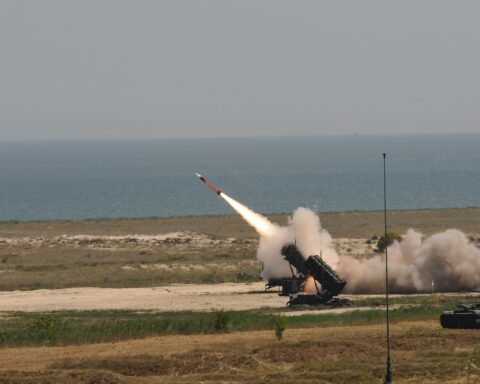
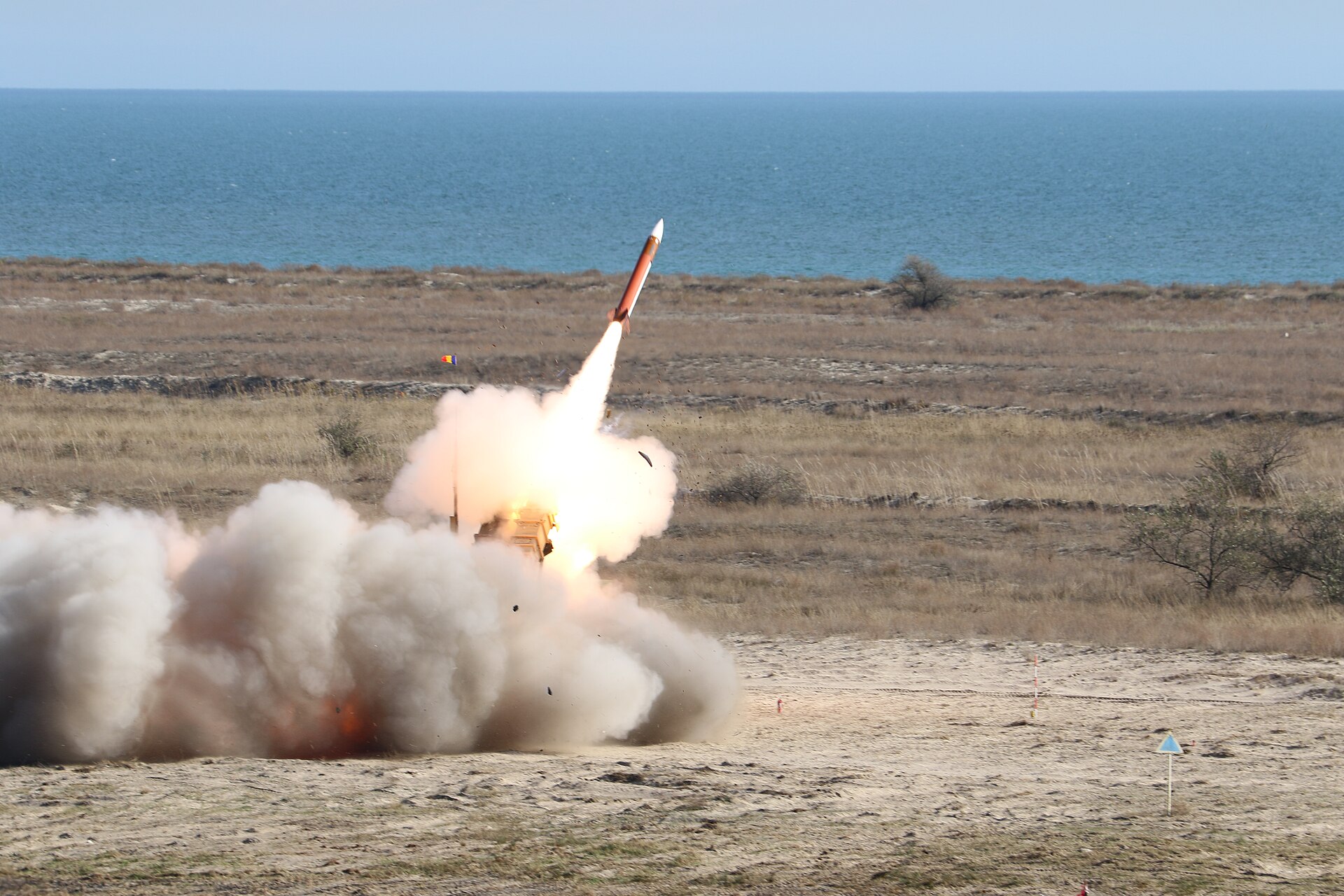
The gap between the two numbers — 51 per cent across all government purchasing, 24.89 per cent in the sector where procurement failures get people killed — is not an accounting curiosity. It is the distance between a procurement reform programme and a sovereign defense industry, and the Iran-Saudi war has made that distance measurable in interceptor rounds. The broader picture of Vision 2030’s ten-year scorecard — 93% of targets met but the government budget still drawing 65–70% from hydrocarbons — is examined in Vision 2030 at Ten: 93% of Targets Met, but the Treasury Still Runs on Oil. In 38 days of combat, Saudi air defenses burned through approximately 2,400 PAC-3 MSE missiles — 86 per cent of the Kingdom’s pre-war stockpile of roughly 2,800 — at $4–5 million per shot, destroying 894 threats including 86 ballistic missiles and 799 drones according to Saudi Ministry of Defense figures published through April 7. Saudi Arabia manufactures THAAD launcher components, radar power units, and missile canisters. It does not manufacture a single interceptor missile.
Table of Contents
The Two Numbers
The 51 per cent figure, tracked by Saudi Arabia’s Local Content and Government Procurement Authority, covers everything the state buys — office furniture, construction materials, IT services, catering contracts for government buildings. Defence procurement sits inside that number but is measured separately by GAMI, which was established in 2017 when approximately 98 per cent of Saudi military purchases came from international suppliers. The trajectory since then — 4 per cent in 2018, 19.35 per cent by end of 2023, 24.89 per cent by end of 2024 — represents genuine progress from a baseline of near-total dependency, a growth rate of roughly five percentage points per year that would, if sustained linearly, land somewhere close to 50 per cent around 2029.
But Aviation Week, reporting on the November 2025 GAMI meeting, flagged a problem with the number itself: GAMI has not publicly clarified whether 24.89 per cent represents actual manufacturing content — Saudi workers machining Saudi-sourced steel into military-grade components — or purchases from Saudi-registered companies assembling imported parts. The distinction matters enormously. A company incorporated in Riyadh that bolts together sub-assemblies shipped from Ohio counts as local procurement under some methodologies but adds almost nothing to sovereign production capacity when the supply chain from Ohio is cut off, which is precisely what a Hormuz closure or a US production bottleneck does.
The number of GAMI-licensed defense companies has grown from five in 2019 to approximately 350 by late 2024, and the defense sector workforce has expanded from 25,000 to 34,000, with 64 per cent Saudi nationals, according to GAMI’s own reporting. The government has poured $1.4 billion in direct incentives into the sector between 2021 and 2022 alone, including zero VAT on locally manufactured military goods and a requirement that the armed forces pay a premium for domestically produced equipment — an acknowledgment that the local market is not yet naturally competitive, according to GAMI. Alkhorayef’s target for government-wide procurement is 70 per cent by 2030; GAMI’s defense target, at the current rate of progress, will require roughly doubling the localization percentage in five years.
What 24.89 Per Cent Actually Buys
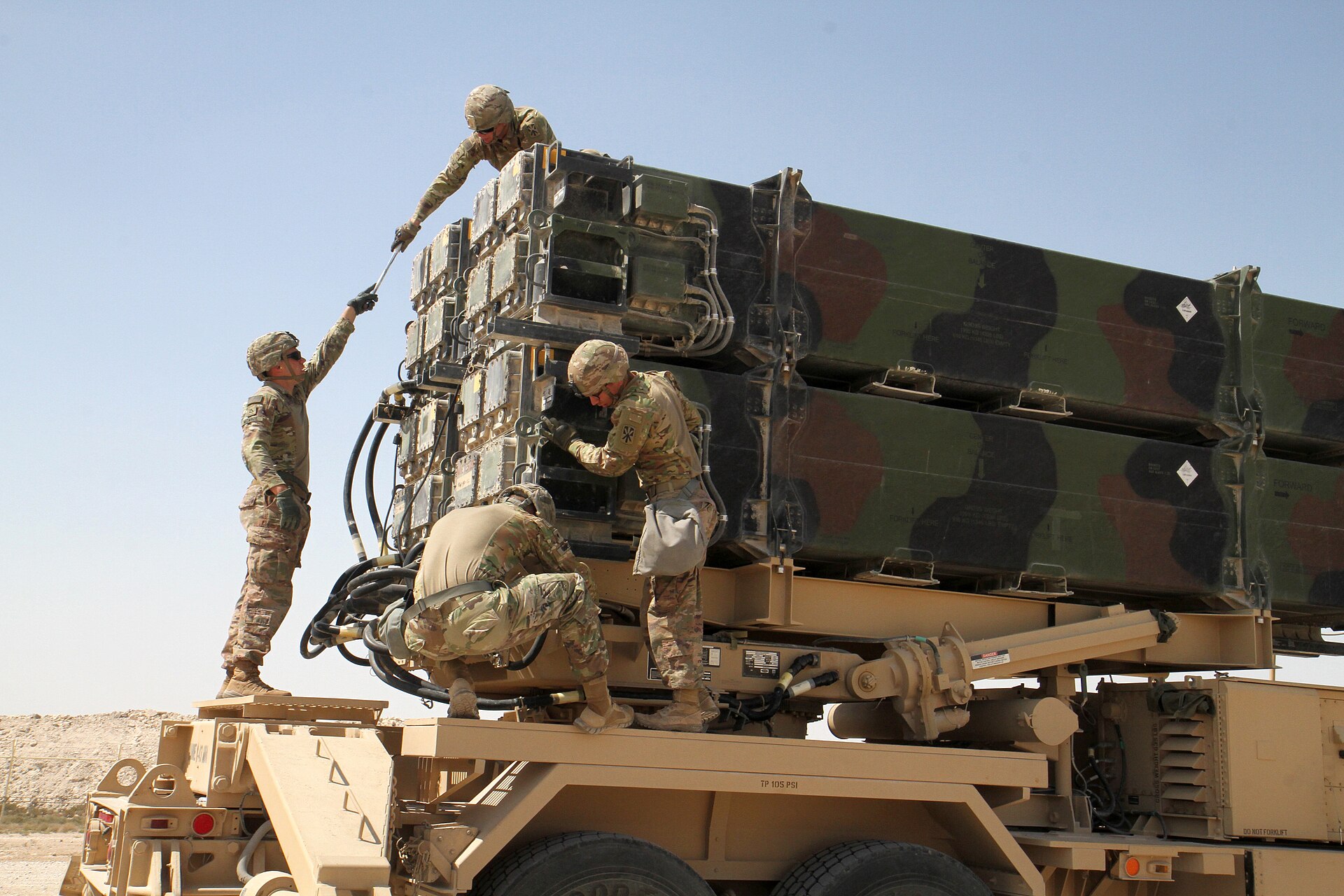
The localization that does exist is concentrated in components, maintenance, and platforms — not in the munitions that run out first in a shooting war. Zahid Industries, based in Jeddah, is the sole global supplier of Power Prime Units for Raytheon’s AN/TPY-2 radar, the sensor backbone of the THAAD system, and has been awarded a contract for missile interceptor canisters. AIC Steel produces domestically manufactured THAAD launcher components. In February 2026, at World Defense Show in Riyadh, Lockheed Martin signed a memorandum of understanding with Middle East Propulsion Company to expand locally produced THAAD interceptor canisters in Saudi Arabia — the containers that hold and transport the missiles, not the missiles themselves.
The Middle East briefing 3,000+ readers start their day with.
One email. Every weekday morning. Free.
Abby Lilly, Lockheed Martin’s chief supply chain officer, told Aviation Week in November 2024 that “the quality that we see coming out of Saudi is right there with some of the domestic supply chains that we have in the United States, and even better quality.” That assessment covers the components Saudi Arabia is producing. The problem is what it is not producing. A THAAD canister without a THAAD interceptor inside it is a sophisticated piece of empty infrastructure — and Saudi Arabia’s ability to build the container while remaining entirely dependent on Lockheed Martin for the $12 million missile that goes inside it is a reasonable summary of where the 24.89 per cent sits in the defence stack.
That dependency on American supply chains runs deeper than procurement: it extends to the legal authority that underpins US forces’ continued presence in the theater. The War Powers Resolution’s 60-day clock expires May 1 without congressional authorization, a deadline whose strategic implications for Saudi Arabia’s defense posture are examined in America’s Legal Authority to Defend Saudi Arabia Expires Thursday.
The Saudi Ministry of National Guard offers a different data point: localization of ground systems maintenance went from 1.6 per cent to 100 per cent over four years, according to Arab News reporting in January 2025. Maintenance, repair, and overhaul is the easiest layer to localize — it requires trained technicians and spare parts inventories, not design authority or propulsion technology — and its success demonstrates both the speed at which Saudi Arabia can move when the task is achievable and the structural difference between servicing equipment and manufacturing the equipment that needs servicing.
The PAC-3 Arithmetic
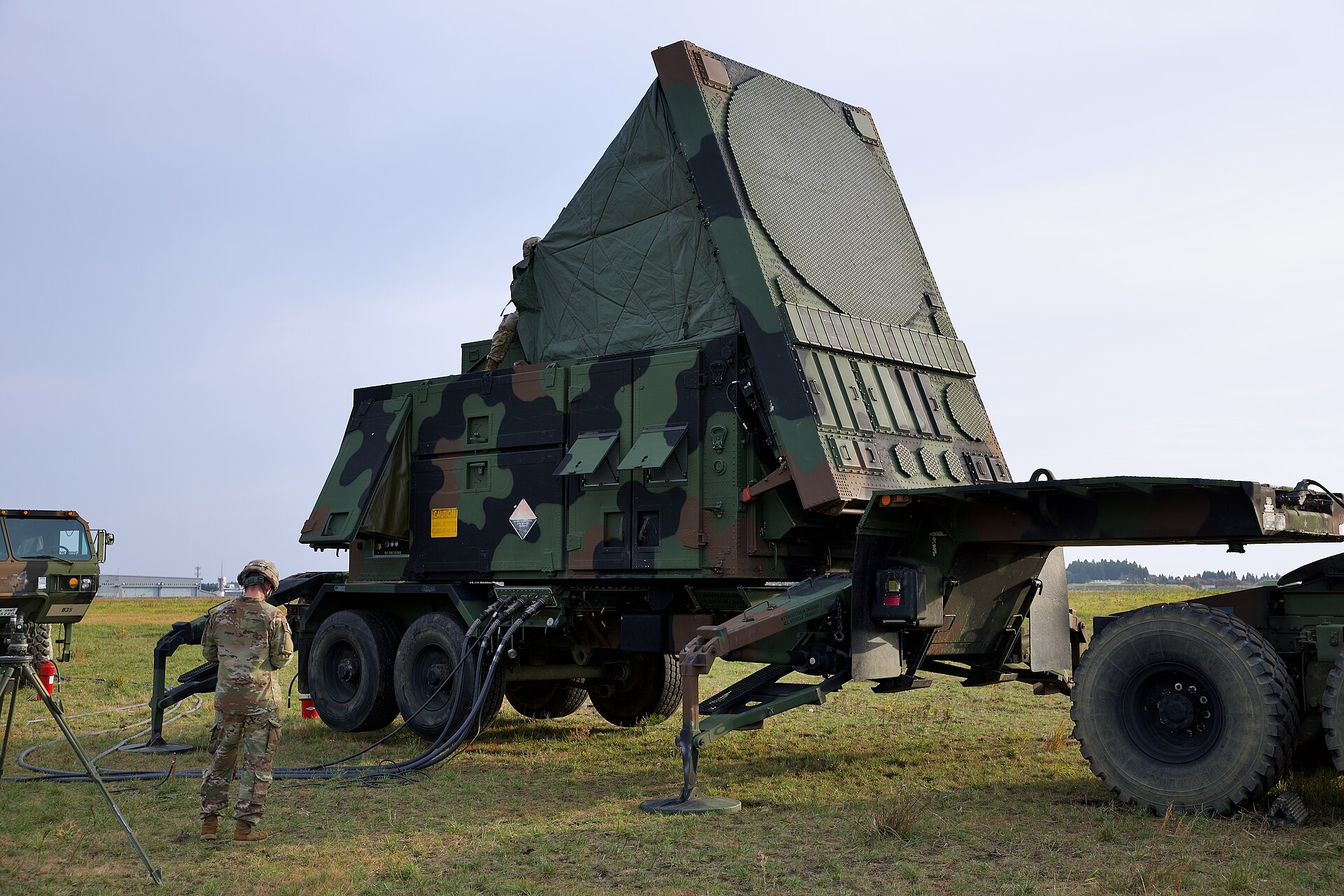
On January 30, 2026, the US Defense Security Cooperation Agency approved a $9 billion sale of 730 PAC-3 MSE rounds to Saudi Arabia — the largest single missile defense transaction in the Kingdom’s history, ordered five weeks before the first Iranian strikes. Raytheon’s global annual production of PAC-3 MSE interceptors runs at approximately 620 rounds per year, a figure the company has been working to increase but which represents hard manufacturing constraints in solid rocket motor production, seeker assembly, and testing. The $9 billion order, in other words, represents more than a full year of the entire world’s PAC-3 MSE production line, and the first deliveries are not expected for at least 18 months.
In 38 days of war, Saudi Arabia consumed roughly 2,400 of its approximately 2,800 pre-war interceptors — the equivalent of nearly four years’ worth of global PAC-3 production — leaving an estimated 400 rounds. The Iranian strategy of drone and ballistic missile saturation, which forced Saudi batteries to engage 894 threats between March 3 and April 7, is designed around precisely this mathematics: the attacker produces munitions at a fraction of the cost and time required to produce the interceptors that defeat them, and the defender’s stockpile becomes a countdown clock that no amount of procurement reform can reset without sovereign manufacturing capacity for the missiles themselves.
| Metric | Figure | Source |
|---|---|---|
| Pre-war stockpile (est.) | ~2,800 rounds | Saudi MOD / HoS tracking |
| Rounds consumed (38 days) | ~2,400 | Saudi MOD intercept data |
| Remaining stockpile (est.) | ~400 rounds | Saudi MOD / HoS tracking |
| Stockpile draw-down | 86% | Calculated |
| Cost per PAC-3 MSE round | $4–5 million | AGBI / SIPRI |
| Approved resupply (DSCA) | 730 rounds ($9 billion) | DSCA, January 30, 2026 |
| Raytheon global annual output | ~620 rounds/year | Aviation Week |
| Earliest delivery | 18+ months | Industry estimate |
Leonardo Mazzucco of the Arab Gulf States Institute in Washington told AGBI in April 2026 that Gulf defense spending is expected to rise by up to 20 per cent over the next three years, a projection he framed as reflecting “a broader structural uplift in baseline spending as threat perceptions reset.” Saudi Arabia’s 2025 defense expenditure hit $83.2 billion — 6.5 per cent of GDP, the eighth-largest military budget globally and a 3.5 per cent year-on-year increase, according to SIPRI’s April 2026 data release. The 2026 Ministry of Defense budget stands at approximately $64 billion. The gap between SIPRI’s total military expenditure figure and the formal MoD budget reflects off-budget security spending, National Guard allocations, and intelligence services — categories where localization is even harder to measure.
Does the War Itself Inflate the Rate?
There is a statistical artifact worth examining. When foreign military deliveries are suppressed — because the Strait of Hormuz is under IRGC control, because US production lines are backordered, because shipping insurance for the Persian Gulf has made freight commercially prohibitive — total defense spending on imported equipment falls. Local defense spending, meanwhile — maintenance contracts, Saudi-employed technicians keeping existing systems operational, locally sourced consumables, salaries for the 34,000-strong defense workforce — holds roughly constant or increases under wartime demand. If the denominator (total defense procurement) shrinks faster than the numerator (local procurement), the localization rate rises mechanically, without a single new factory opening or a single new capability coming online.
GAMI has not published wartime procurement data, and the 24.89 per cent figure dates to end-of-2024, before the conflict began. But the dynamic is worth flagging because the next localization update — whenever it arrives — will cover a period in which Saudi Arabia’s ability to import military equipment was severely constrained by the very conflict that made domestic production capacity most urgently necessary. A rising percentage measured during a period of import suppression would tell a different story than a rising percentage measured during normal supply conditions, and any assessment of Saudi defense industrial progress through 2025 and 2026 will need to account for the distinction.
SAMI and the Vehicle Problem
The Saudi Arabian Military Industries company, wholly owned by the Public Investment Fund and the Kingdom’s flagship defense manufacturer, arrived at World Defense Show 2026 in February with announcements calibrated to demonstrate breadth: a new SAMI Land Company, a new SAMI Autonomous Company covering drones and unmanned maritime and ground platforms, and a contract backlog of approximately $4 billion. The SAMI Land Industrial Complex in Riyadh — 82,000 square metres operational within a one-million-square-metre industrial zone — has capacity to produce up to 1,500 military vehicles per year, according to Army Recognition reporting from WDS 2026. Total deals announced at the show reached SAR 33 billion, approximately $8.8 billion.
Thamer AlMuhid, SAMI’s CEO, told the conference that “the supply chain is not a support function — it is a strategic instrument of sovereignty, readiness and resilience,” language that captures both the ambition and the gap. SAMI’s portfolio — armoured vehicles, drone systems, naval vessels, maintenance — represents the middle and lower tiers of the defence stack, where localization is achievable within a decade. The $3 billion Baykar-SAMI deal for Akinci armed drones, signed in August 2023 with a target of 70 per cent local manufacturing, is the most ambitious transfer-of-technology agreement in SAMI’s portfolio and the one most likely to deliver operational capability that Saudi Arabia currently lacks. But armed drones do not intercept ballistic missiles, and the Akinci’s Bayraktar engines and sensor packages will still come from Turkey for years.
The former SAMI CEO, Walid Abdukhaled, told Breaking Defense in June 2023 that “we are extremely confident that by 2030 we will achieve the target of 50 percent localization.” That confidence was expressed before the war, before the PAC-3 stockpile crisis, and before the operational demonstration that the most consequential gap in Saudi Arabia’s defense industrial base is not in vehicles, maintenance, or even drones — but in the guided munitions that sit at the top of the defense stack and run out first.
The Interceptor Gap No Contract Can Close by 2030
Saudi Arabia’s five-layer air defense architecture — THAAD for high-altitude ballistic missile defense, PAC-3 for lower-tier ballistic and cruise missiles, the Korean-supplied KM-SAM for medium-range threats, directed energy systems, and short-range point defense — depends entirely on foreign-manufactured interceptors for the top two tiers. Zahid Industries makes the canisters. AIC Steel makes launcher parts. MEPC will expand canister production under the new Lockheed Martin MoU. None of them make the missile. The solid rocket motors, the infrared seekers, the hit-to-kill guidance systems that allow a PAC-3 MSE to collide with an incoming ballistic missile at combined closing speeds exceeding Mach 10 — all of that comes from Raytheon’s production lines in the United States, and those production lines are currently running at capacity to meet demand from Ukraine, Taiwan contingency stockpiling, and a dozen other customers whose orders predate Saudi Arabia’s January 2026 emergency purchase.
The $9 billion DSCA-approved sale of 730 PAC-3 MSE rounds will, when delivered in 18 months or more, restore Saudi Arabia’s stockpile to roughly 1,130 rounds — less than half the pre-war level and, at the consumption rate demonstrated during the first 38 days of combat, enough for approximately 18 days of sustained Iranian saturation attacks. The Raytheon LTAMDS contract announced on April 17, 2026 — $904.6 million for five next-generation radar systems — is a US Army order, not a Saudi one, though Saudi Arabia is expected to be an early export customer. Even LTAMDS, the replacement for the Patriot’s AN/MPQ-65 radar, does not address the interceptor supply problem; it improves the ability to detect and track threats, not the ability to produce the missiles that destroy them. When Secretary Rubio invoked the Arms Export Control Act emergency waiver on May 1–2, 2026 to push $8.6 billion in arms transfers to Israel, Qatar, Kuwait, and the UAE, Saudi Arabia — the partner with the most depleted stockpile — was not on the emergency list.
Al-Monitor reported in August 2025 that senior defense leadership changes were linked to frustration that localization targets were not being met — a signal that the gap between GAMI’s trajectory and the 2030 target was already causing concern inside the Saudi establishment before the war began. The conflict has not changed the trajectory so much as it has made the consequences of the trajectory visible: Saudi Arabia can build the platforms, maintain the systems, train the operators, and manufacture the structural components of its most advanced air defense networks, and it remains entirely at the mercy of a single American production line for the one item it consumes fastest in combat.
| Capability Layer | Localization Status | Key Supplier |
|---|---|---|
| Interceptor missiles (PAC-3, THAAD) | 0% — fully imported | Raytheon (RTX) / Lockheed Martin |
| Missile canisters / launcher components | Partial — Zahid, AIC Steel, MEPC | Lockheed Martin (tech partner) |
| Radar power units (AN/TPY-2 PPU) | 100% — Zahid Industries sole global supplier | Raytheon (prime) |
| Armoured vehicles | Growing — SLIC up to 1,500/year capacity | SAMI Land Company |
| Armed drones (UCAV) | In development — 70% local target (Akinci) | Baykar (Turkey) |
| Ground systems MRO | 100% — National Guard | Domestic |
The region spent $218 billion on defence in 2025 according to SIPRI, and Saudi Arabia accounted for more than a third of that total. GAMI’s localization rate will almost certainly rise — the incentive structures, the workforce expansion, the factory construction are all real and accelerating, and SAMI’s autonomous systems division may eventually produce capabilities that reduce the Kingdom’s dependence on imported interceptors through layered drone-based defense. But “eventually” is doing a great deal of work in that sentence, and the 400 PAC-3 rounds sitting in Saudi launchers as of mid-April 2026 are not interested in five-year industrial plans. Thamer AlMuhid was right when he told the World Defense Show that the supply chain is a strategic instrument of sovereignty. The 38-day war demonstrated which part of that supply chain Saudi Arabia controls — and which part controls Saudi Arabia.
Frequently Asked Questions
Why can’t Saudi Arabia buy PAC-3 interceptors from another supplier or manufacture them domestically?
PAC-3 MSE interceptors are exclusively manufactured by Raytheon (RTX) under a US government-controlled program. The Missile Technology Control Regime (MTCR) prohibits the transfer of complete ballistic missile systems and their most sensitive components — including the solid rocket motors and hit-to-kill guidance seekers at the core of a PAC-3 — to non-treaty states without explicit US government approval. Saudi Arabia is not an MTCR member. Even for allied nations, the US has never approved the transfer of PAC-3 production technology to a foreign country. The only path to domestic interceptor production runs through a technology transfer agreement that Washington has not granted to any partner, making the supply dependency a policy constraint, not merely an industrial one.
How does Saudi Arabia’s 24.89 per cent defense localization compare to the UAE and other Gulf states?
The UAE’s defense localization rate, tracked by its General Directorate of Defense Industries (GDDI), reached approximately 18 per cent by 2023 — lower than Saudi Arabia’s current figure, though the UAE has a more developed aerospace and systems integration sector through EDGE Group, which employs around 14,000 people across 25 entities. Qatar’s defense localization is nascent; the Qatar Armed Forces rely almost entirely on imported systems with a domestic base focused on maintenance. Israel, by contrast, produces its own Iron Dome interceptors domestically through Rafael Advanced Defense Systems, illustrating what sovereign interceptor manufacturing requires: decades of state investment, a domestic electronics industry, and a defense R&D budget Israel pegs at roughly $3 billion annually. Saudi Arabia is approximately where Israel was in the 1970s in terms of its industrial development arc.
What does GAMI count as “local content” — and why does the methodology matter?
GAMI has not published a detailed methodology for how it calculates local content, a gap that Aviation Week flagged after the November 2025 Annual Military Industries Sector Meeting. Most defense localization frameworks use one of two approaches: value-added content (the percentage of a product’s final sale price attributable to in-country labor, materials, and design) or direct spend (the percentage of procurement dollars flowing to Saudi-registered companies). The distinction matters because a Saudi-registered subsidiary of a foreign firm assembling imported components can generate high direct-spend localization scores while adding minimal value-added content. Until GAMI publishes its methodology, the 24.89 per cent figure cannot be benchmarked against NATO standards — the most commonly used reference, which applies value-added criteria — or against the UAE’s GDDI framework.
How long would Saudi Arabia’s remaining ~400 PAC-3 interceptors last against a sustained Iranian missile campaign?
At the consumption rate of approximately 63 rounds per day observed during the first 38 days of the war (2,400 rounds ÷ 38 days), the remaining stockpile of roughly 400 rounds represents about six days of sustained operations. However, Saudi battery commanders would not fire at the same rate once stockpiles fell below a reserve threshold — typically 20–30 per cent of full load — meaning the effective operational ceiling is lower still. The DSCA-approved 730-round resupply, once delivered, would bring total stocks to approximately 1,130 rounds, enough for around 18 days at the observed consumption rate. Any Iranian campaign extending beyond that window — or intensifying above the March–April average — would exhaust Saudi interceptor stocks before Raytheon’s backlogged production could compensate. Saudi Arabia absorbs those strikes while simultaneously hosting the three US carrier strike groups whose presence makes the kingdom a primary Iranian target — a dynamic examined in Three Carriers, Zero Consultation.
The political timeline compressing that resupply window is examined in Trump Says Iran Is Collapsing. Congress Says the War Is Illegal., which covers how the War Powers Act 60-day deadline and Trump’s victory claim simultaneously threaten the US security guarantee Saudi Arabia depends on.