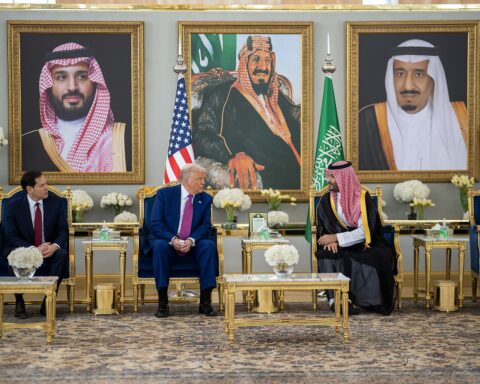
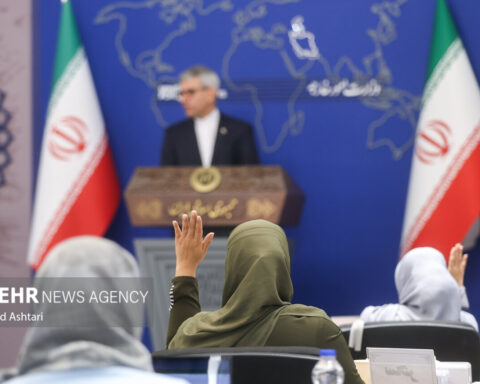
RIYADH — On May 13, 2026, as Donald Trump landed in Riyadh to formalize a $142 billion arms package alongside the political culmination of a civil nuclear cooperation agreement that does not prohibit Saudi uranium enrichment, American negotiators in Muscat were simultaneously demanding that Iran surrender 440.9 kilograms of uranium enriched to 60 percent and accept a 20-year moratorium on enrichment of any kind as the price of a ceasefire. The agreement — formally a Section 123 compact under the Atomic Energy Act — omits the enrichment ban that defined the 2009 UAE “gold standard” deal, does not require Saudi Arabia to sign the IAEA Additional Protocol, and substitutes a bilateral safeguards arrangement that covers only declared facilities. Washington has, in a single diplomatic season, constructed a two-tier nuclear framework in which enrichment is treated as a sovereign prerogative for Saudi Arabia and a non-negotiable condition of surrender for Iran, and the contradiction is not incidental to American policy but has become the structural commitment on which the entire ceasefire negotiation depends.
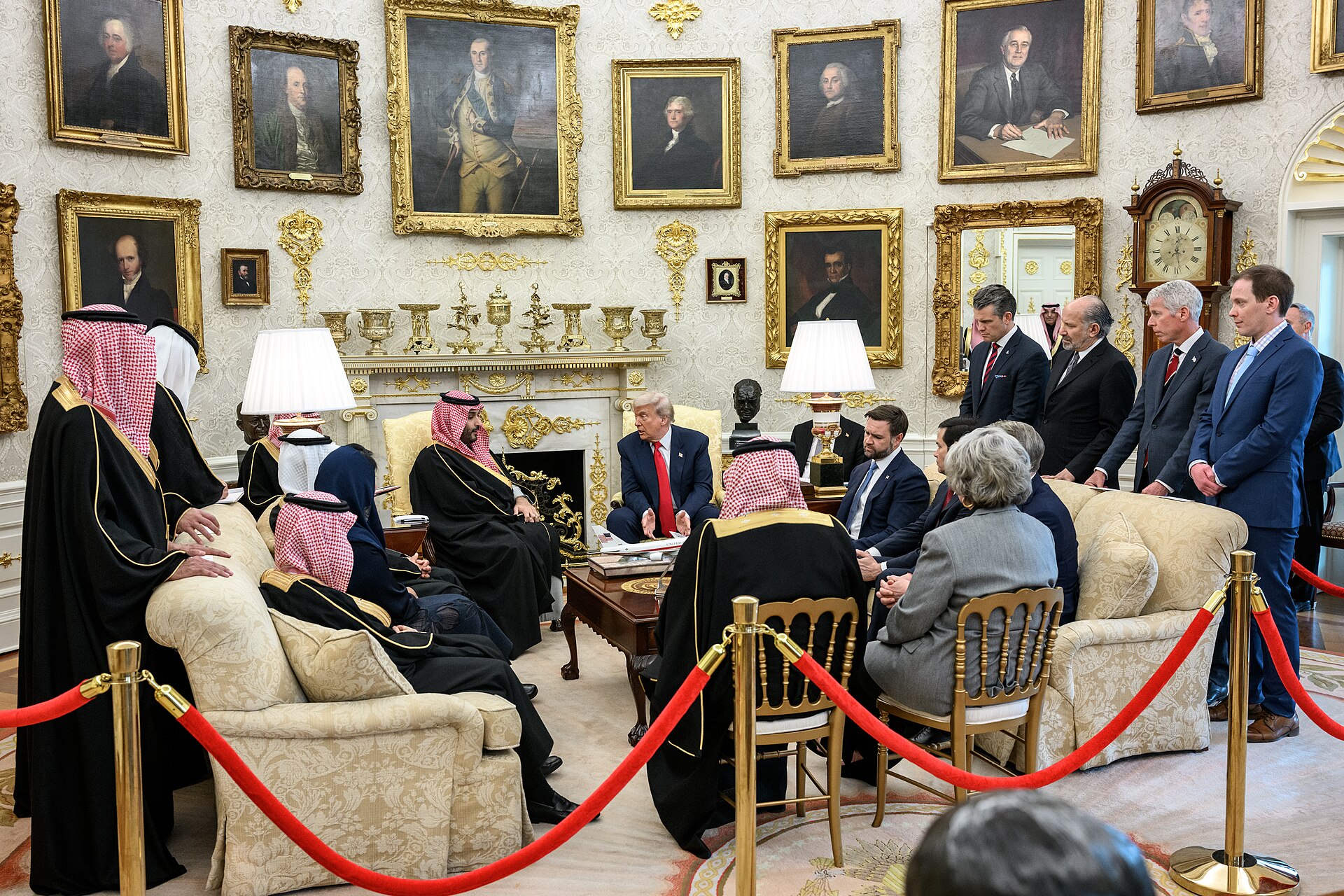
Table of Contents
- What Does the 123 Agreement Actually Say?
- The Gold Standard That Riyadh Refused
- Why Did Washington Invoke the Presidential Waiver for the First Time?
- The Enrichment Demand on Iran
- Does the UAE’s Enrichment Clause Create a Proliferation Cascade?
- Pakistan’s SMDA and the Second Nuclear Guarantee
- Can Seven Senators Stop a Nuclear Agreement?
- The Commitment Nobody Put to a Vote
- Frequently Asked Questions
What Does the 123 Agreement Actually Say?
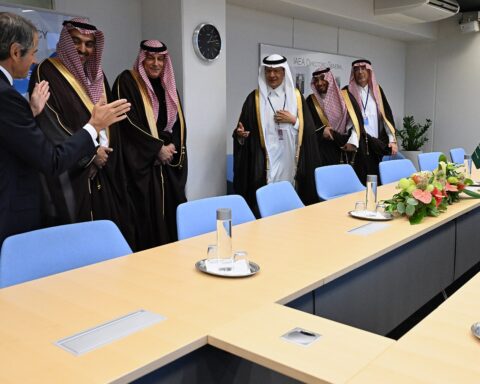
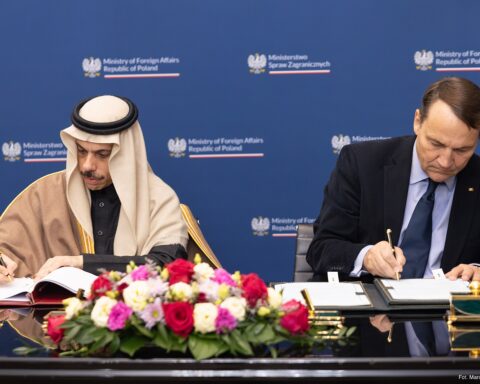
The Joint Declaration on the Completion of Negotiations on Civil Nuclear Energy Cooperation was signed on November 18, 2025, by US Energy Secretary Chris Wright and Saudi Energy Minister Prince Abdulaziz bin Salman in a ceremony that attracted surprisingly little scrutiny given what the text contained — and what it did not. Wright called it “a historic day for the United States and the Kingdom of Saudi Arabia,” language that belongs to the genre of diplomatic understatement because the document’s omissions are more consequential than its declarations.
Section 123 of the Atomic Energy Act requires that any nuclear cooperation agreement satisfy nine specific conditions before it can be submitted to Congress, covering matters including physical security, safeguards, and storage requirements. An enrichment prohibition is not one of those nine conditions — it must be added voluntarily as a supplementary restriction negotiated between the two parties — and the Trump administration chose not to add one. The agreement instead references “additional safeguards and verification measures to the most proliferation-sensitive areas of potential nuclear cooperation” between the two countries, including enrichment, conversion, fuel fabrication, and reprocessing, language that the Arms Control Association has characterized as opening a pathway to Saudi enrichment rather than closing one.
Kelsey Davenport, the Arms Control Association’s director of nonproliferation policy, put it in terms that leave little room for bureaucratic ambiguity when she spoke to PBS NewsHour in February 2026. “Even with restrictions and limits, it seems likely that Saudi Arabia will have a path to some type of uranium enrichment or access to knowledge about enrichment,” she said, describing a framework that, in her assessment, was designed to accommodate enrichment rather than foreclose it.
“Will open the door for Saudi Arabia to acquire uranium enrichment technology or capabilities — possibly even from the United States.”
Kelsey Davenport, Arms Control Association, PBS NewsHour, February 2026
The HOS Daily BriefThe Middle East briefing 3,000+ readers start their day with.
One email. Every weekday morning. Free.
The political timing of the Trump visit on May 13 is not incidental to the agreement’s content. The Joint Declaration was signed in November 2025, but its formal presentation alongside a $142 billion defense package — fighter jets, missile systems, naval cooperation — transforms a technical energy agreement into a component of a comprehensive security relationship in which the nuclear framework is embedded inside the arms deal. Congressional opposition to the 123 terms cannot be separated from the broader commercial and strategic relationship without opposing the entire package, which is precisely how it was designed to arrive.
The Gold Standard That Riyadh Refused
The benchmark for Gulf nuclear cooperation is not a hypothetical standard but a binding, operational legal precedent. The UAE’s Section 123 agreement, signed on May 21, 2009 and entering into force on December 17 of that year, explicitly prohibits the UAE from “possessing sensitive nuclear facilities within its territory or otherwise engaging in activities within its territory relating to enrichment of uranium or reprocessing of nuclear fuel” — a hard prohibition with no equivalent in the Saudi draft. The UAE simultaneously accepted the IAEA Additional Protocol, which grants inspectors expanded access to undeclared sites and gives the agency the verification tools necessary to detect clandestine programs before they mature.
Saudi Arabia refused both commitments, and Washington chose to proceed without them. Jordan, Egypt, and Turkey had all previously refused gold-standard terms in their own 123 negotiations, citing enrichment as a sovereign right under NPT Article IV — the same legal provision that Iran has deployed for two decades to defend its centrifuge program — and those negotiations stalled or collapsed without conclusion. Saudi Arabia’s draft is the first in which Washington accepted a Gulf state’s refusal and moved forward with a deal anyway, converting what had been a non-negotiable American demand into a concession delivered before the final text reached Congress.
| Provision | UAE 2009 “Gold Standard” | Saudi Arabia 2025 Draft |
|---|---|---|
| Enrichment prohibition | Binding waiver — UAE prohibited from enrichment and reprocessing on its territory | No prohibition — references “safeguards” for enrichment but does not ban it |
| IAEA Additional Protocol | Accepted voluntarily at signing | Not required — first use of 2020 NDAA presidential waiver to bypass AP |
| Safeguards scope | Comprehensive — all nuclear material and activities in the state | Bilateral — only declared facilities under the agreement |
| Regional parity clause | Yes — UAE may revisit waiver if a regional state is granted enrichment | Not applicable — no enrichment ban exists to revisit |
| Congressional review | Standard 90-day period (completed 2009) | Standard 90-day period; S. 4243 would require affirmative approval |
| Date signed / entered into force | May 21, 2009 / December 17, 2009 | Joint Declaration November 18, 2025 / pending |
What Saudi Arabia secured is not merely an exception to the gold standard but its effective termination as a regional benchmark. The UAE accepted enrichment and reprocessing prohibitions because it calculated in 2009 that doing so was the price of American nuclear cooperation, and that calculation held for 16 years because no Gulf state tested the premise that Washington would deal on lesser terms. Saudi Arabia tested the premise and discovered that it gave way, which means that the UAE’s concessions — the research foregone, the industrial capability deferred, the sovereign rights voluntarily surrendered — were incurred for a standard that lasted only as long as it took for a wealthier partner to refuse it.
Why Did Washington Invoke the Presidential Waiver for the First Time?
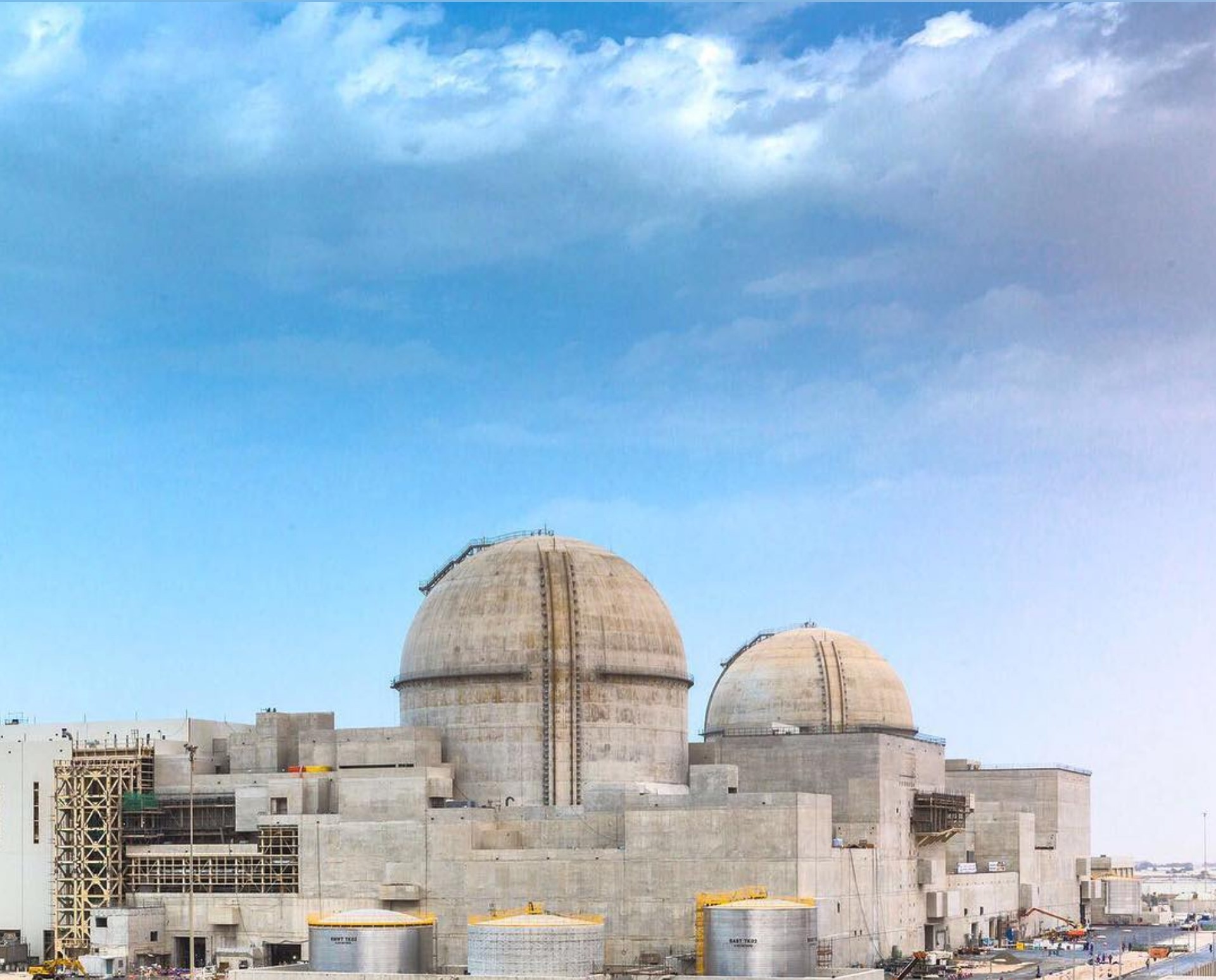
The 2020 National Defense Authorization Act inserted a requirement that a Nuclear Proliferation Assessment Statement — the mandatory analytical submission accompanying any 123 agreement — cannot be filed unless the partner country has signed the IAEA Additional Protocol, or the President submits a report justifying a waiver on national security grounds. Saudi Arabia has not signed the Additional Protocol, and in November 2025 the Trump administration invoked the waiver provision for the first time since the NDAA requirement was enacted — the first 123 agreement to proceed without AP signatory status since Congress imposed the rule.
Lowell H. Schwartz, a former Deputy Assistant Secretary of State for Nonproliferation Policy now writing for Just Security, described the precedent as creating “significant congressional oversight responsibility” — a formulation that registers the reality that the executive branch has used a safety valve Congress built in the hope that no administration would need to pull it. The Additional Protocol exists because the IAEA’s standard Comprehensive Safeguards Agreement, designed during a period when the agency assumed states would honestly declare their nuclear activities, proved catastrophically inadequate after Iraq’s clandestine weapons program was exposed in 1991 and Iran’s undeclared centrifuge cascade at Natanz became public in 2002.
Instead of the Additional Protocol’s comprehensive coverage — which applies to all nuclear material and activities within a signatory state — the Saudi agreement proposes a bilateral arrangement under which only facilities specifically declared under the agreement would be subject to IAEA oversight. The gap this creates is not academic, because a state determined to pursue undeclared nuclear work would face no institutional detection mechanism at sites outside the agreement’s scope, and the entire post-1991 nonproliferation reform effort was designed to close exactly this kind of gap.
The waiver’s first-time use establishes a precedent that extends well beyond Saudi Arabia. Every future 123 negotiation with a non-AP signatory now has a template, and the justification report the administration submitted under national security grounds provides a procedural roadmap for how subsequent presidents can bypass the 2020 NDAA requirement without triggering a legislative confrontation.
The Enrichment Demand on Iran
While the 123 agreement was completing its passage through the diplomatic machinery, American negotiators were presenting Iran with a 14-point ceasefire proposal whose central nonproliferation demand combines the 20-year enrichment moratorium and the 440.9-kilogram stockpile surrender noted above — the last figure confirmed by the IAEA before Iran terminated agency access in February 2026 — with a post-deal enrichment ceiling of zero percent. That zero-percent demand is more restrictive than even the 2015 JCPOA, which permitted enrichment at 3.67 percent, and represents the opening position from which the US expects to negotiate Iran toward a landing zone of 12 to 15 years and some form of residual enrichment right, according to Axios reporting from May 6, 2026.
Iran’s response has been categorical in a way that mirrors, almost precisely, the sovereign-right claim that the US has implicitly accepted in the Saudi 123 deal. Iranian lawmakers described the 14-point proposal as “more of an American wish-list than a reality,” with representative Ebrahim Rezaei using that exact formulation in comments reported by Al Jazeera on May 8, and Iran’s broader diplomatic position — that “the nuclear enrichment programme is non-negotiable” — rests on the same NPT Article IV argument that the Saudi agreement’s silence on enrichment has now implicitly conceded.
The contradiction’s effect is compounded by the administration’s own public framing of the Iran conflict. Trump’s “nuclear dust” characterization of Iran’s program has positioned enrichment as an existential threat when practiced by Tehran and a legitimate energy aspiration when pursued by Riyadh, and the distinction rests on the premise that Saudi intentions are civilian while Iran’s are military — but the 123 agreement’s refusal to include the verification mechanisms that would substantiate that distinction, no Additional Protocol and no comprehensive safeguards, undermines the evidentiary basis for the trust it claims to rest upon.
The asymmetry is visible to every party at the negotiating table, and its diplomatic damage extends beyond bilateral US-Iran friction. PressTV, Iran’s English-language state broadcaster, reported on the February 2026 Congressional notification under the headline “Trump administration advances Saudi nuclear deal, leaves door open to enrichment” — a framing designed to be quoted back at American negotiators in precisely the forum where Washington is demanding enrichment surrender. Russian, Chinese, Turkish, and Pakistani interlocutors monitoring the ceasefire talks have, as Responsible Statecraft and the Arms Control Association have documented, already begun deploying this contradiction as evidence that Washington’s nonproliferation demands operate on political selection rather than legal principle.
When the same administration that tells Tehran enrichment is forbidden has signed an agreement with Riyadh that leaves the enrichment door ajar, the demand stops functioning as a legal position and becomes an exercise in coercive preference — which is precisely how Tehran, Moscow, and Beijing have chosen to describe it. Iran’s tabling of an enrichment consortium proposal four days before Trump landed in Riyadh was, in this light, less a serious negotiating offer than a demonstration that Tehran understands the contradiction and intends to exploit it.
Does the UAE’s Enrichment Clause Create a Proliferation Cascade?
Simon Henderson, the Baker Senior Fellow at the Washington Institute for Near East Policy, has drawn attention to a provision in the UAE’s 2009 agreement that most proliferation analysis has overlooked: a clause permitting the UAE to revisit its voluntary enrichment waiver if any other country in the region is subsequently granted enrichment rights under a comparable arrangement. The clause was inserted at Abu Dhabi’s insistence as protection against exactly the kind of outcome the Saudi 123 deal now represents — a future in which a neighboring state secures nuclear cooperation terms that the UAE voluntarily denied itself.
If the Saudi agreement enters into force without an enrichment prohibition, the UAE acquires a contractual basis to demand equivalent treatment, which means that a single omission in a bilateral US-Saudi deal could dissolve the enrichment waiver that has anchored Gulf nonproliferation policy for 17 years. The cascade potential does not stop at Abu Dhabi, because every subsequent 123 negotiation — with Jordan, Egypt, Turkey, or any other state that has already cited sovereign enrichment rights as grounds for rejecting gold-standard terms — will proceed from the new Saudi baseline rather than the old Emirati one.
The ceasefire negotiators in Muscat face this logic from the opposite direction, and they cannot avoid it. If the Iran ceasefire MOU permits any residual enrichment — even at reduced levels, even under enhanced monitoring, even for a limited duration — the UAE’s regional-parity clause activates from two vectors simultaneously: the Saudi agreement that lacks a prohibition and the Iranian MOU that concedes a residual right. Henderson’s analysis suggests that American negotiators may have constructed a proliferation trigger in which any outcome short of permanent zero-enrichment for Iran accelerates nuclear ambition across the Gulf rather than constraining it.

The cascade Henderson describes is not speculative but contractual, built into the legal text of a ratified agreement. The UAE’s enrichment waiver was conditional from the day it was signed, and the condition was that no regional competitor would receive preferential treatment under a comparable deal. Abu Dhabi’s response to the Saudi 123 agreement will be watched not only by its own nuclear regulators but by every state in the region that deferred enrichment ambitions on the assumption that the gold standard was permanent — an assumption that November 18, 2025 effectively retired.
Pakistan’s SMDA and the Second Nuclear Guarantee
The 123 agreement does not exist in a bilateral vacuum, and the second layer of Saudi Arabia’s nuclear positioning was established four months before Secretary Wright signed the Joint Declaration. On September 17, 2025, Saudi Arabia and Pakistan signed the Strategic Mutual Defence Agreement — the first extended deterrence commitment from a nuclear-weapons state outside the NPT to any sovereign state in the treaty’s history. Pakistan’s role as Saudi Arabia’s $8 billion mediator has been complicated by the war, but the SMDA operates on a separate track, and Defence Minister Khawaja Asif described its scope in terms that left nothing to interpretation: “What we have, and the capabilities we possess, will be made available under this agreement.”
Chatham House characterized the SMDA as historically unprecedented because it places a non-NPT nuclear arsenal within the deterrence framework of a non-nuclear state without any of the institutional safeguards — NATO-style dual-key arrangements, IAEA oversight, parliamentary ratification processes, or congressional review mechanisms — that govern American extended deterrence commitments in Europe and Asia. Pakistan’s deterrence is contingent and external, dependent on Islamabad’s political will and military capacity at the moment of a Saudi request, but the 123 agreement introduces the prospect of a domestic enrichment capability that would be sovereign, permanent, and entirely outside Pakistani control.
The relationship between the two agreements creates a layered nuclear positioning without precedent in the nonproliferation era. The SMDA provides access to an existing nuclear deterrent under conditions of extreme threat, while the 123 agreement opens a legal framework for Saudi Arabia to develop indigenous fuel-cycle capabilities that would, over time, render the Pakistani guarantee supplementary rather than essential. The International Campaign to Abolish Nuclear Weapons noted in its October 2025 analysis that the SMDA lacked every institutional constraint that governs comparable deterrence commitments elsewhere, and the 123 agreement now provides the second instrument in what amounts to parallel insurance — one external and one domestic.
MBS stated publicly in 2018 that Saudi Arabia would match any Iranian nuclear weapon “as soon as possible,” and the layered positioning now visible — external deterrence from Pakistan via the SMDA, a domestic enrichment pathway opened by the 123 agreement — converts what was a declaratory threat into institutional preparation. The broader security architecture MBS has been assembling around Washington’s commitments operates on the same logic: build redundancy so that no single relationship is load-bearing, and no single American decision can leave Saudi Arabia exposed.
Can Seven Senators Stop a Nuclear Agreement?
The No Nuclear Weapons for Saudi Arabia Act — designated S. 4243 and introduced on March 26, 2026, by Senator Edward Markey with cosponsors Merkley, Kaine, Van Hollen, Wyden, Welch, and Sanders — would invert the standard congressional review mechanism by requiring affirmative approval through a joint resolution rather than allowing the agreement to take effect unless Congress passes a joint resolution of disapproval. The procedural distinction is dispositive: under the standard 123 review process, Congress has 90 days of continuous session to act, and blocking requires legislation that the president must sign or that Congress must override by veto-proof majority — a threshold that structurally favors the executive branch.
“Trump is allowing Saudi Arabia, a belligerent and authoritarian nation, to develop nuclear weapons technologies while starting a war with Iran under the guise of preventing an Iranian nuclear bomb.”
Senator Edward Markey, February 2026
Senator Merkley reinforced the critique when he observed that “Trump launched a war in part to stop the possibility of Iran pursuing a nuclear weapon” while the administration’s own agreement “would reportedly allow Saudi Arabia to enrich uranium, reprocess nuclear reactor fuels, and forego inspections at many Saudi nuclear facilities.” The alignment between the two senators’ positions is precise: both frame the 123 deal not as a standalone energy agreement but as one half of a contradiction whose other half is the war itself, and both recognize that the enrichment omission and the IAEA waiver are the structural features that make the contradiction irrecoverable through amendment or side agreement.
The arithmetic is not favorable to the opposition, and the sponsors almost certainly know it. With a Republican-controlled Senate, the seven Democratic sponsors of S. 4243 lack the votes to force a floor debate, let alone passage, and the bill functions as an oversight marker and public record rather than a legislative barrier. The 90-day review clock and the first-time invocation of the presidential waiver create what Schwartz called “significant congressional oversight responsibility,” but oversight responsibility is not the same as veto authority, and the review process favors the executive in any contest where the president’s party controls the chamber.
The structural imbalance matters because the 123 review process was designed for an era in which nuclear cooperation agreements attracted bipartisan scrutiny and nonproliferation committees commanded cross-party deference. The current alignment — in which the president’s party controls the Senate, the agreement is embedded inside a $142 billion arms package that sustains defense contractors across dozens of congressional districts, and the alternative is framed as ceding Saudi nuclear cooperation to Russia or China — converts the 90-day review window from a period of genuine deliberation into a countdown toward automatic implementation. The structural veto points that could kill an Iran deal do not apply here, because the 123 agreement’s passage depends on inaction rather than action — and inaction is the one thing Congress can be relied upon to deliver.
The Commitment Nobody Put to a Vote
The two-tier nuclear framework the Trump administration assembled between November 2025 and May 2026 was not debated in Congress as a regional proliferation policy, was not subjected to public deliberation as a choice between competing nonproliferation models, and was not presented to the American electorate as what it is — a structural decision to treat enrichment as permissible for one Middle Eastern state and impermissible for another. It arrived inside the bureaucratic casing of an energy cooperation agreement, which is technically accurate in the way that a foundation is technically a concrete slab until someone builds a reactor on it.
NPT Article IV explicitly guarantees “the inalienable right of all the Parties to the Treaty to develop research, production and use of nuclear energy for peaceful purposes,” and Iran has cited this article for two decades as the legal basis of its enrichment program. The Saudi 123 agreement’s omission of an enrichment ban implicitly concedes that Article IV covers enrichment — a concession that, once extended to Riyadh, cannot be withheld from Tehran without abandoning the premise that the nonproliferation regime operates on legal rather than political grounds. Every demand the US makes at the Muscat table now carries the footnote that the same administration extending the demand has signed an agreement accepting the opposite proposition for a state 1,200 kilometers across the Gulf.
The 123 agreement, the SMDA, the $142 billion arms deal, and the Iran ceasefire demand are not four separate policies but four expressions of a single decision: that Saudi Arabia is Washington’s permanent regional partner and Iran is its permanent adversary, and that the legal instruments of nuclear cooperation should reflect that distinction without requiring anyone to state it explicitly. The problem with building legal frameworks around unstated premises is that administrations turn over, regional alignments shift, and agreements endure — and a 123 deal designed around the assumption of permanent Saudi alignment will read very differently if that assumption fails. Iran’s belief that it holds the upper hand in the current conflict makes the assumption more fragile than Washington appears willing to acknowledge.
The person who has stated most plainly what this framework enables remains the one who engineered its omissions. In March 2018, speaking to CBS News’s 60 Minutes, Mohammed bin Salman said: “Saudi Arabia does not want to acquire any nuclear bomb, but without a doubt, if Iran developed a nuclear bomb, we will follow suit as soon as possible.” He said it before the SMDA existed, before the 123 agreement was negotiated, before Washington signed both — and he has not needed to say it since.
The enrichment asymmetry Washington has accepted for Saudi Arabia becomes operationally unresolvable on the Iranian side for a structural reason beyond politics: the one figure inside Iran’s decision-making architecture who possessed both the institutional standing and the personal willingness to transmit an authorized nuclear signal died on February 28. How Shamkhani’s death left Washington’s 14-point proposal addressed to a signaling vacuum is the subject of a companion analysis.
Frequently Asked Questions
Why does Saudi Arabia want domestic enrichment capability rather than importing reactor fuel?
Saudi Arabia holds domestic uranium deposits it intends to mine under its Vision 2030 energy diversification program, which identifies nuclear baseload power as part of the post-oil electricity transition. Riyadh’s stated position is that fuel-cycle sovereignty — mining, converting, and enriching uranium domestically — reduces dependence on external suppliers and aligns with the broader strategic autonomy framework MBS has pursued across defense, energy, and finance since 2016.
What is the Carnegie Endowment’s assessment of the enrichment gap in ceasefire talks?
Carnegie Endowment analysis from May 2026 found that Tehran has been pushing enrichment “down the negotiations agenda, recognizing that the gap between the two sides may be too wide for a solution.” This approach suggests that Iranian negotiators regard the enrichment question as a potential deal-breaker they want to defer rather than confront, seeking to secure a ceasefire on military and humanitarian terms before addressing the nuclear issue that Washington has placed at the center of its demands.
What is the difference between the IAEA Comprehensive Safeguards Agreement and the Additional Protocol?
The Comprehensive Safeguards Agreement, which most NPT non-nuclear-weapons states have signed, requires the IAEA to verify that declared nuclear material is not diverted to weapons use but only covers facilities and material that states themselves declare. The Additional Protocol, adopted after Iraq’s clandestine program exposed the CSA’s limits, grants the IAEA authority to inspect undeclared sites, collect environmental samples, and monitor dual-use procurement — the detection tools that the Saudi bilateral arrangement omits.
What happens if Congress takes no action during the 90-day review period for the 123 agreement?
Under the standard Section 123 review process established by the Atomic Energy Act, if Congress does not pass a joint resolution of disapproval within 90 days of continuous session following presidential submission, the agreement enters into force automatically without any affirmative vote. Senator Markey’s S. 4243 would reverse this default by requiring a joint resolution of approval, but the bill has not advanced beyond its seven Democratic sponsors and faces opposition from the Republican Senate majority. The enrichment asymmetry is now a live variable in the broader diplomatic architecture: Saudi Arabia is simultaneously advancing a Helsinki-style non-aggression pact with Iran that would require Tehran to accept the same territorial legitimacy framework that once underpinned Soviet control — without reciprocal constraints on Riyadh’s own nuclear ambitions. What Iran’s response to Washington’s nuclear ultimatum actually looks like in practice is examined in Iran’s Lead Nuclear Negotiator Just Replied to Trump. He Has Been Dead for 78 Days. — IRGC-aligned media amplifying a year-old Shamkhani interview as three-audience signaling architecture, with zero authorized path to yes from any living official.