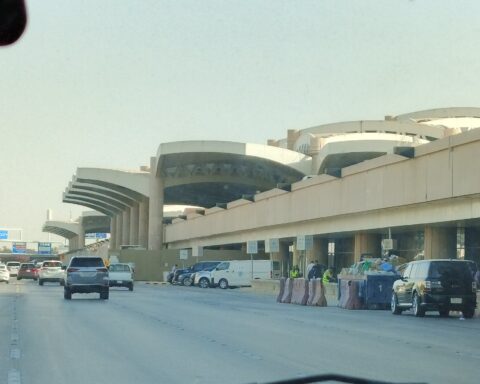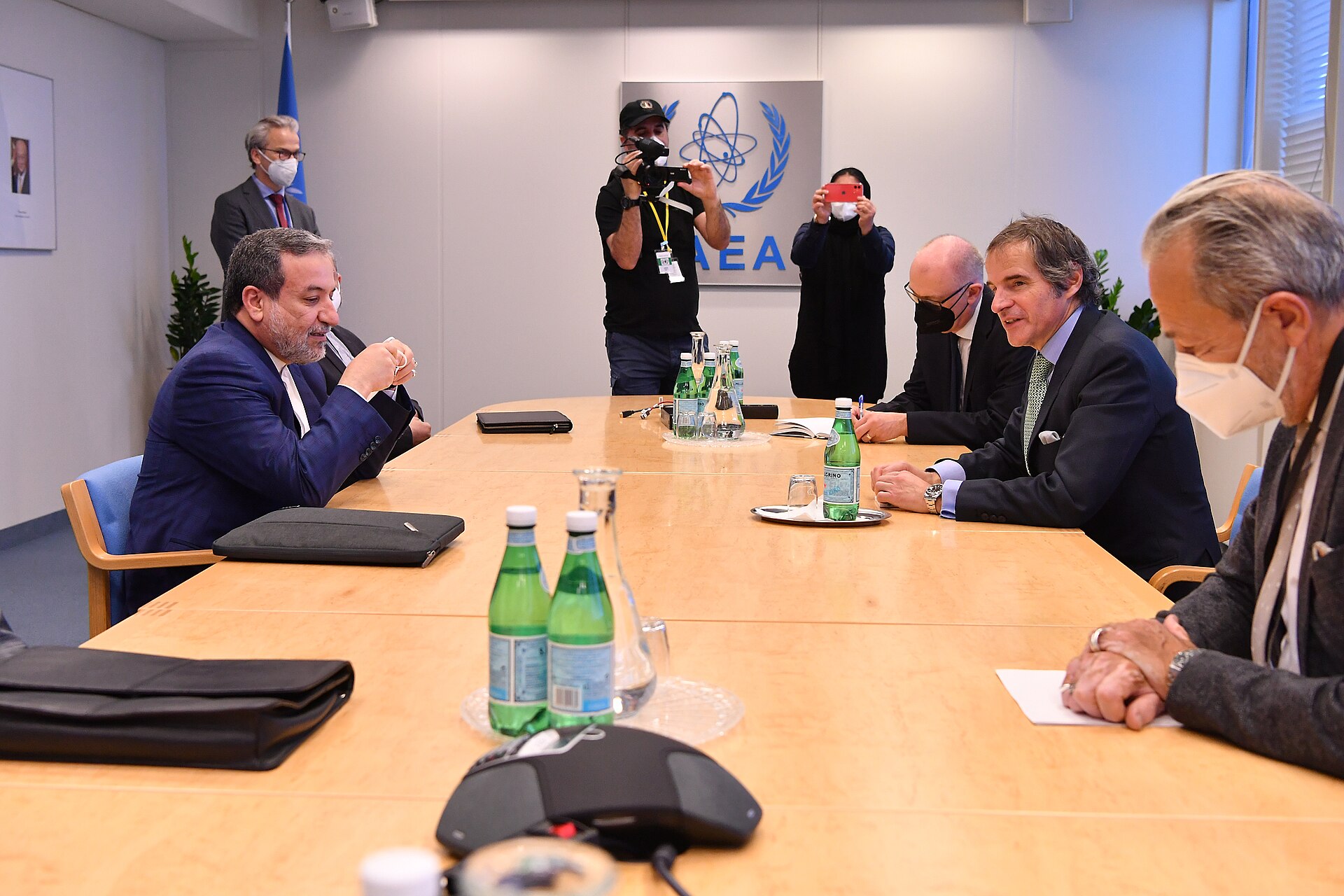

RIYADH — Iran’s Foreign Minister Abbas Araghchi telephoned Saudi Arabia’s Prince Faisal bin Farhan on October 11 and offered “any assistance necessary to initiate dialogue between Saudi Arabia and Yemen,” according to a readout published by Iran’s Nour News. One day earlier, Houthi forces — armed, supplied, and operationally guided by Iran’s Islamic Revolutionary Guard Corps — had struck King Khalid International Airport in Riyadh, killing thirteen people (the BBC counted 308 wounded on October 11; Al Jazeera reported 309). Araghchi’s ministry described the call as “a continuation of the same engagement-oriented approach,” language that framed the outreach not as crisis management but as something Tehran had been doing all along.
His office released a four-point framework: a halt to hostilities, humanitarian corridors, inclusive national dialogue that would seat the Houthis as a governing party, and a national reconciliation government in Yemen. The same week, IRGC-affiliated Tasnim News Agency declared that “Yemen emptied Saudi Arabia’s skies of aircraft,” while the hardline Kayhan newspaper ran headlines celebrating “Yemenis setting Aramco refineries and Al Saud airports on fire.” Iran is not sending mixed signals by accident — it is running two parallel operations aimed at two separate audiences, and the contradiction between them is itself the strategy.
Contents
- What Did Araghchi Actually Offer?
- Did Saudi Arabia Respond to the Mediation Offer?
- Is Iran Actually Directing the Houthi Strikes?
- Why Is Iran Offering to Stop a War It Is Arming?
- The Lebanon Precedent: When Iran Offered Peace and Armed for War
- What Does Saudi Arabia Gain From Not Answering?
- The Cost Iran Is Paying to Keep the War Running
- Two Audiences, Two Messages
What Did Araghchi Actually Offer?
The Iranian proposal, published by Nour News on October 12, contained four elements: an immediate halt to what Tehran called “aggression” against Yemen, the opening of humanitarian corridors, an inclusive national dialogue that would seat the Houthis — whom Iran refers to as Ansar Allah — as a legitimate political party, and the formation of a national reconciliation government. The framing was not incidental; it treated the Houthis not as an armed militia waging a cross-border war but as a political movement entitled to a share of state power, and it cast the Saudi-led coalition as the aggressor whose military operations needed to stop before negotiations could begin.
Araghchi did not limit his outreach to Riyadh. On October 12, he also telephoned Egypt’s Foreign Minister Badr Abdelatty, Turkey’s Hakan Fidan, and Oman’s Sayyid Badr Albusaidi, as though choreographing a regional diplomatic performance that required an audience well beyond the principal belligerents. Turkey’s readout of the Fidan call, notably, made no mention of Yemen at all — an omission that suggested Ankara was willing to accept the conversation but not to endorse the script Tehran had written for it.
The broader diplomatic context makes the timing legible. Araghchi had already circulated a seven-day roadmap in late September — reported by Al Jazeera on September 25 — under which Iran would reopen the Strait of Hormuz in exchange for the United States lifting its aerial blockade, receiving sanctions waivers, and unfreezing approximately $12 billion in Iranian assets. The Yemen mediation offer arrived while Tehran was negotiating simultaneously on multiple fronts: the Strait, the sanctions architecture, and now a proxy war it publicly denied directing. Each track was designed to extract concessions while maintaining the military pressure that made those concessions necessary in the first place.
By October 16, Iranian Deputy Foreign Minister Khatibzadeh told Al Mayadeen that “so far we have not received any positive response” to the mediation offer. The statement served a dual purpose: it registered Riyadh’s non-response as a refusal Tehran could publicise to the region, while preserving Araghchi’s positioning as the party willing to talk — the diplomat waiting by the phone while the bombs his government helped build continued to fall on Saudi cities.
The Middle East briefing 3,000+ readers start their day with.
One email. Every weekday morning. Free.
Did Saudi Arabia Respond to the Mediation Offer?
Saudi Arabia acknowledged the call. Its readout, as reported by AMWAJ Media on October 12, confirmed that the conversation between Araghchi and Prince Faisal had taken place — but made no mention whatsoever of the mediation offer, the four-point framework, or any discussion of Yemen as a subject for Iranian-facilitated dialogue. The Saudi statement referenced only “the recent escalation,” a phrase broad enough to cover everything and specific enough to commit to nothing.
That omission was not an oversight; it was the response. Accepting Iran’s offer — even acknowledging it publicly — would have legitimised Tehran as a regional mediator in a war where Saudi Arabia considers Iran a co-belligerent, not a neutral arbiter. Refusing it openly, on the other hand, would have handed Tehran precisely the propaganda win it needed: proof that Riyadh rejected diplomacy and chose bombs over dialogue, a narrative the IRGC’s media apparatus was already primed to amplify.
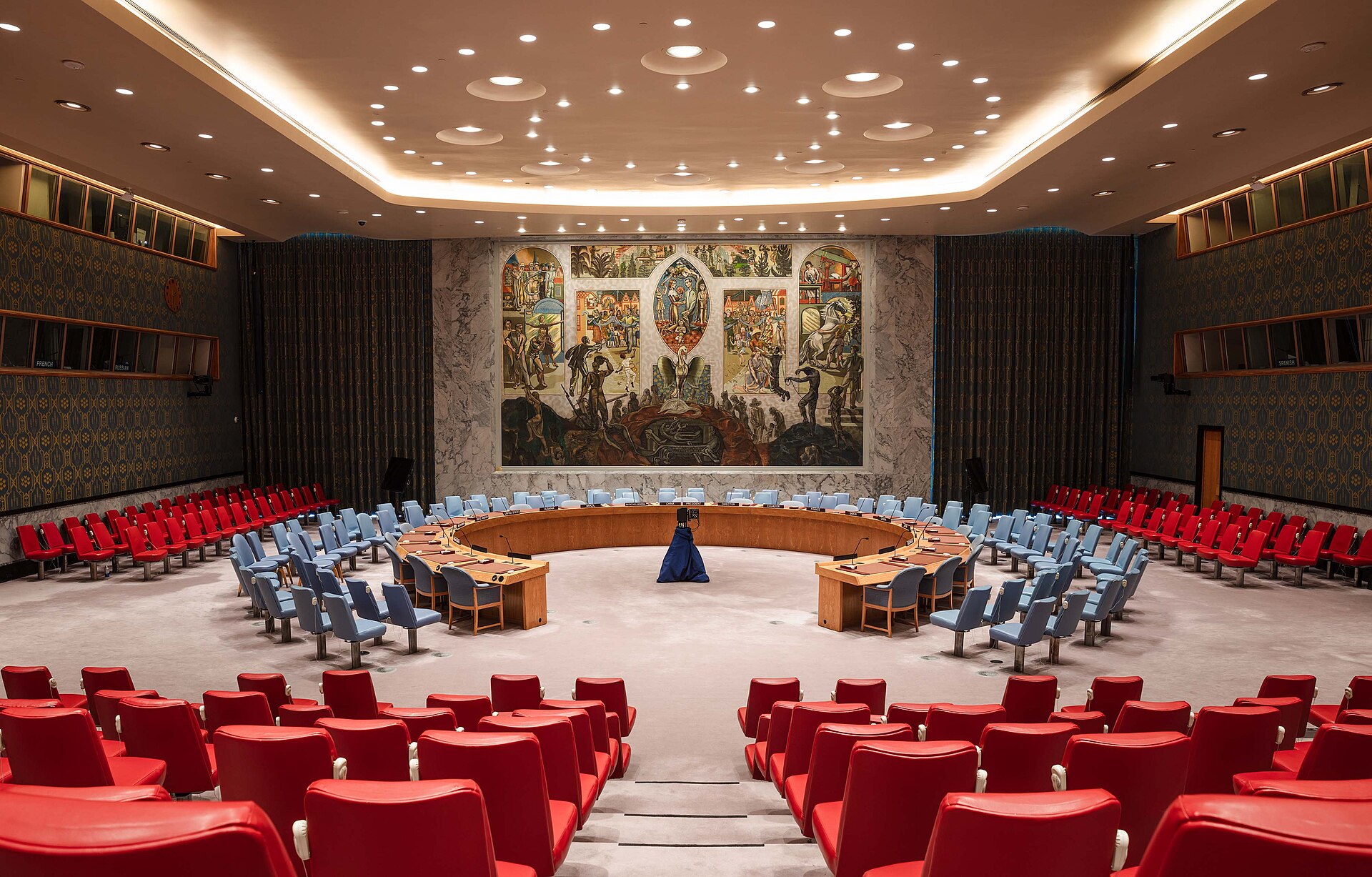
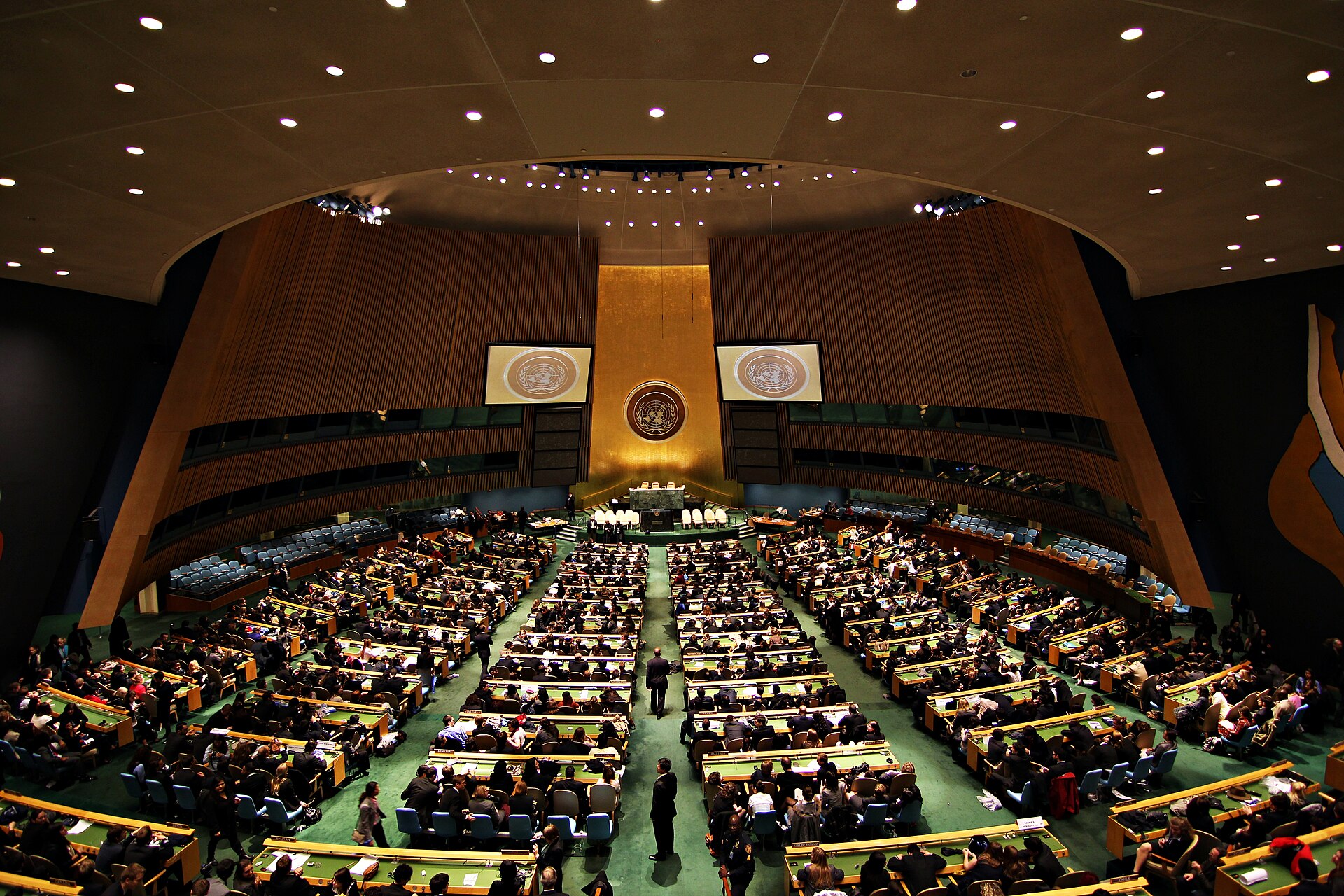
Prince Faisal had signalled Riyadh’s preferred channel weeks earlier. At the United Nations General Assembly on September 28, he told delegates that the international community had been “absent” from the crisis — a formulation that looked past Tehran entirely and directed Saudi Arabia’s complaint at the Security Council and at Washington. On October 9, Riyadh formally asked the UN Security Council to act, routing its demand through multilateral institutions where Iran’s leverage is weakest rather than through a bilateral channel where Tehran would sit across the table as an equal.
Saudi Arabia, Egypt, Pakistan, and Turkey issued a joint condemnation of the Houthi strikes on October 11, the same day Araghchi made his call. The condemnation named no mediator, proposed no bilateral framework, and pointedly declined to mention Iran’s offer — which, given that Araghchi had telephoned three of the four signatory states, was a collective silence that carried its own diplomatic weight. Riyadh was not ignoring the mediation offer out of confusion; it was building an accusation through omission.
Is Iran Actually Directing the Houthi Strikes?
Iran says no, and it says so at every level of government. President Masoud Pezeshkian publicly distanced Tehran from Houthi attacks in September, telling reporters (as Iran International reported on September 12) that Iran bore no responsibility for Yemen’s military decisions. Foreign Ministry spokesperson Esmaeil Baqaei went further on October 16, declaring: “The Islamic Republic of Iran rejects any claim that Iran has played a role in Yemeni operations.” He described Yemen’s armed forces as “acting on their own interests and assessments,” as though the Houthis were an entirely autonomous movement whose military planning happened to coincide, repeatedly and at scale, with Iranian strategic objectives.
That position collapses under the weight of the evidence against it. On October 17, the Wall Street Journal reported — via Iran International — that IRGC officers were inside Yemen and had been “on the front lines helping direct drone and missile attacks” at the time Araghchi’s office was describing Houthi operations as independent decisions made by a sovereign armed movement. In July, Reuters reported that Iran had flown IRGC commanders and missile- and drone-related components to Yemen on a Mahan Air flight on July 13; a Yemeni government minister confirmed the transfer. The previous year, in July 2025, the US Central Command seized a 750-tonne Iranian weapons shipment bound for the Houthis — the largest single documented seizure — containing advanced drone parts, missile warheads, and radar systems, according to the Council on Foreign Relations.
Saudi intelligence had seen it coming. CNN reported on August 6 that Riyadh had detected “meetings involving Iraqis, Houthis and some IRGC members” and tracked the movement of drones and missiles, with signs of planned coordinated attacks “from both north and south.” Danny Citrinowicz, a former head of Iran affairs in Israeli defence intelligence, told Iran International on October 17 that Iran maintains “a strong strategic interest in and close operational ties with the Houthis” — language that left little room for the fiction of Houthi autonomy.
Negar Mortazavi of the Center for International Policy offered a more calibrated framing in Al Jazeera on October 12: “Tehran is an ally of Ansar Allah and has influence with the movement, although it does not control its decisions.” The distinction is analytically sound — it is possible to arm, train, advise, and operationally embed with a proxy force while genuinely not dictating every tactical choice it makes. But the gap between “we have influence” and Baqaei’s “we have no role” is the space where Iran’s diplomatic credibility evaporates, because IRGC officers do not board Mahan Air flights to Sanaa carrying missile components in order to observe.
A Conflict Armament Research analysis of Red Sea weapons seizures found that five per cent of Houthi weapons components were traced directly to Iran, with the remaining 95 per cent sourced from 16 other jurisdictions, as the Malay Mail reported on October 16. The figure might seem to diminish Iran’s role until you examine what that five per cent comprises: the guidance systems, the warheads, the radar technology — the components that turn an improvised projectile into a weapon capable of striking an international airport more than 1,000 kilometres from the launch site.
Why Is Iran Offering to Stop a War It Is Arming?
Andreas Krieg, a professor at King’s College London, put it plainly in Al Jazeera on October 12: “Iran is trying to turn Yemen from a military liability into a diplomatic asset.” The logic is not contradictory; it is sequential. Arm the Houthis, let them demonstrate that Saudi Arabia cannot defend its own airports, then offer to make the attacks stop — but only in exchange for something Tehran needs. “Offering Riyadh a way out of Yemen potentially gives Iran leverage well beyond the Yemeni theatre,” Krieg added, pointing to the way Tehran has layered its negotiating positions across multiple fronts so that movement on one creates pressure on all the others.
The diplomatic track and the military track are not aimed at the same audience, and understanding that division is the key to reading Iran’s behaviour as coherent rather than contradictory. The military strikes — the airport attacks, the Aramco facility hits, the mining of the Strait of Hormuz — speak to Iran’s domestic constituency, to Hezbollah, to Iraqi militias, to the Houthis themselves: Tehran has not abandoned the resistance axis, and the pressure on Saudi Arabia is working. Araghchi’s phone calls, by contrast, speak to European capitals, to the UN, to Gulf states weighing their options — a message that Iran is the reasonable party at the table, ready to negotiate, being rebuffed by a Saudi Arabia that would rather bomb than talk.
Negar Mortazavi framed the strategic objective in Al Jazeera: “The larger political objective is an informal non-aggression arrangement between Iran and its allies.” The mediation offer is not about Yemen in isolation; it is about establishing Iran as a regional security broker whose cooperation Riyadh cannot avoid. If Saudi Arabia accepts, Iran gains legitimacy as an interlocutor in a conflict it is prosecuting through proxies. If Saudi Arabia refuses, Iran gains a grievance it can take to every regional forum and every diplomatic back-channel: we offered peace, and Riyadh chose war.
The economic pressure sharpens the calculation. The US aerial blockade, imposed in coordination with the broader confrontation, has cost Iran an estimated $25 billion in lost oil revenue, according to Axios on October 16. That figure does not include the cost of sustaining proxy operations across Yemen, Iraq, Syria, and Lebanon — costs that have forced Iranian-backed militias to withhold soldier salaries in order to redirect funds to the IRGC, as Axios also reported. Iran needs the diplomatic track to produce economic relief, and the military track to create the leverage that makes economic relief worth offering. Mortazavi captured the bind succinctly: “Saudi Arabia cannot obtain security from attacks, while Iran and its allies remain under military and economic pressure.”
The Lebanon Precedent: When Iran Offered Peace and Armed for War
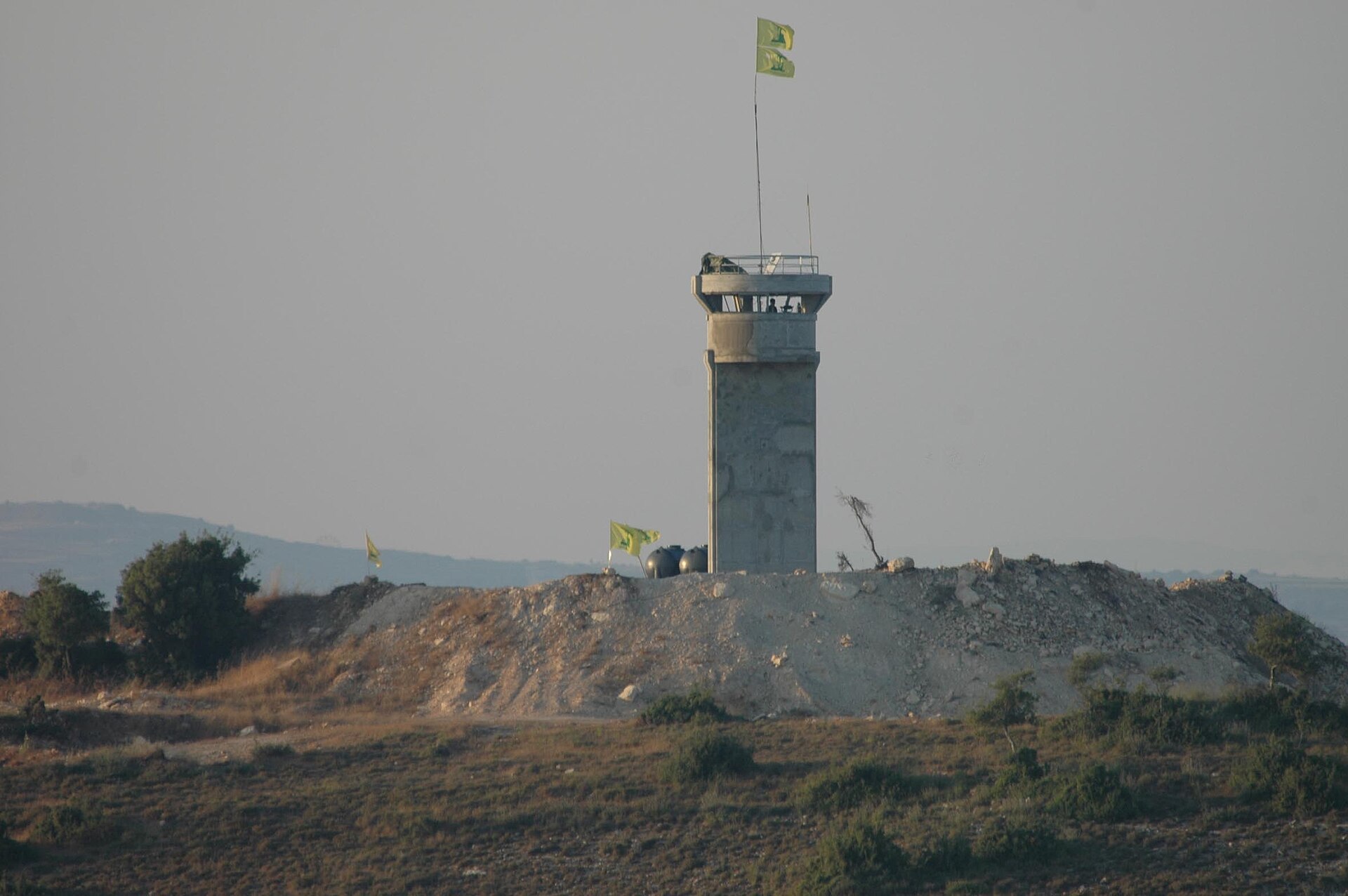
This is not the first time Iran has offered to mediate a conflict it was actively fuelling, and the historical precedent is instructive precisely because it worked. During the 2006 Israel-Hezbollah war, Lebanese Prime Minister Fouad Siniora asked Iran to “help secure a ceasefire” — a request that Tehran accepted, positioning itself as a constructive diplomatic partner in a war that its own creation, Hezbollah, had started by launching cross-border raids into Israel. The ceasefire came, UN Security Council Resolution 1701 was passed, and Hezbollah was supposed to disarm south of the Litani River.
Hezbollah did not disarm. It rearmed — through Syrian channels, under Iranian supervision — and spent the next two decades building the arsenal that would feature in subsequent conflicts. UNSCR 1701 became a permanent fixture of diplomatic language and a permanent failure of diplomatic enforcement, and Iran emerged from the episode having demonstrated that it could simultaneously arm a militia, negotiate a peace, and use the peace agreement itself as cover for the next phase of military preparation.
The Atlantic Council traces the structural logic further back, to the 1989 Taif Accords that ended the Lebanese civil war. Those accords required the disbandment of all Lebanese militias — all except Hezbollah, which was reclassified not as a militia but as a “resistance movement” and thereby exempted from the very disarmament framework that every other armed group was compelled to accept. Iran is now applying the same rhetorical template to the Houthis: Ansar Allah is not a militia, it is a national movement; its members are not insurgents, they are “Yemen’s armed forces”; and any peace deal must seat them at the table as a political party, not disarm them as a proxy.
Araghchi’s four-point plan reads, in this light, less like a peace proposal and more like the opening position of a process designed to produce another UNSCR 1701 — an agreement that stops the shooting, freezes the Houthis’ territorial gains into political legitimacy, and leaves their Iranian-supplied arsenal intact for the next time Tehran needs to demonstrate that it can reach Saudi Arabia’s airports, refineries, and the shipping lanes Riyadh depends on. The Taif template worked for Hezbollah because it converted a militia into a permanent political fact before anyone could insist on disarmament; Araghchi’s four points are built to do the same for the Houthis, and the mediator who writes the terms is the one who decides what counts as peace.
What Does Saudi Arabia Gain From Not Answering?
Saudi Arabia’s decision not to respond publicly to Araghchi’s mediation offer — while acknowledging the phone call itself — is the most calculated diplomatic signal Riyadh has sent in weeks, and it reflects a bind that admits no clean exit. Accepting the offer, even as a basis for exploratory talks, would grant Iran the status of regional mediator in a conflict where Saudi Arabia has spent months building the case that Tehran is a belligerent. Every joint communiqué, every UNGA speech, every coalition framework Riyadh has assembled would be undermined by the spectacle of Prince Faisal sitting across a table from the same government whose officers were, according to the Wall Street Journal, directing the strikes that prompted the talks.
Refusing publicly carries its own cost. Tehran’s entire diplomatic strategy is designed to produce a visible Saudi “no” — a rejection Araghchi can carry to Muscat, to Cairo, to Ankara, and to New York, presenting Iran as the party that sought dialogue while Riyadh chose escalation. Khatibzadeh’s October 16 statement — “so far we have not received any positive response” — was already laying the groundwork, registering Saudi non-response as intransigence before a regional audience primed to hear it.
The deeper problem is that Riyadh’s alternatives are narrowing. Crown Prince Mohammed bin Salman called President Trump twice in September, and both times Trump declined to authorise US strikes on Iran, as CNN reported on October 10. Trump’s public posture — “They’re able to defend. The Saudis are good fighters,” he said — cast the war as Saudi Arabia’s problem to solve with Saudi Arabia’s military, a framing that left Riyadh’s air defences as the last line between Iranian-supplied missiles and Saudi civilian infrastructure. Andreas Krieg noted in Al Jazeera that “Riyadh is increasingly uncomfortable with its dependence on Washington” — an understatement, given that Washington had made clear it was not coming.
So Riyadh routes its response through institutions rather than bilateral channels. It asks the Security Council to act. It builds coalitions with Egypt, Pakistan, and Turkey. It speaks at the General Assembly about the international community’s absence. None of these moves address the mediation offer directly, and all of them are designed to avoid giving Iran the bilateral engagement it is seeking — because the moment Saudi Arabia negotiates through Tehran, it concedes that Iran is the gatekeeper to peace in Yemen, and a gatekeeper, by definition, holds the keys.
The Cost Iran Is Paying to Keep the War Running
Iran’s two-track strategy is not free, and the economic pressure on Tehran explains why the diplomatic track is not merely a propaganda exercise but a genuine attempt to convert military leverage into economic relief before the leverage becomes too expensive to maintain. The patronage architecture through which Tehran sustains its network of proxies — across Yemen, Iraq, Syria, and Lebanon — runs on oil revenue that the US blockade is actively cutting, and when the money tightens, each actor in that network must decide what it can no longer afford.
The Houthis have developed revenue streams of their own, which complicates Iran’s control even as it reduces Tehran’s financial burden. The US Treasury estimates that Houthi forces generate more than $2 billion annually through illicit oil sales, while Iran supplements this with free monthly oil shipments, according to Kharon. That independent revenue base gives the Houthis operational autonomy that Iran’s diplomatic statements — “acting on their own interests and assessments” — inadvertently describe with more accuracy than Tehran intends, because a militia with its own money is a militia that can refuse to stop fighting when its patron needs it to.
SNSC Secretary Mohsen Rezaei called the latest US response “insufficient” on October 11, a statement that doubled as a threat and an admission. It was a threat because it implied Iran would escalate further if the blockade continued; an admission because “insufficient” presupposes that Iran was expecting a response — that the strikes, the Hormuz closure, the proxy campaigns were all calibrated to produce American concessions, and those concessions had not come. One hundred and thirty-five ships had been turned around by CENTCOM since the Hormuz blockade began on July 14, as CBS News reported on October 10, and every one of those vessels represented both Iranian leverage and Iranian cost — because a closed strait denies revenue to the country that mines it, too.
Two Audiences, Two Messages
The architecture of Iran’s strategy becomes visible only when you stop looking for coherence and start looking for audience. The military track — IRGC officers embedded in Yemen, Mahan Air flights carrying missile components, 750-tonne weapons shipments, and the Houthi attacks on Saudi airports, refineries, and critical infrastructure that these supplies make possible — is aimed inward and downward: at Iran’s domestic hardliners, at the IRGC’s institutional interests, at Hezbollah and the Iraqi militias and every actor in the resistance axis who needs to see that Tehran has not gone soft. When Tasnim declared that Yemen had emptied Saudi skies, and Kayhan celebrated fires at Aramco facilities and Saudi airports, they were not undermining Araghchi’s diplomacy — they were speaking to a different room.
The diplomatic track — Araghchi’s phone calls, the four-point framework, the seven-day Hormuz roadmap, and Khatibzadeh’s plaintive “no positive response” — is aimed outward and upward: at European foreign ministries that want a de-escalation narrative, at Gulf states weighing whether to break with Riyadh, at the United Nations where Iran’s permanent mission can point to Araghchi’s initiative as evidence that Tehran is the responsible actor in the region. Rezaei’s warning that neighbouring countries cooperating with the US aerial blockade “would see their airports lose flights” — issued the same week Araghchi was making diplomatic outreach — was not a contradiction; it was the other half of the sentence, the stick that gives the carrot its meaning.
Andreas Krieg observed that “Iran can facilitate talks and potentially influence the intensity of escalation,” and the phrasing is precise: facilitate and influence, not resolve and end. The two-track strategy does not require the war to stop; it requires the war to remain at a level where Tehran can credibly offer to manage it. Saudi Arabia’s bleeding airports and targeted oil infrastructure are not obstacles to Iran’s diplomacy — they are the raw material from which that diplomacy is built, because a mediator without leverage is just a bystander, and Iran has made certain that no one mistakes it for a bystander.
Frequently Asked Questions
How many Houthi military targets has the coalition struck, and has it degraded their capability?
The coalition struck more than 800 Houthi targets during Operation Rough Rider in March 2025, hitting radar installations, air defences, and ballistic and drone launch sites across Yemen. Despite the scale of the campaign, Houthi military capabilities continued operating — the October 2026 airport strikes demonstrated that the movement retains the ability to hit targets deep inside Saudi Arabia. The resilience is partly explained by Iran’s ongoing resupply: the July 2025 seizure of 750 tonnes of Iranian weapons (drone parts, missile warheads, radar systems) by CENTCOM suggests that the pipeline replaces what air strikes destroy.
What specifically is in Araghchi’s September seven-day roadmap?
Araghchi’s roadmap, reported by Al Jazeera on September 25, proposed that Iran would reopen the Strait of Hormuz within seven days if the United States lifted its aerial blockade, granted sanctions waivers, and released approximately $12 billion in frozen Iranian assets. The roadmap treated the Hormuz closure and the blockade as mirror images — each side holding the other’s commerce hostage — and framed Iran’s reopening of the strait as a reciprocal concession rather than a restoration of international shipping norms.
How does Iran use energy leverage alongside its mediation offer?
Mahdi Mohammadi, an adviser to Iranian Speaker Qalibaf, told AMWAJ Media on October 13 that Iran would use “tools in the Strait of Hormuz and Bab al-Mandab to keep oil prices from falling.” The framing is self-revealing: a Hormuz closure that collapses oil prices damages Iran’s own export revenue too, so the threat is financially viable only while strategic tension sustains a price premium. Araghchi’s diplomacy is designed to convert that premium into concessions before it evaporates.
Has any country accepted Iran’s mediation offer?
No country has publicly accepted or endorsed Iran’s mediation offer as of October 17, 2026. Iranian Deputy Foreign Minister Khatibzadeh confirmed on October 16 that “so far we have not received any positive response.” Turkey, which Araghchi called on October 12, released a readout of the conversation that did not mention Yemen at all — suggesting Ankara was willing to maintain diplomatic contact with Tehran without endorsing its framing of the Yemen conflict as something Iran is positioned to mediate.