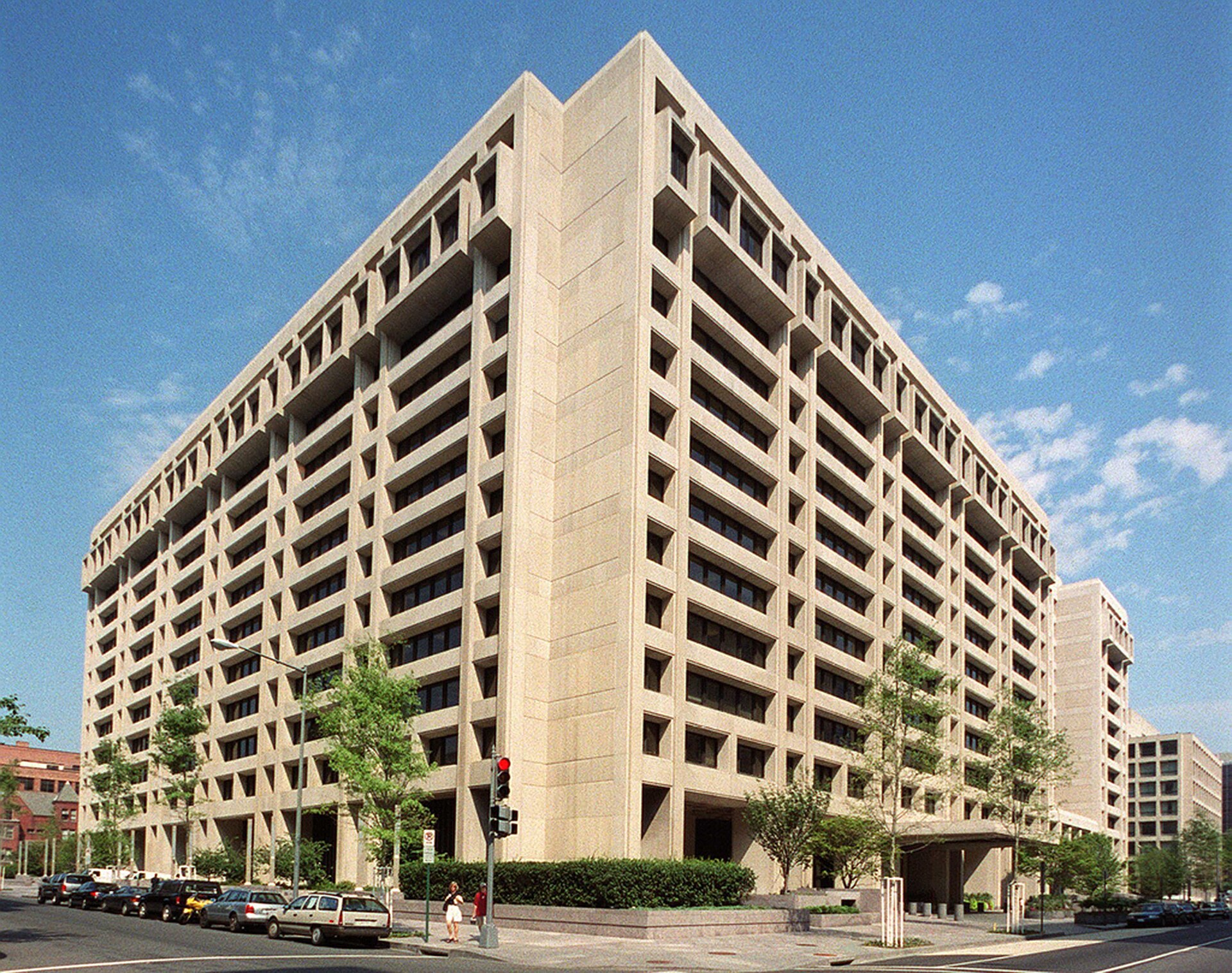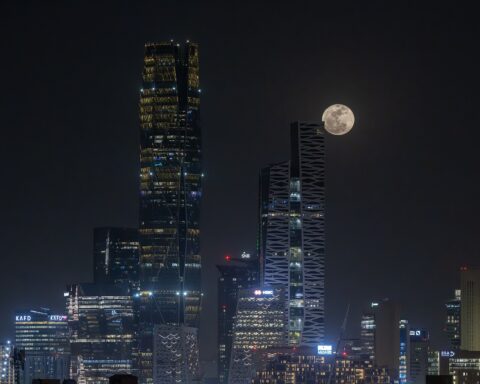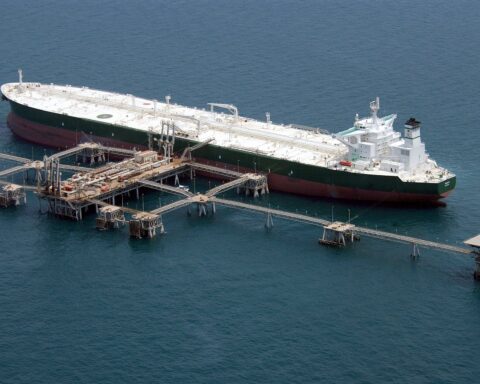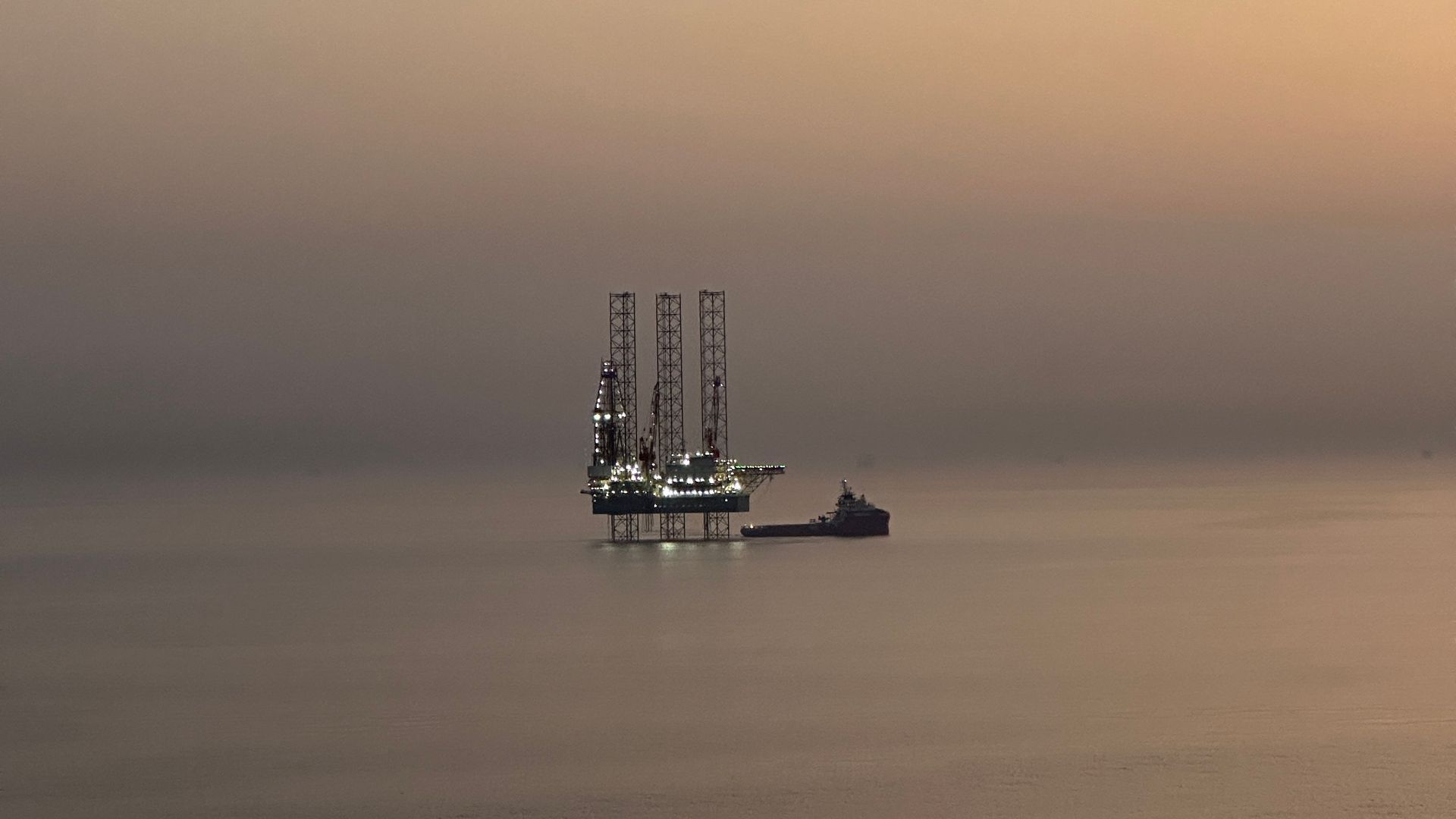

DHAHRAN — On the night of October 13, the Houthis did not strike a pipeline, a refinery, or a processing plant. They struck the address — Saudi Aramco’s corporate headquarters in Dhahran, where the board of the world’s largest listed company meets, its executives work, and the 98.2 percent government shareholder collects the dividends that fund a kingdom. A company source told Reuters that a ballistic missile hit the headquarters complex, damaging the top three floors of an office tower and starting a fire that was later extinguished. The Saudi Energy Ministry confirmed the attack on an administrative building but reported no casualties and no impact on operations. The Saudi-led coalition offered a different account: shrapnel from an interception falling in a residential area of Dhahran. Whether the missile struck the building or its debris did, the result was the same — fire in the compound where Aramco has been headquartered since 1952, on the same night the company’s CEO told the World Petroleum Congress in Riyadh that no single nation could safeguard global energy supplies alone.
Table of Contents
- What Hit the Aramco Headquarters on October 13
- Why Did the Houthis Target the Headquarters Instead of a Pipeline?
- The Congress That Opened as the Headquarters Burned
- What Does the Dhahran Strike Mean for Aramco’s $1.66 Trillion Valuation?
- How Did a Missile Reach Saudi Arabia’s Most Defended Address?
- The Fiscal Address
- From Abqaiq to Dhahran: What Changed in the Houthi Target List?
- What Has Riyadh Signalled?
- Frequently Asked Questions
What Hit the Aramco Headquarters on October 13
The strike came in the evening hours of October 13. Reuters, citing a company source, reported that a ballistic missile struck the headquarters complex in Dhahran, hitting an office tower and damaging its top three floors. The building caught fire. Bloomberg confirmed the fire was subsequently extinguished. The Saudi Energy Ministry issued a statement acknowledging the attack on “an administrative building belonging to Saudi Aramco in the eastern city of Dhahran,” describing it as causing “a limited fire” with no recorded casualties.
Aramco stated that operations remained unaffected — no damage to core energy production or export infrastructure. The company’s crude output, already constrained by the broader conflict, continued uninterrupted. No processing facility, pipeline, or export terminal was involved.
The coalition’s account diverged. A statement said “shrapnel from an interception fell in part of a residential area in Dhahran,” a formulation that left open whether the administrative building suffered a direct hit from the incoming missile or was struck by falling debris after an intercept attempt. Neither version has been formally reconciled. The Energy Ministry’s confirmation that the building was “attacked” sits uneasily beside the coalition’s suggestion that the damage resulted from a successful interception.
The attack followed a day of escalation on both sides. Earlier on October 13, the Saudi-led coalition conducted air strikes on the Yemen Petroleum Company’s al-Sabah station in Sanaa, according to Al Jazeera. The Houthis framed the Dhahran strike as direct retaliation — an energy facility for an energy facility.
Hours before the missile reached Aramco’s compound, Houthi military spokesman Yahya Saree had pre-announced the headquarters as a target. He published GPS coordinates and listed “the Aramco headquarters in Dhahran and an oil refinery in Riyadh” among the intended strike points. Saree declared oil facilities “a legitimate target for our forces” and issued a warning: all employees and citizens present near any facility belonging to Aramco should “evacuate it and move away.” He added that “any Saudi attack on Sanaa would be met with a firm and painful response in the Saudi capital, Riyadh.”
The Middle East briefing 3,000+ readers start their day with.
One email. Every weekday morning. Free.
The pre-announcement gave Aramco — and the Saudi air defence network — hours of notice. The building was struck regardless.
Why Did the Houthis Target the Headquarters Instead of a Pipeline?
The Houthis targeted Aramco’s headquarters in Dhahran — rather than a pipeline, refinery, or terminal — because the compound is the corporate and administrative nerve centre of the world’s most valuable energy company. Previous attacks struck production infrastructure. The Dhahran strike targeted the seat of management, where Aramco’s board convenes and its executive leadership operates, signalling an escalation from disrupting output to threatening institutional continuity.
Since early October, the Houthis had warned civilians away from oil facilities — a pattern the Associated Press reported on October 8. But the designation of the Dhahran headquarters as a named target, with coordinates published in advance, marked a departure from earlier targeting. The pre-announcement was itself a weapon. Publishing GPS coordinates of a corporate headquarters and issuing a public evacuation warning transforms every employee’s commute into a risk calculation. The damage begins before the missile is launched.
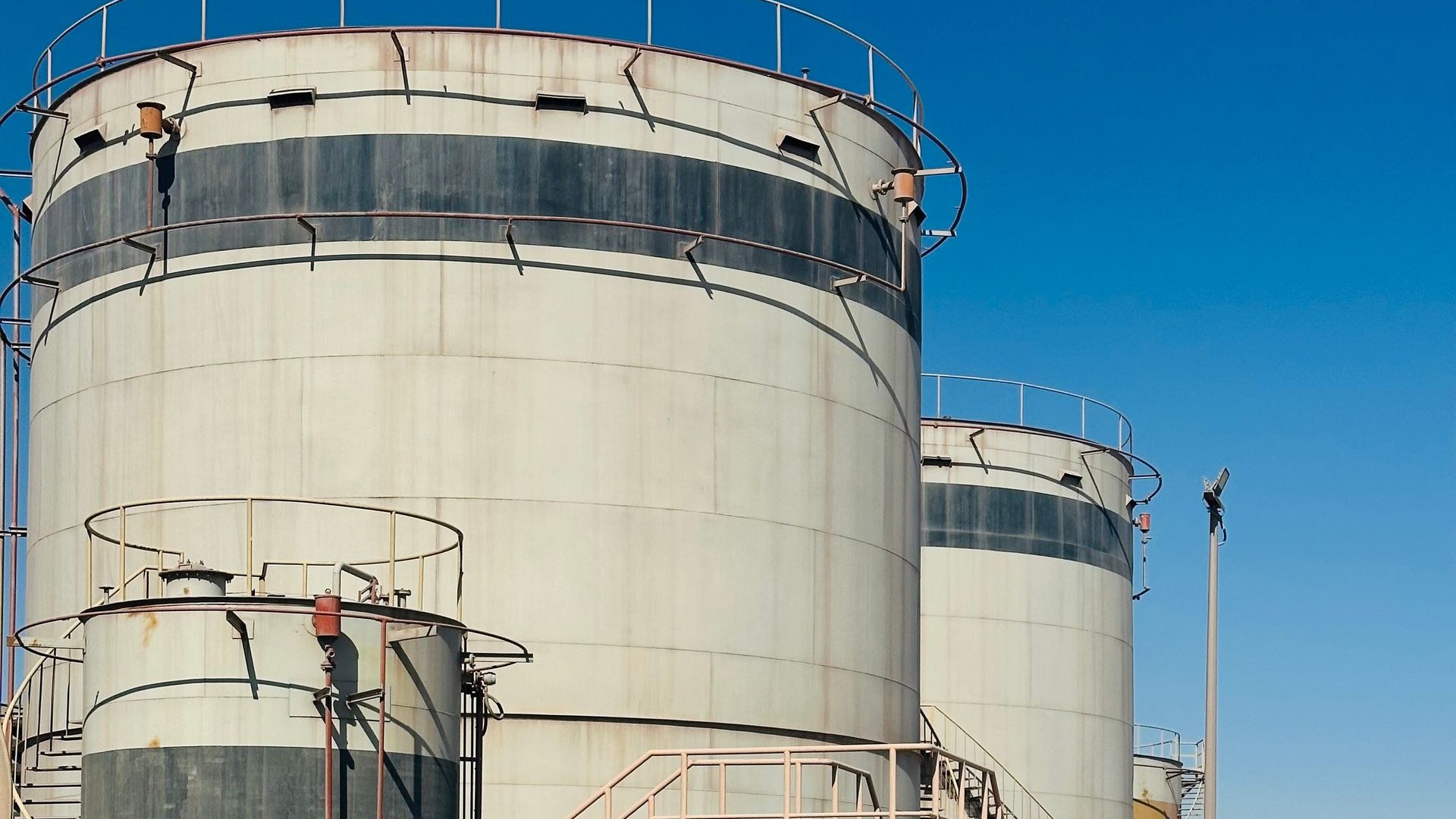
Dhahran is a company town in the most literal sense. Saudi Aramco has been headquartered there since 1952, when the company moved its administrative base from New York. The city grew around the oil industry. Its residential camp, founded in the late 1930s after commercial quantities of oil were discovered at Dammam No. 7 in 1938, houses over 11,000 residents, including Aramco employees and their families. The compound — 58 square kilometres of gated, self-contained campus — hosts a major operations centre overseeing onshore and offshore rigs, pipelines, refineries, and export terminals, according to Reuters. It is not a replaceable field office. It is the institutional address from which the world’s largest oil company is governed.
The Houthis have, over the course of the current conflict, moved from targeting military installations to civilian airports — King Khalid International Airport in Riyadh was struck on October 10, killing at least twelve and wounding more than 300 — and now to the corporate headquarters of the national oil company. The progression follows a logic in which each target carries greater symbolic and economic weight than the last. A military base is a combatant’s asset. An airport is civilian infrastructure with commercial insurance and repair timelines. A corporate headquarters is the legal domicile of the company — the address where fiduciary duty to shareholders is discharged.
The Congress That Opened as the Headquarters Burned
The 25th World Petroleum Congress was Saudi Arabia’s showcase — the kingdom’s first time hosting the event, which was inaugurated in 1933. It was meant to project Saudi Arabia as the stable centre of global energy at a moment when that stability was under direct military threat. Instead, the chief executives of the industry’s largest Western companies declined to appear.
Five CEOs of the industry’s largest Western oil companies withdrew from the programme, according to Reuters: ExxonMobil’s Darren Woods, TotalEnergies’ Patrick Pouyanné, Shell’s Wael Sawan, Chevron’s Mike Wirth, and BP’s Meg O’Neill. A BP spokeswoman explained: “We made every effort to participate. Unfortunately, due to travel disruption we are unable to be there in person.” The travel disruption was specific. King Khalid International Airport — the primary gateway for international arrivals — remained closed after the October 10 missile strike. The United Kingdom, France, and Germany had issued travel warnings for Riyadh. Opening day at the congress was sparse — many country pavilions and company stands sat empty, and Italy’s energy minister opted to participate by video rather than travel.
“No one nation, even one as capable and confident as ours, can safeguard them alone.”— Amin Nasser, Saudi Aramco CEO, World Petroleum Congress, Riyadh, October 13, 2026
Amin Nasser, Aramco’s chief executive, delivered his address at the congress on October 13 — the same day the Dhahran compound was hit. The remark referred to global energy supplies — intended as a call for multilateral security cooperation. Delivered on the day his company’s headquarters caught fire 400 kilometres to the east, it read as something closer to an admission.
The congress was conceived long before the current escalation as a platform for Saudi Arabia to demonstrate its capacity as a reliable supplier. Riyadh built the congress around an agenda of investment, transition, and long-term supply commitments. Aramco’s messaging to industry partners and investors had been consistent throughout the autumn. In September, Nasser told the Saudi Gazette that disruptions “typically last days, not weeks or months.” The October 13 strike did not contradict that assessment in production terms — output was unaffected. But the image of a burning office tower at the host company’s headquarters, on the same day the industry’s premier gathering opened in the host country’s capital, was not the kind of disruption measured in barrels or days.
Five empty chairs at the executive panel told the industry’s assessment more plainly than any analyst note.
What Does the Dhahran Strike Mean for Aramco’s $1.66 Trillion Valuation?
The strike introduces a category of risk that production data alone cannot address. Saudi Aramco’s market capitalisation stood at approximately $1.66 trillion before the attack, with shares trading at 25.78 Saudi riyals on the Tadawul exchange. The Saudi government controls 98.2 percent of the company — 94.2 percent directly and 4.0 percent through the Public Investment Fund — making any sustained decline in the share price a matter of sovereign, not merely corporate, consequence.
The strike occurred after Tadawul’s trading hours. The exchange was closed when the fire was confirmed. When the Tadawul opened on October 14, Aramco shares fell 0.85 percent to SAR 25.68 — a modest percentage decline applied to a SAR 6.24 trillion market capitalisation. Brent crude, which had settled at approximately $106.25 on October 13, held near $106.22–$106.39 the following day — a muted spot reaction reflecting the absence of any production disruption. The deferred curve told a different story. WTI contracts for 2027 delivery hit record levels near $84 per barrel, and Brent’s 2027 strip set records near $90, according to trading data — pricing that suggests the market sees structural supply risk extending well beyond the immediate crisis.
Aramco’s Q3 2026 financial results are scheduled for release on November 3 — the same day as the United States midterm elections. The Q3 reporting period covers July through September and will not directly capture the October 13 strike. But the earnings call will be the first opportunity for analysts to question management about security at the Dhahran compound, about insurance provisions, and about whether the company intends to disperse its corporate functions across multiple sites. Q2 2026 adjusted net income was $33.4 billion, according to QNA.
The December 2019 IPO raised $25.6 billion at a valuation of $1.7 trillion. Since then, Aramco has operated as both a publicly listed company answerable to minority shareholders and a fiscal instrument of the Saudi state. The government’s dividend is not discretionary — it is the foundation of a fiscal model already under acute pressure.
The 1.8 percent public float — the shares not held by the government or PIF — is small by the standards of a $1.66 trillion company. But the float includes sovereign wealth funds, index-tracking ETFs, and institutional investors whose mandates require them to assess political risk. A production disruption is a familiar risk category with established insurance markets and recovery timelines. An office tower with its top three floors burned out is not.
How Did a Missile Reach Saudi Arabia’s Most Defended Address?
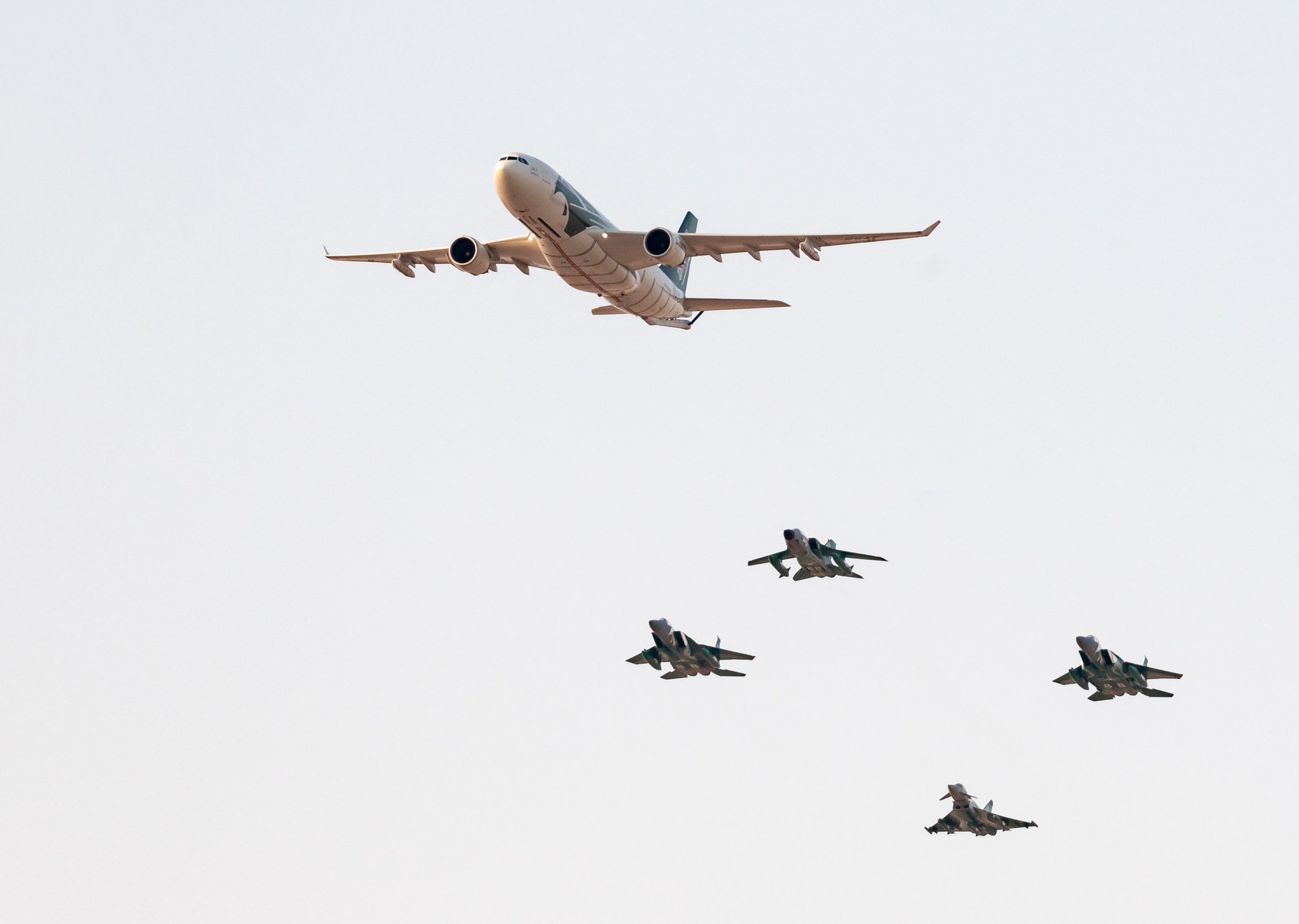
The Dhahran area is one of the most defended locations in Saudi Arabia. King Abdulaziz Air Base, home to RSAF Aviation Wing 1, is located in Dhahran. The Eastern Province hosts layered air defence systems and proximity to the Royal Saudi Air Force’s Eastern Region command. More than 100 US military advisers have been deployed to support Saudi operations with intelligence, according to CNN. The coalition’s own statement about “shrapnel from an interception” implies that defence systems engaged the incoming missile. But the result — a burning office tower — raises the question of what the interception accomplished.
The coalition’s language warrants scrutiny. If the missile was successfully intercepted, the question becomes how falling debris from a midcourse or terminal intercept caused a fire severe enough to damage three floors of an office tower. Debris from a ballistic missile, even after a successful kill, can weigh hundreds of kilograms and arrive at high velocity. A successful intercept does not guarantee that the target area is undamaged — it means the warhead did not function as designed. Whether the fire resulted from warhead fragments or propellant debris, the administrative building suffered structural damage. The distinction between “hit by a missile” and “hit by interception debris” matters to the coalition’s credibility. It matters less to the building.
If the missile was not intercepted — if a ballistic missile penetrated the air defence umbrella over Dhahran and struck the Aramco headquarters directly, as Reuters’ company source described — then the failure is of a different kind. Dhahran is not a remote pipeline junction in the Empty Quarter. It is the administrative seat of the national oil company, adjacent to a major RSAF air base, in a metropolitan area of more than one million people.
The Houthis pre-announced the target. Saree named the Dhahran headquarters, published coordinates, and issued a public evacuation warning hours before the missile arrived. The defenders knew where it was aimed before it launched. The Saudi Energy Ministry’s confirmation — that an administrative building was attacked, that a “limited fire” resulted, that no casualties were recorded — read as damage control for an outcome that the air defence architecture was supposed to prevent.
The Fiscal Address
Saudi Aramco does not merely produce oil. It produces the Saudi budget. The government’s 98.2 percent stake — and the dividends that flow from it — are the single largest revenue line for the Saudi government, and the spending plans are calibrated accordingly.
Those plans are already failing. The Saudi Ministry of Finance revised its 2026 fiscal deficit to SAR 245 billion — a 48 percent overshoot above the original SAR 165 billion target, according to Reuters. Saudi real GDP was projected to contract by 3.6 percent in 2026, driven by a 21.8 percent decline in oil activities. Vision 2030’s fiscal model depends on Aramco dividends to fund the non-oil economy that is supposed to eventually replace them.
Aramco’s production has been compressed by the war. The IEA reported in September that Saudi crude supply had fallen to 5.97 million barrels per day — against an OPEC+ target of 10.5 million barrels per day for November. The company cut its November Arab Light pricing to Asia to $5 below the Oman-Dubai benchmark, the widest discount since June 2020 — a concession to customers reassessing supply risk from the kingdom.
The East-West pipeline, with a design capacity of approximately 7 million barrels per day, was restarted on September 22 after earlier disruption. It routes crude to Yanbu on the Red Sea coast, bypassing the Strait of Hormuz but not the wider conflict. The Dhahran headquarters sits at the eastern terminus of Saudi Arabia’s oil infrastructure: the point from which production schedules are set, pricing decisions are made, export logistics coordinated, and diversification strategies administered.
Hitting Dhahran did not reduce output by a single barrel. But Aramco’s administrative functions — contracts, scheduling, counterparty communications, regulatory compliance, investor relations — flow through the compound. A welding crew can repair a processing tower. Corporate governance requires people at desks, in an office, at a known address.
From Abqaiq to Dhahran: What Changed in the Houthi Target List?
The 2019 Abqaiq-Khurais attack and the 2026 Dhahran headquarters strike sit at opposite ends of the same targeting spectrum. In September 2019, drone and cruise missile attacks on the Abqaiq processing facility and the Khurais oil field cut Saudi production from approximately 9.8 million barrels per day to 4.1 million — a loss of 5.7 million barrels per day representing roughly 5 percent of global supply, according to the US Energy Information Administration. Saudi Aramco restored Abqaiq to 2 million barrels per day within 48 hours. The physical infrastructure was repairable. The production impact, while severe, was transient.
The Dhahran strike inverted the equation. No production was lost. No processing equipment was damaged. But the target was the corporate identity of the company — the place where the name is registered, the annual report is filed, and the board meets. Abqaiq answered the question of whether Saudi oil infrastructure could be physically disrupted. The Dhahran strike asks whether the institution itself — as a governed, managed, investable entity — can operate under direct military threat to its headquarters.
| Abqaiq-Khurais (Sep 2019) | Dhahran HQ (Oct 2026) | |
|---|---|---|
| Target | Processing facility, oil field | Corporate headquarters |
| Production impact | −5.7 mb/d (58% of output) | None reported |
| Weapon | Drones and cruise missiles | Ballistic missile (per Reuters company source) |
| Claimed by | Houthis (Iran suspected) | Houthis (pre-announced with coordinates) |
| Warning issued | None | Public evacuation notice, hours in advance |
| Recovery | 2 mb/d within 48 hours | No production to restore |
The Houthis’ October campaign has followed an escalating sequence. The World Petroleum Congress — intended as a showcase for Saudi Arabia’s energy leadership — became the backdrop. King Khalid International Airport was struck on October 10 and closed indefinitely. Three days later, the Aramco headquarters. The progression from military targets to civilian infrastructure to the corporate seat of the national oil company traces a deliberate arc.
The Houthis had also claimed to have struck an Aramco site in Riyadh on October 3, which the coalition dismissed as “misleading,” according to Al Jazeera. Whether or not that earlier claim was accurate, the pattern of declaring Aramco facilities as designated targets — naming them, publishing their coordinates, issuing public warnings — represents a campaign to make the company’s entire footprint a contested space. The target is no longer a specific processing node that can be hardened and repaired. It is the institution.
What Has Riyadh Signalled?
Saudi Crown Prince Mohammed bin Salman warned that the Houthis would face consequences for repeated attacks, according to a cabinet statement reported by Fox News. Energy Minister Prince Abdulaziz bin Salman was more direct. Neither official specified what form the response would take.
“Our response must be equally serious.”— Prince Abdulaziz bin Salman, Saudi Energy Minister, October 13, 2026
The coalition had already struck Yemen on October 13, hitting the al-Sabah oil facility in Sanaa before the Dhahran missile was launched. The Houthis framed the Aramco headquarters strike as retaliation for that raid. The exchange follows a pattern that has persisted since the escalation began in July: coalition strikes on Houthi-held territory, Houthi missile and drone attacks on Saudi cities and infrastructure, further coalition strikes. Each cycle raises the ceiling of what counts as an acceptable target.
Trump weighed in from Truth Social. “I thought they learned their lesson a year ago when we bombed the HELL out of them and, at their request, stopped,” he wrote, adding that the Houthis had “emerged again, probably at the behest of Iran.” His reference to a previous bombing campaign was framed as a deterrent that had since failed. But his policy was constrained by the electoral calendar. Trump had ruled out strikes on Iran before the November 3 midterm elections, according to The National, reported on October 8. The midterms fall twenty-one days after the Dhahran strike.
Iran’s posture was diplomatic, or at least presented as such. Foreign Minister Abbas Araghchi offered on October 11 to “facilitate dialogue between Saudi Arabia and Yemen,” according to the BBC. The offer positioned Tehran as mediator. Two days later, the Houthis — whose relationship with Iran Trump himself had invoked — struck the Aramco headquarters.
The calendar ahead compounds the pressure. Riyadh Season opens October 21. The EU-GCC summit is scheduled for October 24, bringing European heads of state to a capital whose primary international airport remains closed. The Future Investment Initiative forum runs October 26–29. Each event was planned as a demonstration of Saudi Arabia’s stability and openness to investment. Each now requires a security guarantee that the October 13 strike — on the most symbolically charged corporate address in the kingdom — suggests the government cannot provide for its own national oil company, let alone for visiting delegations.
Nasser’s own assessment from September — that disruptions “typically last days, not weeks or months” — referred to production. The disruption to Aramco’s standing as a secure, governable institution is not on the same clock.
Frequently Asked Questions
When are Aramco’s next earnings reported, and will the Dhahran strike appear in the results?
Saudi Aramco’s Q3 2026 results are due November 3 — the same date as the United States midterms. The earnings call, not the headline numbers, will be the critical event: it is the first forum where analysts can formally ask whether Aramco carries business interruption or headquarters insurance, whether its board has authorised a continuity plan that disperses corporate functions, and whether the company will restate any existing guidance. The Q3 figures themselves — covering July through September — precede the October 13 strike by two weeks and will show nothing of it. The November 3 timing means any market-moving commentary from management will compete for attention with election-night coverage.
Has Saudi Aramco’s Dhahran headquarters been targeted before?
The Dhahran area has been in range of hostile fire before. On February 25, 1991, an Iraqi Scud missile struck a US Army barracks in the Dhahran area, killing 28 American soldiers and wounding 99 — the single deadliest attack on US forces during the Gulf War. The Patriot air defence system failed to intercept the missile due to a software tracking error. But the Aramco corporate headquarters compound had not been a named target in the current conflict prior to October 13, 2026. The 2019 Abqaiq-Khurais attacks struck processing infrastructure elsewhere in the Eastern Province. Pipeline junctions and export terminals have been targeted since July 2026. The headquarters — where the company’s board meets and its governance functions are housed — represents a distinct category: an attack on the company’s institutional identity rather than its production capacity.
What is the East-West pipeline and does it allow Aramco to bypass the Strait of Hormuz?
The East-West pipeline (Petroline) connects the Eastern Province oil fields to the Red Sea port of Yanbu, with a design capacity of approximately 7 million barrels per day. It was restarted on September 22 after earlier wartime disruption, according to Baird Maritime citing Reuters. The pipeline allows Saudi crude to reach international markets without transiting the Strait of Hormuz. However, the Red Sea itself is within Houthi operational range — Yanbu has been targeted in previous waves of the conflict — and the pipeline’s eastern intake infrastructure is in the same Dhahran-Dammam corridor that the October 13 strike reached. The pipeline diversifies the export route but does not remove either end from the threat zone.
What major events are scheduled in Riyadh in the weeks following the Dhahran strike?
Riyadh Season (October 21), the EU-GCC summit (October 24), and the FII forum (October 26–29) are all on the calendar. None has been formally cancelled. With KKIA closed, the practical question for the EU-GCC summit is how European heads of state and their security details enter the country — Prince Mohammed bin Salman International Airport in Medina and King Abdulaziz International in Jeddah are the most viable alternatives, each adding hours of travel time from Riyadh. The FII is the sharper test: institutional investors are not bound by diplomatic protocol and can decline without explanation. Whether major sovereign wealth funds and asset managers send their principals — or send deputies, or send no one — will be the first market signal of how the financial community prices Saudi Arabia’s security risk after the Aramco headquarters strike.