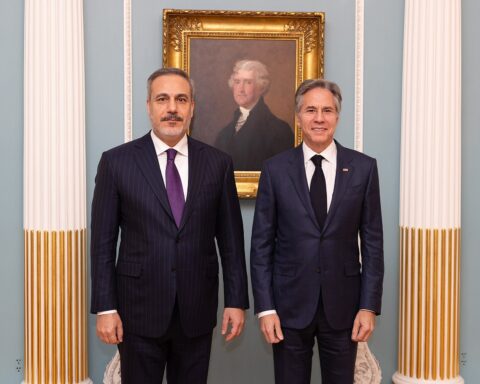
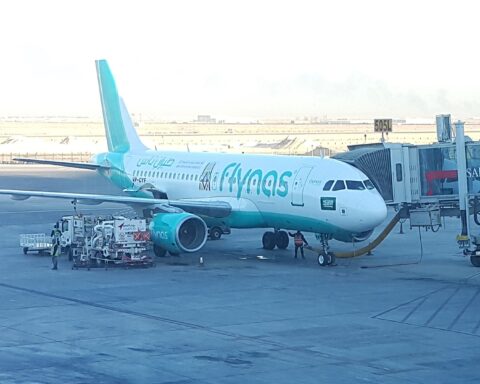
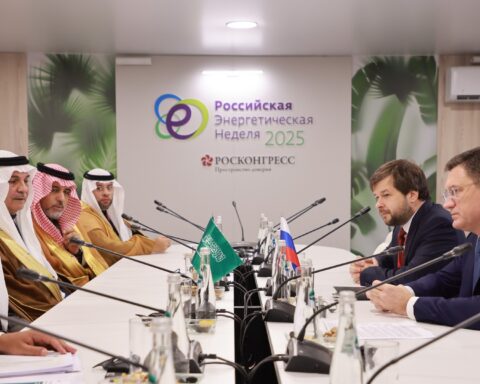
WASHINGTON — The State Department notified Congress on September 17 of a proposed $24.3 billion sale of forty-eight F-35A stealth fighters to Saudi Arabia, and the deal ran straight into a Defence Intelligence Agency report questioning whether sites housing the most classified aircraft in the American arsenal could be secured, given Saudi Arabia’s use of Chinese technology in telecommunications and defence installations. Two days later, Turkish Foreign Minister Hakan Fidan told the broadcaster NTV that Saudi Arabia may have military needs, “especially on some technical issues,” and that Turkey would have “no issues” meeting them. He did not say what Turkey would supply.
The question is not whether Congress blocks the sale; no resolution of disapproval has been tabled and the thirty-day review runs to mid-October. The question is whether Riyadh designed the fallback before Washington created the need, and whether the Mecca Joint Defence Agreement signed August 7 with Turkey and Pakistan was always intended as an arms-procurement corridor wearing the uniform of collective defence.
With no floor action in either chamber eight days into the thirty-day review, congressional opposition to the $24.3 billion sale has so far gone no further than statements.
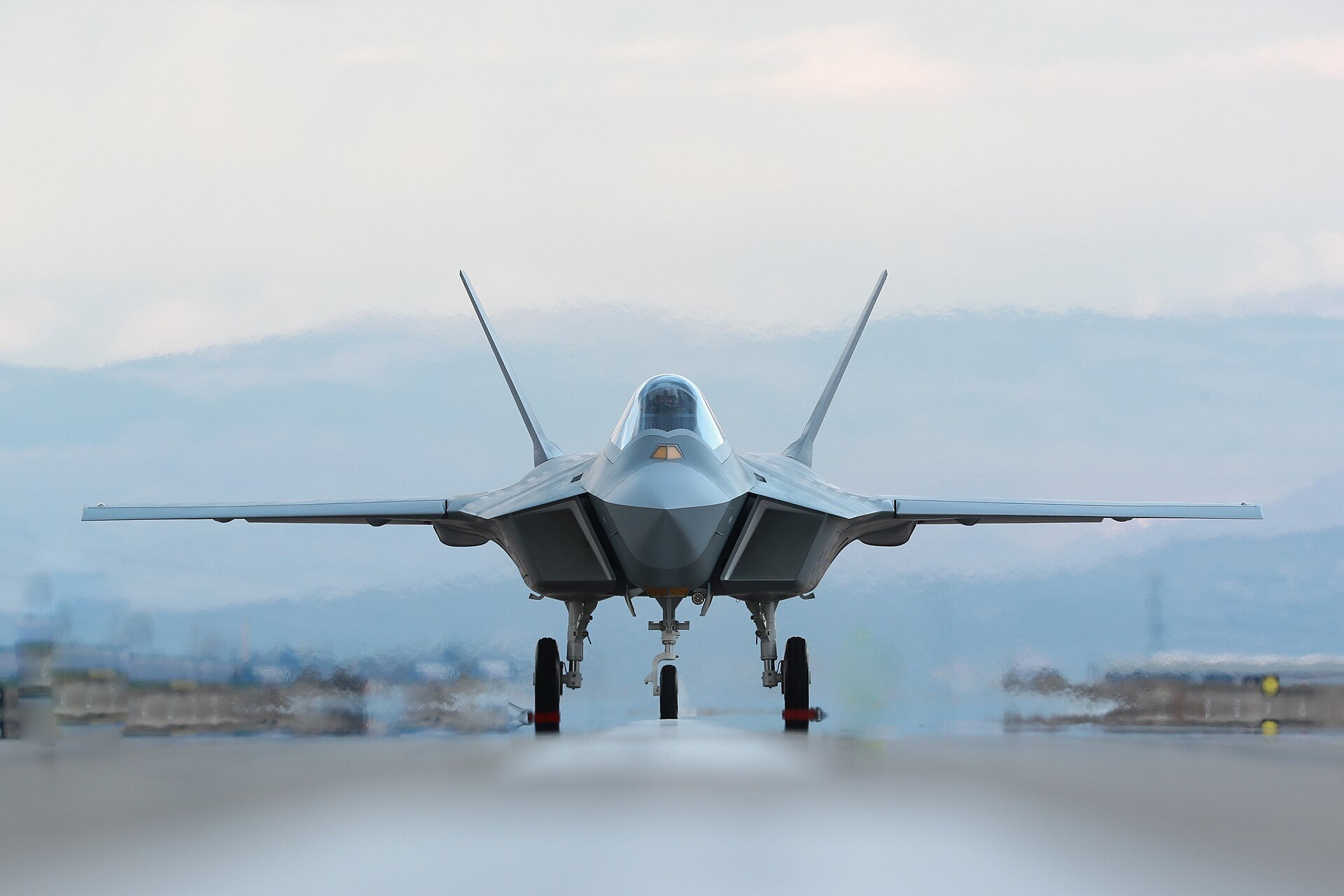
Table of Contents
- The Sale That Arrived with Its Own Objection
- What Did the DIA Find Inside Saudi Bases?
- The Mecca Pact’s Defence-Industrial Corridor
- Can Turkey Actually Replace the F-35?
- Five Days, One Cockpit Canopy, and Hong Kong
- Who Controls the Architecture Riyadh Signed?
- Does Riyadh Need the F-35 or the Leverage?
- Frequently Asked Questions
The Sale That Arrived with Its Own Objection
The package — forty-eight F-35As and a spare engine — was formally submitted to Congress on September 17, 2026, triggering the mandatory thirty-day review during which either chamber can pass a joint resolution of disapproval. Representative Raja Krishnamoorthi, a member of the House Intelligence Committee, issued a statement whose bluntness left no room for diplomatic hedging.
The Trump Administration should not move forward with its proposed sale of F-35 fighter jets to Saudi Arabia when our own intelligence community is warning that it could put the crown jewels of American military technology within reach of the Chinese Communist Party.
Rep. Raja Krishnamoorthi (D-IL)
The HOS Daily BriefThe Middle East briefing 3,000+ readers start their day with.
One email. Every weekday morning. Free.
The line between political opposition and institutional objection matters here. The congressional sceptics are not arguing, as they did during the Obama-era Saudi arms debates, that the weapons will be used to kill civilians in Yemen; they are arguing that the weapons will be compromised before they leave the crate — that the intelligence environment inside Saudi Arabia is structurally incompatible with the security protocols the F-35 requires. This is not a human-rights objection but a counterintelligence one, and it carries a different weight on Capitol Hill because it draws on a Defence Intelligence Agency report.
The distinction matters for a second reason. Turkey was expelled from the F-35 programme in July 2019 for purchasing Russia’s S-400 air-defence system — a conscious procurement decision Ankara made knowing the consequences. The Saudi case is architecturally different: the DIA is not objecting to what Riyadh bought from a rival power but to what a rival power’s companies have already installed inside the kingdom. Buying a Russian weapons system is a choice; hosting Chinese telecommunications infrastructure across your defence-adjacent facilities is a condition.
If the sale survives, Saudi Arabia becomes the first Arab state to operate the F-35 — a milestone the Trump administration framed, when it signed the US-Saudi Strategic Defence Agreement granting Riyadh Major Non-NATO Ally status in November 2025, as the centrepiece of a recalibrated alliance. If it does not, Riyadh faces an arms-market reality in which the country promised the aircraft as part of a strategic bargain discovers that the bargain’s most visible deliverable was never fully in Washington’s gift.
What Did the DIA Find Inside Saudi Bases?
According to AP’s account of the DIA report, it questioned whether US and Saudi forces could secure sites housing the aircraft, citing Chinese military personnel’s access to Saudi bases and Saudi Arabia’s widespread use of Chinese technology in telecommunications and defence installations.
Concerns attributed to the Pentagon’s own intelligence agency were cited in a November 19, 2025, letter from Representatives Krishnamoorthi, Joe Courtney, and Donald Norcross to Defence Secretary Pete Hegseth and Secretary of State Marco Rubio — ten months before the State Department formally notified the sale.
The November 2025 letter asked how far Saudi Arabia’s defence ministry uses digital services from Chinese companies including Huawei and China Telecom, and whether Riyadh could trade F-35 technology to Beijing. The sale was notified ten months later, with those concerns still being argued over in Congress.
The Mecca Pact’s Defence-Industrial Corridor
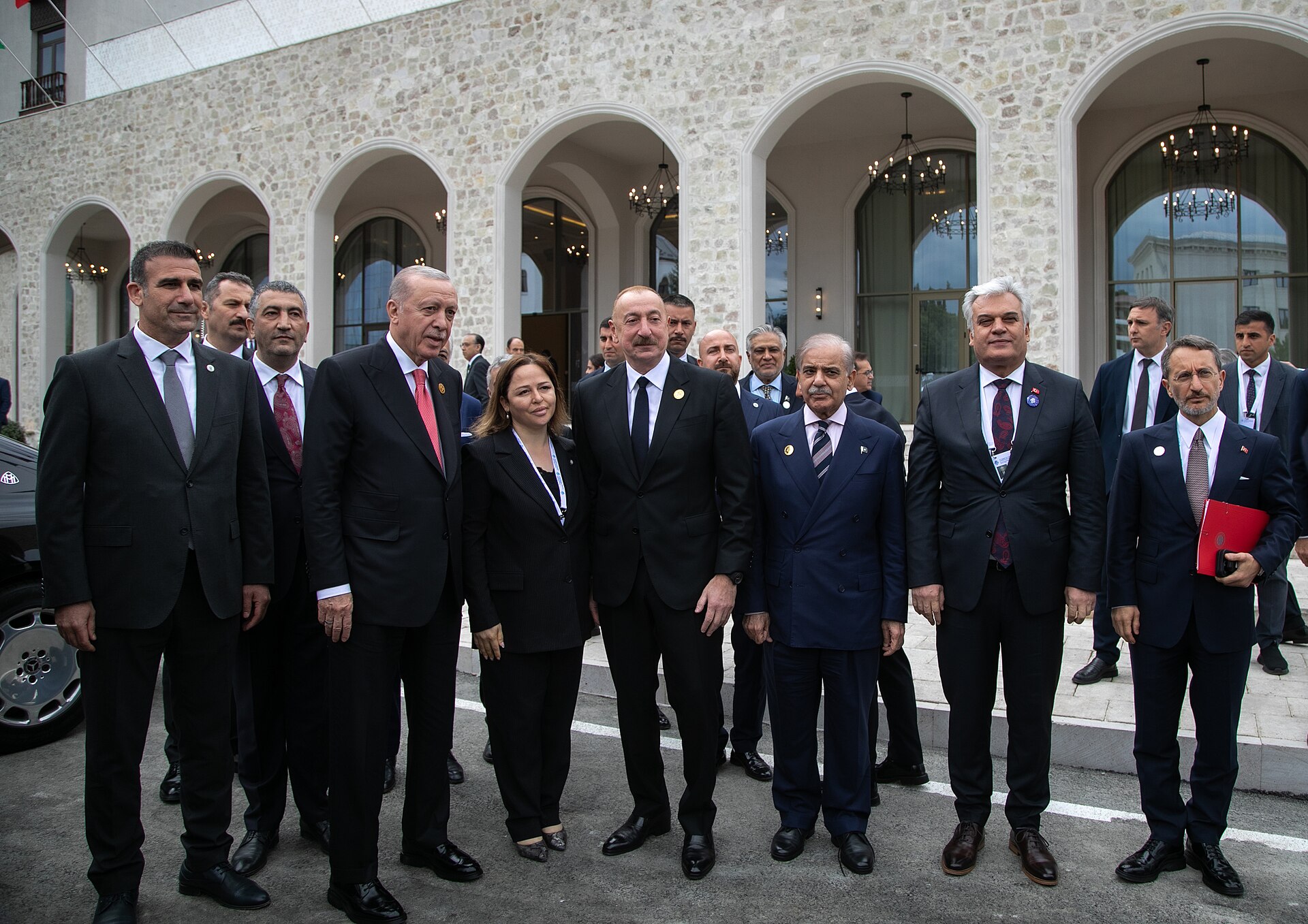
The Mecca Joint Defence Agreement signed on August 7, 2026, by Crown Prince Mohammed bin Salman, President Recep Tayyip Erdogan, and Prime Minister Shehbaz Sharif formalises collective security in language similar to NATO’s collective-defence clause: any armed attack against one signatory is to be regarded as an attack against all three. The pact builds on the bilateral Strategic Mutual Defence Agreement between Saudi Arabia and Pakistan signed on September 17, 2025 — exactly one year to the day before the State Department notified Congress of the F-35 sale — and Turkey was added almost eleven months after the bilateral deal, with officials meeting in Istanbul on August 31 agreeing to set up a secretariat in Riyadh.
| Date | Event |
|---|---|
| Feb 21, 2024 | Turkish KAAN fifth-generation fighter maiden flight |
| Sep 17, 2025 | Saudi-Pakistan bilateral Strategic Mutual Defence Agreement signed |
| Nov 19, 2025 | Krishnamoorthi/Courtney/Norcross letter cites DIA concerns to Hegseth and Rubio |
| Aug 7, 2026 | Mecca Joint Defence Agreement signed (Saudi Arabia, Turkey, Pakistan) |
| Aug 31, 2026 | Istanbul meeting agrees to set up a secretariat in Riyadh |
| Sep 17, 2026 | State Department notifies Congress of $24.3B Saudi F-35A sale |
| Sep 19, 2026 | Fidan says Turkey would have “no issues” meeting Saudi military needs |
| Sep 22, 2026 | Australia confirms F-35 parts were diverted to Hong Kong |
| ~Oct 17, 2026 | Congressional 30-day review window expires |
| 2028 | First KAAN deliveries to Turkish Air Force expected by TAI |
The combined military inventory the pact commands is difficult to dismiss: approximately 1.4 million active personnel, 3,400 aircraft, 6,000 tanks, and 340-plus naval assets, according to Al Jazeera’s reading of the 2026 Global Firepower Index. Umar Karim, a University of Birmingham expert on Saudi foreign policy, told AFP the alignment “is clearly oriented towards Iran and meant to address Iran’s new strategic approach which is geared towards dominance of the broader Gulf region.” The Council on Foreign Relations’ Steven Cook went further, titling his analysis “The U.S.-Led Middle East Order Is Over. The Mecca Agreement Proves It.” — a conclusion that may overstate the rupture but identifies the direction of travel accurately enough to make Washington uncomfortable.
What matters more than the Article 5 language, however, is the defence-cooperation agenda beneath it. Fidan’s September 19 statement that Turkey would have “no issues” meeting Saudi military needs, “especially on some technical issues,” did not say what Turkey would supply, but its emphasis on technical issues pointed towards industry rather than war-fighting. When Saudi Arabia’s defence expenditure is already strained by a war it cannot afford and an air-defence shortfall it has not resolved, the gap between a security alliance that may never fire a shot and a procurement channel that has already supplied drones becomes the pact’s most consequential feature.
Can Turkey Actually Replace the F-35?
Not as a direct substitute — the KAAN flies on different engines, lacks the F-35’s sensor-fusion maturity, and is not expected to begin deliveries until 2028. But Turkey does not need to match the F-35 spec-for-spec to change Riyadh’s negotiating position. An available fifth-generation-adjacent aircraft without a congressional review attached alters the calculus even if it never enters Saudi service.
Whether Turkey can replace the F-35 depends almost entirely on which part of the aircraft’s value proposition Riyadh believes it is buying, because Turkey’s KAAN is not the F-35, does not pretend to be the F-35, and does not need to be the F-35 to alter the balance of negotiating power between Riyadh and Washington. The KAAN completed its maiden flight on February 21, 2024, and Breaking Defense reported in February that Turkish Aerospace was in the “final stages” of talks over Saudi participation in the KAAN programme.
If Saudi Arabia is buying stealth-penetration capability against a peer-level integrated air-defence network — the mission profile the F-35 was designed for against Russian-built S-300 and S-400 systems — the KAAN is not a substitute and will not be for years. The aircraft flies on GE F-110 engines in its current configuration, not the F135 that powers the F-35. Turkey’s planned indigenous engine, TEI’s TF35000, is described as producing at least 36,000 pounds of thrust, with integration and testing planned for 2029–2030.
If Riyadh is buying strategic diversification — a fifth-generation-adjacent aircraft from a supplier outside the US congressional review process — the KAAN becomes a fundamentally different proposition. The aircraft does not need to match the F-35 sensor-for-sensor to reshape Riyadh’s negotiating position; it needs only to exist as a credible enough platform that Congress understands the F-35’s monopoly on Gulf fifth-generation airpower is expiring, not permanent.
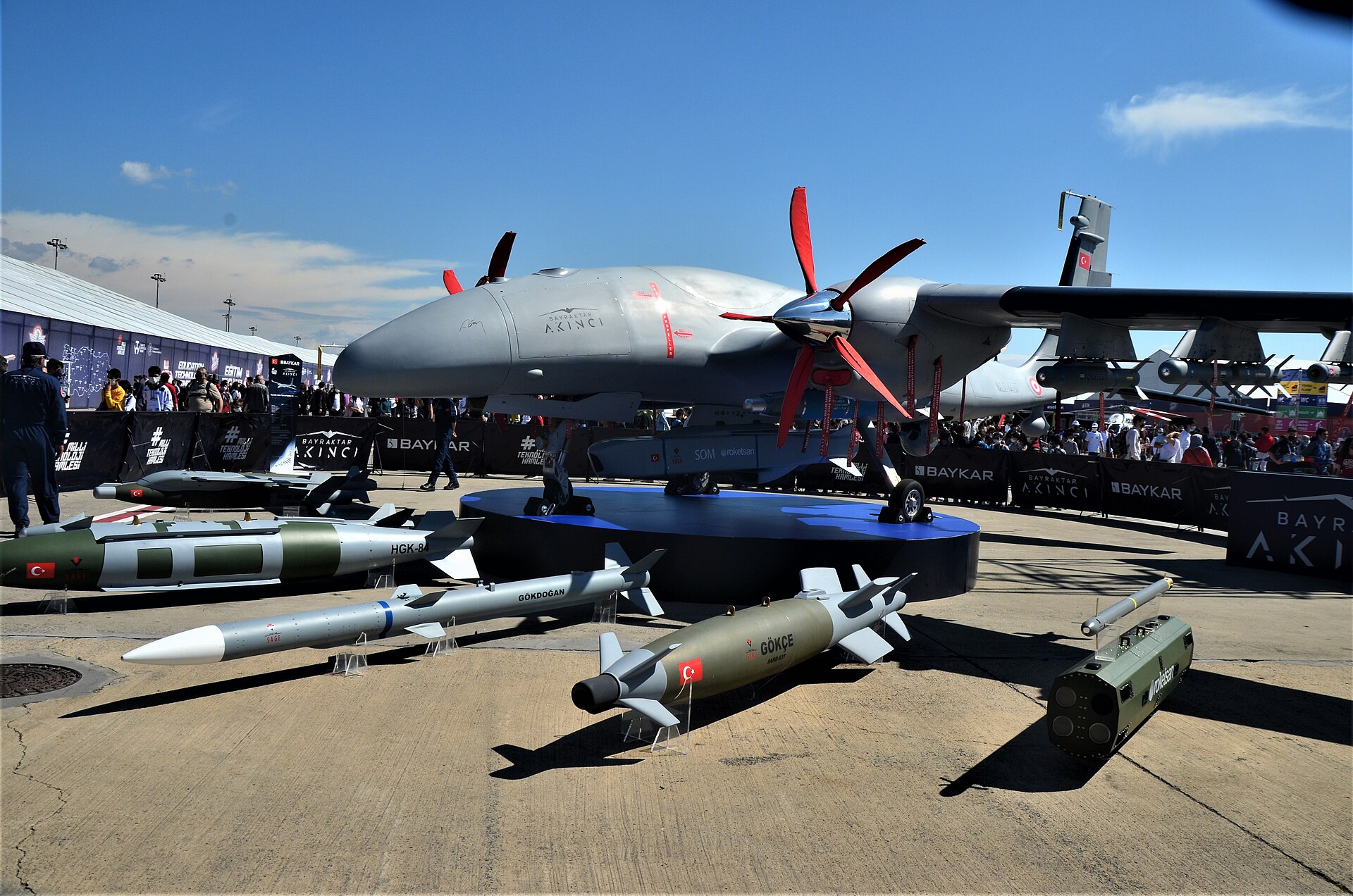
Turkey’s drone offering is both more mature and already inside the Saudi procurement pipeline. Riyadh agreed a deal with Baykar for Bayraktar Akinci heavy combat drones in July 2023, and the Royal Saudi Air Force is now listed as an operator, which places the Akinci far closer to the front line than any manned-fighter alternative under discussion. The Akinci does not replace the F-35 in any doctrinal sense, but it fills the persistent-surveillance and precision-strike role behind many of the sorties Saudi Arabia actually flies when its shield has underperformed, and it arrives without a thirty-day congressional review or a DIA counterintelligence assessment attached.
The timeline gap is the honest answer to the question this section asks. KAAN deliveries are two to three years away, and the F-35’s congressional clock runs out in mid-October. Turkey is not offering to replace the F-35 tomorrow — it is offering to ensure that a congressional rejection is a setback rather than a strategic orphaning, and that a congressional approval lands in a market where Riyadh has already demonstrated it does not depend on the approval to begin building a fifth-generation air force.
Five Days, One Cockpit Canopy, and Hong Kong
On September 22 — five days into the Saudi F-35 congressional review — Australia confirmed a Politico report that F-35 components bound for the United States, including a cockpit canopy with radar-deflecting technology and a weapons-bay door, had been diverted to Hong Kong. Bloomberg later reported that a UPS employee had missed a freight forwarder’s warning about the routing. Australian Defence Minister Richard Marles described the diverted components as not “sensitive,” a characterisation that sits uncomfortably with the fact that radar-deflecting technology is the physical embodiment of stealth — the difference between a fighter that disappears from radar and one that does not.
The diversion is operationally unrelated to the Saudi sale: it involved Australian parts, a shipping failure, and a Hong Kong endpoint with no connection to Riyadh. In every political sense, however, it landed on the desks of the congressional staffers reviewing the Saudi notification at the exact moment the DIA’s China-infrastructure concerns were shaping the debate’s trajectory. The argument that the F-35’s most sensitive technologies can be secured inside Saudi Arabia becomes measurably harder to sustain when F-35 components including a canopy with radar-deflecting technology were diverted to a jurisdiction Beijing administers, five days into the review window, through the programme’s own logistics chain.
The supply-chain breach also undercuts the secondary argument that the sale’s congressional advocates have been offering: that the F-35’s classified-maintenance environment operates on networks isolated enough to withstand the presence of Huawei equipment at adjacent Saudi facilities. A cockpit canopy that travels from Australia to Hong Kong through a missed shipping warning demonstrates that the programme’s security perimeter is only as reliable as its weakest logistics node, and that the weakest node may not reside in the kingdom the DIA flagged but inside the programme’s own supply chain.
For Riyadh, the Hong Kong diversion functions as both alibi and indictment simultaneously. It establishes that F-35 technology leakage is a programme-wide vulnerability rather than a Saudi-specific one, which weakens the case for singling out the kingdom’s telecommunications infrastructure as a disqualifying risk. But it also establishes that adding another operator in a contested counterintelligence environment compounds rather than isolates that programme-wide risk, and congressional opponents will deploy both arguments at once, because neither is wrong.
Who Controls the Architecture Riyadh Signed?
On paper, Riyadh does — the secretariat sits in Saudi Arabia. In practice, Turkey holds the manufacturing capacity (KAAN, Akinci, TB2, corvettes) and Pakistan supplies the nuclear deterrent the pact cannot name. The mutual-defence guarantee remains untested while the defence-industrial ties are already working, which means the architecture functions on Ankara’s terms. France reached a different conclusion: Macron’s military commitment to Yanbu — soldiers, radars and defence systems — delivered what the Mecca pact’s Article 5 language has not.
The Mecca agreement’s most consequential ambiguity is not whether it functions as a genuine mutual-defence treaty — a question the pact has not yet answered — but whether it creates an architecture Riyadh controls or one that absorbs Riyadh into terms set in Ankara and Islamabad. The secretariat sits in Riyadh, but the defence-industrial capacity overwhelmingly does not. Turkey manufactures the KAAN, the Akinci, the Bayraktar TB2 that rewrote the drone-warfare playbook from Libya to Nagorno-Karabakh, and naval corvettes. Pakistan contributes a nuclear deterrent the pact does not formally acknowledge and a military-industrial base that produces the JF-17 fighter jointly with China — the same China whose telecommunications infrastructure is the basis for the DIA objection threatening the Saudi F-35 sale.
The pact is also a bid by Ankara to become the primary non-Western defence supplier to the Gulf at the precise moment Washington’s ability to deliver its signature export platform is in question. Erdogan did not travel to Mecca in August to sign a collective-defence treaty against a threat that has not triggered a collective response in the seven weeks since; he travelled to position Turkey as the country that builds what America withholds, and Fidan’s September statement pointed in that direction.
Pakistan’s role in the architecture is more constrained than the size of its military suggests. Islamabad’s foreign ministry stated publicly that there had been “no discussions about launching a military response under the Mecca agreement”, a formulation that frames readiness as contingent rather than committed and stops well short of the automatic-response mechanism NATO’s Article 5 was designed to provide. Pakistan’s own deep defence relationship with Beijing — from the JF-17 co-production line to the Chinese-funded Gwadar port that sits on the approaches to the Strait of Hormuz — further complicates the counterintelligence environment the DIA has identified as the core F-35 risk. The Mecca pact’s three signatories include Turkey, removed from the F-35 programme over its Russian S-400 purchase, and Pakistan, which builds the JF-17 jointly with China, and that Riyadh chose these two states as its collective-security partners at the moment it was asking Congress to approve a $24.3 billion F-35 sale suggests either a strategic confidence in its ability to compartmentalise alliances or a bet that the sale was never coming and the pact needed to compensate for its absence. What Riyadh acquired when it bought a nuclear ceiling it cannot independently set may matter less than what it signed in Mecca with partners whose own procurement profiles serve as the template for the congressional objection Saudi Arabia now faces.
Does Riyadh Need the F-35 or the Leverage?
Probably the leverage. The F-35 addresses neither the air-defence gaps nor Prince Sultan Air Base’s lost deterrent role that defined Saudi vulnerability in the Iran crisis. What the aircraft delivers is a credential: confirmation that Washington trusts Riyadh with the most sensitive platform in its inventory. That credential may matter more than the aircraft itself.
Saudi Arabia received Major Non-NATO Ally status under the Strategic Defence Agreement signed with Washington in November 2025 — a designation that unlocked expedited arms procurement and the defence-cooperation frameworks the United States had previously reserved for states like Japan, Australia, and South Korea. But the agreement deliberately excluded the explicit executive pledge Washington extended to Qatar: a commitment to treat an attack on the partner state as a direct threat to the United States itself. The F-35 was the centrepiece of the military deliverable, the hardware that made the MNNA designation tangible rather than ceremonial, and without the aircraft the strategic agreement becomes a framework whose most visible output never arrives.
Whether Riyadh actually needs the F-35 as a weapons system — rather than needing it as proof that Washington considers the kingdom a first-tier security partner — is a question the past two months have partially answered. Prince Sultan Air Base lost its deterrent value before Iran fired a shot, not because the Royal Saudi Air Force lacked stealth fighters but because the base’s role as a forward-deployment site for American aircraft was neutralised by political decisions no airframe can reverse. The air-defence gaps exposed by missile and drone attacks are an interceptor problem, not an airframe gap, and the F-35 addresses neither problem.
What the F-35 delivers is not capability alone but credential: that Riyadh has cleared the counterintelligence threshold for the most sensitive platform in the American inventory, that the relationship has moved beyond the transactional arms-for-oil framework into something closer to the integrated defence partnerships Washington maintains with Tokyo or Canberra. That credential has become progressively harder to argue before the committees that control the sale, given expanding military contacts with Beijing and now a collective-security pact that includes a state Washington expelled from the F-35 programme.
Saudi Arabia’s diversified defence strategy has produced a paradox: the more Riyadh diversifies its suppliers, the more room it creates for China, which makes the F-35’s counterintelligence requirements harder to satisfy, which drives further diversification away from the platform whose requirements caused the diversification. The Mecca pact did not create this cycle; it formalised one that began the moment Riyadh concluded that depending on a single weapons supplier whose legislature could block any sale at any time was a strategic vulnerability rather than a relationship worth preserving on Washington’s terms.
The Turkish alternative will not deliver a single airframe for two to three years, and the review window closes in mid-October. What happens inside that gap — whether Riyadh waits, pivots, or accepts the F-35 on conditions requiring the dismantlement of the Chinese infrastructure the DIA flagged — will determine whether the Mecca pact remains a hedge or becomes the architecture that replaces what Washington could not deliver.
Frequently Asked Questions
Has Congress ever successfully blocked an F-35 foreign military sale?
Turkey’s removal from the programme in July 2019, after it bought Russia’s S-400 system, was an executive-branch decision, not a congressional vote. As of 2024, the F-35 programme was expected to cost $2 trillion through 2088, a figure that gives fiscal conservatives grounds to scrutinise any expansion of the operator base independent of the counterintelligence debate surrounding the Saudi sale.
What does Saudi Arabia currently fly as its primary air-superiority platform?
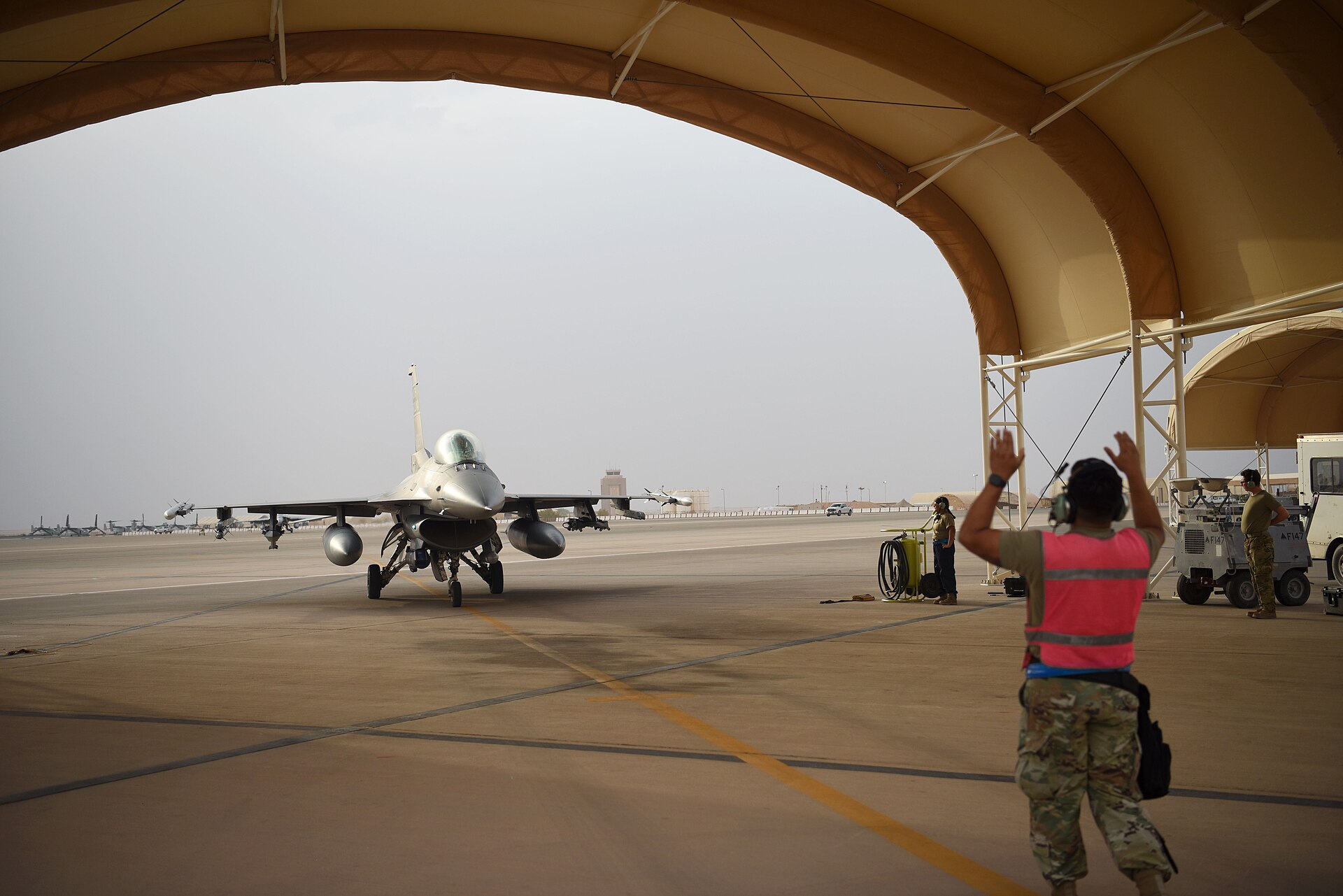
The Royal Saudi Air Force operates eighty-four F-15SA/SAs delivered under a $29.4 billion Foreign Military Sale signed in December 2011, making the Boeing F-15 the backbone of the kingdom’s fighter inventory. The Eurofighter Typhoon fleet of seventy-two aircraft handles the second-line air-superiority and multirole strike mission, while the Tornado ADV has been retired and the Tornado IDS remains in service.
Does the Mecca pact have a nuclear dimension?
The agreement does not mention nuclear weapons, nuclear deterrence, or extended-deterrent commitments in any of its published provisions, but one of its three signatories — Pakistan — possesses an estimated 170 nuclear warheads and the delivery systems to employ them across the region. Crown Prince Mohammed bin Salman told CBS in a 2018 interview that if Iran developed a nuclear weapon, “we will follow suit as soon as possible,” and the Saudi-Pakistan bilateral defence relationship has long been speculated to include an informal nuclear-umbrella understanding that neither capital has confirmed or denied. The Mecca pact’s collective-defence clause does not extend to nuclear-use or retaliatory scenarios, but it formalises a military alliance with a nuclear-armed state at a moment when the Iran nuclear file and Riyadh’s own enrichment ambitions under the US-Saudi civil-nuclear agreement Trump has made subject to the Abraham Accords both remain unresolved.
What happens if the congressional review expires without a resolution of disapproval?
If neither the House nor the Senate passes a joint resolution of disapproval within the thirty-day window, the sale proceeds to the contracting phase — but proceeding does not mean delivering. Before delivery, Riyadh would need to construct classified maintenance facilities, train pilots and ground crews, and demonstrate to the programme office’s satisfaction that the DIA’s telecommunications-infrastructure concerns have been resolved. Congressional approval is the beginning of the procurement process, and the counterintelligence concerns that shadowed the sale at the review stage will follow the aircraft through every subsequent phase of integration.
The F-35 procurement delay sits inside a broader pattern of agreement without guarantee: the Strategic Defence Agreement’s mutual-defence gap leaves Riyadh holding a framework that opens pathways for arms sales without committing the US to use them.
Editor’s note, October 12, 2026: An earlier version of this article said Turkish Foreign Minister Hakan Fidan told reporters in New York that Ankara would meet Riyadh’s military needs and described this as an offer of alternative fighter jets; Fidan spoke to the Turkish broadcaster NTV on 19 September and did not say what Turkey would supply, and the headline has been changed accordingly. The earlier version also misstated the time left in the congressional review, described eleven days of congressional “silence”, attributed the first report of F-35 parts diverted to Hong Kong to Bloomberg and said they passed through a Lockheed Martin intermediary (Politico first reported the diversion and Bloomberg reported a UPS shipping error), named and described a Turkish engine that could not be found in any source, misattributed a quotation to the International Institute for Strategic Studies, cited Arab Center Washington DC, The Conversation and Valdai Club assessments that could not be verified, and included unsourced details on the Defence Intelligence Agency’s findings, drone deals and costs. These have been corrected or removed.