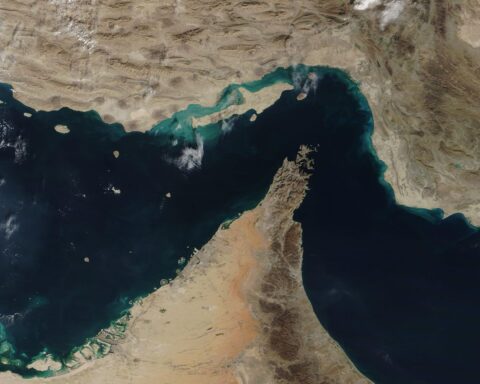

TEHRAN — Iran is no longer merely blockading the Strait of Hormuz. It is administering it. On October 15, Rear Admiral Habibollah Sayyari, deputy chief of the Iranian Army for coordination, told IRNA that the strait “remains closed” and that “any passage through the strategic waterway must be coordinated with Iranian forces,” which he said hold “full control and surveillance” of the area.
The declaration came after the sinking of the Singapore-flagged container ship GFS Pride and what Lloyd’s List called the “highest intensity of the conflict” in attacks on commercial shipping. Behind Sayyari’s language sits a permitting bureaucracy — the Persian Gulf Strait Authority, established in May 2026 — that has been processing transit applications, publishing a vessel blacklist, and recharacterizing attacks on non-compliant ships as administrative enforcement. The Congressional Research Service called Iran’s assertion of control over the entirety of the strait “without precedent.” No state has formally challenged the claim under international law.
Table of Contents
- What Did Iran Declare on October 15?
- How Did Iran Build a Permit Regime for an International Waterway?
- The Sinking Iran Called a Rules Violation
- What Does Hormuz Transit Cost Now?
- Why Has No State Formally Challenged Iran’s Legal Claim?
- Saudi Arabia’s Exports Through Enemy-Administered Waters
- What Separates This From the 1980s Tanker War?
- Frequently Asked Questions
What Did Iran Declare on October 15?
Rear Admiral Habibollah Sayyari declared on October 15, 2026, that the Strait of Hormuz “remains closed” and that passage must be “coordinated with Iranian forces,” which he said hold “full control and surveillance” of the waterway (IRNA, October 15, 2026). The statement, carried by Iran’s official news agency, framed ongoing military operations as enforcement of a permit regime rather than acts of war.
“The Strait of Hormuz remains closed and any passage through the strategic waterway must be coordinated with Iranian forces.”
— Rear Admiral Habibollah Sayyari, IRNA, October 15, 2026
Sayyari’s language echoed an IRGC Navy directive issued on June 25, which stated that only routes announced by Iran are authorized, that coordination with the IRGC Navy via VHF Channel 16 is mandatory, and that vessel owners bear responsibility for non-compliance (Tasnim News, June 25, 2026). The October declaration was not a new claim. It was a restatement of a regime Iran has been constructing since the early months of the war.
The declaration came at the end of the deadliest stretch for commercial shipping in the eight-month conflict. Lloyd’s List reported that Hormuz attacks had reached their “highest intensity of the conflict,” with at least 13 attacks on tankers and gas carriers since September 28 — surpassing previous peaks in March and July (Lloyd’s List / Lloyd’s List Intelligence, October 8–13, 2026). More than 20 vessels were attacked in the strait, the Persian Gulf, and the Gulf of Oman during October alone (CNBC / Lloyd’s List, October 9–13, 2026). Between September 28 and early October, 12 attacks in a single week set the war’s highest weekly total.
The Middle East briefing 3,000+ readers start their day with.
One email. Every weekday morning. Free.
Iran simultaneously took a complaint to the International Maritime Organization regarding VHF Channel 16 procedures, framing the issue as one of navigation safety — of vessels operating on unauthorized routes — rather than military confrontation (Lloyd’s List, October 13, 2026). The IMO’s formal response has not been confirmed.
CENTCOM disputed Iran’s framing. US forces and regional partners “maintain control” of the strait, according to a public statement (Gulf News, October 2026). But the practical American response since the blockade began on July 14 has been to enforce a counter-blockade on Iranian ports — turning ships away — rather than escorting commercial vessels through.
How Did Iran Build a Permit Regime for an International Waterway?
Iran established the Persian Gulf Strait Authority in approximately May 2026 to authorize and regulate transit through the Strait of Hormuz. The PGSA requires vessels to file a “Vessel Information Declaration” — a 40-plus-question form covering ship identity, owners, operators, crew nationalities, and cargo — before approaching the strait (CNN, 2026). More than 300 non-Iranian vessels have contacted the PGSA for permits, according to Argus Media.
The form reads like a customs declaration. It asks for beneficial ownership chains, charterer details, crew manifests sorted by nationality, and full cargo documentation. The PGSA published a “Non-Compliant Vessels” blacklist naming 46 vessels across 17 flag states, with warnings of fines, detention, or seizure. Vessels that transact with blacklisted ships risk being added to the list themselves (Newsweek, 2026).
The bureaucratic infrastructure grew partly from a practical problem. When Iran first announced that passage required permission in early 2026, scammers immediately began selling fraudulent transit documents for cryptocurrency. The PGSA was framed publicly as a consumer protection measure — a centralized authority to prevent fraud and standardize the application process (PGSA.io / Container News, April–May 2026).
The Critical Threats Project at the American Enterprise Institute identified a different strategic purpose. The permit system, it concluded, is “not a temporary wartime measure but the foundation for permanent recognition of Iranian sovereignty over the strait” (Critical Threats, May 8, 2026). Each vessel that files a declaration implicitly acknowledges Iran’s authority to require one. By late May, Iran claimed it had coordinated passage of 26 vessels out of Hormuz in a single 24-hour period (Al Jazeera, May 20, 2026).
The IRGC Navy’s June directive formalized what the PGSA had been doing informally. It shifted liability up the ownership chain — vessel owners, not masters or charterers, bear responsibility for non-compliance. The effect was to expose shipowners and their insurers under Iran’s framework, creating a compliance incentive that runs through London and Singapore boardrooms rather than through captains on the bridge.
The operational mechanics remain opaque. A vessel approaching the strait is expected to contact the IRGC Navy on VHF Channel 16 — the international distress and calling frequency — and receive route instructions. Iran’s use of Channel 16 for administrative coordination effectively repurposes a maritime safety channel as a border control tool. The IMO complaint Iran filed on October 13 concerned other vessels’ use of the same channel, framing the dispute as a safety-of-navigation issue rather than a sovereignty contest (Lloyd’s List, October 13, 2026).
No independent account has confirmed what end-to-end compliant transit looks like in practice. Whether a vessel that files the form, coordinates via VHF Channel 16, and follows the designated route actually receives unimpeded passage remains unverified. The compliance rate — more than 300 applications against a pre-war transit volume of roughly 138 ships per day — suggests that many vessels either avoid Hormuz entirely or transit without applying.
The Sinking Iran Called a Rules Violation
The Singapore-flagged container ship GFS Pride was struck on October 13, caught fire, and subsequently sank. All 21 crew were evacuated with no injuries (MPA Singapore / CNN, October 15, 2026). A second Singapore-flagged vessel, GFS Giselle, was struck the following day and reached safe anchorage under her own power (Marine Insight / MPA Singapore, October 15, 2026).
The cause of the GFS Pride sinking is disputed. Iran’s IRGC Navy claimed the vessel struck a naval mine while operating on an “unauthorized route.” Tehran broadcast footage and described the GFS Pride as a “rules violator” — language consistent with administrative enforcement rather than military aggression (Gulf News / IRNA, October 15, 2026). Maritime security firm MARISKS found no independent evidence to confirm the mine account. Reuters-sourced maritime security experts considered a drone or projectile strike more likely (MPA Singapore / CNN, October 15, 2026).
The framing matters as much as the cause. A mine on an unauthorized route implies the existence of authorized routes — and an authority that designates them. A drone strike is an act of war. Iran chose the narrative that reinforced its administrative claim: the vessel was not attacked, in Tehran’s telling, but sanctioned for breaking the rules.
The GFS Pride was the second vessel lost in the strait in three weeks. The merchant vessel Cape Dao, flagged in Antigua and Barbuda, sank on September 23 after a projectile hit. One Indian crew member was killed (CNN, October 15, 2026). Iran struck Greek- and Chinese-flagged tankers it labeled non-compliant in the same period (TradeWinds News, October 13, 2026). CENTCOM disputed Iran’s narrative of the GFS Pride sinking and maintained that US forces retain control of the strait (Gulf News, October 2026).
The pattern of framing is consistent across incidents. Iran does not describe attacks on commercial ships as military operations. It describes them as enforcement actions against vessels violating Iranian-designated navigation protocols. The language of each IRGC statement — “unauthorized route,” “rules violator,” “non-compliant vessel” — borrows from coast guard and port authority vocabulary, not from military communiques. Whether the IRGC actually distinguishes between compliant and non-compliant vessels in its targeting decisions is unknown.
What Does Hormuz Transit Cost Now?
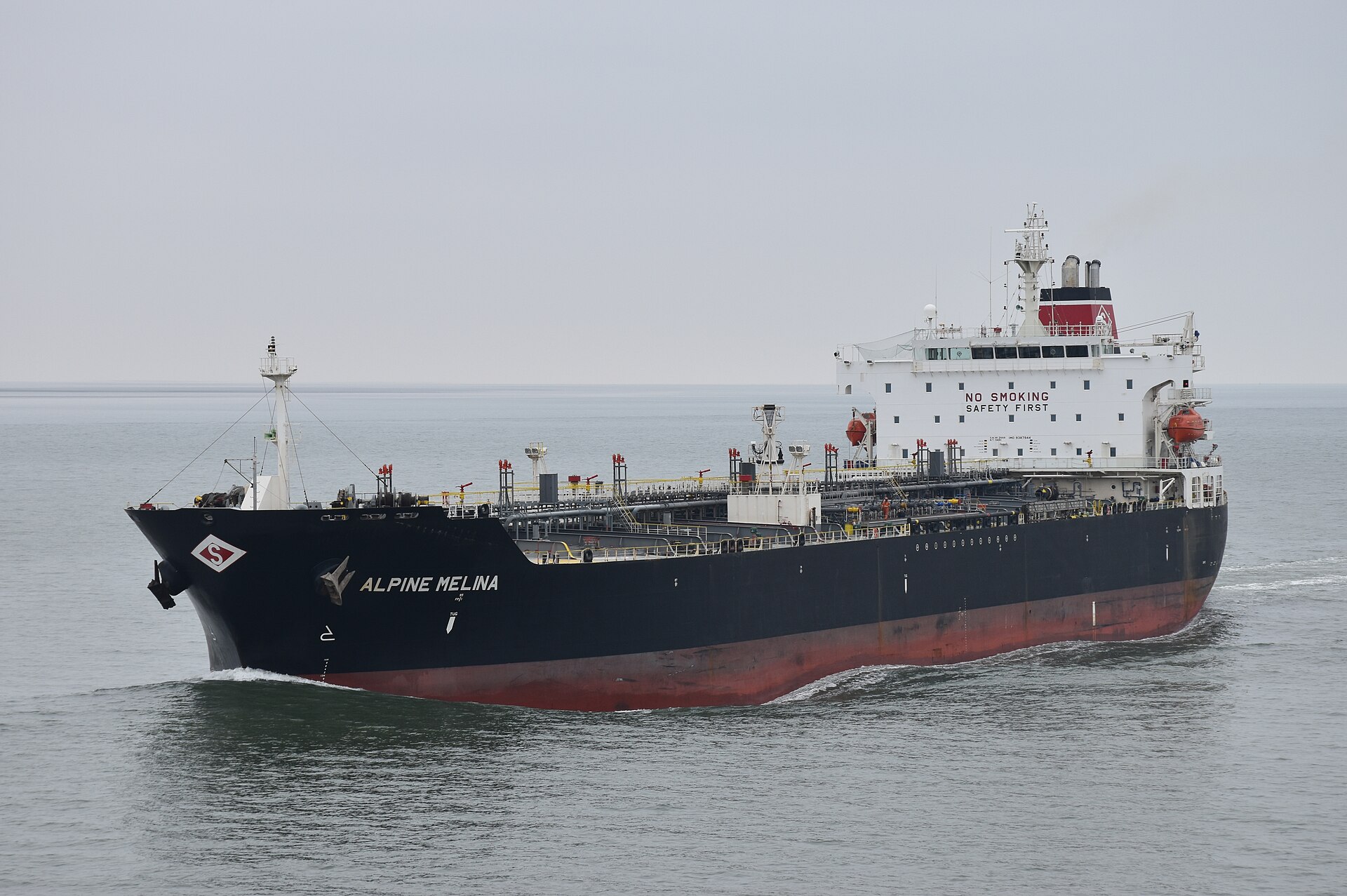
War-risk insurance premiums for Hormuz transits reached 5 to 9 percent of hull value by late September 2026, according to industry data. For a $100 million tanker, that represents $5 to $9 million per crossing — against a pre-war baseline of approximately 0.25 percent, or roughly $250,000 (The National / Marsh / S&P Global, July–October 2026). The Marsh insurance brokerage reported premiums of 7.5 to 10 percent as early as July.
Freight rates followed the risk upward. Gulf-to-China VLCC rates reached $1.2 million per day — fifteen times the approximately $80,000 rate of a year earlier (bdnews24 / LSEG, October 5, 2026).
| Metric | Pre-war | October 2026 | Source |
|---|---|---|---|
| War-risk insurance (% of hull value) | ~0.25% | 5–9% | The National / Marsh / S&P Global |
| Cost per transit ($100m tanker) | ~$250,000 | $5–9 million | The National / Marsh / S&P Global |
| Gulf–China VLCC freight rate (per day) | ~$80,000 | $1.2 million | bdnews24 / LSEG, Oct 5, 2026 |
| Cape of Good Hope reroute penalty | — | +10–15 days per voyage | Yahoo Finance / Hellenic Shipping News |
The alternative carries its own price. Cape of Good Hope traffic approximately doubled since the war began in February 2026. Maersk suspended most Hormuz crossings and rerouted key Middle East services around Africa, adding approximately 10 to 15 days per voyage (Yahoo Finance / Hellenic Shipping News, September 2026). Iran’s permit regime operates in a market already priced for maximum risk — the insurance cost of a single Hormuz transit now exceeds many vessels’ annual pre-war premium, a dynamic already reshaping the economics of Saudi oil exports.
Why Has No State Formally Challenged Iran’s Legal Claim?
No maritime power has formally contested Iran’s declaration of administrative control over the strait under international law. The United States lists Iran’s claim as an “excessive maritime claim” in its annual freedom-of-navigation report — a document that carries no enforcement mechanism (Diplomacy and Law, 2026). Washington’s stated position, as reported by Al Jazeera, is that Iran “cannot charge tolls in international waters governed by the right of transit passage under the Law of the Sea” (Al Jazeera, 2026). The statement has not been followed by legal action at any international tribunal.
The legal architecture favors ambiguity. Iran has not ratified the UN Convention on the Law of the Sea. UNCLOS Article 38 grants the right of transit passage through international straits — a right that Article 44 explicitly bars coastal states from suspending. But because Iran is not a party, it cannot be compelled into Part XV compulsory arbitration. The United States has also not ratified UNCLOS, though it treats Article 38’s transit-passage regime as customary international law (Opinio Juris / International Law Blog / CRS, 2026).
Iran relies on a different legal framework entirely. Its 1993 Marine Areas Act codifies innocent passage requirements, including prior authorization — a regime that, unlike transit passage, does allow a coastal state to regulate and potentially deny entry (CRS / Diplomacy and Law, 2026). Iran applies this framework to the entire strait, not only to its own territorial waters.
The distinction is the core of the dispute. Under UNCLOS, transit passage through an international strait cannot be suspended by a coastal state. Innocent passage, by contrast, can be regulated, denied, or made conditional on prior authorization. By asserting innocent-passage jurisdiction over the entirety of Hormuz rather than only Iranian territorial waters, Iran has shifted the operative legal regime from one where it has no regulatory authority to one where it has wide discretion.
A 2026 article in Frontiers in Political Science developed the concept of “parasitic sovereignty” to describe Iran’s approach — asserting sovereign control through institutions and enforcement mechanisms that mimic legitimate coastal-state authority while the underlying legal claim remains contested (Frontiers in Political Science, 2026). The PGSA’s form, its blacklist, and its VHF coordination requirement all function as regulatory instruments. Each vessel that complies reinforces the implied claim.
Shipping industry associations wrote jointly to the UN and IMO in August 2026 opposing compulsory charges on strait transits, but these were trade bodies, not sovereign states, and the protests carried no legal force. No government has filed a diplomatic protest through Iran’s permanent mission to the United Nations, initiated proceedings at the International Court of Justice, or submitted a formal challenge to the IMO. It is possible that diplomatic notes have been exchanged quietly, but no public record of a state-level legal challenge exists.
The practical consequence is that Iran’s claim operates in a legal vacuum. The longer the PGSA functions without formal challenge — processing applications, issuing denials, blacklisting vessels — the stronger Iran’s argument becomes that its regulatory authority has been tacitly accepted. International law develops through state practice as well as through treaties, and eight months of unchallenged administration creates a body of practice that any future arbitration would have to address. Iran’s Rezaei called Washington’s latest response “insufficient” on October 11 (IRNA via CBS News, October 11, 2026).
Saudi Arabia’s Exports Through Enemy-Administered Waters
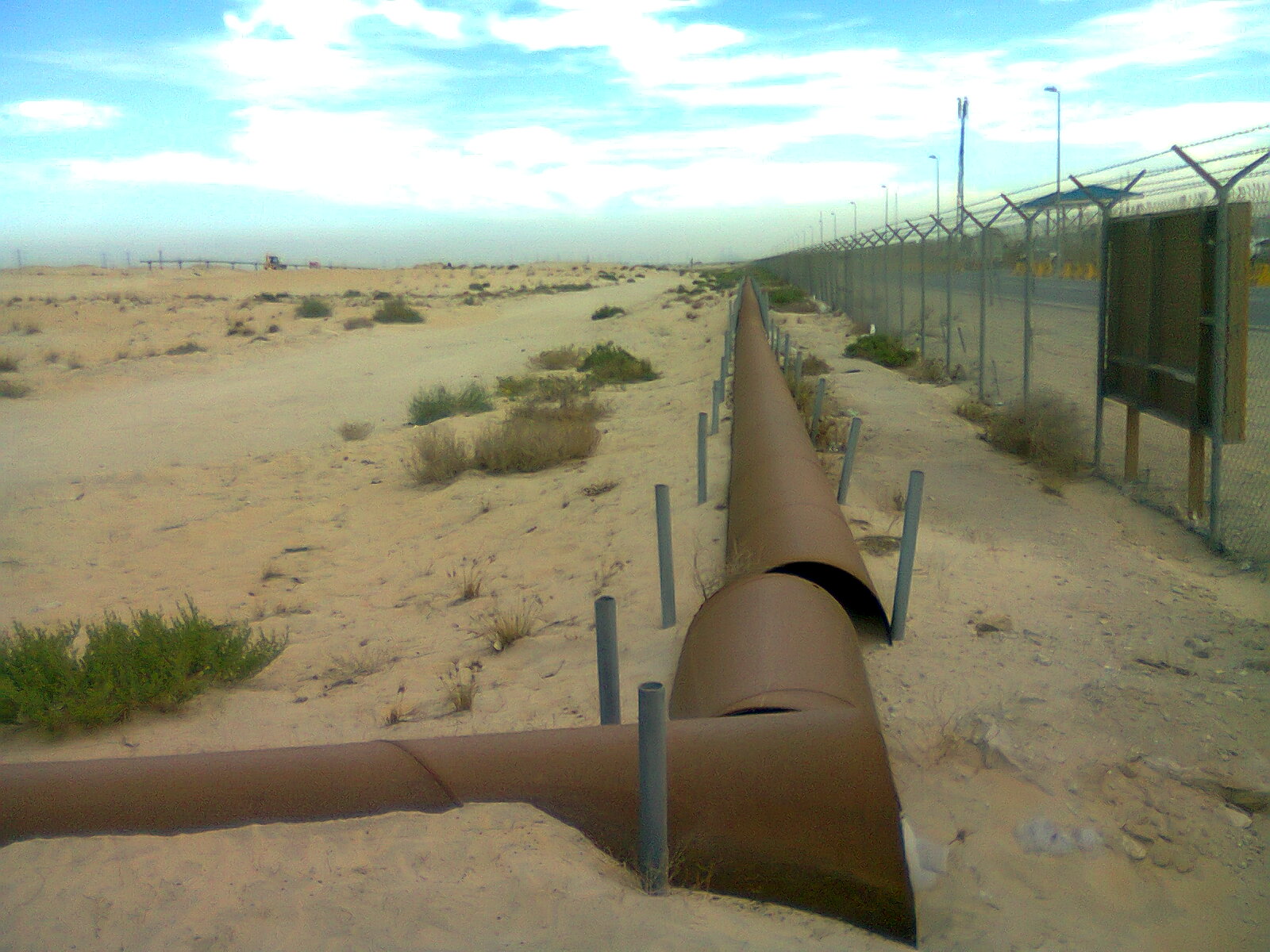
Saudi Arabia has one alternative to the strait. The East-West pipeline, running from Abqaiq to the Red Sea terminal at Yanbu, has a design capacity of approximately 7 million barrels per day (Saudi Gazette via Zawya, September 25, 2026). As of October 6, the line was pumping 5.8 million bpd — 1.2 million below capacity (Al Jazeera / Enerdata, October 6, 2026). The pipeline was shut following a September 12 attack, restarted on September 22, and Aramco said full capacity recovery would take six to eight weeks from the restart date (Baird Maritime / Reuters, September 24, 2026).
The production arithmetic is unforgiving. Saudi November output is targeted at 10.5 million barrels per day (Enerdata, October 4, 2026). The IEA reported that Saudi crude shipments fell to 6 million bpd in August (IEA via Trend, September 14, 2026). Total Hormuz oil exports fell to 8.5 million barrels per day for the week ending approximately October 8, roughly 40 percent below the pre-war normal, according to Kpler data (CNBC, October 9, 2026). Peacetime Hormuz transit averaged approximately 138 ships per day; at the peak of the blockade, that number fell to 5 to 7 per day (CNBC, 2026).
CENTCOM said 135 ships had been turned around since the blockade of Iranian ports began on July 14 (CBS News, October 10, 2026). The US counter-blockade targets Iranian commerce, not safe passage for Saudi crude. The October 14 strike on Aramco’s Dhahran headquarters underscored the vulnerability of eastern infrastructure. France confirmed in September that it would deploy troops, radars, and air defenses to Yanbu to protect the Red Sea terminal (Al Jazeera, September 25, 2026).
The two-chokepoint problem compounds the exposure. Iran closed Hormuz; the Houthis declared a blockade of Red Sea shipping lanes on July 20 (Al Jazeera, July 28, 2026). Saudi Arabia’s eastern exports face Iran’s permit regime; its western exports from Yanbu face the Houthi missile and drone threat that has already struck airports and oil infrastructure across the kingdom. By August, IEA data showed Saudi crude supply at 5.97 million barrels per day (IEA, September 11, 2026).
Aramco CEO Amin Nasser told investors that supply disruptions typically last “days, not weeks or months” (Saudi Gazette via Zawya, September 25, 2026). The East-West pipeline was shut for ten days before restart and, at the recovery rate Aramco projected, will not reach design capacity until late October at the earliest. The attacks on Hormuz shipping continue at the highest rate of the war.
What Separates This From the 1980s Tanker War?
The 1984–1988 Tanker War was a campaign of mutual attrition. Iraq attacked Iranian oil exports; Iran retaliated against Gulf Arab shipping. Neither belligerent claimed administrative sovereignty over the Strait of Hormuz. The US response — Operation Earnest Will, the largest naval convoy operation since World War II — reflagged Kuwaiti tankers under the American flag and escorted them through. The premise was explicit: the waterway was open, transit was a right, and the US Navy was there to enforce both (Britannica / Wikipedia / CIA CSI).
What Iran has done since February 2026 is different in kind. It has not merely attacked shipping. It has built an institutional apparatus — the PGSA, its vessel information form, its blacklist, its VHF coordination requirement — that functions as a regulatory authority over the waterway. The attacks on tankers continue, but they are now embedded in an administrative framework that recharacterizes them as enforcement against non-compliant vessels.
The international response diverges sharply from the 1980s precedent. During the Tanker War, the UN Security Council passed Resolution 598 calling for a ceasefire. In April 2026, Russia and China vetoed a Bahrain-drafted Security Council resolution — prepared with GCC states and Jordan — that called for coordinated defense of Hormuz shipping. The vote was 11 to 2 with 2 abstentions (Dawn, April 7, 2026).
In the Tanker War, the United States escorted allied vessels through a contested waterway. In 2026, it enforces a counter-blockade on Iranian ports while Iran runs a permit regime on the strait itself. The two operations run in parallel. Neither guarantees safe commercial passage for the Gulf states whose crude must transit the waterway.
On October 8, Trump wrote that the US “will not be attacking Iran at any time prior to the midterm elections” on November 3 and said the Hormuz blockade remains in “full force” (The National, October 8, 2026). The April Security Council vote — 11 in favor of coordinated defense, 2 vetoes — closed the multilateral path that Resolution 598 opened in 1988. What remains is a bilateral standoff between Washington and Tehran, with Saudi oil in the middle and no international legal proceeding underway to resolve it.
Frequently Asked Questions
What diplomatic proposals has Iran made for reopening the Strait of Hormuz?
Iran’s Foreign Minister Araghchi presented a seven-day roadmap via Qatar in September 2026: Hormuz would reopen in exchange for the US lifting its counter-blockade, sanctions waivers, and the release of approximately $12 billion in frozen assets (Al Jazeera, September 25, 2026). Trump rejected the plan and, according to the Wall Street Journal, expects renewed bombing after the midterms (Hurriyet / WSJ, September 26, 2026). An earlier framework — the June 2026 Islamabad Memorandum — had provided 60 days of toll-free passage and an end to the US blockade within 30 days, but collapsed in July when three ships, including the Saudi-flagged Wedyan, were struck near Hormuz (Iran International, June 17, 2026; The New Arab, July 8, 2026). Iran’s Rezaei called Washington’s latest response “insufficient” (IRNA via CBS News, October 11, 2026).
Has commercial shipping through the strait completely stopped?
No. Lloyd’s List Intelligence counted 346 non-Iranian-linked transits in August 2026 alone (Lloyd’s List Intelligence, September 9, 2026) — a fraction of the pre-war daily average but far from zero. “Closed” in Tehran’s framework means passage without coordination is unauthorized, not that the waterway is physically impassable. Some commercial traffic continues under varying degrees of Iranian oversight, while an increasing share of Gulf exports reroutes around the Cape of Good Hope. Whether full compliance with the PGSA process actually guarantees safe transit has not been independently verified.
Could the United States escort ships through as it did in the 1980s?
The Trump administration tried. In May 2026, it launched Project Freedom, a naval escort operation modeled on Operation Earnest Will. Saudi Arabia warned it could deny US aircraft access to its airspace, and Trump paused the operation approximately 36 hours after announcing it (The New Arab, May 6, 2026). With US military action against Iran ruled out before the November midterms, CENTCOM’s approach since July has been to enforce a counter-blockade on Iranian ports — turning ships away — rather than escorting commercial vessels through the strait.
How has the Hormuz disruption affected Saudi Arabia’s economy?
Saudi Arabia’s pre-budget statement projected real GDP falling 3.6 percent in 2026, driven by a 21.8 percent decline in oil activities. The government revised its 2026 deficit estimate upward to 245 billion riyals from a budgeted 165 billion (Reuters via Zawya, September 30, 2026). It projects a 12.8 percent rebound in 2027, contingent on Hormuz reopening and pipeline recovery. Brent crude stood at $102.94 on October 9 (CNBC, October 9, 2026) — elevated but insufficient to offset volume losses. Aramco cut its November Arab Light price to Asia to $5 below the Oman/Dubai benchmark, the widest discount since June 2020 (bdnews24 / Reuters, October 5, 2026).