
RIYADH — A Houthi ballistic missile struck King Khalid International Airport on October 8, killing a Sudanese resident and wounding eight others — five Saudi citizens, two Egyptians, one Pakistani. The Arab coalition simultaneously claimed to have intercepted and destroyed a ballistic missile north of Riyadh. Both statements are confirmed, which means two weapons were fired: one stopped, one reaching the airport.
This is the second paired-salvo strike on King Khalid in nineteen days. On September 19, a Houthi ballistic missile ignited an Aramco fuel depot beside the airport while the coalition reported a successful intercept in the same window. The Houthis have standardised a two-weapon pattern against Riyadh’s primary civilian airport, and the $9.4 billion air-defence architecture layered around the capital is catching one and missing the other. The gap is at the terminal phase, where airport approach corridors and interceptor engagement windows occupy the same geometry. The EU-GCC Summit is sixteen days away, scheduled for October 24 in Riyadh. Pakistani troops under the Mecca Pact arrived this week. Neither fact changes the intercept math.
Contents
- What Hit King Khalid Airport on October 8?
- The Two-Weapon Salvo
- How Depleted Are Saudi Arabia’s Interceptor Stocks?
- The Terminal-Phase Geometry Problem
- Why Did the September 19 Strike Not Change the Defence Posture?
- Sixteen Days to the GCC-EU Summit
- Can Pakistani Troops Under the Mecca Pact Close an Air-Defence Gap?
- The Airspace Advisory and What It Signals
- Frequently Asked Questions
What Hit King Khalid Airport on October 8?
A Houthi ballistic missile struck King Khalid International Airport on October 8, killing one Sudanese resident and wounding eight — five Saudi citizens, two Egyptian residents, one Pakistani resident. GACA’s cumulative count for the October 6–8 wave: three killed, thirty-six injured across King Khalid and Abha International airports.
Houthi military spokesman Yahya Saree claimed the strike within hours. “Our armed forces have just targeted King Khalid International Airport in Riyadh with a ballistic missile,” Saree said. “The strike was accurate, by God’s grace, and led to a disruption of air traffic.” The claim was broadcast on Al Masirah and distributed through Houthi military channels before GACA had released its full casualty statement.
The October 8 strike was part of a broader wave that hit five sites across a single operational window: King Khalid Airport, the Aramco refinery at Rabigh, Abha International Airport, the Saudi military base at Khamis Mushait, and the Akfa camp. The geographic spread — from the Yemeni border to Riyadh, roughly 1,200 kilometres — indicates deliberate saturation: forcing Saudi air-defence radars and fire-control systems to allocate across five simultaneous threat axes rather than concentrating on a single approach corridor.
A Saudi government official, quoted by Arabian Gulf Business Insight, stated that Houthi attacks on airports “will not go unpunished.” No specific retaliatory action was announced. The statement is consistent with previous Saudi responses to Houthi strikes on civilian infrastructure — strong language, no disclosed military consequence.
The Middle East briefing 3,000+ readers start their day with.
One email. Every weekday morning. Free.
Al Masirah reported that a “second wave” was in preparation following the October 8 strike. The claim could not be independently verified, but the October 6–8 pattern — five targets, multiple weapon types, successive days — suggests operational depth rather than a single-shot capability. The Houthis are not firing everything and waiting. They are firing, reloading, and firing again.
The Two-Weapon Salvo
The Arab coalition announced on October 8 that it had intercepted and destroyed a ballistic missile “north of Riyadh.” The Saudi GACA confirmed in the same attack window that a ballistic missile produced casualties at King Khalid International Airport. These two statements are not contradictory. They describe two different weapons.
A single ballistic missile cannot be both intercepted north of Riyadh and produce casualties at the airport. The reconciliation requires a minimum of two weapons fired in the same salvo: one engaged and destroyed by Saudi air defences in the northern approach corridor, the other penetrating to the airport. The coalition’s intercept was real. The airport casualties were real.
This is not the first time the pattern has appeared at King Khalid. On September 19, a Houthi ballistic missile ignited an Aramco fuel depot adjacent to the airport — the fire was documented from the airport departure roadway and pushed Flightradar24’s disruption index to 5.0 out of 5.0, the maximum reading. The coalition again claimed a successful intercept. The depot fire and the intercept claim coexist only if two weapons were fired. One stopped. One reached the depot.
Two paired-salvo attacks on King Khalid in nineteen days — casualties on October 8, an infrastructure fire on September 19 — while the coalition in each case reported a successful intercept, indicates a standardised Houthi operational pattern. Fire two ballistic missiles at the same target in rapid succession. Accept that one will be engaged. The second weapon arrives in the shadow of the first intercept, while the fire-control radar recycles, while the launcher reloads, while the engagement sequence resets.
The Institute for the Study of War assessed that “the Houthis believe that they can maximize Saudi economic costs and compel Saudi Arabia to surrender to Houthi demands by striking civilian infrastructure, such as oil facilities and airports.” The paired salvo moves this from belief to tested doctrine — two attempts at King Khalid, two ground-level effects, zero complete defences.
How Depleted Are Saudi Arabia’s Interceptor Stocks?
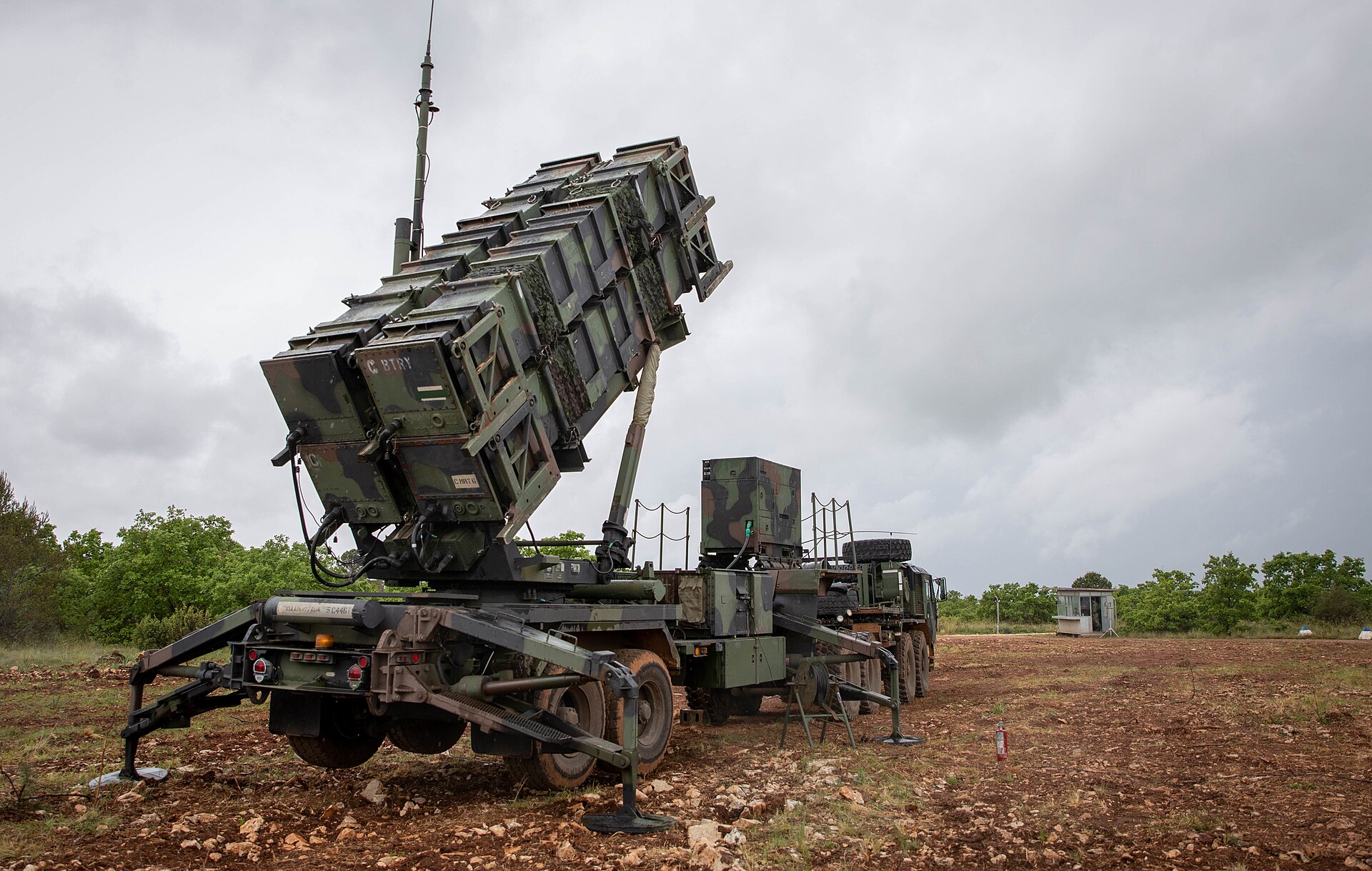
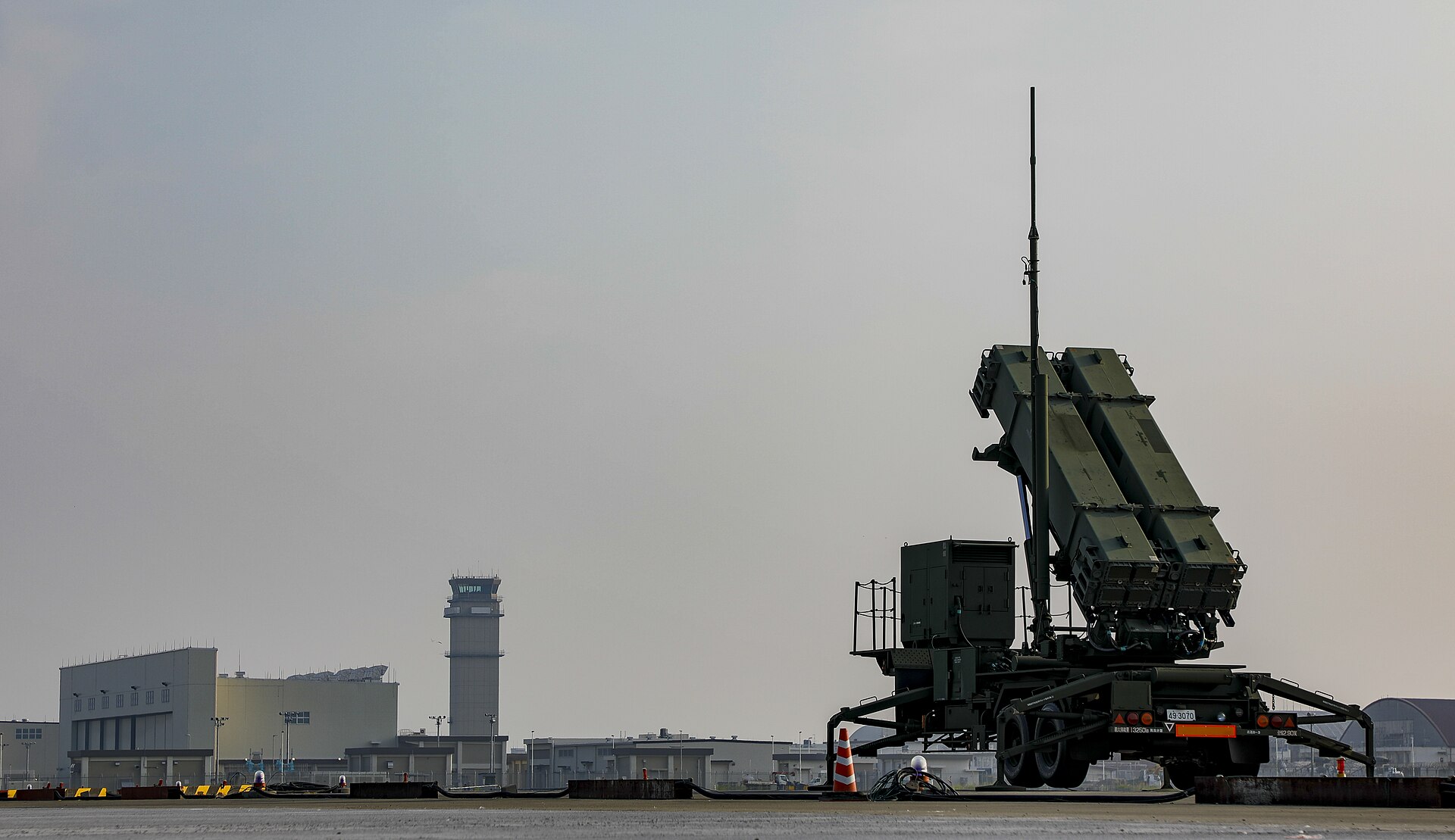
Saudi Arabia entered October 2026 with approximately 400 PAC-3 MSE interceptors remaining from a pre-war stockpile of 2,800 — a depletion of 86 percent in roughly 38 days of high-intensity combat. Distributed across 108 launchers, the remaining stock averages 3.7 rounds per launcher, below a single reload cycle for a standard Patriot fire unit.
A standard Patriot fire unit carries four ready rounds per Transporter Erector Launcher. At 3.7 rounds per launcher averaged across the entire force, some batteries are fully loaded and others are partially empty. The average conceals the distribution problem: high-priority sites receive priority reloads, leaving lower-priority sites with fewer than four rounds — or none. The question is not how many interceptors Saudi Arabia has in total. It is how many are loaded on the launchers defending King Khalid International Airport at the moment the next salvo arrives.
Saudi Arabia operates two of its seven procured THAAD fire units for upper-tier ballistic missile defence. THAAD engages at higher altitudes and earlier in the trajectory than PAC-3 — it is designed for exo-atmospheric or high-endoatmospheric intercept, not the terminal-phase engagement where the King Khalid gap exists. The two systems layer: THAAD fires first at altitude, PAC-3 cleans up what leaks through. When the PAC-3 layer averages 3.7 rounds per launcher, the cleanup function degrades. The five non-operational THAAD units are delivered but not fielded — a function of training, maintenance, and manning constraints that the current threat timeline does not accommodate.
No contract deliveries of PAC-3 MSE from Lockheed Martin’s production facility in Camden, Arkansas are projected before 2028. The production line serves multiple customers — the US Army, allied export contracts, and Ukraine replenishment — and Saudi Arabia’s position in the queue does not yield near-term resupply. The interceptors expended in March and April will not be replaced by the interceptors needed in October. Prince Sultan Air Base lost its deterrent posture during the same Iran-war cycle that consumed the stockpile, and the depletion rate has not slowed.
| Metric | Figure | Source |
|---|---|---|
| PAC-3 MSE pre-war stockpile | 2,800 rounds | CSIS |
| PAC-3 MSE remaining (Oct 2026) | ~400 rounds | CSIS / HOS estimate |
| Depletion rate | 86% | Calculated |
| Patriot launchers deployed | 108 | CSIS |
| Average rounds per launcher | 3.7 | Calculated |
| THAAD fire units (operational / procured) | 2 / 7 | CSIS |
| Total intercepts, Mar–May 2026 | 894 (799 drone, 95 missile) | Saudi MoD / CSIS |
| Next PAC-3 MSE delivery window | Not before 2028 | Lockheed Martin / CSIS |
Between March 3 and early May 2026, Saudi air defences completed 894 intercepts — 799 drones and 95 ballistic or cruise missiles. That total exceeds the intercept count for the entire 2015–2025 Yemen campaign. The consumption rate has no peacetime production parallel. And the Houthis, who are party to no ceasefire and bound by no interceptor shortage, continue firing.
The Terminal-Phase Geometry Problem
The paired-salvo pattern at King Khalid exploits a structural feature of airport air-defence geometry. Civilian airports require open approach corridors — designated flight paths where commercial aircraft descend from cruise altitude to the runway. These corridors cannot be closed without closing the airport. They run at fixed angles and altitudes, published in aeronautical charts and accessible to any adversary with a civilian flight database.
PAC-3 fires on ballistic missiles in the terminal phase — the final segment of the trajectory, typically below 40 kilometres altitude, where the warhead descends toward its target. The engagement window is seconds, not minutes. A PAC-3 battery positioned to defend an airport must calculate its intercept point against the missile’s terminal trajectory while avoiding engagement geometries that would send debris into approach corridors, active runways, or the surrounding urban footprint.
King Khalid International Airport sits approximately 35 kilometres north of central Riyadh. Its approach corridors extend further north — into the airspace sector where the coalition reported its October 8 intercept. A PAC-3 fire unit engaging a missile “north of Riyadh” is consistent with the battery firing into the northern approach geometry. A second weapon arriving on a slightly offset azimuth — east of the first, or threading the gap between two fire unit coverage arcs — may enter a sector where the battery has already committed its AN/MPQ-65 tracking radar to the first engagement.
The AN/MPQ-65 can track multiple targets simultaneously. But tracking is not engagement. Each fire unit can prosecute a limited number of concurrent intercepts, and the time between engaging one ballistic missile and cycling to a second — recycling the guidance link, confirming the new target, launching, and guiding the interceptor — is measured in seconds that the terminal-phase timeline does not always provide. The two-weapon salvo exploits exactly this cycling window. It does not require electronic warfare or decoys. It requires a second missile, timed correctly.
In March 2026, debris from an intercepted ballistic missile fell on a residential area in Riyadh, injuring four Asian residents. That intercept was classified as successful — the warhead was destroyed. The debris field produced casualties anyway. At an airport, the geometry is worse: even a successful terminal-phase intercept above King Khalid scatters debris across runways, taxiways, and terminal areas. The kill chain does not end when the interceptor hits. It ends when the debris clears the airport’s operational footprint — or when it does not, and flights are grounded regardless of intercept success.
Why Did the September 19 Strike Not Change the Defence Posture?
On September 19, a Houthi ballistic missile struck an Aramco fuel depot adjacent to King Khalid Airport. No casualties were confirmed. The coalition claimed a successful intercept. Nineteen days later, the same gap at the same airport produced the casualties the September strike did not.
The options for closing a terminal-phase geometry gap in nineteen days are limited. Repositioning a Patriot fire unit requires site survey, power infrastructure, communications integration, and radar calibration — a process measured in weeks under field conditions and longer in an urban environment with restricted siting. Moving a battery to King Khalid means uncovering another defended asset. Saudi Arabia’s 108 launchers are already distributed across Aramco facilities, military bases, government complexes, and airports. Coverage is not fungible. Every gain at King Khalid is a loss somewhere else.
The alternative is not repositioning but adding. The five non-operational THAAD units are procured but not fielded. Fielding them requires trained crews, maintenance chains, and integration with the existing air-defence network — none of which materialise in nineteen days. Even if a fifth or sixth THAAD unit could be activated, THAAD engages at altitude, not in the terminal phase where the gap sits. The interceptor type that could close the King Khalid gap is PAC-3 MSE, and the PAC-3 inventory has no surge reserve.
Saudi Arabia’s layered architecture — THAAD for upper-tier, PAC-3 for terminal — was designed for a threat environment where single missiles arrived at single targets with intervals between salvos. The architecture lost its depth during the Iran-war cycle, and the Houthis are now exploiting the residual capability with a tactic calibrated to the exact constraint: two weapons, one engagement cycle, one missile through.
The September 19 gap was not closed before October 8 because the gap is not a deployment error. It is a structural limitation of defending a civilian airport with a depleted interceptor force against paired salvos. Closing it requires more interceptors — unavailable before 2028 — or a different engagement doctrine that accepts firing over active runways. Neither was implemented.
Sixteen Days to the GCC-EU Summit
The second EU-GCC Summit is confirmed for October 24 in Saudi Arabia, co-chaired by European Council President António Costa, with European Commission President Ursula von der Leyen attending. The EU Council announced the summit on September 4. Sixteen days separate the October 8 airport strike from the arrival of European heads of state in Riyadh.
The summit’s location is itself a security statement. European delegations will fly into Saudi airspace — the same airspace that Yahya Saree declared “a theater of operations.” Saree’s October warning issued a “last warning” to international airlines to cease using Saudi airspace, carving out only Mecca and Medina. Riyadh was not excluded. Government aircraft carrying heads of state are not subject to airline operational decisions, but the threat environment applies regardless of the passenger manifest.
The European Aviation Safety Agency issued a dedicated advisory for Saudi airspace on approximately September 30, recommending operators avoid the southwestern portion of the Jeddah Flight Information Region. The advisory was extended after the October 8 strikes. EASA advisories are non-binding — they do not close airspace — but they reflect the agency’s institutional threat assessment. An EASA advisory active on the day that European heads of state fly into Riyadh is an awkward signal for a summit intended to deepen EU-GCC security and economic partnership.
Riyadh has hosted diplomatic events under missile threat before. The 2019 Abha strikes did not cancel scheduled engagements. But those strikes did not produce casualties at King Khalid, Riyadh’s primary international gateway and the airport where summit delegations will land. The question for European security planners is specific: can King Khalid be defended against a weapon that has penetrated twice in nineteen days?
The twenty-nine-day window that frames the broader Saudi war timeline now intersects with a diplomatic deadline. If Riyadh cannot demonstrate that the King Khalid gap is closed before October 24, the summit’s staging becomes a security question that European governments will answer independently of Saudi assurances. Some may answer it by sending a foreign minister instead of a head of state.
Can Pakistani Troops Under the Mecca Pact Close an Air-Defence Gap?
Turkey and Pakistan activated the Mecca Pact on approximately October 5–6, the first invocation since the agreement was signed on August 7. Pakistan confirmed on October 7 that troops are deployed in Saudi Arabia. CNN reported the deployment without specifying numbers, unit types, or basing. The activation followed the broader shield diplomacy that Riyadh has pursued since September.
The Mecca Pact’s text, as reported by Al-Monitor, commits signatories to “provide the agreed military forces and capabilities and ensure their rapid deployment” to Saudi Arabia. Dania Thafer, executive director of the Gulf International Forum, assessed that “Saudi Arabia is trying to turn the Mecca pact from a political declaration into a deterrent.” The distance between declaration and deterrent is measured by what Pakistan actually brings.
Pakistan operates the HQ-9/P — a Chinese-origin medium-to-long-range air-defence system — but does not operate Patriot, THAAD, or any NATO-standard system interoperable with Saudi fire-control architecture. A Pakistani air-defence battery deployed in Saudi Arabia would run on separate communications, separate radar, and separate command authority. Integrating it into the Saudi network — sharing tracking data, deconflicting engagement sectors, preventing two batteries from engaging the same target while leaving others uncovered — requires technical integration that the Mecca Pact framework has not demonstrated.
What Pakistan can deploy rapidly is ground forces: infantry, military police, perimeter security. These capabilities address threats at ground level — sabotage, force protection, site security. They do not address a ballistic missile arriving at terminal velocity on a descending trajectory into the northern approach corridor of King Khalid International Airport. The Mecca Pact may produce military utility in the south, where ground operations along the Yemeni border require manpower. It does not produce air-defence utility in Riyadh, where the gap is above the surface.
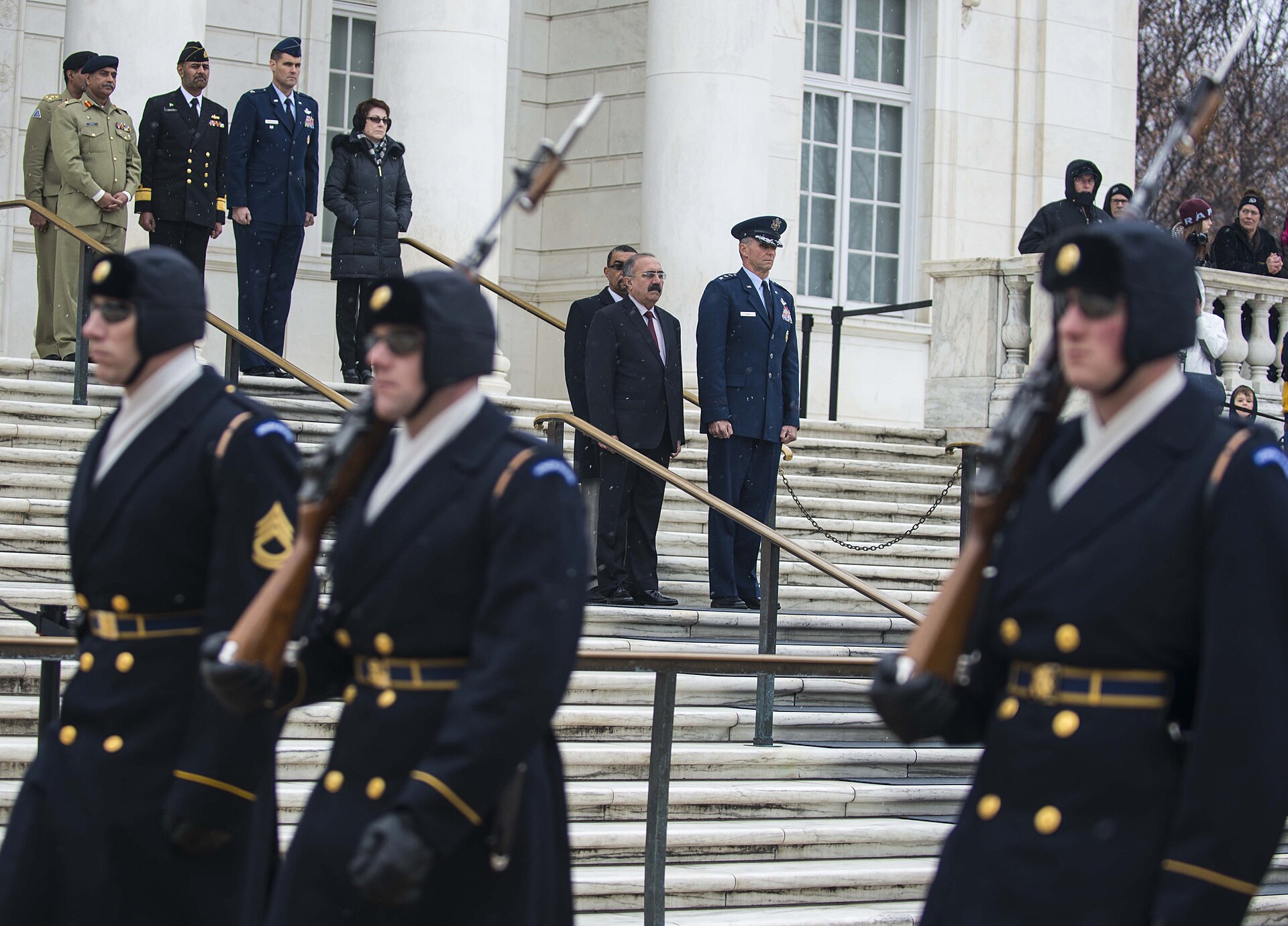
The political value of Pakistani troops on Saudi soil is separate from their operational value at King Khalid. Islamabad’s deployment signals that the Mecca Pact is not decorative — that signatories will send forces when invoked. For Riyadh, that signal matters in the context of unanswered requests to Washington and the broader question of who underwrites Saudi security when the American relationship produces interceptors at a rate slower than the Houthis consume them. The signal is real. The airport gap remains open.
The Airspace Advisory and What It Signals
Saree’s warning to international airlines was not rhetorical. The October 6–8 wave struck two operational civilian airports — King Khalid in Riyadh and Abha International — producing fatalities and dozens of wounded across both facilities. A third airport, at Jizan, was struck in September. The Houthis have demonstrated both the capability and the intent to hit civilian aviation infrastructure with mass-casualty outcomes.
“Saudi airspace is a theater of operations,” Yahya Saree declared, issuing what he called a “last warning” to global airlines — exempting only Mecca and Medina from the Houthi threat envelope.
The Mecca-Medina carve-out is operationally deliberate. Excluding the two holy cities limits the religious backlash that targeting Hajj and Umrah traffic would produce across the Muslim world. It simultaneously concentrates the threat on Saudi Arabia’s commercial aviation network — Riyadh, Jeddah, Dammam, Abha — where the economic and reputational damage is highest. The carve-out is a targeting doctrine, not a humanitarian concession.
EASA’s September 30 advisory covered the southwestern Jeddah FIR. After October 8, the advisory’s relevance extends to Riyadh, which sits in a different sector but within demonstrated Houthi ballistic-missile range. European carriers assessing Riyadh service now face a layered calculation: the EASA advisory, war-risk insurance premiums, two demonstrated missile penetrations at King Khalid, and a formal Houthi declaration that all Saudi airspace outside the holy cities is a combat zone.
The precedent is Ben Gurion. In 2025, a Houthi ballistic missile struck Tel Aviv’s Ben Gurion International Airport, evading Iron Dome and David’s Sling — Israel’s most capable layered air-defence systems. That single strike produced a global reassessment of Houthi precision and reach. King Khalid has now been struck twice in nineteen days. The aviation industry’s institutional memory of the Ben Gurion event is less than eighteen months old.
King Khalid’s Flightradar24 disruption index hit 5.0 on September 19. The October 8 strike, with confirmed fatalities, will produce a second consecutive maximum reading. Airlines do not need EASA to interpret what consecutive 5.0 scores at a capital-city airport mean. They need insurers to price it. If the war-risk premium exceeds the route revenue, the route closes — not by government order, but by actuarial arithmetic. The Houthis do not need to close Saudi airspace. They need to make it uninsurable.
Frequently Asked Questions
Has King Khalid International Airport been closed after the October 8 strike?
Saudi GACA has not announced a formal closure as of October 8. The airport experienced departure and arrival disruptions — Flightradar24 recorded elevated delays — but continued accepting commercial traffic. Saudi Arabia’s pattern after previous airport strikes, including the 2019 Abha attacks, has been to resume normal operations within 24–48 hours. King Khalid handled approximately 29.6 million passengers in 2025, making a sustained closure economically untenable for the kingdom’s aviation hub strategy and the broader NEOM and Vision 2030 connectivity targets.
What type of ballistic missile did the Houthis use in the October 8 strike?
The Houthis did not specify the variant in Yahya Saree’s claim. In previous strikes on Riyadh, the Houthis have employed the Burkan-2H — a modified Scud variant with an estimated 1,000-kilometre range — and the more recent Toufan series, believed to incorporate Iranian Zolfaghar-derived technology with improved terminal guidance. The distance from Houthi-controlled Sa’dah province to Riyadh is approximately 850–900 kilometres, within range of several Houthi ballistic missile types. Open-source analysis of the October 8 weapon has not confirmed the specific variant.
How does the King Khalid strike compare to the 2019 Aramco Abqaiq attack?
The September 2019 Abqaiq-Khurais attack used cruise missiles and drones — not ballistic missiles — and targeted energy infrastructure, not a civilian airport. That strike temporarily removed 5.7 million barrels per day of Saudi processing capacity, roughly five percent of global supply, and exposed directional blind spots in Saudi radar coverage from the north. King Khalid represents a different failure mode: not a directional gap but a terminal-phase saturation problem at a site where air defences are present, active, and successfully engaging one of two inbound weapons. Abqaiq was a coverage failure. King Khalid is a capacity failure.
What would it cost to replenish Saudi Arabia’s PAC-3 stockpile?
A PAC-3 MSE interceptor costs approximately $4.1 million per round at 2024 contract prices. Replacing the estimated 2,400 expended rounds would cost roughly $9.84 billion at current unit costs — before inflation adjustments, expedited-production surcharges, or the diplomatic cost of advancing Saudi Arabia in the Lockheed Martin production queue ahead of existing US Army and allied orders. Alternative systems such as NASAMS or IRIS-T, which some Gulf states have explored as supplements, are not compatible with the Saudi Patriot fire-control architecture and would require a parallel integration programme running years, not months.
Have Houthi missiles reached Riyadh before the 2026 strikes?
The Houthis first struck Riyadh in November 2017, firing a Burkan-2H that was intercepted over the capital — debris fell near King Khalid Airport. In March 2018, seven ballistic missiles targeted Riyadh in a single salvo; interceptors engaged all seven, though debris killed an Egyptian resident in a residential neighbourhood. Between 2017 and 2021, Houthi missiles or drones reached the Riyadh area on at least six documented occasions. The 2026 strikes differ not in reach but in outcome: the earlier attacks were intercepted without terminal-phase penetration, while the October 2026 paired salvos have produced two ground-level impacts at King Khalid in nineteen days.