DUBAI — Major General Ali Abdollahi, commander of Iran’s Khatam al-Anbiya Central Headquarters, warned on May 4 that “any foreign military force, especially the aggressive US military, that intends to approach or enter the Strait of Hormuz will be targeted” — issuing the threat on the same day Pakistan confirmed Tehran had received Washington’s counter-proposal to Iran’s 14-point peace plan.
The statement, broadcast on state television by IRIB, came as Iran’s Foreign Ministry said it was “reviewing” the US response delivered through Pakistani intermediaries. Abdollahi is the officer President Masoud Pezeshkian publicly accused on April 4 of sabotaging the Islamabad ceasefire talks. Under Iran’s constitutional structure, Pezeshkian cannot remove or discipline him. Iran is now simultaneously receiving a peace offer and broadcasting an attack order from the same command apparatus.
Table of Contents
What Did Abdollahi Say on May 4?
Abdollahi’s IRIB broadcast was a direct operational threat, not diplomatic signaling. “We warn that any foreign military force, especially the aggressive US military, that intends to approach or enter the Strait of Hormuz will be targeted,” he said, according to PressTV and Mehr News on May 4. He added that “any aggressive US move aimed at disrupting the current situation would only further complicate conditions and jeopardize the security of vessels in the area.”
He also addressed commercial shipping. “We have repeatedly said the security of the Strait of Hormuz is in our hands and that the safe passage of vessels needs to be coordinated with the armed forces,” Abdollahi said, according to Mehr News. The phrasing matched a pattern established since March: vessels may transit, but only with IRGC authorization.
The threat arrived 48 hours after Trump told Kan News on May 3 that Iranian efforts to block Hormuz “will, unfortunately, have to be dealt with forcefully.” Trump had rejected the 14-point plan in the same interview, calling it “not acceptable” because it contained no nuclear provisions. Abdollahi’s broadcast functioned as the operational answer.
Ebrahim Azizi, head of Iran’s parliament national security commission, reinforced the framing from the legislative side, calling the US force presence “delusional” and “a direct violation of the ceasefire,” according to PressTV on May 3.
The Middle East briefing 3,000+ readers start their day with.
One email. Every weekday morning. Free.
The IRGC Maritime Control Zone
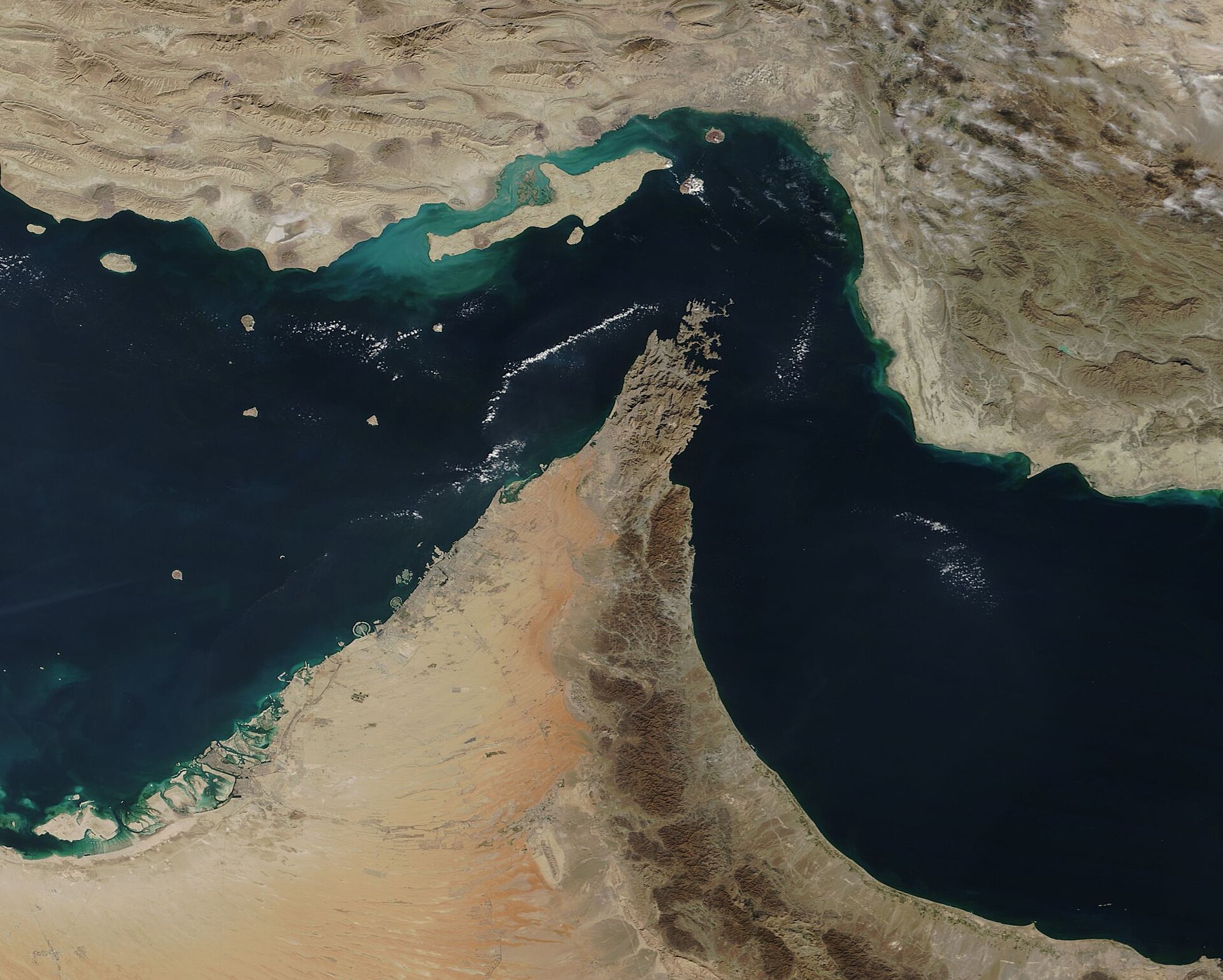
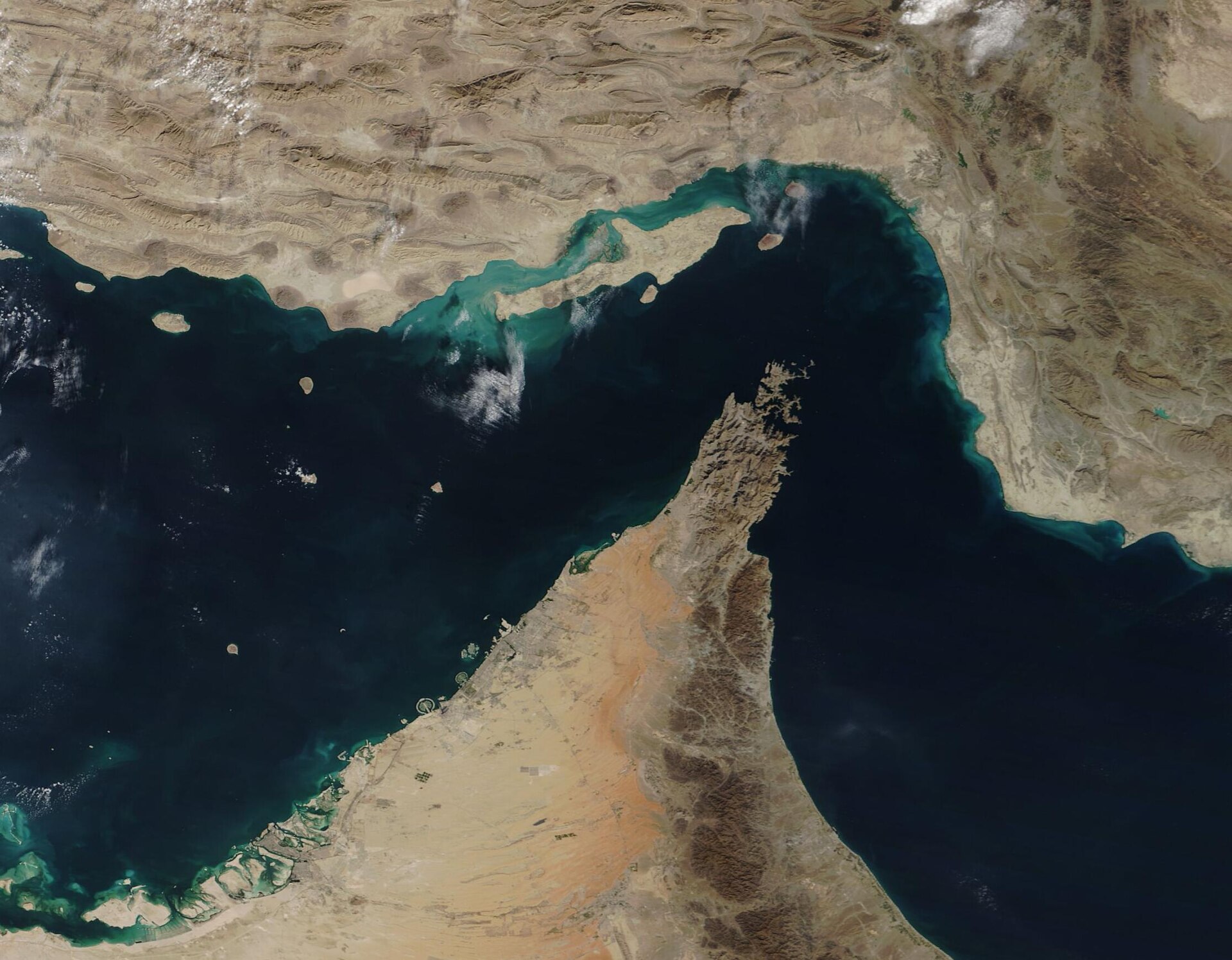
On the same day as Abdollahi’s broadcast, Tasnim News Agency — the IRGC-aligned outlet — published a formal maritime control zone map. The declared zone spans from the end of Qeshm Island to Umm Al Quwain on the western boundary and from Mount Mobarak (Iran) to south of Fujairah (UAE) on the southern boundary.
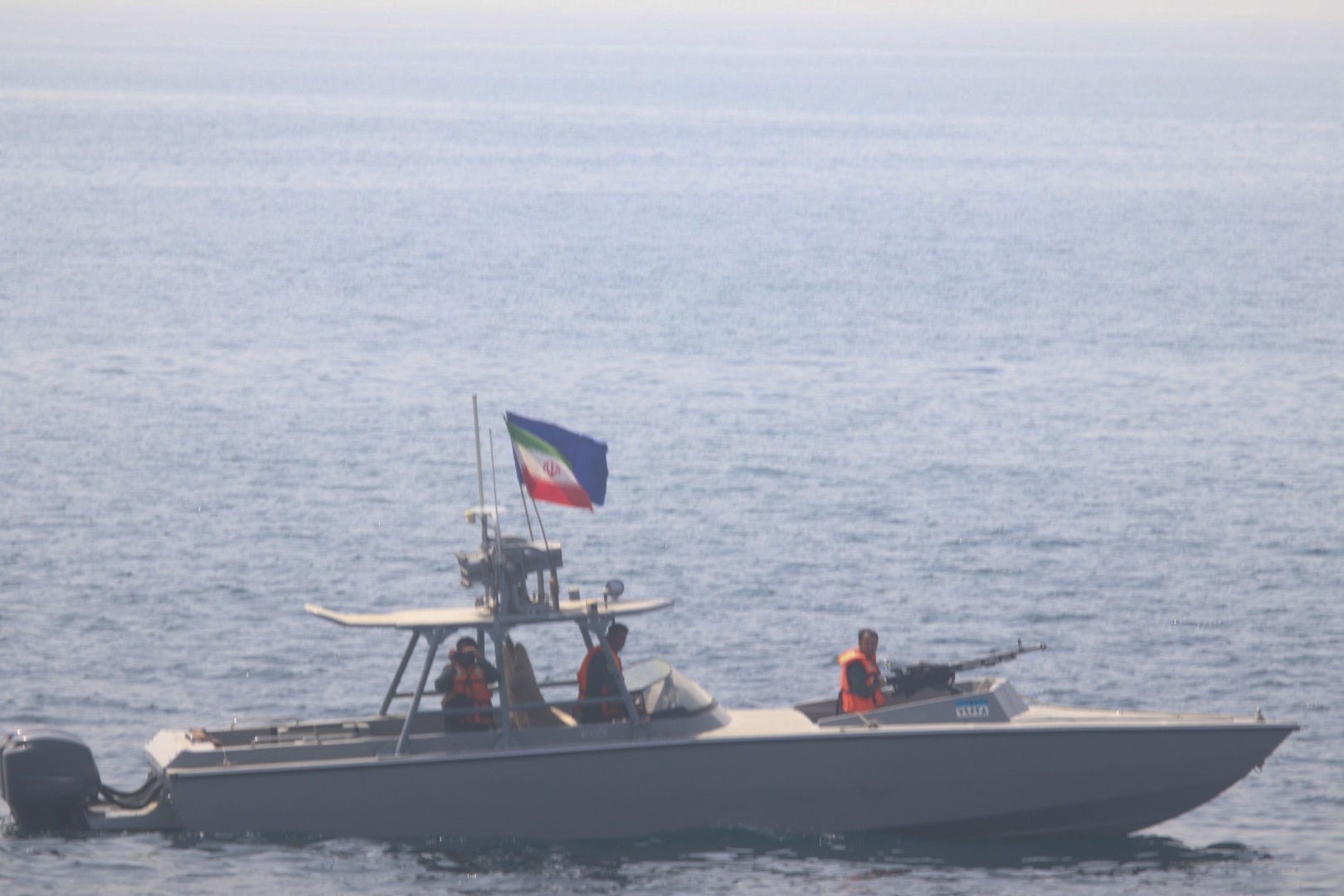
The IRGC separately declared control over “nearly 2,000 kilometers of Iran’s coastline” spanning the Arabian Gulf and the Strait of Hormuz, according to Tasnim. Vessels violating the declared protocols would be “forcefully stopped.”
This is the cartographic expression of what Abdollahi stated verbally. The IRGC Navy’s April 5 declaration of “full authority” over Hormuz established the claim; the May 4 map draws the lines. Iran’s parliament is now advancing a 12-article Hormuz sovereignty law that would codify the arrangement legislatively — banning Israeli vessels permanently, requiring Iranian authorization for all others, and demanding reparations from “hostile nations,” according to UK Parliament Research Briefing CBP-10636.
The operational, cartographic, and legislative tracks are converging. What was a verbal claim in early April is now an announced zone with declared boundaries and pending statutory authority.
How Does Iran’s 14-Point Plan Collide With the US Counter-Proposal?
Iran’s 14-point peace proposal, delivered through Pakistan, calls for a ceasefire within 30 days, US withdrawal from Iran’s periphery, an end to the naval blockade, release of frozen assets, reparations, sanctions relief, Lebanon’s inclusion in any deal, and a new Hormuz mechanism. It contains zero nuclear provisions, according to The National and Al Jazeera on May 3.
Trump rejected it on those grounds. The US counter-proposal — the document Pakistan confirmed Iran received on May 4 — has not been published, but the gap is structural. Washington has proposed a 20-year enrichment moratorium in earlier rounds, according to Axios. Iran countered with monitored down-blending. Foreign Minister Abbas Araghchi said he was “inches away” from a memorandum of understanding before Vice President JD Vance walked out of the Islamabad talks in April, according to Axios reporting.
Araghchi blamed Washington’s “destructive habits,” including “insistence on putting forward unreasonable demands, frequently changing positions, rhetoric of threat and recurrent breaking of promises,” according to GlobalSecurity reporting in May 2026. Iran’s Foreign Ministry spokesman Esmaeil Baghaei described the 14-point plan as “exclusively focused on ending war” — diplomatic language from the same government whose joint operational commander was simultaneously threatening to target US warships.
The IRGC set its own deadline on May 2: a 30-day window for the US to end the blockade of Iranian ports, expiring approximately June 1. That deadline exists outside the diplomatic channel entirely. Pakistan delivered the counter-proposal; Abdollahi is not bound by whatever Araghchi reviews.
Why Can’t Pezeshkian Stop the Threat?
Iran’s constitutional structure makes the president irrelevant to IRGC operational decisions. Under Article 110, the Supreme Leader — not the president — holds command authority over the armed forces. Ayatollah Ali Khamenei has been absent from public view for approximately 65 days as of May 4.
Pezeshkian tried. On April 4, he publicly named both Ahmad Vahidi, the IRGC Commander-in-Chief, and Abdollahi as the officers who sabotaged the Islamabad ceasefire talks, accusing them of “deviation from the delegation’s mandate.” The accusation changed nothing. Abdollahi was not removed, reprimanded, or sidelined. He is now issuing operational threats on state television.
Khatam al-Anbiya Central Headquarters was separated from Iran’s General Staff in 2016 as a standing independent joint operational command, according to UANI and academic sources. It exercises command and control over all Iranian armed forces, including the IRGC Navy. Abdollahi is not a land commander overstepping into maritime affairs — he sits above the IRGC Navy in the command hierarchy. The IRGC’s apex war command declared conflict resumption likely through Abdollahi’s headquarters.
The IRGC Navy itself has been without a named commander since Alireza Tangsiri was killed on March 30 — 35 days with no announced successor. Abdollahi’s KCHQ fills the vacuum. He replaced two previous KCHQ commanders — Gholamali Rashid and Ali Shadmani — both killed in Israeli strikes during the current war, according to IranWire.
The Foundation for Defense of Democracies described Iran’s Hormuz offer as having “no verifiable sovereign” capable of binding IRGC operations to diplomatic commitments. Pezeshkian’s April 4 accusation was the public admission: the president knows the military is acting independently and can say so on television without it making any operational difference. The Central Bank memo obtained in April — projecting 180% inflation and a 12-year recovery horizon — reflects the economic reality Pezeshkian’s government faces while its military operates on a separate timeline.
Project Freedom and the Hormuz Transit Test
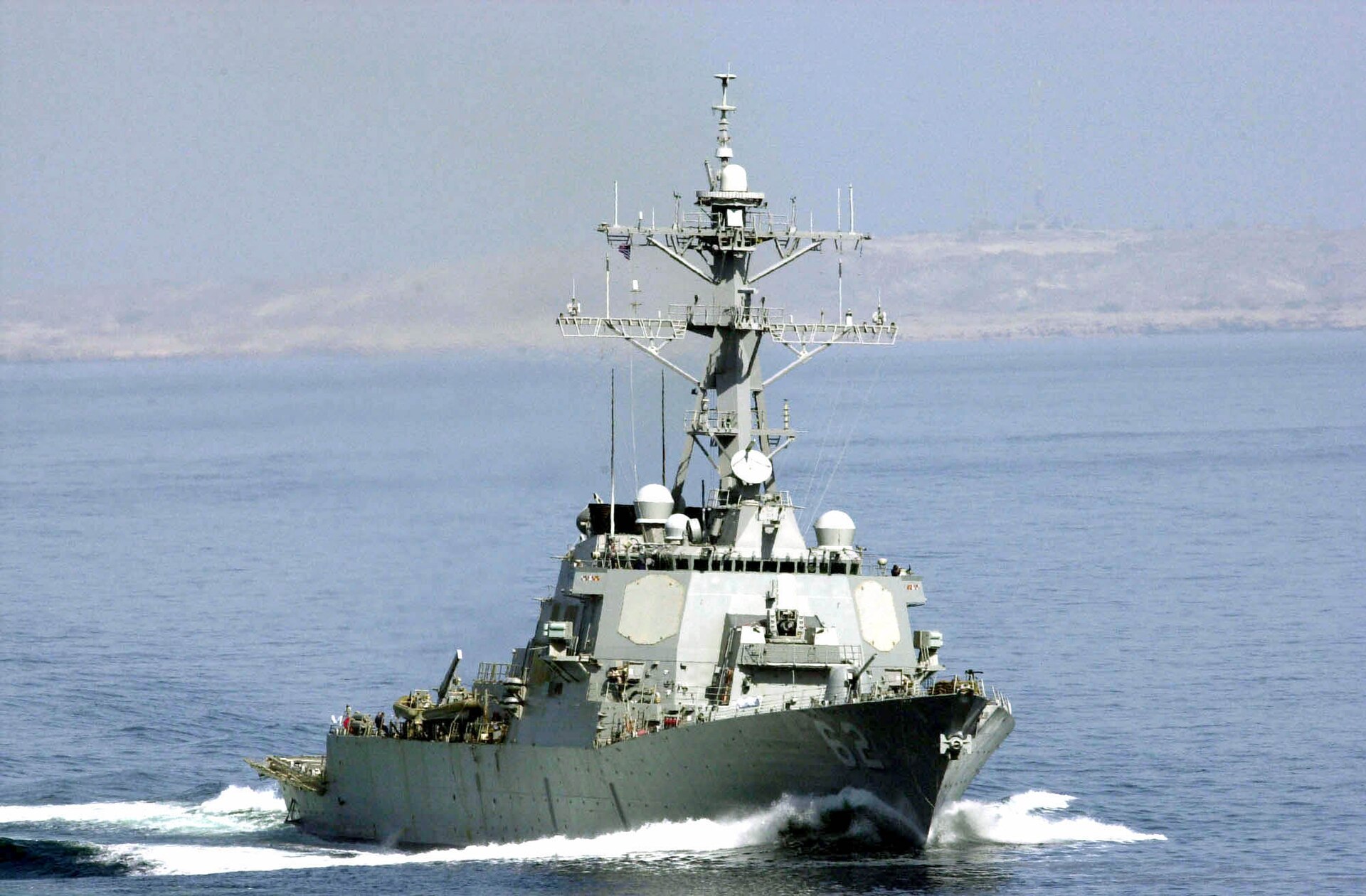
Abdollahi’s threat was tested within hours. Two US Navy guided-missile destroyers transited the Strait of Hormuz on May 4, and two US-flagged merchant vessels completed transits the same day, according to CNN. They passed through the zone the IRGC had just declared its own.
The transits are part of Operation Project Freedom, the US force package deployed to secure Hormuz passage. The National and Axios reported on May 4 that the package includes guided-missile destroyers, over 100 land and sea-based aircraft, multi-domain unmanned platforms, and 15,000 service members. Saudi Arabia’s exposure to the two-chokepoint trap — Hormuz and Bab el-Mandeb — makes the operation’s scope a direct Gulf security variable.
CENTCOM confirmed the transits and denied any US vessels had been struck. “No U.S. Navy ships have been struck. U.S. forces are supporting Project Freedom and enforcing the naval blockade on Iranian ports,” CENTCOM said in a May 4 statement.
The destroyers transited the strait the same day Abdollahi said they would be targeted. Neither side blinked. Both sides broadcast their positions in real time — Abdollahi on IRIB, CENTCOM through official channels. The pattern resembles the April 11 incident, when CENTCOM destroyers DDG-121 and DDG-112 transited Hormuz and the IRGC issued a “last warning” radio call that the US dismissed as “passage in accordance with international law.”
The Fars News Missile Claim
Fars News Agency, IRGC-aligned, claimed on May 4 that two missiles struck a US warship near Jask. CENTCOM denied it categorically. Al Arabiya, CNBC, and The Hill all reported the denial.
The claim fits an established pattern. NewsGuard documented what it called “50 Lies in 25 Days” in Iranian state media during the conflict. The Institute for National Security Studies tracked 37,000 AI-generated content items producing 145 million views, with 72% of distribution on TikTok, according to INSS data. Fars News has previously claimed strikes that CENTCOM denied and satellite imagery did not corroborate.
The Jask claim serves a domestic function regardless of accuracy. Abdollahi issued an operational threat on state television in the morning; Fars News reported a strike that evening. The narrative arc — threat followed by claimed execution — reinforces IRGC credibility inside Iran even if the strike never occurred. Tasnim News Agency separately reported on May 4 that the “Iranian Navy blocks entry of hostile destroyers,” framing the same transit that CENTCOM described as completed.
Background
The Iran-US military confrontation in the Strait of Hormuz is now in its third month. The IRGC began restricting commercial shipping in early March 2026, shortly after the broader conflict erupted. The US imposed a naval blockade on Iranian ports effective April 13, and the IRGC responded by tightening control over the strait itself, creating what Bloomberg on April 26 described as a “double blockade” — the US controls the Arabian Sea entry while the IRGC controls the Gulf of Oman exit.
Abdollahi was sanctioned by the US Treasury’s Office of Foreign Assets Control in 2019, according to FDD and IranWire reporting. His appointment to KCHQ came during wartime, following the deaths of his two predecessors in Israeli strikes. Born in 1959, he joined the Revolutionary Committees after the 1979 revolution and led suppression of Kurdish citizens in Kurdistan Province, according to IranWire. He subsequently commanded the IRGC’s 16th Qods Division, served as Chief of Staff of IRGC Ground Forces, and held a deputy command in the IRGC Air Force.
Pakistan’s role as the diplomatic intermediary is itself under structural pressure. Army chief General Asim Munir visited Khatam al-Anbiya headquarters on April 16 — the very command whose officer Pezeshkian had publicly accused of sabotaging the talks Munir was mediating. The IRGC strike on an ADNOC tanker demonstrated that operational actions continue irrespective of diplomatic timelines.
FAQ
What is Khatam al-Anbiya Central Headquarters?
KCHQ is Iran’s independent joint operational command, separated from the General Staff in 2016. It exercises command and control over all branches of the Iranian armed forces during wartime, including the IRGC Navy, IRGC Ground Forces, and the regular military (Artesh). Its commander, currently Abdollahi, holds operational authority above individual service commanders — making his Hormuz threats orders of the joint command, not commentary from a single branch.
Has Iran attacked US warships in the current conflict?
Iran has not confirmed a successful strike on a US warship that CENTCOM has corroborated. The May 4 Fars News claim of two missiles hitting a US vessel near Jask was denied by CENTCOM. In April, the IRGC issued radio warnings to US destroyers transiting Hormuz but did not fire. The gap between IRGC rhetoric and confirmed kinetic action against US naval assets has persisted since the conflict began in late February 2026.
What is Abdollahi’s OFAC designation?
The US Treasury sanctioned Abdollahi in 2019 under Executive Order 13876, which targets Iran’s Supreme Leader’s office and associated individuals. The designation freezes any US-held assets and prohibits US persons from transacting with him. His sanctioned status predates the current war by seven years, reflecting longstanding US assessment of his role in Iran’s military command structure.
How many transits have occurred through Hormuz since the ceasefire?
Bloomberg reported 45 transits since the April 8 ceasefire as of late April — approximately 3.6% of the pre-war baseline transit rate. The May 4 transits by two US destroyers and two US-flagged merchant vessels represent the most direct challenge to IRGC control claims since Project Freedom’s deployment. Commercial shipping remains heavily suppressed, with VLCC rates at record levels and over 150 tankers anchored outside the strait as of late April.
What happens if the IRGC’s 30-day blockade deadline expires?
The escalation trajectory since March — radio warnings, then vessel seizures, then explicit attack threats — suggests the June 1 deadline functions as an internal authorization marker rather than a diplomatic signal. The IRGC did not specify consequences when it set the deadline on May 2. Whether Khamenei, absent for approximately 65 days, would ratify kinetic action against US forces remains the unanswered question at the center of Iran’s command paralysis. The Pentagon confirmed on May 5 that Iran had already carried out more than ten attacks on US forces since the April 8 ceasefire, each classified as below the threshold for escalation — a calibration ceiling that is now public knowledge.