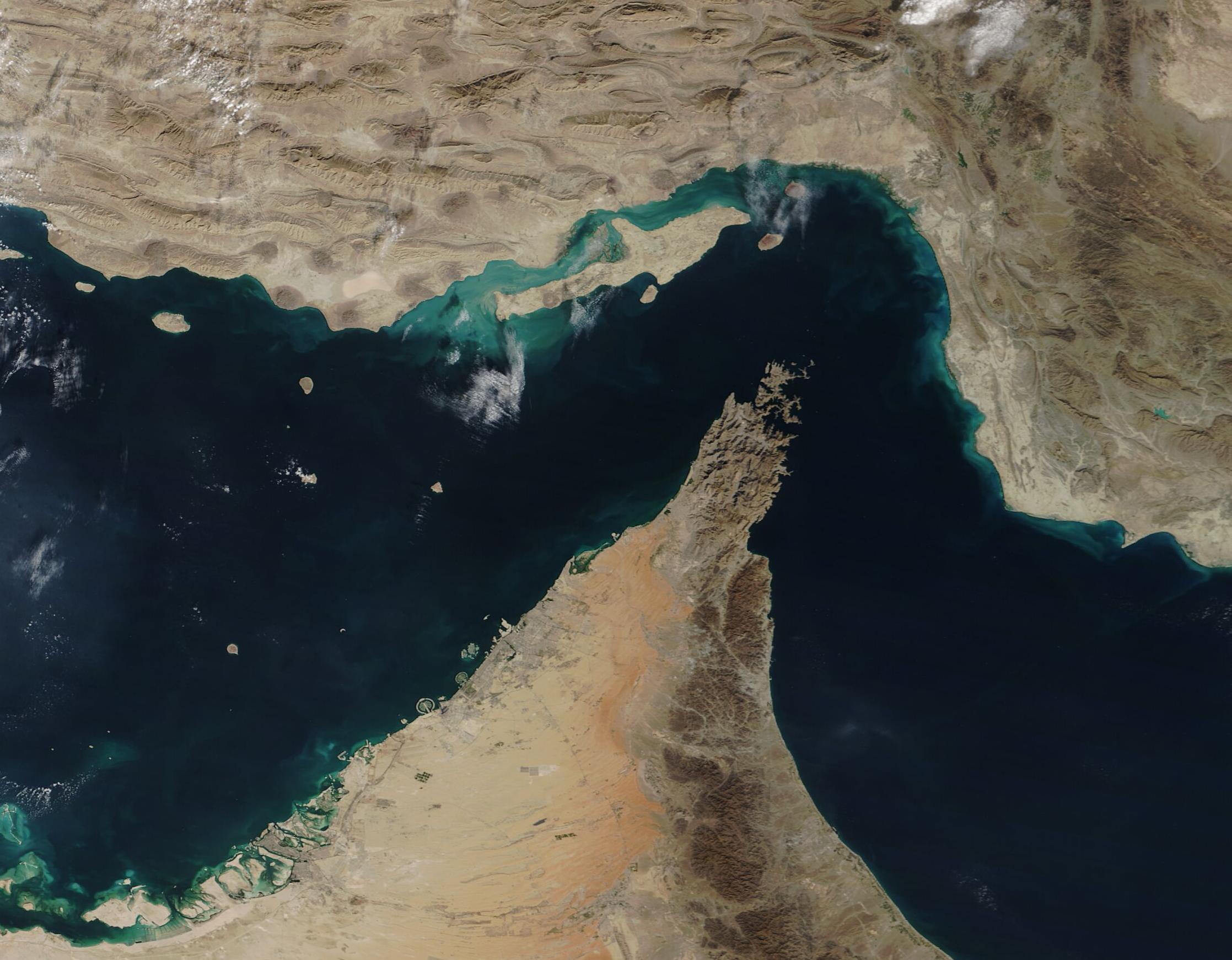
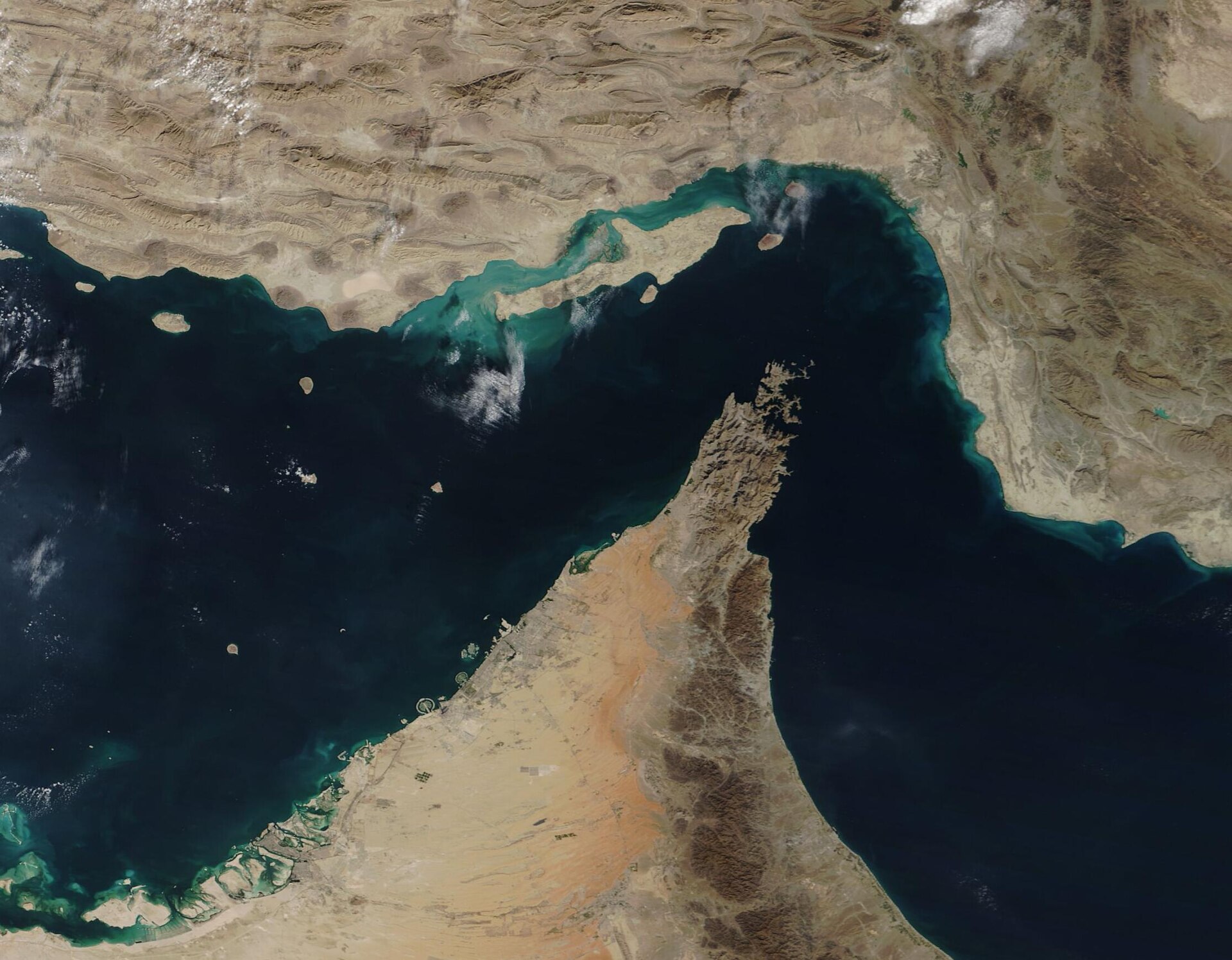
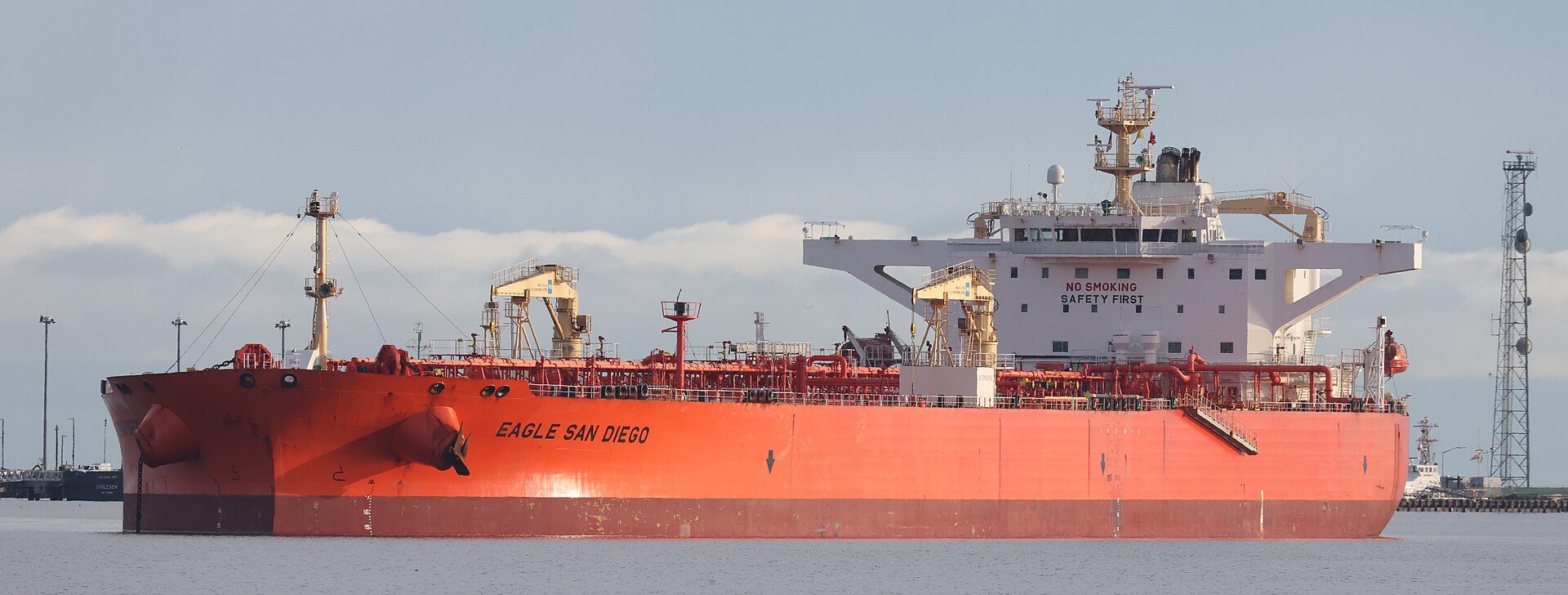
DUBAI — Iran struck an Abu Dhabi state oil company tanker with two drones in the Strait of Hormuz on Sunday, the same day the United States launched Project Freedom with the first successful escorted transits of two American-flagged merchant ships through the same waterway — a juxtaposition that demonstrated, within hours, exactly who the new military operation protects and who it does not. The M.V. Barakah, an empty crude carrier operated by ADNOC Logistics & Services, sustained the impacts approximately 78 nautical miles north of Fujairah with zero crew injuries, according to ADNOC, but the UAE Ministry of Foreign Affairs condemned the attack as a “flagrant violation of UN Security Council Resolution 2817” and an act of “piracy by Iran’s Revolutionary Guard Corps,” while the GCC Secretary General denounced it “in the strongest terms.”
The gap between who Project Freedom shields and who it does not now defines the operational reality of the Strait of Hormuz for every Gulf Arab fleet. CENTCOM’s own language scopes the operation to vessels from countries “not affiliated with the conflict”; the UAE, which has been under sustained IRGC attack since February 28 and deployed an Israeli-made Iron Dome air defence battery, is affiliated with the conflict by any available measure, and so is Saudi Arabia, whose Eastern Province refineries have been struck and whose crude production crashed 30 per cent in March. Iran did not test American resolve on Project Freedom’s first day — it demonstrated, through target selection, who the operation leaves exposed, and that doctrinal message was addressed not to Washington but to Riyadh.
Table of Contents
What Happened in the Strait on May 4
The Barakah was not the day’s only target. Roughly eight hours before the ADNOC tanker was hit, a northbound bulk carrier was attacked by multiple Iranian small craft approximately 11 nautical miles west of Sirik, Iran, according to UKMTO’s ATTACK 052-26 advisory — placing two separate Iranian strikes on commercial shipping within a single operational day that also saw the first successful Project Freedom transits. US Navy guided-missile destroyers accompanied two American-flagged merchant vessels through the strait under the protection of what CENTCOM described as more than 100 land- and sea-based aircraft, multi-domain unmanned platforms, and 15,000 US service members, while the Barakah — carrying no cargo and flying the UAE flag — fell outside this protective architecture entirely.
ADNOC Logistics & Services confirmed the drone impacts in statements carried by Al Arabiya, Gulf News, and the Khaleej Times, noting zero injuries aboard the vessel. The company operates a fleet of 120 ships with a combined deadweight tonnage of 5,759,111 metric tons, and its crude carriers typically haul approximately two million barrels per voyage — making an ADNOC tanker transit through Hormuz the kind of routine commercial event that, before February 28, required no one in Abu Dhabi to give it a second thought. Iran simultaneously claimed to have struck a US Navy frigate with two missiles, a statement CENTCOM denied within hours by confirming that “no US Navy ships have been struck” — the sixth formal denial of false Iranian strike claims since the war began.
“We warn that any foreign military force, especially the aggressive US military, that intends to approach or enter the Strait of Hormuz will be targeted.”
— Major General Pilot Ali Abdollahi, Iranian Armed Forces, to IRIB, May 4, 2026
The HOS Daily BriefThe Middle East briefing 3,000+ readers start their day with.
One email. Every weekday morning. Free.
Abdollahi’s warning, issued to Iran’s state broadcaster on the same day the strikes occurred, framed every vessel in the waterway as a potential target regardless of escort status. Ebrahim Azizi, the head of Iran’s parliamentary national security and foreign policy commission, went further, formally declaring Project Freedom a ceasefire violation: “Any American interference in the new maritime regime of the Strait of Hormuz will be considered a violation of the ceasefire,” he said, before adding that “the Strait of Hormuz and the Persian Gulf would not be managed by Trump’s delusional posts.” Iran’s state news agency IRNA dismissed the entire operation as part of Trump’s “delirium,” and Tasnim News Agency — the IRGC-aligned outlet that typically claims Iranian strikes within minutes — issued only a brief holding statement: “Additional news will be announced later.” The restraint was consistent with neither claiming nor disclaiming the attack, a calibrated ambiguity designed to allow Tehran time to assess the international response before deciding whether the Barakah incident becomes an acknowledged IRGC operation or a deniable event.
Why Did Iran Target an ADNOC Vessel?
The target was not random, and the timing was not coincidental. ADNOC is the operational arm of Abu Dhabi’s hydrocarbon wealth, the company through which the UAE manages its energy exports and funds its wartime economy, and the entity whose managing director — Sultan Ahmed Al Jaber, who doubles as UAE Minister of Industry and Advanced Technology — responded to the attack by declaring that “the Strait of Hormuz must never be held hostage or used as a tool of economic coercion and extortion.” By hitting an ADNOC vessel on the same day American ships passed untouched, the IRGC made a jurisdictional argument with explosives — that its “new maritime regime,” announced May 2 when the Revolutionary Guards established formal control over nearly 2,000 kilometres of Iran’s coastline, applies to Gulf Arab state fleets whether or not Washington sends destroyers through the passage.
Iran’s doctrine of targeting UAE-linked assets is not improvisation but an established operational pattern with a traceable escalation sequence: the IRGC seized a Togo-flagged, UAE-managed products tanker on a fabricated judicial order in July 2024; struck UAE and Bahrain aluminium facilities linked to US war support on March 29, 2026; and seized the MSC Francesca (11,660 TEU) and Epaminondas (6,690 TEU) on April 22, after the ceasefire, establishing a post-ceasefire seizure precedent that made clear the IRGC’s maritime posture had not changed. Two days before the Barakah was struck, as this publication reported, Iran privately disclosed to Saudi and Omani interlocutors its intent to “crush the UAE” — a threat delivered to Riyadh rather than Abu Dhabi because the intended audience was Saudi Arabia’s mediation calculus, not Emirati resolve.
The Barakah attack converts that disclosure from diplomatic threat to demonstrated capability against a named state oil company within 48 hours, and the speed of that conversion tells every defence ministry in the Gulf how much warning time separates an Iranian declaration of intent from its operational execution. The choice of an empty vessel — no cargo, no environmental disaster, no casualties — was itself a calibration: Iran made the doctrinal point without creating the kind of incident that might force Washington to expand Project Freedom’s scope beyond its designed limits.
Project Freedom’s Protection Gap
The operation is unprecedented in scale — the largest American naval deployment in the Gulf since the 1987–88 Tanker War — but its scope contains a restriction the Barakah strike exposed within hours of the first transit. Project Freedom’s name is itself a concession, an acknowledgment that the strait has been functionally closed embedded in the very act of reopening it, and whether reopening it for American-flagged ships constitutes reopening it at all is a question the IRGC answered on May 4 with a pair of drones and a UAE state oil company tanker.
Axios reported on May 4 that the US Navy has “no plans for full-fledged naval escorts right now,” with destroyers shadowing convoy lanes and standing ready to intervene rather than sailing in formation with commercial vessels — a posture that amounts to proximity deterrence for American-flagged ships within the destroyer’s tactical radius, but one that is structurally unable to extend to UAE-flagged or Saudi-flagged vessels that fall outside the operational criteria CENTCOM established for the programme. The distinction between “shadowing” and “escorting” is one no insurer writing war-risk premiums for Hormuz transit will fail to notice, and no Gulf Arab shipowner calculating the cost of attempting the passage without a destroyer alongside can afford to ignore.
Dr. Anwar Mohammed Gargash, diplomatic adviser to the UAE president, stated that “these attacks confirm that the Iranian threat to the security and stability of the region is ongoing and cannot be ignored” — a formulation aimed at Tehran, obviously, but also at a Washington that had just demonstrated the limits of its own escort architecture in real time. The IRGC’s 30-day blockade deadline is designed to ensure that any American decisions about expanding Project Freedom’s scope are made under pressure rather than deliberation.
Does Project Freedom Cover Gulf Arab Shipping?
The honest answer, based on CENTCOM’s operational language and the evidence of May 4, is: not yet, and possibly not by design. The 1987 reflagging mechanism under Operation Earnest Will worked because Kuwaiti tankers were re-registered under the American flag, converting them into US vessels entitled to naval escort under international maritime law — a mechanism Project Freedom has not offered to the UAE, Saudi Arabia, or any other Gulf state, and the distinction between a US-flagged ship transiting under destroyer escort and a UAE-flagged ADNOC tanker attempting the same passage 78 nautical miles north matters in ways that are legal, operational, and on May 4 became violently practical.
The consequence is a two-tier Hormuz in which American-flagged ships transit under direct military protection while Gulf Arab state vessels must navigate the same waters under Iranian drone coverage without the escort umbrella. This may not be a failure of the operation but a deliberate scope limitation — one that allows Washington to demonstrate freedom of navigation without committing to a convoy obligation that would require defending Saudi and Emirati tankers and would risk the direct US-Iran naval engagement the operation appears designed to avoid. But for Abu Dhabi, which watched a national oil company tanker absorb drone impacts on the same morning American ships sailed through untouched, and for Riyadh, whose tankers face identical exposure, the analytical distinction between deliberate limitation and functional abandonment carries very little operational weight.
“The Strait of Hormuz and the Persian Gulf would not be managed by Trump’s delusional posts!”
— Ebrahim Azizi, Head of Iran Parliament’s National Security and Foreign Policy Commission, May 4, 2026
Azizi’s declaration frames Project Freedom as an act of escalation — consistent with the IRGC’s assertion that any uninvited naval presence in the strait constitutes a ceasefire violation, regardless of the cargo being escorted or the flag it flies. If protecting Gulf Arab ships requires defending them against Iranian attacks, and if Iran has pre-classified that defence as a ceasefire breach, then every vessel added to Project Freedom’s coverage raises the escalation threshold in ways the operation’s current architecture appears calibrated to avoid.
The UAE-Iran Rupture Deepens
The Barakah strike lands on a bilateral relationship that has already moved past rupture into something closer to an undeclared war. Iran’s 2,819 weapons systems fired at UAE territory since February 28 destroyed the cautious equilibrium Abu Dhabi maintained with Tehran for decades, an arrangement built on the premise that the UAE’s trade links with Iran (the Dubai re-export market, the Iranian business community in Sharjah and Ajman, the informal banking channels through which both sides quietly profited) made it worth Tehran’s while to exempt Abu Dhabi from the kind of targeting it reserved for Riyadh.
The UAE’s response has been to harden at every available pressure point. Abu Dhabi exited OPEC on May 1 after 59 years, stripping the cartel of its third-largest Gulf producer and signalling a willingness to act unilaterally that extends well beyond energy policy; it deployed an Israeli-made Iron Dome air defence battery whose provenance alone ensures deepened Iranian hostility; and Gargash publicly declared the GCC “not fit for purpose,” a judgement directed at Riyadh’s mediation-first strategy. The UAE’s ceasefire demands — reparations plus security guarantees — diverge so sharply from Saudi Arabia’s zero-accountability language that they describe functionally separate wars fought under the same coalition label, and Iran’s formal designation of six Arab states as co-belligerents, met with Saudi silence, is a data point Abu Dhabi will not have overlooked.
The IRGC’s 30-day blockade deadline, issued May 2 with expiry around June 1, sits over the entire Gulf as an accelerant — and the Barakah attack, arriving on day two of that clock, suggests the Revolutionary Guards intend to use the countdown not for negotiation but for target demonstrations that establish the cost of non-compliance before the deadline arrives. The next ADNOC tanker to attempt the strait will carry cargo, and Abu Dhabi must decide whether it sails under the UAE flag without escort or waits for an American offer that, as of May 4, has not been extended.
What Must Saudi Arabia Calculate Now?
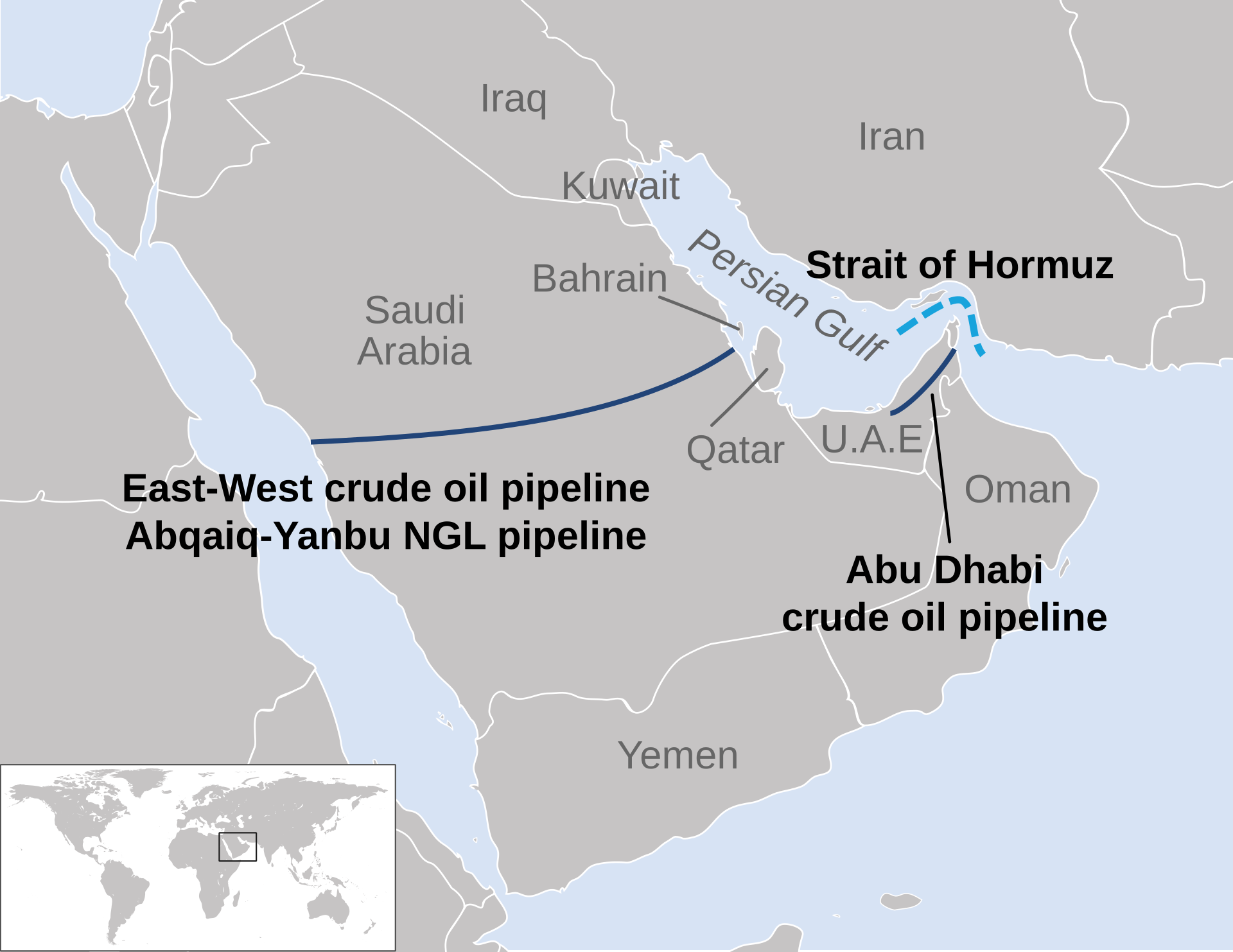
For Riyadh, the Barakah attack clarifies a question Project Freedom’s launch had temporarily obscured: whether American military operations in the strait reduce Saudi Arabia’s exposure or merely rearrange it. Saudi crude exports have already been rerouted through the East–West Pipeline to Yanbu on the Red Sea, a bypass covering 80–85 per cent of pre-war capacity at a ceiling of 4–5.9 million barrels per day against a pre-war Hormuz throughput of 7–7.5 million bpd — a structural gap Saudi Arabia cannot close without the strait, and Project Freedom, as currently configured, does not extend its protection to Saudi-flagged tankers. The UAE, which held a logistical advantage through the Habshan–Fujairah pipeline entirely outside the strait, lost that advantage on the same day: the VTTI terminal strike at Fujairah burned the Abu Dhabi bypass infrastructure that was supposed to make Hormuz irrelevant for UAE crude exports. Iran returned the following day with a second salvo — Iran’s two-day Fujairah campaign completed a thirty-day operation to eliminate every Hormuz bypass, shutting down the ADNOC refinery and suspending port loading through May 11.
OPEC+ approved a 188,000 barrel per day output increase for June at its first post-UAE-exit meeting, a gesture so marginal against the 13 million bpd the IEA’s Fatih Birol has called “the biggest energy security threat in history” that it functions less as supply management than as institutional proof of life. Brent crude rose more than 2 per cent to $110.64 per barrel on Project Freedom’s launch, though the net market reaction was mixed — traders pricing the Barakah attack, arriving hours after the first successful transits, as evidence that the threat ceiling the escort operation was designed to eliminate remains firmly in place, and the Jask claim was never meant to be true but to force a response, just as the Barakah strike was designed to demonstrate a condition rather than destroy a ship.
Iran does not need to close the strait to every vessel to achieve its strategic objective. It needs only to demonstrate that Gulf Arab ships remain targetable outside the American escort perimeter — and on May 4, with two drones and an empty tanker bearing the name of the UAE’s national oil company, it accomplished that at almost no cost, with no casualties, and with a degree of target discrimination that makes the doctrinal point without creating the kind of catastrophe that might force Washington to extend Project Freedom’s protection to the ships it was designed to leave outside.
Background: The Double Blockade
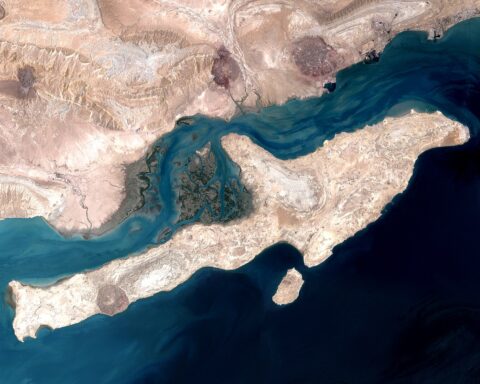
The Strait of Hormuz has been functionally contested since the war’s first day, February 28, 2026, when the IRGC established a unilateral permit regime requiring commercial vessels to coordinate with Iranian naval authorities before transiting — a demand most operators have complied with by not attempting the passage at all. Only approximately 45 vessels completed the strait between the April 8 ceasefire and May 4, representing 3.6 per cent of the pre-war baseline, and the first vessel attack of the conflict struck the oil tanker Skylight on March 1 north of Khasab, Oman, killing two Indian crew members. The IRGC’s mine-chart publications from late February through April effectively declared standard shipping lanes a danger zone, forcing the handful of permitted vessels into a narrow five-nautical-mile corridor between Qeshm and Larak islands inside Iranian territorial waters.
The United States established its own counter-blockade on April 13, controlling Arabian Sea entry and creating a double blockade in which vessels require both American and Iranian permission to transit — the US managing the southern approach, the IRGC controlling the Gulf of Oman exit. Iran’s May 2 extension of IRGC authority over nearly 2,000 kilometres of coastline, combined with a 14-point diplomatic proposal containing zero nuclear provisions and a 30-day blockade ultimatum, set the operational conditions under which Project Freedom was launched — and the Barakah attack established that Iran intends to contest the operation not by striking the American ships it shields but by hitting the Gulf Arab vessels it does not.
Frequently Asked Questions
What is UN Security Council Resolution 2817?
Resolution 2817 is the international legal instrument the UAE Ministry of Foreign Affairs invoked in condemning the Barakah attack, framing the IRGC drone strike as a violation of binding international law governing freedom of navigation and the protection of commercial shipping in international waterways. The citation is diplomatically consequential because it provides a basis for potential multilateral action — including formal Security Council proceedings — that a purely bilateral UAE-Iran framing would not, and it elevates the Barakah attack from a wartime incident into the category of state-sponsored piracy under international law, a classification that carries distinct legal obligations for UN member states.
Could Gulf Arab states reflag their tankers under the US flag?
The 1987 precedent is instructive: Kuwait re-registered 11 tankers under the American flag during the Tanker War, entitling them to US Navy escort under Operation Earnest Will and providing the legal basis for the most extensive American naval convoy operation since the Second World War. No comparable offer has been extended to the UAE or Saudi Arabia under Project Freedom, and the barriers are considerable — US Maritime Administration registration requirements, liability implications for the Department of Defence, and the political signal of Gulf Arab sovereign wealth entities transferring flag sovereignty to Washington at a moment when both governments are simultaneously pursuing diplomatic channels with Tehran through Pakistani and Omani mediators.
Has the US Navy lost mine-clearance capability in the Gulf?
The four Avenger-class mine countermeasure ships based at Naval Support Activity Bahrain were decommissioned in September 2025, six months before the war began, leaving sharply reduced MCM capacity in the theatre with only two Avenger-class vessels remaining available for Gulf operations. The IRGC’s mine-laying activity since February has contaminated an estimated 200 square miles of seabed in and around the strait, and post-conflict clearance would require roughly 51 days based on the 1991 Kuwait mine-clearance benchmark — meaning that even if a comprehensive ceasefire were signed and held, safe commercial navigation through the strait’s standard shipping lanes would remain months away from restoration.
What is Iran’s 14-point diplomatic proposal?
Submitted on May 2, the proposal contained no nuclear provisions — a conspicuous absence given that Iran holds 440.9 kilograms of highly enriched uranium at 60 per cent, sufficient for multiple weapons within approximately 25 days per device using existing IR-6 centrifuge cascades, according to IAEA estimates compiled before Iran terminated inspector access on February 28. Trump called the proposal “unacceptable.” The IRGC simultaneously issued the blockade ultimatum that now hangs over Project Freedom, coupling the diplomatic document with a military deadline in a structure that treats negotiation and escalation not as alternatives but as parallel instruments operating on the same timeline.