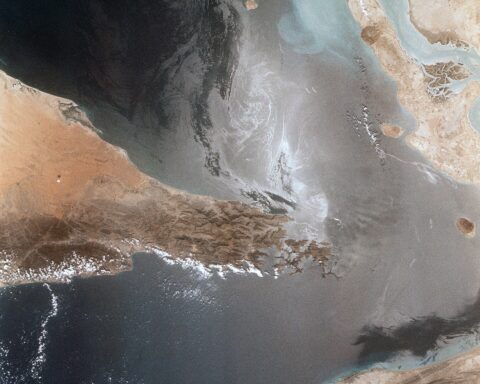
JEDDAH — Saudi Arabia’s survival thesis since February 28 has rested on a single pipeline: the 1,201-km East-West Petroline from Abqaiq to Yanbu, pumping at its full 7 million barrels per day for the first time in its history. That thesis — articulated in this publication five days into the war — assumed Hormuz was closed and Yanbu was open. It did not reckon with the fact that approximately 90 percent of crude loaded at Yanbu moves on VLCCs too large for the Suez Canal, and that those VLCCs have exactly one exit to Asian buyers: south through Bab al-Mandab. The Islamabad Accord, signed April 8, names three parties — Iran, the United States, Israel — and zero provisions for the Yemeni force that controls the western shore of that strait.
Table of Contents
- The Yanbu Assumption and Its Southern Dependency
- Who Controls Bab al-Mandab — and Who Is Absent from the Ceasefire?
- The Three Houthi Trigger Conditions Saudi Arabia Cannot Control
- What Happened to the Red Sea Naval Shield?
- Iran’s Ceasefire Order and the Houthi Compliance Problem
- The Emerging Toll Architecture: Hormuz Meets the Red Sea
- Why Can’t Saudi Arabia Coerce the Houthis Militarily?
- Dual-Chokepoint Exposure: The Numbers
- Saudi Arabia’s One Channel — and What It Costs
- Frequently Asked Questions
The Yanbu Assumption and Its Southern Dependency
The arithmetic behind Saudi Arabia’s wartime export strategy is straightforward. Before the Iran war began on February 28, 2026, Yanbu handled 770,000-800,000 barrels per day — roughly 8 percent of Saudi crude output. Within four weeks, Aramco had brought the East-West Pipeline to its 7 million b/d design capacity, routing approximately 5 million b/d to crude loading terminals at Yanbu, 700,000-900,000 b/d to refined products, and 2 million b/d to domestic refineries. Fortune, Bloomberg, and World Oil each confirmed the figures by late March.
The pipeline works. The tanker geometry does not.
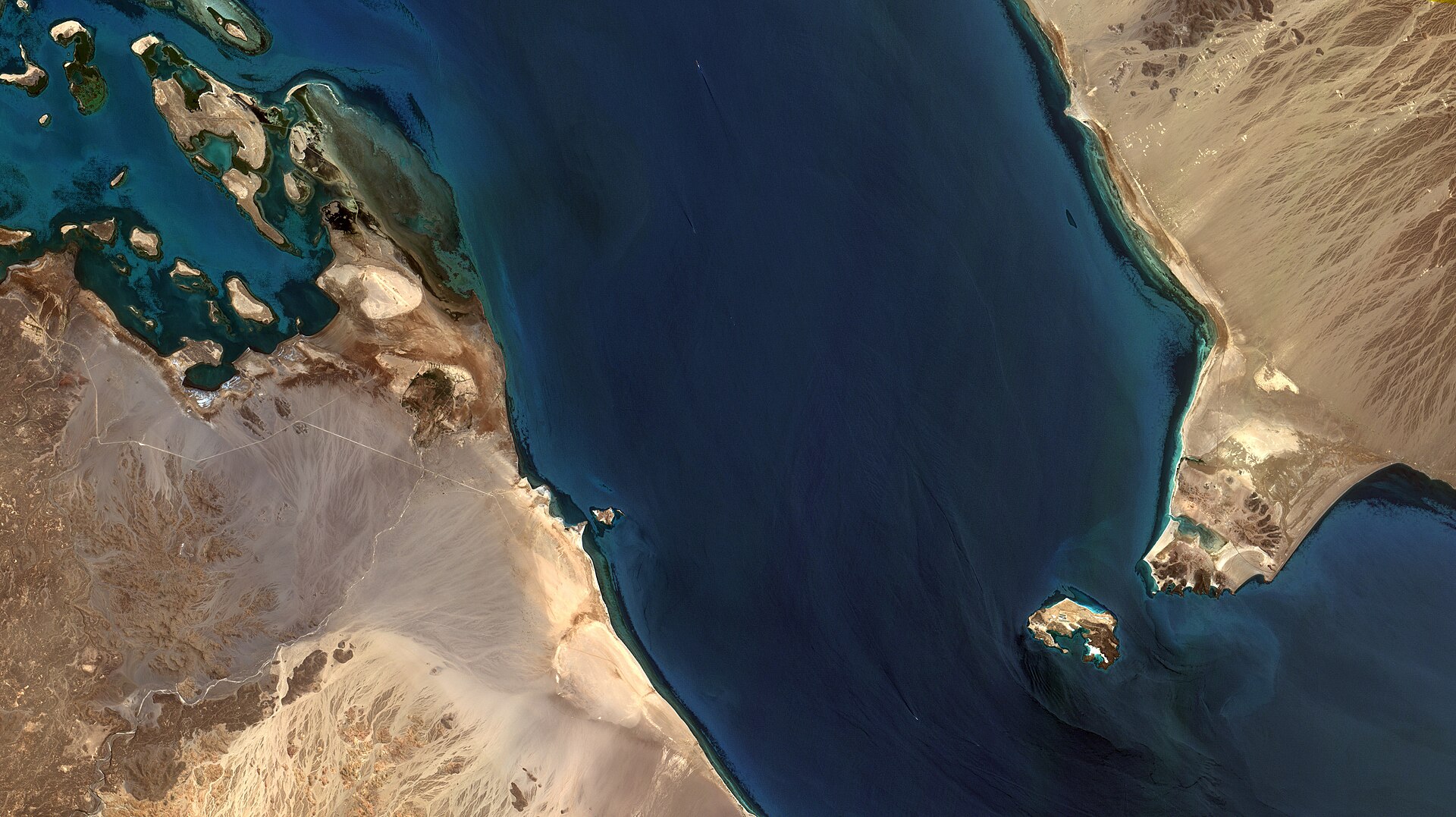
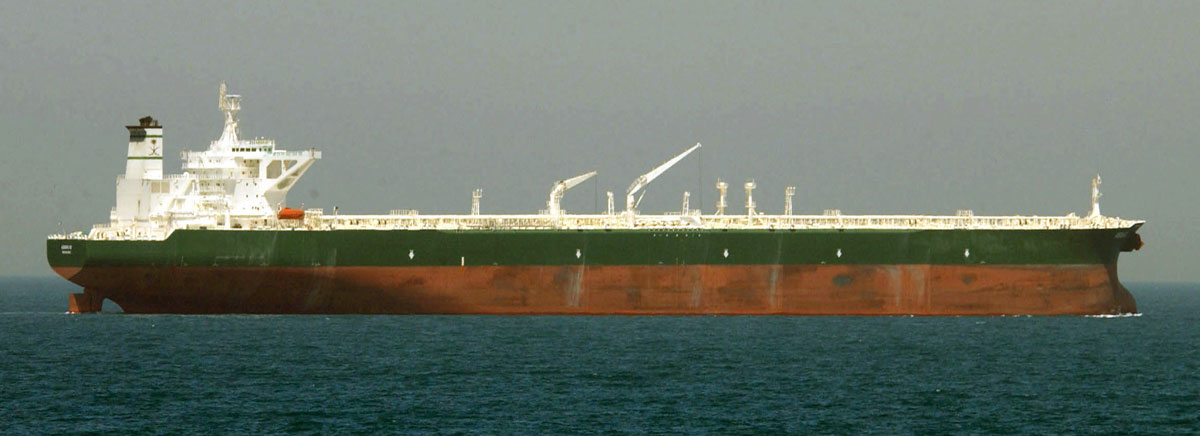
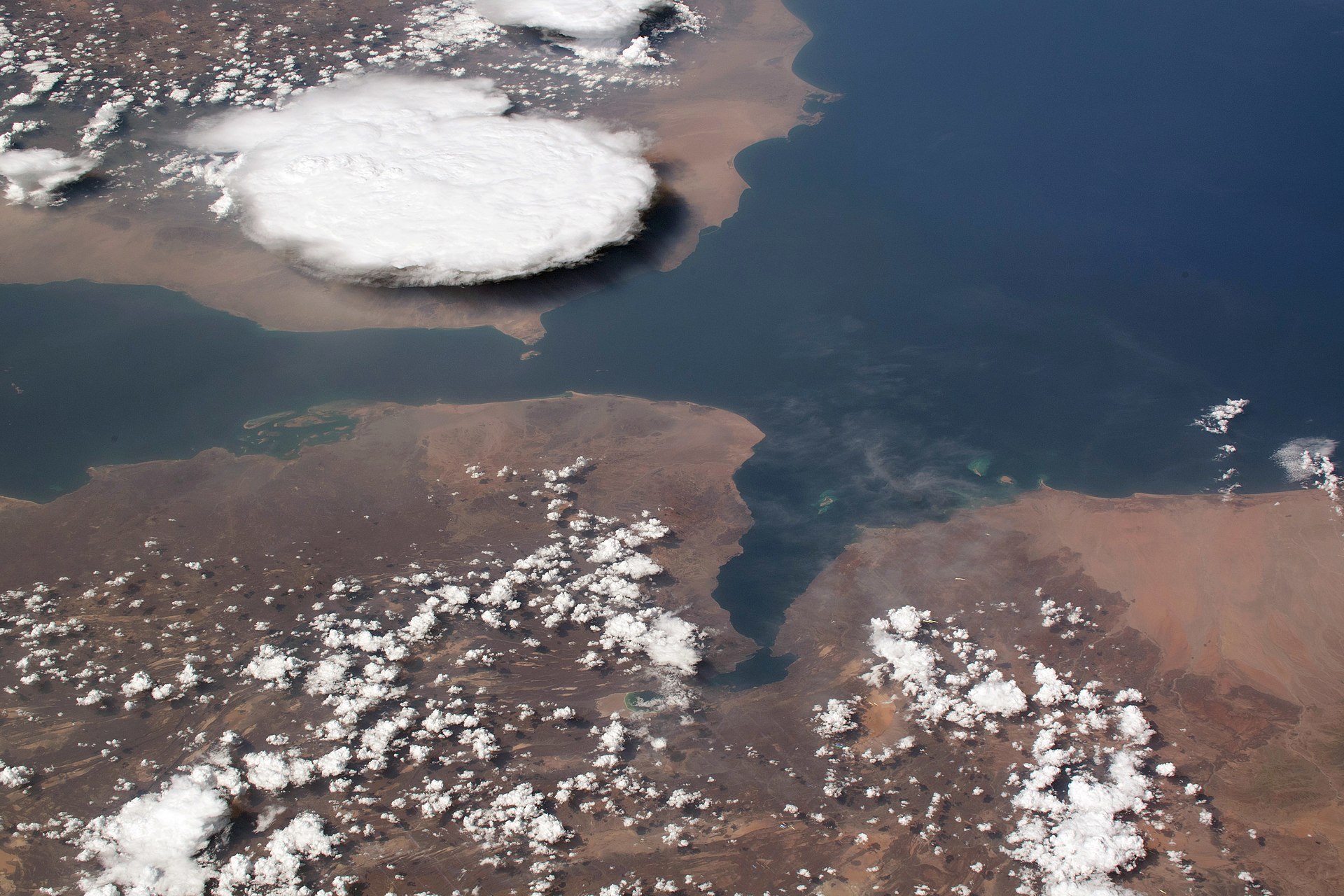
VLCCs — the 300,000-deadweight-ton carriers that move the bulk of global crude — cannot transit the Suez Canal when fully laden. Their draft exceeds the canal’s 66-foot limit. A loaded VLCC departing Yanbu for South Korea has one route: south through the Red Sea, through the 20-mile-wide Bab al-Mandab strait, into the Gulf of Aden, and east across the Indian Ocean. That voyage takes 24 days. If Bab al-Mandab closes, the alternative is the Cape of Good Hope — 54 days, a 125 percent increase in voyage time that doubles the number of vessels required to maintain the same delivery rate.
Horn Review’s March 2026 analysis put the VLCC dependency at 90 percent of Yanbu crude loadings. At 5 million b/d of crude exports through Yanbu, that means roughly 4.5 million b/d of Saudi crude is physically routed through Bab al-Mandab. This is not a secondary chokepoint. It is the primary bottleneck for 70-75 percent of Saudi Arabia’s current total export volume.
The East-West Pipeline bypass thesis — Saudi Arabia survives Hormuz by pumping west — treated the Red Sea as a given. It was never a given. It was a vulnerability transferred from one strait to another, from an adversary that had formally engaged in a ceasefire to one that had not.
The Middle East briefing 3,000+ readers start their day with.
One email. Every weekday morning. Free.
Who Controls Bab al-Mandab — and Who Is Absent from the Ceasefire?
Saudi Arabia is excluded from the enforcement mechanism. But the most consequential absence is not Saudi Arabia’s. It is Ansar Allah’s.
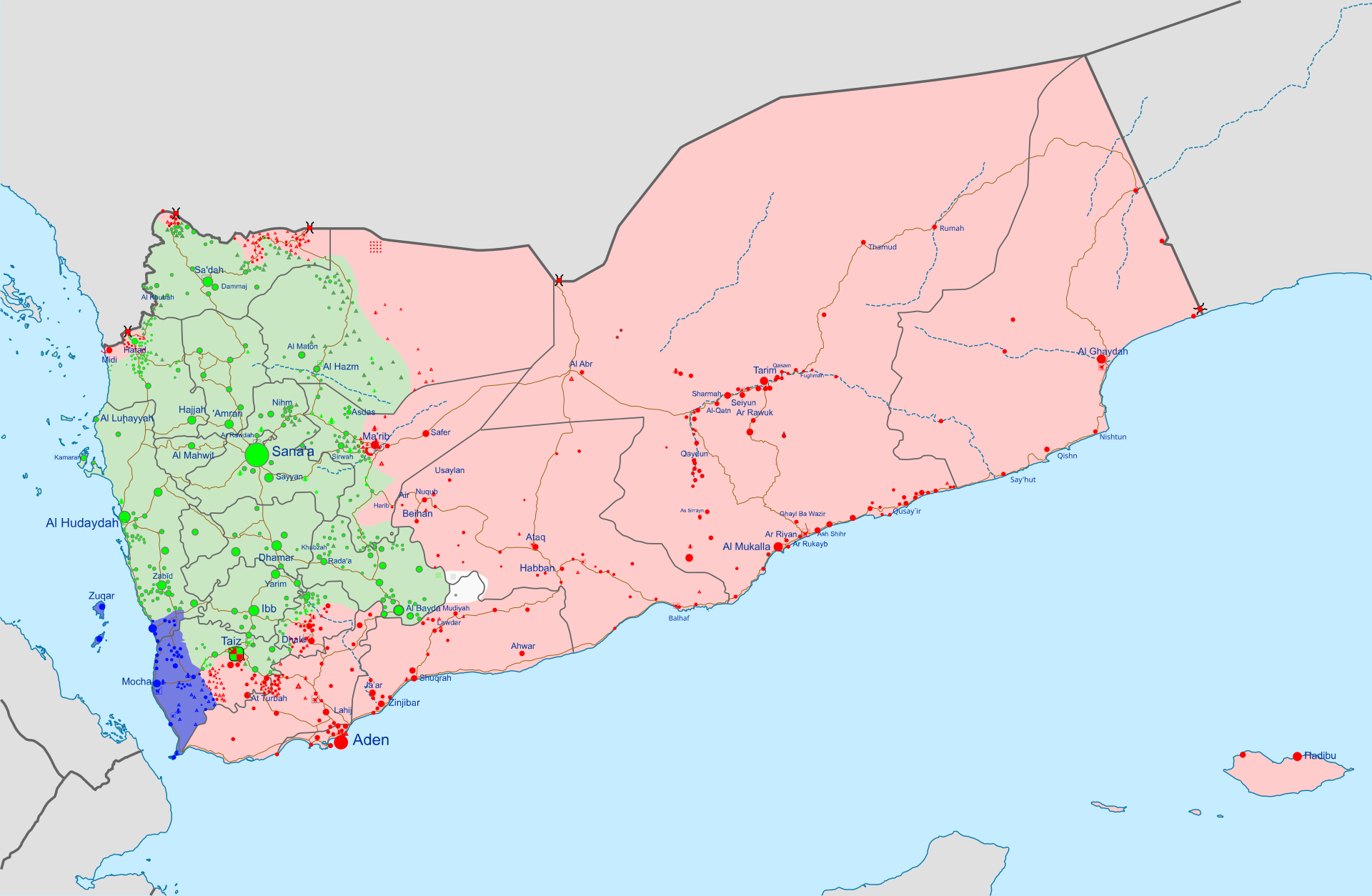
The Houthis control most of Yemen’s Red Sea coastline, including the port of Hodeidah — 250 nautical miles from Bab al-Mandab, within direct strike range of the strait’s shipping lanes. They are not party to the ceasefire. They are not named in the text. No Houthi obligations appear in any published framework. No Houthi representative attended any round of Islamabad talks. The Washington Times confirmed on April 9 that the accord contains no Yemen provisions and no Bab al-Mandab clause.
This is an agreement that addresses the eastern chokepoint — where the IRGC published mine charts and declared shipping lanes a danger zone — while leaving the western chokepoint entirely to the discretion of a non-state actor with its own political calendar, its own military doctrine, and its own conditions for escalation.
The Three Houthi Trigger Conditions Saudi Arabia Cannot Control
Mohammed Mansour, Houthi Deputy Information Minister, published the framework on March 31 in Al-Monitor: closure of Bab al-Mandab is “a Yemeni option that can be implemented should the aggression against Iran and Lebanon escalate savagely.” The conditions he listed are specific enough to function as a doctrine.
The first condition: any Gulf state joins military operations supporting the United States or Israel. Saudi Arabia has formally refrained from offensive operations since the ceasefire. But IRGC doctrine — articulated by Ali Shamkhani as early as March 2026 — has already classified Saudi Arabia’s hosting of US military assets at Prince Sultan Air Base as a form of participation. If the IRGC classifies hosting as joining, and the Houthis adopt that classification, Saudi Arabia triggers Mansour’s first condition without firing a single weapon.
The second condition: escalation of aggression against Iran or Lebanon. Israel struck 100-plus Hezbollah targets in Lebanon on April 8, killing at least 254 people — within 24 hours of the ceasefire. Ghalibaf declared the strikes a violation. If the Houthis agree, the second condition is already met. Saudi Arabia has no influence over Israeli operations in Lebanon. It has no mechanism to restrain them. The trigger sits entirely outside Riyadh’s control.
The third condition: the United States obstructs the UN-supervised ceasefire roadmap for Yemen. This refers to the Oman-mediated Road Map — a separate diplomatic track governing Saudi-Houthi relations that predates the Iran war. The US has shown limited interest in the Yemen roadmap since retiring Operation Prosperity Guardian in May 2025. Any American obstruction of the roadmap — or what the Houthis define as obstruction — would activate the third trigger regardless of Saudi Arabia’s preferences.
“The option of closing the Bab el Mandab strait is a Yemeni option that can be implemented should the aggression against Iran and Lebanon escalate savagely.”
— Mohammed Mansour, Houthi Deputy Information Minister, Al-Monitor, March 31, 2026
All three triggers share a common feature: Saudi Arabia cannot prevent any of them from being pulled. Two depend on Israeli and American decisions. One depends on Houthi interpretation of Saudi hosting arrangements. The kingdom’s fiscal survival is now contingent on the restraint of actors in Jerusalem, Washington, and Sanaa — none of whom owe Riyadh a consultation.
What Happened to the Red Sea Naval Shield?
Between November 2023 and May 2025, Houthi attacks on commercial shipping in the Red Sea forced the largest rerouting of global trade since the Suez Crisis. More than 100 vessels were attacked. Bab al-Mandab throughput fell from 8.7 million b/d in 2023 to 4.0 million b/d by mid-2024 — a 54 percent decline, according to the EIA. The United States responded with Operation Prosperity Guardian, a multinational naval escort force that, at its peak, deployed carrier strike groups, destroyers, and cruisers to the southern Red Sea.
Prosperity Guardian was retired following the May 2025 US-Houthi ceasefire. The deal that ended Houthi attacks also ended the naval architecture designed to contain them.
As of April 2026, the only international naval force operating in the Red Sea is the European Union’s Operation Aspides. Aspides is purely defensive — its mandate permits protection of commercial vessels under direct attack but not offensive strikes against Houthi positions. The European Council extended its mandate to February 2027 with a budget of €15 million for the two-year period. For context, a single Houthi anti-ship ballistic missile costs the target vessel’s insurer between $5 million and $50 million in hull war premiums. Aspides’s entire two-year budget would cover the insurance cost of three attacks.
Nabeel Khoury, a former US diplomat, described the threshold to Al Jazeera: “All they have to do is fire at a couple of ships coming through, and that would lead to the arrest of all commercial shipping through the Red Sea.” The Houthis demonstrated during 2023-2025 that they possess the capability. Between March 2024 and April 2025, they shot down seven US MQ-9 Reaper drones — $32 million per unit — inflicting over $200 million in losses on the most advanced surveillance platform in the American inventory. Their anti-ship arsenal includes C-802 cruise missiles (80-300 km range), anti-ship ballistic missiles (up to 300 km), Shahed-pattern one-way attack drones (600-1,200 km range), and explosive unmanned surface vessels.
Nawaf Obaid of King’s College London put it precisely in AGBI: “The risk of renewed attacks on shipping is elevated… Their capabilities remain limited, but they are still sufficient to disrupt shipping, raise insurance costs, force rerouting and require greater naval protection.” The naval protection no longer exists.
Iran’s Ceasefire Order and the Houthi Compliance Problem
Iran’s ceasefire halt order — attributed to Khamenei via IRIB on April 7, though the question of who actually commands Iran’s military apparatus remains contested — has no established mechanism to compel Houthi compliance. The relationship between Tehran and Ansar Allah is well-documented as influential but not directive.
Saeed Thabet, Al Jazeera’s Yemen bureau chief, described the arrangement on April 2: the Houthi-Iran relationship is “an unequal partnership” in which Houthis “retain a margin of manoeuvrability governed by their local calculations” and “their decisions intersect with Iran’s interests without automatically mirroring the behaviour” of other Iranian-aligned groups.
The timeline of the 2026 war illustrates the dynamic. The war began February 28 with Iranian missile and drone strikes on Israeli and Saudi targets. The Houthis did not enter until March 28 — a full month later. Kaitlyn Hashem of the Stimson Center analyzed the delay in a March 30 paper: the Houthi decision “reads less as an operational decision than as a political one.” They entered on their own calendar, for their own reasons, at a moment of their own choosing. Inbal Nissim-Louvton of Tel Aviv University’s Moshe Dayan Center confirmed the assessment: Houthis “decided their actions independently” from Tehran.
IRGC commanders and Quds Force advisors are stationed in Yemen. Iran provides intelligence, Shahed-136 drones with electro-optical seekers, C-802 missiles, and ballistic missiles with claimed ranges up to 2,000 km. The support is material. The command relationship is not. Iranian state media — IRNA, Tasnim — has described the Houthis as “Iran’s most valuable card” in the Axis of Resistance following Hezbollah’s degradation since 2024. A card played on someone else’s board.
If Tehran’s ceasefire holds, the Houthis may choose to observe it. If the ceasefire collapses, the Houthis will certainly escalate. But the operative word in both scenarios is “choose.” Mohammed Ali Al Houthi, a senior leader, stated in April that the group would avoid targeting Saudi Red Sea ports “if Riyadh refrains from joining attacks on Yemen or Iran.” The conditional phrasing — “if” — is a sovereign declaration, not a compliance acknowledgment. It grants immunity on Houthi terms, revocable by Houthi judgment.
The Emerging Toll Architecture: Hormuz Meets the Red Sea
The pattern is now visible at both chokepoints. At Hormuz, Iran’s Parliament passed a fee bill on March 31 authorizing charges for strait transit — what this publication analyzed as Iran giving Saudi Arabia an open Hormuz on Iranian terms. Ships broadcast AIS messages declaring “all crew Muslims,” “Chinese ship and crew,” and “no contact Israel” to negotiate safe passage. At Bab al-Mandab, the Houthis have built a parallel system.
The Houthis now operate a “Humanitarian Operations Coordination Center” — a bureaucratic apparatus requiring shipowners to submit safe-passage requests before transiting the Red Sea. Vessels that comply receive clearance. Vessels that do not comply face the same risk that drove the 54 percent throughput decline in 2024. The system mimics Iran’s Hormuz toll architecture in form and function: both convert military control of a waterway into an administrative franchise, extracting compliance (and potentially fees) from commercial shipping under the appearance of regulation.
Elisabeth Kendall, a Middle East specialist at Girton College, Cambridge, connected the two chokepoints on Al Jazeera: “If you have restrictions on the Strait of Hormuz at the same time as restrictions are escalating in the Bab al-Mandeb, then you will disrupt trade toward Europe.” The disruption extends well beyond Europe. If both straits close simultaneously, 25 percent of global oil and gas supply is blocked — a figure derived from EIA throughput data for both waterways.
The Houthis have begun screening vessels by “political identity” via AIS signals — the same selective-pressure formula applied at Hormuz. The Washington Times and Lloyd’s List both documented the practice in April 2026. The logical endpoint is a dual-toll system in which Saudi crude loaded at Yanbu pays once to pass Bab al-Mandab (to the Houthis) and once to pass Hormuz if the strait reopens partially (to Iran). Saudi Arabia’s export corridor becomes a tollbooth operated by two actors with aligned interests and no obligation to the ceasefire.
| Feature | Strait of Hormuz (Iran) | Bab al-Mandab (Houthis) |
|---|---|---|
| Legislative basis | Iran Parliament fee bill, March 31 | Houthi “Humanitarian Operations Coordination Center” |
| Screening mechanism | AIS political-identity broadcasts | AIS political-identity broadcasts (mirrored) |
| Selective enforcement | Chinese/Russian vessels permitted; Israeli-linked blocked | “Muslim crew” vessels cleared; Israeli-linked targeted |
| Ceasefire obligation | Islamabad Accord (Iran named party) | None (Houthis not party to any agreement) |
| International naval deterrent | US Fifth Fleet (reduced posture) | EU Aspides only (defensive, €15M budget) |
| UNCLOS applicability | Iran not a ratifier | Yemen a party; Houthis not recognized as state |
Why Can’t Saudi Arabia Coerce the Houthis Militarily?
Saudi Arabia’s most effective anti-Houthi military instrument was the Southern Transitional Council — a UAE-backed force that held southern Yemen and provided the ground-force capability Riyadh itself lacked. In January 2026, Saudi Arabia disbanded the STC as part of a plan to build a national Yemeni army from scratch. The International Crisis Group assessed in April 2026 that this removed “the most effective anti-Houthi military force from southern Yemen.”
The timing is punishing. Saudi Arabia dismantled the STC in January. Iran’s war began in February. The Houthis entered in March. Saudi Arabia is now in a ceasefire posture — formally refraining from offensive operations. Any unilateral Saudi military action against Houthi positions would require US air support, which is also in ceasefire posture. And it would immediately trigger Mansour’s first condition for Bab al-Mandab closure: a Gulf state joining military operations.
The Diaplous maritime security consultancy issued a formal alert in March 2026 warning of “a credible threat” to Yanbu itself — not just to tankers transiting Bab al-Mandab, but to the loading terminals. Sea drones, aerial drones, and missiles were named as threat vectors. At the time, 24-30 VLCCs were loading or positioned to load at Yanbu. A single successful strike on a laden VLCC at Yanbu — 2 million barrels of crude, at $91-94 Brent — would produce a loss exceeding $180 million in cargo value alone, before accounting for environmental liability, insurance market contagion, and the tanker withdrawal that would follow.
Saudi Arabia cannot coerce the Houthis without triggering the retaliation clause that makes coercion necessary. It cannot negotiate directly — no bilateral channel exists. It cannot rely on Iran to restrain them — Iran’s influence is encouragement, not command. The kingdom’s military options have been systematically removed: the STC disbanded, the air campaign halted, the US naval shield retired, and the PAC-3 stockpile drawn down to 400 rounds that are needed for the eastern front, not the western one.
Dual-Chokepoint Exposure: The Numbers
Saudi Arabia’s pre-war export architecture distributed risk across two outlets: Ras Tanura and Ju’aymah on the Persian Gulf (eastern), and Yanbu on the Red Sea (western). The Iran war collapsed the eastern outlet. Hormuz post-ceasefire throughput stands at 15-20 commercial vessels per 24 hours versus a pre-war average of 138 per day, with zero confirmed tanker transits in the first 48 hours after the ceasefire. The Yanbu bypass absorbed the load.
But the bypass runs through Bab al-Mandab, and Bab al-Mandab’s pre-Houthi throughput of 8.7 million b/d had already been halved once — to 4.0 million b/d in 2024 — by Houthi attacks that required no state-level military capability, only anti-ship missiles, drones, and the willingness to use them.
| Metric | Strait of Hormuz (East) | Bab al-Mandab (West) |
|---|---|---|
| Pre-war Saudi crude throughput | ~7-8M b/d (via Ras Tanura/Ju’aymah) | ~770-800K b/d (via Yanbu) |
| Current Saudi crude throughput | Near zero (strait functionally closed) | ~5M b/d (pipeline at capacity) |
| Current commercial vessel traffic | 15-20 ships/day (pre-war: 138/day) | Reduced but operational |
| Controlling hostile actor | IRGC (ceasefire party) | Ansar Allah/Houthis (no ceasefire obligation) |
| International naval presence | US Fifth Fleet (ceasefire posture) | EU Aspides (defensive only, €15M/2yr) |
| If closed: Cape diversion penalty | N/A (already closed) | +30 days per laden VLCC voyage to Asia |
| If closed: global supply impact | ~21% of global oil trade | Combined with Hormuz: 25% of global oil and gas |
The fiscal arithmetic is unforgiving. At $91-94 Brent and 5 million b/d in Yanbu crude exports, Saudi Arabia earns approximately $455-470 million per day through the Red Sea corridor. A Bab al-Mandab closure would not eliminate those exports — VLCCs can route around the Cape — but it would halve the effective fleet by doubling voyage time, immediately tightening supply. Insurance premiums during the 2024 Houthi campaign rose by 0.5-1.0 percent of hull value per transit — roughly $1-2 million per VLCC crossing. At 24-30 VLCCs loading at Yanbu at any given time, the insurance cost alone would add $24-60 million per loading cycle.
The Hajj timeline compounds the pressure. Pilgrims begin arriving April 18. The ceasefire expires April 22. If the ceasefire collapses and the Houthis activate their Bab al-Mandab threat, Saudi Arabia faces simultaneous demands on its security apparatus: protecting 1.8 million pilgrims in Mecca and Medina while safeguarding tanker traffic 600 km west at Yanbu — with 400 PAC-3 rounds to cover both.
Saudi Arabia’s One Channel — and What It Costs
Saudi Arabia’s only diplomatic access to Houthi leadership runs through Oman. The Oman-mediated “Road Map” — a pre-war framework for ending the Yemen conflict — has been the sole conduit for Saudi-Houthi communication since direct engagement ended. There is no bilateral channel.
The Road Map involves Saudi payments of up to $1 billion per year in salary transfers through the Yemeni central bank. These payments reach Houthi-controlled areas and function as a de facto subsidy to the movement’s governance apparatus. CSIS and the International Crisis Group have both documented the arrangement. Saudi Arabia is financing the administrative capacity of the force that holds its export corridor hostage.
Oman’s role as mediator is further complicated by Oman’s own positioning. Oman simultaneously serves as a political interlocutor for the Houthis, a mediator between Saudi Arabia and Yemen, and — since the Iran war — a party to the emerging Hormuz transit-permit architecture. Oman’s Transport Minister Al Maawali objected to Iran’s proposed Hormuz toll on legal grounds, but Oman has not objected to the Houthi screening system at Bab al-Mandab. The mediator has interests at both chokepoints.
The structural irony is complete. Saudi Arabia pays $1 billion per year through a channel mediated by Oman to maintain dialogue with a movement that retains the unilateral option to close the strait through which 70-75 percent of Saudi exports now flow — at any moment, for reasons that may have nothing to do with Saudi Arabia’s own conduct. The Islamabad Accord addressed the eastern chokepoint. It did not mention the western one. And the actor who controls the western one was never invited to sign anything.
Frequently Asked Questions
Can Saudi Arabia reroute Yanbu exports through the Suez Canal instead of Bab al-Mandab?
Only partially. Suezmax tankers (120,000-200,000 DWT) can transit the canal, but they carry roughly one-third the cargo of a VLCC. Converting Yanbu’s 5 million b/d crude flow from VLCC to Suezmax loading would require tripling the number of tanker calls, overwhelming Yanbu’s berth capacity (designed for VLCC operations) and adding $2-4 per barrel in freight costs. Additionally, Suezmax cargoes routed through Suez reach Mediterranean and European buyers but still face a 40-day voyage to Asian markets — Saudi Arabia’s primary crude customers — making the route commercially inferior to Cape routing even under Houthi threat.
Have the Houthis attacked Saudi oil infrastructure before?
Yes. In May 2019, Houthis struck two pumping stations on the East-West Pipeline itself — the same pipeline Saudi Arabia now depends on for 70-75 percent of its exports. In September 2019, Houthi-claimed drone and missile strikes hit Abqaiq and Khurais, temporarily halving Saudi output by 5.7 million b/d. During the 2015-2022 Saudi-led coalition campaign, Houthis launched over 900 missiles and 1,400 drones at Saudi territory. The 2023-2025 Red Sea campaign demonstrated that Houthi capabilities have expanded since those earlier attacks, with the addition of anti-ship ballistic missiles and unmanned surface vessels that did not exist in the Houthi arsenal before 2022.
What would simultaneous Hormuz and Bab al-Mandab closure mean for oil prices?
EIA data indicates the two straits together handle approximately 25 percent of global oil and gas trade. During the 2024 Houthi campaign alone — with Hormuz fully open — Brent crude rose approximately $8-12 per barrel on disruption premiums. Simultaneous closure would remove all Saudi, Iraqi, Kuwaiti, and UAE exports from established routes, forcing Cape of Good Hope routing that adds 30-54 days per voyage depending on origin. Goldman Sachs estimated in March 2026 that a full Hormuz closure alone would push Brent above $150. Adding Bab al-Mandab closure would eliminate the Yanbu safety valve entirely, leaving only pipeline exports to Bahrain (negligible) and whatever volumes could be trucked or piped to Jordan’s Aqaba — infrastructure that does not currently exist at scale.
Is there a precedent for Houthis defying Iranian guidance?
The Houthis’ one-month delay in entering the 2026 Iran war — from February 28 to March 28 — is itself a precedent. Iran was under sustained US and Israeli attack for four weeks before Ansar Allah joined. During the 2023-2025 Red Sea campaign, Houthis expanded their target set beyond what Iranian guidance reportedly envisaged, attacking vessels with no Israeli connection — including a Houthi missile strike on the Greek-flagged MV Tutor that sank in the Red Sea in June 2024, the first commercial vessel sunk by Houthi fire. Analysts at the Stimson Center, the Moshe Dayan Center, and Al Jazeera have independently assessed that the Houthis act on their own timeline and their own threat calculus, intersecting with but not subordinate to Iranian strategic direction.