
Deep in the Al-Jawf Province of northwestern Saudi Arabia, the ancient oasis city of Dumat Al-Jandal holds some of the oldest standing structures on the Arabian Peninsula. With roots stretching back to the 10th century BC, this was once the capital of a powerful Arab kingdom mentioned in Assyrian royal inscriptions — a city ruled by warrior queens and fought over by empires for more than two thousand years. Today it stands as one of the most significant and least-visited archaeological sites in the Kingdom, offering travellers on a wider Saudi Arabia itinerary a genuinely rare experience: walking through ruins that predate Islam, Rome, and even classical Greece. Dumat Al-Jandal sits at the intersection of the incense trade routes that connected southern Arabia to Mesopotamia, and its fortress, mosque, and stone quarter survive as a layered record of Nabataean, Roman, early Islamic, and Ottoman civilisation.
Best Time to Visit: October to March (daytime temperatures 15–25°C; summers exceed 45°C)
Getting There: Fly to Al-Jawf Airport (AJF) in Sakakah, then 37 km by road (30–40 minutes)
Visa Required: Yes — tourist e-visa
Budget: $50–100 USD per day (accommodation and food are inexpensive in Al-Jawf)
Must-See: Qasr Marid (Marid Castle), Omar Ibn Al-Khattab Mosque, Al-Dari Quarter
Avoid: Visiting in summer (June–August) — temperatures regularly exceed 45°C with no shade at the ruins
Why Visit Dumat Al-Jandal
Most visitors to Saudi Arabia head for AlUla’s Nabataean tombs or Riyadh’s Masmak Fortress. Dumat Al-Jandal offers something different: a complete ancient city where a castle, mosque, residential quarter, and city walls coexist in a single archaeological landscape, largely untouched by mass tourism. The Saudi Heritage Commission listed the site on its tentative UNESCO World Heritage nominations, recognising its exceptional layered history from the Iron Age through the early Islamic period.
The city’s name translates roughly as “Dumah of the Stones,” referring both to the biblical figure Dumah (son of Ishmael) and to the distinctive stone construction that sets Al-Jawf’s architecture apart from the mud-brick building traditions found elsewhere in the Kingdom. For anyone interested in Saudi Arabia’s traditional architecture, this site is essential — the stonework here is among the oldest surviving construction in the Arabian Peninsula.
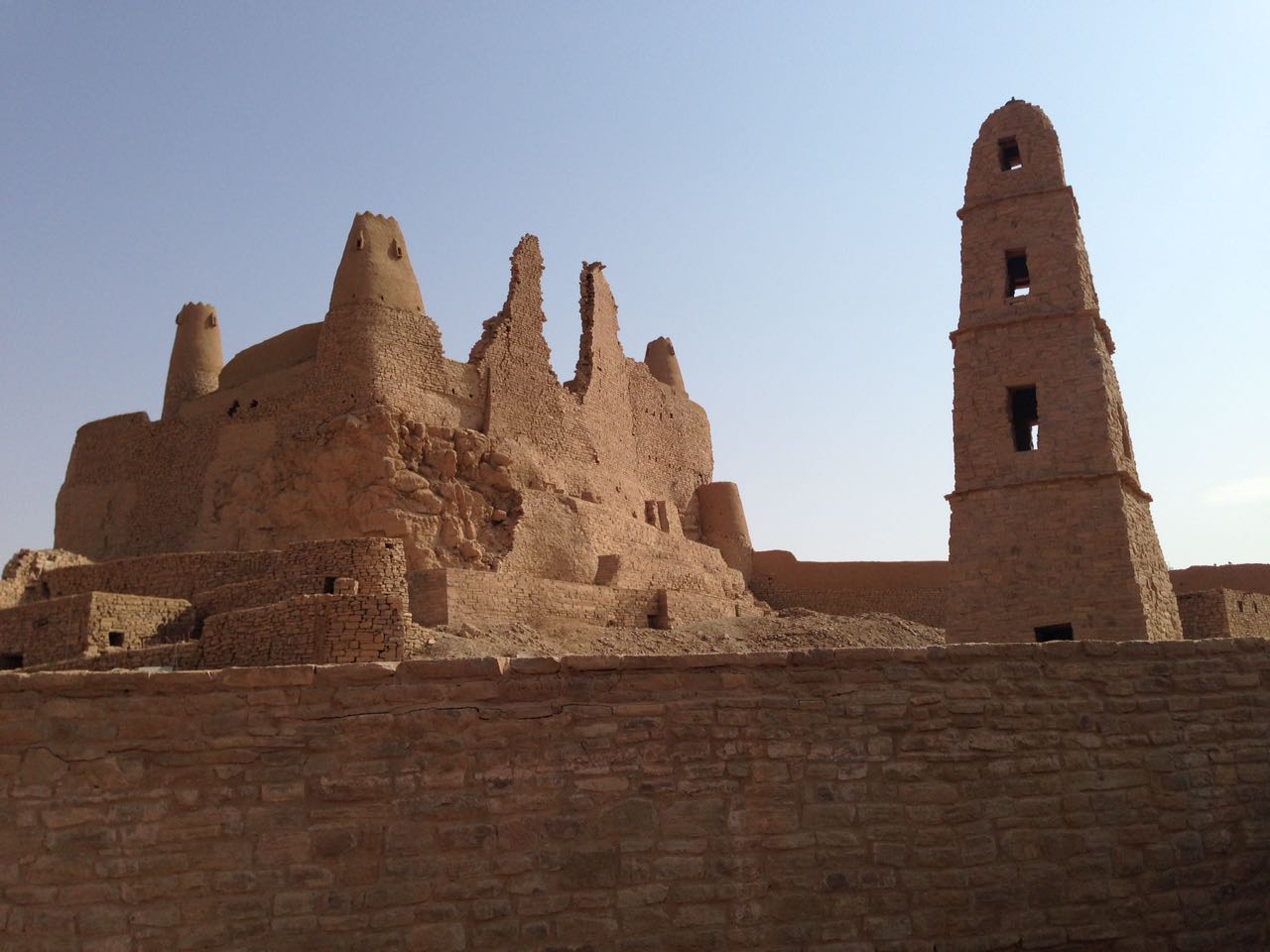
A History Spanning Three Millennia
The Kingdom of Adummatu (10th–6th Century BC)
Dumat Al-Jandal first appears in written records as Adummatu in Akkadian cuneiform inscriptions of the Neo-Assyrian Empire, dated to approximately 845 BC. These inscriptions describe it as the capital of an Arab kingdom, sometimes identified with the Qedarite confederation — a powerful tribal alliance that controlled trade routes across the northern Arabian desert.
What makes these records remarkable is that they name five Arab queens who ruled from Adummatu, including Zabibe, Shamsi, and Te’elkhunu. This is one of the earliest documented examples of female political leadership in the ancient Near East. The Assyrian king Sennacherib recorded a military campaign against the city around 689 BC, capturing its idols and its queen — evidence that Dumat Al-Jandal was wealthy and significant enough to draw the attention of the region’s superpower.
Nabataean and Roman Influence (3rd Century BC – 4th Century AD)
The Nabataeans, the same civilisation that carved Hegra and Petra, established a presence at Dumat Al-Jandal as part of their control of the incense trade route. The fortress foundations at Qasr Marid likely date to this period, built on a natural limestone outcrop that provided both defensive advantage and visibility over the surrounding valley. The city sat at a crucial junction: the northern end of Wadi Sirhan, a natural corridor connecting the Arabian interior to the Levant, and the route linking Mesopotamia to the Hejaz. Whoever controlled Dumat Al-Jandal controlled the trade.
Visitors familiar with Nabataean history in Saudi Arabia will recognise the characteristic precision stonework in the castle’s oldest layers, though the structure has been rebuilt and modified many times over the centuries.
The Islamic Conquest (630 AD)
In 630 AD, the Prophet Muhammad sent Khalid ibn al-Walid to capture Dumat Al-Jandal. The city’s ruler, Ukaydir ibn Abd al-Malik, surrendered and signed a treaty. This event marks Dumat Al-Jandal’s entry into the Islamic world, and the Omar Ibn Al-Khattab Mosque — one of the oldest mosques in Saudi Arabia — was constructed shortly afterward, during the caliphate of Umar (634–644 AD).
Medieval Period to Ottoman Era
Throughout the medieval period, Dumat Al-Jandal remained an important waypoint on pilgrimage and trade routes. The Al-Dari Quarter, with its dense network of stone houses and narrow alleys, dates primarily to this era, though excavations have revealed that it sits on foundations going back to the mid-first millennium BC. The city gradually declined as trade routes shifted, and by the Ottoman period it had become a provincial settlement, though the castle and mosque continued to function.
Qasr Marid (Marid Castle)
The undeniable centrepiece of Dumat Al-Jandal, Qasr Marid rises from a natural limestone outcrop at the heart of the ancient city. The name Marid means “the rebel” or “the giant” in Arabic — a reference either to the fortress’s impregnability or to a pre-Islamic legend. Ancient sources record that the castle “repelled” multiple sieges, giving it its defiant name.
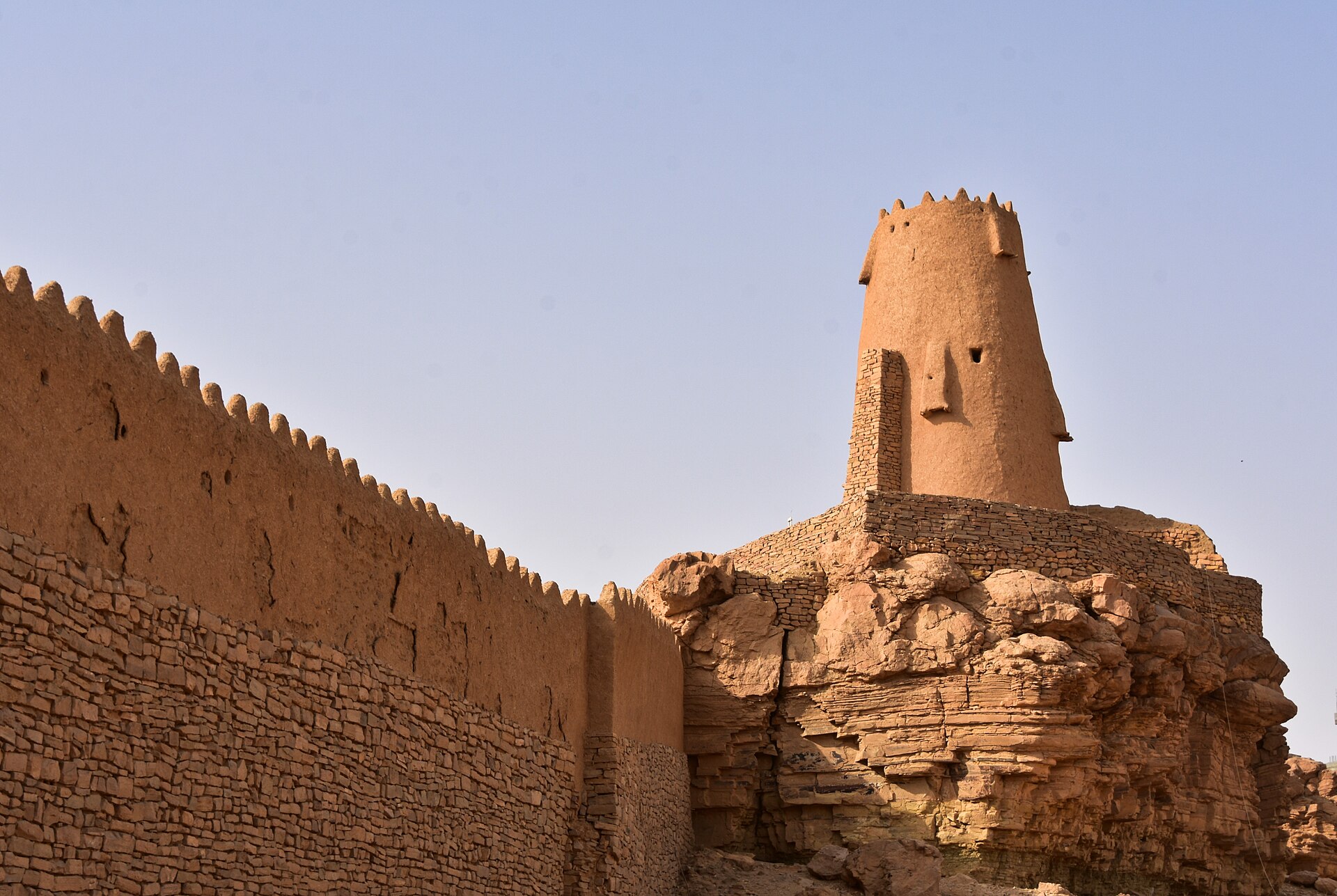
What You Will See
The castle complex includes a tall conical watchtower visible from across the valley, thick defensive walls with distinctive stepped crenellations, interior chambers built at multiple levels following the natural rock, and a well that provided water during sieges. The oldest visible stonework — large, precisely cut blocks at the base — dates to the Nabataean period (roughly 1st century AD), while upper sections show Islamic-era reconstruction using smaller stones and mudbrick.
Visitor Tip: Climb to the top of the castle for panoramic views across the oasis, the Omar Mosque’s minaret, and the surrounding desert. The best light for photography is in the late afternoon when the sandstone glows amber. Entry is free.
Understanding the Architecture
The castle is not a single-period building but a palimpsest of construction phases spanning nearly two thousand years. Look for the transition between Nabataean ashlar blocks (large, squared stones fitted without mortar), Islamic-period additions (smaller stones with mud mortar), and modern restoration work by the Saudi Heritage Commission. This layering is what makes Marid exceptional — it is a physical timeline of Arabian architecture, comparable in importance to Tabuk Castle but considerably older.
Omar Ibn Al-Khattab Mosque
Situated at the foot of Marid Castle, the Omar Ibn Al-Khattab Mosque is one of the oldest mosques in the world outside the Hejaz. Built during the caliphate of Umar ibn al-Khattab (634–644 AD), it features a distinctive stone minaret that has become the symbol of Dumat Al-Jandal.
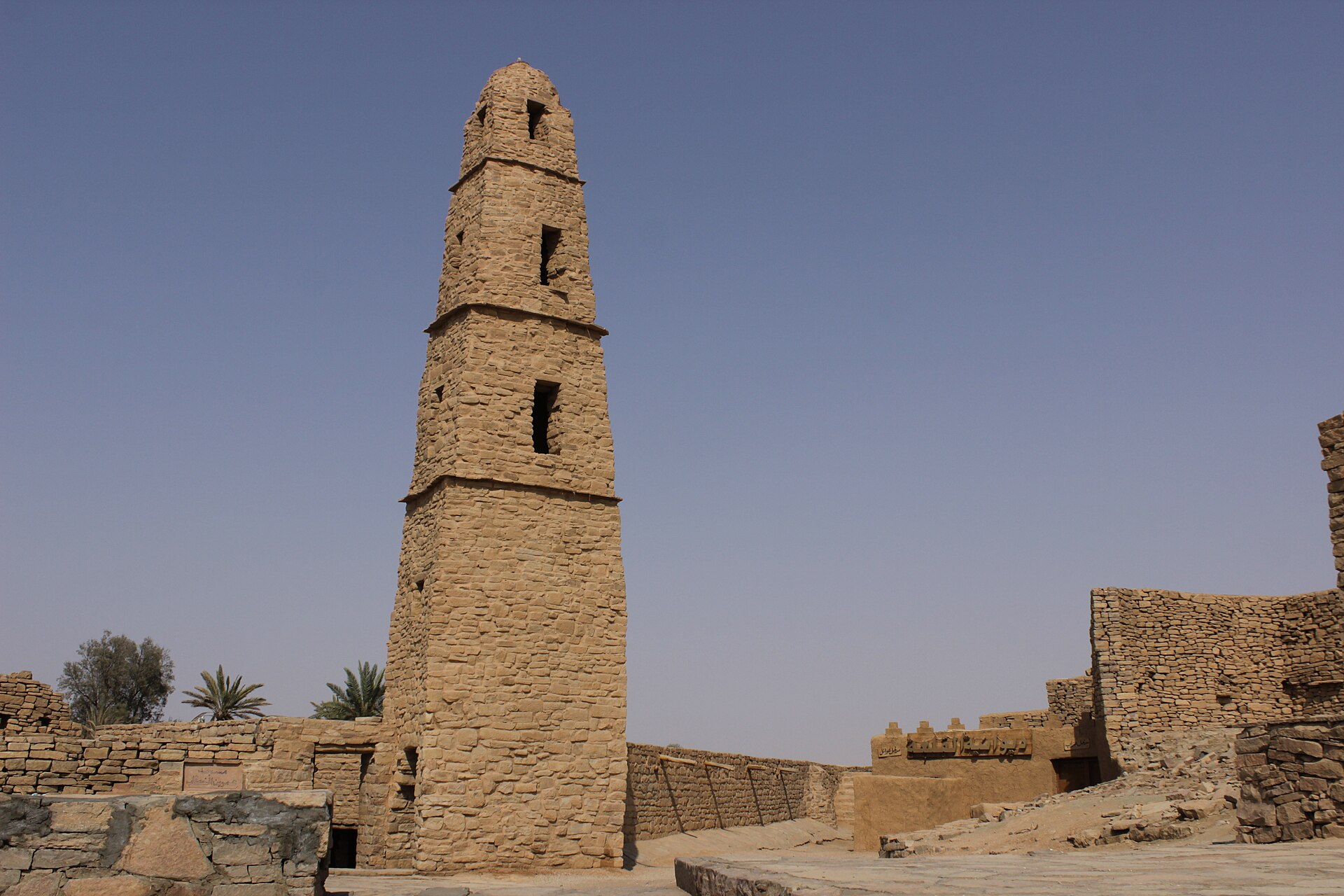
Architectural Features
The mosque’s minaret is unusual for its time — a tapering stone tower built in three tiers, each slightly narrower than the one below, with small window openings. The prayer hall below is a simple rectangular space with stone columns supporting a flat roof, following the earliest Islamic architectural tradition. The overall design is strikingly austere compared to later mosque architecture, reflecting the functional building traditions of 7th-century Arabia.
The mosque remains in active use today, making it one of the longest-continuously-operating mosques in the world. Visitors are welcome outside of prayer times.
Note: The attribution to Caliph Umar is traditional but debated by scholars. The mosque was certainly built during the early Islamic period, but whether Umar himself ordered its construction is uncertain. What is not in doubt is its extraordinary age — nearly 1,400 years of continuous use.
The Al-Dari Quarter
Below the castle, the Al-Dari Quarter is the surviving residential heart of the old city. This dense network of stone houses, narrow alleys, covered passageways, and small courtyards gives visitors a rare chance to walk through a medieval Arabian settlement that has not been demolished or rebuilt.
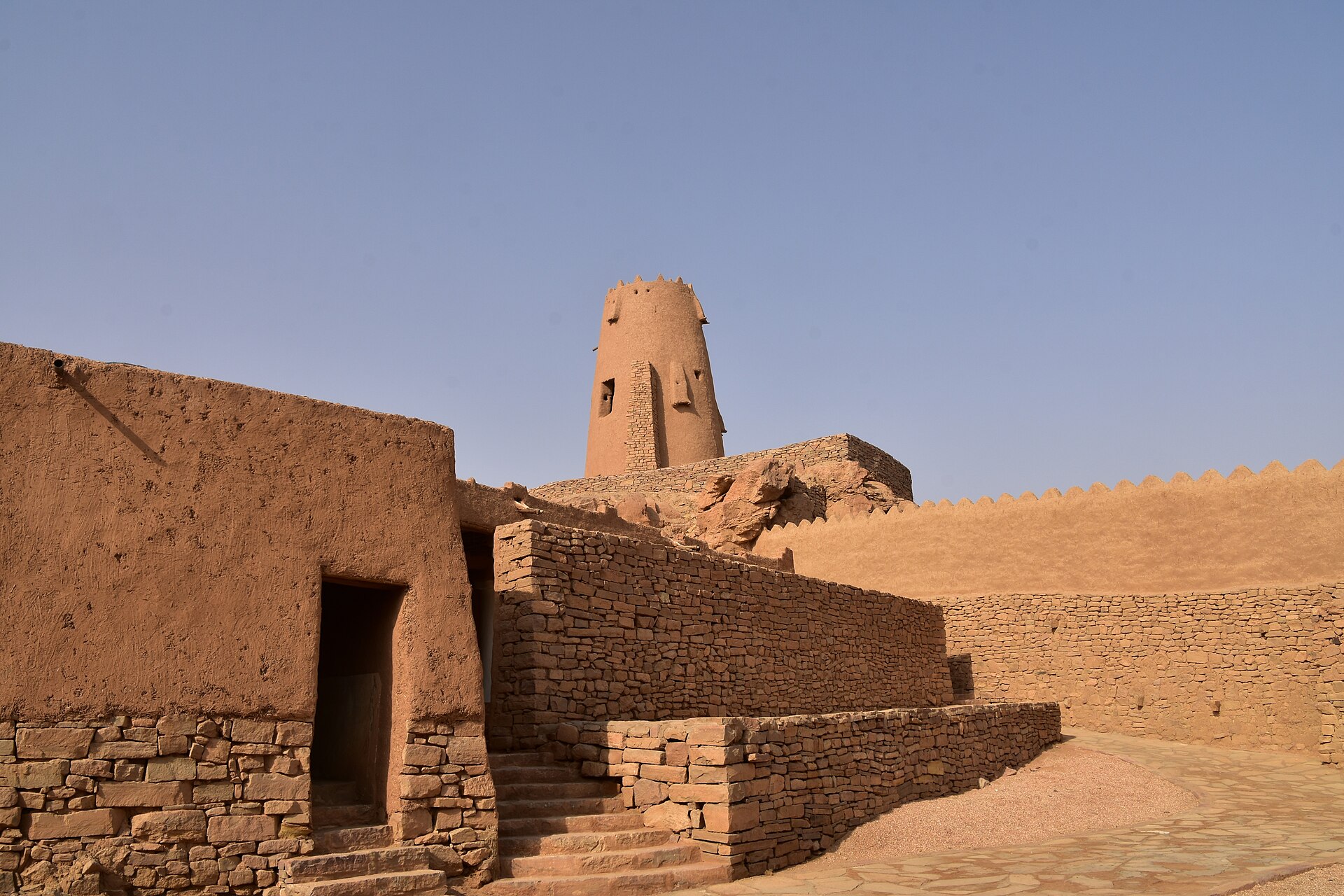
What Makes It Special
The Al-Dari Quarter is one of the few remaining antiquities of Dumat Al-Jandal’s old city that escaped demolition in the late 20th century, when much of the historic market was destroyed. The surviving buildings date primarily to the middle Islamic period, but archaeological excavations have shown that they sit on ancient foundations dating to the mid-first millennium BC — meaning people have lived on this exact spot for approximately 2,500 years.
The stone construction is distinctive to the Al-Jawf region and quite different from the mudbrick architecture found in Saudi Arabia’s highland heritage villages or the coral-stone buildings of the Hejaz coast. Walls are built from flat limestone slabs, sometimes without mortar, stacked in courses that follow the natural contour of the terrain. For those interested in how people built and lived in the desert before modern materials, this quarter is a masterclass.
Dumat Al-Jandal Lake
At the heart of the ancient site lies a natural spring-fed lake surrounded by palm groves. This is not a modern reservoir — the water source is the same natural spring system that sustained human settlement here for three millennia. The oasis provides a striking contrast to the surrounding desert landscape and explains why this particular location became such an important city: whoever controlled the water controlled the trade routes.
The lake area is pleasant for a walk after exploring the ruins, and the surrounding date palm groves are still productive. Local farmers tend them using traditional irrigation methods that have changed little over centuries.
Al-Jawf Museum
Located in nearby Sakakah, the Al-Jawf Regional Museum houses artefacts excavated from Dumat Al-Jandal and other archaeological sites in the province. The collection includes Nabataean pottery, pre-Islamic inscriptions, stone tools from even earlier periods, and objects from the Islamic era. It provides essential context for understanding the ruins themselves and is worth visiting either before or after your trip to the site.
Other Sites Near Dumat Al-Jandal
Rajajil Stone Columns
About 22 km south of Sakakah, the Rajajil Standing Stones are a group of roughly 50 stone columns arranged in clusters, dating to approximately 4000 BC. Often called “Saudi Arabia’s Stonehenge,” these megaliths remain enigmatic — their purpose is unknown, though they may have served astronomical, religious, or boundary-marking functions. This is one of the most important prehistoric sites on the Arabian Peninsula and pairs well with a Dumat Al-Jandal visit. Enthusiasts of Saudi Arabia’s rock art and ancient sites should not miss this.
Za’abal Castle
Also near Sakakah, Za’abal Castle (Qasr Za’abal) sits on a rocky hill overlooking the city. Smaller than Marid but dramatically positioned, it offers another example of Al-Jawf’s fortress-building tradition and excellent views over the date palm groves below.
Wadi Sirhan
The ancient trade corridor of Wadi Sirhan runs northwest from Dumat Al-Jandal toward modern Jordan. This natural valley was the highway of the ancient world, carrying incense, spices, and goods between southern Arabia and the Mediterranean. While you cannot drive the entire historic route, the landscape around Dumat Al-Jandal gives a vivid sense of the terrain that ancient caravans traversed.
Getting There
By Air
Al-Jawf Airport (AJF) in Sakakah receives domestic flights from Riyadh (approximately 2 hours) and Jeddah. Saudia and flynas operate regular services. From the airport, Dumat Al-Jandal is 37 km south — about 30–40 minutes by car. There is no public transport to the site, so arrange a rental car or taxi in advance.
By Road
Dumat Al-Jandal sits on Highway 80, making it accessible by road from multiple directions. From Riyadh, the drive is approximately 1,000 km (10–11 hours) via Ha’il. From Tabuk, it is roughly 500 km (5–6 hours). A Saudi road trip through the northern provinces is one of the most rewarding ways to see the Kingdom’s less-visited regions, and Dumat Al-Jandal makes an excellent stop on a Riyadh–Tabuk routing.
Visa Requirements
All international visitors need a valid visa. The Saudi tourist e-visa is available online for citizens of over 60 countries and covers leisure travel including visits to archaeological sites. Processing takes minutes and the visa is valid for one year with multiple entries.
Where to Stay
There is no accommodation at the Dumat Al-Jandal archaeological site itself. The nearest hotels are in Sakakah, 37 km to the north. Options are limited compared to major Saudi cities but include several mid-range hotels and furnished apartments. Expect to pay SAR 200–500 (approximately $55–135 USD) per night. Book in advance during Saudi school holidays and the olive harvest season (October–November), when domestic visitors increase.
Practical Tip: Sakakah is a small city with limited restaurant options outside of hotel dining. Stock up on water and snacks before heading to the ruins — there are no facilities at the archaeological site.
Best Time to Visit
The Al-Jawf region has a continental desert climate with extreme temperature swings. Summers (June–August) are brutally hot, with daytime highs exceeding 45°C — exploring exposed ruins in this heat is dangerous. Winters (December–February) are mild during the day (15–20°C) but can drop near freezing at night. The ideal visiting window is October to March, when daytime temperatures are comfortable for walking and the light is excellent for photography.
Al-Jawf is also Saudi Arabia’s olive-growing region, and the annual Olive Festival in Sakakah (typically October–November) adds cultural interest to a visit during this period.
How Long to Spend
The Dumat Al-Jandal archaeological site itself — castle, mosque, and Al-Dari Quarter — can be explored in 2–3 hours. Add the Rajajil Standing Stones and Za’abal Castle for a full day. If you include the Al-Jawf Museum and a drive through the surrounding date palm and olive landscapes, two days in the region is ideal. Most visitors combine Al-Jawf with Tabuk or a broader northern Saudi circuit.
Tips for Visiting the Ruins
- Footwear: The terrain is uneven limestone and sand. Sturdy walking shoes or hiking boots are essential — sandals will not work at the castle.
- Sun protection: There is almost no shade at the ruins. Bring a hat, sunscreen, and at least 2 litres of water per person.
- Photography: Late afternoon light (2–3 hours before sunset) produces the best photographs, with warm golden light on the sandstone.
- Respect: The Omar Mosque is an active place of worship. Dress modestly and remove shoes before entering. Non-Muslims may visit outside prayer times.
- Guides: There are no formal guide services at the site. The Al-Jawf Museum in Sakakah can sometimes arrange a guide with advance notice.
- Accessibility: The castle involves climbing steep, uneven stone steps and is not wheelchair accessible. The mosque and parts of the Al-Dari Quarter are on flatter ground.
- Saudi Arabia Travel Guide 2026 — The complete guide to visiting the Kingdom
- Tabuk Travel Guide — Gateway to Saudi Arabia’s northwest frontier including NEOM
- Tabuk Castle and Ottoman Heritage Sites — Another northern fortress with centuries of military history
- Saudi Heritage Villages — Preserved mountain and desert settlements across the Kingdom
- Nabataean History in Saudi Arabia — Hegra, Dadan, and the ancient trade civilisation
- Saudi Arabia Visa Guide — Every visa type explained
Dumat Al-Jandal in Context
Saudi Arabia’s archaeological landscape is rapidly gaining international recognition. While AlUla and Hegra receive the most attention — deservedly so — sites like Dumat Al-Jandal, Diriyah, and Al-Ahsa complete the picture of a peninsula that was never the empty wasteland of Western imagination. Dumat Al-Jandal proves that complex urban civilisation existed in northern Arabia nearly three thousand years ago, governed by queens whose names survive in Assyrian palace records. For history-minded travellers, that alone makes the journey worthwhile.