
RIYADH — The Public Investment Fund released its 2026-2030 strategy during the week Saudi exports through the Strait of Hormuz fell to 3.33 million barrels per day — half of pre-war volumes — and on the same day Donald Trump’s Iran deadline entered its final hours. The timing was not incidental. The document, previewed at the Future Investment Initiative Priority conference in Miami on March 27 and formalized in the weeks since, cuts capital expenditure by approximately 15%, suspends The Line, elevates an artificial intelligence subsidiary called HUMAIN to the center of the portfolio, and reorients the entire sovereign wealth apparatus around two fixed dates: Expo 2030 and the 2034 FIFA World Cup. Taken together, the strategy reads less like a revision and more like a repricing — one built on the assumption that Hormuz disruption is not a crisis to be waited out but a baseline condition that may persist for 18 to 36 months.
No competing coverage has framed it this way. Reuters described a private-sector pivot. Bloomberg took Saudi confidence claims at face value. The sharpest independent analysis, from AGBI and Middle East Briefing, treated the cuts as rational financial correction under stress. All of those readings are defensible. But none of them account for the structural pattern: every asset class deprioritized is Hormuz-exposed, and every asset class elevated is Hormuz-insulated. That pattern is the argument.
Table of Contents
- The 15% Capex Cut and What It Replaces
- The Line Was Not Scaled Back — It Was Abandoned in Place
- How Large Is the PIF Write-Down on Giga-Projects?
- HUMAIN and the Compute Bet
- Why Are Expo 2030 and the 2034 World Cup the Protected Channels?
- The Crowd-In Model and the FDI Gap
- What Does the Fiscal Arithmetic Look Like Under Prolonged Hormuz Disruption?
- The Hormuz Baseline Thesis
- What Does PIF’s Strategy Signal About the Ceasefire?
- Frequently Asked Questions
The 15% Capex Cut and What It Replaces
The headline number — a 15% reduction in capital spending across the 2026-2030 cycle — understates the scale of the correction already underway. At a December 2024 board meeting, PIF approved a minimum 20% spending reduction across its 100-plus portfolio companies. Some individual project budgets were cut by up to 60%. Total construction contracts awarded across Saudi Arabia fell to below $30 billion in 2025, down from $71 billion in 2024 — a collapse of nearly 60%, according to MEED project data. PIF’s share of those awards dropped from 38% to 14%.
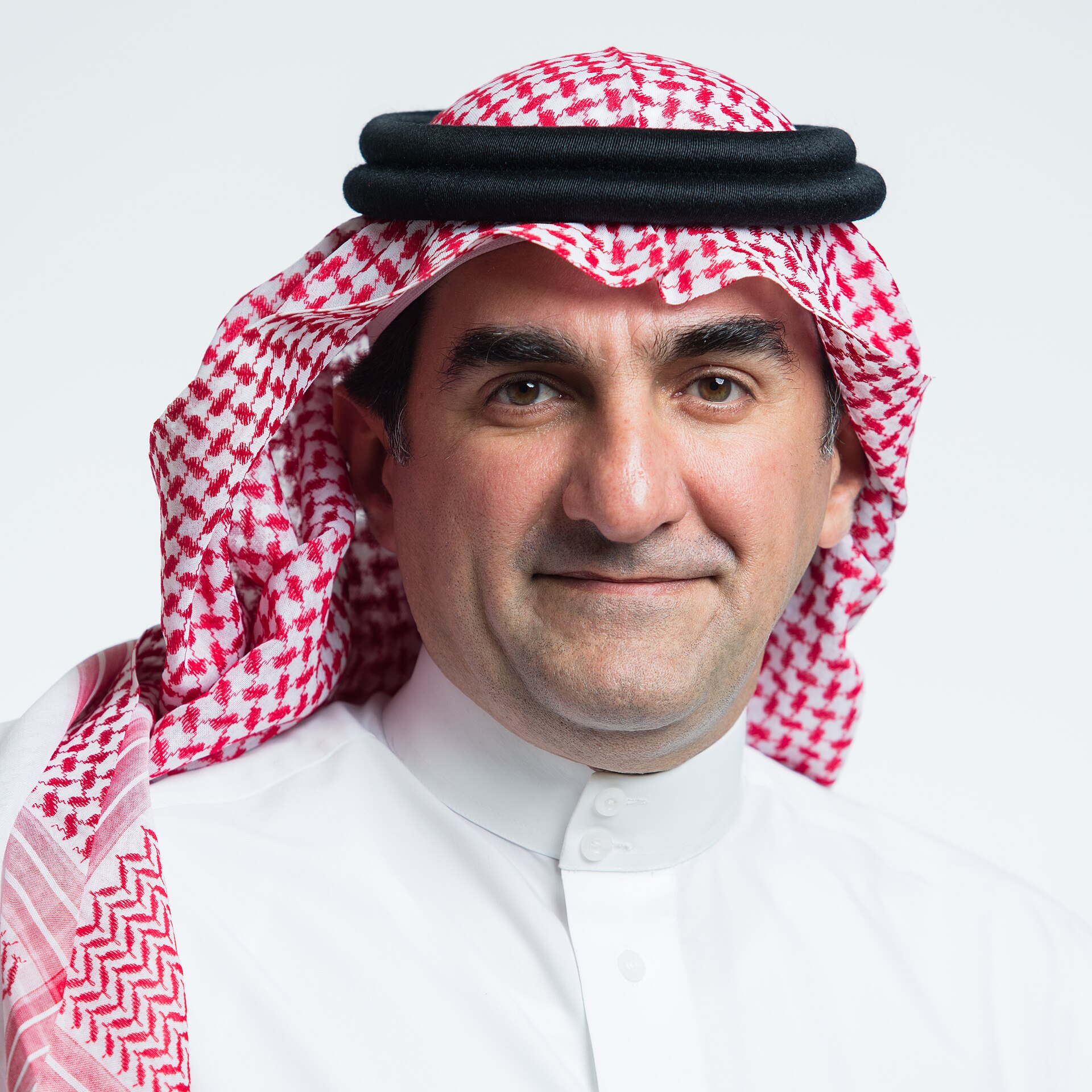
Yasir Al Rumayyan, PIF’s governor, framed the shift at FII Priority Miami as an evolution in deployment philosophy. “We wanted to do most of these investments by ourselves and it’s all equity,” he said. The new model: “We want to get more and more people to work with us, to encourage third-party capital to work with us.” The language is deliberate. PIF spent SAR 591 billion domestically from 2020 to 2024 — roughly $158 billion — as sole equity deployer. That era is over.
Tim Callen, former IMF mission chief for Saudi Arabia and now at the Arab Gulf States Institute, said the previous capital expenditure ambitions had exceeded “sustainable levels under current market conditions.” Rachel Ziemba of Ziemba Insights was more direct about the earlier targets: “Too lofty.”
The 2026-2030 plan reorganizes the portfolio into six ecosystem pillars: travel, tourism, and entertainment; urban development and livability; advanced manufacturing and innovation; industry and logistics; clean energy and renewables; and NEOM as a standalone ecosystem. The last of these is instructive — NEOM survives as a brand, detached from any construction timeline, while The Line, its defining component, sits dormant.
The Line Was Not Scaled Back — It Was Abandoned in Place
Construction on The Line was suspended in September 2025. At the time of suspension, 2.4 kilometers of foundation had been completed out of a planned 170-kilometer linear city. Three major Trojena contracts — the alpine resort component of NEOM — were terminated: Webuild’s $4.7 billion dam and artificial lake project, Eversendai’s structural steel package, and Hyundai E&C’s $1 billion tunnel contract. The Asian Winter Games 2029, which had been Trojena’s anchor event, were postponed indefinitely by the Olympic Council of Asia in January 2026, triggering a contract cascade.
The internal numbers explain the decision. PIF’s own audit revealed projected costs of $8.8 trillion with a completion timeline stretching to 2080 — against an original public estimate of approximately $500 billion. PIF recorded an $8 billion write-down on giga-projects. Fitch Ratings estimates only $115 billion in giga-project contracts have been awarded in total since 2019, a fraction of the projected costs required to deliver the original scope.
The Line was conceived in 2021, when Brent crude averaged $70 and the Strait of Hormuz was a theoretical vulnerability. It required cheap capital, stable oil logistics, and the assumption that Saudi Arabia’s fiscal position would allow decades of sovereign-funded construction at scale. By April 2026, Aramco’s base dividend has been cut by roughly one-third — a direct reduction to PIF’s primary domestic funding mechanism. PIF cash reserves fell to approximately $15 billion by late 2024, the lowest since 2020. PIF lost approximately $6 billion in Aramco dividend income following the dividend reduction alone.
The publicly released strategy retains NEOM as a standalone sixth ecosystem pillar. Critics describe this as rebranding a failed megaproject. The more precise reading is that PIF is preserving optionality on the NEOM brand — which retains land, infrastructure permits, and development authority over a territory the size of Belgium — while acknowledging that the physical construction program that defined it requires conditions that do not currently exist and may not return soon.

How Large Is the PIF Write-Down on Giga-Projects?
PIF recorded an $8 billion write-down on giga-projects as of the 2026-2030 strategy cycle, reflecting the gap between contracted commitments and revised delivery timelines. The internal audit that produced the $8.8 trillion cost-through-2080 figure for NEOM alone suggests the total exposure is substantially larger, but PIF has not disclosed project-level impairment details beyond the aggregate write-down.
The $8 billion figure sits against a current asset base of $941.3 billion — PIF’s reported assets under management as of 2024. In April 2025, PIF raised its AUM target to $2.67 trillion by 2030, a 43% increase over the prior goal. The gap between current AUM and the 2030 target is $1.73 trillion. Closing that gap requires a combination of asset appreciation, new capital injections, and the private-sector co-investment that Al Rumayyan described in Miami — at a time when the fund’s cash position is at a four-year low and its primary revenue source has been cut.
Al Rumayyan addressed the tension with characteristic patience: “We are a long-term, patient investor. We measure our returns not in quarters but in decades.” The statement is true on its own terms. It also functions as a request not to measure the fund against its own near-term targets.
HUMAIN and the Compute Bet
HUMAIN, PIF’s artificial intelligence subsidiary, has emerged as the centerpiece of the 2026-2030 strategy with a capitalization structure that dwarfs anything in the giga-project pipeline still under construction. The numbers: $23 billion in strategic technology partnerships, a $10 billion venture fund, $3 billion invested in Elon Musk’s xAI, $3 billion committed to Blackstone for data center development. NVIDIA has expanded its deal with Saudi Arabia to up to 600,000 GPUs over three years. Amazon Web Services will deploy up to 150,000 NVIDIA GPUs in a dedicated “AI Zone” in Riyadh.
The Saudi Data and AI Authority awarded a $2.7 billion contract in January 2026 for a 480-megawatt Hexagon data center in Riyadh. HUMAIN’s target is 3 to 6 gigawatts of AI compute capacity, with a long-term ambition of 6.6 gigawatts by 2034 — a figure that would place Saudi Arabia among the top five global markets for AI infrastructure.
The strategic logic is geography-specific. Data centers require electricity, land, and cooling — three resources Saudi Arabia has in abundance. They do not require Hormuz transit. A GPU does not ship through a contested strait; it arrives by air cargo or overland. The electricity that powers the compute comes from domestic natural gas and, increasingly, from renewables. HUMAIN’s entire value chain is insulated from the disruption that has collapsed non-oil PMI to 48.8 and halved crude exports.
The skeptics have a case. CNBC reported in August 2025 that Saudi Arabia produces minimal indigenous AI research. HUMAIN’s compute advantage depends on continued US chip export licenses — a dependency made fragile by the Trump administration’s tariff regime and the broader trajectory of US-China technology restrictions. The electricity subsidies required to make AI economics work at this scale are fiscally unsustainable if the war drags and oil revenue continues to decline. These are real constraints. But PIF appears to have decided that betting on compute is less risky than betting on concrete — and given what happened to The Line, the comparison is not unreasonable.
Why Are Expo 2030 and the 2034 World Cup the Protected Channels?
Both events carry fixed, immovable deadlines backed by international governing bodies — FIFA and the Bureau International des Expositions — that override the internal logic of cost cutting and function as demand guarantees regardless of oil prices or the status of Hormuz. No equivalent enforcement mechanism protects any other investment in the PIF portfolio.
Investment Minister Khalid Al Falih confirmed at the PIF Private Sector Forum in February 2026 that Expo 2030 and the 2034 FIFA World Cup are the “most protected investment channels” in the kingdom. An unnamed source close to PIF was less diplomatic: “No contract of significance is going to be awarded this year unless it’s got the words Expo or World Cup.”
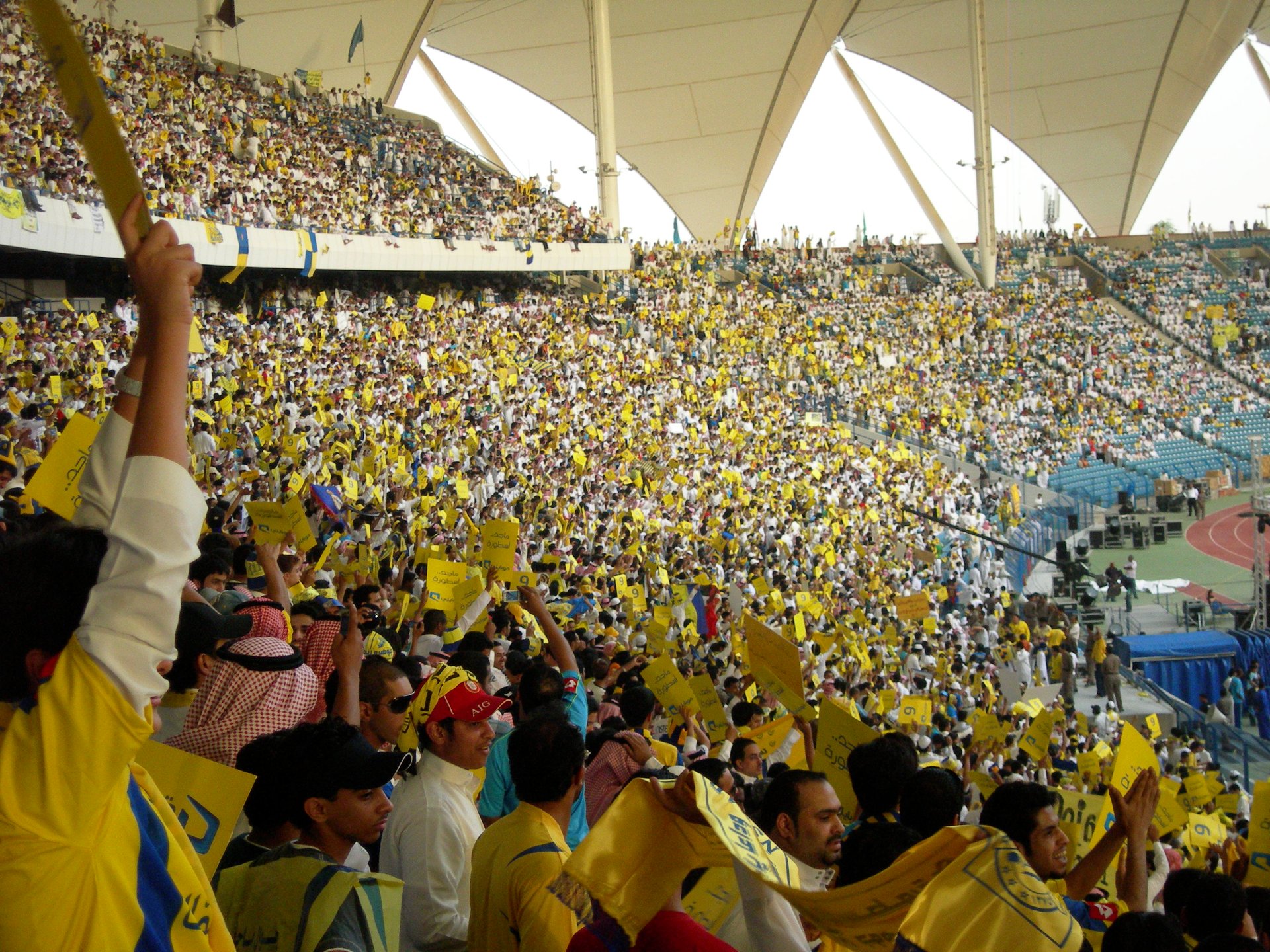
The economics of that decision are visible in the numbers. Expo 2030 carries an official budget of $7.8 billion, with total infrastructure investment estimated at over $90 billion. The Expo site — 4.3 square kilometers in northern Riyadh — is 25% levelled as of early 2026, with main pavilion construction set to begin in the third quarter. The 2034 World Cup requires 15 stadiums, of which 11 are not yet built, at an estimated stadium spending of $25 to $30 billion.
You cannot postpone a World Cup the way you postpone the Asian Winter Games. The infrastructure required for both events — stadiums, metro extensions, hotels, airport capacity — generates construction employment and private-sector contracting that partially offsets the collapse in giga-project awards. In a kingdom where non-oil PMI has contracted for the first time since 2020, this is not an abstract benefit.
The Crowd-In Model and the FDI Gap
The 2026-2030 strategy introduces a SAR 70 billion ($18.7 billion) private sector support facility and formally shifts PIF’s posture from sole equity deployer to what Saudi officials describe as a “crowd in” model — using PIF capital to attract third-party investment rather than funding projects alone. Eight IPOs are earmarked for 2026, including Sela (ticketing and event management) and Saudi Global Ports, a joint venture with PSA International of Singapore.
The model requires foreign direct investment that is not currently arriving at the necessary scale. Saudi Arabia recorded $19 billion in FDI net inflows in the first nine months of 2025, against a Vision 2030 target of $100 billion annually by the end of the decade. The gap is not new, but the war has widened it.
F. Gregory Gause III, an associate fellow at the Middle East Institute, identified the core problem: “We know capital is a coward; it doesn’t go into war zones.” Hela Miniaoui, an associate professor at Lusail University, added specificity: “The more vulnerable category is discretionary greenfield investment, where firms have greater flexibility to delay or redirect.” Karen Young of Columbia University’s Center on Global Energy Policy acknowledged that PIF “is the deployer of capital, it is an attractor of capital, and has the geographic location to be central as a supply centre” — but cautioned that tourism, financial services, logistics, and technology “may take a hit from the conflict.”
Justin Alexander, director of Khalij Economics, offered a conditional assessment: “I’m sure in the short term lots [of investments] will be stalled, but in the medium term it depends on whether Iran ends up somewhere stable.” The conditional is doing significant work in that sentence. As of April 6, the 45-day ceasefire framework has been rejected by Tehran, the IRGC command structure has lost its second intelligence chief, and MBS has privately urged Trump to send ground troops for regime change. Stability is not the near-term trajectory.
PIF’s $170 billion in US investments since 2017 — a figure Al Rumayyan disclosed at FII Miami — represents a parallel strategy: deploying capital in jurisdictions where the war does not affect asset values. The xAI stake, the Blackstone data center commitment, and the expanded NVIDIA relationship all place capital outside the Gulf’s risk premium. Young and Alexander both suggest the strategy release during wartime is partly a signaling exercise. Reports of some Asian and European banks reducing Middle Eastern debt exposure suggest markets have not fully accepted the reassurance.
What Does the Fiscal Arithmetic Look Like Under Prolonged Hormuz Disruption?
The IMF estimates Saudi Arabia’s fiscal breakeven oil price exceeds $90 per barrel. The projected 2026 budget deficit is $44 billion — 3.3% of GDP — on official figures. Goldman Sachs estimates the actual deficit at 6 to 6.6% of GDP, or $80 to $90 billion, once off-budget sovereign spending is included.
Saudi exports have fallen to 3.33 million barrels per day, half of pre-war volumes, but the East-West Pipeline bypass through Yanbu is now certified at 7 million bpd, covering 80 to 85% of pre-war export capacity through a route that does not transit Hormuz. The bypass insulates revenue from a full Hormuz closure but does not solve the demand-side problem: buyers must reroute tanker traffic to the Red Sea, and Washington’s simultaneous licensing of Iranian crude under OFAC General License U is displacing Saudi market share in India, where Saudi volumes have fallen from 16% to 11%.
Aramco’s 2025 net income was $104.7 billion, but the base dividend cut of roughly one-third reflects a board judgment that the prior payout was unsustainable. PIF holds the majority Aramco stake. Every dollar removed from the Aramco dividend is a dollar PIF cannot deploy domestically without drawing on reserves that are already at $15 billion — a level that constrains the fund’s ability to anchor the crowd-in model with seed capital.
| Metric | Figure | Source |
|---|---|---|
| Assets under management (2024) | $941.3 billion | PIF disclosure |
| AUM target (2030) | $2.67 trillion | The National, April 2025 |
| Cash reserves (late 2024) | ~$15 billion | Middle East Briefing |
| Giga-project write-down | $8 billion | Zawya, 2026 |
| Aramco dividend income lost | ~$6 billion annually | Middle East Briefing |
| Domestic spending (2020-2024) | SAR 591 billion (~$158B) | AGBI, March 2026 |
| US investments since 2017 | $170 billion | Al Rumayyan, FII Miami |
| Giga-project contracts awarded since 2019 | $115 billion (total) | Fitch Ratings via AGBI |
| Indicator | Figure | Source |
|---|---|---|
| Fiscal breakeven oil price | >$90/barrel | IMF estimate |
| 2026 budget deficit (official) | $44 billion (3.3% GDP) | Saudi MoF |
| 2026 budget deficit (Goldman Sachs) | $80-90 billion (6-6.6% GDP) | Goldman Sachs via AGBI |
| Saudi exports (current) | 3.33 million bpd (down 50%) | East-West Pipeline bypass coverage |
| Yanbu bypass capacity | 7 million bpd certified | East-West Pipeline bypass coverage |
| FDI net inflows (Jan-Sep 2025) | $19 billion | AGBI, February 2026 |
| FDI annual target (2030) | $100 billion | Vision 2030 |
| Non-oil PMI (March 2026) | 48.8 (contraction) | S&P Global / AGBI |
The Hormuz Baseline Thesis
No explicit Hormuz disruption scenario appears in the publicly disclosed PIF strategy document. What follows is editorial inference from the structural pattern of the pivot — not a stated Saudi position.
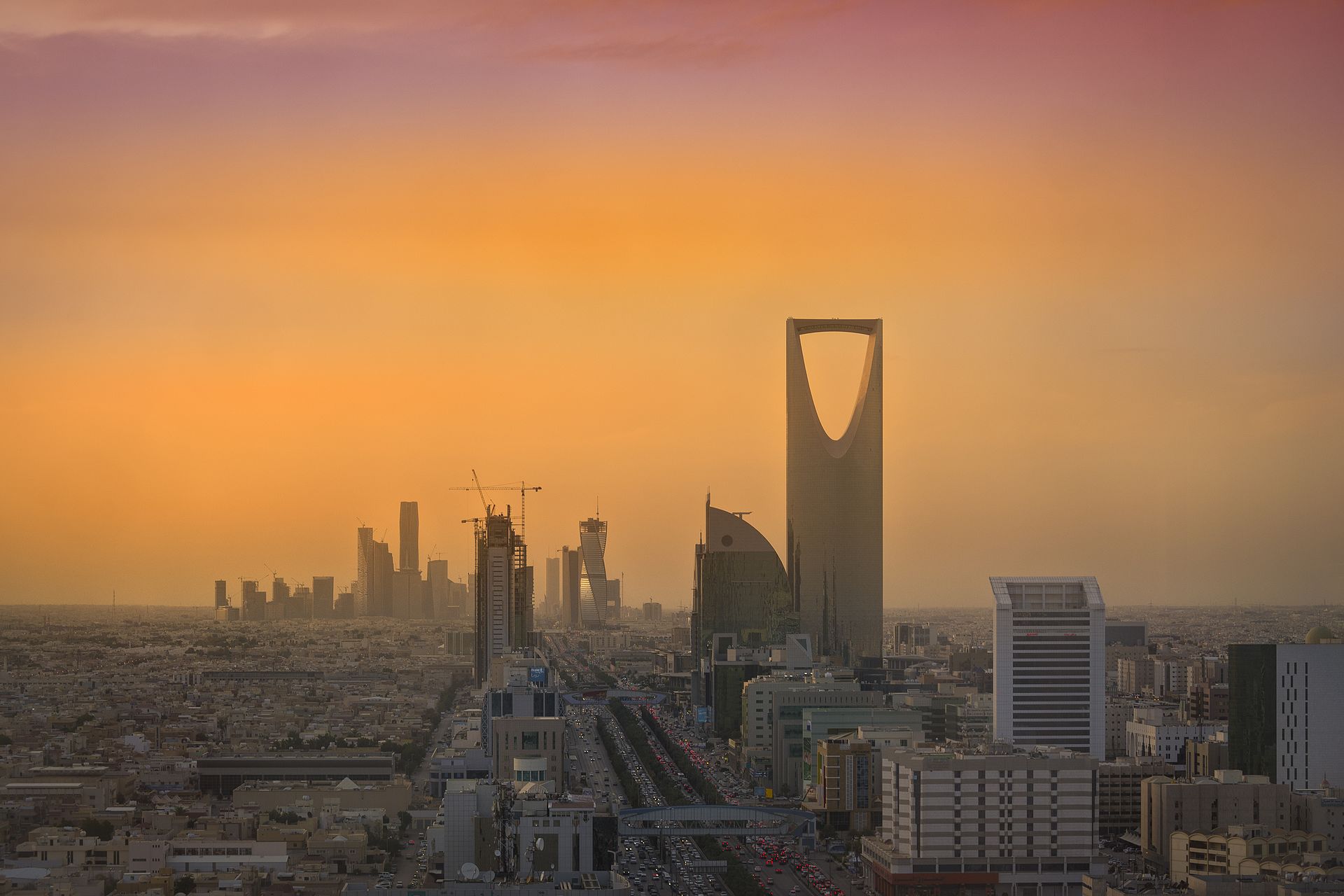
The portfolio restructuring maps cleanly onto a Hormuz disruption matrix. Assets deprioritized or suspended: The Line (required decades of construction material imports through eastern ports), Trojena (alpine resort dependent on tourism volumes that assume open airspace and stable regional security), and greenfield industrial projects in the Eastern Province. Assets elevated: HUMAIN (compute infrastructure powered by domestic energy, supplied by air cargo), Expo 2030 (fixed-date demand in Riyadh, 900 kilometers from the nearest Iranian missile battery), 2034 World Cup (stadium construction in Riyadh, Jeddah, and interior cities), and minerals and advanced manufacturing (supply chains routable through Red Sea ports).
The 15% capex cut is not austerity in the conventional sense. Austerity preserves existing commitments at reduced scale. What PIF has done is abandon one category of commitment — Hormuz-exposed, timeline-flexible, capital-intensive construction — and redirect resources to another category: Hormuz-insulated, deadline-fixed, technology-intensive, or event-anchored. The distinction matters because it suggests the planning horizon is not “until the war ends” but “assuming the war continues.”
The OPEC+ meeting dynamics reinforce the reading. Saudi Arabia’s decision to hold production flat rather than cut — despite losing half its export volume — reflects a calculation that production cuts would cede market share permanently while the Yanbu bypass provides a revenue floor. The PIF strategy and the OPEC+ posture are consistent: both assume a prolonged disruption and position around it rather than waiting for its resolution.
MBS has form on this kind of signaling. The crown prince has consistently used economic announcements as geopolitical communication — the original Vision 2030 launch in 2016 was as much a message to Washington about Saudi self-sufficiency as it was an economic program. Releasing a five-year sovereign wealth strategy on the day of Trump’s Iran deadline places the document in the same category: it is a plan, and it is also a statement.
What Does PIF’s Strategy Signal About the Ceasefire?
The ceasefire framework that emerged through Pakistani, Egyptian, and Turkish mediation — a 45-day Phase 1 ceasefire with Hormuz and enrichment deferred to Phase 2 — was assessed by Axios and The National as having “slim” chances. Iran formally rejected Trump’s deadline on April 6. The IRGC’s second intelligence chief, Khademi, was killed at dawn the same day. Khamenei has been absent from public view for 29 days. The structural conditions for a ceasefire — a functioning Iranian chain of command, a US administration willing to accept less than capitulation, and a mediator with access to both sides — do not exist in their necessary conjunction.
PIF’s strategy does not mention the war. It does not need to. A sovereign wealth fund that cuts capex by 15%, writes down $8 billion in giga-projects, suspends its signature construction program, pivots to assets insulated from maritime disruption, and protects only investments with immovable international deadlines is not positioning for a ceasefire in the next quarter. It is positioning for a world in which the ceasefire either does not come or comes too late to reverse the structural changes already underway.
This does not mean Saudi Arabia opposes a ceasefire. MBS’s private entreaty to Trump for ground troops and regime change suggests the opposite — the crown prince wants the war resolved, but resolved on terms that permanently eliminate Iran’s capacity to threaten Hormuz. Short of that outcome, the PIF strategy suggests Riyadh is prepared to operate indefinitely under disruption conditions, with a smaller, more focused portfolio built around assets that do not require the strait to be open.
No contract of significance is going to be awarded this year unless it’s got the words Expo or World Cup.
Source close to PIF, via AGBI, February 2026
The 2021-2025 PIF plan targeted a minimum of $40 billion in annual domestic investment, $320 billion in non-oil GDP contribution, and an AUM target of $1.07 trillion — later raised to $1.87 trillion. Both AUM targets were achieved. PIF created 1.1 million jobs by 2024. Those were the metrics of a fund operating in peacetime, with a functioning Hormuz transit, a full Aramco dividend, and an FDI pipeline that — while never reaching the $100 billion annual target — was at least directionally positive.
The 2026-2030 plan measures success differently. The SAR 70 billion private sector support facility replaces direct equity deployment with catalytic capital. The eight planned IPOs — Sela, Saudi Global Ports, and six others — are designed to recycle capital rather than deploy new sovereign funds. The HUMAIN investment thesis assumes that Saudi Arabia’s competitive advantage is not its oil but its electricity, its land, and its willingness to spend at scales that private capital cannot match in AI infrastructure. None of these metrics require Hormuz. All of them require time — the kind of time a prolonged war, paradoxically, might provide by removing the pressure to deliver the original Vision 2030 megaprojects on their initial timelines.
Frequently Asked Questions
Has PIF formally abandoned The Line or NEOM?
PIF has not formally abandoned NEOM — it remains a standalone sixth ecosystem pillar in the 2026-2030 strategy. However, The Line’s construction was suspended in September 2025 with only a fraction of its planned 170-kilometer route complete. The three major Trojena contract terminations (Webuild, Eversendai, Hyundai E&C) and the indefinite postponement of the Asian Winter Games 2029 suggest the physical construction program is dormant. PIF’s internal audit projecting costs through 2080 at a figure dwarfing the original estimate indicates the original scope will never be built as designed, regardless of whether the NEOM brand survives as a development authority with intact land entitlements over a territory the size of Belgium.
How does the HUMAIN investment compare in scale to the giga-projects?
HUMAIN’s disclosed commitments — $23 billion in strategic partnerships, $10 billion venture fund, $3 billion in xAI, $3 billion with Blackstone, plus the 600,000-GPU NVIDIA deal and AWS AI Zone — represent a concentration of capital in a single technology vertical that exceeds any individual giga-project still under active construction. The more telling comparison is capital velocity: GPU deployments deliver operational capacity within 12 to 18 months, while giga-projects like The Line were measured in decades. PIF appears to have concluded that faster capital cycles reduce exposure to the kind of timeline risk that the war has made acute — and that a sovereign fund operating under fiscal pressure cannot afford to lock capital into multi-decade construction programs.
What is the SAR 70 billion private sector support facility?
The facility, introduced under the 2026-2030 strategy, provides financing mechanisms — including co-investment structures, loan guarantees, and equity participation — designed to attract private-sector capital into priority sectors. It replaces the 2021-2025 model in which PIF deployed sovereign equity directly into portfolio companies. The shift reflects both a philosophical change (Al Rumayyan’s stated preference for third-party capital) and a practical constraint: with cash reserves at ~$15 billion and Aramco dividends reduced, PIF lacks the liquidity to continue as sole equity deployer at 2021-2025 spending levels. The facility’s effectiveness will depend on whether private investors are willing to commit capital to a kingdom at war — a question the $19 billion in FDI for the first nine months of 2025 (against a $100 billion annual target) does not answer favorably.
Could PIF reverse course if a ceasefire holds?
Structurally, some reversals are possible — The Line’s land entitlements and development authority remain intact, and NEOM’s standalone ecosystem designation preserves institutional capacity to restart construction. But three factors work against a simple restart: the contract cascade from Trojena terminations has dispersed the international engineering consortia that were mobilized for the giga-projects; the Aramco dividend cut reflects a structural reassessment of payout sustainability, not a temporary wartime measure; and the HUMAIN partnerships create new institutional constituencies within PIF whose budgets and headcount would need to be reduced to fund a giga-project revival. The strategy is designed to be difficult to reverse, which is itself a signal about how long Riyadh expects current conditions to persist.
Is the PIF 2026-2030 strategy credible given Saudi Arabia’s FDI track record?
Saudi FDI net inflows reached only $19 billion in nine months of 2025 against a $100 billion annual target by 2030 — a gap that the war has widened. The crowd-in model’s credibility rests on whether the eight planned IPOs can demonstrate returns that attract follow-on private capital, and whether HUMAIN’s compute infrastructure generates hyperscaler demand that is less sensitive to regional security risk than greenfield industrial FDI. The binding constraint is the one Gause identified: capital avoids war zones, and Saudi Arabia’s eastern ports remain within range of Iranian missiles. The strategy assumes that HUMAIN, Expo, and the World Cup can attract enough offshore capital to compensate — a thesis that depends more on event-driven demand guarantees than on a resolution of the underlying conflict.