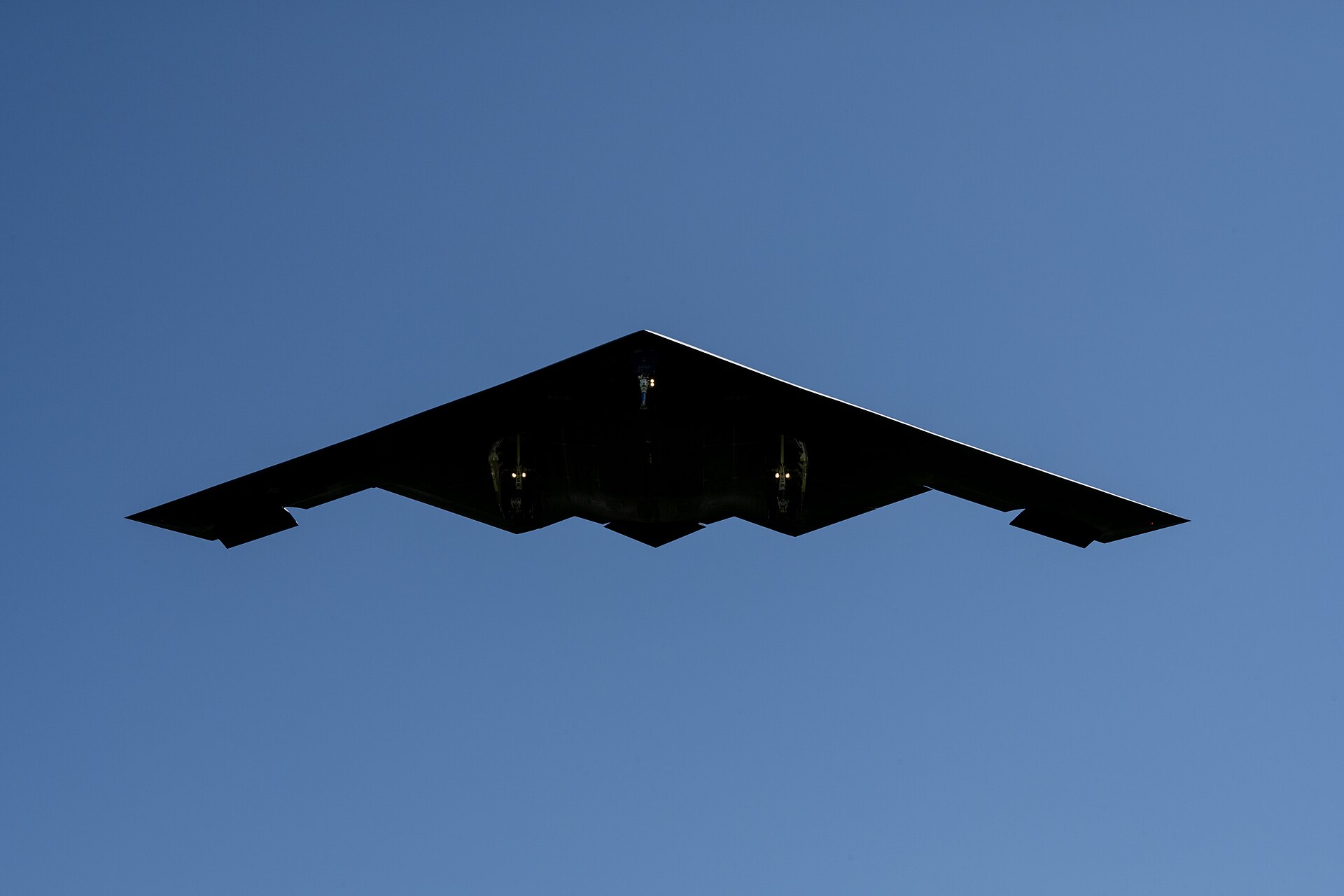

DHAHRAN — The United States is bombing Iranian military infrastructure with B-2s while licensing the sale of Iranian crude whose revenues fund that same military. On March 20, the Treasury Department’s Office of Foreign Assets Control issued General License U, a 30-day sanctions waiver permitting transactions on Iranian oil loaded before that date. On April 4, India confirmed its first Iranian crude purchase since May 2019. The license contains no escrow mechanism, no volume cap, no payment restriction, and no reporting obligation — making it structurally weaker than every sanctions architecture Washington has applied to Iranian oil since 2012. Meanwhile, Saudi Aramco’s exports have fallen 39 percent from February levels, its CEO has gone silent, and the kingdom absorbs both the physical loss of the Strait of Hormuz and the market loss of Indian refinery contracts it spent five years winning. The arithmetic does not resolve.
Table of Contents
- What General License U Actually Licenses
- Why Is GL U Weaker Than Obama-Era Sanctions Relief?
- India’s Return — and Who Moved First
- Does Iranian Crude at a Brent Premium Achieve Anything Washington Claims?
- The Saudi Displacement
- Where Does the Revenue Go?
- Aramco’s Institutional Silence
- How Exposed Is Saudi Arabia’s Fiscal Position?
- The Ping Shun and the 30-Day Trap
- Frequently Asked Questions
What General License U Actually Licenses
OFAC’s General License U, dated March 20, 2026, authorizes “all transactions ordinarily incident and necessary to the sale, delivery, or offloading of crude oil or petroleum products of Iranian origin loaded on any vessel on or before 12:01 a.m. EDT, March 20, 2026.” The window runs through 12:01 a.m. EDT, April 19, 2026 — thirty days. Baker McKenzie’s sanctions practice noted the license applies only to cargoes already loaded at the cutoff date, not to new liftings from Iranian terminals.
What GL U does not contain is more instructive than what it does. There is no escrow requirement — no mechanism routing payments through restricted accounts, as existed under certain Obama-era arrangements. There is no volume reduction obligation. There is no reporting requirement for purchasers. There is no restriction on payment channels. Max Meizlish, a former OFAC enforcement officer now at the Foundation for Defense of Democracies, wrote on March 21 that the license “contains no escrow mechanism and no obvious restrictions on payment channels” and “quietly opens the door” to Iranian crude entering markets — including, in theory, the United States — that have been closed for decades.
Treasury Secretary Scott Bessent said GL U ensures oil “continues flowing into global markets” and that Iran “will have difficulty accessing any revenue generated.” The first clause is operative. The second is aspirational. Nothing in the license text enforces it.
Why Is GL U Weaker Than Obama-Era Sanctions Relief?
GL U lacks every enforcement mechanism that defined earlier sanctions architectures. The Obama-era Significant Reduction Exceptions under the FY2012 NDAA required countries to demonstrate measurable reductions in Iranian crude purchases over rolling 180-day periods. GL U imposes no reduction path, no reporting, no escrow — weaker than any Iran oil sanctions framework since 2012.
The FY2012 National Defense Authorization Act established SREs as a structured concession: countries could continue importing Iranian crude only if they demonstrated measurable reductions over each 180-day period. The architecture was imperfect — India’s imports held at roughly 250,000 to 300,000 barrels per day even as European flows collapsed under the EU’s embargo — but the reduction requirement created a ratchet. Iranian oil revenues fell from $95 billion in 2011 to between $38 billion and $56 billion in 2013-2014, according to EIA and USIP data.
The Middle East briefing 3,000+ readers start their day with.
One email. Every weekday morning. Free.
During the Joint Plan of Action period, January 2014 through January 2016, the reduction requirement was suspended — a concession to Iran as part of the nuclear negotiations. Even that suspension preserved the structural framework: the ratchet could be reactivated. When Trump withdrew from the JCPOA and reimposed sanctions in 2018, the SRE architecture was reinstated for eight countries, including India, before Trump ended all waivers on April 22, 2019, with the stated goal of reducing Iranian exports “to zero.”
GL U abandons the ratchet entirely. It does not require significant reductions. It does not require any reductions. It is a 30-day open window with no compliance architecture behind it — issued not during a diplomatic negotiation but during active combat operations against the country whose oil it licenses.
India’s Return — and Who Moved First
India’s oil ministry confirmed on April 4 that Indian refiners had purchased Iranian crude for the first time since May 2019. The statement was brief and bureaucratic: “Amid Middle East supply disruptions, Indian refiners have secured their crude oil requirements, including from Iran; and there is no payment hurdle for Iranian crude imports.” Seven years of sanctions compliance, dissolved in two sentences.
The purchasing pattern reveals a split. India’s state-owned refiners — Indian Oil Corporation and Bharat Petroleum Corporation Limited — largely stayed on the sidelines. A 30-day window creates what compliance officers describe as a trap: companies that spent years unwinding Iranian contracts and rebuilding compliance frameworks are reluctant to re-engage in a trade that could become prohibited again by April 19. The compliance infrastructure around Iranian oil — segregated accounts, sanctioned-entity screening, insurance carve-outs — takes months to rebuild. GL U gives them weeks.
Private refiners moved more quickly. Nayara Energy, partly owned by Russia’s Rosneft, was among those reported willing to transact. The distinction matters: state-owned refiners answer to government ministries with long institutional memories of the 2019 cutoff. Private refiners calculate differently.
Kpler and Vortexa estimated approximately 170 million barrels of Iranian crude in floating storage globally as of late March 2026, with roughly 60 million barrels positioned near China and between 10 and 51 million barrels practically accessible to Indian ports. The supply is physically available. The question is who bears the risk of purchasing it — and who bears the cost when the window closes.
Does Iranian Crude at a Brent Premium Achieve Anything Washington Claims?
No. Iranian crude offered at $6 to $8 above ICE Brent — the first premium to the benchmark since May 2022 — directly contradicts GL U’s stated purpose. If the license was designed to ease supply constraints and suppress prices, pricing Iranian crude above the benchmark accomplishes neither. The barrels change ownership; the global supply curve does not shift.
Bloomberg reported on March 26 that Iranian crude reached $1 per barrel above Brent in spot transactions, with subsequent offers to Indian refiners carrying premiums of $6 to $8. The premium reflects the scarcity value of cargoes already loaded — the GL U cutoff date means no new Iranian liftings are licensed, making existing floating storage a finite pool — and the lack of competition among buyers willing to transact under a 30-day window.
Treasury Secretary Bessent framed GL U as a measure to keep oil “flowing into global markets.” The IEA’s Fatih Birol described the broader crisis as “the greatest global energy security challenge in history” and warned that “no country will be immune to the effects.” But GL U does not add supply to global markets in any structural sense. It permits the liquidation of a floating inventory that already existed — cargoes loaded before March 20 — at prices above the benchmark they are supposed to suppress.
The premium also means Indian refiners are paying more for Iranian crude than they would for comparable grades from Saudi Arabia, Iraq, or the UAE — when those barrels were available. The displacement is not driven by price advantage. It is driven by physical availability: with Saudi exports constrained by the Hormuz closure and rerouted through the East-West pipeline to Yanbu, Indian refiners face a supply gap that Iranian floating storage — however expensively priced — can physically fill.
The Saudi Displacement
Saudi Arabia built its Indian market position during two distinct periods of Iranian absence. The first followed the 2012 sanctions and EU embargo, when Aramco and Iraqi producers absorbed volumes that European refiners had abandoned and Indian refiners could no longer fully source from Tehran. The second, and more consequential, followed Trump’s April 2019 decision to end all SREs. India halted Iranian imports entirely from May 2019. Aramco moved aggressively: Saudi Arabia’s share of Indian crude imports rose to approximately 16 percent by 2021.
That share has since eroded — not because of Iran, but because of Russia. Russian crude’s share of Indian imports climbed from 1 percent in 2017 to 36 percent in 2024, driven by post-invasion discounts that Indian refiners — state-owned and private alike — absorbed without diplomatic hesitation. Saudi Arabia’s Indian market share fell to roughly 11 percent by May 2024. The kingdom was already losing ground before the war.
| Supplier | 2017 Share | 2021 Share | 2024 Share | April 2026 (est.) |
|---|---|---|---|---|
| Russia | ~1% | ~2% | ~36% | ~33% |
| Saudi Arabia | ~18% | ~16% | ~11% | ~9% |
| Iraq | ~22% | ~23% | ~21% | ~18% |
| Iran | ~11% | 0% | 0% | Resuming |
| UAE | ~7% | ~8% | ~6% | ~5% |
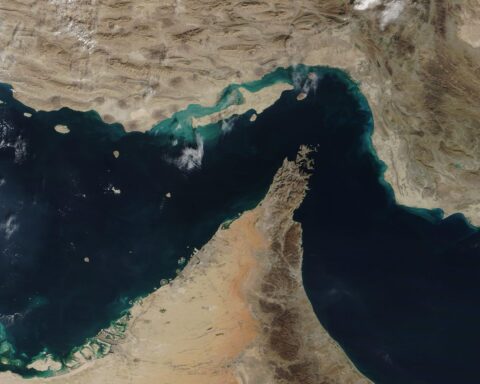
Now the war adds a physical constraint. Saudi crude exports fell approximately 39 percent from February’s 7.1 million barrels per day to an estimated average of 4.355 million bpd in March, according to Bloomberg and Anadolu Agency data. The Strait of Hormuz closure locked away what the Arab Center DC estimated at 4 million bpd in excess capacity held collectively by Iraq, Kuwait, Saudi Arabia, and the UAE — capacity that exists in the ground but cannot reach tankers. Aramco’s East-West pipeline routes roughly 5 million bpd to the Red Sea terminal at Yanbu, but normal Gulf exports ran 7.1 million bpd. The gap — approximately 2 million bpd of stranded export capacity — has simply gone offline.
The Hormuz constraint is not a Saudi problem alone. Iran’s selective exemption regime — allowing certain tankers through while blocking others — has created a two-tier transit system that advantages Iranian-flagged or Iranian-permitted cargoes over Gulf Arab exports. Iraqi Suezmax tankers crossed under apparent exemption in late March; Saudi-chartered vessels did not. The selectivity means Iran profits twice from the closure: once through restricted supply lifting its own crude prices, and again through GL U licensing the sale of cargoes loaded before the chokepoint tightened.
Saudi crude exports to India are forecast at roughly 23 million barrels for April 2026, down from 25 to 28 million barrels in February. In a market where every barrel of supply carries a premium, each barrel India sources from Iranian floating storage is one fewer barrel India needs from Aramco’s already constrained Yanbu pipeline. Before the war, India imported roughly 450,000 bpd of Iranian crude under the SRE architecture. Even a partial resumption at that scale — unlikely within a 30-day window — would displace volumes equivalent to Aramco’s entire Indian market share decline since 2021.
Where Does the Revenue Go?
Iran’s FY2026 budget allocates $12.4 billion — one-third of annual oil revenues — to the armed forces, tripled year-on-year; the IRGC budget rose 24 percent. TankerTrackers estimated $139 million per day as of late March 2026. GL U contains no mechanism to prevent proceeds from reaching that allocation. The license funds the force structure the United States is simultaneously attacking.
The FY2026 Iranian budget law, passed by the Majlis and reported by Iran International on April 3, channels oil revenues through the National Development Fund and the general budget. The armed forces allocation — $12.4 billion — is not a ceiling subject to sequestration. It is a statutory appropriation linked to oil revenue projections. When oil revenues exceed projections, as they have with crude trading above budget assumptions, the surplus flows proportionally.
The IRGC’s 24 percent year-on-year budget increase funds precisely the force elements conducting operations in the Strait of Hormuz — the naval units managing the selective exemption regime that determines which tankers transit and which do not, the missile batteries that struck Gulf infrastructure, the drone programs that targeted Saudi and Emirati energy assets. Revenue is fungible, but in this case the budget line items are explicit.
At $139 million per day, Iran’s oil revenues over the 30-day GL U window amount to approximately $4.17 billion. One-third of that — the statutory military allocation — is $1.39 billion. GL U does not license this allocation, but it licenses the revenue stream that funds it, without any mechanism to interrupt the flow.

Aramco’s Institutional Silence
Amin Nasser, Saudi Aramco’s chief executive, pulled out of CERAWeek in Houston in March. He also cancelled a pre-recorded video message for the conference — a secondary withdrawal that suggests the decision was not logistical but deliberate. Aramco issued no public statement on GL U. It issued no public statement on India’s April 4 confirmation of Iranian crude purchases. It issued no statement on the 39 percent export decline.
Aramco’s communications discipline is a known quantity — the company does not freelance on geopolitics. But silence on a policy that directly displaces Saudi barrels in a market Aramco spent years cultivating is itself a form of communication. When Nasser last spoke publicly, at a Fortune event in early March, he warned of a “catastrophic” oil shock if the Iran war continued. He did not mention GL U, which had not yet been issued. He has not spoken publicly since.
The silence is consistent with a broader Saudi posture described by the Carnegie Endowment in a March 2026 analysis titled “The Iran War Is Uncovering the Weakness in U.S.-Gulf Ties.” The report argued that Gulf states bear the physical and economic costs of the conflict while Washington exercises unilateral discretion over the sanctions and military architecture. GL U is a case study: the United States issues a license that benefits Indian refiners and — through revenue flows — the Iranian military, while the principal US security partner in the Gulf absorbs the market displacement with no comparable accommodation.
No tariff relief on Saudi petrochemical exports to the United States. No accelerated defense deliveries. No commitment on post-conflict market share restoration. Aramco’s silence may reflect an institution that has calculated the diplomatic cost of public complaint and decided the silence itself communicates more effectively.
How Exposed Is Saudi Arabia’s Fiscal Position?
Severely. IMF estimates the fiscal breakeven at $86.60/bbl; Bloomberg Economics puts the consolidated figure at $94; full PIF capital commitments push it to $111. Saudi Arabia carried a 5.3 percent of GDP deficit before the war. At $109 Brent, the kingdom clears the IMF floor but misses PIF-inclusive breakeven while exporting 2.7 million fewer barrels per day than in February.
| Metric | Estimate | Source |
|---|---|---|
| Government-only breakeven | $86.60/bbl | IMF (2025) |
| Consolidated breakeven | $94/bbl | Bloomberg Economics |
| Full PIF capex breakeven | $111/bbl | Chatham House / analyst est. |
| 2025 fiscal deficit (pre-war) | 5.3% of GDP | IMF |
| Feb 2026 exports | ~7.1 mbd | Bloomberg / Aramco |
| March 2026 exports (est.) | ~4.355 mbd | Bloomberg / Anadolu |
| Export volume decline | ~39% | Calculated |
Chatham House noted in its March 2026 analysis that Saudi Arabia “will be able to claw back some revenue losses thanks to higher oil prices, but its financial position was already showing signs of strain.” The East-West pipeline to Yanbu covers, in Chatham House’s estimate, “only about one-quarter of the oil that normally goes through the Strait of Hormuz” — a figure that applies to total Hormuz flows, not just Saudi volumes, but the constraint is real. The OPEC+ output pause agreed in early April acknowledged the physical reality: production targets are irrelevant when export infrastructure is severed.
The fiscal arithmetic interacts with Vision 2030 commitments that are contractual, not aspirational. NEOM, the Red Sea tourism corridor, Diriyah Gate, the Jeddah Tower revival — these carry contractor obligations, sovereign guarantees, and employment targets. Cutting them saves money. It also signals that the development model has a vulnerability its architects did not price in: the assumption that Hormuz would remain open.
The Ping Shun and the 30-Day Trap
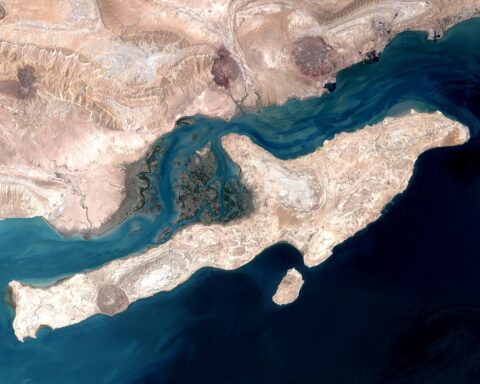
The tanker Ping Shun loaded approximately 600,000 barrels of Iranian crude at Kharg Island around March 4, 2026, and declared an estimated arrival at Vadinar, India, for April 4. It did not arrive. Mid-voyage, the vessel diverted to China. Bloomberg reported the diversion resulted from payment term disputes — Iran demanding upfront payment rather than the 30- to 60-day credit terms Indian refiners traditionally received on Iranian crude. India’s government denied any payment difficulties.
The Ping Shun episode captures the structural problem with GL U’s 30-day window. Iran, aware that the license expires April 19, has every incentive to demand immediate payment — the compliance window for banking transactions narrows with each passing day. Indian refiners, aware that they may need to demonstrate to a future OFAC that their Iranian transactions were cleanly concluded within the license period, have every incentive to insist on documentation and standard credit terms. The two positions are incompatible within a 30-day framework.
This is the compliance trap that kept IOC and BPCL on the sidelines. A sanctions waiver that expires in weeks does not create a trade relationship. It creates a spot transaction under duress — priced at a premium, conducted under time pressure, with neither buyer nor seller confident the legal framework will survive the cargo’s discharge. Pre-2019, India’s Iranian crude trade operated on established banking channels (primarily through UCO Bank), with insurance provided through Indian state underwriters after European P&I clubs withdrew. Rebuilding that infrastructure for a 30-day window is not commercially rational.
The Indian refiners who did transact — private operators with shorter compliance chains and higher risk tolerance — accepted terms that state-owned companies would not. The split between IOC/BPCL and Nayara Energy is a split between institutions that remember the cost of the 2019 cutoff and institutions that calculate each cargo independently.
Frequently Asked Questions
What happens to Indian refiners if GL U is not renewed after April 19?
Indian refiners that purchased Iranian crude under GL U face a compliance cliff. Any cargoes not fully discharged and paid for by the April 19 expiry enter a legal grey zone — the transactions were licensed at initiation but may not be fully settled at expiry. During the 2018-2019 wind-down, OFAC issued specific guidance on “wind-down transactions” with 90-day tails. GL U contains no equivalent provision. Refiners with outstanding letters of credit or cargo in transit on April 19 will need individual OFAC specific licenses — a process that takes weeks to months and carries no guarantee of approval. UCO Bank, which handled Indian-Iranian oil payments until 2019, has not publicly confirmed whether it has re-established the necessary correspondent banking relationships for GL U transactions. As confirmed, GL U was not renewed — Treasury Secretary Bessent confirmed the non-renewal on April 15–16, while simultaneously extending Russia’s equivalent waiver (GL 134A) for another 30 days, a coercive asymmetry that $90 Brent had yet to price by the time the license expired.
Could GL U be extended or replaced with a broader waiver?
Legally, OFAC can issue a new general license at any time — the authority sits with the Director of OFAC under delegated presidential powers and does not require congressional action. Politically, extension faces opposition from the FDD and allied Congressional offices that have framed GL U as “funding the enemy.” The 2012 NDAA’s SRE provisions remain statutory law; any broader waiver that attempted to circumvent the “significant reduction” requirement would face legal challenge. The Biden administration’s 2022 approach — quiet non-enforcement of sanctions on Chinese purchases of Iranian crude — offers an alternative model: tolerate the trade without licensing it. That approach avoids the legal exposure of GL U while achieving similar supply-side effects, but it cannot be applied to India, whose banking system is more integrated with US correspondent networks than China’s.
How does Iran’s current oil pricing compare to pre-sanctions levels?
Before the 2012 sanctions, Iranian Heavy — the kingdom’s primary export grade — traded at a discount of $3 to $5 per barrel to ICE Brent, reflecting its higher sulfur content and lower API gravity relative to lighter crudes. During the sanctions era (2012-2015), the discount widened to $7-$10 as buyers demanded compensation for compliance risk. That relationship has now inverted: a swing of roughly $13 per barrel from the sanctions-era discount to the current GL U premium. The reversal reflects the finite pool of pre-loaded cargoes (no new liftings are licensed), the 30-day time constraint, and the absence of competing sanctioned-price crude from Russia, which Indian refiners had been absorbing at $10-$15 below Brent. Iran is, briefly, the price-maker rather than the price-taker — a position it has not occupied in the Indian market since before the 2012 sanctions architecture took hold.
What is Saudi Arabia’s realistic path to recovering Indian market share?
Saudi Arabia’s Indian market share problem predates the Iran war. The kingdom lost ground primarily to Russia between 2022 and 2024 — a displacement driven by discounts of $10 to $15 per barrel below Brent that Aramco could not match without abandoning its Official Selling Price framework. Post-war recovery depends on two variables Aramco does not control: the duration of the Hormuz closure (which constrains Saudi export volumes regardless of demand) and whether Russia’s discount pricing persists. Aramco’s tool is the OSP — the administered price at which it offers crude to term contract buyers. Historically, Aramco has used OSP cuts to defend market share in Asia, most aggressively in 2014-2015 and again in the 2020 price war. But OSP cuts only work when the volume is physically available to deliver. With 2 million bpd of export capacity stranded behind a closed Hormuz, Aramco cannot cut its way back into the Indian market until the strait reopens.
Has the US issued similar waivers for other sanctioned oil producers during active military operations?
No direct precedent exists. The closest analogue is the 2003 Iraq war, during which the UN Oil-for-Food Programme’s residual contracts were wound down under Security Council Resolution 1483 — but Iraq was the target of the military operation, and the programme was being terminated, not initiated. The Libya intervention in 2011 saw EU sanctions on Libyan oil concurrent with NATO operations, with no waiver issued. GL U is structurally unique: a sanctions waiver on a country’s primary revenue source, issued by the government conducting military operations against that country’s military infrastructure, with no mechanism to prevent the revenue from reaching the military budget the operations are designed to degrade. Saudi Arabia’s counter-move on market share — pricing May Arab Light crude to Asia at a record +$19.50/bbl, but deliberately $20.50 below Bloomberg’s $40 expectation — illustrates how Riyadh is competing for the same Asian buyer base that GL U keeps accessible to Tehran. See the full Aramco OSP pricing analysis. The strategic bind that closes if Kharg is destroyed — Aramco pumping replacement volumes while the IRGC adds Ras Tanura to its counter-target list — is examined in Kharg Goes Dark and Aramco Faces a $612 Million Daily Bet.
General License U, which OFAC set to expire at 12:01 a.m. EDT on April 19 — one week after Trump declared the Hormuz naval blockade — was not renewed or revoked before the blockade declaration, leaving Indian refineries operating under a purchase authorization that contradicts active US enforcement of a blockade on the same crude flows.
South Korea emerged as the next domino in the same pattern: Seoul’s 273 million barrel bypass is 91 per cent Saudi crude rerouted through Yanbu, with the 9 per cent sourced from Kazakhstan and Oman representing structural diversification that, like India’s Iranian purchases, will not reverse once long-term offtake agreements are signed.