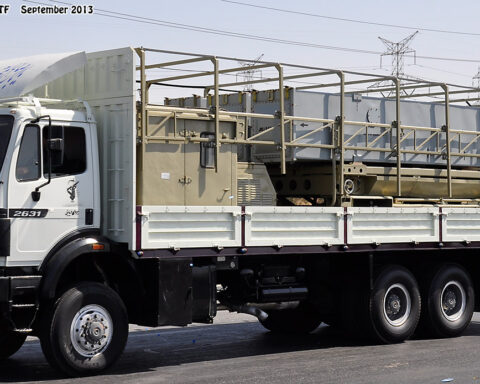
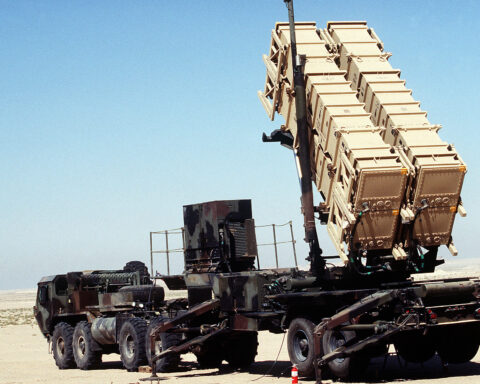
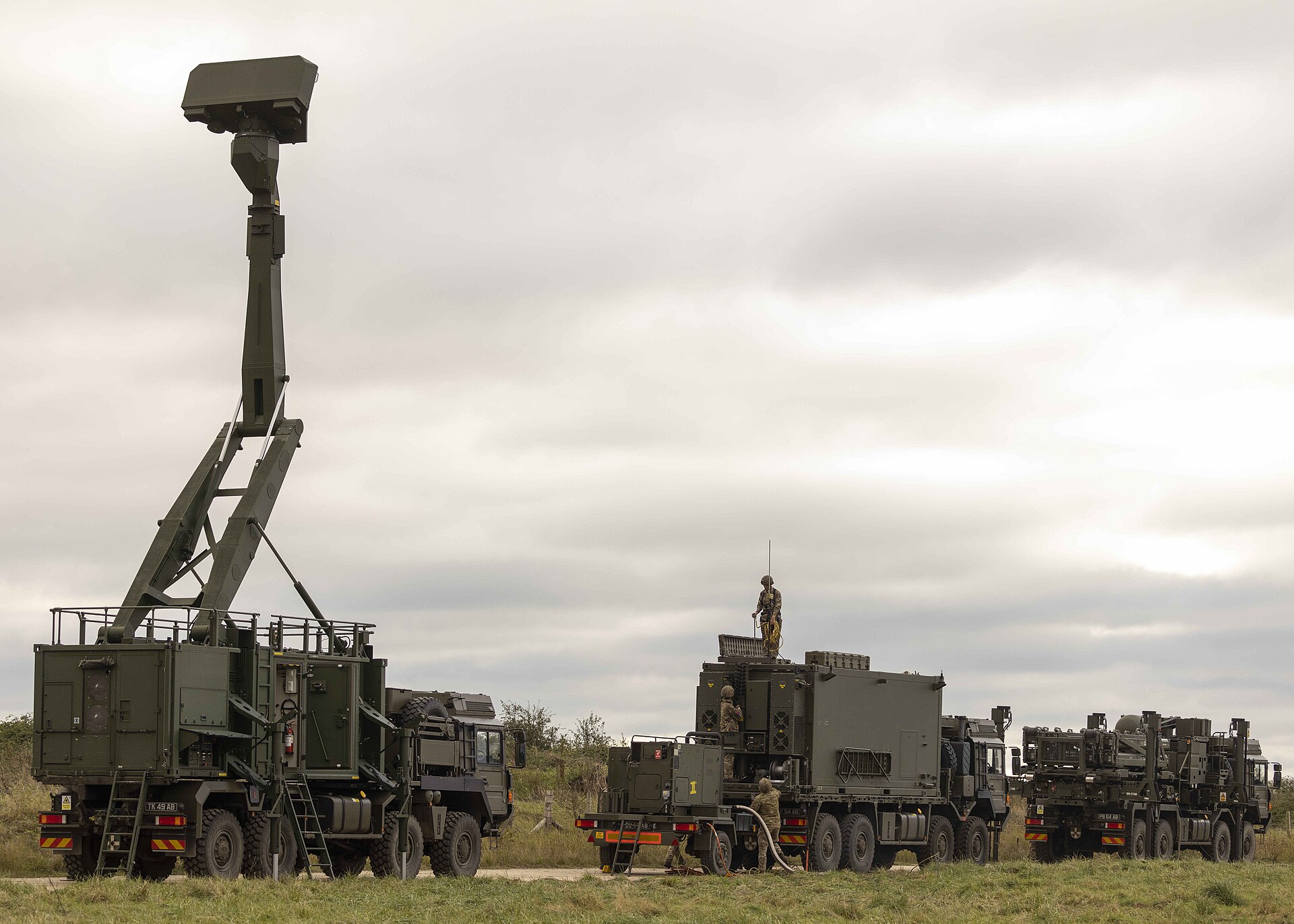
JEDDAH — Britain has deployed its most advanced ground-based air defence system to Saudi Arabia, and it cannot intercept a single one of the ballistic missiles that have struck Saudi energy infrastructure, military bases, and industrial complexes over the past 38 days. Sky Sabre, the Common Anti-Air Modular Missile system that Keir Starmer visited in person on April 8 during his Jeddah summit with Mohammed bin Salman, operates at a ceiling of eight kilometres — roughly one-fifth the altitude at which Iranian ballistic missiles descend during their terminal phase at speeds that overwhelm anything in the CAMM engagement envelope.
The deployment is real, the intent is genuine, and the system is effective against drones and cruise missiles — the categories that account for 799 of the 894 aerial threats Saudi Arabia and its Gulf allies have intercepted since March 3. But 95 of those threats were ballistic missiles, the weapon class that penetrated Saudi defences to ignite a SABIC petrochemical fire in Jubail, destroy SATCOM terminals at NSA Bahrain, and force the temporary closure of the King Fahd Causeway. Those 95 missiles flew in the one altitude band that Sky Sabre was never designed to reach, and the system that was designed to reach it — Patriot PAC-3 MSE — has seen its Saudi stockpile fall from approximately 2,800 rounds to 400, an 86 per cent drawdown with no resupply timeline shorter than years.
Table of Contents
- The Eight-Kilometre Ceiling and the Forty-Kilometre Problem
- What Can Sky Sabre Actually Intercept in the Gulf?
- The PAC-3 MSE Stockpile Crisis Saudi Arabia Cannot Outrun
- Can Boeing Triple Seeker Production Before Saudi Arabia Runs Out?
- Poland Said No, and NATO’s Eastern Flank Said Why
- Why Does Iran’s Cost-Exchange Ratio Favour the Attacker 110 to 1?
- Britain’s Own Ballistic Missile Defence Gap
- The Jeddah Optics and the Hundred-Year Treaty
- Iran’s Calibration — What the Deployment Signals to Tehran
- Frequently Asked Questions
The Eight-Kilometre Ceiling and the Forty-Kilometre Problem
Sky Sabre fires the CAMM interceptor to a maximum altitude of eight kilometres and a range of 25 kilometres, with 24 simultaneous missile guidance channels capable of engaging eight targets at once — against aircraft, helicopters, unmanned aerial vehicles, and cruise missiles travelling at up to roughly three times the speed of sound. Those are the specifications from Army Recognition’s technical database, and within that envelope the system is formidable, a genuine generational leap over the Rapier it replaced in UK service when initial operating capability was declared on October 8, 2021. The problem is that the envelope stops where Iran’s most consequential weapon starts.
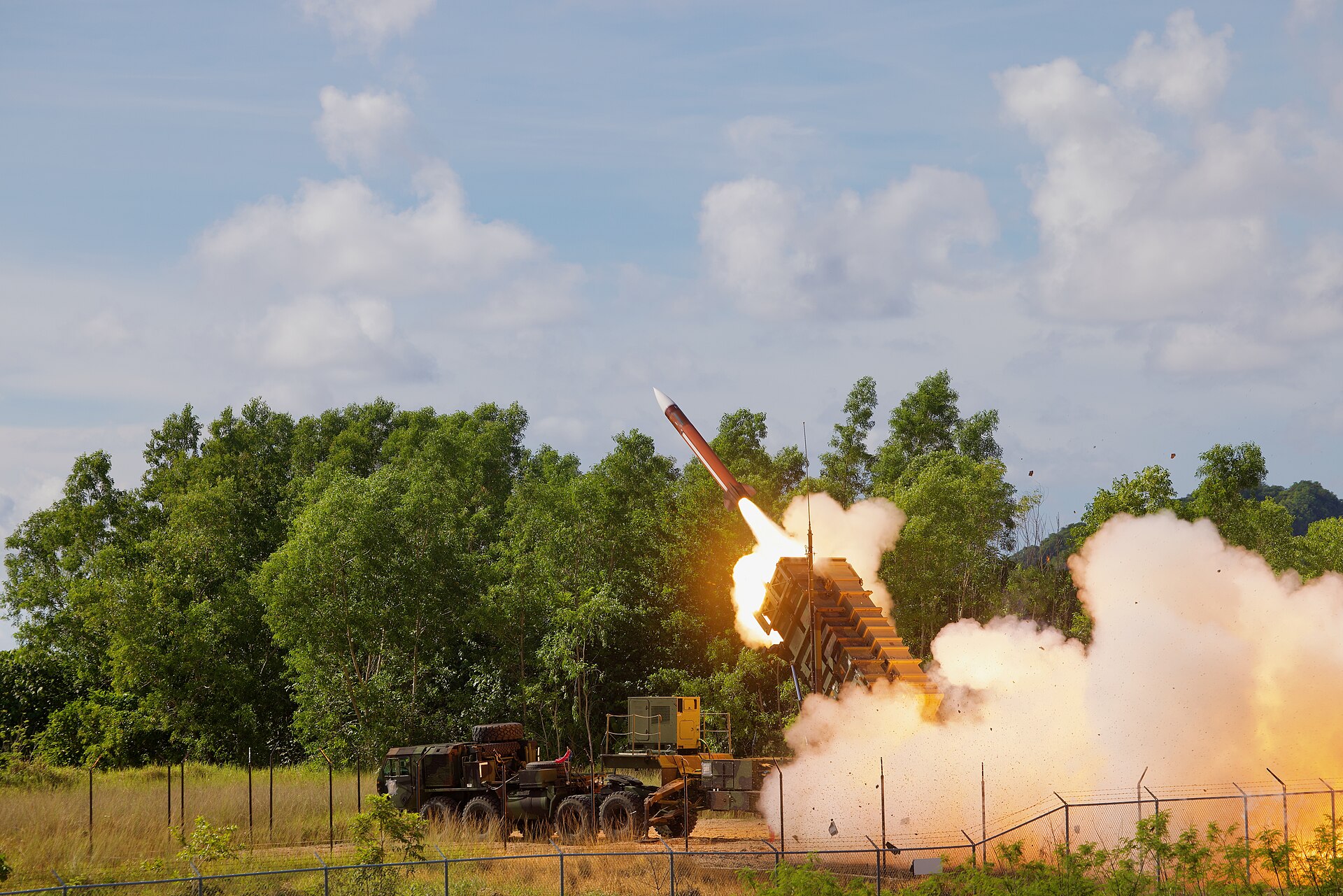
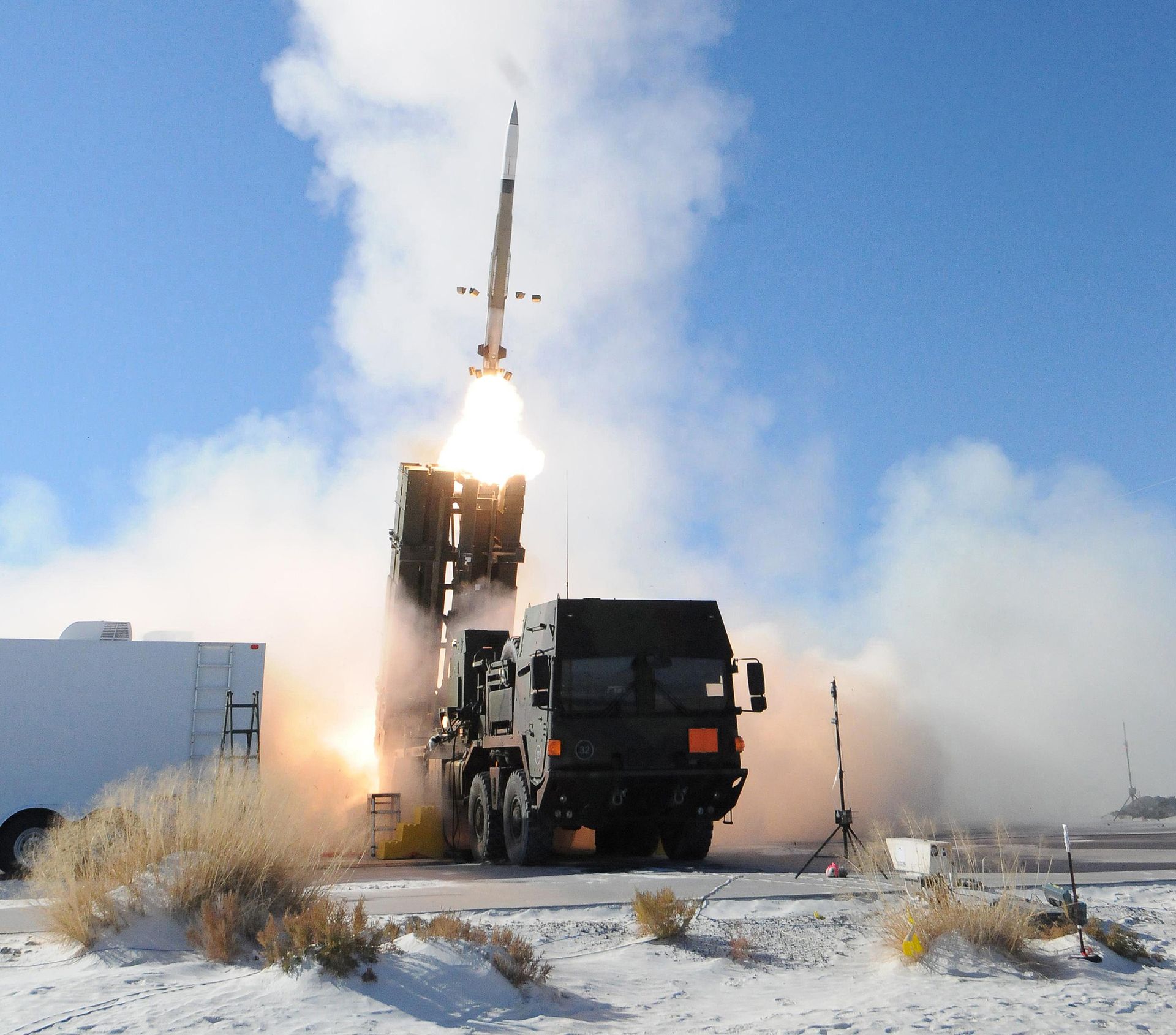
PAC-3 MSE, by contrast, reaches approximately 40 kilometres in altitude and 120 kilometres in range, using a hit-to-kill kinetic warhead guided by an active Ka-band radar seeker and propelled by a dual-pulse rocket motor — a fundamentally different interception geometry designed for the terminal phase of ballistic missile flight. The gap between eight and 40 kilometres is not a marginal shortfall that software upgrades or creative tactics might bridge; it is a categorical boundary between two classes of air defence that exist for two different threat sets. When UK Parliament debated the matter in Westminster Hall in November 2024, the assessment was unambiguous: “Sky Sabre cannot defend against ballistic or hypersonic missile threats — it was not designed to do so.”
That parliamentary candour has not translated into public messaging around the March 31 Gulf deployment announcement. Defence Secretary John Healey framed the package — Sky Sabre to Saudi Arabia, Lightweight Multirole Launcher to Bahrain, Rapid Sentry and ORCUS counter-drone systems to Kuwait, a Typhoon extension to Qatar, roughly 1,000 UK troops across the Gulf theatre — as Britain defending allied skies. “My message to Gulf partners is: Britain’s best will help you defend your skies,” Healey told LBC. The statement is accurate on its own terms: Sky Sabre is Britain’s best ground-based air defence. It is also Britain’s only ground-based air defence, and it occupies an altitude band that leaves the ballistic missile threat entirely unaddressed.
What Can Sky Sabre Actually Intercept in the Gulf?
Sky Sabre can engage drones, cruise missiles, helicopters, and low-flying aircraft within a 25-kilometre range and eight-kilometre ceiling, handling up to eight simultaneous intercepts across 24 guidance channels at speeds up to approximately Mach 3. In the context of the Iran-Saudi war, that means it is relevant to the 799 drone threats recorded between March 3 and April 7, and to any cruise missile Iran launches below its engagement ceiling — a substantial and genuine contribution to the layered defence architecture.
The Middle East briefing 3,000+ readers start their day with.
One email. Every weekday morning. Free.
What it cannot do is substitute for the PAC-3 MSE batteries that have been burning through interceptors at a rate that has consumed 86 per cent of the pre-war stockpile in 38 days. The 95 ballistic missiles in the Saudi intercept count are the threats that have caused the most concentrated infrastructure damage: the Jubail SABIC fire on April 7, where 11 ballistic missiles were intercepted but debris from the engagement itself ignited a petrochemical blaze; the strikes on Ras Tanura; the seven missiles fired at Eastern Province installations that forced the King Fahd Causeway closure. Sky Sabre’s presence on Saudi soil frees PAC-3 batteries from having to engage the lower-altitude threats they were wasting rounds on — a genuine tactical benefit — but it does not generate a single additional ballistic missile intercept.
The distinction matters because public framing of the deployment has blurred it. Sky Sabre arriving in theatre is not Sky Sabre filling the gap that keeps Saudi defence planners awake. The gap is vertical, measured in tens of kilometres of altitude, and no quantity of CAMM rounds closes it.
The PAC-3 MSE Stockpile Crisis Saudi Arabia Cannot Outrun
Saudi Arabia entered the war on March 3 with approximately 2,800 PAC-3 MSE rounds distributed across its 108 M902 Patriot long-range launchers, according to CSIS Missile Defense Project data cross-referenced with Bloomberg procurement analysis. Thirty-eight days later, roughly 400 rounds remain — enough, at the consumption rate observed during the heaviest Iranian salvos, to sustain perhaps two to three weeks of continued high-intensity defence before Saudi Arabia’s ballistic missile shield effectively ceases to function. The implied expenditure is staggering: at $3.9 million per round, the drawdown represents approximately $9.36 billion in interceptors consumed in just over five weeks.
The DSCA notified a sale of 730 PAC-3 MSE rounds to Saudi Arabia on January 30, 2026 — a $9 billion package that predated the war by 32 days and has no confirmed delivery date because the rounds must be newly manufactured at the sole production facility in Camden, Arkansas. That facility produces approximately 620 rounds per year for all 17 partner nations combined, a queue that includes the United States itself, Germany, Japan, the Netherlands, South Korea, Taiwan, Qatar, the UAE, Kuwait, and Bahrain. Saudi Arabia’s 730-round order represents more than 14 months of total global Camden output — meaning that even if Riyadh were moved to the front of the line and every other customer agreed to wait, full delivery would take well over a year from the date production begins.
The arithmetic is merciless. At 400 remaining rounds and a wartime consumption rate that has averaged roughly 63 rounds per day across the conflict (2,400 consumed over 38 days), Saudi Arabia faces a window measured in single-digit days of high-intensity defence before the stockpile reaches critically low levels — levels at which commanders must begin triaging which cities, which refineries, which military installations receive ballistic missile protection and which do not. That triage calculus is already visible: as the Jubail SABIC fire demonstrated, Ras Tanura and Jubail sit 65 to 73 kilometres apart, and a single PAC-3 battery cannot cover both simultaneously.
| Parameter | Sky Sabre (CAMM) | PAC-3 MSE |
|---|---|---|
| Maximum altitude | ~8 km | ~40 km |
| Maximum range | 25 km | ~120 km |
| Simultaneous engagements | 8 | 9 per battery (varies by config) |
| Guidance channels | 24 | Phased array fire control |
| Target set | Aircraft, helicopters, UAVs, cruise missiles | Ballistic missiles, cruise missiles, aircraft |
| Ballistic missile capable | No | Yes (hit-to-kill, Ka-band seeker) |
| Max target speed | ~Mach 3 | Mach 5+ |
| Cost per round | ~$1M (est.) | $3.9–$4.2M |
| Gulf deployment date | March 31, 2026 | Pre-war (Saudi inventory) |
Can Boeing Triple Seeker Production Before Saudi Arabia Runs Out?
On April 8 — the same day Starmer sat with MBS in Jeddah — Boeing signed a seven-year Delegation of Work framework with the US Department of Defense to triple PAC-3 seeker production from approximately 620 units per year toward 2,000 units annually. The company has invested $200 million since 2024 in its Huntsville, Alabama facility, including a new 35,000-square-foot production line, and reports that 2025 seeker deliveries are up 30 per cent year-on-year. Full capacity is targeted for approximately 2033.
The language from both sides of the agreement reflects the urgency and the constraint simultaneously. Michael Duffey, the Under Secretary of War for Acquisition and Sustainment, called it an effort “to build a true Arsenal of Freedom” where “speed, volume, and a resilient supply chain are paramount.” Bob Ciesla, Boeing’s Vice President for Precision Engagement Systems, said the agreement “paves the way for us to scale rapidly to deliver advanced seekers.” Neither offered a date by which Saudi Arabia’s 730-round order might ship, because the industrial reality does not permit one — the ramp is a seven-year programme, and Saudi Arabia’s stockpile crisis is measured in weeks.
The Poland precedent is instructive for understanding procurement timelines. Warsaw signed a $4.75 billion contract for Patriot PAC-3 in March 2018 and reached full operational capability in December 2025 — a seven-year arc from contract signature to fielded, functioning battery. Even assuming Saudi Arabia’s existing infrastructure eliminates the integration phase, the production queue at Camden for 730 new-build rounds against a baseline output of 620 per year for 17 nations means the earliest plausible completion of the Saudi order extends well into 2028 at current capacity, with meaningful volume arriving only as Boeing’s Huntsville ramp begins to accelerate in 2027 or later.
Poland Said No, and NATO’s Eastern Flank Said Why
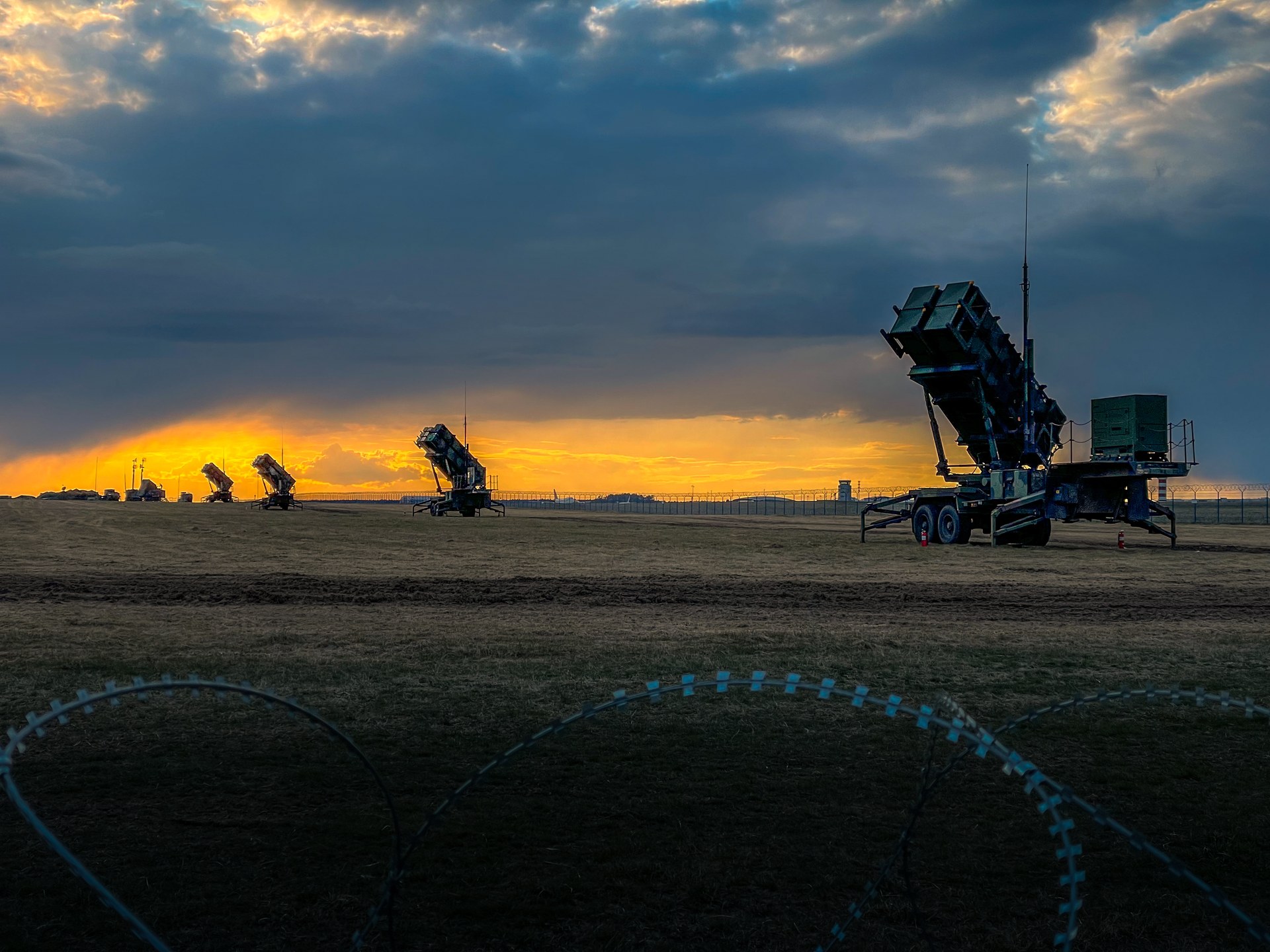
On March 31, 2026, Polish Defence Minister Wladyslaw Kosiniak-Kamysz closed off what might have been the fastest available path to replenishing Saudi Arabia’s PAC-3 inventory: transferring one of Poland’s two Patriot batteries, with its estimated 200 rounds, directly to the Gulf. “Our Patriot batteries and their armament serve to secure Polish skies and NATO’s eastern flank,” Kosiniak-Kamysz stated. “Nothing is changing in this field, and we do not plan to move them anywhere.” The refusal removed the nearest available NATO resupply pool from consideration and underscored a structural tension that the Gulf war has exposed — the global PAC-3 inventory is not a shared reserve that can be redirected to wherever the shooting is hottest, but a collection of nationally owned, politically immovable assets that each owner state considers existential to its own defence.
Poland’s calculation is straightforward: it spent seven years and $4.75 billion acquiring Patriot capability against the specific threat of Russian ballistic missiles, and no amount of diplomatic pressure from Washington or Riyadh will persuade Warsaw to strip its eastern-flank deterrent while a ground war continues in Ukraine. The same logic applies, with local variations, to every other PAC-3 operating nation. Germany needs its batteries for Baltic air defence. Japan faces a persistent North Korean missile threat. South Korea and Taiwan confront their own ballistic missile adversaries. The 17-nation customer base for Camden is not a coalition of the willing waiting to pool interceptors — it is 17 separate threat environments, each consuming rounds from the same single production line, each unwilling to accept risk to its own national defence for the sake of another’s war.
Why Does Iran’s Cost-Exchange Ratio Favour the Attacker 110 to 1?
A single Shahed-136 drone costs Iran approximately $35,000 to manufacture, while the PAC-3 MSE round required to destroy it costs Saudi Arabia between $3.9 million and $4.2 million — a cost-exchange ratio of roughly 110 to 1 in favour of the attacker, as documented by CSIS analysis. This ratio is the structural engine driving the stockpile crisis: Iran does not need to penetrate Saudi air defences with every launch to win the ammunition war; it merely needs to force Saudi Arabia to keep shooting, and the economics do the rest.
The 799 drone intercepts recorded since March 3 represent, at even a conservative blended cost per engagement, billions of dollars in defensive expenditure against an offensive outlay that Iran can sustain from a military budget of $12.4 billion funded largely by oil revenue — revenue that, despite the war, has continued to flow through Kharg Island at approximately $139 million per day. Sky Sabre’s arrival helps on this axis specifically because CAMM rounds are substantially cheaper than PAC-3 MSE, meaning every drone or cruise missile that Sky Sabre intercepts is one fewer $4 million round expended from the dwindling Patriot stockpile. That is the deployment’s genuine tactical value, and it is real — but it remains a cost-mitigation measure for the lower tier of the threat, not a solution to the upper tier that is dismantling Saudi industrial infrastructure.
The IRGC has articulated this asymmetry as deliberate strategy. Iran’s force structure — a mix of cheap expendable drones, medium-cost cruise missiles, and expensive ballistic missiles — is designed to saturate multi-layered defences by forcing the defender to engage across all altitude bands simultaneously, draining interceptor stocks at every tier. The IRGC’s pre-commitment to escalated retaliation against Gulf energy infrastructure compounds the problem: even if a ceasefire nominally holds, the command-and-control fragmentation within Iran’s military structure means localised IRGC units may continue launching independently, each salvo burning through rounds that cannot be replaced for years.
Britain’s Own Ballistic Missile Defence Gap
The United Kingdom has never possessed ground-based ballistic missile defence capability — not during the Cold War, not during the Gulf Wars, not now. Sky Sabre’s predecessor, Rapier, shared the same fundamental limitation: effective against aircraft and low-altitude threats, incapable of engaging ballistic missiles. The only UK platform with any BMD capability is Sea Viper, the Aster 30 missile system aboard Type 45 destroyers, which provides naval point defence against ballistic threats but cannot be deployed on land to protect fixed infrastructure. A ground-based Aster 30 Block 1 variant has been discussed in UK defence planning circles, but initial operating capability is not projected before 2028, with full capability extending to 2032, according to both UK Hansard records and specialist defence analysis.
This means that when John Healey says “Britain’s best will help you defend your skies,” the statement carries an unspoken qualifier: Britain’s best ground-based system cannot defend against the specific threat class that has caused the most damage to Saudi Arabia during this war. Air Commodore Blythe Crawford, the retired former Commandant of the UK Air and Space Warfare Centre, assessed war-gaming results of a mass missile strike against UK CAMM-centred defences as “not a pretty picture” — a judgement that applies with equal force to the Saudi deployment. The UK sent what it had available and what was politically deployable; the gap between that offering and Saudi Arabia’s existential need is not a failure of British will but a reflection of a capability the UK has simply never built.
Sky Sabre cannot defend against ballistic or hypersonic missile threats — it was not designed to do so.
UK Parliament, Westminster Hall debate, November 27, 2024
Sky Sabre’s two previous deployments — to the Falklands in 2021 and to Poland under Operation Stifftail from 2022 to 2024 — were both configured for aircraft, drone, and cruise missile defence, because that is the mission profile the system was built to execute. The Gulf deployment is its third, and the mismatch between the threat environment and the system’s design parameters is the widest yet.
The Jeddah Optics and the Hundred-Year Treaty
Starmer’s April 8 visit to Jeddah carried a layered diplomatic agenda that extended well beyond the Sky Sabre battery he inspected that morning. The UK and Saudi Arabia are preparing to mark 100 years of diplomatic relations under the Treaty of Jeddah, and Starmer committed during the summit to “convene partners to agree and plan practical steps” to restore shipping confidence through the Strait of Hormuz — a commitment that, if fulfilled, would matter far more to Saudi fiscal survival than any number of CAMM interceptors. With only 15 to 20 ships transiting Hormuz per day compared to the pre-war average of 138, Saudi Arabia’s export revenue crisis dwarfs the air defence question in pure economic terms, even as the two problems compound each other.
The visit also underscored the diplomatic tightrope the UK is walking. Iran struck the runway at RAF Akrotiri in Cyprus with a Shahed drone on March 1, 2026 — one hour after Starmer’s initial deployment announcement — causing minimal damage but establishing that Tehran views UK military support to the Gulf as a legitimate casus belli for targeting British assets. Three hundred British personnel were reported within 200 metres of an Iranian missile and drone strike on NSA Bahrain, and Iran has formally named UK facilities in Bahrain and Qatar as potential targets. Sky Sabre’s purely defensive nature may give Iran a diplomatic basis to avoid formally designating the UK as a co-belligerent — a distinction Tehran has exploited by filing formal UN complaints against Saudi Arabia and the UAE for hosting US offensive operations while treating the UK deployment as a separate, less provocative category.
For MBS, the summit delivered a visible allied commitment at a moment when Saudi Arabia’s 400 remaining PAC-3 rounds and the approaching Hajj pilgrimage season have created overlapping and compounding crises — one measured in interceptor inventory, the other in the political cost of a missile strike on a pilgrim convoy. A Sky Sabre battery addresses neither directly, and both compound daily.
Iran’s Calibration — What the Deployment Signals to Tehran
Iran’s UN Ambassador Amir Saeid Iravani has warned Saudi Arabia and the UAE of “international responsibility of States arising from placing their territory at the disposal of others for the commission of acts of aggression” — a formulation that frames Gulf hosting of foreign military assets as a legal liability rather than a defensive right. Sky Sabre’s deployment fits awkwardly into this framework because it is unambiguously defensive: a system that can only shoot down incoming threats, not project force outward, deployed to protect Saudi population centres and infrastructure from Iranian attack. Tehran’s information warfare apparatus, which the IRGC has sustained at industrial scale throughout the conflict, faces a harder task characterising CAMM launchers as aggressive than it does F-15E strike fighters or B-2 bombers.
The more consequential signal, from Iran’s operational perspective, is what Sky Sabre reveals about what the UK did not send. Britain has no ground-based BMD to offer, meaning the deployment confirms rather than challenges the IRGC’s operating assumption that ballistic missiles remain the most effective tool for penetrating Gulf defences. Every CAMM launcher that arrives in Saudi Arabia is one more system Iran’s drone fleet must saturate — a tactical nuisance that increases the cost of low-altitude operations — but not one additional obstacle in the ballistic missile corridor that has produced every major infrastructure strike of the war. For IRGC planners, the UK deployment changes the cost of the drone war without changing the calculus of the missile war, and the missile war is the one that breaks Saudi Arabia’s industrial and fiscal capacity to continue.
| Metric | Figure | Source |
|---|---|---|
| Pre-war PAC-3 MSE stockpile | ~2,800 rounds | CSIS Missile Defense Project |
| Current stockpile (April 9, 2026) | ~400 rounds | Bloomberg; HOS Post 26007 |
| Drawdown rate (38 days) | 86% | CSIS; HOS calculation |
| Implied cost of consumed rounds | ~$9.36B (at $3.9M/round) | CSIS cost data |
| DSCA-notified new order | 730 rounds / $9B | DSCA, January 30, 2026 |
| Camden annual production (all nations) | ~620 rounds/year | Army Recognition; Breaking Defense |
| Saudi order as share of annual output | ~118% (14+ months) | HOS calculation |
| Boeing ramp target | ~2,000 seekers/year by ~2033 | Boeing; Breaking Defense April 2026 |
| Boeing Huntsville investment | $200M since 2024 | Boeing.mediaroom.com |
| Poland Patriot transfer | Refused, March 31, 2026 | Defense News; EUObserver |
| Saudi Patriot launchers in inventory | 108 M902 long-range | IISS Military Balance 2025 |
To build a true Arsenal of Freedom, we must strengthen every link in the chain. This agreement with Boeing is a direct reflection that speed, volume, and a resilient supply chain are paramount.
Michael Duffey, Under Secretary of War for Acquisition and Sustainment, Breaking Defense, April 1, 2026
The seven-year timeline embedded in Boeing’s framework agreement is itself an admission that the industrial base cannot respond at the speed the battlefield demands. Wes Rumbaugh of the CSIS Missile Defense Project has documented a “projected gap between July 2023 and April 2027 of deliveries for THAAD,” the next tier up from Patriot in the US missile defence architecture — meaning the interceptor production crisis extends beyond PAC-3 into the broader family of systems that Gulf states depend on. Saudi Arabia is not merely short of one type of round; it is caught in a systemic production bottleneck that affects every nation relying on American-manufactured missile defence, at a moment when one of those nations is burning through its inventory at a rate the manufacturing base was never designed to sustain.
The gap between Sky Sabre’s eight-kilometre ceiling and PAC-3’s 40-kilometre domain is not a criticism of Britain or of the system itself — it is a description of physical reality that no amount of diplomatic language can obscure. The UK deployed what it could, when it could, at genuine risk to its own personnel: 300 British troops within 200 metres of an Iranian strike at NSA Bahrain is not a symbolic commitment. But describing Sky Sabre as an answer to Saudi Arabia’s air defence crisis requires ignoring the altitude band where the crisis actually lives, and the industrial timeline that ensures it will persist long after the centenary bunting of the Treaty of Jeddah has been taken down.
Frequently Asked Questions
Has Sky Sabre been used in combat before the Saudi Arabia deployment?
Sky Sabre achieved initial operating capability on October 8, 2021, and its first deployment was to the Falkland Islands as a replacement for the legacy Rapier system defending the British Overseas Territory. Its second deployment was Operation Stifftail in Poland, running from March 2022 to December 2024 with approximately 100 UK personnel, positioned as a NATO eastern-flank deterrent during the Russia-Ukraine war — though it did not engage any targets during that period. The Saudi Arabia deployment, announced March 31, 2026, is its third overseas commitment, and the system had not yet completed its planned UK warfighting certification cycle for the Medium Range Air Defence role, which was targeted for July 2026 — meaning the version deployed to the Gulf preceded its own scheduled warfighting IOC by three months.
Could the Royal Navy’s Sea Viper system fill the ballistic missile defence gap instead?
Sea Viper, which fires the Aster 30 missile from Type 45 destroyers, is the only current UK platform with any ballistic missile defence capability, but it is a naval point-defence system designed to protect the ship and its immediate battlegroup, not fixed ground infrastructure spread across hundreds of kilometres of Saudi territory. A single Type 45 positioned in the Gulf could theoretically contribute to BMD coverage of a coastal target, but the geometry of Saudi Arabia’s threat — ballistic missiles arriving from the north and northeast against dispersed inland targets including Riyadh, Jubail, and Ras Tanura — makes naval point defence an inadequate substitute for the distributed ground-based Patriot network that Saudi Arabia actually requires. The UK has discussed a ground-based Aster 30 Block 1 variant, but IOC is not projected before 2028.
How many nations are competing for PAC-3 rounds from the same factory?
The Camden, Arkansas facility supplies PAC-3 interceptors to 17 partner nations: the United States, Saudi Arabia, the UAE, Qatar, Kuwait, Bahrain, Germany, the Netherlands, Japan, South Korea, Taiwan, Poland, Sweden, Romania, Switzerland, Spain, and Greece — though not all have identical variants or active orders at any given time. The critical constraint is that total annual output of approximately 620 rounds must be allocated across all active orders, and the US military’s own replenishment needs take contractual priority. Boeing’s seven-year framework to triple seeker production will eventually expand the pie, but the 2033 full-capacity target means the allocation bottleneck persists through the remainder of this decade at minimum.
What would happen if Saudi Arabia’s PAC-3 stockpile reached zero?
Saudi Arabia’s 108 M902 Patriot launchers would remain physically intact but operationally inert against ballistic missiles — effectively converting the kingdom’s most expensive defensive infrastructure into static displays. The THAAD batteries operated by US forces in the region provide a partial backstop, but Rumbaugh’s CSIS research documents a delivery gap for THAAD interceptors extending through April 2027, suggesting that system faces its own replenishment constraints. In practical terms, a PAC-3 stockpile at or near zero would force Saudi Arabia to rely entirely on the threat of allied offensive retaliation — rather than active defence — as its deterrent against Iranian ballistic missile strikes, a posture that inverts the defensive architecture Riyadh has spent decades and tens of billions of dollars constructing.
Did Iran respond to the Sky Sabre deployment announcement?
Iran struck the runway at RAF Akrotiri in Cyprus with a Shahed drone on March 1, 2026, one hour after Starmer’s initial announcement of enhanced Gulf military deployments — a sequence that UK defence officials interpreted as a deliberate signal. More broadly, Iran’s UN Ambassador Amir Saeid Iravani submitted formal complaints to the United Nations against Saudi Arabia and the UAE for hosting foreign military operations, arguing that the host states bear “international responsibility” for acts of aggression launched from their territory. The legal framing is notable because Sky Sabre’s purely defensive capability may actually work in the UK’s diplomatic favour: Tehran has found it easier to characterise US strike aircraft and bombers operating from Saudi bases as aggressive than to make the same argument about a system that can only shoot down incoming projectiles.