
Saudi Arabia has become one of the fastest-growing business destinations in the world. Vision 2030 has opened entire sectors to foreign investment, mega-projects are drawing contractors and consultants from every continent, and Riyadh is positioning itself as the regional headquarters capital of the Middle East. Whether you are flying in for a single meeting or relocating a team, this Saudi Arabia travel guide companion will walk you through the etiquette, hotels, transport and practical details that make the difference between a productive trip and an awkward one. Saudi business culture rewards preparation, relationship-building and cultural awareness — get those right and doors open remarkably fast.
Best Time to Visit: October to March (cooler weather, full business calendar; avoid Ramadan and Hajj weeks unless specifically invited)
Getting There: Direct flights to Riyadh (RUH), Jeddah (JED) and Dammam (DMM) from most international hubs; Riyadh Metro now connects the airport to the financial district
Visa Required: Yes — business visa or tourist e-visa (e-visa valid for business meetings for 60+ nationalities)
Budget: $200–$500/day (mid-range to luxury hotel, meals, transport)
Must-See: King Abdullah Financial District (KAFD), Diriyah, Al-Balad Historic Jeddah
Avoid: Scheduling critical meetings during prayer times or on Fridays
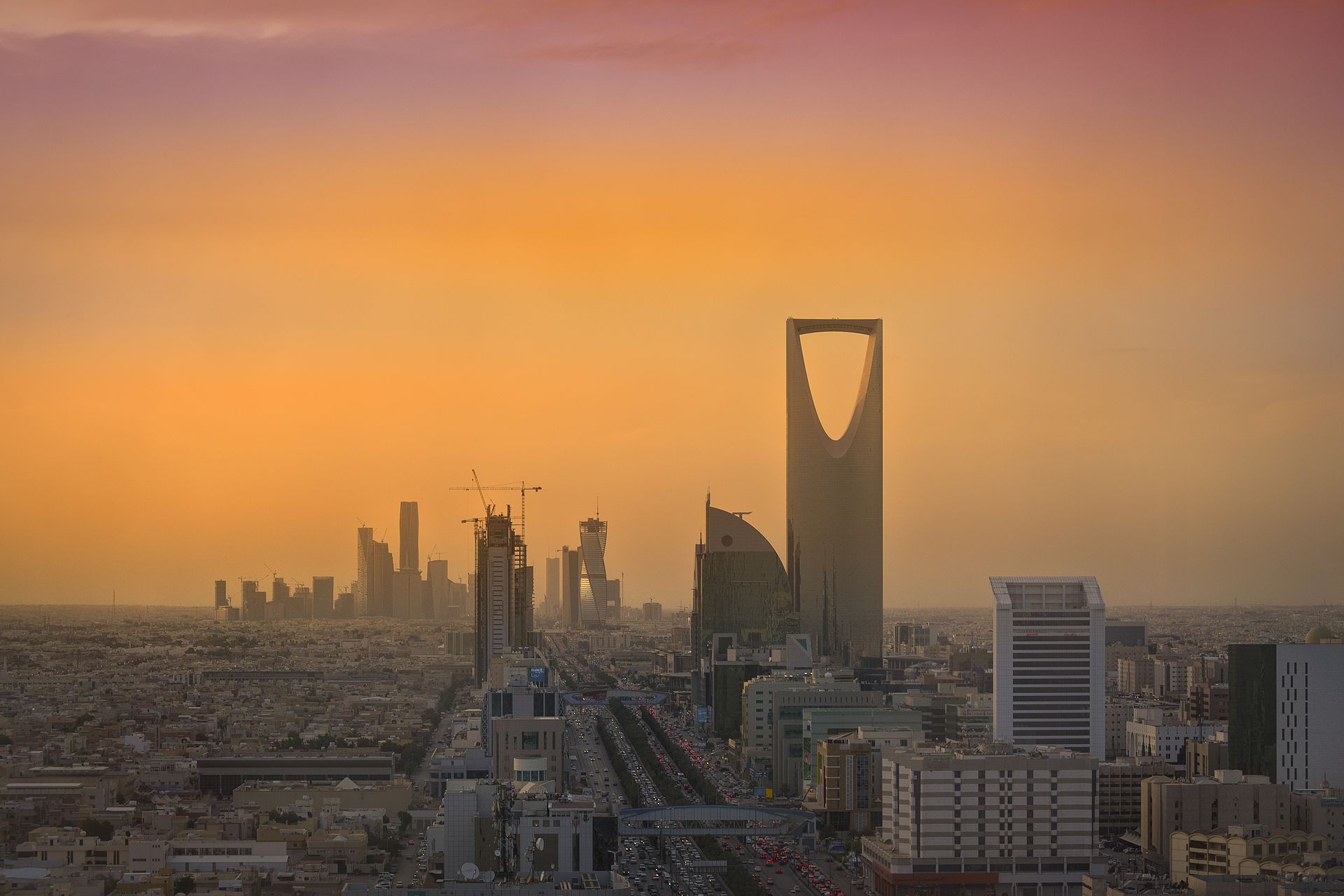
The Saudi Business Landscape in 2026
Saudi Arabia’s economy is in the middle of the most ambitious restructuring any petro-state has attempted. Vision 2030, the national transformation plan launched by Crown Prince Mohammed bin Salman in 2016, has rewritten foreign investment rules, opened tourism, entertainment and sports sectors, and created entirely new cities. For business travellers, this translates into a few practical realities:
- Regional Headquarters Programme (RHQ): Since January 2024, multinational companies must establish a regional headquarters in Saudi Arabia to win government contracts. More than 500 companies have committed to relocating, including 44 Fortune 500 firms. If your company does business with the Saudi government, you will be visiting Riyadh regularly.
- Mega-project pipeline: NEOM, the Red Sea coast resorts, Diriyah Gate, Qiddiya, Jeddah Central and dozens of giga-projects are in active construction. Contractors, consultants, engineers and legal advisers are in constant demand.
- New sectors: Entertainment, tourism, film, gaming, fintech and renewable energy have all opened to foreign participation since 2019. The Public Investment Fund (PIF) is the world’s fifth-largest sovereign wealth fund and an active co-investor.
- Hierarchy: Decision-making authority typically rests with the most senior person, who may not speak much during the meeting itself. Junior team members often handle the technical discussion while the principal observes.
- Indirectness: A direct “no” is rare. Phrases like “inshallah” (God willing), “we will study it” or “let us see” can indicate hesitation or polite disagreement rather than commitment. Read the context, not just the words.
- Interruptions: Meetings may be paused for phone calls, prayer or the arrival of a more senior person. This is normal, not rude. Do not check your watch or show impatience.
- Follow-up: Verbal agreements carry weight, but always confirm in writing. WhatsApp is widely used for business communication and follow-up in Saudi Arabia — more so than email in many sectors.
- Luxury pens, fine leather goods or high-quality desk accessories
- A beautifully bound book on a subject relevant to your counterpart’s interests
- Premium chocolates or confections from your home country
- A quality item representing your city or company heritage
- Monday in Riyadh overlaps with Monday in London, New York and Singapore — but Sunday does not
- Your Saudi colleagues are off on Friday when your European and American colleagues are working
- Thursday afternoon is effectively the start of the Saudi weekend — meetings become harder to arrange
- Tourist e-visa: Available to 60+ nationalities. Valid for business meetings, conferences and site visits. Single or multiple entry, up to 90 days per visit. Apply online in minutes.
- Business visa: Required when the tourist e-visa is not available for your nationality or when your visit involves specific commercial activities. Requires a Saudi sponsor (the company inviting you) and an electronic invitation from MOFA. Processing takes 1–3 weeks.
- GCC citizens: Visa-free entry for nationals of UAE, Bahrain, Kuwait, Oman and Qatar.
- Timing: Dinner is late — typically 9:00 PM or later. During Ramadan, business dinners happen after iftar, often at 10:00 PM or later.
- Seating: The host sits at the head. The most honoured guest sits to the host’s right. Follow your host’s lead.
- Eating: Eat with your right hand. The left hand is considered unclean in Arab culture. If cutlery is provided, hold the fork in the right hand.
- Alcohol: Alcohol is prohibited in Saudi Arabia. Do not ask for it, joke about it or bring it up. Restaurants serve fresh juices, Saudi champagne (a sparkling apple drink), Arabic coffee and international soft drinks.
- Diet: All food in Saudi Arabia is halal. Pork is unavailable. If you have dietary restrictions, communicate them clearly to your host.
- SIM cards: Pre-paid tourist SIMs are available at the airport from STC, Mobily and Zain. The SIM card guide compares plans and pricing. An eSIM is the fastest option if your phone supports it.
- WhatsApp: The primary business communication tool in Saudi Arabia. Expect to exchange WhatsApp contacts, not just business cards. Follow-up messages, meeting confirmations and even document sharing happen via WhatsApp.
- VoIP: Voice and video calls over WhatsApp, Zoom, Microsoft Teams and FaceTime all work in Saudi Arabia. VoIP restrictions that once applied have been largely lifted.
- VPN: Generally not needed for business purposes. Some websites are blocked, but standard business tools all function normally.
- Health: No special vaccinations are required for business travel (Hajj and Umrah travellers have specific requirements). Tap water is safe in hotels but most people drink bottled. The hospitals guide lists the best private facilities.
- Climate: Summer temperatures routinely exceed 45°C (113°F) in Riyadh and the Eastern Province. From June to September, limit outdoor time and stay hydrated. Air conditioning is ubiquitous indoors. Winter (November–February) is pleasant, with daytime temperatures of 15–25°C.
- Photography: Do not photograph government buildings, military installations, people (especially women) without permission, or the interiors of palaces and private residences. The photography rules guide covers the details.
- Customs: Do not bring alcohol, pork products, pornography, religious materials for proselytising, or drones without a permit. The customs guide has the full list.
- Dress modestly in business settings — shoulders, chest and legs covered. An abaya is optional but useful for government meetings.
- Handshakes with male counterparts are increasingly common in corporate settings, but let the other person set the pace.
- Women-only transport options exist (Wsslini app) but are not necessary — standard Uber and Careem are perfectly safe.
- Hotels, restaurants and public spaces are all fully accessible. Gender-segregated sections (family vs singles) are still present in some traditional restaurants but are largely irrelevant in business-facing establishments.
- King Abdullah Financial District (KAFD): The new financial centre, home to the Saudi Central Bank, Capital Market Authority and growing number of RHQ offices. Modern, walkable, well-connected by Metro.
- Riyadh Front Exhibition Centre: Hosts LEAP, FII and other major conferences.
- Diplomatic Quarter (DQ): Embassies, international organisations and some corporate offices. Green, quiet and well-planned.
- King Abdullah Economic City (KAEC): A purpose-built city 100 km north of Jeddah, designed for industrial and commercial use.
- Jeddah Tower district: The area around the (still under construction) Jeddah Tower is developing as a new commercial district.
- Scheduling meetings on Friday: Friday is the holy day. Almost nothing business-related happens.
- Expecting punctuality: Meetings start when the senior person arrives. Build buffer time into your schedule.
- Refusing coffee or food: Hospitality is sacred. Accept at least one cup.
- Pushing for decisions too quickly: Relationships first, contracts second.
- Ignoring prayer times: Plan around them, not through them.
- Booking flights on Thursday evening: Airport traffic and delays are worst on Thursday night and Friday morning as the weekend begins.
- Not downloading ride-hailing apps before arrival: Public transport outside the Riyadh Metro is limited.
- Bringing prohibited items through customs: Alcohol, pork products, vapes (in some cases) and religious proselytising materials are confiscated at the border.
- ☑ Visa confirmed (e-visa or business visa via MOFA)
- ☑ Passport valid for 6+ months with 2 blank pages
- ☑ Hotel booked near your meeting district
- ☑ Uber and Careem apps downloaded and payment linked
- ☑ Business cards printed (Arabic reverse side optional but appreciated)
- ☑ Conservative business attire packed; lightweight abaya for women
- ☑ Prayer times app downloaded
- ☑ WhatsApp active on your phone
- ☑ Key Arabic phrases memorised
- ☑ Travel insurance with medical cover
- ☑ Customs rules reviewed — no prohibited items packed
- Saudi Arabia Travel Guide 2026 — The complete guide to visiting the Kingdom
- Saudi Arabia Etiquette Guide — Cultural customs and social norms explained
- First Time in Saudi Arabia — Everything newcomers need to know
- Riyadh Travel Guide 2026 — Things to do, metro, hotels and day trips
- Jeddah Travel Guide 2026 — Al-Balad, diving, F1 and food
- Saudi Arabia Visa Guide — Every visa type explained
The practical effect is that airports are busier, hotels book up fast during conference seasons, and the pace of business has accelerated dramatically from the pre-2018 era. Plan early.
Business Etiquette: The Rules That Matter
Saudi business culture blends traditional Arabian hospitality with increasingly international practices. The Kingdom is modernising rapidly, but certain customs remain central to how deals get done. Understanding Saudi etiquette is not optional — it is the foundation of every successful business relationship here.
Greetings and First Impressions
The standard greeting is “As-salamu alaykum” (peace be upon you), to which you reply “Wa alaykum as-salam.” A firm handshake with the right hand follows. When greeting a group, address the most senior person first, then move right to left around the room.
With female colleagues, allow them to initiate the handshake. If they do not extend a hand, a verbal greeting with a slight nod is perfectly appropriate. This boundary has relaxed considerably in mixed business environments, but following the other person’s lead avoids any awkwardness.
Tip: Exchange business cards with your right hand or both hands. Having one side printed in Arabic is appreciated but not essential. Titles matter — use them. “Doctor,” “Engineer” (Muhandis) and “Sheikh” are common professional titles.
Arabic Coffee and the Majlis Tradition
Almost every business meeting in Saudi Arabia begins with qahwa — traditional Arabic coffee. The coffee is lightly roasted, spiced with cardamom (and sometimes saffron or cloves), and served from a dallah (a long-spouted pot) into small handleless cups called finjan. You will also be offered dates and possibly tea.
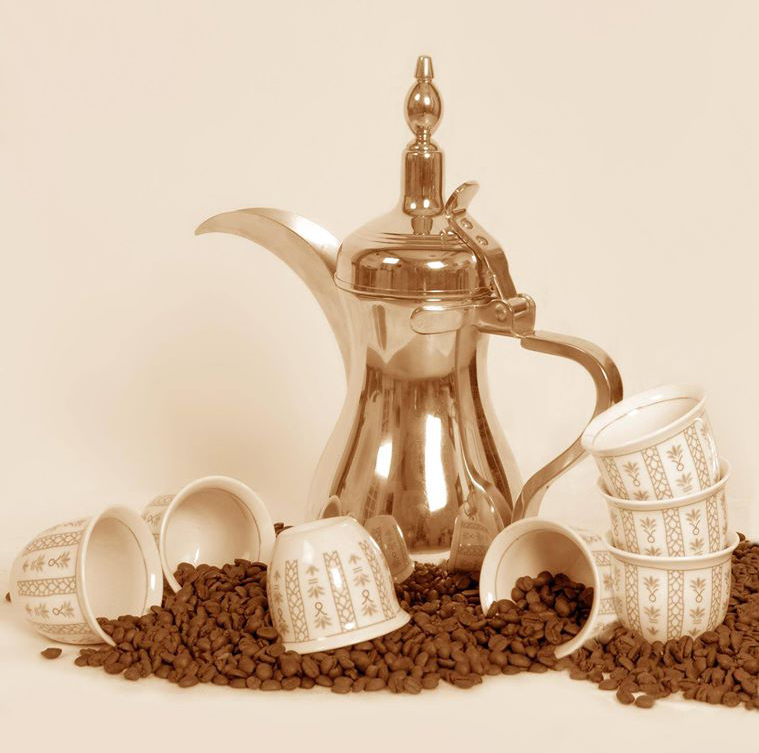
Accept the coffee graciously — declining the first cup is considered impolite. When you have had enough, gently shake the cup from side to side as you hand it back. The coffee ritual is not a formality to rush through; it is the beginning of the relationship-building that Saudis consider essential before any business discussion.
The majlis (literally “sitting place”) is the traditional meeting and reception space dating back to pre-Islamic Arabia. Today, a majlis meeting might take place in a corporate boardroom, a private home or a dedicated reception area. An invitation to a majlis at a Saudi partner’s home is a significant milestone that signals trust beyond the office. Accept it.
Meetings: Pace and Protocol
Saudi meetings rarely start on time by Western standards and almost never end on time. Expect the first 15–30 minutes to be dedicated to small talk — family, health, travel, mutual connections, current events. Rushing to the agenda signals that you do not understand what matters.
Practical note: Prayer times happen five times daily and last approximately 20–30 minutes. Most offices and many restaurants close during prayer. The prayer time apps used locally will help you plan around them. Never schedule a meeting across prayer time without asking your host first.
Relationship-Building Over Transactions
The single biggest mistake Western business travellers make in Saudi Arabia is trying to close a deal in one visit. Saudi business culture prioritises relationships — trust, personal rapport and mutual respect — over transactional efficiency. The first meeting is about getting to know each other. The second may be more substantive. The deal often comes on the third or fourth interaction.
Accept invitations to dinner, social events and informal gatherings. These are not distractions from business — they are the business. Saudis invest in people they trust, and trust is built face-to-face over time.
Gift-Giving
Gifts are not expected at first meetings but are appreciated as relationships develop. Appropriate choices include:
Present gifts with the right hand or both hands. Avoid alcohol, pork-derived leather, anything with religious imagery from another faith, or overly personal items. If you receive a gift, open it later — not in front of the giver.
What to Wear: Business Dress Code
Saudi Arabia’s dress code for men in business settings is straightforward: a dark suit with a tie for formal meetings, business casual (trousers, collared shirt, no tie) for less formal settings. Saudi men typically wear the traditional white thobe and ghutra (headdress), but foreign visitors are expected to wear Western business attire, not local dress.
For women in business, the rules have changed significantly. The abaya is no longer legally required for foreign women as of 2019, but many still wear one in conservative environments as a sign of respect. In Riyadh’s corporate towers and Jeddah’s commercial district, professional business attire that covers shoulders, chest and legs to below the knee is standard. Long-sleeved blouses, tailored trousers or ankle-length skirts work well.
Tip: Pack a lightweight abaya in your bag even if you do not plan to wear one routinely. You may need it for government ministry visits, traditional social gatherings or visits to more conservative areas. The full dress code guide covers every scenario.
The Working Week and Business Hours
Saudi Arabia’s working week runs Sunday to Thursday. Friday and Saturday are the weekend. This means:
| Setting | Typical Hours | Notes |
|---|---|---|
| Government offices | 7:30 AM – 2:30 PM | Single shift, Sunday–Thursday |
| Private sector offices | 9:00 AM – 6:00 PM | Some split shifts: 9 AM–1 PM, 4:30–8 PM |
| Banks | 9:30 AM – 4:30 PM | Sunday–Thursday; some Saturday morning hours |
| Shopping centres | 10:00 AM – 10:00 PM | Close briefly during prayer times |
| During Ramadan (Muslim employees) | 10:00 AM – 3:00 PM | Max 6 hours/day; meetings often shift to late evening |
Ramadan and Business Travel
During Ramadan, Muslims fast from dawn to sunset. Working hours for Muslim employees are reduced by law to a maximum of six hours per day. Many offices shift to a 10:00 AM to 3:00 PM schedule. Evening meetings — after iftar (the meal breaking the fast at sunset) — are common and can run late.
As a non-Muslim visitor, you are not expected to fast, but eating, drinking and smoking in public during daylight hours is prohibited. Most hotel restaurants serve meals behind screens during the day. Business travel during Ramadan is entirely possible, but the pace changes. Check the best time to visit guide for Ramadan dates before booking.
Where to Stay: Business Hotels by City
Saudi Arabia’s hotel infrastructure has expanded dramatically, but business hotels in Riyadh still fill up fast during conference season (October–March) and major events. Book early, especially for properties near KAFD and the Diplomatic Quarter. The full hotels guide covers all categories and cities.
Riyadh
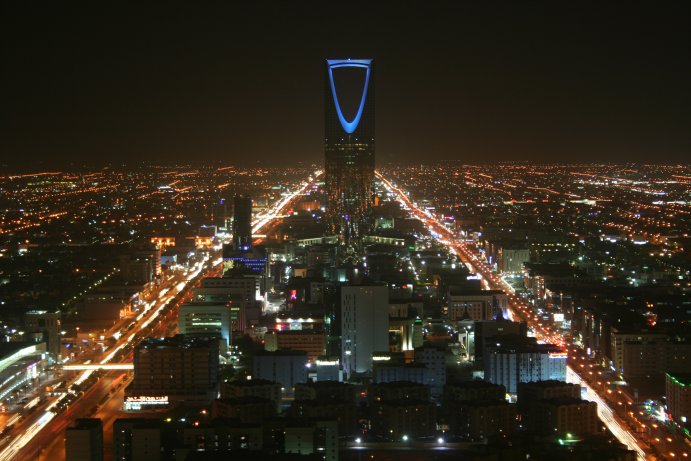
Riyadh is where most government-related and corporate business happens. The key business districts are Olaya (the traditional commercial spine), the Diplomatic Quarter (embassies and international organisations) and KAFD (the new financial district).
| Hotel | Location | Business Traveller Notes | From (SAR/night) |
|---|---|---|---|
| Four Seasons at Kingdom Centre | Olaya | Top floors of Kingdom Tower; full business centre, iconic Sky Bridge access; the default power-meeting hotel | 2,500+ |
| Mandarin Oriental Al Faisaliah | Olaya | Adjacent to Al Faisaliah Tower; world-class spa, event spaces, proximity to embassies and malls | 2,200+ |
| Fairmont Riyadh | King Fahd Road | Renovated 2024; strong conference facilities, business lounge, central location | 1,200+ |
| Novotel Riyadh Al Anoud | Olaya | Solid mid-range option; good meeting rooms, reliable Wi-Fi, close to Metro | 600+ |
| Holiday Inn Riyadh — Olaya | Olaya | Budget-friendly with decent business facilities; walking distance to malls | 400+ |
Jeddah
Jeddah is the commercial gateway to the western region, the Red Sea coast and the holy cities. Business travellers typically stay along the Corniche or in the Tahlia district. See the full Jeddah travel guide for more.
| Hotel | Location | Business Traveller Notes | From (SAR/night) |
|---|---|---|---|
| The Ritz-Carlton Jeddah | Corniche | Former palace; largest convention space in Jeddah; 224 rooms; antique-furnished suites | 2,800+ |
| Park Hyatt Jeddah | Marina | Waterfront location; private beach; executive lounge with marina views | 2,000+ |
| InterContinental Jeddah | Corniche | Conference facilities, central location, airport shuttle | 1,100+ |
| Movenpick Hotel Tahlia | Tahlia | Good mid-range; strong F&B, walking distance to shopping and restaurants | 650+ |
Dammam and Eastern Province
If your business involves oil and gas, petrochemicals or industrial projects, you will likely be heading to the Eastern Province. Dammam, Dhahran and Al Khobar form a metropolitan triangle centred on Saudi Aramco’s headquarters in Dhahran.
| Hotel | Location | Business Traveller Notes | From (SAR/night) |
|---|---|---|---|
| Kempinski Al Othman | Al Khobar | Waterfront; executive floor with lounge; closest luxury to Aramco | 1,500+ |
| Sheraton Dammam Hotel | Dammam Corniche | Reliable business option; conference rooms, seaside setting | 800+ |
| Le Meridien Al Khobar | Al Khobar | Good mid-range with pool and business centre | 550+ |
Booking tip: During Ramadan and Hajj season, Jeddah hotels surge in price and availability drops sharply. Riyadh hotels are most expensive during the Future Investment Initiative (FII, usually October) and LEAP tech conference (usually February). Book at least six weeks in advance for these periods.
Getting There: Airports and Flights
Saudi Arabia’s three main international airports serve business travellers well. Check the dedicated Riyadh airport guide and Jeddah airport guide for terminal maps and detailed arrival procedures.
King Khalid International Airport (RUH) — Riyadh
Riyadh’s airport handles the majority of business traffic. The airport has five terminals, with Terminals 1 and 2 handling most international flights. In 2026, the airport is mid-expansion ahead of the new King Salman International Airport (expected 2030s).
Business lounges: The new Hafawa Lounge by Riyadh Air (between Terminals 1 and 2) spans 2,000 square metres and features circadian lighting, private rooms, and technology-enabled service. The Alfursan Lounge offers sleep rooms and shower facilities. Plaza Premium Lounge in Terminal 1 is available on a pay-per-visit basis. See the airport lounge guide for access options and Priority Pass details.
King Abdulaziz International Airport (JED) — Jeddah
Jeddah’s airport is the gateway to western Saudi Arabia and the holy cities. Terminal 1 opened in 2019 and is a modern facility with strong lounge options.
King Fahd International Airport (DMM) — Dammam
The world’s largest airport by area (though most of that is empty desert), DMM serves the Eastern Province. It handles less international traffic but has direct connections to Dubai, Bahrain, Mumbai and several European cities. The Dammam airport guide has full details.
Visas for Business Travellers
There are two main visa options for business visitors. The full visa guide covers all types in detail:
Your passport must have at least six months’ validity and two blank pages. The entry requirements page has the latest rules.
Getting Around: Transport for Business Travellers
Saudi Arabia’s transport infrastructure has improved enormously since 2020, but it is still a car-centric country. Here is what works for business travellers:
Ride-Hailing Apps
Uber and Careem (now owned by Uber) are the two essential apps. Both operate in all major cities and are reliable, safe and metered. Careem often has better availability for premium vehicles. The Uber and Careem guide explains fare structures and tipping customs.
Other local options include Kaiian (a Saudi-owned platform), Ego (budget-friendly) and Jeeny. For women-only transport, Wsslini operates in Riyadh and other major cities.
Tip: In Riyadh, ride-hailing is more reliable than trying to flag a taxi. In Jeddah, both work. Always have a ride-hailing app installed before you land.
Riyadh Metro
The Riyadh Metro opened in late 2024 and is a game-changer for business travellers. Six colour-coded lines cover 176 kilometres with over 85 stations. The system connects King Khalid Airport directly to the King Abdullah Financial District without switching lines — a journey that used to take 45–90 minutes by car in traffic.
Download the Darb app for journey planning and contactless payment. The Metro runs from approximately 6:00 AM to midnight (reduced hours on Fridays). First-class carriages are available on all lines for a premium fare.
Car Rental
If your business takes you outside city centres or to industrial zones, renting a car may be the most practical option. International licences are accepted for short-term visitors. Be aware that Saudi driving culture can be aggressive by Western standards. The rental car guide and road rules page cover everything you need to know.
Domestic Flights
For inter-city travel, domestic flights are fast and affordable. Saudia, flynas and flyadeal operate frequent services between Riyadh, Jeddah and Dammam (approximately one hour each way). Riyadh Air, Saudi Arabia’s new carrier, launched in 2025.
Haramain High-Speed Railway
The Haramain train connects Jeddah to Mecca and Medina at speeds up to 300 km/h. If your business takes you between these cities, it is faster and more comfortable than driving. Business class offers spacious seating, Wi-Fi and power outlets.
Dining and Business Entertaining
Business dinners are common in Saudi Arabia and serve the same relationship-building function as the coffee ceremony. Key points:
Restaurant tip for Riyadh: The Four Seasons, Mandarin Oriental and Assila all have private dining rooms suitable for business entertaining. For a more memorable experience, book a traditional Saudi restaurant with a private majlis-style room.
Connectivity and Communication
Saudi Arabia has excellent mobile and internet infrastructure. 5G coverage is widespread in Riyadh, Jeddah and Dammam.
Money and Expenses
The Saudi riyal (SAR) is pegged to the US dollar at a fixed rate of approximately 3.75 SAR to 1 USD. This makes budgeting straightforward for dollar-denominated travellers. The currency guide covers exchange rates and the ATM and banking page lists the best options.
| Expense | Budget Range (SAR) | Approx. USD |
|---|---|---|
| Business hotel (mid-range) | 600–1,200/night | $160–$320 |
| Business hotel (luxury) | 2,000–4,000/night | $530–$1,070 |
| Uber/Careem across city | 30–80 | $8–$21 |
| Business lunch | 80–150 | $21–$40 |
| Business dinner (upscale) | 200–500 | $53–$133 |
| Airport to city centre (Uber) | 50–120 | $13–$32 |
Credit cards (Visa and Mastercard) are accepted almost everywhere. Contactless payment via Apple Pay and Google Pay is widespread. VAT is 15% and is included in displayed prices at most business-facing establishments.
Health, Safety and Practical Considerations
Saudi Arabia is one of the safest countries in the Middle East for business travellers. Violent crime rates are extremely low, and petty theft is rare. The safety guide covers all scenarios in detail.
Key Arabic Phrases for Business
You do not need to speak Arabic to do business in Saudi Arabia — English is widely used in corporate settings. However, a few phrases go a long way. The Arabic phrases guide covers more.
| English | Arabic | Transliteration |
|---|---|---|
| Peace be upon you | السلام عليكم | As-salamu alaykum |
| Thank you | شكراً | Shukran |
| God willing | إن شاء الله | Inshallah |
| Congratulations / well done | مبروك | Mabrook |
| If God wills it (to express hope) | بإذن الله | Bi-idhn Allah |
| Please | من فضلك | Min fadlak (to a man) / Min fadlik (to a woman) |
| How are you? | كيف حالك؟ | Kayf halak? (to a man) / Kayf halik? (to a woman) |
Women in Saudi Business
Saudi Arabia’s business environment for women has changed dramatically since 2018. Women now make up approximately 33% of the Saudi workforce (up from 17% in 2017), hold senior positions in government and the private sector, and drive, travel independently and attend mixed-gender business events.
For female business travellers, practical considerations include:
Business Hubs and Conference Venues
Riyadh
Jeddah
NEOM and the Future
NEOM is not yet a business travel destination in the conventional sense, but project offices in Riyadh and Tabuk handle most contractor and consultant meetings. See the NEOM guide for the latest on what is accessible.
Key Business Events and Conferences
| Event | Typical Dates | City | Focus |
|---|---|---|---|
| Future Investment Initiative (FII) | October | Riyadh | Investment, finance, sovereign wealth |
| LEAP | February | Riyadh | Technology, AI, digital transformation |
| Saudi Food Show | November | Riyadh | F&B, hospitality, FMCG |
| ADIPEC | Variable | Regional (Abu Dhabi/Riyadh) | Oil, gas, energy |
| Cityscape Saudi | November | Riyadh | Real estate, construction, urban planning |
| Saudi Maritime Congress | March | Dammam | Shipping, ports, logistics |
Hotels near conference venues book out months in advance for these events. Register early and lock in accommodation as soon as dates are confirmed.