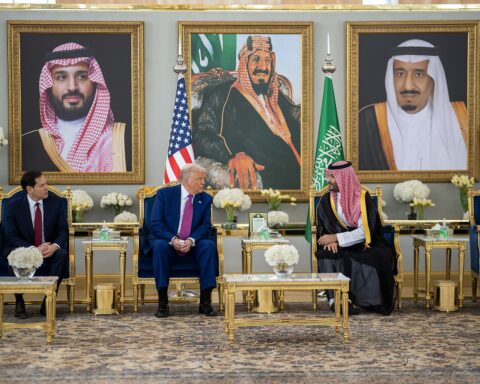

US President Joe Biden’s national security adviser, Jake Sullivan, met with Saudi Arabia’s Crown Prince Mohammed bin Salman on Sunday. The discussion focused on finalizing a comprehensive security agreement between the two nations.
This agreement is a significant part of Washington’s strategy to have Riyadh formally recognize Israel, a move made more complex by the current Gaza conflict.
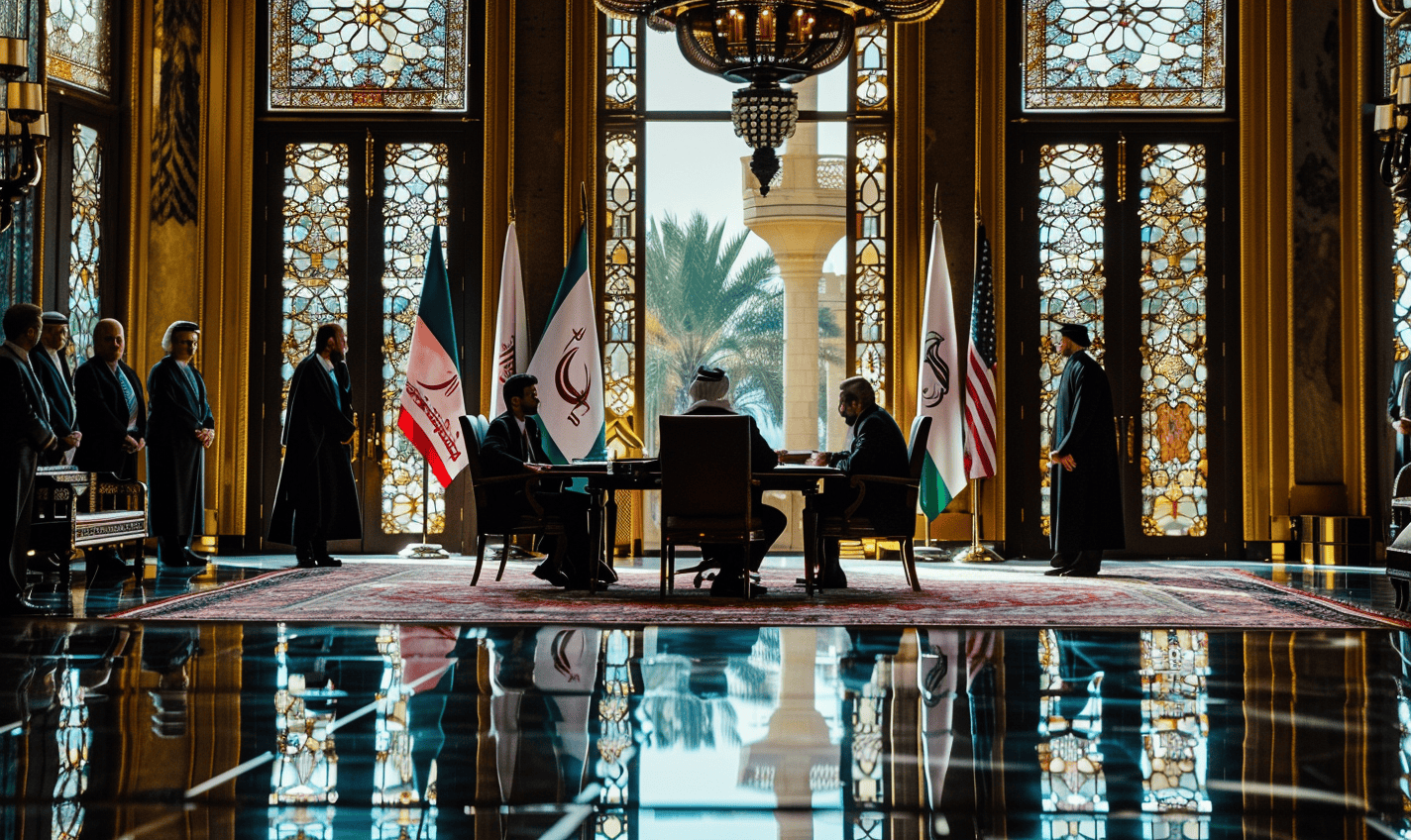
Saudi state media released no images from the meeting held in Dhahran, the host city of the state-run Saudi Aramco oil company.
A statement following the talks mentioned discussions on “the semi-final version of the draft strategic agreements” between the US and Saudi Arabia. It also highlighted efforts to find a credible solution to the Palestinian issue, including a two-state solution that addresses Palestinian aspirations and rights. Additionally, it emphasized the need to end the Gaza conflict and facilitate humanitarian aid.
Previously, the US indicated that the pact would include a normalization aspect with Israel, requiring it to support a future Palestinian state.
Sullivan is set to visit Israel next, where he will meet Prime Minister Benjamin Netanyahu to brief him on the Riyadh talks and discuss Israel’s planned military actions in Rafah, according to a US official.
The Middle East briefing 3,000+ readers start their day with.
One email. Every weekday morning. Free.
Saudi Arabia has historically advocated for a Palestinian state along Israel’s 1967 borders, with East Jerusalem as its capital. This stance conflicts with Netanyahu’s government, which relies on hardline support against a two-state solution and favors Israeli settlements in contested areas.
The Gaza war’s impact on Saudi relations gained urgency when war cabinet minister Benny Gantz issued demands, including Saudi normalization, as a condition for his party’s support in the emergency government. Netanyahu’s office responded by rejecting the idea of a Palestinian state, labeling it a terror state.
The current conflict began on October 7 with a large-scale Hamas attack on Israel, killing 1,200 people and taking 252 hostages. Israel’s response aimed at eliminating Hamas, dismantling its authority in Gaza, and rescuing the hostages.
During US Secretary of State Anthony Blinken’s visit to Riyadh in April, progress was noted towards finalizing the US-Saudi component of the deal.
Saudi Arabia, like other Gulf nations, has depended on the US for security in the volatile Middle East, especially with Iran’s nuclear developments leading to numerous attacks. The proposed pact would likely enhance this security relationship, including access to advanced weaponry and potential trade agreements.
Saudi Arabia seeks nuclear cooperation, wanting the US to permit uranium enrichment on its soil, raising proliferation concerns. Prince Mohammed has expressed that Saudi Arabia would pursue a nuclear arsenal if Iran does. Iran has recently intensified its nuclear threats.
Despite being the world’s largest oil exporter, Saudi Arabia aims for renewable energy and emissions reduction as part of its long-term strategy. Critics argue that Riyadh might be seeking nuclear capabilities for potential weapons development, a concern even with proposed safeguards in the deal with Washington.
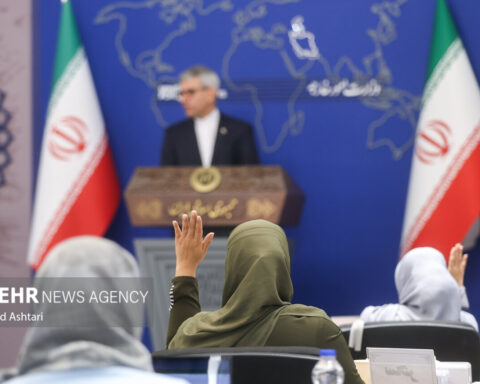
Meanwhile, Iran communicated that it held indirect discussions with US officials in Oman last week, according to Iran’s state-run news agency. These talks are part of a continued process amid ongoing tensions.
Oman has previously hosted US-Iran negotiations, including during Biden’s administration, illustrating the persistent efforts to manage US-Iran relations.