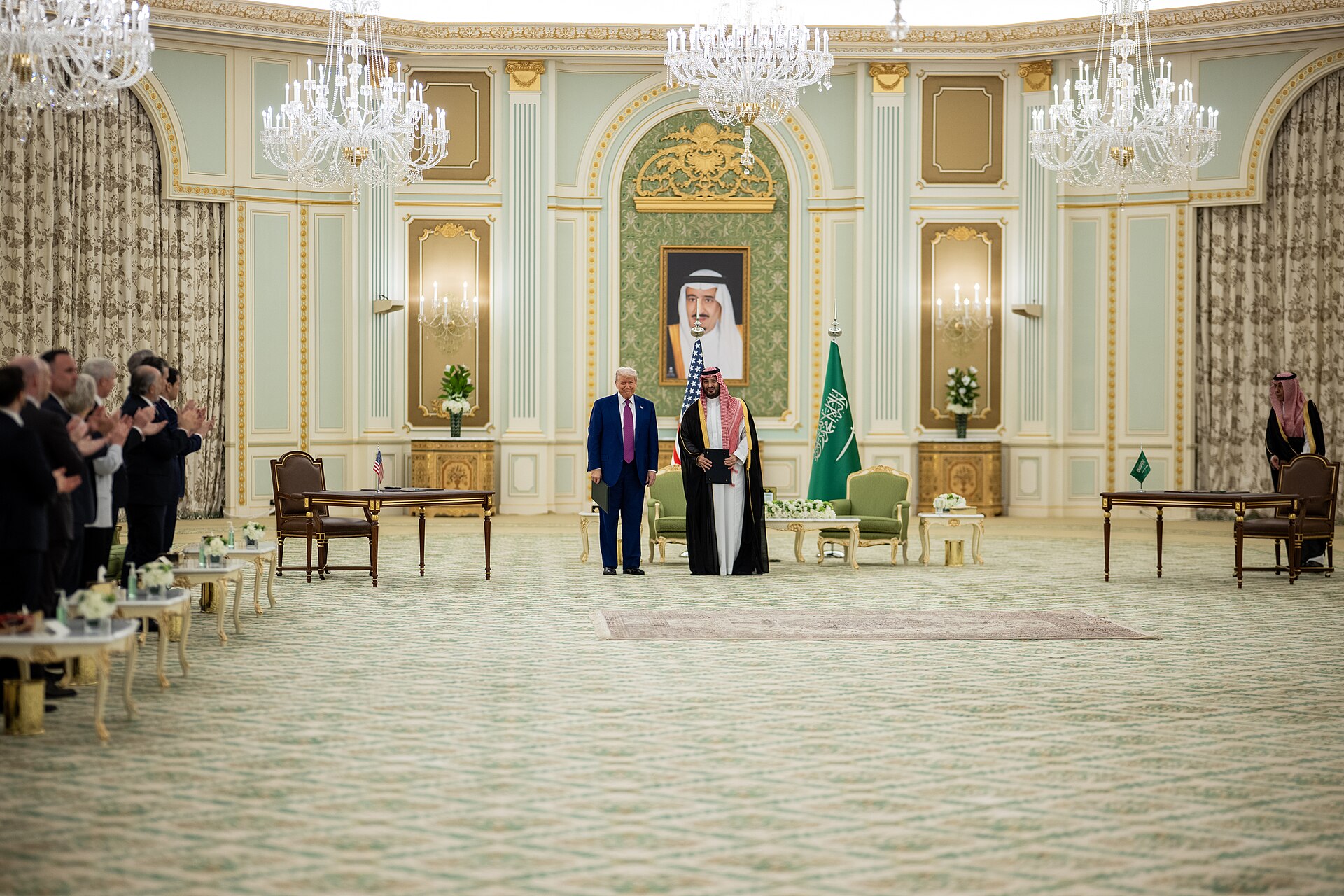
ABU DHABI — On May 18, Sheikh Mohammed bin Zayed called Donald Trump to demand the United States stand down from a planned “very major attack” on Iran — and within the same 48-hour window, six drones launched from Iraqi territory struck at the heart of UAE civilian infrastructure, one of them hitting the electrical systems of Barakah, the only operational nuclear power plant in the Arab world, a facility that generates a quarter of the country’s electricity. The drones came from the same country — Iraq — whose airspace the UAE had prohibited US forces at Al Dhafra Air Base from striking into without consent since February 2024.
MBZ’s base-denial framework, constructed over two years to shield the UAE from proxy retaliation by removing the offensive operations that might provoke it, did not prevent the retaliation. It prevented the response. The consent architecture that blocks American combat aircraft from launching sorties into Iraqi airspace also blocks the counter-battery operations that would destroy the drone teams firing at Barakah, and Iran’s proxy network now operates inside a permissive environment that Abu Dhabi built for an entirely different purpose.
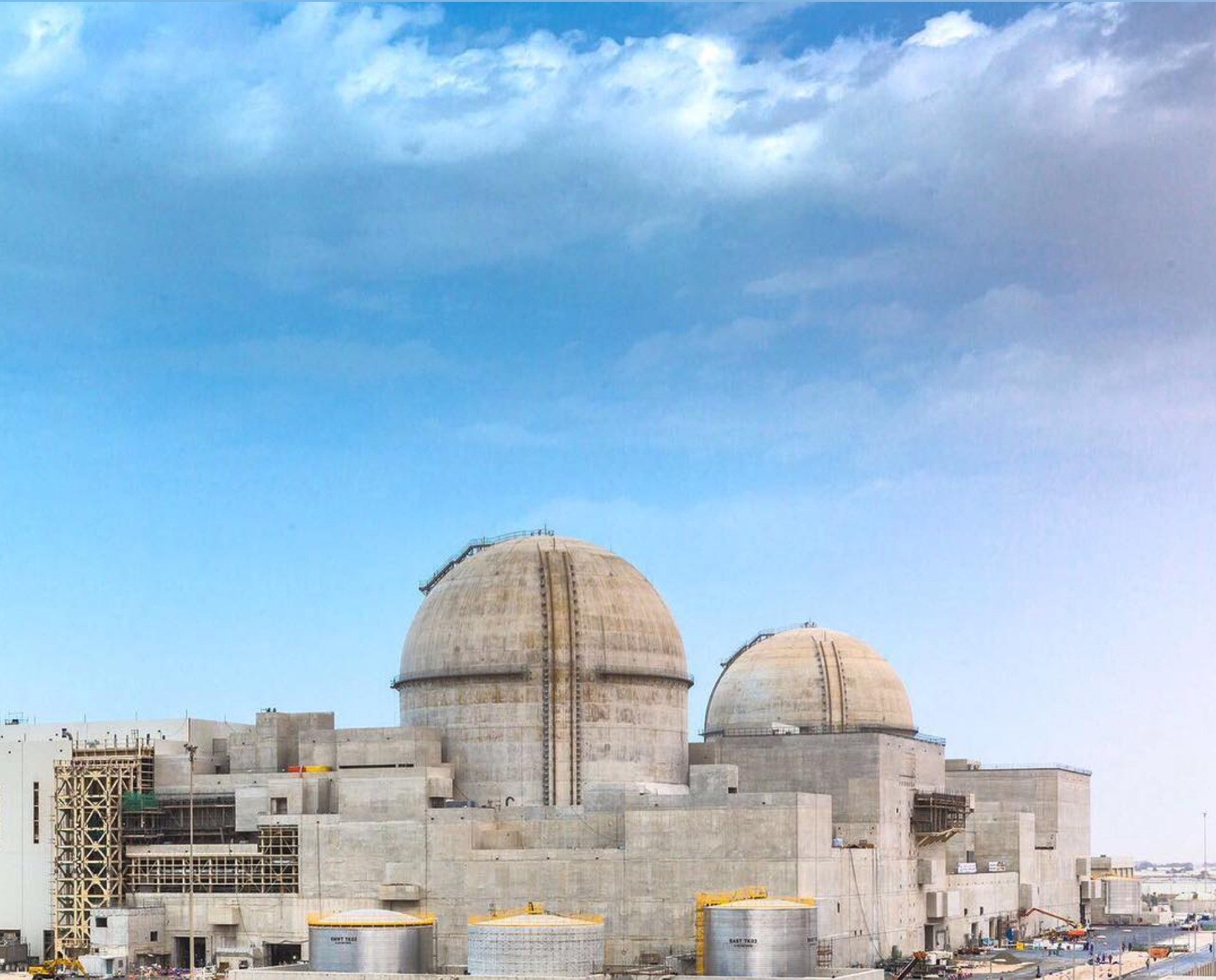
Table of Contents
- Six Drones, 48 Hours, One Nuclear Plant
- How Did the UAE’s Base-Denial Framework Evolve?
- The Consent Trap
- Who Controls Iraq’s Drone Capability?
- Why Can’t US Forces at Al Dhafra Respond?
- The PGSA Launched on the Same Day
- What Does Barakah Mean for Nuclear Safety in Wartime?
- The 72-Hour Window
- Frequently Asked Questions
Six Drones, 48 Hours, One Nuclear Plant
On May 17, three drones crossed into UAE airspace from the west. Air defences intercepted two; the third struck an electrical generator outside the inner perimeter of Barakah Nuclear Energy Plant in the Al Dhafra region, starting a fire that was contained without casualties or radiation release. The strike knocked out external power to Unit 3, one of four South Korean-designed APR-1400 pressurised water reactors at a facility with a total nameplate capacity of 5,600 megawatts, and forced the reactor onto emergency diesel backup — the last line of defence in nuclear safety protocol.
Three more drones followed over the next 24 hours, all targeting the UAE. On May 19, the UAE Defence Ministry confirmed that technical tracking had established all six originated from Iraqi territory, a statement that Gulf News reported “intensified scrutiny of militias operating under the umbrella of the Popular Mobilization Forces.” No group claimed responsibility — consistent with the operational signature of Iran’s proxy architecture, in which deniability travels through intermediaries while the command signal does not.
The UAE called it “an unprovoked terrorist attack” but stopped short of naming a perpetrator, a formulation that identifies the geography of the threat while carefully avoiding the political consequences of naming the command chain behind it. Saudi Arabia, meanwhile, intercepted a separate batch of three drones launched from Iraqi airspace on the same day, and the GCC collectively condemned “drone attacks on Saudi Arabia launched from Iraqi airspace” — the broader pattern confirming that the Barakah strike was not an isolated incident but part of a coordinated 48-hour campaign across multiple Gulf targets.
The IAEA’s Rafael Grossi called the attacks “unacceptable” and demanded “maximum military restraint near any nuclear power plant to avoid the danger of a nuclear accident.” By May 19, external power to Unit 3 had been restored, and Grossi welcomed the outcome “as an important step for nuclear safety, which means the reactor no longer needs emergency diesel generators for power.” Unit 3 had spent roughly 48 hours on diesel — within the 72-hour minimum autonomy window rated by the IAEA and the US Nuclear Regulatory Commission, but a margin measured in hours rather than weeks.
The Middle East briefing 3,000+ readers start their day with.
One email. Every weekday morning. Free.
How Did the UAE’s Base-Denial Framework Evolve?
In February 2024, UAE officials notified Washington that Al Dhafra could no longer be used for strikes into Yemen or Iraq without Abu Dhabi’s advance consent. The restriction expanded to cover Iran in March 2026 and was reinforced by the Gulf-wide veto of Project Freedom in May — framed each time as a shield against proxy retaliation, the threat it has failed to stop.
The original catalyst was not the Iran war. In January 2022, Houthi missiles and drones struck Abu Dhabi, killing three people and igniting a fire near the airport — the first direct attacks on the UAE capital in the country’s history. MBZ drew a specific lesson from those strikes: hosting American offensive operations invited retaliation that American defensive systems could not always intercept, and the risk of being a target outweighed the benefit of being a launch pad. The February 2024 notification framework was the institutional expression of that calculation, and it specifically named Yemen and Iraq as the restricted zones.
When the Iran war began in late February 2026, the framework scaled up. The UAE, Qatar, and Kuwait all separately instructed the Pentagon that their airbases could not be used for strikes against Iran, and the Pentagon began relocating combat aircraft from Al Dhafra to other facilities — though the restrictions followed the aircraft, since Qatar had imposed identical conditions. By the time Project Freedom launched on May 4 without advance coordination with host nations, the consent architecture was comprehensive enough that Saudi Arabia’s denial of Prince Sultan Airbase access collapsed the operation within 24 hours.
| Date | Event | Category |
|---|---|---|
| Jan 2022 | Houthi drones and missiles strike Abu Dhabi; 3 killed, fire near airport | Attack on UAE |
| Feb 2024 | UAE restricts Al Dhafra strikes into Yemen and Iraq without consent | Base restriction |
| Mar 2026 | UAE, Qatar, Kuwait ban anti-Iran strikes from all bases | Base restriction |
| May 4, 2026 | Project Freedom launched; Saudi denies Prince Sultan Airbase within 24 hours | US operation paused |
| May 14, 2026 | Soufan Center assesses UAE as most-targeted Gulf state in the war | Intelligence assessment |
| May 17, 2026 | 3 Iraqi-origin drones target Barakah; 1 strikes electrical generator | Attack on UAE |
| May 17–18, 2026 | 3 additional Iraqi-origin drones target UAE over 24 hours | Attack on UAE |
| May 18, 2026 | MBZ, MBS, Tamim call Trump; planned Iran strikes cancelled | Gulf veto |
| May 18, 2026 | Iran’s SNSC launches PGSA (Hormuz toll authority) | Iran institutional action |
| May 19, 2026 | UAE confirms all 6 drones originated from Iraqi territory | Attribution |
The timeline tells its own story. Every restriction was designed to prevent a specific category of retaliation — and the category of retaliation that actually arrived at Barakah was not one the framework was built to stop.
The Consent Trap
The structural problem that Barakah exposes is not that the base-denial framework failed to deter attacks — it is that the same framework that removes offensive capacity also removes defensive capacity, and MBZ built both constraints into a single architecture. The February 2024 agreement requires UAE advance notification and consent for any US combat sortie from Al Dhafra into Iraqi airspace. That consent requirement does not distinguish between an offensive strike and a counter-battery response to drones that just hit a nuclear power plant on Emirati soil.
“Gulf states must now confront a paradox: They are reliant on the United States for security, and there is no good alternative. At the same time, the actions the United States and Israel have taken in this war introduce new security issues for Gulf states.”
— Atlantic Council MENASource analysis, 2026
The Atlantic Council framed this as a problem that happened to the Gulf states — a paradox they must confront, as though it arrived from outside. Barakah suggests the more uncomfortable reading: the consent architecture is not something that happened to the UAE. MBZ engineered it, refined it over two years, and expanded it at every opportunity because the underlying logic — that hosting offensive operations invites retaliation — was sound in 2024 and remains sound now. What the logic did not account for is that the retaliation comes regardless, and that MBZ’s own framework becomes the mechanism that prevents the American response.
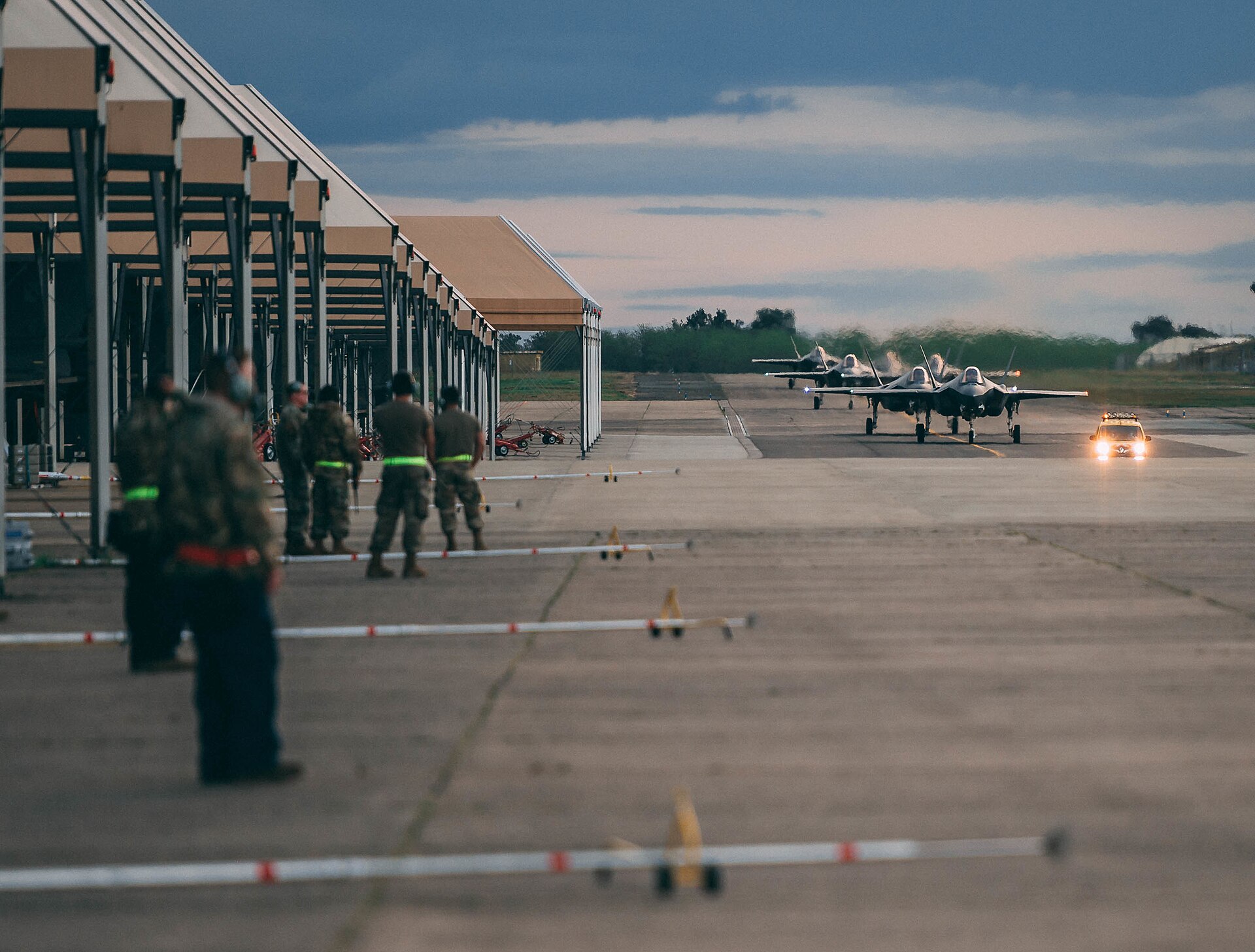
Al Dhafra hosts approximately 5,000 US military personnel and is the largest American air base in the Middle East by aircraft type diversity — F-35s, B-52s, MQ-9 Reapers built precisely for counter-drone operations, and U-2 reconnaissance aircraft. All of this capability is functionally grounded for combat operations into Iraq by a consent requirement that MBZ demonstrated, on May 18, he is willing to enforce in the most consequential circumstances imaginable. He vetoed strikes against Iran itself. The notion that he would simultaneously authorise strikes into Iraq — an entirely separate sovereign state whose government has not been consulted — requires a theory of MBZ’s decision-making that contradicts what he did the same day.
Who Controls Iraq’s Drone Capability?
Kataib Hezbollah — a US-designated Foreign Terrorist Organization — controls the PMF’s missiles and anti-armor departments under direct IRGC Quds Force command. In 2024, PMF Chief of Staff Abu Fadak al-Mohammadawi publicly declared the group takes its orders from Khamenei, not the Iraqi prime minister. The command architecture had been operational for years before he confirmed it openly.
The UAE’s May 19 attribution statement confirmed Iraqi territory as the launch origin but did not name a responsible organisation. The diplomatic restraint is understandable: naming Kataib Hezbollah would require Baghdad either to act against forces embedded within its own nominal military structure or to publicly admit it cannot control them. Iraq’s foreign ministry instead said its air defences had “not detected any drones launched from Iraqi airspace” and requested Saudi Arabia share intelligence — a response that confirmed what the attribution could not say directly, which is that Baghdad does not surveil the PMF’s drone programme because it does not control it.
The Washington Institute and the American Enterprise Institute assess Kataib Hezbollah as the “premier militia in Iraq, operating under Iran’s direct command.” The characterisation matters for the Barakah analysis because it means the drone teams in western Iraq are not freelance operators who might be deterred by diplomatic signalling — they are components of an Iranian military apparatus that has its own operational logic, its own command chain through the IRGC, and its own strategic objectives in the broader Hormuz confrontation. The absence of any claim of responsibility is not confusion about who launched the drones; it is the IRGC’s standard operational signature for deniable proxy action, in which the command signal travels through Kataib Hezbollah while the plausible deniability travels through Baghdad’s institutional incapacity.
Tehran’s silence reinforced the pattern. As of May 19, no Iranian official or state media outlet had claimed or disavowed the Barakah attack. The silence is the doctrine working as designed: Iran maintains escalation control through its proxy infrastructure while the Iraqi government absorbs the diplomatic friction of hosting the launch teams it cannot remove.
Why Can’t US Forces at Al Dhafra Respond?
Any counter-battery response to the Barakah drones — Reaper strikes on launch sites in western Iraq, or F-35 sorties against Kataib Hezbollah’s drone storage infrastructure — would require MBZ’s explicit permission under a framework he built specifically to prevent American strikes from UAE soil into countries where proxy retaliation could be triggered. The base-denial agreement makes no exception for attacks on nuclear plants.
A UAE official explained the original 2024 restrictions as “coming from a place of self-protection” — the fear that continued US strikes from Al Dhafra would make the UAE a target of the Axis of Resistance. The Soufan Center’s May 14 assessment that the UAE has experienced the most Iranian attacks of any Washington-aligned actor in the 2026 war suggests the self-protection logic has not performed as anticipated. The restrictions have not reduced the UAE’s target profile; they have reduced the UAE’s response options while the targeting continued and, after Barakah, escalated to the perimeter of a nuclear power plant.
The operational absurdity is specific: the UAE is being struck by drones launched from a country that its own consent framework shields from American retaliation originating from UAE soil. MQ-9 Reapers — designed precisely for the kind of persistent surveillance and strike mission that would locate and destroy drone launch teams in the Iraqi desert — sit at Al Dhafra, within range of western Iraq, grounded for that mission by a restriction intended to prevent the attacks they would be responding to. The restriction was supposed to make the UAE safer. Barakah is the first empirical test of that premise, and the result was a fire at a nuclear power plant.
The PGSA Launched on the Same Day
While MBZ, MBS, and Sheikh Tamim were calling Trump on May 18 to demand the cancellation of strikes on Iran, the Supreme National Security Council in Tehran was launching the Persian Gulf Strait Authority — a 12-article sovereignty statute institutionalising Hormuz toll collection under Iranian control. The PGSA went operational on the same day the Gulf veto calls were placed, a piece of timing that is not coincidental but architecturally coherent with how Iran has used every diplomatic pause in this war.
The Gulf veto bought Iran time — Trump granted “two to three days” for negotiations — and the PGSA used that window to entrench an institutional fact. Every day the veto holds, the authority accumulates operational precedent. Every tanker that pays the toll or is turned back reinforces the legal architecture Iran is constructing around Hormuz. The veto does not pause Iran’s strategic programme; it provides diplomatic cover for the programme’s acceleration, and the Gulf leaders who placed the calls cannot easily withdraw the cover without admitting that the negotiating window they demanded is being used against their own interests.
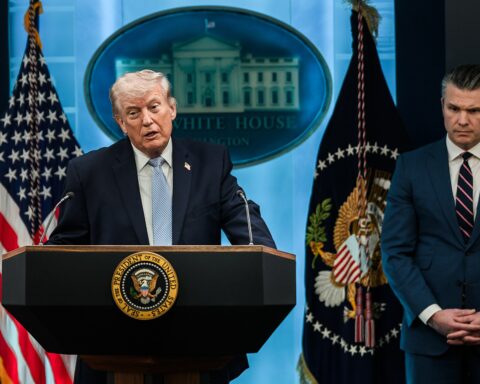
Trump’s own language confirmed the dynamic without appearing to recognise it. He told reporters the military remains “prepared to go forward with full, large scale assault of Iran, on a moment’s notice,” while simultaneously confirming that MBZ and the Gulf leaders had persuaded him to grant the negotiating window. The assault stays on the table, but the table keeps being pushed further away — and each day it moves, the PGSA adds another day of operational precedent to a toll architecture that the IRGC has been building since it declared “full authority” over the strait in April.
What Does Barakah Mean for Nuclear Safety in Wartime?
Barakah is the second nuclear plant struck by drones in an active conflict — after Zaporizhzhia — but the first hit while all reactors were fully operational. Unit 3’s 48 hours on emergency diesel demonstrated that the safety margin at an active facility is not measured in weeks but in the finite hours of diesel supply, with no certainty of external power restoration.
The distinction from Zaporizhzhia is material, not procedural. Ukraine’s six reactors were shut down in the early months of the invasion; the safety risk at Zaporizhzhia involves spent fuel pools and residual decay heat, not active fission. Barakah’s four APR-1400 reactors were generating electricity when the drone hit — all units online, the full capacity of a facility that serves a quarter of the UAE’s total supply. A loss of external power to an operating reactor is a fundamentally different category of emergency than a loss of power to a cold-shutdown facility, because an operating reactor requires active cooling to prevent fuel damage, and active cooling requires either grid power or diesel backup.
| Factor | Zaporizhzhia (Ukraine) | Barakah (UAE) |
|---|---|---|
| Reactor status at time of strike | Cold shutdown (all 6 units) | Fully operational (all 4 units) |
| Reactor type | VVER-1000 | APR-1400 |
| Total capacity | 5,700 MW (nameplate) | 5,600 MW (nameplate) |
| Share of national electricity | ~20% (pre-war) | ~25% |
| External power disrupted | Multiple times (2022–2026) | Unit 3, May 17 2026 |
| Diesel backup activated | Yes, repeatedly | Yes, ~48 hours |
| Radiation release | None reported | None |
| Active fission risk | No (spent fuel cooling only) | Yes (operating reactor) |
Grossi coined the word “unprecedented” for Zaporizhzhia. Barakah now requires a different word, because the precedent has been set — and this time the facility was running. The drone that struck the generator hit peripheral electrical infrastructure rather than the containment structure, and the diesel systems performed exactly as designed, but the episode proved that the PMF drone teams either did not know or did not care that they were striking at the power supply of an active nuclear facility. That indifference, combined with the demonstrated ability to penetrate UAE air defences at a rate of one in three, is what the next 72 hours must be assessed against.
The 72-Hour Window
Trump has given Iran “two to three days” to reach a deal, and the structural dynamics that produced the Barakah strike will not have changed when that window closes. The base-denial framework will still restrict Al Dhafra operations into Iraq. The PMF drone teams will still be operational in western Iraq, approximately 250 kilometres from Barakah — a distance well within the range of the Iranian-designed systems that Kataib Hezbollah’s missiles department operates. The consent architecture will still require MBZ’s approval for the counter-battery operations that would address the threat.
MBZ’s position after Barakah is measurably worse than it was before the veto call. Before May 17, the base-denial framework was untested — logically coherent on its own terms, never subjected to the scenario it was built to prevent. After Barakah, it is an empirically failed theory of self-protection that MBZ cannot easily reverse without conceding the failure. Lifting the Al Dhafra restrictions now, in the immediate aftermath of a nuclear-plant strike, would admit that two years of consent architecture produced the opposite of its intended effect — and would hand Trump exactly the operational freedom the veto was designed to deny.
Maintaining the restrictions while the PMF continues to launch drones from Iraq is no better: it means accepting that the UAE’s most important civilian energy facility operates within range of an adversary whose launch teams cannot be struck from the largest American air base in the region — a facility with some of the most capable counter-drone platforms in the US inventory. The Soufan Center’s assessment that the UAE is the most-targeted Gulf state in this war arrived three days before Barakah. Six drones in 48 hours suggest the targeting calculus was never the UAE’s to change.
“Military activity that threatens nuclear safety is unacceptable.”
— Rafael Grossi, IAEA Director General, May 18, 2026
Grossi’s statement was addressed to all parties. But only one party’s nuclear power plant was hit, and only one party’s consent framework prevents the response from the air base sitting 200 kilometres away. The people launching the drones from western Iraq do not consult the Al Dhafra notification agreement before they fly, and the veto that was supposed to keep the UAE out of the war has instead ensured that the war arrives on terms the UAE cannot answer.
Frequently Asked Questions
Could the US legally respond to the Barakah drones from Al Dhafra without UAE consent?
US forces retain inherent self-defence authority under Title 10 of the US Code, and the 2001 Authorization for Use of Military Force provides broad legal cover for operations against designated terrorist organisations including Kataib Hezbollah. However, the 2024 notification framework represents a host-nation political constraint that the Pentagon has treated as operationally binding — not because it overrides US legal authority, but because violating it would jeopardise the entire Al Dhafra basing agreement, a facility the US has used since 1991 and expanded continuously since. The legal authority exists; the political permission does not, and in practice the political constraint governs.
Has the UAE deployed THAAD or Patriot batteries at Barakah?
The UAE operates both THAAD and Patriot PAC-3 systems purchased from the United States, though specific deployment locations are classified. The two successful interceptions on May 17 — a two-thirds intercept rate against the initial salvo — suggest point-defence coverage was already in place at or near Barakah. The one drone that penetrated struck peripheral electrical infrastructure rather than reactor containment, which may indicate a layered defence prioritising the reactor buildings over support systems, though it may also simply reflect the inherent difficulty of intercepting low-flying, slow-moving drones at the outer edges of a defensive perimeter.
What is the APR-1400 containment design, and could a drone breach it?
The APR-1400, designed by Korea Electric Power Corporation for the UAE’s Emirates Nuclear Energy Corporation, features a pre-stressed concrete containment structure with a steel liner, engineered to withstand commercial aircraft impact under post-9/11 IAEA design standards. A small tactical drone of the type operated by PMF factions would be unlikely to breach the containment structure itself. The vulnerability Barakah demonstrated is not to direct reactor attack but to disruption of the external power systems that keep reactor cooling active — the same category of failure that initiated the Fukushima disaster in 2011, where loss of external power followed by diesel generator flooding led to three reactor meltdowns.
Can the Iraqi government intercept drones launched from its own territory?
Iraq’s integrated air defence system has limited coverage over the western desert regions where PMF factions operate, and the Iraqi military does not exercise command authority over Kataib Hezbollah’s drone programme. The Iraqi Foreign Ministry’s statement that its defences had “not detected any drones launched from Iraqi airspace” is consistent with a surveillance gap rather than a detection failure — Baghdad does not monitor PMF launch activity because the PMF’s missiles department operates outside the Iraqi chain of command, under IRGC Quds Force direction. Iraq’s formal investigation is constrained by the same institutional reality: the investigative authority cannot compel cooperation from organisations that answer to Tehran, not Baghdad.
How many US personnel are stationed at Al Dhafra?
Approximately 5,000, making Al Dhafra one of the largest US military installations in the Middle East. The base hosts F-35A Lightning IIs, B-52H Stratofortress bombers, MQ-9 Reaper drones, U-2 Dragon Lady reconnaissance aircraft, and KC-135 Stratotanker aerial refuelling platforms — the most diverse combat aircraft inventory at any single US facility in the region. Despite this concentration of capability, the base-denial framework means these assets cannot conduct combat operations into Iraq or Iran without UAE governmental consent, limiting their operational role during the 2026 war to intelligence collection, aerial refuelling of non-restricted missions, and force protection of the base itself.