RIYADH — Iran stated on May 19 that it is not negotiating its nuclear program at this stage. The declaration, reported by Al Jazeera as official Iranian position, arrived the same day Donald Trump confirmed he had called off a scheduled strike on Iran at the request of Saudi Arabia, Qatar, and the UAE — and one day after Iran’s Supreme National Security Council created the Persian Gulf Strait Authority, institutionalizing IRGC control over the Strait of Hormuz. The 72-hour window that three Gulf leaders purchased with phone calls on May 18 is now running against a counterparty that has publicly ruled out discussing the one issue Trump has called non-negotiable. The Gulf leaders asked for time. Iran is using it to build institutions, not offers.
Iran’s updated 14-point MOU proposal, transmitted to Washington via Pakistan on May 18, contains “more words on Iran’s commitment not to pursue a nuclear weapon, but no detailed commitments about suspending uranium enrichment or handing over its existing stockpile of highly enriched uranium,” according to Axios. A senior US official responded the same day: “We need some real, sturdy and granular conversation regarding the nuclear program. If that’s not gonna happen, we will have a conversation through bombs, which will be a shame.” On the morning of May 19, Trump provided his own summary: “Most points were agreed to, but the only point that really mattered, nuclear, was not.”
Table of Contents
- What Iran Actually Said on May 19
- The 14 Points That Exclude the One That Matters
- Why Does Bifurcation Work as a Negotiating Strategy?
- The PGSA Was Created the Same Day as the Gulf Veto
- Is the 48-Hour Response Window a Clock or a Weapon?
- Trump’s War Powers Problem
- The Precedent Table: When Nuclear Was Deferred to Later
- Pakistan’s Interior Minister Is Negotiating Nuclear Arms Control
- What Did the Gulf Veto Actually Purchase?
- Frequently Asked Questions
What Iran Actually Said on May 19
Al Jazeera’s reporting on May 19, citing Iranian officials, was unambiguous: “Iranians are saying that, at this stage, they’re not negotiating their nuclear programme; it’s only about ending the war on all fronts.” The formulation is precise. “At this stage” acknowledges the nuclear file exists. It declines to open it. The framing positions ceasefire as a procedural prerequisite, not as one track running in parallel with nuclear discussions.
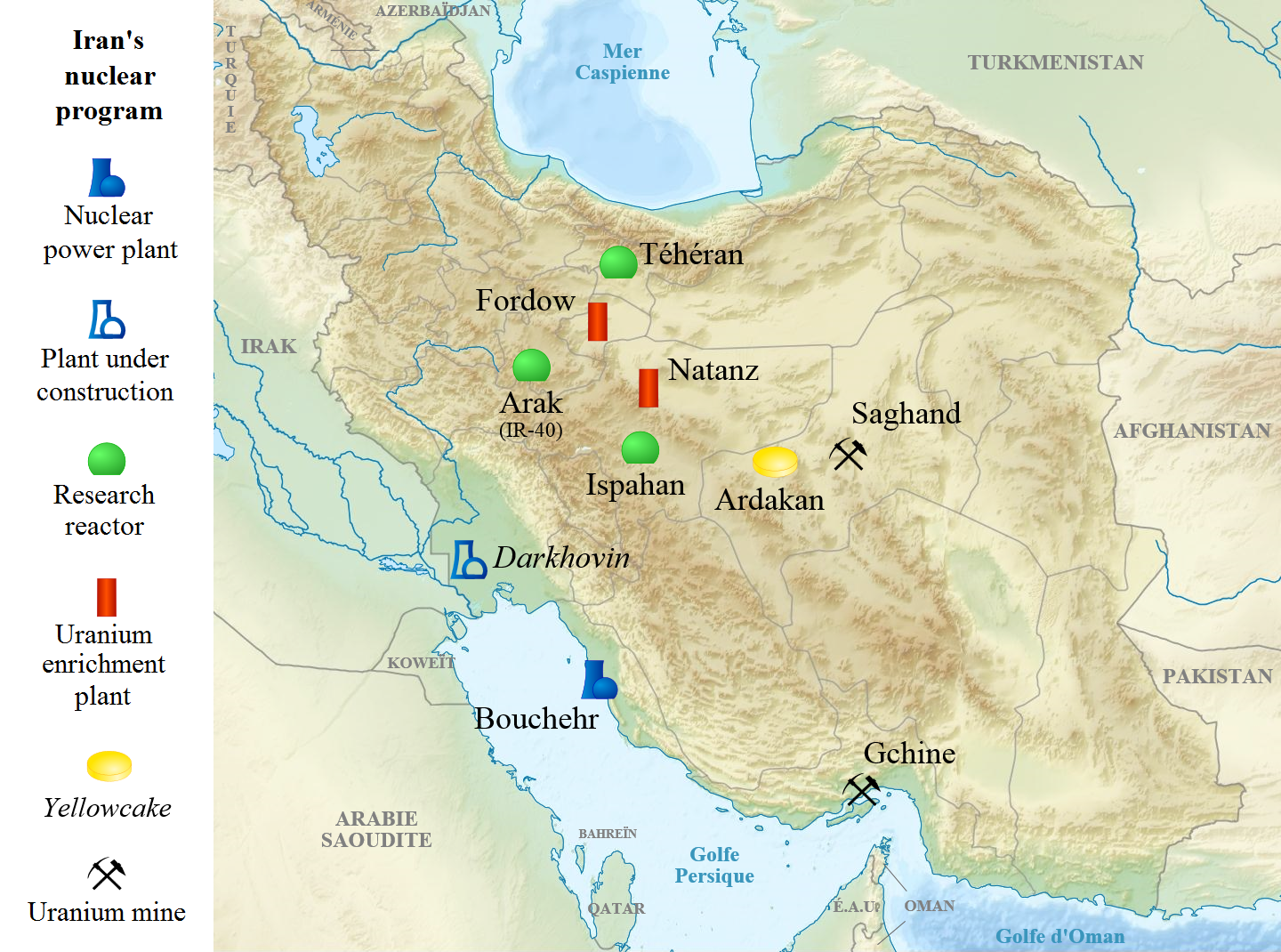
Tehran’s public justification is procedural: the nuclear file requires multilateral engagement — the JCPOA framework, the IAEA, the P5+1 — that cannot be replicated in a wartime MOU mediated by a Pakistani interior minister. The implicit argument is that a 20-year enrichment moratorium cannot be negotiated on a one-page document drafted in 48 hours. The explicit effect is that 440.9 kilograms of uranium enriched to 60 percent, last verified by the IAEA in June 2025 before inspectors were expelled, remains undiscussed while the ceasefire clock runs.
Mohammad Ayatollahi Tabaar of the Carnegie Endowment identified the structural logic on May 19: “The central problem is that the Trump administration cannot credibly offer meaningful sanctions relief, which makes Iran less willing to show flexibility on enrichment, and Tehran therefore appears to be pushing the enrichment issue down the negotiations agenda, recognizing that the gap between the two sides may be too wide for a solution.”
Tabaar drew the parallel directly: “This resembles the treatment of disarmament in the Hezbollah and Hamas negotiations with Israel, where the issue was deferred to future steps after a ceasefire — which in practice has meant indefinitely.”
The Middle East briefing 3,000+ readers start their day with.
One email. Every weekday morning. Free.
The 14 Points That Exclude the One That Matters
Iran’s April 28 counterproposal, first reported by Al Jazeera on May 3, contained 14 operative provisions: a permanent end to hostilities within 30 days, US naval blockade lifted, frozen assets released, war reparations, and a new Hormuz governance mechanism. The nuclear file was entirely absent from the operative text.
The updated version transmitted via Pakistan on May 18 added language on non-weaponization — a declaratory commitment that Iran will not pursue a nuclear weapon. It did not add commitments on enrichment suspension. It did not address the 440.9-kilogram HEU stockpile. It did not propose readmitting IAEA inspectors. The Axios description — “more words” but “no detailed commitments” — captures the ratio between gesture and substance.
The negotiating gap on the nuclear file alone is wider than any ceasefire MOU can bridge:
| Issue | US Position | Iran Position | Gap |
|---|---|---|---|
| Enrichment moratorium | 20 years | 5 years | 15 years |
| HEU stockpile (440.9 kg at 60%) | Transfer 400 kg to US custody | Not on the table | Total |
| Operational nuclear facilities | 1 facility permitted | Not specified | Open |
| IAEA inspections | Snap inspections | Inspectors expelled Feb 28 | Total |
| Frozen assets | 75% withheld | Full release demanded | $7B+ |
| War reparations | None | Required | Total |
| Naval blockade | Maintained as pressure | Must be lifted first | Sequencing |
Three sources cited by Axios estimated the likely landing zone on the moratorium alone at 12 to 15 years. That range assumes both parties are negotiating simultaneously. Iran’s May 19 statement removes the assumption.
Trump’s own assessment arrived without ambiguity. On May 10-11, he called Iran’s proposal “totally unacceptable.” He described the ceasefire as on “massive life support” with a “one percent chance” of surviving. On May 19, he said the attack he had authorized was “held off for a little while, hopefully, maybe forever.”
Why Does Bifurcation Work as a Negotiating Strategy?
The Center for Strategic and International Studies published its assessment in April: “The dispute between Iran and the U.S. appears to focus on sequencing, with Tehran saying the U.S. naval blockade must cease before broader talks can commence, while Washington sees the blockade as a source of leverage for those talks and is not inclined to call it off in advance.” The word “sequencing” makes the disagreement sound procedural. It is structural.
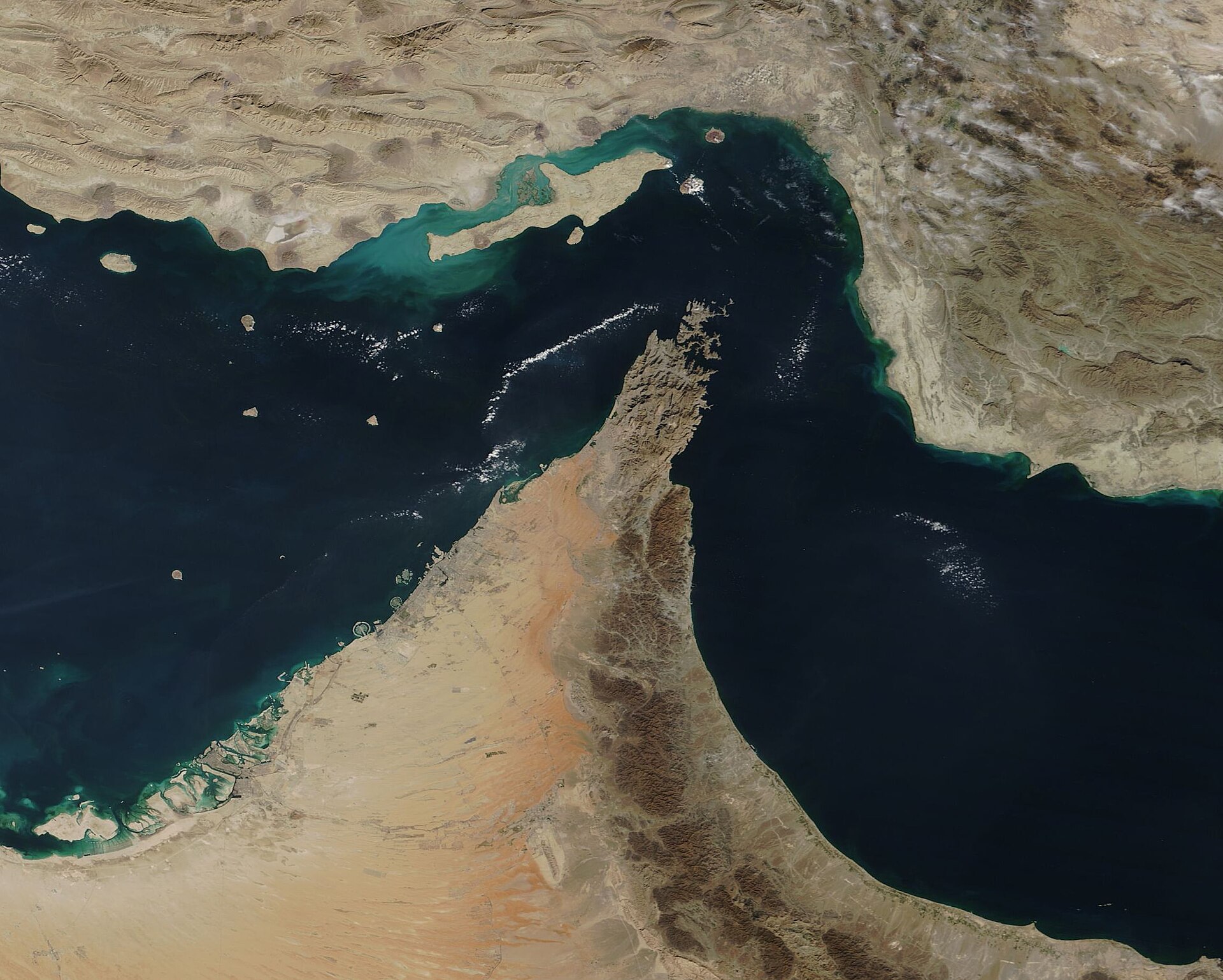
Iran holds two assets the United States wants to constrain: a nuclear program approaching weapons capability, and physical control of a strait through which 21 million barrels per day transited before March 2026. Bundled, those assets create pressure on Iran — Washington can threaten strikes and blockade simultaneously, forcing Tehran to concede on both fronts or lose both. Separated, each becomes a standalone negotiation where Iran enters holding the stronger hand.
The 14-point MOU transmitted on May 18 is the separation instrument. If Washington accepts a ceasefire without nuclear preconditions, it relieves the kinetic pressure that makes nuclear concessions rational from Tehran’s perspective. If Washington rejects the ceasefire because it lacks nuclear provisions, it owns the continuation of a war that has taken 14 million barrels per day offline and stranded 22,500 mariners on 1,550 vessels.
CSIS stated the implication: “The ceasefire is less a resolution than a pause in a conflict whose underlying drivers remain not only intact but, in some cases, intensified.” And on the nuclear file specifically: “The nuclear issue is likely to determine not only when the war ends, but also how it ends, and who can claim ‘victory.’”
Stephen Miller, White House Deputy Chief of Staff, restated the administration’s position on May 19: Trump has a red line to “not allow Iran to develop nuclear weapons, and he will use force if necessary to accomplish that.” The red line has been drawn four times in twelve weeks. It has not been enforced once.
The PGSA Was Created the Same Day as the Gulf Veto
On May 18, while MBS, MBZ, and Tamim were calling Trump to request a strike postponement, Iran’s SNSC formally established the Persian Gulf Strait Authority. The PGSA institutionalizes IRGC toll collection at the Strait of Hormuz, converting what began as ad hoc IRGC boarding operations in March into a permanent administrative body with its own governing structure.
The timing is not coincidental. Iran used the diplomatic space created by the Gulf veto to harden its Hormuz position, not to soften it. The PGSA was announced via Newsweek and confirmed by OFAC, which simultaneously warned US and non-US persons of sanctions risks for paying Iranian tolls “in any form — fiat, digital assets, offsets, in-kind.” OFAC’s warning is a concession that the tolls are being paid.
This is the second time Iran has used a diplomatic pause to entrench. During the ceasefire that began in April, the IRGC restored 30 of 33 Hormuz missile sites and reconstituted approximately 70 percent of its pre-war missile capacity, according to the Institute for the Study of War. Iran’s formal toll mechanism announcement on May 13 came 74 days after the IRGC had already built the operational architecture.
The ceasefire restored missiles. The Gulf veto created the PGSA. On May 19, one day into the 72-hour window, the SNSC’s new authority was already staffed and the OFAC advisory was already published.
Is the 48-Hour Response Window a Clock or a Weapon?
Trump gave Iran “two or three days, maybe Friday, Saturday, Sunday, maybe early next week” to respond. The language itself is the tell. A president issuing an ultimatum does not append “maybe” to three consecutive days and then add “maybe early next week.” The window is open-ended enough to be a domestic political instrument — allowing Trump to claim ongoing engagement without defining a point at which engagement fails — while being described as a deadline.
Iran has seen this before. ABC News reported on May 18 that the war “is now past the 12-week mark” and that Trump “has threatened for weeks to restart attacks…but has yet to commit.” At least four prior deadlines have passed unenforced since March. The April 6 deadline. The April 22 ceasefire expiration. The May 1 War Powers clock. The May 17 “clock is ticking” warning. Each produced a rhetorical escalation followed by a procedural extension.
Iran’s 48-hour MOU response window — the timeframe in which Pakistan is supposed to relay Tehran’s answer to Washington — is calibrated against this record. If Trump has not enforced four prior deadlines, a fifth deadline carries the same structural weakness. Tehran’s incentive is not to respond within 48 hours with a substantive nuclear offer. It is to respond with enough procedural motion — a revised document, a new interlocutor, a request for clarification — to justify another extension.
MBS asked Trump to stand down and was given days, not weeks. Tehran is now spending those days without opening the nuclear file. The Gulf veto purchased time. The bifurcation strategy consumes it.
Trump’s War Powers Problem
On May 1, Trump declared that hostilities with Iran had been “terminated,” invoking the ceasefire to avoid the 60-day War Powers Resolution deadline that would have required congressional authorization for continued military operations. The declaration was reported by the Washington Post and PBS as a deliberate legal maneuver: if the war is over, the clock stops.
But the war is not over. Strait traffic stands at one vessel per day against a pre-war baseline of roughly 60. The IRGC retains operational control of 30 of its 33 Hormuz missile sites, its reconstituted capacity confirmed by the Institute for the Study of War. The IEA describes cumulative losses exceeding one billion barrels and 14 million barrels per day offline — “the biggest energy security threat in history.” Some 850 to 870 major merchant ships sit at anchor in Gulf waters while 22,500 mariners remain trapped on more than 1,550 vessels.
If Trump now orders the strike he postponed on May 18, he faces a legal question his May 1 declaration was designed to avoid. Having claimed hostilities were terminated, any new military action requires fresh political justification — either a new authorization or a claim that Iran’s behavior since May 1 constitutes a separate casus belli. The PGSA’s creation could serve that purpose. Iran’s refusal to negotiate nuclear could serve that purpose. Neither has been invoked.
Iran’s bifurcation exploits this constraint. By offering a ceasefire-only MOU that addresses war termination but excludes nuclear, Tehran is proposing exactly what Trump already claimed to have achieved. Accepting it would be redundant. Rejecting it — because it lacks nuclear provisions — would mean acknowledging that the war was never actually terminated, reopening the congressional authorization question Trump spent May 1 closing.
The Precedent Table: When Nuclear Was Deferred to Later
The Carnegie Endowment’s Tabaar drew the Hezbollah parallel explicitly, but the historical record is broader and more uniform than a single case suggests.
United Nations Security Council Resolution 1701, which ended the 2006 Lebanon war, called for Hezbollah’s disarmament south of the Litani River as a ceasefire condition. Eighteen years later, the condition was never implemented. The ceasefire created a durable status quo that froze the disarmament question permanently. UNIFIL monitored the line. Hezbollah rearmed above it. The mechanism that was supposed to be temporary became the architecture.
The North Korea Agreed Framework of 1994 followed the same logic in a nuclear context. The United States and North Korea agreed to freeze Pyongyang’s plutonium program in exchange for light-water reactors and fuel oil. The kinetic threat was removed. A uranium enrichment program continued on a parallel covert track. By 2002 the framework had collapsed. Eight years of American concessions had been extracted while the program continued on a path Washington chose not to monitor.
Iraq after 1991 presents the enforcement variant. UN Resolution 687 imposed weapons elimination as a ceasefire condition and created UNSCOM to verify it. Saddam Hussein accepted, then spent seven years obstructing inspectors. The coercive pressure of active war was never restored. Once the ceasefire was signed, the enforcement mechanism shifted from military force to inspection access — a contest Iraq was structurally equipped to win through delay.
Libya in 2003 is the counterexample — and the model Trump has explicitly demanded. Muammar Gaddafi’s WMD surrender came before diplomatic normalization, under maximum pressure, with no ceasefire in place. The United States and the United Kingdom maintained sanctions while disarmament was verified. The sequence was: disarm first, then normalize. Iran’s 14-point MOU inverts that sequence entirely: normalize first (ceasefire, blockade removal, asset release), then discuss disarmament at an unspecified future date.
The pattern across four decades and four cases is uniform. When the nuclear or WMD file was deferred to a post-ceasefire phase, the deferral became permanent. When disarmament preceded the ceasefire, it happened. There are no exceptions in the modern record.
Pakistan’s Interior Minister Is Negotiating Nuclear Arms Control
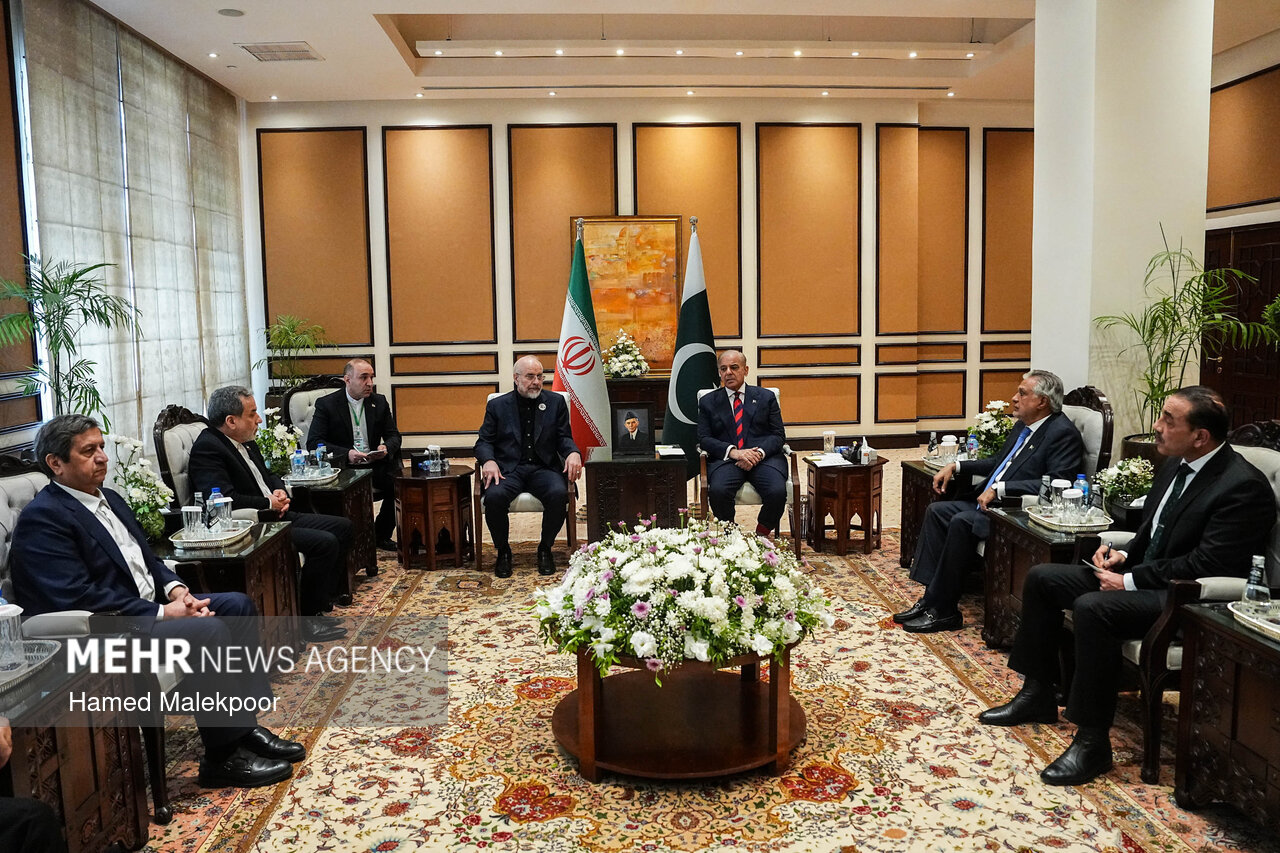
Pakistan’s Interior Minister Mohsin Naqvi arrived in Tehran on May 17-18, meeting President Pezeshkian, Interior Minister Eskandar Momeni, and Parliament Speaker Mohammad Bagher Ghalibaf. Pakistan Today and Al Jazeera confirmed the visit. Naqvi carried the latest iteration of the ceasefire framework.
The channel has no precedent in nuclear arms control. Interior ministers manage borders, policing, and domestic security. They do not negotiate enrichment moratoriums. The JCPOA was negotiated by foreign ministers, energy secretaries, and nuclear physicists over 20 months in Vienna, Lausanne, and Geneva, with the IAEA providing technical verification at every stage. The current framework is being relayed by a Pakistani interior minister to an Iranian interior minister, with a 48-hour response window, in a war zone.
The contrast with the Saudi-Iranian FM track is precise. While Pakistan runs an interior-minister channel, Saudi Arabia’s foreign minister has spoken to Araghchi six times in six weeks — direct, foreign-minister-to-foreign-minister contact that is structurally capable of producing the kind of framework the Pakistan channel cannot. Whether Riyadh can convert that contact cadence into a deliverable is the question examined in MBS Has Forty-Eight Hours to Deliver Iran. On May 20, Faisal answered the question in public: his named appeal to Tehran to seize the window marked the first time a Saudi foreign minister attached his credibility to a public, time-bound diplomatic demand directed simultaneously at both Washington and Tehran.
Javad Heiran-Nia, an Iranian political analyst cited by Al Jazeera on May 18, assessed the trajectory: “Pakistan is on the verge of shifting from being an indispensable channel to an option ignored by both sides.” Once Iran and the United States engage through other channels, “Islamabad’s role will become marginal.”
The channel’s inadequacy serves Tehran’s strategy. A Pakistan-mediated interior-minister track is structurally incapable of producing the kind of “real, sturdy and granular” nuclear conversation the senior US official demanded on May 18. Iran can cite the channel’s limitations as a reason for deferral without appearing to refuse outright. The procedural argument — you cannot negotiate a 20-year enrichment moratorium through an interior minister — is substantively correct. It is also strategically convenient.
Pakistan’s role as the ceasefire’s sole enforcement mechanism was always structurally limited by the gap between Islamabad’s diplomatic reach and the military-nuclear questions it was being asked to mediate. The interior-minister channel narrows that reach further. Pezeshkian has publicly accused Vahidi and Abdollahi of wrecking the Islamabad talks in April. He is now receiving the same mediator’s envoy, carrying a document that does not address the men he accused.
What Did the Gulf Veto Actually Purchase?
MBS, MBZ, and Tamim stopped a strike they may need later. The question now is whether the 72-hour window they purchased contains enough negotiating space for Iran to move on the nuclear file. Iran’s May 19 statement answers that question in the negative.
The Wall Street Journal reported on May 19 that Gulf officials claimed they had no advance knowledge that a strike was scheduled — directly contradicting Trump’s account of the phone calls. If the veto was not coordinated with advance knowledge, the Gulf leaders acted on instinct rather than intelligence. If it was coordinated, as Trump’s Truth Social post suggests, then three governments knowingly purchased time for a counterparty that had already decided not to discuss nuclear.
The fiscal context constrains every actor. Saudi Arabia has spent its annual deficit in ninety days. Brent crude swung from above $111 to approximately $102 on May 19 following the strike postponement announcement. Aramco’s May OSP, set at war-premium levels, is now $17 above spot. Goldman Sachs estimates Saudi Arabia’s war-adjusted deficit at 6.6 percent of GDP, nearly double the official 3.3 percent projection. Every day the ceasefire persists without resolution, the fiscal arithmetic deteriorates for the Gulf states that purchased the window.
Iran faces its own economic pressure — 180 percent inflation, a Central Bank memo projecting a 12-year recovery timeline — but the bifurcation strategy is designed to extract maximum concessions before that pressure becomes politically unbearable. A ceasefire-only agreement relieves the most visible pressure (active bombing) while preserving the institutional gains (PGSA, missile reconstitution, enrichment continuation) that Tehran accumulated during the pause.
The nuclear issue is likely to determine not only when the war ends, but also how it ends, and who can claim ‘victory.’
Center for Strategic and International Studies, April 2026
The 72-hour window closes sometime between Friday, May 22, and early the following week — Trump’s language was imprecise enough to leave the endpoint ambiguous. By then, Day of Arafat falls on May 26, seven days away, with 1.2 to 1.5 million Hajj pilgrims assembling in Makkah under air defense coverage that has been reduced to roughly 400 PAC-3 rounds — 14 percent of pre-war inventory. Any military escalation during Hajj would force MBS to defend the pilgrimage with depleted interceptor stocks while holding the Custodian of the Two Holy Mosques title that his grandfather’s predecessor created in 1986 precisely to survive a crisis involving Iran and the holy sites.
Iran does not need to resolve the nuclear question in 72 hours. It needs to avoid resolving it. A revised MOU paragraph, a new non-weaponization clause that commits to nothing operational, a request for clarification on a minor provision — any of these is sufficient to justify another extension from a president who has granted four already. On May 22 or 23 or sometime early the following week, Trump will face the same binary he faced on May 18, except that the PGSA will have been operational for four days, the Hajj pilgrimage will be three days closer, and the nuclear stockpile will be three days larger.
Frequently Asked Questions
What is Iran’s current enrichment capability?
Iran’s last IAEA-verified stockpile stood at 440.9 kilograms of uranium enriched to 60 percent as of June 2025. IAEA inspectors were expelled on February 28, 2026, and no independent verification has occurred since. At 60 percent enrichment, the stockpile is approximately 25 days from weapons-grade material (90 percent) using Iran’s IR-6 centrifuge cascade. The number of operational centrifuges and total enrichment output since February 28 is unknown to outside monitors, making even the 440.9-kilogram figure a floor, not a ceiling.
Has Iran ever agreed to a nuclear moratorium in these negotiations?
During the Islamabad talks on April 11-12, Iran indicated willingness to accept a five-year enrichment pause with verification measures, according to Axios. The US demanded 20 years. Three Axios sources estimated a possible landing zone of 12-15 years. However, Iran’s April 28 counterproposal removed nuclear from the operative MOU entirely, and the May 18 update added only declaratory non-weaponization language without enrichment commitments. The five-year offer has not been publicly repeated since the Islamabad talks collapsed.
What is the Persian Gulf Strait Authority (PGSA)?
The PGSA was established on May 18, 2026, by Iran’s Supreme National Security Council. It institutionalizes IRGC toll collection and transit management at the Strait of Hormuz, converting ad hoc boarding and fee-collection operations that began in March into a permanent administrative body. OFAC issued a simultaneous advisory warning that any payment of Iranian tolls — in fiat currency, cryptocurrency, offsets, or in-kind transfers — exposes payers to US secondary sanctions. Iran’s parliament had already advanced a 12-article Hormuz sovereignty law through committee stage in April.
Why can’t the nuclear file be negotiated through the current Pakistan channel?
Nuclear arms control requires foreign ministers, energy secretaries, nuclear physicists, and IAEA technical verification — institutional infrastructure that an interior minister cannot substitute. The deeper problem is authorization: Iran’s nuclear posture is controlled by the IRGC command structure and ratified by Khamenei, neither of which Mohsin Naqvi can reach. A channel that cannot contact the actual decision-makers cannot produce commitments those decision-makers will honor.
What does Iran gain from each extension of the nuclear deadline?
Every extension without nuclear preconditions allows Iran’s centrifuges to run, its missile sites to remain operational, and its Hormuz governance institutions to consolidate. The IAEA has had no inspector access since February 28, 2026, meaning Iran’s enrichment output during each diplomatic window is unverified. The longer the moratorium discussion is deferred, the larger the HEU stockpile and the higher the eventual cost of any verified rollback — raising the price Iran can demand for compliance.