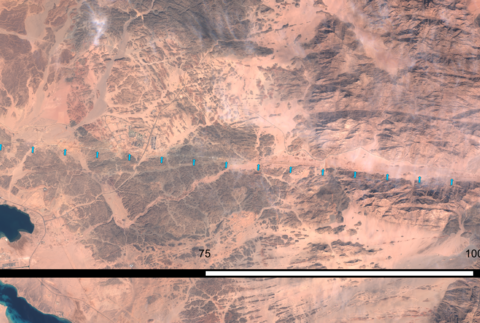
Scientists from the King Abdullah University of Science and Technology (KAUST) have identified ten potential sites for solar and wind energy storage across the Red Sea region. Two locations were found to be particularly feasible for storing renewable energy, with an estimated cost of $16.5 billion.
The study, published in the Renewable and Sustainable Energy Reviews journal, highlights the role of these sites in decarbonizing Saudi Arabia’s power sector and balancing the electricity grid. It also explores the potential for seasonal hydro storage of desalinated water to meet high summer electricity and water demand.
This initiative aligns with Saudi Arabia’s Vision 2030 plan, which aims to source at least 50% of its electricity from renewables by 2030 and achieve net-zero emissions by 2060. The study emphasizes the need for infrastructure that can store energy from solar and wind during cooler months for use in hotter periods.
The researchers also considered factors such as water evaporation, salinity, and the feasibility of building solar or wind plants nearby. They stressed the importance of accurately estimating the value of these storage sites due to their high upfront investments, integrating water management into the design for a comprehensive assessment.
The Middle East briefing 3,000+ readers start their day with.
One email. Every weekday morning. Free.