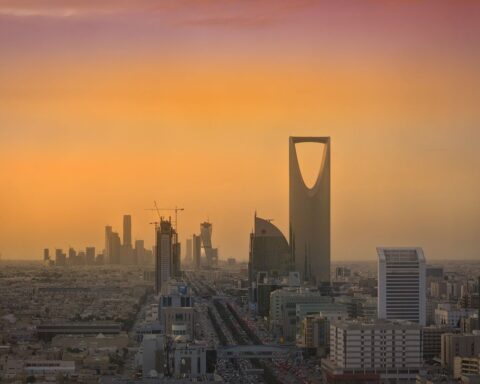
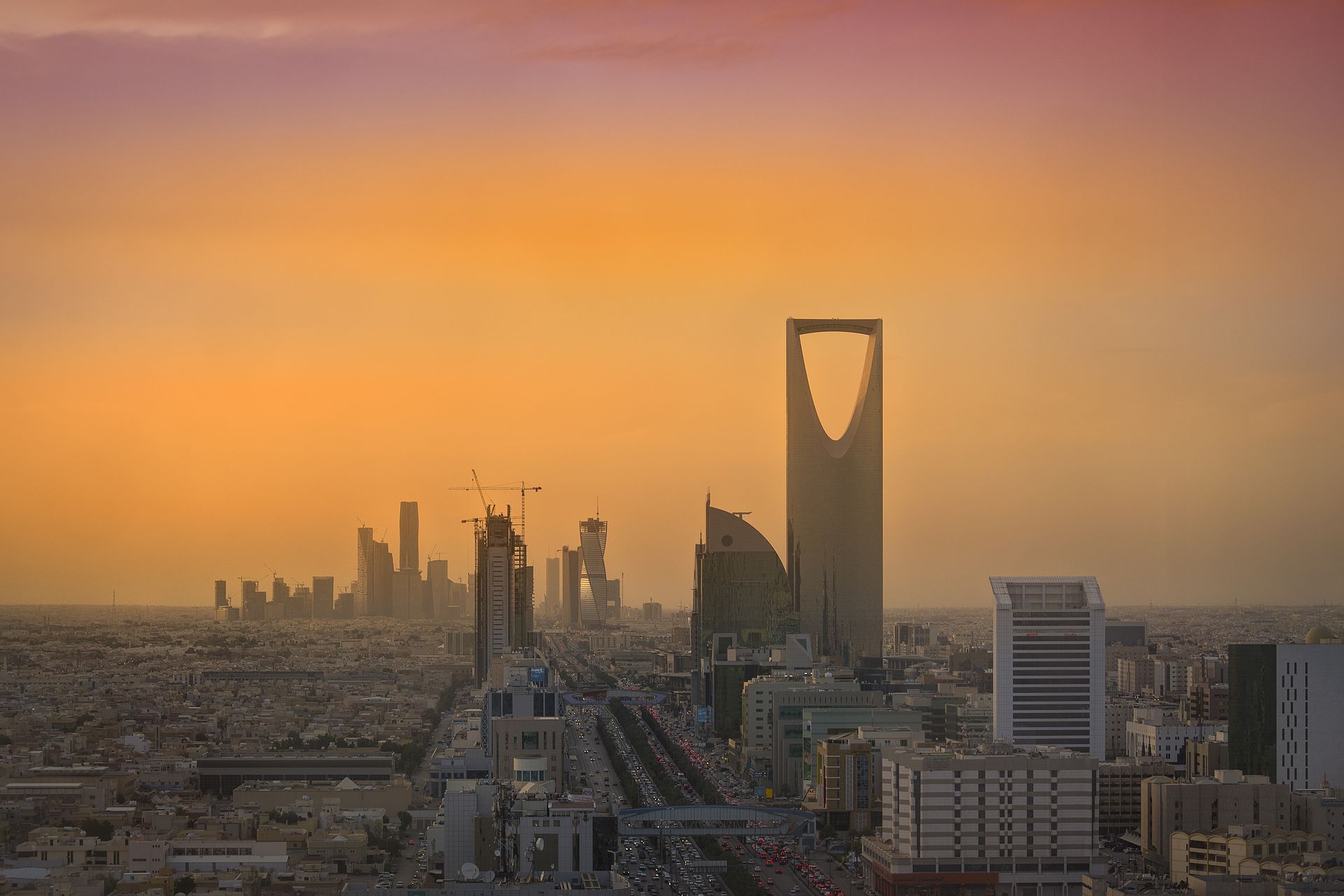
RIYADH — Saudi Arabia published its Vision 2030 Annual Report on April 25, 2026 — the plan’s tenth anniversary — claiming 93% of KPIs met or exceeded their 2025 targets, the same week Bloomberg confirmed that both sides of the Strait of Hormuz are now blocked and the kingdom’s oil production sits 30% below pre-war levels. Every number in the report is from 2025, the last full calendar year before Iran’s first missiles hit Saudi infrastructure on February 28, 2026, which means the document MBS chose to release into a wartime economy is structurally incapable of reflecting the wartime economy — and he knows that, and he published it anyway, because the audience for this report was never the people who would check the dates.
The report is a political act dressed as an audit. Its three simultaneous audiences — Saudi youth and the domestic private sector, PIF’s institutional investor base, and foreign governments being asked to sustain Vision partnerships through a war — each need a different thing from it, and MBS is betting that the 2025 numbers are strong enough to carry all three arguments at once. The $35.5 billion FDI figure, the 123 million tourists, the 51% private-sector share of GDP: these are real achievements from a country that no longer operates under the conditions that produced them, deployed as evidence that it will again.
Table of Contents
- The Pre-War Snapshot — What the Report Actually Says
- What Happens When You Run Those KPIs Against Wartime Reality?
- NEOM Became an AI Campus Because The Line Became a Monument
- Can PIF Fund a War Economy With $15 Billion in Cash?
- The Fiscal Hole Goldman Sees and Riyadh Won’t Name
- Why Did MBS Publish This Now?
- What Actually Survived the War — And What That Reveals
- Frequently Asked Questions
The Pre-War Snapshot — What the Report Actually Says
The headline numbers are, by any honest measure, the strongest set Vision 2030 has produced. Saudi real GDP reached $1.31 trillion in 2025, non-oil activities accounted for 55% of that total, non-oil GDP grew 4.9% year-on-year, and the private sector — the metric MBS has staked his domestic legitimacy on — crossed the 51% threshold of GDP for the first time, worth $660.5 billion. Foreign direct investment hit $35.5 billion, up from $7.5 billion in 2017, a fivefold increase in eight years that tracks with the kind of capital attraction story emerging markets spend decades trying to tell. Tourism — the sector that was supposed to prove Saudi Arabia had something to offer beyond hydrocarbons — delivered 123 million visitors and a record $81.1 billion in spending.
The employment figures extend the narrative in the direction MBS needs them to. Saudi unemployment fell to 3.5% by Q4 2025, and female labour-force participation reached 35%, up from 22.8% when the plan launched — a genuine structural shift in a country where women couldn’t legally drive when Vision 2030 was announced. Youth unemployment, the number that keeps Saudi planners awake, sat at 10.01% for the 15–24 cohort: better than the Gulf average, worse than any minister would admit in a press conference, and invisible in the report’s framing of “93% of targets met.”
The report’s own language, attributed directly to MBS, captures the tone: “After a decade of progress under Vision 2030, our nation has shown how ambition can be turned into real results through the determination of its people and the strength of its institutions.” That sentence was written — or at minimum approved — by a man whose country is under active missile bombardment, whose primary export route is blocked by an adversary’s navy and his ally’s blockade simultaneously, and whose fiscal position has deteriorated more in sixty days than in the previous six years combined. The 93% figure, the report’s centrepiece claim, refers to 2025 performance against 2025 targets — not against 2030 end-state targets, many of which were quietly recalibrated downward before being reported as “on track.”
What Happens When You Run Those KPIs Against Wartime Reality?
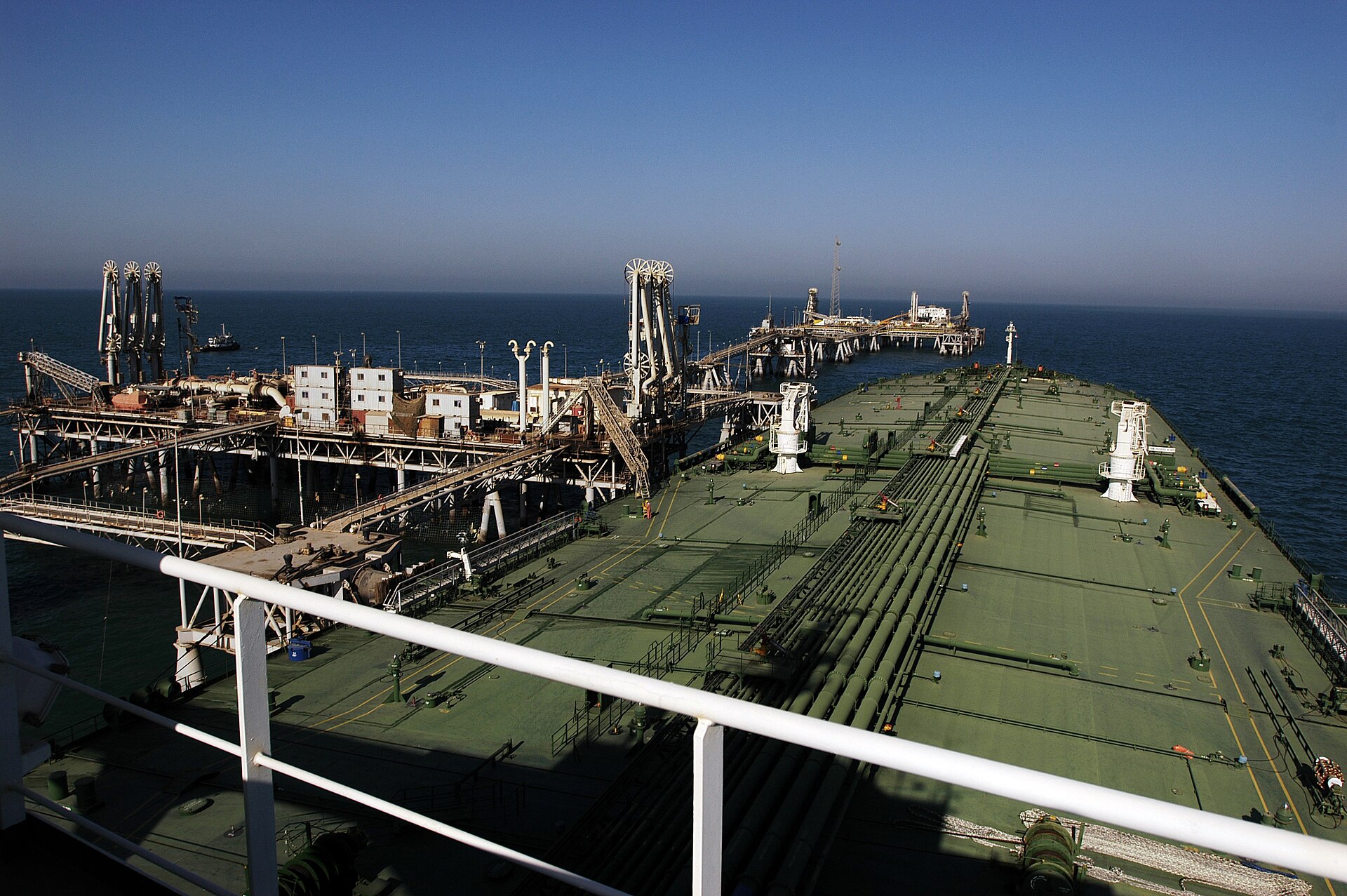
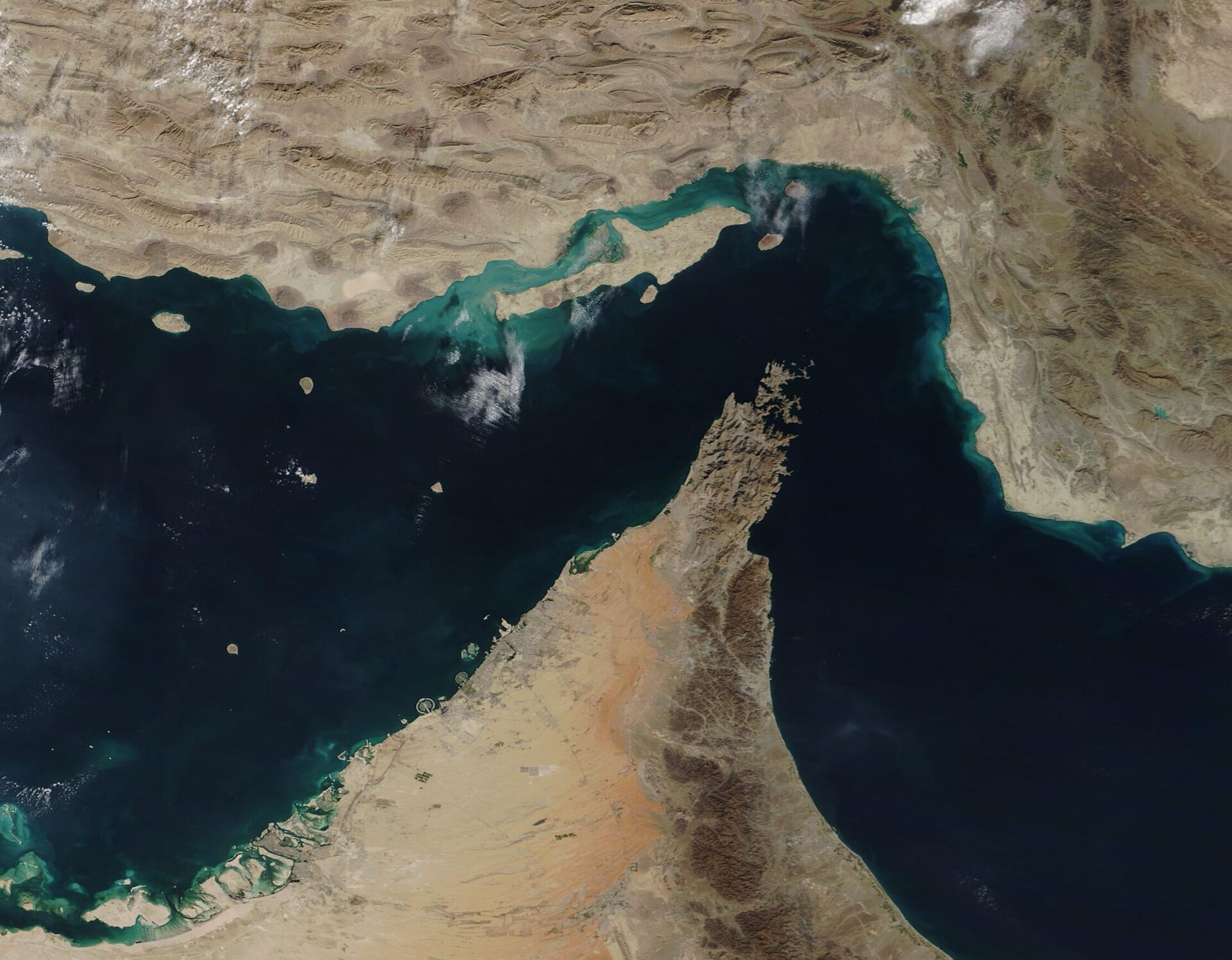
The war began on February 28, 2026. The report covers calendar year 2025. That twelve-week gap is the entire argument, because every headline KPI in the document has a wartime counterpart that tells a different story — and the report’s authors knew this when they chose the publication date. Start with the number that matters most to Riyadh’s fiscal survival: oil production dropped from 10.4 million barrels per day in February to 7.25 million bpd by March, a 30% crash driven by IRGC strikes on Saudi infrastructure and the effective closure of the Strait of Hormuz to most commercial traffic. The IEA called it the “largest disruption on record,” and Goldman Sachs projected that oil trade through Hormuz would remain minimal through at least end-April.
The Middle East briefing 3,000+ readers start their day with.
One email. Every weekday morning. Free.
Tourism, the sector where Saudi Arabia has invested most aggressively in the diversification narrative, faces a wartime test the report cannot capture. The 123 million visitors and $81.1 billion in spending are 2025 numbers; the 2026 reality is a US Hajj travel advisory, PAC-3 interceptor stocks at roughly 14% of pre-war inventory protecting the holy sites, a ceasefire that expired around April 22 with no replacement, and between 1.2 and 1.5 million pilgrims arriving into an active conflict zone. Saudi Arabia has said nothing publicly about the security posture around Hajj 2026 — the silence is itself a data point, because announcing the defensive measures would require admitting the threat they’re designed to counter.
The FDI figure — $35.5 billion in 2025, the report’s strongest proof of international confidence — has a Q1 2026 shadow that Riyadh has not addressed. One investment bank assessment, cited by Middle East Insider in March 2026, estimated that FDI inflows could decline 60–70% in Q1 2026 compared to the same period in 2025, a collapse that would put the annual run-rate somewhere around $10–14 billion if it held, well below the $100 billion 2030 target and back to 2019 levels. The private investment share of total investment reaching 76%, up from 60%, is the one number in the report that genuinely tests whether the model survives — because if the war reverses that ratio, the entire diversification thesis breaks, and the state becomes the investor of last resort at precisely the moment the state can least afford it.
| Metric | 2025 (Report) | Wartime Status (Q1 2026) | Source |
|---|---|---|---|
| Oil production | 10.4M bpd (Feb 2026) | 7.25M bpd (Mar 2026, −30%) | IEA |
| FDI inflows | $35.5B annual | Est. −60–70% Q1 YoY (single source) | Middle East Insider |
| Tourist arrivals | 123M | US Hajj advisory issued; active conflict zone | State Dept; HoS |
| Tourism spending | $81.1B | No Q1 2026 data released | — |
| Private sector % of GDP | 51% | Non-oil GDP +4.9% Q1; insulated so far | Arab News |
| Fiscal deficit (official) | 3.3% GDP ($44B) | Goldman est. 6.6% GDP ($80–90B) | AGSI; Goldman Sachs |
| Tadawul foreign holdings | — | SAR 462.13B ($123.23B) end-Mar | CMA |
| Saudi unemployment | 3.5% (Q4 2025) | No Q1 2026 data released | GASTAT |
The table exposes the report’s structural limitation: every metric where 2025 data looks strong either has no 2026 update (unemployment, tourism spending), has a wartime counterpart that is dramatically worse (oil production, FDI, fiscal deficit), or is genuinely insulated but too narrow to carry the diversification argument alone (non-oil GDP growth). MBS published the table he could defend and left the one he couldn’t for someone else to compile.
NEOM Became an AI Campus Because The Line Became a Monument
The single best case study for reading the gap between what Vision 2030 claims and what the war has done to those claims is NEOM, and specifically The Line — the 170-kilometre mirrored mega-structure that was supposed to house 1.5 million people and redefine what a city could be. The Line was formally suspended on September 16, 2025, before the current war, with only 2.4 kilometres of foundation complete. Internal cost estimates had ballooned from the original $1.6 trillion in 2021 to $8.8 trillion. Total construction contracts across NEOM fell from $71 billion to $30 billion, and by March 2026, Hyundai Engineering and Eversendai had both had their contracts cancelled. The population target was cut from 1.5 million to under 300,000, a concession so large it amounts to a different project wearing the same name.
The pivot that replaced The Line in the narrative is a $5 billion partnership between NEOM and DataVolt for a 1.5-gigawatt net-zero AI data centre campus in Oxagon, announced in February 2026 with a first-phase target of 300 megawatts operational by 2028. The reframe is clever — AI infrastructure is the asset class of the moment, and positioning NEOM as a compute hub rather than a residential fantasy plays better with the institutional investors MBS needs to keep engaged. But DataVolt is a subsidiary of Vision Invest, a Saudi holding company, which means the headline “$5 billion partnership” is Saudi capital being recycled within the Saudi holding-company structure, not the foreign investment arrival that the diversification model requires. The data here is thinner than Riyadh would like: there is no confirmed foreign anchor tenant, no disclosed pre-lease commitments, and the 2028 operational target depends on power infrastructure that NEOM has not yet built.
The NEOM sub-projects with genuine physical progress — Sindalah Island at 75–80% complete and the Oxagon Green Hydrogen plant at 80% — are real, and any honest assessment of Vision 2030’s construction record should acknowledge them. They are also, combined, a fraction of the original NEOM vision, and their completion timelines assume construction conditions that a war on the Arabian Peninsula does not guarantee. Bloomberg reported in February 2026 that Saudi officials had already conducted a “broad re-evaluation of the national development plan” resulting in project cancellations and downgrades before the first Iranian missile arrived — the war then hit a plan that was already being quietly dismantled.
Can PIF Fund a War Economy With $15 Billion in Cash?
Ten days before the Annual Report’s publication, on April 15, PIF released its 2026–2030 strategy with a commitment that reads differently in wartime than it would have in peacetime: 80% of deployable capital directed to domestic investment, with the language shifted from “growth acceleration” to “sustained value creation.” The fund that MBS built as the engine of economic transformation — a vehicle that has deployed hundreds of billions into everything from football clubs to semiconductor fabs — is being asked to serve simultaneously as the kingdom’s primary wartime domestic industrial engine while sitting on reported cash reserves of approximately $15 billion. The gap between the mission and the balance sheet is the gap the Annual Report cannot discuss.
The 80% domestic commitment is a signal aimed at Saudi citizens and businesses, a promise that PIF will not retreat to the safety of foreign portfolio holdings while the domestic economy absorbs a 30% production crash and a fiscal deficit potentially double the official estimate. But PIF’s ability to execute on that commitment depends on capital inflows — asset sales, new debt, sovereign wealth transfers — that the war has made harder to secure at acceptable terms. Middle East Insider estimated in March 2026 that $840 billion in Vision 2030-associated investments are now at risk, a figure that includes PIF’s pipeline. An unnamed Saudi private-sector minister told AGBI in January 2026, before the war, that Saudi Arabia was already “handing scope of some Vision 2030 projects to the private sector” — a quiet admission that PIF’s capital constraints were binding even before the first missile hit Ras Tanura. The retreat from international soft-power spending is the most visible symptom of that constraint: as we’ve reported, PIF has sold a 70% stake in Al-Hilal and will end LIV Golf funding after 2026, liquidating the $5 billion sportswashing portfolio that was supposed to define Saudi Arabia’s global brand for the next decade.
The Tadawul metric matters here because it’s the investor-confidence reading MBS cannot fake. Foreign holdings on the Saudi exchange stood at SAR 462.13 billion ($123.23 billion) as of end-March 2026, according to Capital Market Authority data — roughly four weeks into the war. If that number holds or grows through Q2, PIF’s domestic deployment strategy has a foundation; if it drops, the signal to international markets is that the smart money is leaving, and PIF becomes a sovereign fund propping up a stock market it is simultaneously supposed to be investing through.
The Fiscal Hole Goldman Sees and Riyadh Won’t Name
Saudi Arabia’s official 2026 fiscal projection — published before the war — is a deficit of 165 billion SAR, approximately $44 billion, or 3.3% of GDP. Goldman Sachs, adjusting for the production crash and the Hormuz disruption, estimates the real figure at 6.6% of GDP, somewhere between $80 and $90 billion. The difference between those two numbers is roughly another $40 billion, and it represents the entire fiscal credibility of the Annual Report’s diversification narrative — because the non-oil economy’s growth, at 4.9% in Q1 2026, is real but insufficient to close a hole that size. Saudi Arabia’s fiscal break-even oil price sits at $108–111 per barrel when PIF obligations are included; Brent has traded between $90 and $105 through April 2026, which means the kingdom is running a deficit on every barrel it manages to export through the one pipeline that still works.
The AGBI assessment, published the same week as the Annual Report, frames the problem with a precision Riyadh’s own document avoids: “current events in the Strait of Hormuz, the status of the kingdom’s giga-projects and the Covid-19 pandemic have combined to overshadow the original goals,” adding that expanded commitments — the 2030 World Expo and the 2034 FIFA World Cup — have broadened the to-do list “in a way not foreseen by the document’s authors.” The Clingendael Institute, the Dutch foreign-policy think tank, went further in its April 2026 assessment: the war “once again highlighted the continued dependence of Saudi economic development on regional stability and oil revenues,” naming four pre-war recalibrations that are now themselves threatened by wartime damage. The IMF’s April 2026 blog, titled “War Darkens Global Economic Outlook,” warned that the severe scenario for the Middle East conflict could produce 2% global growth and inflation above 6% — conditions under which Saudi Arabia’s non-oil diversification would face both domestic fiscal pressure and an international investment drought simultaneously.
Why Did MBS Publish This Now?
The timing was not accidental, and the choice to publish on the tenth anniversary rather than defer until conditions improved tells you more about MBS’s political calculus than any KPI in the document. April 25 was always going to be the publication date — the anniversary provided a structural reason to release the report that no amount of wartime damage could override without the deferral itself becoming the story. Not publishing would have been an admission that the war had broken the plan, and MBS’s domestic political position depends on the plan being not broken but tested, not derailed but delayed — a narrative that the 93% figure, drawn from a pre-war dataset, can sustain only if you don’t ask the follow-up question.
The three audiences each read the document differently. Saudi youth and the domestic private sector — the constituents who will either sustain or abandon MBS’s social contract — need to see that the jobs, the entertainment, the female workforce participation, and the construction activity are real and continuing. The 51% private-sector GDP share and the 3.5% unemployment rate serve that audience, and they serve it honestly, because those numbers were real in 2025 and the non-oil economy’s Q1 2026 performance (wholesale and retail up 6.6%, finance up 5%, construction up 3.8%) suggests the domestic economy has not yet absorbed the full shock. PIF’s institutional investors — the pension funds, sovereign wealth funds, and private equity firms that have committed capital to Saudi giga-projects — need reassurance that the thesis holds, that the recalibration is strategic rather than forced, and that the wartime disruption is temporary. The $35.5 billion FDI figure and the NEOM-to-AI-campus pivot serve that audience, even though the pivot is financed by Saudi capital and the FDI trajectory has collapsed.
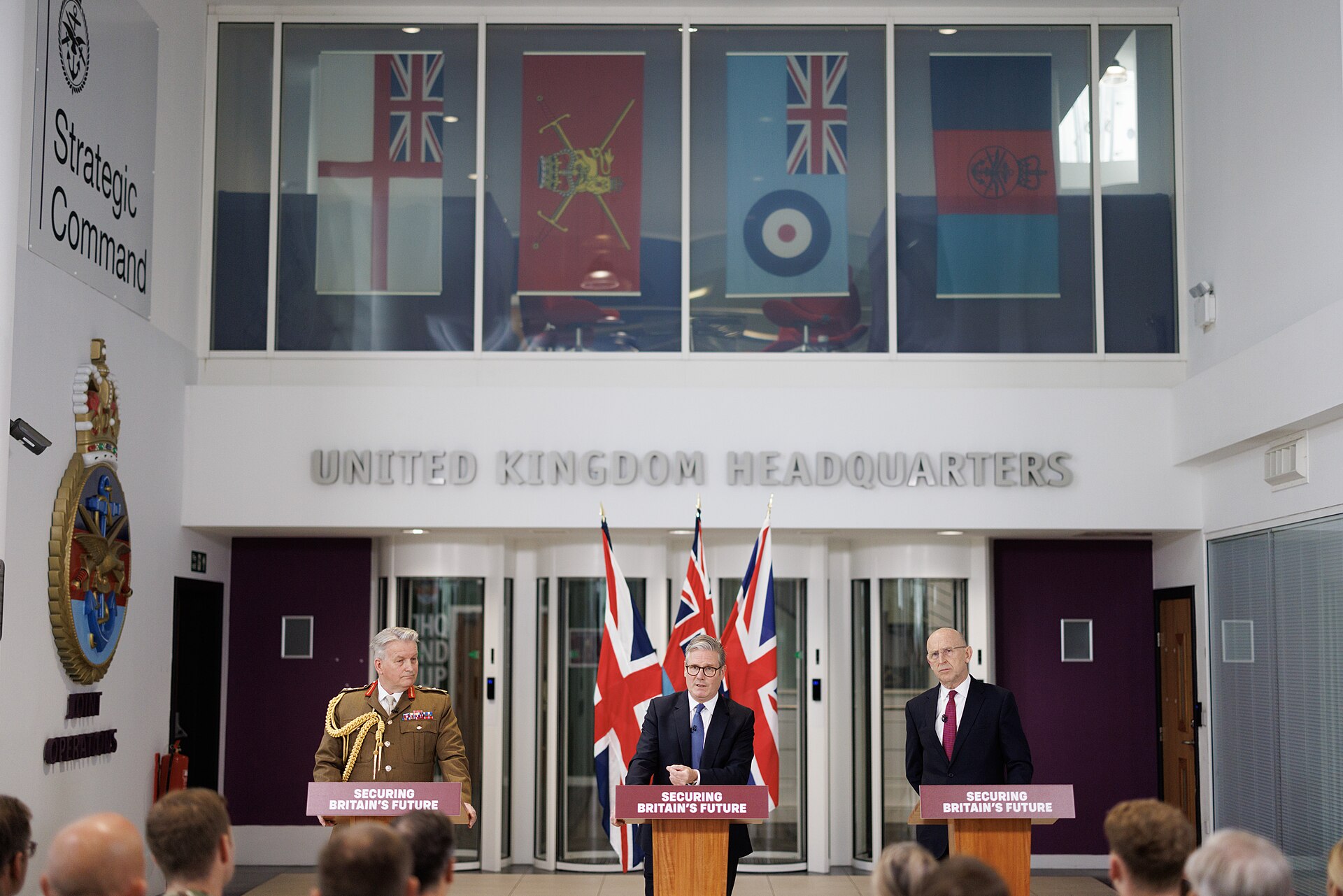
The third audience is the one that matters most for the war: foreign governments being asked to sustain Vision 2030 partnerships — defence cooperation, technology transfer, investment frameworks — through a conflict that has made Saudi Arabia simultaneously more strategically important and more commercially risky. The report’s message to Washington, London, Paris, Tokyo, and Beijing is that the pre-war achievements are durable, the institutional capacity is proven, and the partnerships will generate returns once the conflict resolves. MBS is building a military posture and a diplomatic architecture that assume continued Western and Asian engagement — the Annual Report is the economic credential he needs to sustain that engagement while the missiles are still flying.
What Actually Survived the War — And What That Reveals
The most revealing part of the Annual Report is not the numbers it highlights but the category of achievement that has genuinely survived the first eight weeks of war: the non-oil domestic economy. Wholesale and retail trade growing 6.6%, financial services up 5%, construction at 3.8% — these are not headline-grabbing figures, but they represent something the original Vision 2030 promised and, against the odds, partially delivered. The entertainment sector that MBS built from scratch — the concerts, the cinemas, the sports events that were illegal in Saudi Arabia a decade ago — continues to operate. The female workforce participation rate will not reverse because of a maritime blockade. The domestic consumer economy that Vision 2030 was supposed to create exists, and it is, for now, functioning on its own terms rather than as a derivative of oil revenue.
That partial insulation is real, and the temptation to dismiss the entire report as propaganda misses it. The diversification was always supposed to produce an economy that could absorb an oil shock without collapsing, and the non-oil sector’s Q1 2026 performance is the first live-fire test of that proposition. But the test is incomplete, because the fiscal transmission hasn’t hit yet — the government is still spending at pre-war rates, the construction projects are still drawing on committed capital, and the consumer economy hasn’t yet felt the contraction that a $40–46 billion additional deficit will eventually force. The private investment share reaching 76% of total investment means the private sector is now load-bearing in a way it wasn’t five years ago, which is precisely the vulnerability: if private capital retreats because the risk-adjusted returns no longer justify Saudi exposure, there is no government backstop large enough to replace it at current PIF cash levels.
The Clingendael Institute’s conclusion — that “further recalibration of Vision 2030 is increasingly likely” — understates what the data already shows. The recalibration happened before the war: Bloomberg confirmed in February 2026 that Saudi officials had conducted a “broad re-evaluation” that produced the giga-project cancellations and downgrades. The war didn’t force a rethink; it hit a rethink that was already underway and turned an orderly retreat into something closer to a scramble. The Annual Report’s 93% success rate is a measure of performance against targets that had themselves been adjusted downward to reflect pre-war fiscal reality — and then the war arrived and made those adjusted targets look optimistic. MBS published it because the alternative was silence, and silence from a crown prince who has made personal authorship of the national project his defining political claim would have been louder than any number Goldman Sachs could publish. The 10th-anniversary report is not a progress update; it is a wartime communiqué from a leader who needs the plan to be seen as surviving even while the conditions for its survival are being systematically destroyed on both sides of the Strait of Hormuz.
Frequently Asked Questions
What is the difference between Vision 2030’s three phases?
Vision 2030 was structured as Foundation (2016–2020), Scale (2021–2025), and Completion (2026–2030). The Annual Report marks the end of Phase 2, but Phase 3 launched into wartime conditions that invalidate many of the Phase 2 assumptions — including a stable Hormuz, predictable oil revenue above $100/bbl, and continued foreign capital inflows. The 2030 end-state targets, which the 93% figure does not measure against, remain publicly unchanged despite at least two rounds of internal recalibration confirmed by Bloomberg and Saudi officials.
How does the 2034 FIFA World Cup factor into Vision 2030’s wartime economics?
Saudi Arabia won the 2034 FIFA World Cup hosting rights in December 2024, committing to infrastructure widely estimated at $50–60 billion in stadium, transport, and hospitality build-out that was not part of the original Vision 2030 scope. AGBI flagged this as a commitment that expanded the to-do list “in a way not foreseen by the document’s authors.” The World Cup spending timeline — the bulk of construction between 2028 and 2033 — overlaps with the period when Saudi Arabia will need to finance post-war reconstruction and absorb whatever fiscal damage the conflict produces, creating a resource competition between two sets of mega-commitments that PIF is expected to backstop.
What happened to the 2030 FDI target of $100 billion annually?
The target remains officially unchanged at $100 billion per year by 2030. The 2025 figure of $35.5 billion — itself a record — represents roughly one-third of that target with four years remaining. At the 60–70% Q1 2026 decline rate estimated by investment bank analysts and cited by Middle East Insider — a single-source figure that has not been independently corroborated — the annual run-rate would fall to $10–14 billion; at the upper end of that range the figure would still exceed the $12.2 billion Saudi Arabia achieved in 2021 during post-COVID recovery, but at the lower end it would not. No Saudi official has publicly revised the $100 billion target or addressed the Q1 2026 trajectory, and the Annual Report cites only the 2025 peak.
Are there any Vision 2030 KPIs that improved during the war?
The Tadawul data is striking in this context: foreign holdings on the Saudi exchange stood at SAR 462.13 billion ($123.23 billion) at end-March 2026, four weeks into the war, suggesting that institutional investors had not yet triggered a mass exit — a reading that cuts against the FDI decline narrative if it holds through Q2. Defence-adjacent manufacturing and maintenance has also expanded under wartime demand, though Saudi Arabia does not report this as a separate Vision 2030 KPI. The non-oil economy’s Q1 2026 performance continued positive across its sub-sectors, and the Vision 2030 social indicators — female workforce participation, entertainment infrastructure, youth employment — are structurally resistant to a maritime blockade in ways that oil revenue is not, because they are driven by domestic demand and regulatory reform rather than export volumes.
What is the IRGC’s targeting relationship to Vision 2030 infrastructure?
The IRGC’s target selection throughout the war has consistently hit the economic infrastructure that underpins Vision 2030’s revenue model: Ras Tanura (Saudi Arabia’s largest oil-export terminal), the SAMREF refinery at Yanbu (struck April 3), and the East-West Pipeline pumping station (struck April 8, the day a ceasefire was nominally in effect). This is not coincidental — the IRGC’s stated doctrine targets adversary economic capacity, and Saudi Arabia’s export infrastructure is both the kingdom’s primary fiscal lifeline and the revenue source for every Vision 2030 project. Hitting Yanbu specifically targets the bypass route that was supposed to make Saudi exports resilient to a Hormuz closure, attacking the resilience architecture itself rather than just the primary system.
The IRGC targeting logic exposes a deeper strategic miscalculation: the war Riyadh privately encouraged has stripped the kingdom of its swing-producer status and with it the oil revenue that funds every Vision 2030 target. How the 3.15 million bpd production collapse transferred marginal-barrel pricing power to US shale — permanently — is the central argument in Saudi Arabia Lost Its Swing-Producer Crown to a War It Wanted.