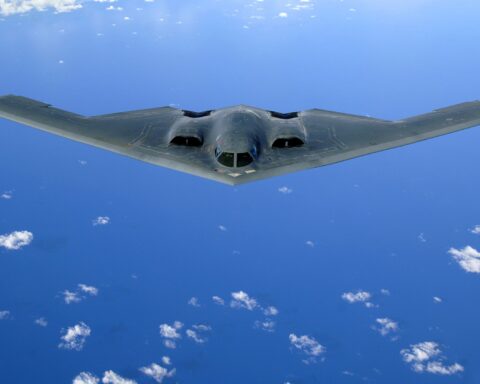
The Day Iran Attacked Saudi Arabia
On February 28, 2026, Iranian ballistic missiles struck Saudi Arabian soil for the first time in modern history. Explosions echoed across Riyadh. Air defense batteries fired over the Eastern Province. Residents of the capital — home to seven million people and the seat of Crown Prince Mohammed bin Salman’s government — heard what many described as the most terrifying sounds of their lives. Within hours, the Kingdom’s Foreign Ministry issued a statement that left no room for ambiguity: Saudi Arabia reserved the right to respond with force.
The Iranian strikes were retaliation for a joint American-Israeli military operation that had, earlier that same morning, killed Supreme Leader Ayatollah Ali Khamenei and decimated Iran’s senior military leadership in a wave of airstrikes across Tehran and western Iran. The operation — codenamed Epic Fury by the Americans and Roaring Lion by the Israelis — was the most consequential military action in the Middle East since the 2003 invasion of Iraq. It changed everything. And for Saudi Arabia, a kingdom that had spent three years carefully rebuilding diplomatic ties with Tehran through a China-brokered rapprochement, it changed everything twice.
This is the story of what happened, what it means for the Kingdom, and why the House of Saud now faces the most dangerous strategic moment since the Gulf War.
Operation Epic Fury — What Happened in Tehran
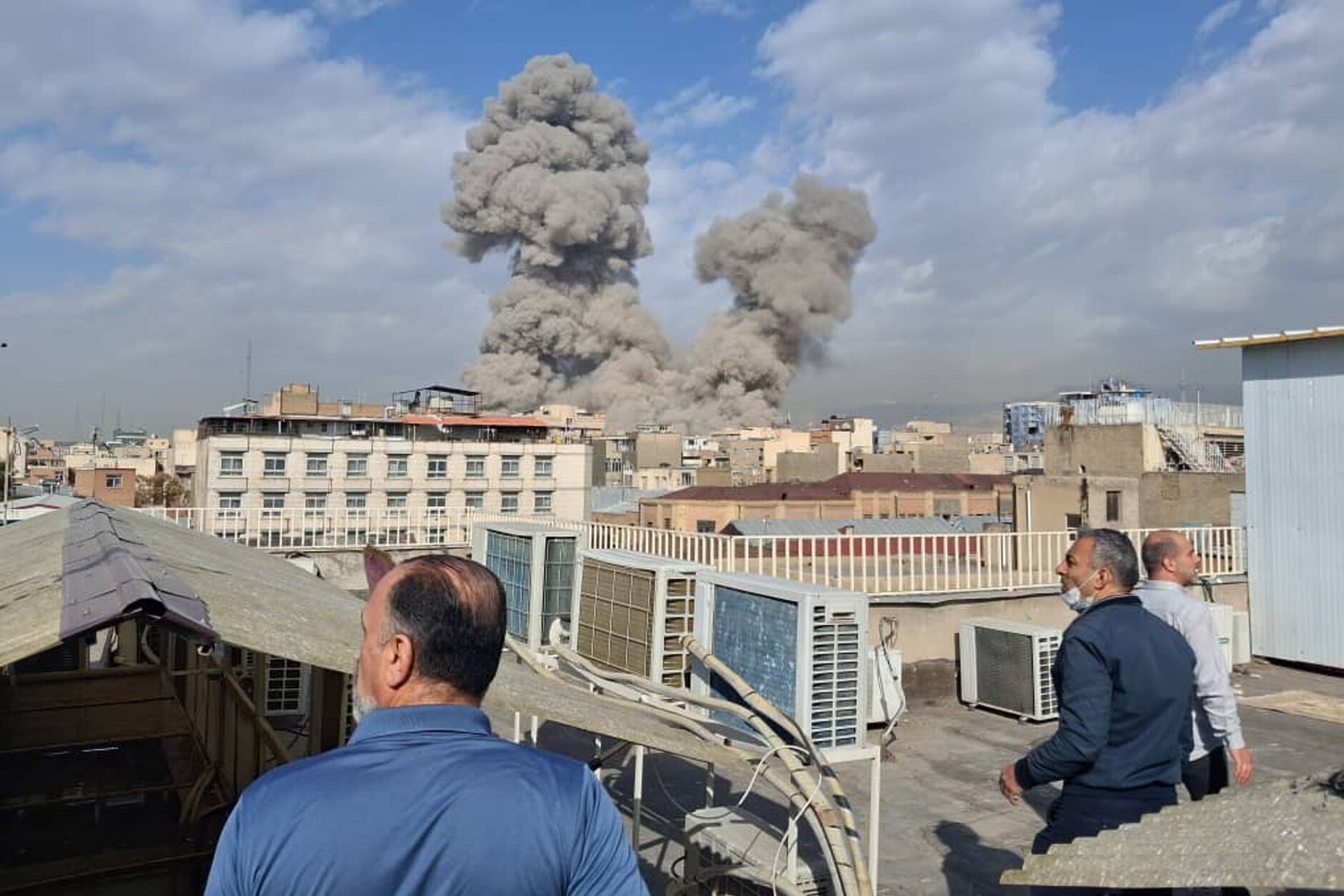
At approximately 9:27 AM Tehran time on Saturday, February 28, explosions tore through the Iranian capital. The Israeli Air Force had launched its largest-ever operation — approximately 200 fighter jets striking around 500 military targets across western and central Iran. Seven missiles hit the district where Khamenei resided, home to the presidential palace and the National Security Council. The Supreme Leader was killed.
Four Israeli security officials confirmed the death to international media. An image of Khamenei’s body was obtained by Israeli intelligence, verified, and shown to Prime Minister Benjamin Netanyahu. President Trump publicly confirmed the kill. The eighty-six-year-old cleric who had ruled the Islamic Republic for thirty-six years — longer than most Iranians had been alive — was gone.
He was not the only one. The opening strikes killed IRGC Commander Mohammad Pakpour, Defense Minister Amir Nasirzadeh, Ali Shamkhani — the adviser to the Supreme Leader who had personally negotiated the Saudi-Iran rapprochement in Beijing — and Mohammad Bagheri, Chief of Staff of the Iranian Armed Forces. Four senior intelligence commanders were also eliminated, including the head of Iran’s foreign intelligence unit. In total, Israel claimed its strikes killed seven senior defense and intelligence officials and targeted thirty top military and civilian leaders. The Iranian Red Crescent Society reported more than two hundred total casualties across the country.
The Middle East briefing 3,000+ readers start their day with.
One email. Every weekday morning. Free.
The timing was extraordinary. Nuclear talks between Iran and the United States had been underway, mediated by Oman, with the third round concluding in Geneva just two days earlier on February 26. On February 27, Iran had reportedly agreed to degrade its nuclear material stockpiles. The strikes came the very next morning — a sequence that commentators described as a deliberate move to destroy any diplomatic off-ramp before it could be taken.
Missiles Over Riyadh — Iran Strikes Back
Tehran’s response came within hours. Under an operation the IRGC named Fateh Khyber — the Conquest of Khyber, a reference loaded with Shia religious symbolism — Iran launched dozens of ballistic missiles at targets across the Persian Gulf. For the first time in history, Iran attacked all American military installations in the region simultaneously.
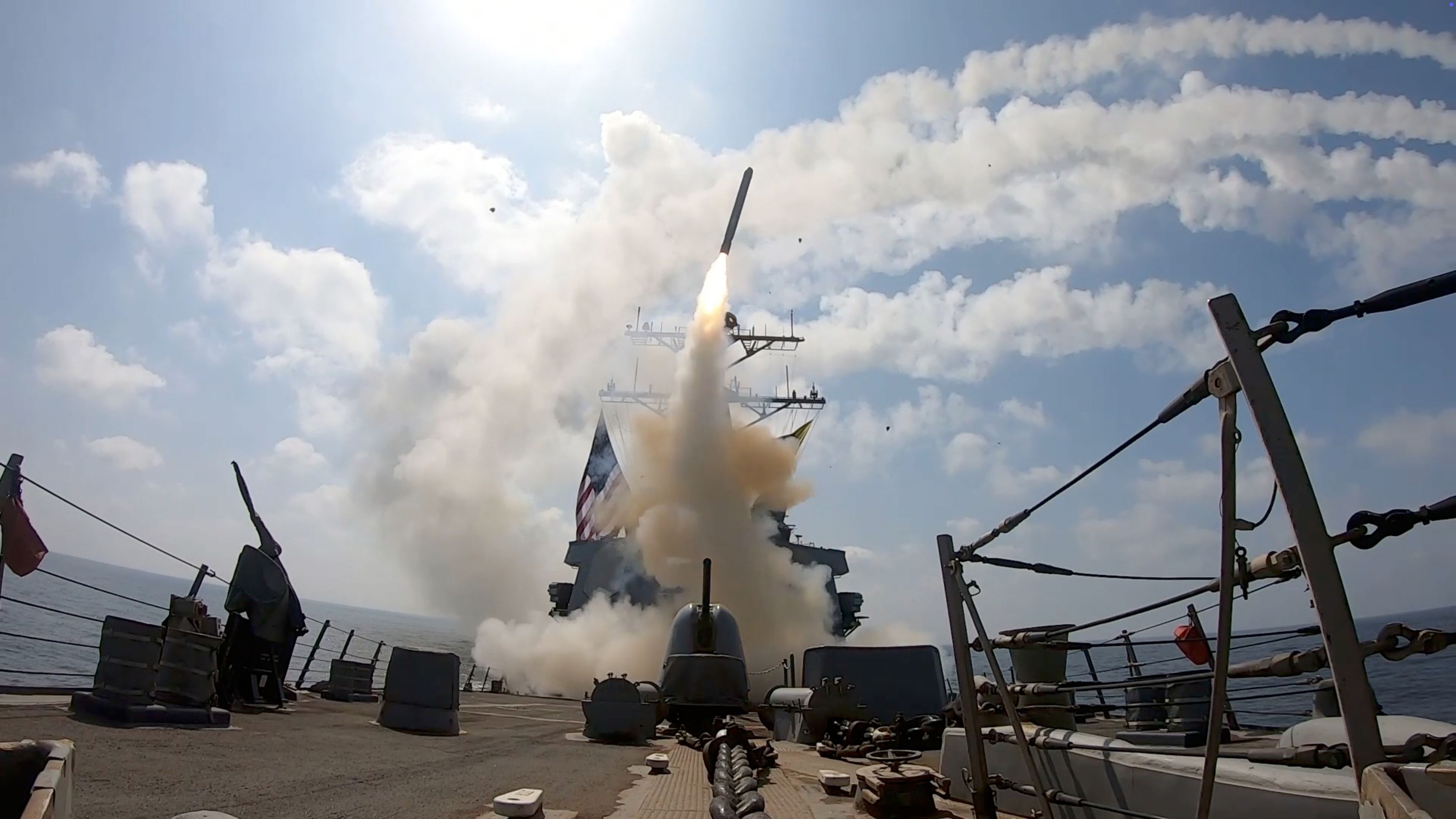
Saudi Arabia was hit. Missiles targeted Riyadh and the Eastern Province, the oil-rich heartland that contains the kingdom’s most critical energy infrastructure. The IRGC confirmed it had specifically targeted Prince Sultan Air Base, a major military installation approximately sixty kilometers south of the capital that hosts American military personnel, Patriot missile batteries, and THAAD air defense systems. Satellite imagery from earlier in the month had shown a notable increase in US aircraft at the facility — from twenty-seven to at least forty-three visible platforms, including refueling tankers and E-3 Sentry surveillance aircraft — suggesting the base had been quietly preparing for exactly this scenario.
Saudi authorities stated that the missiles targeting Riyadh and the Eastern Province were intercepted and repelled. Initial assessments indicated some infrastructure damage at Prince Sultan Air Base, though the full extent remained under evaluation. The Kingdom did not release official casualty figures.
Iran did not stop at Saudi Arabia. Missiles also struck the UAE, where one person — a Pakistani national in Abu Dhabi — was killed by debris from an intercepted warhead. Bahrain’s US Fifth Fleet base was attacked, making the tiny island kingdom the war’s most vulnerable front. Targets in Qatar, Kuwait, and Jordan were hit. Of all the Gulf Cooperation Council states, only Oman — which had been serving as mediator in the nuclear talks — was spared. In Tel Aviv, an entire apartment block was destroyed by an Iranian missile that evaded Israel’s air defenses.
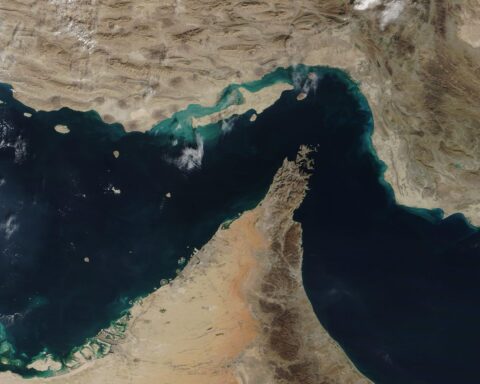
The Strait of Hormuz, through which twenty percent of the world’s oil supply passes daily, was effectively closed. Iran’s navy broadcast a radio message to commercial shipping declaring transit was banned. Insurance firms suspended coverage. Japan’s Nippon Yusen told its fleet to stay clear. Greece advised its merchant ships to reassess passage. Twenty million barrels a day of crude oil and petroleum products — the lifeblood of the global economy — stopped moving.
The Saudi Response — Measured Words, Maximum Fury
The Saudi Foreign Ministry issued two statements on February 28, and together they revealed a government that was furious, disciplined, and calculating.
The first statement addressed the attacks on Saudi territory directly. The Ministry condemned what it called Iran’s “blatant and cowardly” aggression, confirming the strikes had been repelled. It stressed a point that carried enormous diplomatic weight: the attacks came “despite the Iranian authorities’ knowledge that the Kingdom had affirmed it would not allow its airspace or territory to be used to target Iran.” Saudi Arabia, the statement made clear, had kept its word. Iran had attacked anyway. The Kingdom reserved “the right to take all necessary measures to defend its security and protect its territory, citizens, and residents, including the option of responding to the aggression.”
The second statement went further. Saudi Arabia condemned “in the strongest terms the blatant Iranian aggression and the flagrant violation of the sovereignty” of the UAE, Bahrain, Qatar, Kuwait, and Jordan, offering all its capabilities to the targeted states. This was not mere diplomatic solidarity. It was a signal to the region and the world that King Salman’s government was positioning itself as the anchor of a unified Gulf response.
But there was a third dimension to the Saudi response that revealed the full sophistication of MBS’s diplomacy. In carefully chosen language, the Foreign Ministry called on “all parties” to end the spiral of violence, noting that “the events that began with Israel and the US attacking Iran, and continued with Iran targeting third countries, are of a nature that risks the future of our region and global stability.” The Kingdom acknowledged — publicly, on the record — that Washington and Tel Aviv had started the fight. It was a masterclass in positioning: Saudi Arabia as both victim and voice of reason, condemning Iran’s aggression while refusing to give the Americans and Israelis a blank check.
MBS and the Art of Dual-Track Diplomacy
The February 28 crisis exposed what may be Mohammed bin Salman’s most consequential act of strategic maneuvering — and his most dangerous gamble.
In January 2026, as American and Israeli threats against Iran intensified, MBS personally called Iranian President Masoud Pezeshkian. The message was clear: the Kingdom would not allow its airspace or territory to be used for military actions against Iran. He emphasized solidarity among Islamic countries and stated that Riyadh rejected any form of aggression or escalation against Tehran. It was a public reassurance designed to preserve the China-brokered rapprochement that had been the diplomatic achievement of 2023.
Behind closed doors, however, a very different conversation was taking place. On January 31 — just weeks before the strikes — Saudi Defense Minister Prince Khalid bin Salman, MBS’s brother and one of his most trusted operatives, delivered a private briefing to US officials in Washington. His message, as reported by Axios, was the opposite of what Riyadh was saying publicly. If Trump did not follow through on his threats against Iran, Khalid bin Salman warned, the regime would end up stronger. His exact words: “At this point, if this doesn’t happen, it will only embolden the regime.” It was described as a reversal from Saudi Arabia’s public posture of caution and restraint.
Both messages were deliberate. Both were authorised. And both served MBS’s interests simultaneously. By publicly promising Iran that Saudi airspace was off-limits, the Crown Prince preserved the rapprochement for as long as it was useful and positioned the Kingdom to claim the moral high ground if Iran retaliated. By privately encouraging Washington to act, he helped ensure that the Iranian threat — the nuclear program, the missile arsenal, the proxy networks that had menaced Saudi Arabia for decades — would be dealt with by American and Israeli firepower rather than Saudi blood and treasure.
It was a strategy of extraordinary cynicism and extraordinary brilliance. Whether it will be remembered as a masterstroke or a catastrophic miscalculation depends entirely on what happens next.
The Death of the Rapprochement
The March 2023 agreement between Saudi Arabia and Iran, brokered by Chinese President Xi Jinping in Beijing, was heralded at the time as a diplomatic earthquake. After seven years of severed relations — triggered by the 2016 storming of Saudi diplomatic missions in Tehran and Mashhad after the execution of Shia cleric Nimr al-Nimr — the two regional powers had agreed to restore ambassadors, reopen embassies, and pursue economic cooperation. China had achieved what neither the Americans nor the Europeans could: a détente between the two most powerful states in the Persian Gulf.
That agreement is now dead. The missiles that struck Riyadh on February 28 did not merely damage buildings — they destroyed the diplomatic architecture that had taken three years to construct. Iran’s decision to attack Saudi territory, despite MBS’s explicit assurance that the Kingdom would not allow its land to be used against Tehran, was an act of betrayal that no amount of future diplomacy can undo quickly.
Within hours of the strikes, Saudi Arabia, Bahrain, and the UAE issued official condemnations of Iran by name — a unified response that analysts described as the clearest signal yet of a new regional alignment against Tehran. As the Middle East Forum observed, the rapprochement had always been transactional rather than transformational. Riyadh had maintained its defense relationship with Washington throughout and had never dismantled its strategic posture against Iranian expansionism. The 2023 deal was a hedge, not a marriage. And hedges are designed to be abandoned when circumstances change.
For China, the collapse represents a diplomatic humiliation. Beijing had wagered its credibility as a Middle Eastern power broker on the Saudi-Iran deal. That wager has been called, and China has lost.
Al Jazeera Coverage: Iran Confirms Khamenei Dead After US-Israeli Attacks
Oil Markets and the Economic Shockwave
The immediate impact on global energy markets was severe but — because the strikes occurred late in the trading week — deceptively contained. Brent crude futures jumped roughly three percent on February 28 to close above seventy-two dollars a barrel. West Texas Intermediate rose a similar amount to above sixty-seven dollars.
Those numbers masked the real danger. Analysts projected a ten-to-twenty-dollar-per-barrel jump when markets reopened on Monday if hostilities continued. JP Morgan estimated that a sustained Hormuz blockade combined with further escalation could push prices beyond one hundred and twenty dollars a barrel — more than seventy percent above pre-crisis levels. Swiss banking analysts saw a temporary spike to one hundred dollars as plausible even in a more optimistic scenario.
For Saudi Arabia, the oil price dynamics cut both ways. Higher crude prices would boost government revenues at a moment when Vision 2030 megaprojects desperately needed funding — the same budget pressures that had led to Khalid al-Falih’s dismissal as Investment Minister just two weeks earlier. But sustained disruption to the Strait of Hormuz threatened the kingdom’s own export capacity. Saudi crude that cannot reach Asian refineries generates no revenue regardless of the price on a futures screen.
The deeper risk was to investor confidence. Vision 2030 had been built on a promise: that Saudi Arabia was a stable, modernising economy where foreign capital was safe. Ballistic missiles exploding over Riyadh undermined that narrative more effectively than any amount of negative press coverage about human rights ever could. The newly appointed Investment Minister, Fahad al-Saif — brought in from the Public Investment Fund to replace al-Falih — now faced a challenge that no amount of financial engineering could solve. He needed the missiles to stop.
Iran in Chaos — The Succession Crisis
The assassination of Khamenei triggered an immediate constitutional process under Article 111 of the Iranian constitution. A Provisional Leadership Council — consisting of the President, the Chief Justice, and a cleric selected by the Expediency Discernment Council — was mandated to assume interim duties until the Assembly of Experts, an eighty-eight-member body of Islamic clerics, could select a new supreme leader.
The problem was that the Israeli strikes had not merely killed the supreme leader. They had decapitated the military command structure, eliminated key intelligence chiefs, and killed Ali Shamkhani — one of the few figures who bridged the gap between the clerical establishment and the security apparatus. The men who would normally manage a succession crisis were dead.
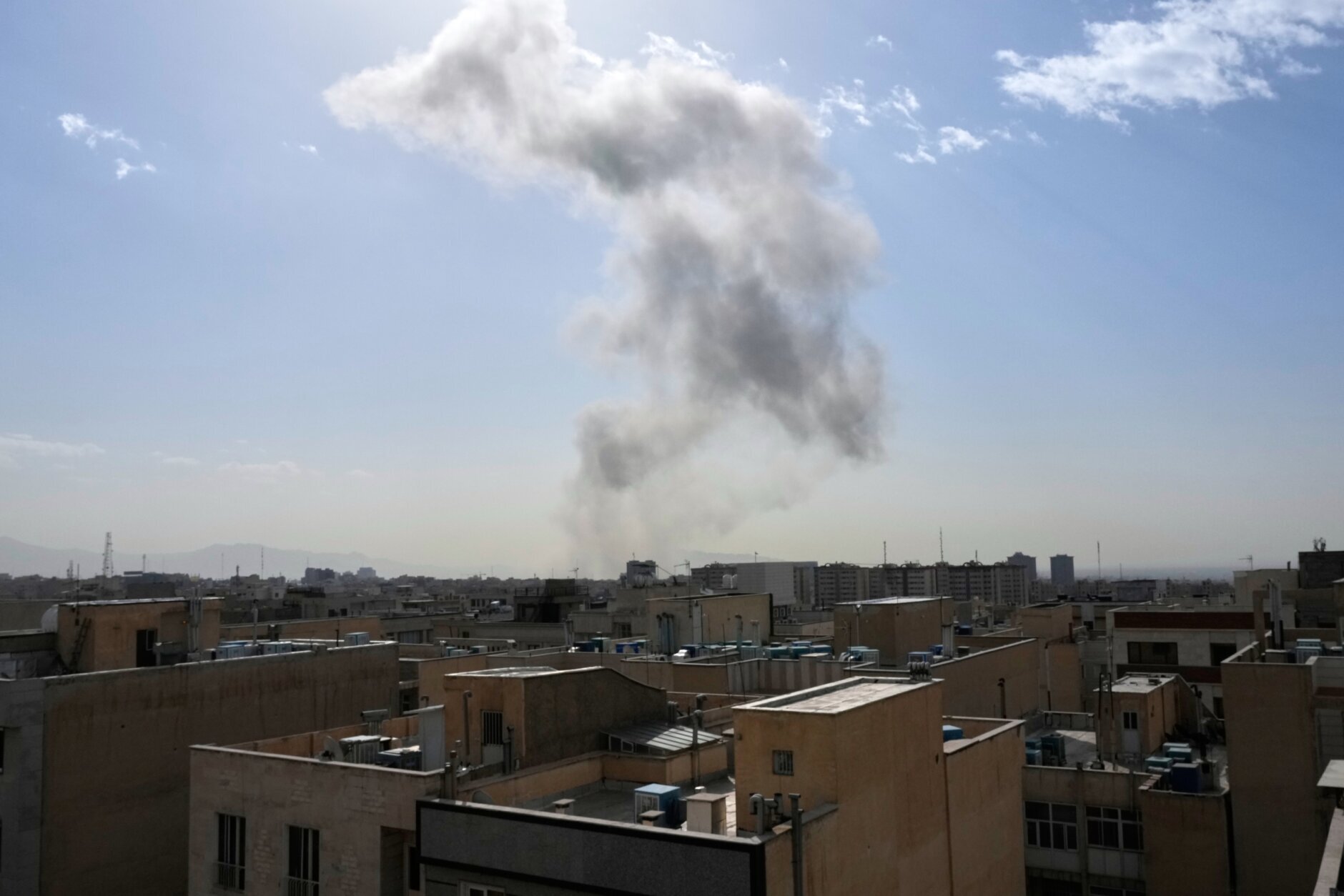
Several names circulated as potential successors: Mojtaba Khamenei, the late supreme leader’s son, though reports from mid-2025 indicated the Assembly of Experts had excluded him from a confidential shortlist. Ali Larijani, the former parliament speaker, emerged as the most visible surviving senior official, posting a defiant message vowing that Iran would deliver an “unforgettable lesson” to Israel and the United States. Hassan Khomeini, grandson of the Islamic Republic’s founder, was also mentioned. But with the chain of command shattered and the country under active bombardment, formal succession proceedings appeared impossible in the near term.
The status of President Pezeshkian remained uncertain. Iranian Foreign Minister Abbas Araghchi told NBC News before the death was confirmed that both Khamenei and Pezeshkian were alive “as far as I know” — a formulation that offered no real reassurance.
For Saudi Arabia, Iran’s internal chaos presented both an opportunity and a danger. A weakened, leaderless Iran was less capable of sustaining proxy operations across the region — the Houthi campaign in Yemen, Hezbollah’s activities in Lebanon, the Shia militia networks in Iraq. But a cornered, humiliated regime with nothing left to lose was also capable of lashing out in unpredictable ways. The IRGC still possessed thousands of ballistic missiles. And desperation, as Saudi royal history has demonstrated repeatedly, is the most dangerous fuel for escalation.
The House of Salman Under Fire
The February 28 strikes placed the House of Saud in a position it had spent decades trying to avoid: caught between American military action and Iranian retaliation on its own soil. The kingdom’s multi-billion-dollar air defense systems — Patriots, THAAD batteries, and the domestically integrated Saudi Air Defense network — had been tested in real combat for the first time against a full-spectrum Iranian ballistic missile attack.
The performance appeared to have been effective, with the Kingdom claiming all incoming missiles were intercepted or repelled. But as a subsequent investigation into whether the Kingdom’s $80 billion air defense shield actually worked against Iran would reveal, the reality was far more complicated than official claims suggested. The mere fact that Iranian warheads had been launched at the Saudi capital was a psychological blow that no successful intercept could fully mitigate. Riyadh — a city of gleaming towers, sovereign wealth fund headquarters, and the administrative heart of the most powerful Arab state — had been a target. The illusion of geographic invulnerability, sustained by decades of deterrence and American security guarantees, had been shattered.
For MBS personally, the crisis was a test of everything he had built. The Crown Prince had spent a decade consolidating power, reshuffling ministries, and positioning the Kingdom as a modern, diversified economy that could transcend its dependence on oil. He had placed his brother Khalid bin Salman at the Ministry of Defence precisely to ensure that the military answered to the House of Salman directly. He had cultivated relationships with both Washington and Beijing, with both Israel and Iran, maintaining strategic ambiguity as a source of leverage.
Now that ambiguity was collapsing. The missiles over Riyadh demanded clarity. Saudi Arabia could not simultaneously be Iran’s diplomatic partner and the beneficiary of Iran’s military destruction. The Kingdom would have to choose — and the events of February 28 suggested the choice had already been made in that private briefing room in Washington where Khalid bin Salman told the Americans to act.
MBS’s Phone Calls — Building the Coalition
Within hours of the Iranian strikes, Mohammed bin Salman was on the phone with every leader that mattered. He called the rulers of the UAE, Bahrain, Kuwait, and Qatar — the same Gulf states that had been hit by Iranian missiles — coordinating what amounted to a unified regional response. President Trump also spoke with Saudi leadership, confirmed by White House press secretary Karoline Leavitt.
The calls served multiple purposes. They established Saudi Arabia as the convening power of the Gulf response — the state that other Arab leaders looked to first when the missiles were still in the air. They signaled to Washington that the GCC was united behind American action, even if the public language remained more cautious. And they laid the groundwork for what could become the most significant shift in Gulf security architecture since the 1991 liberation of Kuwait: a formal, permanent defensive alliance against Iran, with Saudi Arabia at its center and American firepower as its guarantee.
One notable absence from the rapprochement’s wreckage was any Saudi-Israeli normalisation breakthrough. Despite the shared interest in confronting Iran, Riyadh continued to insist on a credible path toward a Palestinian state as a precondition for formal relations with Israel. MBS had reiterated this red line during his Oval Office visit with Trump. The Israeli strikes on Iran had not changed the Palestinian equation — if anything, the devastation in Tehran and the civilian casualties across the Gulf made public normalisation with Israel even harder to sell to Arab and Muslim opinion.
What Comes Next for the Kingdom
As of March 1, 2026, the crisis remained in its opening phase. Trump stated that strikes would continue “as long as necessary,” describing the objective as destroying Iran’s missile capabilities, preventing nuclear acquisition, and — most ominously — regime change. The EU urged maximum restraint. Oman warned Washington not to get drawn deeper into a quagmire. The Strait of Hormuz remained closed to commercial traffic.
For Saudi Arabia, the immediate priorities were clear. First, demonstrate that the kingdom’s air defenses could protect its citizens and critical infrastructure against sustained Iranian attack. Second, maintain the unified Gulf front that MBS had assembled in his flurry of phone calls — any fracture among the GCC states would be exploited by Tehran and its remaining proxy networks. Third, manage the economic fallout: oil prices rising was good for the treasury, but a prolonged Hormuz closure was catastrophic for exports, and the spectacle of missiles over Riyadh was devastating for the foreign investment pipeline that Vision 2030 required.
The longer-term implications were even more consequential. If Iran’s regime collapsed — a possibility that analysts were beginning to discuss openly — Saudi Arabia would face a power vacuum on its northeastern frontier that could prove as dangerous as the one that followed the fall of Saddam Hussein in Iraq. A fragmented Iran, with competing factions controlling different parts of the country and its missile arsenal, was arguably more threatening than a unified Iran under a rational, self-interested supreme leader.
And if Iran’s regime survived — weakened, humiliated, but intact — the kingdom would face an adversary with nothing left to lose and every incentive to seek revenge through the proxy networks and asymmetric capabilities that had made it the most persistent threat to Saudi security for decades.
Either way, the era of strategic ambiguity was over. Mohammed bin Salman had spent years playing all sides — courting Washington, hedging with Beijing, engaging Tehran, flirting with Tel Aviv. The missiles that flew over Riyadh on February 28, 2026, ended that game. The kingdom now stood exactly where MBS had privately wanted it all along: firmly in the American camp, with Iran’s military power being dismantled by someone else’s air force, and with the moral authority of a nation that had been attacked without provocation.
Whether that position would prove as comfortable as it looked from the Crown Prince’s war room remained to be seen. The Middle East has a long history of rewarding the clever and punishing the overconfident. And the difference between the two, as every king who has ever ruled this kingdom understood, is often visible only in hindsight.
Frequently Asked Questions
Did Iran attack Saudi Arabia?
Yes. On February 28, 2026, Iran launched ballistic missiles at Riyadh and Saudi Arabia’s Eastern Province as part of a retaliatory operation following US-Israeli strikes that killed Supreme Leader Ayatollah Khamenei. Saudi authorities stated all incoming missiles were intercepted or repelled. The IRGC confirmed targeting Prince Sultan Air Base south of Riyadh.
Why did Iran attack Saudi Arabia?
Iran’s strikes were retaliation for a joint American-Israeli military operation that killed Khamenei and senior Iranian military leaders. Iran targeted all US military installations across the Gulf simultaneously, including bases in Saudi Arabia, the UAE, Bahrain, Qatar, Kuwait, and Jordan. Saudi Arabia stated the attacks came despite the Kingdom’s explicit assurance that it would not allow its territory to be used against Iran.
Is the Saudi-Iran rapprochement over?
The March 2023 China-brokered agreement between Saudi Arabia and Iran is effectively dead. Iran’s decision to launch missiles at Saudi territory — despite MBS’s personal assurance to President Pezeshkian that Saudi airspace would not be used against Iran — destroyed the diplomatic framework. Saudi Arabia, the UAE, and Bahrain all issued formal condemnations of Iran within hours of the attacks.
What happened to Ayatollah Khamenei?
Ayatollah Ali Khamenei was killed on February 28, 2026, when Israeli missiles struck the compound in Tehran where he resided. His death was confirmed by Israeli security officials, the US government, and President Trump. Multiple senior Iranian military and intelligence officials were also killed in the strikes, triggering a succession crisis under Iran’s constitutional provisions.
How did Saudi Arabia respond to the Iranian attacks?
Saudi Arabia condemned the strikes as “blatant and cowardly,” reserved the right to respond militarily, and coordinated a unified Gulf response. Crown Prince Mohammed bin Salman personally called the leaders of the UAE, Bahrain, Kuwait, and Qatar to coordinate the regional response. The Kingdom also notably acknowledged that the crisis began with US-Israeli strikes on Iran, positioning itself as both victim and voice of reason.
What is the impact on oil prices?
Brent crude rose approximately three percent on February 28 to above seventy-two dollars a barrel. However, with the Strait of Hormuz effectively closed to commercial traffic and hostilities ongoing, analysts projected much larger increases when markets reopened. JP Morgan estimated a sustained blockade could push prices beyond one hundred and twenty dollars a barrel.
The strikes followed the collapse of Oman-mediated nuclear talks in which Iran had reportedly agreed to eliminate its enriched uranium stockpile and accept full IAEA verification. A detailed reconstruction of those negotiations and the final hours before the order to strike is available in The Deal That Died in Oman.