The Peace Deal That Died — How Diplomacy Was Killed 48 Hours Before the Bombs Fell
On February 26, diplomats in Geneva believed they had achieved a breakthrough that could avert war. Forty-eight hours later, Operation Epic Fury reduced that promise to rubble — along with the man who had spent years building the very architecture of peace.
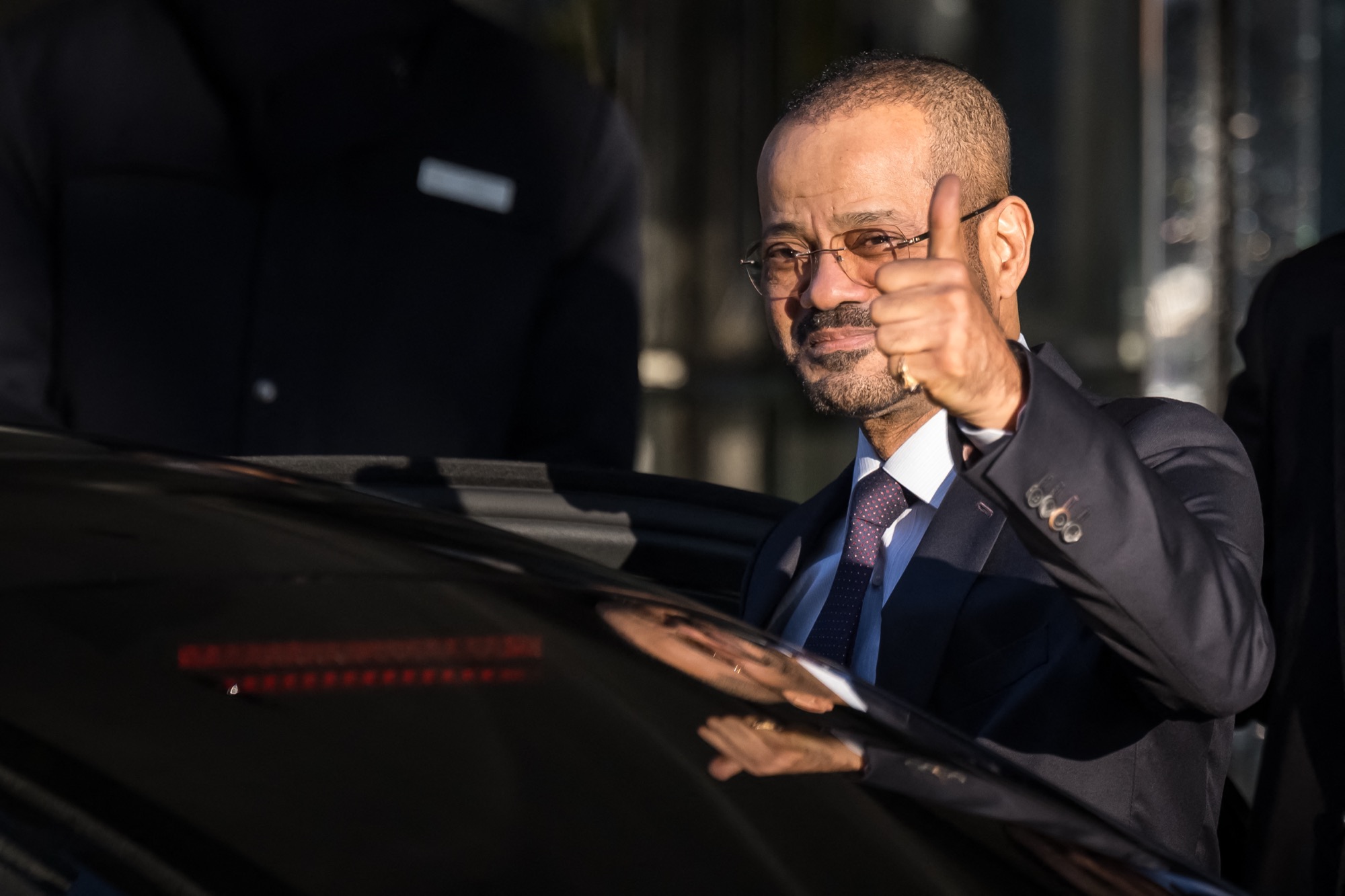
On the evening of February 26, 2026, Oman’s Foreign Minister Badr bin Hamad Al Busaidi stood before reporters in Geneva and delivered what should have been the most consequential diplomatic statement of the decade. Iran, he announced, had agreed during the third round of indirect talks with the United States to never stockpile enriched uranium and to accept full, comprehensive verification by the International Atomic Energy Agency. The Omani mediator told the press he believed all outstanding issues could be resolved “amicably and comprehensively” within a few months. A fourth round of talks was already being planned.
In diplomatic terms, this was enormous. After the catastrophe of the June 2025 strikes, after months of escalation, proxy warfare, and nuclear brinkmanship, a sovereign nation with every reason to pursue a weapon had instead agreed to the core demand that the West had spent two decades trying to extract. Iran would degrade its stockpiles to the lowest level possible, convert material into irreversible fuel, and open its doors to international inspectors. The road to a deal — a real, verifiable, enforceable deal — was open.
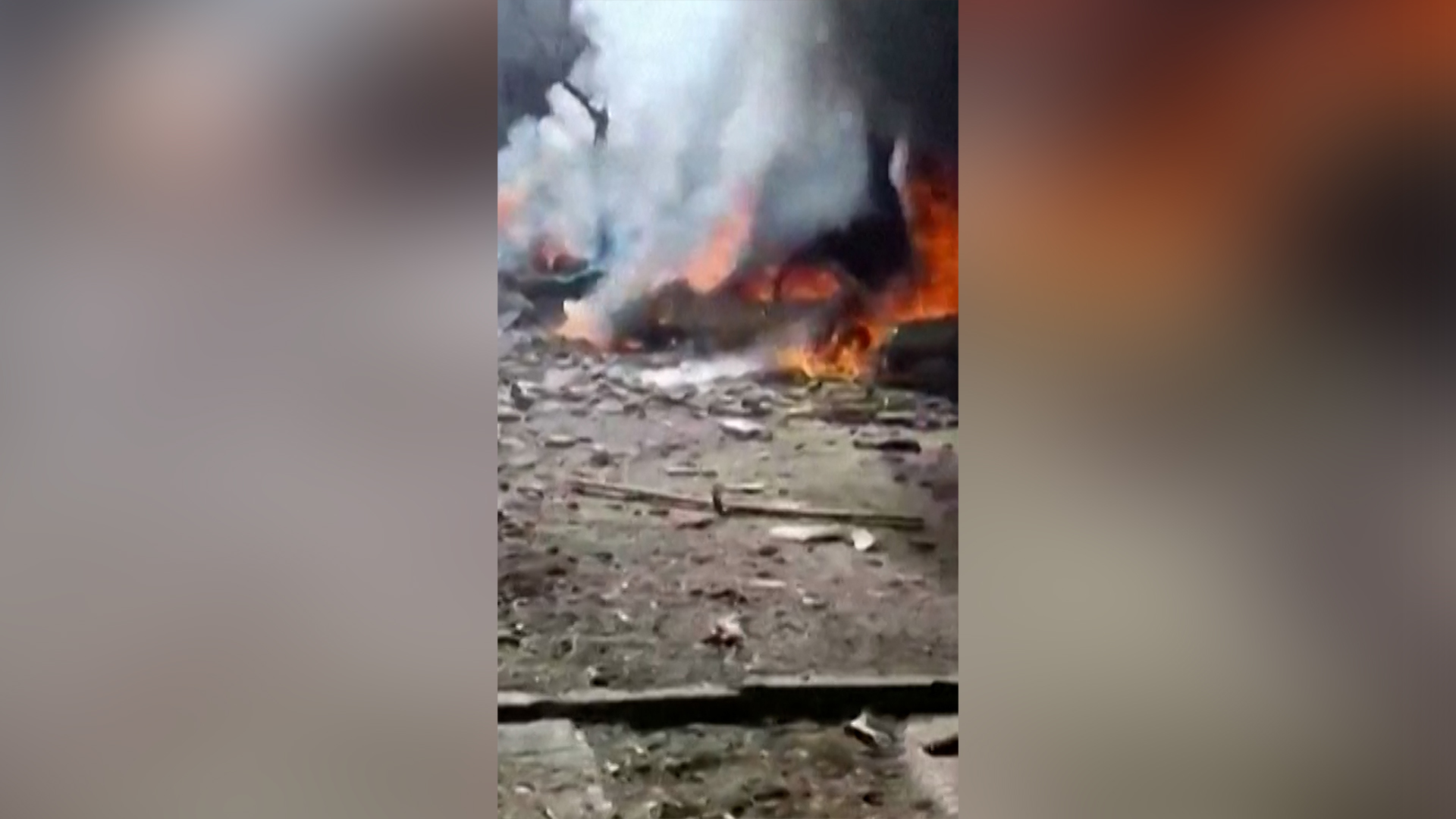
Forty-eight hours later, at approximately 1:00 a.m. Eastern Time on February 28, Tomahawk cruise missiles launched from U.S. naval vessels in the Persian Gulf, followed by precision munitions dropped from American and Israeli fighter jets. Operation Epic Fury, as the Pentagon designated it — Roaring Lion to the Israelis — was the largest joint air campaign in the history of either military. Some 200 Israeli aircraft alone participated, dropping hundreds of munitions on approximately 500 targets across Iran. Before dawn, Supreme Leader Ayatollah Ali Khamenei was dead. So was Ali Shamkhani, the secretary of Iran’s Defence Council — the man who, three years earlier, had sat in a room in Beijing and built the diplomatic framework that was supposed to prevent exactly this.
This is the story of the peace deal that died — not because it failed, but because it was deliberately killed.
What Was Agreed in Geneva
The third round of indirect U.S.-Iran negotiations in Geneva was, by all accounts, the most substantive session since the talks began. Mediated by Oman, the discussions saw the two sides — who still refused to sit in the same room — exchange proposals through Omani intermediaries over the course of several days. The framework that emerged addressed the single most contentious issue in the entire Iranian nuclear file: what happens to enriched uranium.
The Middle East briefing 3,000+ readers start their day with.
One email. Every weekday morning. Free.
Under the terms conveyed by the Omani foreign minister, Iran agreed to degrade its current stockpiles of nuclear material to the lowest level possible, convert that material into reactor fuel in a process that would be irreversible, and submit to full and comprehensive IAEA verification. This was not a vague commitment to future negotiations. It was a concrete, actionable framework — one that went further, in several respects, than the terms of the original 2015 Joint Comprehensive Plan of Action. The JCPOA allowed Iran to enrich to 3.67 percent and maintain a 300-kilogram stockpile of low-enriched uranium. The Geneva framework would have eliminated the stockpile entirely and made the conversion irreversible. For nonproliferation experts, this was the gold standard.
There were, of course, outstanding disagreements. Iranian state television reported that Tehran remained insistent on its right to continue enriching uranium, rejected proposals to transfer material abroad, and sought the lifting of international sanctions. These were not trivial matters. But they were the kind of issues that diplomats resolve in fourth and fifth rounds of talks — the kind of friction that, in every successful negotiation in history, precedes a deal rather than preventing one.
The fourth round was never held.
Oman’s Quiet Role — and Why It Was the Only GCC State Spared
Oman’s role as mediator was not accidental. The Sultanate has spent decades cultivating a unique position in the Gulf: a GCC member that maintains warm relations with Iran, hosts American military facilities but refuses to join anti-Iranian coalitions, and serves as a quiet back channel when louder voices dominate the region. It was Oman that facilitated the secret Obama-era talks that led to the JCPOA. And it was Oman that, in the winter of 2026, once again stepped into the breach.
When Iran launched its retaliatory strikes on February 28, the pattern of targeting told a story that diplomats immediately understood. Saudi Arabia was hit. The United Arab Emirates was hit. Bahrain, Kuwait, and Qatar — all states that host significant American military assets — were targeted. Oman was the only GCC member not struck. Initial reports confirmed that the Sultanate was entirely spared; although Omani authorities later reported that two drones targeted a port facility on the following day, the contrast was unmistakable. Iran’s message was clear: those who facilitate war will bear its consequences; those who facilitate peace will be recognized for it.
For the broader region, this lesson deserves far more attention than it has received. Oman’s neutrality was not weakness — it was the only form of security that actually worked. The Sultanate’s decision to serve as an honest broker provided its citizens with the one thing that missile defense systems could not guarantee: the absence of incoming fire. The other GCC states, now assessing the damage from Iranian retaliation, might reconsider their own calculations in light of Oman’s example.
The Two Timelines: Diplomacy and War Planning
What makes the destruction of the Geneva process so devastating is not merely that it happened, but that it was premeditated. The diplomatic track and the military track were not parallel efforts competing for presidential attention. They were, according to extensive reporting by the Washington Post and the Times of Israel, a deliberate deception — with diplomacy serving as cover for war.
The military timeline began long before the diplomatic one. According to the Times of Israel, Prime Minister Benjamin Netanyahu and President Donald Trump began planning for a potential strike on Iran’s nuclear program after a meeting in February 2025 — a full year before the Geneva talks. During that meeting, their first under Trump’s second term, Netanyahu presented Trump with four options: an exclusively Israeli attack, an Israeli-led attack with minimal U.S. support, a fully collaborative operation, or a U.S.-led assault. What followed was what the Times of Israel described as an elaborate public deception program designed to mask the preparations.
The diplomatic timeline, by contrast, began in earnest only after the June 2025 strikes failed to achieve their stated objectives. When a classified Defense Intelligence Agency assessment found that the bombing of Fordow, Natanz, and Isfahan — carried out with fourteen GBU-57 Massive Ordnance Penetrator bunker busters dropped by B-2 Spirit stealth bombers — had set Iran’s nuclear program back by less than six months, the administration needed a new approach. Or at least, it needed the appearance of one.
The first round of indirect talks took place in January 2026. The second round followed in early February. By the time the third round convened in Geneva on February 26, the largest U.S. military buildup in the Middle East since the 2003 invasion of Iraq was already complete. Aircraft carriers were in position. Stealth bombers were fueled. Target packages were finalized. The talks were not an alternative to war. They were a countdown clock.
Trump himself offered a telling signal. On the day the Geneva talks concluded, he told reporters that he was “not exactly happy with the way they’re negotiating.” This was not the statement of a leader weighing options. It was the public justification for a decision already made.
The Saudi Calculation: Public Peace, Private War
No actor in this drama played a more contradictory role than the Kingdom of Saudi Arabia. The public record shows a government committed to de-escalation. The private record, as revealed by the Washington Post and Axios, shows something very different.
On January 27, 2026, Crown Prince Mohammed bin Salman called Iranian President Masoud Pezeshkian and delivered a clear assurance: the Kingdom would not allow its airspace or territory to be used for any military actions against Iran, regardless of their origin. The Saudi Press Agency published the statement in full. It was a remarkable commitment — a direct, personal guarantee from the leader of the Arab world’s most powerful state to the president of its most significant rival.
Four days later, on January 31, a very different message was being delivered in Washington. Prince Khalid bin Salman, the Saudi Defense Minister and MBS’s brother, met privately with approximately fifteen think tank experts and representatives from five Jewish organizations. According to sources present in the room, as reported by Axios, KBS told the assembled group that if Trump did not follow through on his threats against Iran, the regime would only end up stronger. His exact words, according to multiple attendees: “At this point, if this doesn’t happen, it will only embolden the regime.”
The contradiction is staggering. In the span of four days, the Saudi leadership delivered diametrically opposed messages to the two parties in the conflict. To Iran: we will protect your sovereignty. To the Americans and their allies: you must strike, or Iran will grow stronger. This was not a government hedging its bets. This was a government that had already chosen a side but needed to maintain deniability.
The Washington Post subsequently reported that MBS made multiple private phone calls to Trump over the preceding weeks, personally advocating for a U.S. attack — even as his government publicly supported a diplomatic solution. Netanyahu, meanwhile, continued his long-running public campaign for strikes against what he views as an existential enemy. Together, the Israeli prime minister and the Saudi crown prince formed what one former U.S. official described as the most effective lobbying operation in the history of American foreign policy.
The question Saudi strategists must now answer is whether the outcome justified the cost. Iran’s retaliatory strikes hit Riyadh and the Kingdom’s eastern region, despite the very assurances MBS had given Pezeshkian. The Saudi Foreign Ministry noted, with bitter irony, that the attacks came despite Iran knowing the Kingdom had pledged not to allow its territory to be used against Tehran. The private lobbying for strikes had been heard, and the public assurances were now worthless.
The Nuclear Question: Was Iran Actually Close to a Bomb?
The stated justification for both the June 2025 strikes and Operation Epic Fury was Iran’s nuclear program. But the evidence, examined carefully, tells a more complicated story than the one presented to the American public.
Begin with what the IAEA actually found. In the months following the June 2025 strikes, Iran denied inspectors access to the damaged facilities at Fordow, Natanz, and Isfahan. A confidential IAEA report confirmed that, due to this lack of access, the agency could not verify whether Iran had suspended all enrichment-related activities or confirm the current size, composition, or location of its enriched uranium stockpiles. This was a genuine concern — opacity is always dangerous in nuclear affairs.
Satellite imagery added to the ambiguity. Planet Labs images showed that Iran had constructed roofs over damaged buildings at both Isfahan and Natanz — structures that blocked satellite observation, the IAEA’s only remaining monitoring method. Analysts assessed that these coverings were likely not reconstruction but rather efforts to assess whether key assets, including limited stocks of highly enriched uranium, had survived the June strikes.
But here is what is equally important: Iran was at the negotiating table. It was engaging, through Omani mediation, in substantive discussions about the very issues that the strikes were supposed to address. The Geneva framework would have provided exactly what the IAEA needed — full, comprehensive verification access — and would have done so through consent rather than coercion. The question is not whether Iran’s nuclear activities were concerning. Of course they were. The question is whether the appropriate response to a country that had just agreed to full IAEA verification was to bomb it forty-eight hours later.
The classified DIA assessment from mid-2025 provides critical context. The fourteen GBU-57 bunker busters dropped on Fordow, Natanz, and Isfahan — the most powerful conventional weapons in the American arsenal — set Iran’s nuclear program back by less than six months. Iran’s centrifuges remained largely intact. Enriched uranium had been moved prior to the strikes. Iran’s capacity was, in the assessment of multiple analysts, dented but not destroyed.
If the most powerful bombs in existence could not eliminate Iran’s nuclear capabilities, the argument for a diplomatic solution was the only rational path. The Geneva framework offered what bombs never could: a voluntary commitment to disarmament, backed by international verification, addressing not just the current stockpile but the future trajectory of the program. The decision to destroy that framework at the moment of its greatest promise represents a strategic failure of historic proportions.
Shamkhani: The Peace Architect Who Became a Target
Among the hundreds of targets struck on February 28, one carries a symbolism so heavy it borders on the operatic. Ali Shamkhani — the former Iranian defense minister, the secretary of the Defence Council, the veteran Revolutionary Guard commander who had spent decades navigating the treacherous waters between Iranian hardliners and the outside world — was confirmed killed by the Israeli military.
Shamkhani was not merely a senior official. He was the architect of the most significant diplomatic breakthrough in the modern history of the Middle East. In March 2023, after months of quiet negotiations through Iraq and Oman, Shamkhani led the Iranian delegation to Beijing for five days of previously unannounced talks with Saudi Arabia. The result was the restoration of diplomatic relations after seven years of severance — a deal so unexpected that it stunned capitals from Washington to London.
The Beijing agreement produced tangible results. By September 2023, Iran and Saudi Arabia had exchanged ambassadors. Trade resumed. Diplomatic channels frozen since 2016 reopened. The agreement represented something genuinely rare in Middle Eastern affairs: a de-escalation driven by the parties themselves, rather than imposed by external powers.
Shamkhani was the thread connecting this history to the present. The first Iranian defense official to visit Saudi Arabia since the revolution, he was exactly the kind of interlocutor that a serious peace process requires — a figure with enough credibility among hardliners to deliver compromises, and enough sophistication to understand what the other side needs.
His death was not collateral damage. The IDF specifically confirmed his killing alongside Khamenei and other senior officials. Whether the targeting was driven by military logic, political calculation, or something else entirely, the effect is the same: the man who built the bridge between Tehran and Riyadh is gone, and with him, the institutional memory and personal relationships that made the Beijing rapprochement possible. Future diplomats attempting to rebuild what was destroyed will find no Shamkhani waiting on the other side of the table.
Why Trump Chose Force Over Talks
The decision to launch Operation Epic Fury while a diplomatic process was actively producing results demands explanation. Several factors, drawing on the available reporting, appear to have converged.
First, the lobbying campaign. The Washington Post’s reporting makes clear that MBS and Netanyahu conducted weeks of sustained private advocacy for military action. Together, they presented a united front — the two most significant U.S. partners in the Middle East, both urging the same course of action. For a president who prizes personal loyalty, this was a powerful force.
Second, the ideological commitment to regime change. Trump’s own words betray the true objective. In a video address on February 28, he told the Washington Post that his main concern was “freedom” for the Iranian people, appealing directly to Iranians: “When we are finished, take over your government.” This is not the language of nuclear containment. It is the language of regime change — the very policy Trump had repeatedly pledged to avoid.
Third, the perceived failure of the June 2025 strikes created pressure to escalate rather than accept limitations. Having bombed Iran’s nuclear facilities once and failed to achieve lasting results, the administration faced a choice: acknowledge that military force alone cannot solve the nuclear question, or double down. The Geneva talks represented the first path. Operation Epic Fury represented the second.
Fourth, and most speculatively, the domestic political context may have played a role. Just 34 percent of Americans supported the strikes according to YouGov polling — the lowest public backing for any major U.S. military action in modern history, compared to 92 percent for Afghanistan in 2001 and 71 percent for Iraq in 2003. Even among Republicans, only 69 percent backed the strikes. A president may have calculated that dramatic action would shift the narrative. If so, the calculation has thus far failed.
The International Response and Its Meaning
The global reaction was swift and, for the United States, largely unfavorable. UN Secretary General António Guterres condemned the strikes for violating Iran’s sovereignty and called for an immediate cessation of hostilities. China called for the immediate cessation of military action and a return to negotiations. Russia went further, describing the strikes as a “pre-planned and unprovoked act of armed aggression” and accusing Washington of pursuing regime change under the guise of nuclear concerns. The two powers jointly requested an emergency Security Council meeting.
For the Kingdom of Saudi Arabia, the international response carries particular implications. The Beijing rapprochement of 2023 signaled that Riyadh was diversifying its strategic relationships beyond Washington. China’s role as broker of the Iran-Saudi deal positioned Beijing as a credible actor in Gulf security for the first time. The destruction of that framework — by the very partner Saudi Arabia chose over China — raises uncomfortable questions. If Washington was willing to sabotage a diplomatic process that served Saudi interests in regional stability, what exactly is the value of the American security guarantee?
The Saudi Calculation: Victory or Trap?
The House of Saud now faces a strategic landscape fundamentally altered by decisions it helped engineer. The question is whether the outcome serves Saudi interests — or whether the Kingdom has been drawn into a conflict that benefits others at its expense.
The case for the strikes, as articulated privately by Khalid bin Salman, rests on the assumption that Iran’s regime is a permanent threat that cannot be managed through diplomacy. The removal of Khamenei eliminates a figure who presided over decades of proxy warfare, Houthi support, and regional destabilization. In this view, the strategic calculus is straightforward.
But the costs are already mounting. Iranian missiles struck Saudi territory. The Kingdom’s credibility as a neutral interlocutor, carefully built through the Beijing process, has been shattered. The economic disruption of regional conflict threatens the investment climate that Vision 2030 requires. And the political vacuum in Tehran may produce not the moderate government that regime change advocates fantasize about, but something far more dangerous: a fragmented, radicalized state with nuclear knowledge, shattered institutions, and nothing left to lose.
The Beijing deal was, for Saudi Arabia, a genuine strategic achievement — proof that the Kingdom could pursue its security interests through diplomacy and do so independently of Washington. The destruction of that achievement represents a return to a security model in which the Kingdom’s safety depends entirely on American military power. Given that the June 2025 strikes demonstrably failed to eliminate Iran’s nuclear capabilities, and given that the diplomatic alternative was working, this is a regression that Saudi strategists may come to regret.
The Road Not Taken
It is worth pausing to consider what the world might look like today if the Geneva framework had been allowed to proceed. Iran had agreed, through Omani mediation, to the core demand of the international community: no stockpiling of enriched uranium, full IAEA verification, irreversible conversion of existing material into fuel. A fourth round of talks was planned. Disagreements remained — on enrichment rights, on sanctions relief — but these were the normal friction of negotiation, not insurmountable barriers.
A deal along these lines would have achieved what no amount of bombing can: a voluntary, verified commitment by Iran to constrain its nuclear program, backed by the institutional authority of the IAEA. It would have preserved the Beijing rapprochement, maintained Saudi credibility, avoided the human cost of war, and given the Iranian people a government that had chosen negotiation over confrontation.
Instead, the world has Operation Epic Fury: a dead supreme leader, a dead peace architect, Iranian missiles striking Gulf capitals, the lowest domestic support for American military action in modern history, condemnation from every major power except Israel, and a nuclear program that has proven remarkably resilient to aerial bombardment.
The peace deal did not fail. It was murdered — killed in its cradle by actors who preferred the certainty of violence to the uncertainty of diplomacy. History will record that on February 26, 2026, the outlines of a solution were visible to anyone willing to look. And history will record that forty-eight hours later, the bombs fell anyway.
For the Kingdom of Saudi Arabia, which played a role on both sides of this tragedy, the reckoning is only beginning. The Beijing deal is ashes. The Omani channel is compromised. The man who built the bridge is dead. And the question that will define Saudi foreign policy for a generation is now unavoidable: was the destruction of diplomacy worth what came next?
Frequently Asked Questions
What did Iran agree to in the Geneva talks on February 26, 2026?
According to Oman’s Foreign Minister, Iran agreed to never stockpile enriched uranium, to degrade its current stockpiles by converting them into irreversible fuel, and to accept full IAEA verification. These commitments represented a significant breakthrough, although disagreements over enrichment rights and sanctions remained unresolved.
Why was Oman the only GCC state not struck by Iranian retaliation?
Oman served as the primary mediator in the U.S.-Iran talks and has maintained a longstanding policy of neutrality. Iran’s retaliatory strikes targeted Saudi Arabia, the UAE, Bahrain, Kuwait, and Qatar — all states hosting American military assets — but initially spared Oman. This reflected Iran’s recognition of Oman’s role as honest broker, though Omani authorities later reported limited drone activity targeting a port the following day.
What was Prince Khalid bin Salman’s message to U.S. officials?
On January 31, 2026, the Saudi Defense Minister met privately with think tank experts and representatives from five Jewish organizations in Washington. According to Axios, KBS said that if Trump did not follow through on his threats, Iran’s regime would only end up stronger. This directly contradicted the assurance MBS had given Iran’s president just four days earlier.
Did the June 2025 strikes destroy Iran’s nuclear program?
No. A classified DIA assessment found that the strikes on Fordow, Natanz, and Isfahan — using fourteen GBU-57 bunker busters delivered by B-2 stealth bombers — set the program back by less than six months. Iran’s centrifuges remained largely intact, and enriched uranium had been moved prior to the strikes. Satellite imagery later showed Iran constructing roofs over damaged facilities and denying IAEA inspectors access, reinforcing the conclusion that the program survived in significant part.
Who was Ali Shamkhani and why does his death matter?
Shamkhani was the secretary of Iran’s Defence Council and the architect of the 2023 Beijing rapprochement — leading the Iranian delegation during five days of talks that restored Iran-Saudi diplomatic relations after seven years. The first Iranian defense official to visit Saudi Arabia since the revolution, his death eliminates the most important institutional figure in the Iran-Saudi diplomatic relationship.
How does American public opinion view the strikes?
A YouGov snap poll conducted on February 28 found that only 34 percent of Americans approved of the strikes — the lowest public support for any major U.S. military action in modern history, compared to 92 percent for Afghanistan in 2001 and 71 percent for Iraq in 2003. Even among Republicans, only 69 percent backed the strikes, while just 10 percent of Democrats approved.
What happens to diplomacy now?
The Omani-mediated indirect talks are effectively destroyed. The killing of Khamenei and Shamkhani has decapitated Iran’s decision-making apparatus, making it unclear who has the authority to negotiate on behalf of the Iranian state. The Beijing rapprochement has been further damaged by revelations of Saudi lobbying for the strikes. The UN, China, and Russia have all called for an immediate cessation of hostilities, but no mechanism currently exists to facilitate a return to talks. The path back to diplomacy will be far longer and more difficult than the path that was destroyed on February 28.
For a detailed analysis of the three rounds of Oman-mediated negotiations, including the specific terms Iran offered and how the deal was killed in its final twenty-four hours, see The Deal That Died in Oman.