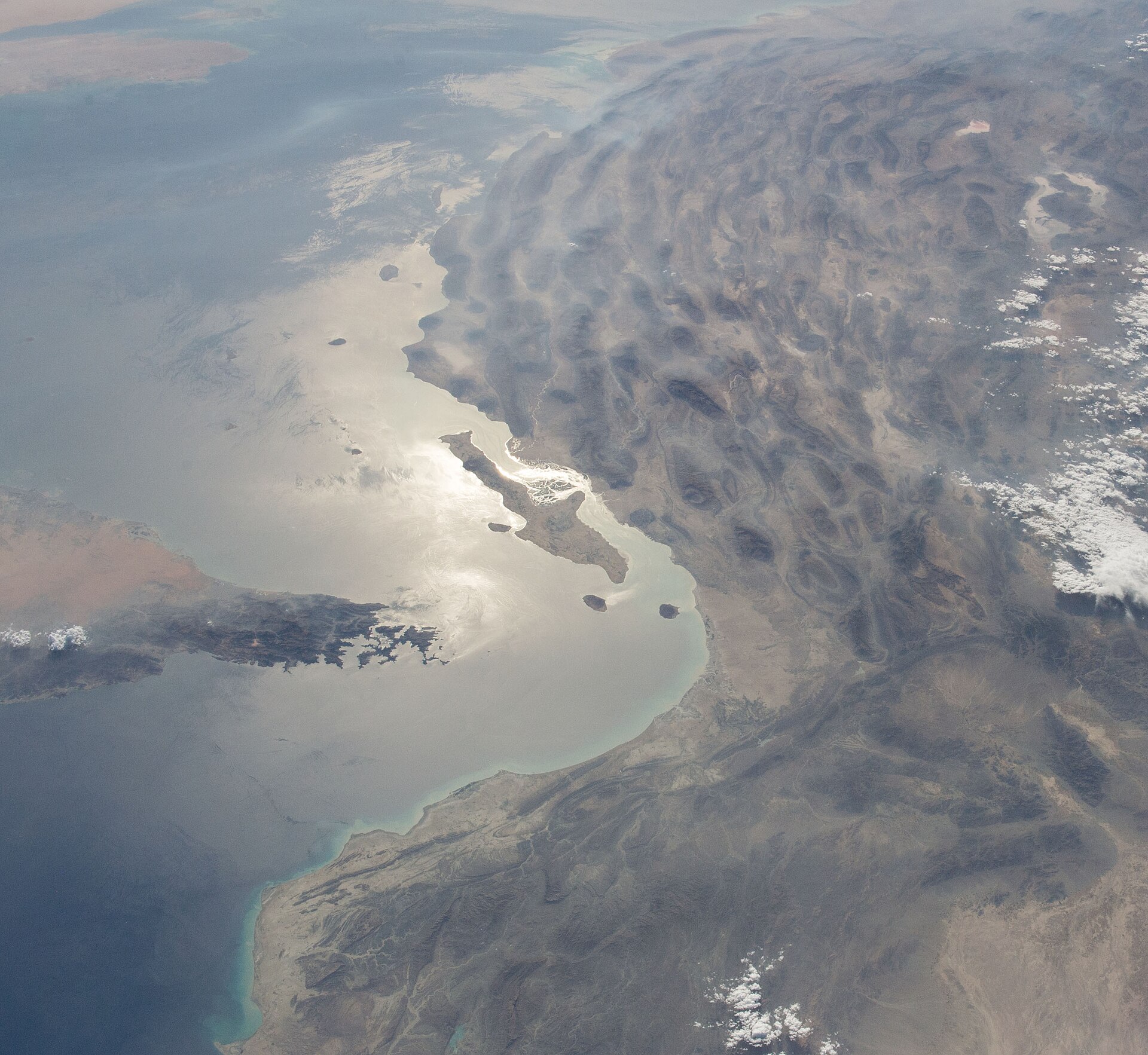
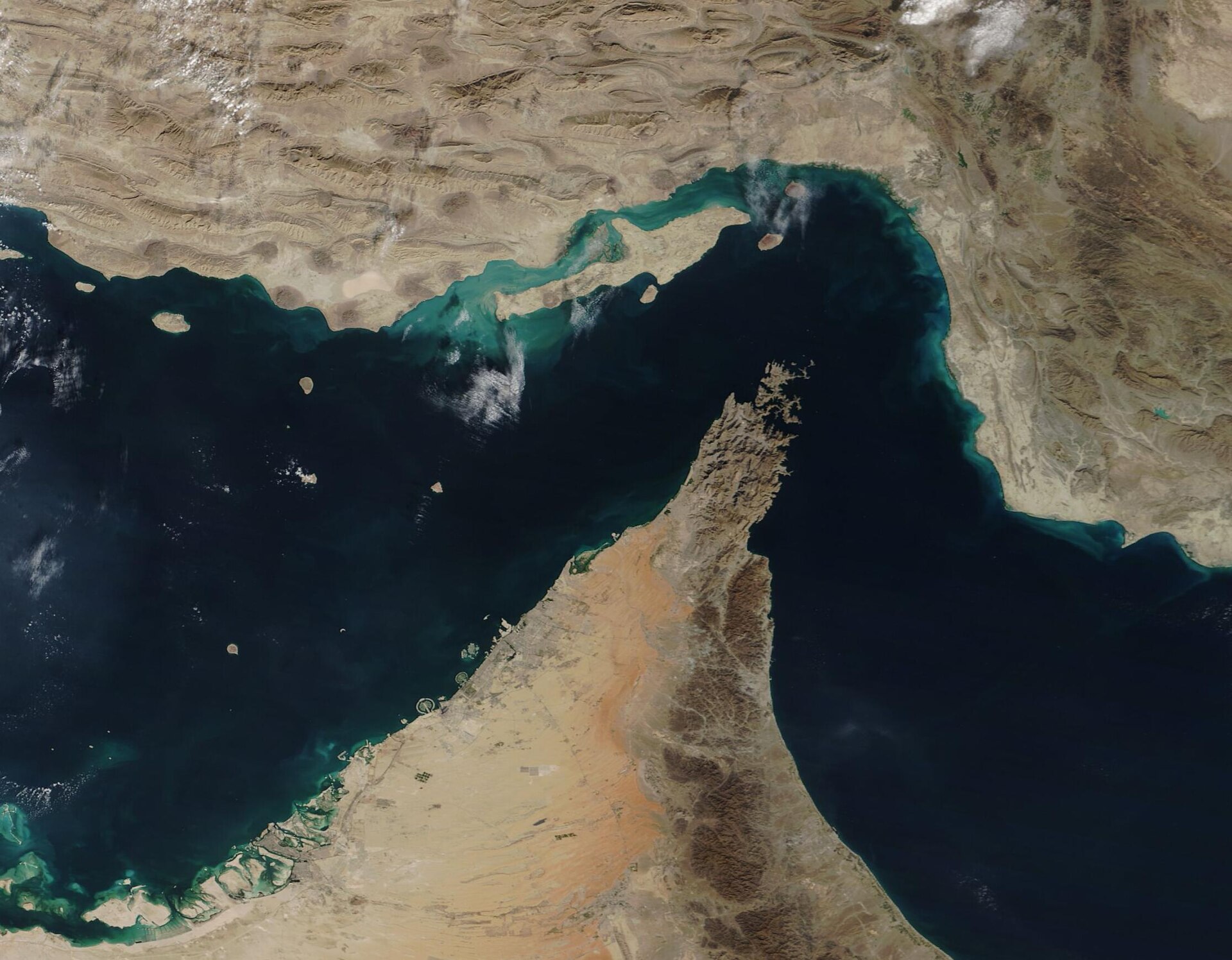
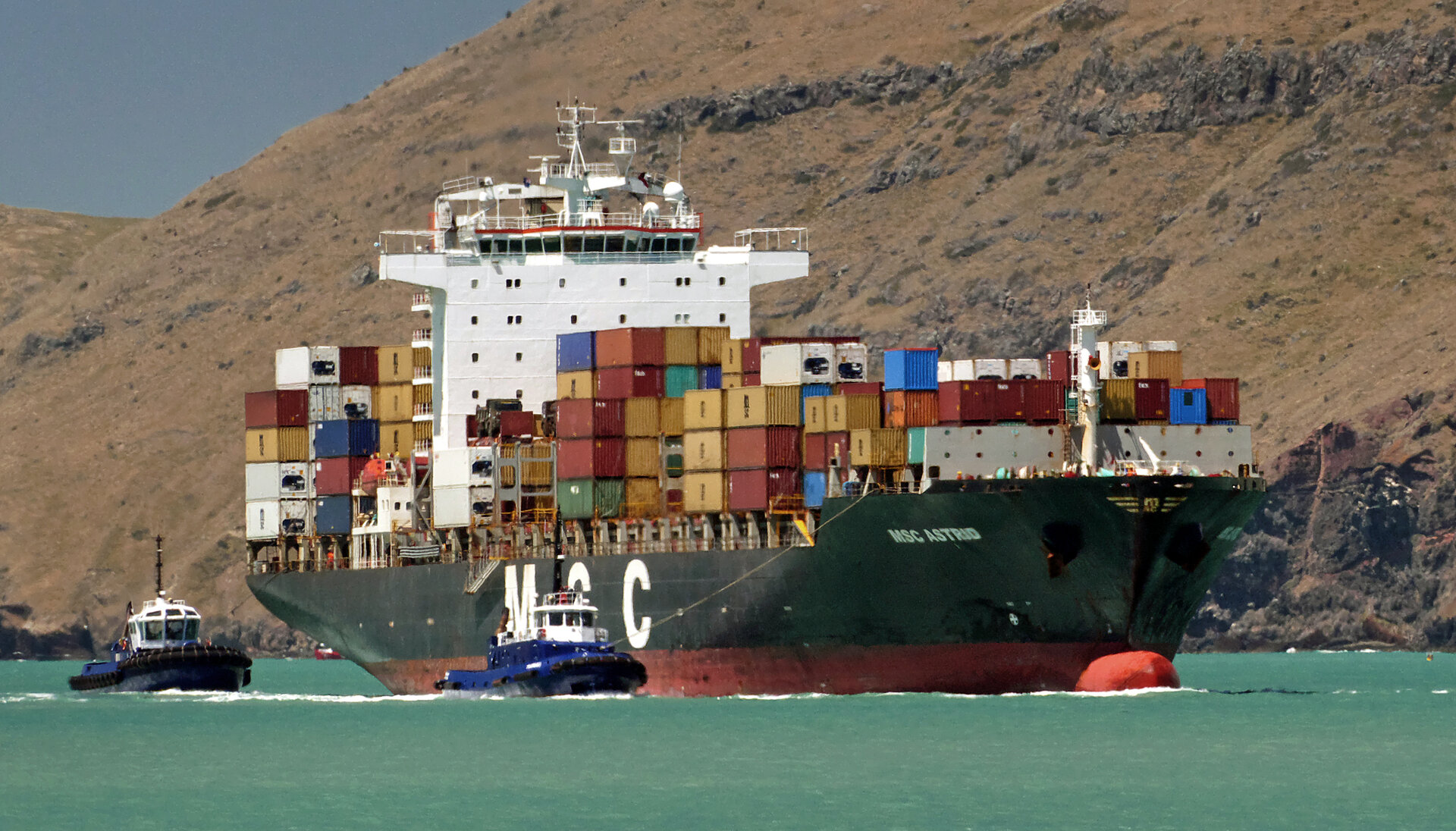
WASHINGTON — The White House ruled on April 22, 2026 that Iran’s seizure of two commercial vessels in the Strait of Hormuz does not constitute a ceasefire violation — because the ships were not American and not Israeli. Press Secretary Karoline Leavitt, appearing on Fox News hours after the IRGC Navy boarded the Panama-flagged MSC Francesca and the Liberia-flagged Epaminondas, delivered a definition of the ceasefire that left every other maritime nation on earth outside its protection: “These were not US ships. These were not Israeli ships. These were two international vessels.”
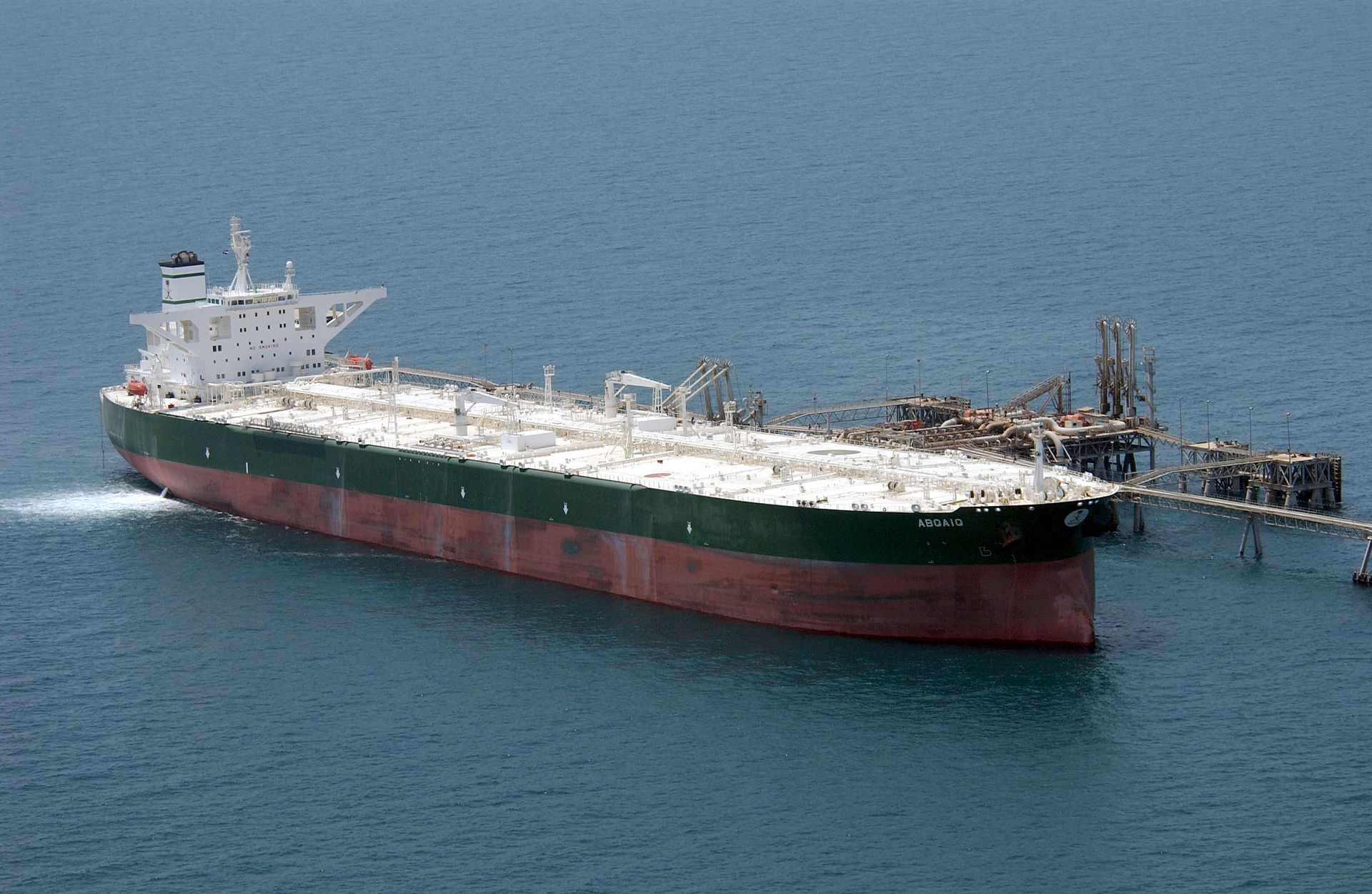
The ruling creates a two-tier ceasefire architecture with immediate consequences for Saudi Arabia, whose entire crude export fleet sails under non-US flags. Bahri, the kingdom’s national shipping carrier, registers its VLCCs under Panama, Liberia, and Marshall Islands flags — all three now explicitly classified as “international vessels” that Iran can seize without triggering a US response. The 30-nation Hormuz coalition assembled to protect exactly these ships just learned that the country leading the naval blockade does not consider attacks on their vessels worth defending.
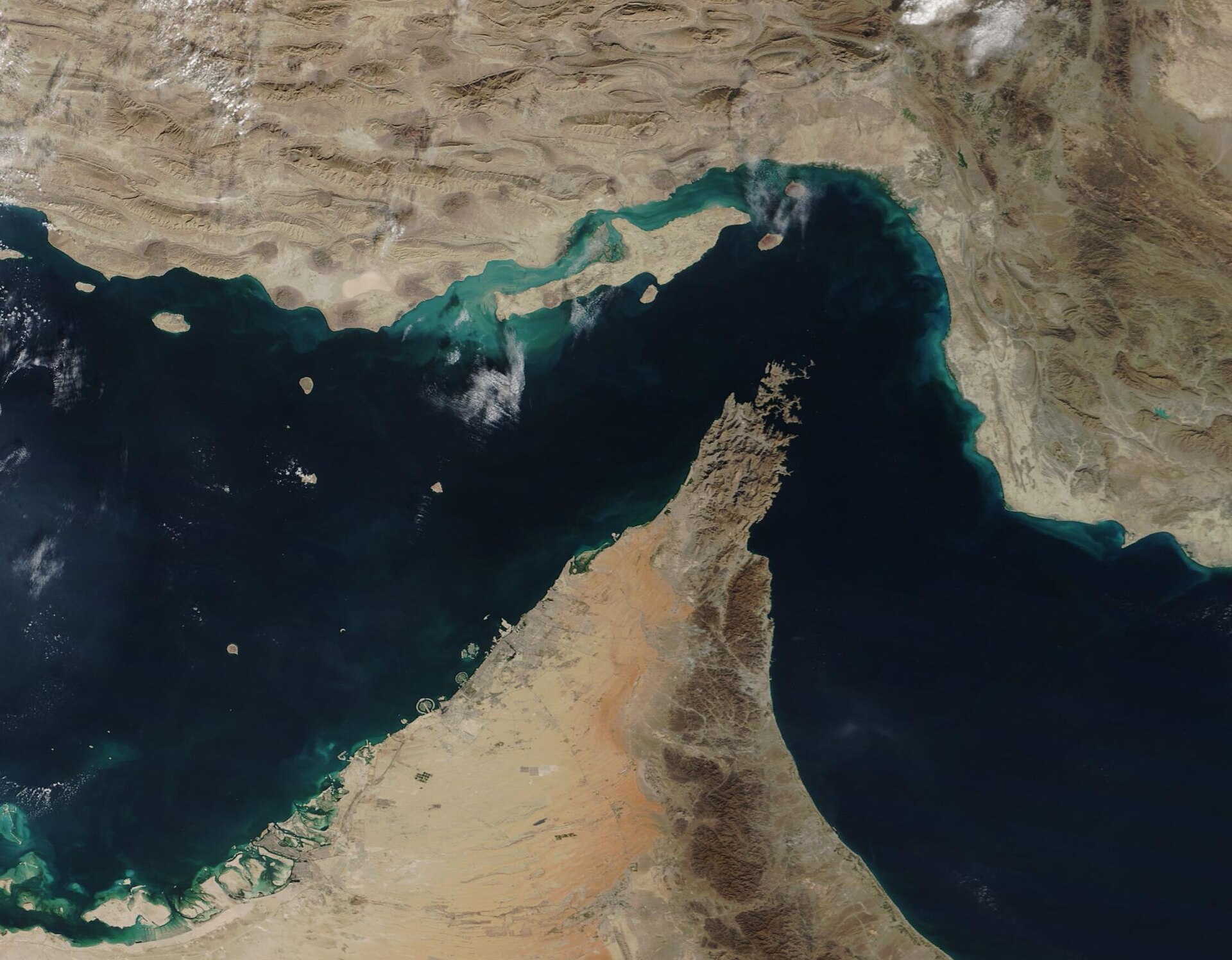
Table of Contents
The Two-Tier Architecture
Leavitt’s statement, delivered with the confidence of someone announcing a weather forecast, carved the world’s busiest oil chokepoint into two juridical zones. Zone 1 covers US-flagged and Israeli-flagged vessels — any IRGC seizure of these ships would constitute a ceasefire violation and presumably trigger a military response. Zone 2 covers everything else: the European container ships, the Greek-owned bulkers, the Indian-bound tankers, the Saudi VLCCs carrying 4-5.9 million barrels per day through the Yanbu bypass corridor. In Zone 2, seizure is “piracy” in the White House’s own language, but piracy with no ceasefire consequences.
The distinction is not academic. According to Windward Maritime Intelligence data from April 2026, the dominant flag states for Gulf tanker traffic are Panama (138 vessels), Marshall Islands (73), and Liberia (66) — excluding Iran’s own 102-vessel fleet and Comoros-flagged ships. Every single one of these leading non-Iranian flags falls into Zone 2. The US-flagged commercial fleet in the Persian Gulf is, for practical purposes, negligible. Leavitt did not exclude a few ships from ceasefire protection. She excluded almost all of them.
“Iran has gone from having the most lethal navy in the Middle East to now acting like a bunch of pirates,” Leavitt added during the same appearance. “They don’t have control over the strait. This is piracy that we are seeing on display, and the naval blockade that the United States has imposed continues to be incredibly effective.” The word “piracy” did heavy lifting — it acknowledged the illegality of Iran’s actions while simultaneously declining to do anything about them under the ceasefire framework. By April 23, the blockade’s enforcement record stood at 31 vessels turned back, with President Trump declaring there is “no time frame” for ending the war — confirming the two-tier architecture will persist indefinitely.
What Happened on April 22
The IRGC Navy executed a coordinated three-vessel operation within hours of President Trump extending the ceasefire indefinitely. The MSC Francesca, a Panama-flagged vessel operated by Geneva-based Mediterranean Shipping Company, was boarded and seized in the strait. The Epaminondas, a Liberia-flagged ship owned by Greek interests through Technomar Shipping and linked to shipowner George Youroukos, was seized while carrying cargo bound for Gujarat, India. A third vessel, the Euphoria, was attacked by an IRGC gunboat northeast of Oman with gunfire and RPGs, suffering heavy bridge damage — UK Maritime Trade Operations confirmed two separate firing incidents.
The Middle East briefing 3,000+ readers start their day with.
One email. Every weekday morning. Free.
Technomar Shipping confirmed that all crew aboard the Epaminondas were “safe and accounted for” and that “no injuries were reported,” though “preliminary inspections indicated the ship’s bridge had been damaged.” The IRGC Navy Command issued a statement justifying both seizures on the grounds that the vessels were “operating without authorization, committing repeated violations, tampering with navigation aid systems, and endangering maritime security in an attempt to exit the strait covertly.” PressTV went further, labeling the MSC Francesca as “an Israeli ship” — a designation based on MSC’s commercial connections to Israel and aligned with a bill advancing in the Iranian parliament, reported by Iranian state broadcaster IRIB, that would codify a ban on “Israeli-linked ships” defined broadly enough to capture any vessel with Israeli business exposure.
Iran’s timing was surgically precise. Trump had extended the ceasefire with no time frame attached. Within hours, the IRGC tested the new architecture’s boundaries and received its answer: non-US, non-Israeli ships are fair game. Iranian Foreign Ministry spokesman Esmail Baghaei offered no concessions, stating there had been “no final decision” on whether to agree to more talks with Washington in light of “unacceptable actions” by the US — a reference to the continuing naval blockade of Iranian ports.
Why Is Saudi Arabia Uniquely Exposed?
Saudi Arabia’s vulnerability under the two-tier framework is structural, not incidental. The kingdom’s national carrier Bahri accounts for 46% of VLCCs loading at Yanbu, according to Windward Maritime Intelligence. These tankers fly Panama, Liberia, and Marshall Islands flags — the exact registrations Leavitt classified as “international vessels” outside ceasefire protection. At crisis charter rates of up to $450,000 per day per vessel, Saudi Arabia is paying record prices to move crude through a corridor where its ships now have zero ceasefire cover.
The exposure compounds an already dire export situation. Yanbu loaded 47 VLCCs in March 2026 — four times its pre-war monthly average of 11-12 — but the Red Sea terminal’s export ceiling remains 4-5.9 million barrels per day against a pre-war Hormuz throughput exceeding 7 million barrels per day. That leaves a structural gap of 1.1-1.6 million barrels per day that cannot be closed without Hormuz reopening. Saudi March production crashed to 7.25 million barrels per day from February’s 10.4 million, a 30% drop that the International Energy Agency called “the largest disruption on record.” Asia-bound exports fell 38.6% according to Kpler tracking data.
The fiscal arithmetic is punishing. Saudi Arabia’s break-even oil price sits at $108-111 per barrel on a Bloomberg PIF-inclusive basis. Brent crude, which rebounded to approximately $101 after the seizure news broke — markets treating the two-tier ruling as confirmation that Hormuz remains functionally closed — still sits $7-10 below that threshold. Goldman Sachs estimates a war-adjusted fiscal deficit of 6.6% of GDP, nearly double the official 3.3% projection. Every day the two-tier architecture holds, Saudi crude moves on ships the United States has just told Iran it will not defend.
The Earnest Will Precedent
The White House’s selective-protection logic has a direct historical ancestor. In July 1987, the Reagan administration launched Operation Earnest Will, reflagging 11 Kuwaiti tankers under the US flag to justify providing Navy escort protection through the Strait of Hormuz during the Iran-Iraq War. The operation ran through September 1988 and established a principle that the current administration has now replicated: maritime protection follows the flag, not the cargo, not the route, and not the alliance.
Non-reflagged vessels during Earnest Will remained unprotected from Iranian attacks. Kuwaiti tankers that sailed under their original flags received no US escort. The calculus was explicit — the US would fight for ships carrying its flag, and only for ships carrying its flag. Leavitt’s April 22 ruling reproduces this logic almost verbatim, with one critical difference: in 1987, the US was offering to extend protection through reflagging. In 2026, no such offer has been made. The two-tier architecture is a ceiling, not a floor.
The Earnest Will comparison illuminates what Riyadh’s options would look like if the kingdom wanted ceasefire protection for its tanker fleet. Bahri would need to reflag its VLCCs under US registration — a process involving Jones Act compliance, US Coast Guard certification, and crewing requirements that would take months even under expedited procedures. No Saudi official has publicly raised the possibility, and Washington has not offered it. The gap between the 1987 precedent and the 2026 reality is the gap between an administration that used flag-state logic to expand protection and one that uses it to limit protection.
How Does Iran’s Permit Regime Survive the Ceasefire?
Iran’s authorization requirement for Hormuz transit was never suspended by the ceasefire because it was never addressed by it. PressTV announced the IRGC Navy’s “new order” on April 17-18, 2026, requiring all commercial vessels to secure explicit IRGC authorization before transiting and to use only IRGC-designated routes. The ceasefire extension came on April 21-22. No publicly available ceasefire term mentions the permit regime, let alone suspends it. The IRGC’s position — that it is enforcing a standing regulatory framework, not violating a ceasefire — has now received implicit White House endorsement through the two-tier ruling.
The permit regime’s enforcement record tells its own story. In 36-plus days of operation through April 18, Iran collected exactly zero dollars in transit fees despite issuing 60 permits and sending 8 payment requests. The International Maritime Organization’s Secretary-General Dominguez called the toll regime “illegal.” Legal scholars at Just Security, including Nevitt and Emory, identified three specific UNCLOS Article 26 violations: no service linkage to justify fees, discriminatory application by flag state, and no legal basis under Article 37’s non-suspension clause for transit passage. But Iran has not ratified UNCLOS, rendering treaty-based enforcement a dead letter. And the White House has now removed even the political enforcement trigger — seizures of non-US ships carry no ceasefire consequences.
The practical effect is that seizure has replaced tolling as Iran’s enforcement mechanism. The $0 revenue figure proved the toll regime was decorative. Boarding and confiscating vessels, by contrast, produces immediate results: it establishes physical control over the strait, generates detained assets for future negotiations, and — as of April 22 — carries no cost under the ceasefire framework. Iran’s internal power dynamics reinforce this trajectory: the IRGC Navy operates under its own authorization ceiling, and President Pezeshkian has publicly accused IRGC commanders Vahidi and Abdollahi of wrecking previous ceasefire efforts without being able to remove them.
The Coalition Protection Void
The 30-nation Hormuz coalition was assembled to do exactly what the White House just declined to do: protect non-US commercial shipping through the strait. The coalition’s membership includes European, Asian, and Gulf-state navies whose own vessels now fall into the two-tier framework’s unprotected zone. Britain has deployed a Sky Sabre air defense battery to Saudi Arabia and maintains a naval presence in the Gulf. France has assets in the region through its UAE base. Neither country’s ships qualify for ceasefire protection under Leavitt’s definition.
The coalition’s dilemma is sharpened by European reluctance to act independently. An unnamed Macron adviser told Al Jazeera: “We won’t enter into a coalition with the Americans, simply because we are not party to the conflict.” EU Energy Commissioner Dan Jørgensen framed the stakes in raw economic terms on April 22: “This is not a short-term, small increase in prices. This is a crisis that is probably as serious as the 1973 and the 2022 crises combined,” estimating Europe’s daily cost at approximately €500 million ($600 million). But cost is not the same as capability, and Europe has shown no willingness to independently escort commercial shipping through the strait.
“A complete ceasefire only has meaning if it is not violated through a naval blockade.”— Mohammad Bagher Ghalibaf, Iranian Parliament Speaker, April 22, 2026
Iranian Parliament Speaker Mohammad Bagher Ghalibaf — himself a former IRGC Aerospace Force commander from 1997-2000 — exploited the asymmetry immediately. “A complete ceasefire only has meaning if it is not violated through a naval blockade,” he stated on April 22, per Middle East Eye. The framing is tactically precise: the US maintains its blockade of Iranian ports (which Araghchi has labeled an “act of war”), while Iran maintains its seizure regime against third-party ships. Both sides claim the other is the aggressor. The difference is that the US has now formally confirmed it will not respond to Iran’s enforcement actions against non-US vessels, while Iran has made no equivalent concession regarding the US blockade.
What Comes Next?
The IRGC now possesses a White House-certified playbook for Hormuz operations. Every future seizure can be calibrated to target Zone 2 vessels — the Panamanian-flagged tankers, the Liberian-registered bulkers, the Marshall Islands VLCCs carrying Saudi crude — without risking a ceasefire violation. The only constraint is avoiding US-flagged or Israeli-flagged ships, a population so small in the Gulf that it barely constitutes a constraint at all. The mine clearance challenge remains daunting: the USS Pioneer and USS Chief are heading to the Persian Gulf to address the gap left by the four Avenger-class MCM ships decommissioned from Bahrain in September 2025, but clearing an estimated 200 square miles of potential mine contamination would take approximately 51 days based on the 1991 Kuwait benchmark. Trump’s April 23 Truth Social order to “triple” minesweeping operations — issued the same day he instructed the Navy to shoot and kill any vessel observed laying mines with “no hesitation” — was therefore an instruction issued against a baseline of zero dedicated MCM hulls in theater; the full strategic and fiscal implications of that doctrine for Saudi Arabia are examined in Trump’s Hormuz Shoot-on-Sight Order Leaves Saudi Arabia With No Script.
For Riyadh, the two-tier ruling transforms the ceasefire from a security guarantee into a selective protection racket. Saudi Arabia is simultaneously the country most dependent on Hormuz transit for its economic survival and the country whose ships are most exposed under the new framework. The kingdom’s diplomatic options are constrained: it is not a member of the 30-nation Hormuz coalition, it cannot reflag its fleet overnight, and the $108-111 per barrel fiscal break-even that its entire budget depends on requires export volumes that Yanbu alone cannot deliver. Every barrel that needs to transit Hormuz now travels on a ship the White House has told Iran it will not fight for.
The ceasefire, as defined on April 22, 2026, protects American and Israeli ships in a strait where almost no American or Israeli ships sail. It is the maritime equivalent of locking the one door nobody uses while leaving every window open. UNCLOS Article 37 states that transit passage through international straits “shall not be impeded” — a principle that applies to all ships regardless of flag. Karoline Leavitt’s ruling does not dispute this principle. It simply declines to enforce it.
FAQ
How many US-flagged commercial vessels currently operate in the Persian Gulf?
The US-flagged commercial fleet in the Persian Gulf is negligible. The overwhelming majority of commercial traffic through the Strait of Hormuz operates under flags of convenience — Panama, Marshall Islands, Liberia, and Comoros dominate the registry. US Maritime Administration (MARAD) data shows fewer than 80 US-flagged vessels across all international trade routes combined, with the Persian Gulf representing a fraction of that already small fleet. The ceasefire’s Zone 1 protection therefore covers a statistically insignificant portion of actual Gulf shipping traffic.
Could Saudi Arabia or other Gulf states reflag their tankers under the US flag?
Technically yes, but the scale alone makes it implausible in the near term. Bahri operates a fleet of over 40 VLCCs and chemical tankers; reflagging the entire fleet would require Jones Act citizenship compliance for vessel ownership, US Coast Guard safety recertification, and US crewing minimums for each ship — a multi-year bureaucratic process even under expedited procedures. More fundamentally, the Trump administration has not offered reflagging as an option, and Saudi Arabia has not publicly requested it — suggesting neither side currently views the Earnest Will model as a workable template for 2026.
What legal recourse do shipowners have against Iran’s seizures?
Limited to non-existent in practical terms. UNCLOS Article 37 and the broader transit passage framework prohibit impeding passage through international straits, but Iran has not ratified UNCLOS and does not recognize the International Tribunal for the Law of the Sea’s jurisdiction. Shipowners can file claims through their flag-state governments, but Panama, Liberia, and Marshall Islands — the three largest flag registries — are open registries with minimal naval capability to enforce anything. Insurance claims under war-risk policies can compensate for vessel losses, but London market war-risk premiums for Hormuz transit have already surpassed 2019 levels. The International Maritime Organization can issue condemnatory resolutions, but IMO has no enforcement mechanism. In practice, the only recourse is diplomatic pressure through the flag state’s government or through the shipowner’s home country — which returns the problem to the two-tier framework: countries with naval power to enforce are declining to treat seizures as ceasefire violations.
Has any country offered to escort non-US commercial vessels through the strait?
No country has publicly committed to independent escort operations as of April 22. Britain’s Royal Navy maintains a Gulf presence but has not announced escort patrols. France has explicitly distanced itself from joint US operations, with an Elysée source telling Al Jazeera that Paris views itself as outside the conflict. India, whose cargo aboard the Epaminondas was directly affected by the April 22 seizure, has expanded its naval presence in the Arabian Sea but has not extended operations into the strait itself. Japan and South Korea, both major Gulf oil importers, rely on US-led security frameworks and have not signaled willingness to operate independently. The gap between the 30-nation coalition’s stated mission and any country’s willingness to actually escort ships through Iranian-controlled waters remains the central vulnerability in the maritime security architecture.
What is the difference between Iran’s toll regime and its seizure regime?
Iran’s Hormuz toll regime, announced in late March 2026, attempted to monetize strait control by charging approximately $2 million per VLCC transit. It collected nothing — the toll required voluntary compliance, and no shipowner agreed to pay. The seizure regime, which escalated in April, does not require compliance. It uses physical force — boarding teams, gunboats, and as the Euphoria attack demonstrated, RPGs — to detain vessels and their cargo. The toll regime was a regulatory fiction; the seizure regime is a military operation. The White House’s April 22 ruling effectively ratified the transition from one to the other by confirming that seizures of non-US vessels carry no ceasefire consequences, removing the last political deterrent against Iran’s shift from tolling to confiscation as its primary strait-control mechanism.
The engineering constraint behind that transition—Pentagon’s classified six-month mine-clearance estimate and what GPS-guided mines mean for any resumption of normal Hormuz traffic—is analyzed in The Six-Month Sentence: How the Hormuz Mine-Clearing Timeline Defines Saudi Arabia’s Fiscal Horizon. The precipitating seizure that escalated Iran from tolling to confiscation — and set off that 72-hour cascade — is documented in One Ship, 72 Hours, Three Crises: The M/V Touska Seizure. Iran then published boarding video from the MSC Francesca seizure and fired on a third vessel on April 23 — the full sequence is documented in Iran Releases Boarding Video and Fires on Third Vessel on Day One of Trump’s Ceasefire Extension.