
Table of Contents
- What Is the STEP Quartet?
- How Did Four States With No Treaty Broker a Ceasefire?
- The Architecture of Failure
- Can Saudi Arabia Afford to Anchor a Bloc It Didn’t Design?
- Pakistan’s Impossible Position
- What Does Turkey Get From a War It Did Not Join?
- Egypt’s Corridor Interest
- Does STEP Have an Institutional Future?
- Frequently Asked Questions
RIYADH — Saudi Arabia did not design the STEP quartet. The war did. Fifty-five days into the Iran-Saudi conflict, the four states now grouped under the STEP label — Saudi Arabia, Turkey, Egypt, and Pakistan — have no joint treaty, no secretariat, no shared command structure, and no charter. What they have is a ceasefire that none of them could have brokered alone, a Pakistani military deployment that activated a bilateral defence pact on Saudi soil, and a set of overlapping interests held together less by strategic vision than by the structural failure of every formal security architecture that was supposed to prevent exactly this situation.
The STEP quartet is the residue of fifty-five days of institutional collapse. The GCC’s collective defence mechanism absorbed 83% of Iran’s total missile and drone strikes, according to the Atlantic Council’s Stefanie Hausheer Ali, and produced no unified military response. The US security guarantee proved conditional — disputed blockade-lift terms and Gulf exclusion from the Islamabad bilateral talks exposed the limits of the relationship. The Arab League did not convene a security session. The OIC includes Iran, making it structurally useless for anti-Iranian coordination. What remained was a set of bilateral relationships that converged under pressure into something that looks, from a distance, like an alliance — and looks, up close, like a set of unresolved contradictions held together by the absence of alternatives.
Saudi Arabia is the bloc’s nominal financial anchor, running a daily oil revenue shortfall of approximately $93 million against its pre-war baseline. Pakistan is its most active member and its most structurally contradicted — simultaneously the treaty ally of the state under attack and the diplomatic interlocutor of the command running the attacks. Turkey has the clearest exit. Egypt has the most temporally bounded interest. None of the four designed the arrangement. All four need it to hold.
What Is the STEP Quartet?
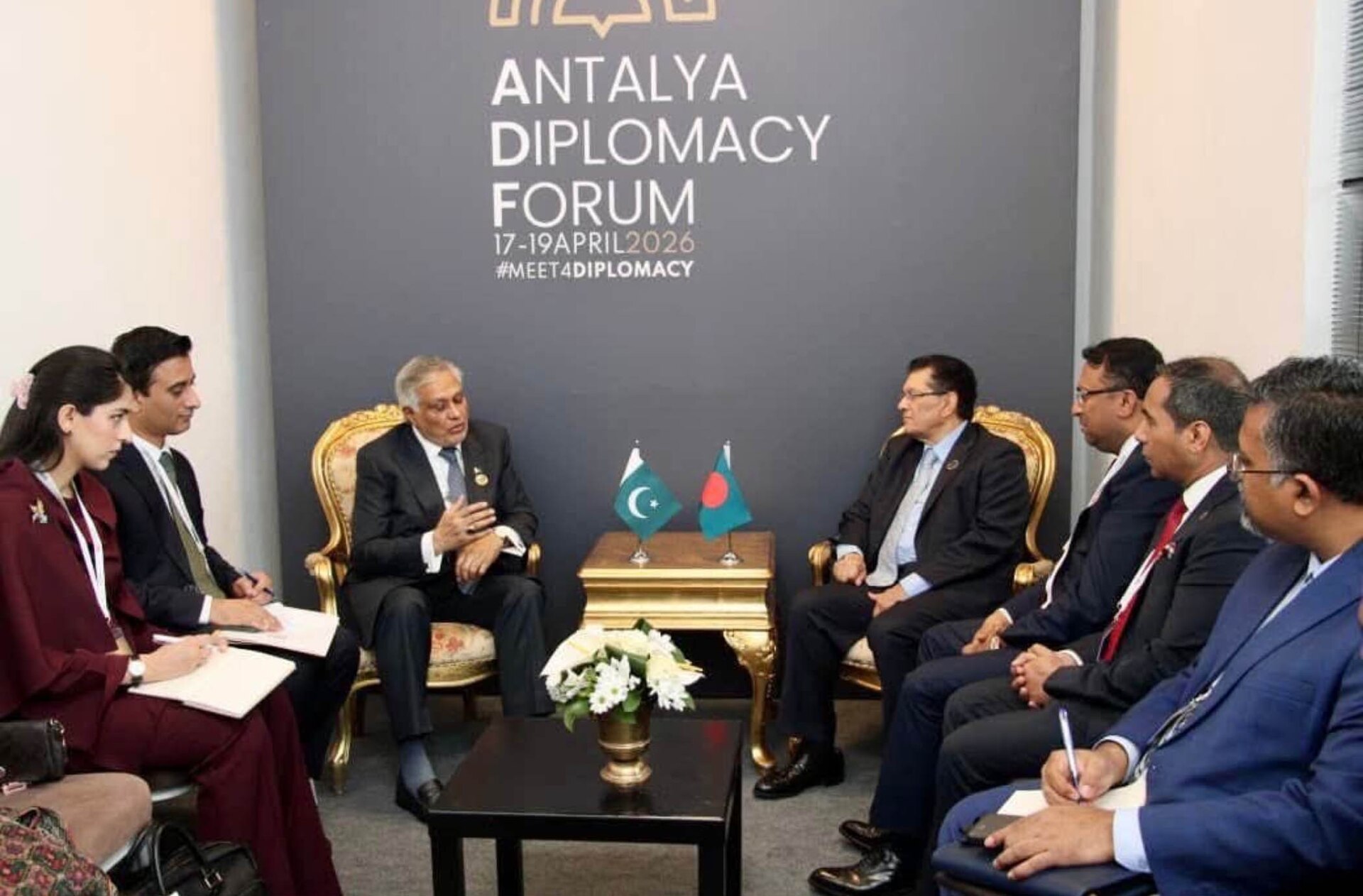
The STEP quartet — Saudi Arabia, Turkey, Egypt, Pakistan — is a wartime diplomatic coordination group that emerged in March 2026 during the Iran-Saudi conflict. It has no formal institutional existence. The four states use “Islamabad Quartet” in diplomatic correspondence; “STEP” is a journalistic acronym now in wide analytical use (The Conversation, Asia Times, Athens News) but carries no official endorsement from any of the four governments.
The group’s first formal meeting took place on March 19, 2026, in Riyadh, at foreign-minister level. A second meeting followed on March 29-30 in Islamabad, attended by Saudi Foreign Minister Prince Faisal bin Farhan, Turkish Foreign Minister Hakan Fidan, Egyptian Foreign Minister Badr Abdelatty, and Pakistani Foreign Minister Ishaq Dar. Pakistani Prime Minister Shehbaz Sharif met all four delegations. No joint statement was published from either meeting.
The only public characterisation of the group’s purpose came from Fidan, who told reporters in Islamabad that the four would “seek to establish a mechanism aimed at de-escalation” and “chart out actionable steps” (Al-Monitor, March 28, 2026). The mechanism was never formally described. No charter was drafted. No headquarters was designated.
The Middle East briefing 3,000+ readers start their day with.
One email. Every weekday morning. Free.
What distinguishes STEP from the alphabet soup of Middle Eastern security forums — the GCC, the OIC, the IMCTC, the D-8 — is that its only operational output to date is a real outcome: the April 8 US-Iran two-week ceasefire, brokered through the Islamabad channel. The quartet does not claim joint credit. Pakistan is credited as venue, Turkey and Saudi Arabia as diplomatic pressure channels, Egypt as endorser. But the ceasefire happened because the four states created a coordination space that no existing institution provided.
The aggregate credentials are not trivial. Combined active military personnel exceed 1.9 million. Combined population approaches 500 million. The group contains a nuclear-armed state (Pakistan), a NATO member (Turkey), the controller of the Suez Canal (Egypt), and the world’s largest oil exporter (Saudi Arabia). Natasha Lindstaedt, Professor of Government at the University of Essex, has argued the quartet “may signal the beginning of a new regional order designed to curb Israeli and Iranian dominance after the war” — while cautioning that its unity is “fragile and transaction-based rather than ideological” (The Conversation, April 2026).
How Did Four States With No Treaty Broker a Ceasefire?
The April 8 ceasefire between the United States and Iran was brokered primarily through Pakistan’s Islamabad channel, using the diplomatic space created by the STEP quartet’s March meetings. Pakistan served as both venue and physical relay — Prime Minister Sharif’s national security adviser, Field Marshal Asim Munir, operated as the intermediary between US Special Envoy Steve Witkoff and Iranian Foreign Minister Hossein Amir-Abdollahian’s successor, Abbas Araghchi.
The ceasefire’s structural fragility was visible from inception. It contained no enforcement clause. It deferred the two hardest questions — Hormuz sovereignty and Iran’s 440.9 kilograms of highly enriched uranium at 60% — to a second phase that had no agreed timeline. It expired on April 22 with no extension mechanism. The Soufan Center noted the absence of any renewal pathway.
Turkey’s role was primarily diplomatic pressure. Fidan described the four-way talks as an assessment of “where the negotiations in this war are heading and how these four countries assess the situation and what can be done” — language that frames Turkey as analyst, not guarantor. Egypt’s contribution was endorsement and implied Suez Canal leverage: Cairo had a direct economic stake in de-escalation, given the canal’s dependence on stable maritime corridors through both Hormuz and Bab el-Mandeb.
Saudi Arabia’s role was the most constrained. Riyadh was the state under attack and simultaneously the state most dependent on the ceasefire holding. The April 14 break with Washington, when Saudi officials publicly pressed the US to end its Hormuz blockade and return to negotiations (WSJ/JPost, April 14, 2026), was described by Arab officials as driven by fear that “Iran will disrupt Bab el-Mandab” if the blockade continued. That fracture — likened by regional analysts to allied dissent during the 2003 Iraq War — exposed the gap between Saudi Arabia’s position as the bloc’s nominal centre and its actual leverage within the quartet’s diplomatic operations.
The Architecture of Failure
STEP did not emerge because four states chose each other. It emerged because every other security architecture failed.
The GCC’s Joint Defence Council, established by the Peninsula Shield agreement, was designed for precisely this scenario: a direct military threat to a member state. Iran’s campaign since February 28, 2026, delivered that threat at scale. The UAE received more attacks than any country including Israel, according to ACLED Gulf conflict data. Saudi Arabia absorbed strikes on Ras Tanura, Khurais, and infrastructure across the Eastern Province. Bahrain’s airspace has been closed since February 28. And the GCC produced no unified military response.
Hesham Alghannam, a nonresident scholar at the Malcolm H. Kerr Carnegie Middle East Center, identified four structural impediments to GCC collective defence in a February 2026 analysis: political rivalries between member states, fear of antagonising Iran, sovereignty concerns over shared command structures, and individual bilateral security arrangements with the United States that disincentivise multilateral coordination. His verdict was blunt: “Without structural reform, the current state-of-affairs will continue.”
The Saudi-UAE rivalry sits at the centre of that dysfunction. In December 2025, Saudi Arabia bombed UAE-supplied weapons to the Southern Transitional Council in Yemen — the two states arming opposing sides in a conflict zone while nominally sharing a defence council. They arm opposing factions in Sudan’s civil war. Alghannam’s Carnegie analysis concluded that “a NATO-like GCC defensive coalition [is] unlikely” because “both Saudi Arabia and the UAE would want to lead it and neither would accept the other as head.”
The US security guarantee, the other pillar of Saudi defence architecture, proved conditional in ways the war exposed. Washington and Riyadh disagreed over the terms of the Hormuz blockade. The White House ruled that IRGC ship seizures did not constitute ceasefire violations, creating a two-tier Hormuz architecture that left Saudi-bound commercial shipping vulnerable while exempting US naval operations. All four GCC states that host US forces — Saudi Arabia, Qatar, Kuwait, and the UAE — signalled they would not allow US use of their airspace for strikes on Iran.
These are not marginal failures. They represent the collapse of both the regional multilateral framework and the external security guarantee that underpinned Saudi defence planning for seven decades. STEP is what filled the vacuum — not by design, but by default.
Can Saudi Arabia Afford to Anchor a Bloc It Didn’t Design?
Saudi Arabia’s war-economy arithmetic constrains everything the STEP quartet can become. The kingdom is running a daily oil revenue shortfall of approximately $93 million against its pre-war baseline, according to IEA and Goldman Sachs data analysed in House of Saud’s fiscal coverage. March 2026 production fell to 7.25 million barrels per day — down from 10.4 million bpd before the war, a 30% drop that the IEA described as “the largest disruption on record.”
The production collapse has three structural causes, none of which is temporary. Khurais, producing 300,000 bpd before the war, remains offline with no restart timeline announced by Saudi Aramco. The East-West Pipeline to Yanbu, Saudi Arabia’s Hormuz bypass, has a loading ceiling of 4-5.9 million bpd against a pipeline design capacity of 7 million bpd — a constraint that limits the bypass to covering 80-85% of pre-war export volumes even when fully operational. Asia-bound exports fell 38.6% in March, according to Kpler tanker-tracking data.
Goldman Sachs estimates the war-adjusted fiscal deficit at 6.6% of GDP — double the official government projection of 3.3% — implying a funding gap of $80-90 billion. Brent crude at $101.73 sits below the PIF-inclusive break-even of $108-111 per barrel calculated by Bloomberg Economics. The June 2026 OSP reset at +$3.50 per barrel, down from May’s war-premium of +$19.50, signals that Aramco itself expects the pricing environment to normalise faster than the production environment can recover.
At $101 Brent plus the $3.50 premium, Asian buyers face an effective price of approximately $104.50 — still below fiscal break-even when export volumes remain constrained at roughly 5 million bpd. Saudi defence spending, already $72.5 billion in 2025 and allocated at approximately $78 billion for 2026 (21% of government spending, 7.2% of GDP), must now absorb the cost of hosting 13,000 Pakistani troops on Saudi soil, servicing the diplomatic infrastructure of a four-state coordination group, and maintaining the Yanbu bypass at operational capacity.
The fiscal question is not whether Saudi Arabia can afford STEP in the short term. The kingdom has reserves, borrowing capacity, and PIF assets. The question is whether Saudi Arabia can afford to be the financial centre of gravity for an informal bloc whose three other members — Turkey, Egypt, Pakistan — each carry their own fiscal constraints, and whose collective leverage depends on Saudi Arabia’s capacity to sustain wartime spending without the oil revenue that justified it.
Pakistan’s Impossible Position
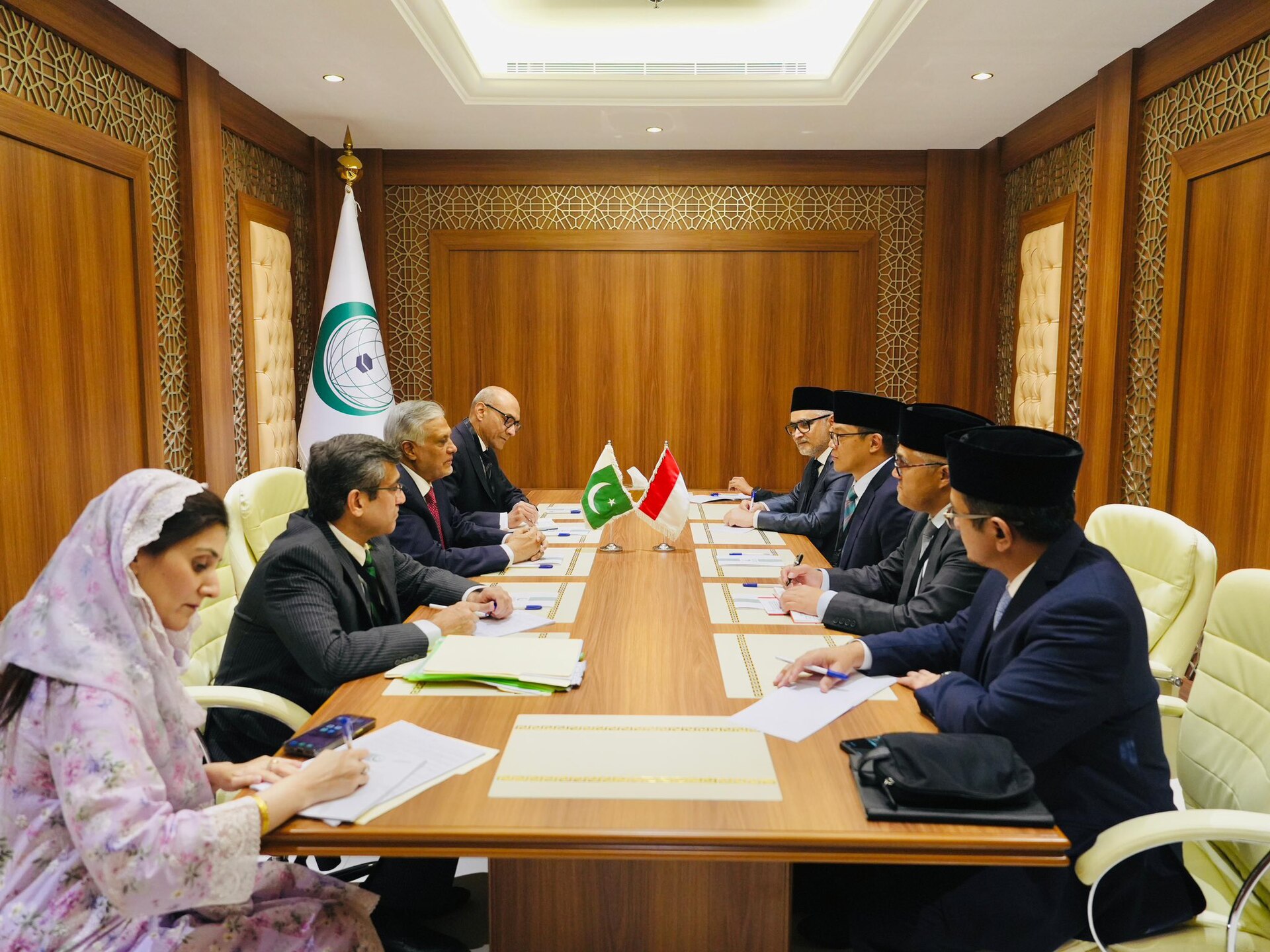
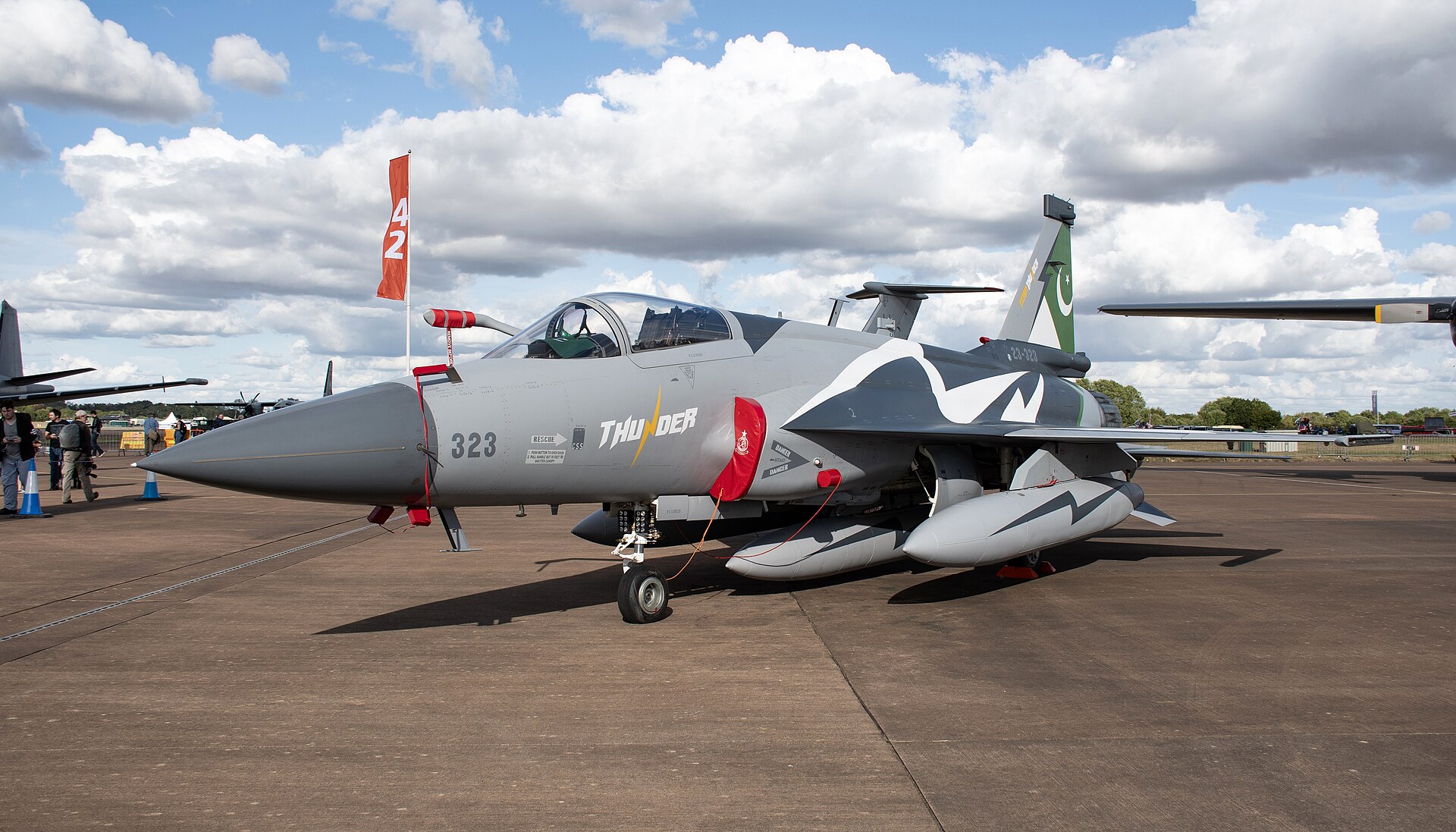
Pakistan is the STEP quartet’s most active member and its most structurally contradicted. On September 17, 2025, at Al-Yamamah Palace in Riyadh, Crown Prince Mohammed bin Salman and Prime Minister Shehbaz Sharif signed the Strategic Mutual Defence Agreement — the SMDA — which stipulates that “any aggression against the Kingdom will be considered an aggression against Pakistan.” On April 11, 2026, Pakistan activated that clause physically: 13,000 ground troops and more than ten JF-17 fighter jets deployed to King Abdulaziz Air Base in the Eastern Province (Al Jazeera, Fortune, April 11, 2026).
Five days later, Field Marshal Munir concluded a three-day visit to Tehran. He met President Masoud Pezeshkian and Foreign Minister Araghchi. He also met Major General Ali Abdollahi, commander of Khatam al-Anbiya Headquarters — the IRGC entity that Iran’s own president publicly accused of wrecking the ceasefire. Pakistan is simultaneously the treaty ally of the state Khatam al-Anbiya attacked, and the diplomatic interlocutor of the command running those attacks.
Umer Karim, an associate fellow at the King Faisal Center for Research and Islamic Studies and doctoral researcher at the University of Birmingham, has documented this contradiction for the Stimson Center. Pakistan, he writes, “struggled to develop a direct channel of communication with the powerful Islamic Revolutionary Guards Corps” despite its SMDA obligations and mediation role. The SMDA’s mutual-defence clause creates what Karim identifies as a “direct conflict” with the mediation function — a tension that became operationally visible when Munir visited Khatam al-Anbiya HQ on April 16 while Pakistani troops were stationed on Saudi soil under a pact designed to deter exactly the command he was meeting.
The JF-17 deal collapse crystallised the friction. Pakistan and Saudi Arabia had been negotiating a $1.5-4 billion sale of JF-17 Block III aircraft. On April 20, Pakistan froze the deal “after Saudi objections” — Riyadh withdrew financial backing and urged Islamabad to pause (Times of Islamabad, April 20, 2026). The freeze coincided with the Khatam al-Anbiya visit. Riyadh’s intervention in Pakistan’s defence export pipeline suggests the SMDA relationship is already generating the kind of leverage politics that bilateral defence pacts produce when one partner has the money and the other has the troops.
Pakistan’s own fiscal position compounds the contradiction. The IMF set eleven new conditions for the next $1.2 billion tranche of Pakistan’s $7 billion bailout programme on April 21, 2026 (Geo.tv). A $5 billion Saudi loan matures in June 2026 (Pakistan Today). Pakistan is deploying military assets to Saudi Arabia — aircraft, troops, logistics — while operating under IMF programme conditionality that constrains precisely the kind of discretionary spending military deployments require. The SMDA’s 27th Constitutional Amendment dimension means the deployment is Field Marshal Munir’s operation, not the elected government’s — a structural fact that insulates the military commitment from parliamentary fiscal scrutiny but does not insulate Pakistan’s balance sheet from its cost.
What Does Turkey Get From a War It Did Not Join?
Turkey is the STEP member with the clearest exit. Ankara has no mutual defence pact with Saudi Arabia, no troops deployed on Gulf soil, no bilateral treaty equivalent to the SMDA, and — according to Turkish officials — no intention of acquiring one. Turkey confirmed it will not join the SMDA. Chatham House analysts characterised Turkey’s STEP participation in January 2026 as reflecting “Ankara’s opportunistic hedging strategy” — a preferred model that stops “short of mutual defence commitments while enabling arms co-production, intelligence sharing, joint training, and coordinated diplomatic positions.”
That hedging has a material upside. Pakistan’s Defence Production Minister confirmed to Reuters in January 2026 that “the Pakistan-Saudi Arabia-Turkey trilateral agreement is already in pipeline” and that “the draft had been under review for ten months.” The trilateral is structured around defence-industrial cooperation, not mutual defence — a distinction that gives Ankara access to the Saudi defence procurement budget ($78 billion allocated for 2026) without the obligations that procurement money normally carries.
Turkey’s diplomatic value to the quartet is primarily its Iran channel. Ankara maintains functional relations with Tehran. Fidan’s characterisation of the Islamabad meetings as an assessment of “where the negotiations in this war are heading” positions Turkey as the bloc’s analytical node — the member that can speak to both sides without the structural contradiction that binds Pakistan or the direct victimhood that constrains Saudi Arabia.
The risk for Riyadh is that Turkey’s hedging model becomes the quartet’s institutional norm. If STEP crystallises as a group where one member provides money (Saudi Arabia), one provides troops under treaty obligation (Pakistan), one provides canal leverage (Egypt), and one provides diplomatic flexibility with no binding commitment (Turkey), the result is a bloc where costs and obligations fall asymmetrically — and the member with the least obligation has the most freedom to exit.
Egypt’s Corridor Interest
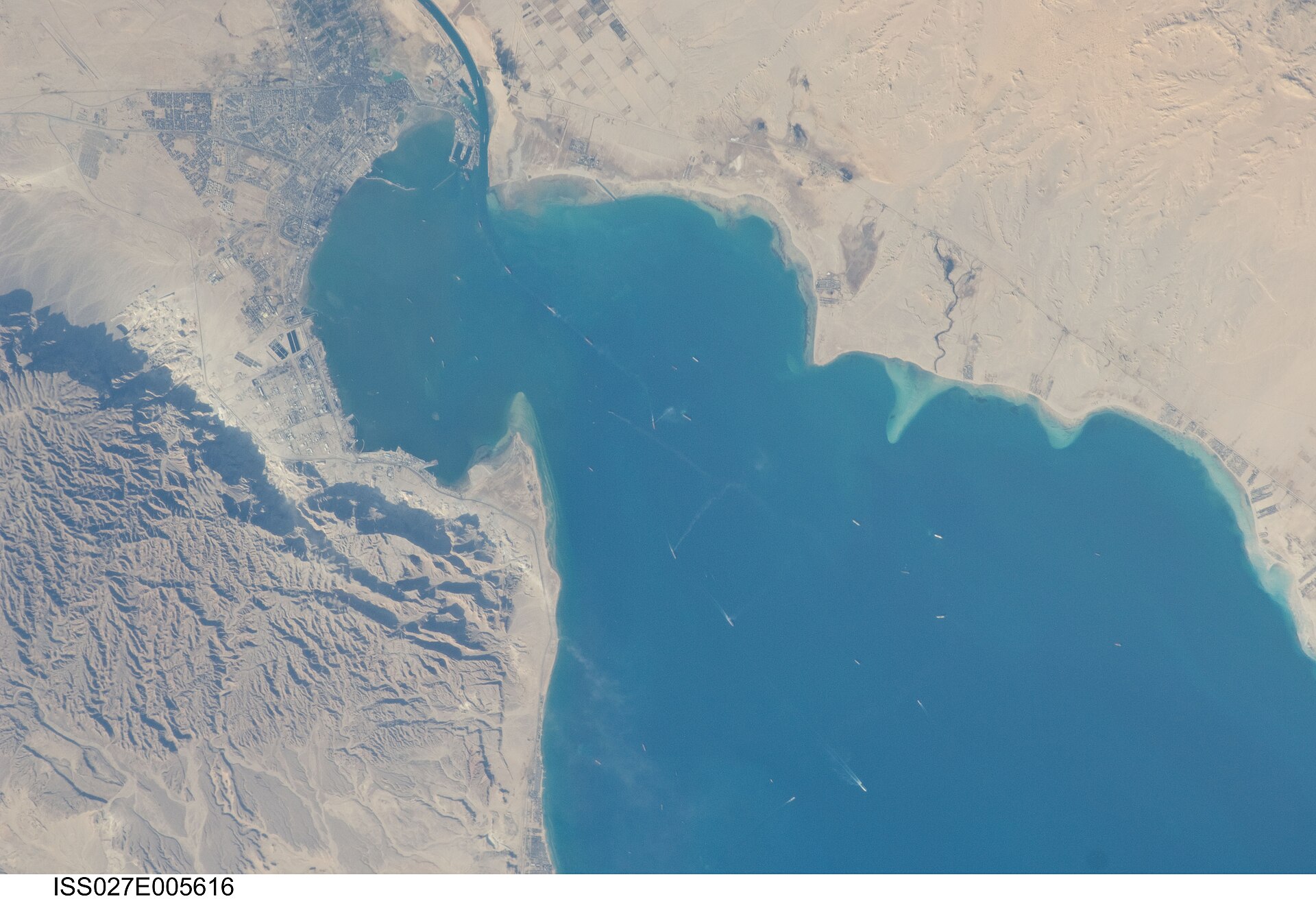
Egypt’s stake in STEP is the Suez Canal. The canal recovered to $449 million in revenue in early 2026 after a 50% revenue drop during the Red Sea crisis caused by Houthi disruptions (Daily News Egypt, February 2026; Anadolu Agency). That recovery is structurally dependent on continued de-escalation in the region’s maritime corridors — Hormuz, Bab el-Mandeb, and the Red Sea approaches to Suez itself.
Cairo has no bilateral defence pact with Riyadh equivalent to the SMDA. Egypt’s integration into STEP is through the diplomatic format only — foreign-minister attendance at quartet meetings, endorsement of the ceasefire framework, and implicit leverage through the canal. Iran’s threat to disrupt Bab el-Mandeb — the southern approach to the Red Sea and, by extension, to Suez — gives Egypt a defensive interest in the quartet’s de-escalation function that is economic rather than military.
The six-month timeline for Hormuz mine clearance extends the period during which regional shipping uncertainty suppresses Suez transit volumes. Egypt’s interest in STEP is therefore time-bound in a way that the other members’ interests are not. Saudi Arabia needs a long-term security architecture. Pakistan has a treaty obligation with no expiry. Turkey wants defence-industrial access. Egypt wants shipping lanes open. When they open — or when the war ends and insurance premiums normalise — Cairo’s incentive to participate in a security coordination group diminishes.
Egypt is not a free-rider. It is the member whose participation most clearly reveals what STEP actually is: not an alliance, but a set of overlapping and temporally mismatched interests that the war forced into the same room.
Does STEP Have an Institutional Future?
The analytical temptation is to compare STEP to NATO, the Quad, or AUKUS. Dr. Imran Khurshid of the International Centre for Peace Studies, writing in Asia Times in February 2026, dismantled the comparison directly: the “Islamic NATO” concept lacks “integrated command structures, shared doctrines and decades of coordination.” The alliance framework, he argued, reveals itself as “oriented against Iran rather than Israel” by its membership logic — a framing problem that limits its legitimacy as a pan-Islamic security institution.
The institutional gap between what STEP does and what alliances require is not marginal. NATO has Article 5, a Supreme Allied Commander, integrated air defence, standardised ammunition, and seventy-seven years of joint exercises. STEP has bilateral calls between foreign ministers and a single joint meeting that produced no communiqué. The SMDA binds Saudi Arabia and Pakistan. Nothing binds Turkey or Egypt to either the SMDA framework or to each other.
The quartet’s precursor frameworks suggest what it might become — and what it almost certainly will not. The Islamic Military Counter Terrorism Coalition, Saudi-led and forty-one members strong since 2015, has no operational record. Pakistan’s Raheel Sharif served as its first commander. All four STEP states are members. The IMCTC’s institutional emptiness is a warning about what happens when ambitious security frameworks lack operational teeth. The D-8, Necmettin Erbakan’s 1997 creation, included both Iran and Turkey — STEP’s narrower membership is explicitly an anti-Iranian subset of the OIC’s membership, a core contradiction for any group that claims pan-Islamic legitimacy.
What STEP may become is something less ambitious and more durable: a crisis-management coordination layer that activates under threat and deactivates when the threat recedes. This is not an alliance. It is a contact group — closer to the Normandy Format (France, Germany, Russia, Ukraine on Donbas) than to NATO. The question is whether a contact group is enough when one member is absorbing missile strikes, another is deploying troops, a third is hedging, and a fourth is protecting canal revenue.
The April 14-18 diplomatic sprint illustrates both the group’s utility and its limits. Prime Minister Sharif visited Saudi Arabia, Qatar, and Turkey in rapid succession. Munir visited Tehran and Khatam al-Anbiya HQ simultaneously. Iran’s hardliners answered the ceasefire extension with a missile parade and prosecution threat. The quartet’s coordination produced physical outputs — diplomatic visits, a military deployment, a ceasefire channel. It did not produce a shared assessment, a joint statement, or an enforceable framework. The ceasefire expired on April 22 with no successor.
Saudi Arabia’s challenge is not whether STEP can be institutionalised. It is whether Saudi Arabia can afford to be the permanent financial anchor of a coordination group whose other members contribute at variable levels of commitment, while running a Goldman Sachs-estimated fiscal gap of $80-90 billion and a production shortfall that put March output at 7.25 million bpd — down 30% from before the war. The bloc built itself around Saudi Arabia. The question is whether Saudi Arabia’s runway extends far enough to keep it together.
Frequently Asked Questions
What is the difference between the STEP quartet and the Islamic Military Counter Terrorism Coalition (IMCTC)?
The IMCTC is a formal Saudi-led coalition of 41 member states established in 2015 with a permanent headquarters in Riyadh and a designated military commander. It has produced no confirmed operational outcomes. The STEP quartet has no formal institutional structure — no charter, headquarters, or commander — but produced a tangible operational outcome (the April 8 ceasefire) within three weeks of its first meeting. The IMCTC’s membership includes states with no material military contribution; STEP’s four members each brought a specific asset to the table during the crisis. Pakistan’s Raheel Sharif led the IMCTC from 2017 to 2021 without deploying a single unit; Pakistan’s current SMDA deployment put 13,000 troops on Saudi soil within weeks.
How does the STEP quartet relate to China’s role in Gulf security?
Beijing expressed “full support for the Islamabad initiative” that the STEP quartet facilitated. China’s interest is structural: the quartet ceasefire protects Hormuz transit, which protects Chinese crude imports and LNG offtake contracts — including CNPC and Sinopec’s 8 million tonnes per annum of contracted Qatari LNG and 5% equity in Qatar’s North Field East expansion. At the UN Security Council, China abstained on the main ceasefire resolution (13-0-2) rather than vetoing, while voting in favour of the competing Russian draft alongside Russia, Pakistan, and Somalia. Beijing’s preferred role is as a parallel guarantor of maritime access, not as a STEP participant.
Why is Israel concerned about the STEP quartet?
Israeli analysts at the Institute for National Security Studies (INSS) and Ynet News have framed STEP as placing “Saudi Arabia and Israel on opposite sides of an emerging regional divide.” The concern is structural: the Abraham Accords framework positioned Saudi Arabia as a potential normalisation partner for Israel, with the US as intermediary. STEP’s emergence as a Muslim middle-power coordination group — built around mediating the Iran conflict rather than containing it — creates a diplomatic identity for Riyadh that competes with the normalisation track. Israeli officials separately assessed that some regional states were “forming a counter-group” that excluded Israeli security interests from its mandate.
Has Turkey ever joined a mutual defence pact in the Middle East?
Turkey’s only mutual defence commitment in the region is through NATO’s Article 5, which applies globally but has never been invoked for a Middle Eastern contingency. The Baghdad Pact (1955), later CENTO, included Turkey, Iraq, Iran, Pakistan, and the UK — but collapsed after Iraq’s 1958 revolution and was dissolved in 1979 after Iran’s Islamic Revolution. Turkey has explicitly declined to join the Saudi-Pakistan SMDA. Chatham House assessed in January 2026 that Ankara’s preferred model stops “short of mutual defence commitments” — making Turkey’s STEP participation its first significant regional security coordination outside the NATO framework since CENTO’s dissolution forty-seven years ago.
What happens to STEP if the war ends?
The quartet’s durability depends on whether its members’ interests outlast the crisis. The January 2026 trilateral defence-production pipeline between Pakistan, Saudi Arabia, and Turkey — confirmed by Pakistan’s Defence Production Minister as having been under review for ten months — predates the war and suggests at least the Saudi-Pakistan-Turkey axis has institutional momentum independent of the conflict. Egypt’s Suez-driven interest would diminish with maritime normalisation. The frozen $1.5-4 billion JF-17 deal, however, suggests that even bilateral tracks within the quartet are subject to the kind of leverage politics that can fracture informal groupings. The most likely post-war outcome is a reversion to bilateral relationships — Saudi-Pakistan (SMDA), Saudi-Turkey (defence industry), Saudi-Egypt (diplomatic alignment) — with the four-way format available for reactivation but not permanently staffed.
Syria’s integration into the Saudi-led diplomatic architecture accelerated further when al-Sharaa completed a Gulf tour in late April, cementing Riyadh’s primacy over Damascus before Qatar or Turkey could reassert influence — as covered in Al-Sharaa’s Gulf Tour Locks Saudi Arabia Into Syria’s Post-War Architecture.