TEHRAN — Iranian Foreign Minister Abbas Araghchi on April 20 formally labelled the United States naval blockade of Iranian ports an “act of war,” declared the ceasefire violated, and refused to send a delegation for a second round of talks in Islamabad — a framing shift that aligns Tehran’s diplomatic vocabulary with the IRGC’s operational posture for the first time since the war began 53 days ago.
The declaration matters less for what it says about international law — a blockade is inherently a belligerent act under the San Remo Manual — than for what it does inside Iran’s fractured command structure. By adopting language that designates ongoing US military operations as acts of war, Araghchi has either been overruled by the Islamic Revolutionary Guard Corps or has defected to its position. Either scenario eliminates the diplomatic interlocutor that Trump’s open-ended ceasefire extension, announced April 21, was designed to preserve.
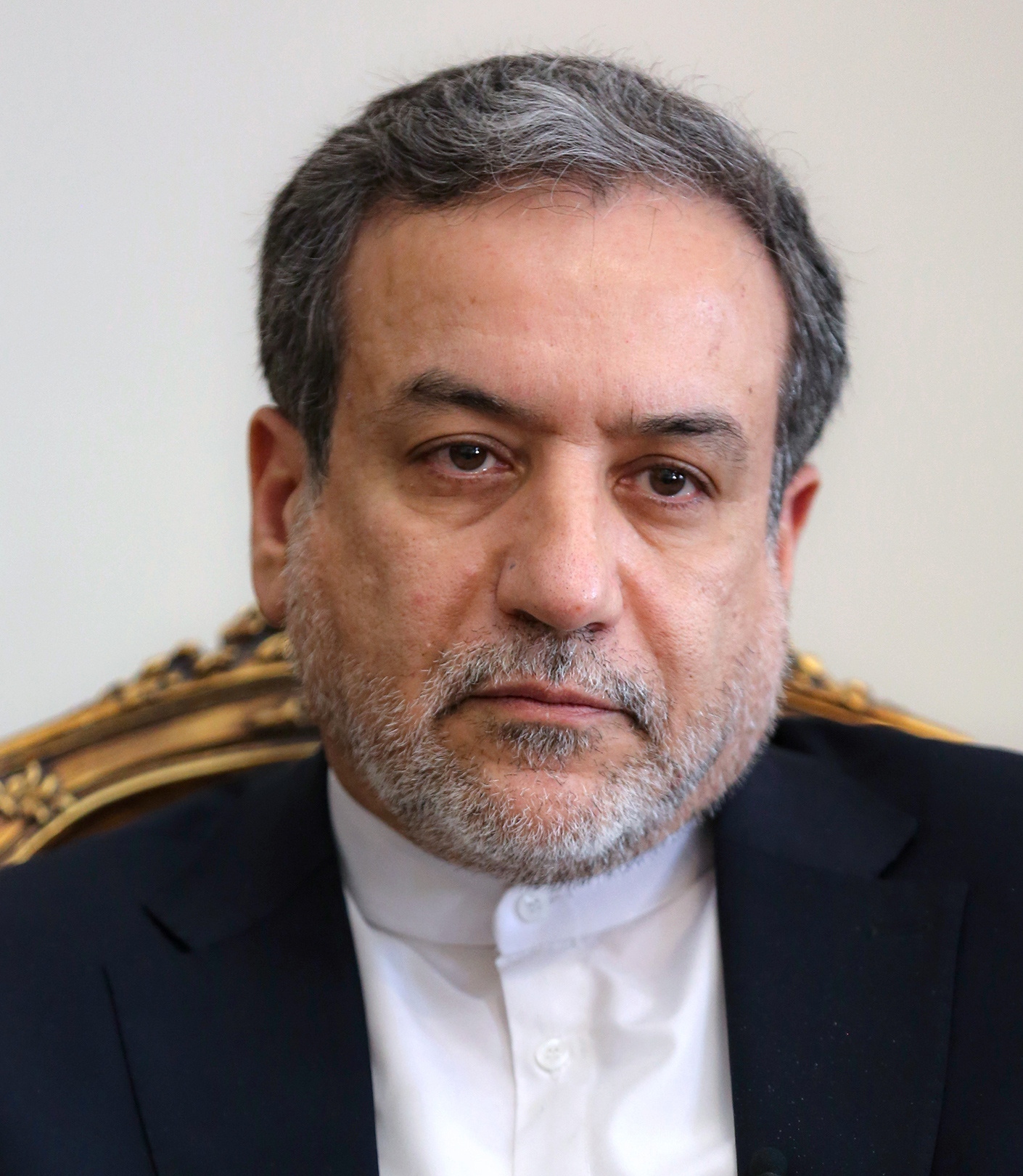
Table of Contents
- What Araghchi Said — and What It Forecloses
- The Touska Seizure and Iran’s Counter-Seizures
- Why Does the “Act of War” Label Matter Inside Iran?
- The IRGC’s Operational Posture
- Can Trump’s Ceasefire Extension Survive Without an Interlocutor?
- Bab el-Mandeb: The Second Front
- Background: 53 Days of Parallel Authority
- FAQ
What Araghchi Said — and What It Forecloses
“Blockading Iranian ports is an act of war and thus a violation of the ceasefire,” Araghchi posted on X on April 20. “Striking a commercial vessel and taking its crew hostage is an even greater violation.” The statement, reported by Newsweek, NBC News, and Al Jazeera, referred to the April 19 seizure of the Iranian-flagged cargo ship MV Touska by the USS Spruance in the Gulf of Oman.
The language is precise. Under the law of armed conflict and the San Remo Manual on International Law Applicable to Armed Conflicts at Sea (Articles 93–108), a blockade is a legitimate belligerent act — but it is, by definition, an act of war. Araghchi did not change Iran’s legal status. Iran and the United States are already in an international armed conflict, now in its eighth week. What he changed was Iran’s political framing: the ceasefire is void on Iran’s own terms.
That framing removes the internal political pressure on Tehran to continue engaging diplomatically while the blockade persists. Iran notified Pakistan on April 20 that it would not send a delegation for Islamabad Round 2, according to Euronews and Al Jazeera. Vice President JD Vance’s planned second trip to Islamabad was formally cancelled on April 22.
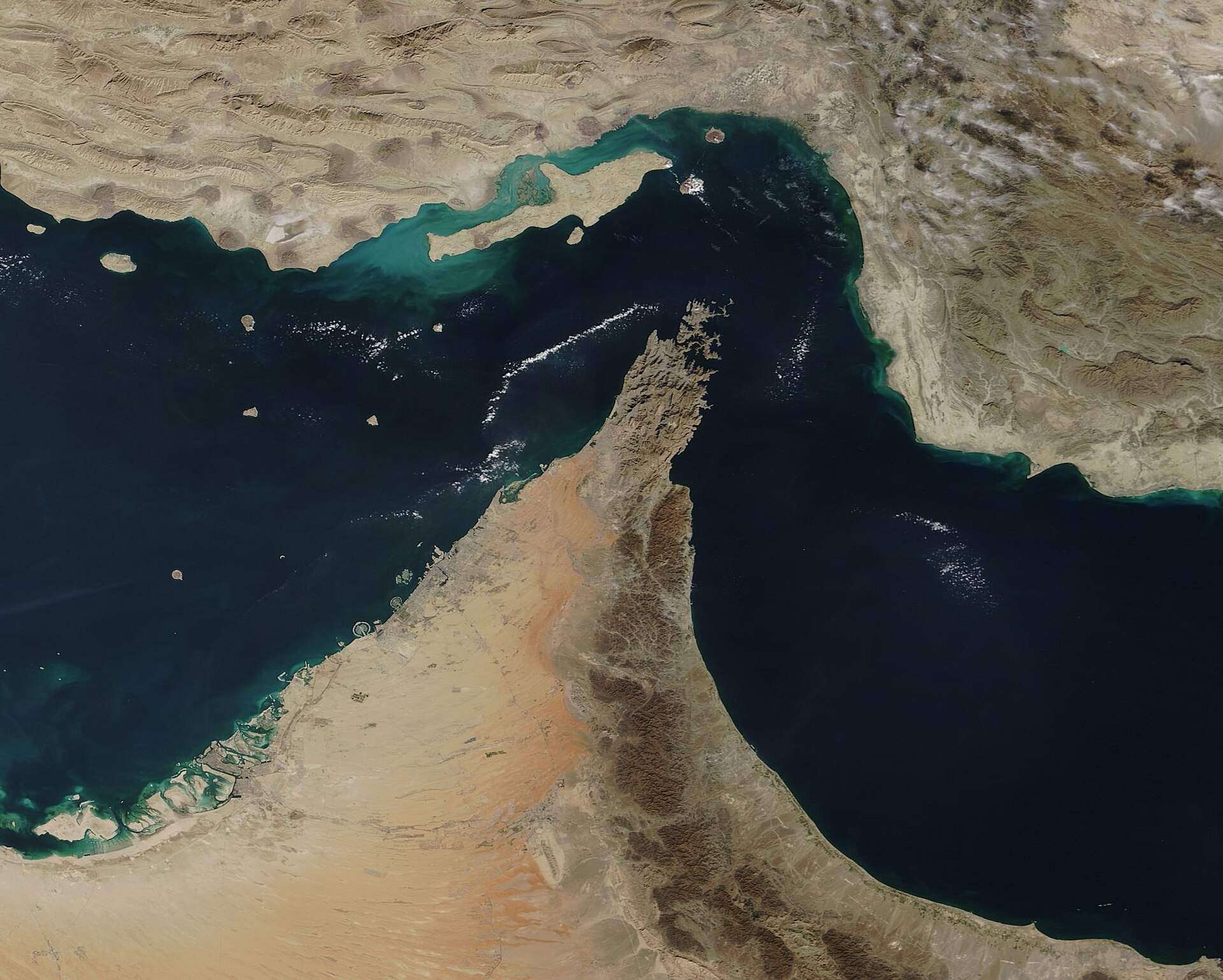
Five days earlier, Araghchi had declared the Strait of Hormuz “completely open.” The IRGC reversed him within 24 hours — firing on two commercial ships on April 18 and broadcasting on VHF Channel 16 that “the Strait of Hormuz is still closed.” The IRGC radio operator referred to Araghchi as “some idiot.”
The Middle East briefing 3,000+ readers start their day with.
One email. Every weekday morning. Free.
The Touska Seizure and Iran’s Counter-Seizures
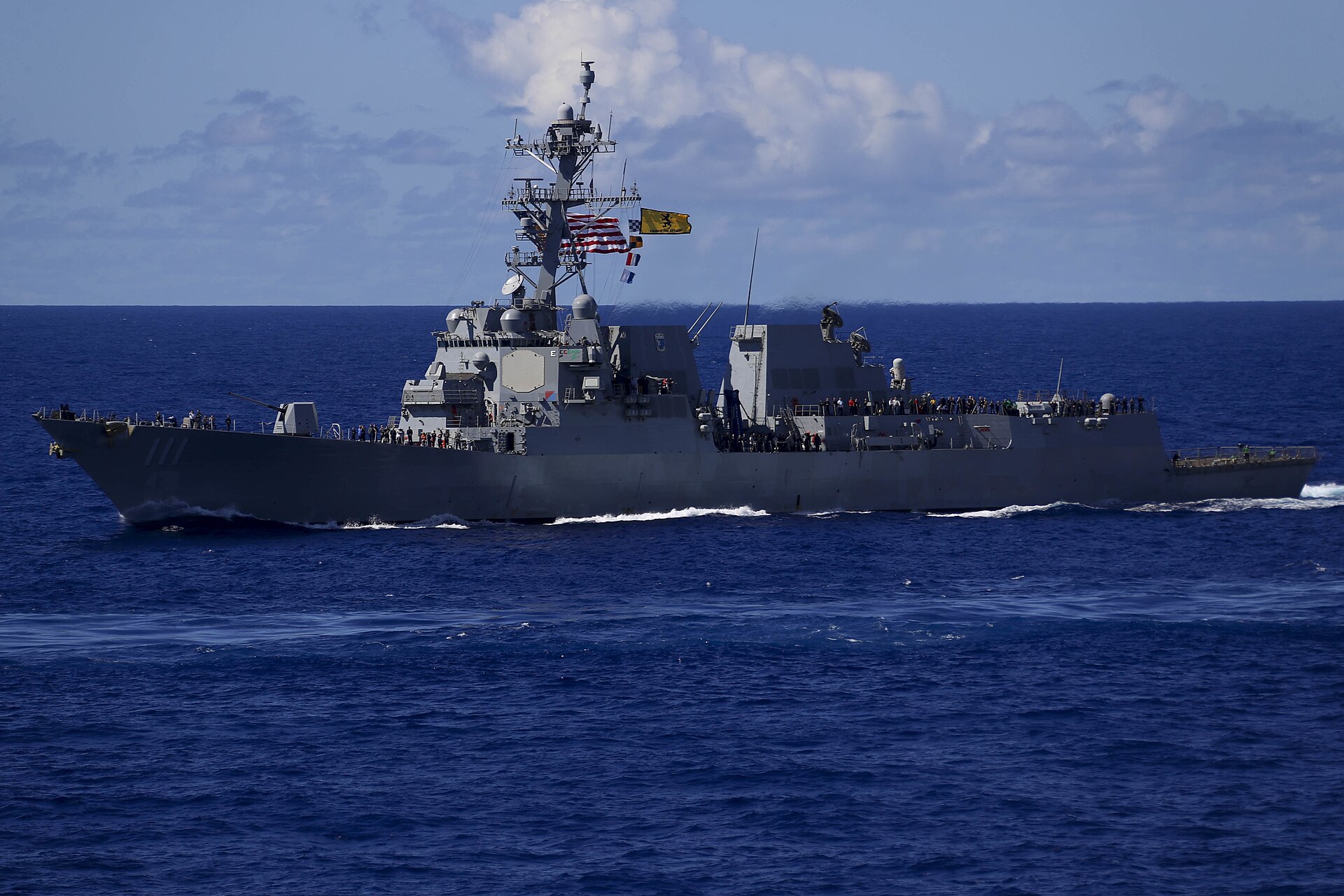
The immediate trigger for Araghchi’s statement was the interdiction of the MV Touska, a nearly 900-foot Iranian-flagged cargo vessel intercepted by the destroyer USS Spruance on April 19 in the Gulf of Oman. The stand-off lasted six hours. The Spruance disabled the Touska’s engine room, and US Marines boarded and took custody of the vessel and crew, according to The Aviationist and NPR.
The Touska seizure was the highest-profile enforcement action since the US naval blockade took effect on April 14. CENTCOM declared that the blockade covers “the entirety of the Iranian coastline” and that any vessel entering or departing Iranian ports without authorization is “subject to interception, diversion, and capture.” By April 22, CENTCOM claimed the blockade had halted 90 percent of Iran’s sea trade. By April 23, CENTCOM had turned back 31 vessels in total — and President Trump simultaneously told Fox News there is “no time frame” for ending the war, converting the blockade from a coercive deadline instrument into an open-ended interdiction.
Iran’s response came within 72 hours. On April 22, the IRGC Navy seized two vessels in the Strait of Hormuz: the MSC Francesca, a Panama-flagged container ship identified by Iran as Israel-linked, and the Epaminondas, a Liberia-flagged bulk carrier. The United Kingdom Maritime Trade Operations reported that both ships were fired upon without warning. The Epaminondas had been explicitly told by Iranian authorities that it had permission to transit, according to Safety4Sea and ABC News.
The sequence — US seizure, Iranian counter-seizure — echoes the tit-for-tat pattern of the 1984–1988 Tanker War, when both Iran and Iraq attacked commercial shipping in the Persian Gulf. The US responded then with Operation Earnest Will in 1987. Iran mined international waters, leading to the USS Samuel B. Roberts incident in April 1988, which wounded 10 American sailors and triggered Operation Praying Mantis.
Why Does the “Act of War” Label Matter Inside Iran?
The answer is structural, not rhetorical. Article 110 of Iran’s constitution grants the Supreme Leader sole authority over the armed forces. The president — and by extension the foreign minister — has zero authority over the IRGC. Araghchi cannot order the Guards to do anything. He cannot order them to stop doing anything.
But Araghchi can set the political frame within which the IRGC operates. By publicly declaring the blockade an act of war and the ceasefire void, he has given the IRGC legal and political cover to pursue counter-blockade measures — further Hormuz seizures, Bab el-Mandeb interdictions, strikes on Gulf infrastructure — as proportionate military responses rather than ceasefire violations. The legal analysis site Just Security described this dynamic in April 2026 as the “reprisals paradox.”
This is the authorization-ceiling problem in reverse. For weeks, the ceiling operated as a constraint: the IRGC acted while Araghchi tried to negotiate, and the gap between them was visible. President Masoud Pezeshkian publicly accused Major General Ahmad Vahidi and General Ali Abdollahi of wrecking the ceasefire on April 4. The Supreme National Security Council Secretary, Mohammad Bagher Zolghadr — an IRGC loyalist appointed March 24 — filed a complaint that Araghchi had “surpassed his mandate” by expressing flexibility in Islamabad, and the delegation was recalled.
On ceasefire expiry day, April 22, Iran’s hardline establishment answered Trump’s open-ended extension not with a reciprocal signal but with a Khorramshahr-4 missile parade and two ship seizures — while Judiciary Chief Mohseni-Ejei warned that “the enemy is not in a position to set a time for us.” The convergence of hardliner pressure with Araghchi’s act-of-war framing is analysed in Iran’s Judiciary Chief and IRGC Answer Trump’s Ceasefire Extension with Missile Parade and Prosecution Threat.
Now the ceiling has collapsed. Araghchi’s vocabulary matches the IRGC’s operational reality. The CS Monitor, PJ Media, and Sputnik reported on April 20 that Vahidi and his inner circle have “assumed dominance over both Iran’s military operations and its negotiating stance,” sidelining the foreign minister entirely.
The IRGC’s Operational Posture
The IRGC is not waiting. Brigadier General Sayyed Majid Mousavi, commander of IRGC Aerospace, declared on April 21: “If after the ceasefire the enemy oversteps and commits any aggression against this soil, this time our target will be wherever you direct us,” according to PressTV. The pledge was delivered at a public ceremony — not a closed military briefing — positioning the IRGC’s escalation readiness as popular mandate rather than institutional decision.
In the same address, Mousavi warned Gulf states hosting US forces: “If their land and resources are used by America… they must bid farewell to oil production in West Asia,” Iran International reported. The threat extends beyond Hormuz. Ali Akbar Velayati, a senior adviser to the Supreme Leader and former foreign minister, told Al Jazeera that “the unified command of the Resistance front views Bab al-Mandeb as it does Hormuz.”
Major General Ali Abdollahi, chief of Iran’s Joint Military Command, told Tasnim News Agency that Iranian forces would resist attempts to create “false narratives about the situation on the ground.” Tasnim separately reported that Iran is “fully prepared for the possibility of renewed war,” including “repositioning military units, identifying new targets, and planning additional surprises should hostilities resume.”
The operational evidence matches the rhetoric. The MSC Francesca and Epaminondas seizures on April 22 were framed by IRNA and Tasnim not as retaliation but as enforcement of navigation permit requirements — reinforcing the IRGC’s standing claim that Hormuz control is sovereign administrative management, not a military blockade. The IRGC Navy declared “full authority to manage the Strait” on April 5 and again on April 10, both times while Araghchi was in or en route to Islamabad.
Can Trump’s Ceasefire Extension Survive Without an Interlocutor?
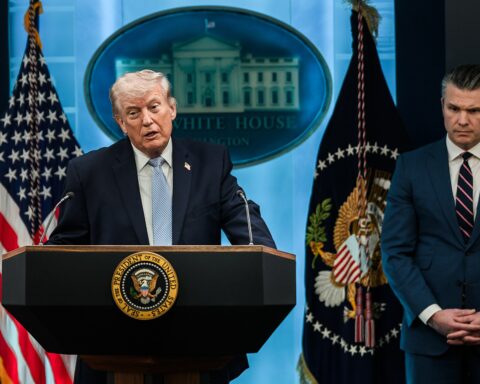
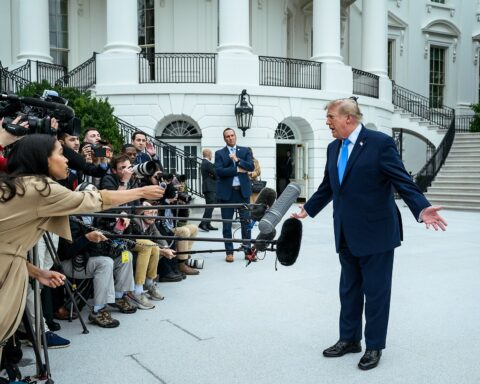
On April 21, President Trump extended the ceasefire on an open-ended basis, telling reporters that Iran’s government is “seriously fractured.” He conditioned continued talks on Iran submitting a “unified proposal” and directed the US military to “continue the Blockade,” according to CNBC and Al Jazeera. The extension was made “upon the request of Field Marshal Asim Munir and Prime Minister Shehbaz Sharif of Pakistan,” NPR reported.
Trump’s condition — a unified Iranian proposal — is structurally impossible to meet. Araghchi has publicly adopted the IRGC’s framing. Pezeshkian has publicly accused Vahidi of undermining the previous negotiating mandate. Zolghadr controls the SNSC and acts as gatekeeper for what the delegation can offer. And the figure who could theoretically reconcile these positions — Supreme Leader Ayatollah Ali Khamenei, or his son Mojtaba acting on his behalf — has not been publicly seen or heard for more than six weeks.
CNN and Time reported on April 21 that the regime has used AI-generated video in Mojtaba Khamenei’s name. One source familiar with Iran’s internal dynamics told Time: “The system is using him to get final approval for key broad decisions and not the tactics for the negotiations. Mojtaba is missing in action, so attributing views to him is a good cover for Iranian negotiators to protect themselves from criticism.”
Mahdi Mohammadi, an adviser to Parliamentary Speaker Mohammad Bagher Ghalibaf, posted on X on April 21: “Trump’s ceasefire extension means nothing, the losing side cannot dictate terms.” He followed up on April 22: “Trump’s ceasefire extension is certainly a ploy to buy time for a surprise strike. Iran must take initiative,” as cited by Axios and Reuters.
Pakistan, the sole remaining mediator, now has no Iranian delegation to mediate with and no American delegation en route. The Abdollahi war warning was issued on the same day Pakistan brokered the extension — a pattern that has repeated at every diplomatic inflection point since the Islamabad Accord.
Bab el-Mandeb: The Second Front
Velayati’s statement that the Resistance front “views Bab al-Mandeb as it does Hormuz” marks the first explicit linkage by a figure in the Supreme Leader’s inner circle between the Hormuz blockade and the Bab el-Mandeb chokepoint, through which Saudi Arabia’s remaining Red Sea export corridor passes.
Saudi crude exports have already fallen 38.6 percent to Asia since the war began, according to Kpler data. Saudi production dropped from 10.4 million barrels per day in February to 7.25 million bpd in March, per the International Energy Agency — a 3.15 million bpd decline, the largest single-month disruption on record. The Yanbu terminal on the Red Sea, fed by the East-West Pipeline, operates at a ceiling of 4–5.9 million bpd against a pre-war Hormuz throughput of 7–7.5 million bpd.
If the IRGC or its proxies extend interdiction operations to Bab el-Mandeb, the Yanbu bypass — the engineering achievement that has kept Saudi exports viable — loses its strategic value. Mousavi’s warning that Gulf states hosting US forces “must bid farewell to oil production in West Asia” is not abstract. The East-West Pipeline pumping station was struck by the IRGC on April 8, the day the ceasefire nominally began. The SAMREF refinery at Yanbu was hit on April 3.
IMO Secretary-General Arsenio Dominguez has stated that “there is still no legal basis in international law to take any actions to block any strait used for international navigation.” The statement applies equally to the US blockade of Iranian ports and to Iran’s permit regime in Hormuz — a symmetry neither side acknowledges.
Background: 53 Days of Parallel Authority
Since the war began on February 28, 2026, the conflict has produced a pattern unique in modern military history: two parallel authority structures inside Iran issuing contradictory orders on the same operational questions at the same time. On April 5 and April 10, the IRGC Navy declared “full authority to manage the Strait of Hormuz” while Araghchi was conducting ceasefire negotiations. On April 17 he declared Hormuz “completely open”; the IRGC fired on commercial ships the next morning and broadcast that it was closed. On April 4, Pezeshkian accused Vahidi and Abdollahi of derailing the Islamabad talks. On April 20, Araghchi adopted the IRGC’s language entirely.
The IRGC has progressively seized presidential appointments and cordoned Mojtaba Khamenei’s operational role, according to reporting from CNN, Time, and multiple Iranian-diaspora outlets. Zolghadr’s appointment as SNSC Secretary on March 24 placed an IRGC loyalist at the nexus of Iran’s national security decision-making. Rear Admiral Ali Tangsiri, the IRGC Navy commander, was killed on March 30; no named successor has been announced in 23 days, yet the IRGC Navy continues to operate — seizing ships, firing on vessels, issuing radio broadcasts — without visible command-level authorization.
The San Remo Manual requires that a blockade be “declared, effective, and impartial,” with humanitarian exemptions. CENTCOM’s April 14 declaration formally meets these criteria. But the manual also assumes a coherent adversary with whom the blockading power can negotiate terms. The US blockade is designed to compel Iran to negotiate. Iran’s “act of war” designation is designed to make negotiation impossible while the blockade exists. The result is a coercive instrument operating in a diplomatic vacuum.
FAQ
Is a naval blockade actually an “act of war” under international law?
Yes. Under the San Remo Manual on International Law Applicable to Armed Conflicts at Sea (1994), a blockade is a belligerent measure that can only be imposed during an armed conflict. It is, by definition, an act of war. Araghchi’s statement is legally accurate. The political significance lies not in the legal characterization but in Iran’s decision to publicly adopt it as its official framing — which forecloses the possibility of treating the blockade as a manageable irritant that diplomacy can work around.
What is the “authorization ceiling” and why does it prevent a unified Iranian proposal?
Under Article 110 of Iran’s constitution, the Supreme Leader holds sole command authority over the armed forces, including the IRGC. The president and foreign minister have no legal power to direct, restrain, or override IRGC operations. For a “unified proposal” to emerge — as Trump has demanded — it would require either the Supreme Leader’s direct intervention or the IRGC voluntarily subordinating its operational posture to diplomatic objectives. Ayatollah Khamenei has not been publicly seen in over six weeks. Mojtaba Khamenei’s appearances have involved AI-generated video. Vahidi has publicly overridden the foreign ministry at every stage of the conflict. No institutional mechanism exists to compel unification.
Could Pakistan still broker talks despite Iran’s refusal?
Pakistan retains the institutional relationships — Field Marshal Munir visited Khatam al-Anbiya headquarters (Abdollahi’s command) on April 16, and the ceasefire extension was made at Pakistan’s request. But Pakistan’s leverage depends on both parties sending delegations. With Iran refusing to attend and Vance’s trip cancelled, Pakistan’s role shifts from mediator to message-carrier. The September 2025 Saudi-Pakistan Mutual Defense Agreement further complicates Islamabad’s position: it is simultaneously Iran’s interlocutor and Saudi Arabia’s treaty ally.
What are the Tanker War precedents for the current seizure cycle?
During the 1984–1988 Tanker War, Iran and Iraq attacked more than 400 commercial vessels in the Persian Gulf. The United States launched Operation Earnest Will in 1987 to escort reflagged Kuwaiti tankers. After the USS Samuel B. Roberts struck an Iranian mine in April 1988 (10 sailors wounded), the US launched Operation Praying Mantis — the largest US naval engagement since World War II — sinking or disabling six Iranian vessels in a single day. The current tit-for-tat seizure pattern (US seizes Touska April 19; IRGC seizes MSC Francesca and Epaminondas April 22) mirrors the early-phase escalation of the Tanker War before it widened into direct naval combat. The comparison to Earnest Will is now shaping a 30-nation military planning conference: on April 22 a UK-France coalition at Northwood PJHQ began designing a modern armed escort architecture for the strait, deliberately structured outside NATO to avoid triggering Article 5.
What does the Epaminondas incident reveal about the IRGC permit system?
The Epaminondas was explicitly told by Iranian authorities that it had permission to transit the Strait of Hormuz, according to Safety4Sea and ABC News. It was seized anyway — fired upon without warning per UKMTO. This indicates either that the IRGC Navy does not recognize permits issued by the civilian government, or that the permit system itself is designed to generate compliance data (which vessels request permission) rather than to facilitate actual transit. Either reading confirms that the IRGC operates a parallel authority structure in Hormuz that is not bound by commitments made by Iran’s diplomatic apparatus. On April 22, the White House simultaneously declined to defend non-US commercial ships from these seizures, with Press Secretary Leavitt’s ruling establishing Washington’s determination that non-US ship seizures fall outside the ceasefire framework — an implicit endorsement of the transition from Iran’s failed toll regime to physical seizure as its primary strait-control mechanism.
Iran’s formal refusal to send a delegation to the second Islamabad round — announced April 24 — represents an escalation beyond Araghchi’s “act of war” framing: Tehran has moved from rhetorical defiance to operational non-participation, suspending Vance’s planned trip and exposing Pakistan’s enforcement role as a relay without coercive capacity. How Iran’s refusal collapsed Pakistan’s mediation architecture is reported here.