
RIYADH — Iran’s President Masoud Pezeshkian apologized to Gulf Arab states on March 8 for the wave of missile and drone attacks that have struck Saudi Arabia, Bahrain, Qatar, and Kuwait since February 28 — and within hours, his own military contradicted him, the Islamic Revolutionary Guard Corps declaring that any location hosting American military assets remained a legitimate target. The episode exposed the deepest fracture in Iran’s wartime leadership since the revolution: a civilian president who cannot control the forces fighting in his country’s name, and a newly installed Supreme Leader whose authority derives entirely from the very military apparatus Pezeshkian sought to restrain.
For Saudi Arabia, the spectacle of an Iranian president apologizing while Iranian drones were still in the air above Riyadh presents a strategic puzzle unlike any Mohammed bin Salman has faced. The Kingdom has maintained a diplomatic backchannel to Tehran throughout the conflict, according to Bloomberg, but the question that now confronts MBS and his war cabinet is existential: which Iran is on the other end of that phone line — the one seeking peace, or the one loading the next Shahab-3?
The answer may determine whether this war lasts weeks or years, and whether Saudi Arabia’s massive air defense investments prove sufficient to outlast an adversary fighting itself as fiercely as it fights the Gulf.
Table of Contents
- What Did Pezeshkian Actually Say to the Gulf States?
- Why Did Iran’s President Retract His Apology Within Hours?
- Who Actually Controls Iran’s Military?
- How Did Mojtaba Khamenei Gain Power and What Does He Want?
- The Constitutional Cage That Traps Iran’s Elected Leaders
- What Has the IRGC Said About Continuing Gulf Attacks?
- Saudi Arabia’s Impossible Calculation
- The Dual-Track Deception Matrix
- Can Saudi Arabia Trust Either Voice From Tehran?
- What Would a Real Ceasefire Actually Require?
- The Backchannel That Built — and May Save — the Saudi-Iran Relationship
- What Are Mohammed bin Salman’s Options Now?
- Frequently Asked Questions
What Did Pezeshkian Actually Say to the Gulf States?
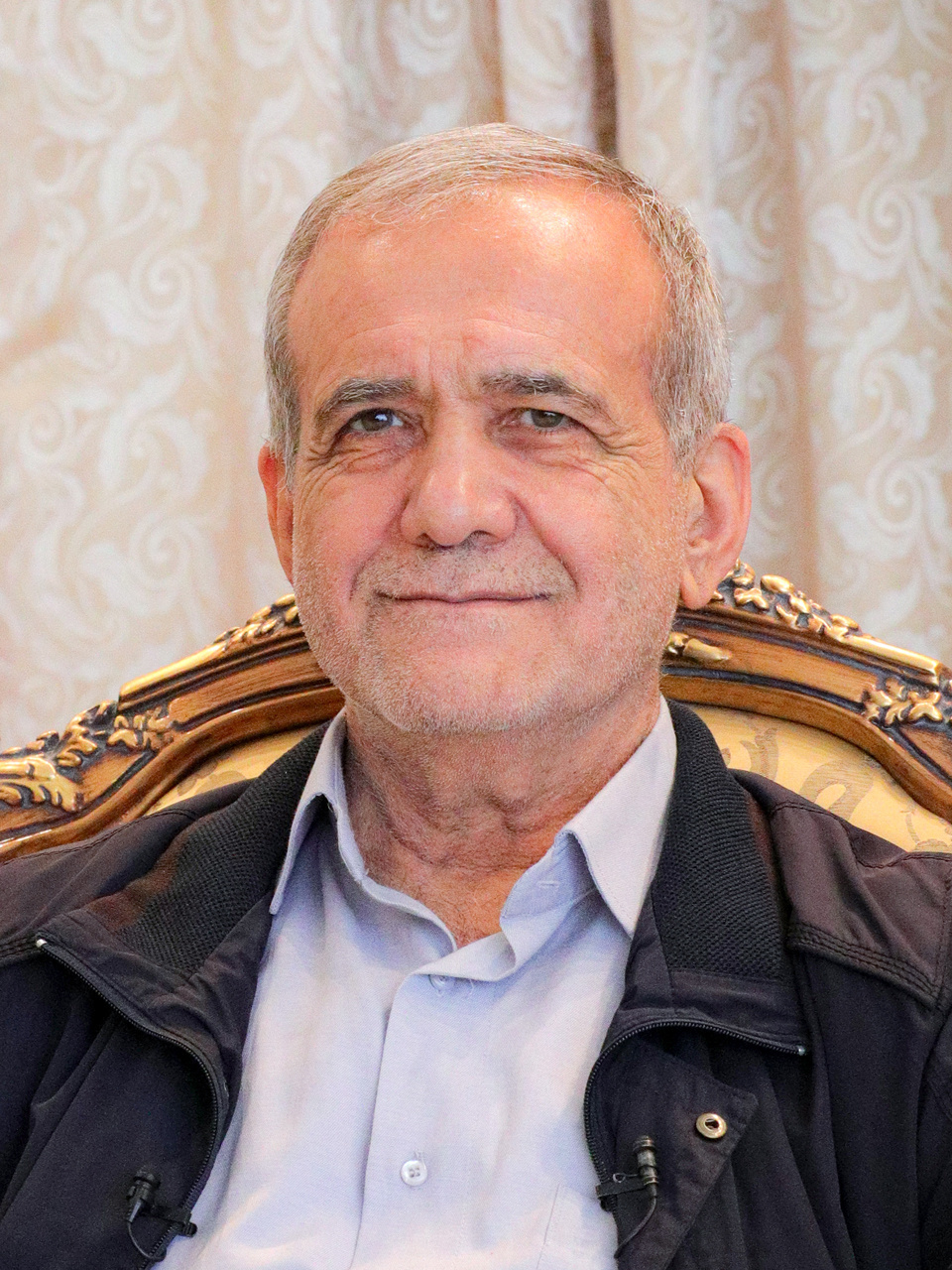
On Saturday, March 8, Iranian President Masoud Pezeshkian appeared on state television to deliver a message that no Iranian leader has delivered since the 1979 revolution: an explicit apology to neighboring states for military aggression carried out by Iranian forces. The 70-year-old reformist president, speaking from Tehran, told Gulf Arab nations that the missile and drone attacks of the preceding week were not ordered by civilian leadership.
“Our commanders and our leader lost their lives following the barbaric aggression, and our armed forces, the champions that are sacrificing their lives to defend our territorial integrity, fired at will because their commanders were absent,” Pezeshkian said, according to NPR’s reporting from Tehran. He then announced that the interim leadership council had instructed Iran’s armed forces to cease attacking neighboring countries unless Iran came under direct attack from their territory.
The statement was extraordinary for several reasons. First, it acknowledged that Iran’s retaliatory strikes — which had hit targets across Saudi Arabia, Bahrain, Qatar, Kuwait, the UAE, Jordan, and Iraq — were essentially unauthorized, launched by military commanders operating without clear civilian oversight in the chaos following Supreme Leader Ali Khamenei’s assassination on February 28. Second, it drew a distinction between Iran’s civilian government and its military establishment that no Iranian president had ever made so explicitly during wartime.
The Middle East briefing 3,000+ readers start their day with.
One email. Every weekday morning. Free.
According to Euronews, Pezeshkian simultaneously rejected American demands for Iran’s surrender, positioning his apology not as capitulation but as a rational actor’s attempt to prevent the conflict from spiraling further. He emphasized that Iran’s war was with the United States and Israel — the nations that launched Operation Epic Fury — not with its Gulf neighbors who happened to host American military bases.
| Date/Time | Event | Source |
|---|---|---|
| March 7 PM | Fresh Iranian missile and drone wave strikes Dubai International Airport, Saudi oil facility, Bahrain targets | Al Jazeera |
| March 8 AM | Pezeshkian delivers televised apology to Gulf nations, orders forces to stop attacking neighbors | NPR, Euronews |
| March 8 PM | Hardliner lawmaker Hamid Rasai condemns apology as “unprofessional, weak and unacceptable” on social media | CBC News |
| March 8 PM | Pezeshkian partially retracts apology under pressure from hardliners | Gulf News |
| March 8 late | IRGC issues statement declaring all locations hosting US assets remain “legitimate targets” | CNN |
| March 8 night | Mojtaba Khamenei announced as new Supreme Leader by Assembly of Experts | CBS News, Al Jazeera |
The speed with which the apology was issued, challenged, and effectively overridden tells a story about Iran’s wartime governance that matters far more than the words themselves. It reveals a state whose civilian institutions and military apparatus are operating on entirely different wavelengths — and whose new Supreme Leader was chosen specifically to end that confusion in the military’s favor.
Why Did Iran’s President Retract His Apology Within Hours?
The retraction was not Pezeshkian’s choice. It was forced upon him by a political system designed to ensure that elected civilian officials never accumulate enough power to challenge the revolutionary establishment. Within hours of his televised address, the backlash arrived from multiple directions simultaneously.
Hardline cleric and Majlis lawmaker Hamid Rasai addressed the president publicly on social media, calling his stance “unprofessional, weak and unacceptable,” according to CBC News reporting. The criticism was notable not because it came from a political opponent — Iranian politics has always featured factional disputes — but because it signaled that the military-clerical establishment regarded Pezeshkian’s apology as an unauthorized deviation from the war strategy.
Gulf News reported that Pezeshkian partially walked back his remarks later that evening, softening the apology into a more ambiguous expression of regret rather than the clear policy statement he had originally delivered. The distinction mattered. An apology implied that Iran’s attacks on Gulf states were wrong and would stop. An expression of regret merely acknowledged that civilians had been harmed — a far lower bar that committed Iran to nothing.
Analysis by CNN described the episode as “the first significant message of de-escalation” from Iran, but noted a “major caveat” — that Pezeshkian’s authority to deliver on any promise of restraint was fundamentally questionable. The network’s analysts pointed to the structural reality of Iranian governance: the president controls neither the military, the intelligence services, nor the foreign policy apparatus. Those levers belong to the Supreme Leader and, by extension, to the IRGC.
Iranian Foreign Minister Abbas Araghchi further undermined Pezeshkian’s peace signals when he told reporters that Iran was “neither asking for ceasefire nor negotiations with the US,” according to the Times of Israel. If Iran’s own foreign minister was contradicting the president’s conciliatory tone, the apology’s diplomatic value approached zero.
Who Actually Controls Iran’s Military?
Understanding why Pezeshkian’s apology was meaningless requires understanding a constitutional architecture designed in 1979 to prevent exactly the kind of civilian-led de-escalation he attempted. Iran’s political system is not a conventional republic. It is a theocratic-military hybrid in which elected officials serve at the pleasure of unelected ones, and the military answers to God’s representative on earth — the Supreme Leader — not to the people’s representative in the presidential palace.
Article 110 of the Islamic Republic’s constitution grants the Supreme Leader command of the armed forces, the power to appoint and dismiss the heads of the judiciary, the state broadcaster, and the commanders of the Army, the IRGC, and the police. The Supreme Leader delineates all general policies of the state and supervises their implementation across the legislature, executive, and judiciary, according to the Council on Foreign Relations’ analysis of Iran’s power centers.
The president, by contrast, manages the civilian bureaucracy. He signs treaties, appoints ministers subject to parliamentary approval, and administers the state budget. He has no independent authority over military operations, intelligence collection, nuclear policy, or strategic foreign policy — all of which fall under the Supreme Leader’s direct supervision.
| Domain | Supreme Leader | President |
|---|---|---|
| Armed forces command | Direct authority (Art. 110) | None |
| IRGC appointments | Appoints/dismisses commanders | None |
| Nuclear policy | Final decision-maker | No authority |
| Foreign policy direction | Sets all general policies | Implements via diplomats |
| Intelligence services | Direct supervision | Limited civilian intel only |
| State broadcaster | Appoints head | No control |
| Judicial system | Appoints head of judiciary | No control |
| Civilian budget | Oversight via Expediency Council | Day-to-day administration |
| Treaty signing | Must approve via Guardian Council | Signs, subject to approval |
| Domestic governance | Can override via decree | Primary administrator |
This structural reality means that when Pezeshkian ordered Iran’s armed forces to stop attacking Gulf neighbors, he was issuing an instruction he had no constitutional authority to enforce. The order would only carry weight if the Supreme Leader endorsed it. And by the time Pezeshkian spoke, the Supreme Leader was dead — killed in the February 28 strikes — and his successor had not yet been formally installed.
Iran was, for approximately nine days between Khamenei’s death and Mojtaba Khamenei’s formal appointment on March 8, a state without its most powerful decision-maker. The IRGC filled that vacuum. According to NBC News, the “powerful hard-line military corps” that emerged as the dominant force in the interregnum was never going to accept a civilian president’s authority to negotiate on its behalf — particularly when that president was a reformist elected on a platform of engagement with the West.
How Did Mojtaba Khamenei Gain Power and What Does He Want?
Mojtaba Khamenei’s elevation to Supreme Leader on March 8, 2026, was not a democratic process. It was a military operation conducted by the IRGC within the formal machinery of the Assembly of Experts — Iran’s 88-member clerical body constitutionally charged with selecting the Supreme Leader.
According to Al Jazeera and Axios reporting, the IRGC began pressuring Assembly members to vote for Mojtaba Khamenei as early as March 3, just three days after his father’s assassination. Eight members of the Assembly publicly stated they would boycott the selection process due to what they described as “heavy pressure” from IRGC commanders. The boycott was insufficient to block the appointment. Mojtaba Khamenei was confirmed as Iran’s third Supreme Leader on the evening of March 8 — the same day his father’s assassin’s ally, President Pezeshkian, had attempted to sue for peace.
The 56-year-old Mojtaba is not a conventional clerical figure. He served in the IRGC’s Habib Battalion during the Iran-Iraq War and spent decades cultivating relationships within the Revolutionary Guard’s command structure. Al Jazeera described him as having “deep ties to the paramilitary Islamic Revolutionary Guard Corps” — ties that, in Iran’s system, are the currency of real power.
Analysts at Axios noted that Mojtaba “might lean more heavily on the might of the IRGC” than even his father did. Ali Khamenei, for all his authoritarianism, occasionally restrained the Guard Corps when their operations threatened to provoke unmanageable escalation — most notably in his cautious response to the 2020 assassination of Quds Force commander Qassem Soleimani. Mojtaba, who owes his position to IRGC pressure, may lack both the inclination and the political capital to exercise similar restraint.
The IRGC’s broader leadership has also been reshuffled by the war. Ahmad Vahidi, a veteran of the Iran-Iraq War and the inaugural commander of the Quds Force, was appointed as IRGC Commander-in-Chief after his predecessor, Mohammad Pakpour, was killed in the initial US-Israeli strikes, according to Al Jazeera. Meanwhile, the status of Quds Force commander Esmail Qaani remains uncertain, with unverified reports circulating that the IRGC has detained him on suspicion of espionage — an extraordinary claim that, true or false, signals the depth of paranoia within the military establishment.
What Mojtaba Khamenei wants is clearer than many analysts acknowledge. He wants to consolidate the same total authority his father held, and the fastest path to consolidation in a wartime theocracy is to position himself as the guardian of national resistance. Suing for peace would undermine his legitimacy before it is established. Continuing the war — or at least projecting an unwillingness to stop — cements his authority as the Supreme Leader the IRGC chose because they knew he would not flinch.
The Constitutional Cage That Traps Iran’s Elected Leaders
Iran’s presidential reformists have run into the same constitutional wall for three decades. Mohammad Khatami, elected in 1997 on a platform of dialogue with the West, discovered that the Supreme Leader and Guardian Council could block any initiative he proposed. Hassan Rouhani, who negotiated the 2015 nuclear deal (JCPOA), watched the agreement collapse not because his diplomacy failed but because the IRGC’s provocations and the Supreme Leader’s refusal to make broader concessions gave Washington’s hawks the ammunition they needed to withdraw.
Pezeshkian occupies an even weaker position than either predecessor. He was elected in July 2024 with a reformist mandate, but his presidency has been defined by events entirely outside his control — the escalation with Israel, the assassination of Khamenei, and now a full-scale war that he neither authorized nor can stop.
The constitutional architecture ensures this impotence is permanent, not accidental. The Guardian Council, whose six clerical members are appointed directly by the Supreme Leader, vets all presidential candidates. The Expediency Discernment Council mediates disputes between parliament and the Guardian Council — and its chairman is appointed by the Supreme Leader. The judiciary, the state broadcaster, and the armed forces all report to the Supreme Leader. The president sits atop a civilian bureaucracy that administers schools, hospitals, and municipal services while the real decisions about war, peace, intelligence, and nuclear weapons are made in a parallel system he cannot access.
This is why the question of who replaces Khamenei was always more important than who occupies the presidential palace. The Supreme Leader is not merely Iran’s head of state; he is the sole node through which military, intelligence, judicial, and religious authority converge. Without a functioning Supreme Leader, those systems operate autonomously — which is precisely what happened between February 28 and March 8, when the IRGC launched attacks across the Gulf without meaningful civilian oversight.
What Has the IRGC Said About Continuing Gulf Attacks?
The IRGC’s position has been unambiguous, and it directly contradicts Pezeshkian’s peace signals. According to CNN and multiple wire service reports, the Revolutionary Guard issued a statement declaring that any location hosting American military assets or interests would be treated as a legitimate target — regardless of which country’s sovereign territory that location occupied.
This statement transforms the entire Gulf into a potential battlefield. Saudi Arabia hosts US forces at Prince Sultan Air Base in al-Kharj. Qatar hosts Al Udeid Air Base, the largest US military facility in the Middle East. Bahrain is home to the US Fifth Fleet. Kuwait hosts Camp Arifjan and several other American installations. The UAE accommodates US forces at Al Dhafra Air Base. By the IRGC’s declared logic, all of these nations — and any civilian infrastructure near these installations — are fair game.
The scale of attacks during the war’s first ten days underscores the seriousness of this threat. According to official figures compiled from multiple Gulf defense ministries, the region intercepted hundreds of Iranian missiles and drones in the first week alone.
| Country | Ballistic Missiles | Cruise Missiles/Drones | Total | Key Targets |
|---|---|---|---|---|
| Bahrain | 78 | 143 | 221 | US Fifth Fleet, Israeli Embassy, desalination plant |
| Kuwait | 97 | 283 | 380 | Camp Arifjan, Kuwait International Airport area |
| Qatar | 18 | — | 18+ | Al Udeid Air Base |
| Jordan | 13 | 49 | 62 | US military facilities |
| Saudi Arabia | — | — | Undisclosed | Prince Sultan Air Base, Shaybah oilfield, Riyadh |
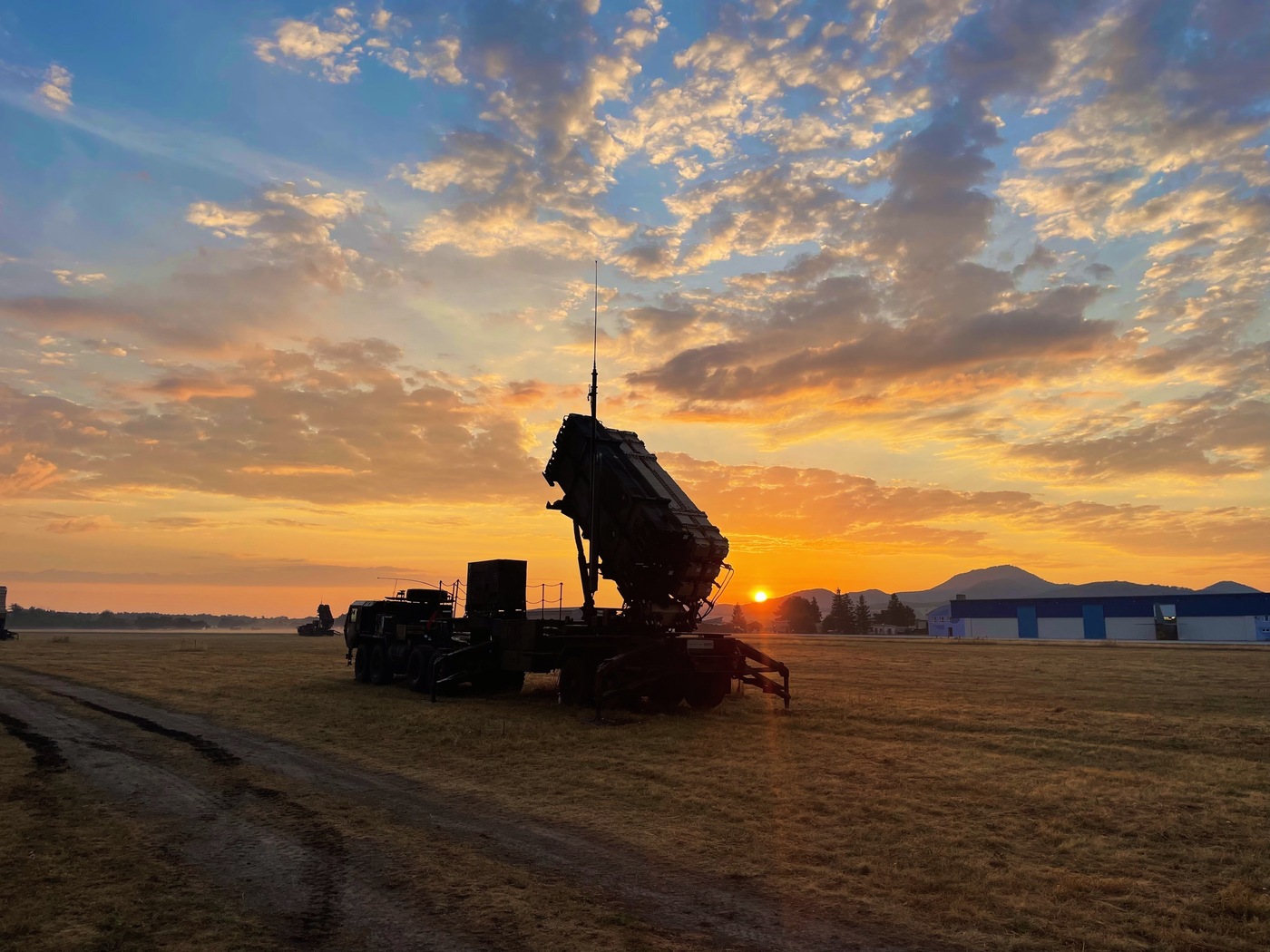
Saudi Arabia has not released comprehensive interception figures, though individual incidents have been reported: three ballistic missiles intercepted near Prince Sultan Air Base on March 6, two cruise missiles near al-Kharj on March 5, six drones heading toward the Shaybah oilfield, and 15 drones intercepted over Riyadh on March 9, among others. Saudi Arabia’s air defense network, anchored by Patriot PAC-3 and THAAD batteries, has performed well — but each interception costs millions of dollars against drones and missiles that cost a fraction of that amount.
The gap between Pezeshkian’s apology and the IRGC’s continued operations is not merely rhetorical. On the same day the president expressed regret, Saudi civil defense reported that a “military projectile” struck a residential area in al-Kharj, killing two foreign nationals — an Indian citizen and a Bangladeshi worker — and injuring twelve others, according to PBS News. These were the first confirmed deaths on Saudi soil from Iranian attacks. An Iranian president’s apology arrived the same day Iranian weapons killed civilians in Saudi Arabia. The contradiction could not have been more stark.
Saudi Arabia’s Impossible Calculation
The fracture within Tehran’s leadership creates a strategic paradox for Mohammed bin Salman that no amount of military spending can resolve. Saudi Arabia has invested an estimated $80 billion in air defense systems over the past decade, building the most sophisticated missile shield in the Middle East. It has cultivated a diplomatic backchannel to Tehran that Bloomberg reported has been deployed “with greater urgency” since the war began. And it has positioned itself as a peacemaker, maintaining communication with both sides while simultaneously brokering conflicts from Ukraine to Sudan.
Yet none of these tools provides a clear answer to the question Pezeshkian’s apology raises: who should Saudi Arabia negotiate with?
If MBS engages with Pezeshkian, he is negotiating with a leader who has already demonstrated that he cannot deliver on his promises. The president ordered the military to stop attacking neighbors; the military ignored him. Any agreement Pezeshkian signs would be worth precisely as much as his televised apology — which is to say, nothing, unless Mojtaba Khamenei and the IRGC endorse it.
If MBS engages with Mojtaba Khamenei directly, he is negotiating with a leader who has every incentive to prolong the conflict. The new Supreme Leader needs the war to establish his authority. A ceasefire in his first week would signal weakness to the IRGC commanders who installed him. Moreover, any communication between MBS and Mojtaba would bypass Pezeshkian entirely, reinforcing the principle that Iran’s elected government is irrelevant — a message the Saudi crown prince might find uncomfortable given his own approach to governance.
The third option — waiting for one voice in Tehran to prevail over the other — carries its own risks. Every day the war continues, more Iranian drones and missiles test Saudi air defenses, more oil infrastructure sits in the crosshairs, and more of the diplomatic goodwill accumulated through the 2023 China-brokered normalization agreement erodes. MBS personally invested political capital in the Saudi-Iranian rapprochement. Each Iranian missile that falls on Saudi soil destroys a piece of that investment.
The Dual-Track Deception Matrix
Iran’s simultaneous peace signals and continued military operations are not contradictory. They are complementary elements of a strategy that the Islamic Republic has employed repeatedly since 1979 — a dual-track approach in which the civilian government’s diplomatic overtures provide political cover for the military establishment’s operational objectives.
The pattern is identifiable across multiple historical episodes and can be analyzed through a structured assessment framework that evaluates whether Iran’s peace signals are genuine or tactical.
| Episode | Civilian Signal | Military Reality | Outcome | Deception Score (1-10) |
|---|---|---|---|---|
| Iran-Iraq War, 1986-88 | Multiple ceasefire feelers via UN mediators | IRGC continued offensives, used chemical weapons | War continued until military exhaustion forced genuine acceptance of UNSCR 598 | 8 |
| JCPOA Negotiations, 2013-15 | Rouhani’s diplomatic charm offensive | IRGC expanded regional proxy operations, continued ballistic missile development | Deal signed but IRGC compliance selective; military programs continued in letter-of-law gray areas | 6 |
| Post-Soleimani, January 2020 | Zarif offered de-escalation messaging | IRGC launched ballistic missiles at Al Asad Airbase in Iraq | Both sides stepped back; attack was calibrated to avoid US casualties while allowing domestic escalation narrative | 5 |
| Saudi-Iran Rapprochement, 2023 | China-brokered agreement, embassy reopening | IRGC maintained Houthi supply lines, continued proxy operations in Iraq and Syria | Genuine diplomatic progress on bilateral track while proxy competition continued on separate track | 4 |
| Pezeshkian Apology, March 2026 | Presidential apology to Gulf states | IRGC contradicts within hours; new Supreme Leader installed by IRGC | Pending — but initial indicators suggest highest deception score in the dataset | 9 |
The framework reveals a consistent pattern: when Iran’s civilian government signals peace while the military continues operations, the civilian signal almost always proves to be the unreliable variable. The military’s actions — not the president’s words — predict Iran’s actual trajectory.
The 2026 episode scores highest on the deception index for a specific reason. In every previous case, the Supreme Leader stood above both tracks, capable of aligning them when strategic calculation demanded it. Khamenei could order the IRGC to genuinely de-escalate, as he did after the Al Asad attack in 2020. The current situation is different. The Supreme Leader is a newly installed figure who owes his position to the IRGC and has no independent power base. The civilian track (Pezeshkian) and the military track (IRGC/Mojtaba Khamenei) are now structurally disconnected, with no actor above them capable of imposing coherence.
For Saudi Arabia, this analysis produces a grim conclusion: Pezeshkian’s apology is not even a useful bargaining chip. It is noise.
Can Saudi Arabia Trust Either Voice From Tehran?
The contrarian argument — and one that deserves serious consideration despite the evidence against it — is that Pezeshkian’s apology, precisely because it was unauthorized and quickly retracted, may be the most honest signal to emerge from Tehran since the war began.
The conventional wisdom holds that only the Supreme Leader’s word matters in Iran, and therefore Pezeshkian’s overture is meaningless. But this analysis contains a hidden assumption: that Iran’s power structure will remain stable under the pressure of sustained aerial bombardment, economic isolation, and the death of its founding revolutionary leader’s successor.
Revolutions devour their children, and wars devour power structures. The IRGC installed Mojtaba Khamenei because they wanted continuity. But continuity in a system designed around one man’s absolute authority is impossible to replicate. Ali Khamenei spent 35 years accumulating the personal relationships, institutional knowledge, and religious authority that allowed him to manage the IRGC. Mojtaba inherits the title and the constitutional powers, but not the relationships or the legitimacy. The clerical establishment’s unease was visible in the eight Assembly of Experts members who boycotted the selection process — a small number, but in a system designed to produce unanimous outcomes, a significant signal of dissent.
Iran’s hierarchy showed signs of fracturing over the war. The apology-retraction cycle exposed a government speaking with two voices — one seeking survival through diplomacy, the other seeking legitimacy through defiance.
CBC News analysis, March 8, 2026
If the war continues for weeks rather than days — a scenario that the Pentagon’s operational tempo suggests is likely — the gap between Iran’s civilian and military leadership may widen rather than narrow. Economic pressure will intensify. Civilian casualties will mount. Popular anger, which in Iran has historically directed itself at the government rather than foreign enemies, could create domestic pressure for negotiation that even the IRGC cannot ignore.
Saudi Arabia’s interest lies in keeping the diplomatic channel to Pezeshkian open even while recognizing its current limitations. The reformist president cannot stop the war today. But if the war grinds on long enough to erode the IRGC’s domestic legitimacy — as happened during the Iran-Iraq War, when Khomeini was eventually forced to accept “drinking from the poisoned chalice” of UN Resolution 598 — Pezeshkian or his successor may become the figure through whom Iran eventually seeks an exit.
What Would a Real Ceasefire Actually Require?
A genuine cessation of hostilities between Iran and the US-led coalition would require agreements across at least five separate dimensions, none of which Pezeshkian has the authority to negotiate independently.
| Dimension | Key Requirement | Who Must Agree (Iran Side) | Who Must Agree (Other Side) | Current Status |
|---|---|---|---|---|
| Military cessation | Full halt of missile/drone attacks on Gulf states | Supreme Leader + IRGC | US + Israel | IRGC explicitly refuses |
| Gulf neutrality guarantee | Iran commits to not targeting Gulf states hosting US bases | Supreme Leader | Gulf states + US | IRGC declares opposite |
| Nuclear safeguards | IAEA inspection access restored/expanded | Supreme Leader + Atomic Energy Org | US + IAEA + P5+1 | No negotiations underway |
| Proxy de-escalation | Iran restrains Houthis, Iraqi militias, Hezbollah remnants | IRGC Quds Force | US + Israel + regional states | Proxies operating independently |
| Economic normalization | Sanctions relief pathway | President + FM | US + EU | Not discussed |
Pezeshkian has theoretical authority over only one of these five dimensions — economic normalization, where the president’s role in administering sanctions and trade policy gives him some operational relevance. On the four dimensions that actually determine whether the shooting stops, the Supreme Leader and IRGC hold all the cards.
Iran’s Foreign Minister Araghchi has stated explicitly that Iran is “neither asking for ceasefire nor negotiations with the US,” according to the Times of Israel — a position that reflects the IRGC’s preference for continued resistance rather than the president’s preference for de-escalation. Until Mojtaba Khamenei personally endorses a ceasefire framework, no amount of presidential apologizing will alter the battlefield reality.
The historical parallel is instructive. During the Iran-Iraq War, it took eight years of military stalemate, hundreds of thousands of casualties, and the near-total exhaustion of Iran’s conventional military capacity before Ayatollah Ruhollah Khomeini agreed to accept UN Security Council Resolution 598. Khomeini famously described the decision as “more deadly than taking poison.” The IRGC had argued throughout for continuing the fight. It took the Supreme Leader — the one figure in Iran’s system with the authority to overrule the military — to end the war.
The current conflict is nine days old. The IRGC is not exhausted. The new Supreme Leader is not yet secure enough to contemplate compromise. And the one Iranian leader who has attempted to signal de-escalation has been humiliated for doing so. By every available metric, the conditions for a genuine ceasefire do not exist.
The Backchannel That Built — and May Save — the Saudi-Iran Relationship
Despite the current hostilities, Saudi Arabia and Iran share a diplomatic history that includes one of the most significant rapprochements of the 21st century. The 2023 China-brokered normalization agreement, which reopened embassies and restored diplomatic relations after a seven-year rupture, represented a genuine strategic shift — one that MBS personally championed as evidence that Saudi Arabia could manage its own regional security without total dependence on Washington.
According to Bloomberg, Saudi officials have deployed this diplomatic infrastructure “with greater urgency” since the war began. The backchannel involves security agencies and diplomats on both sides and has been supported by several European and Middle Eastern nations. The secret line to Tehran remains open even as Iranian missiles arc across the Gulf.
The question is whether this backchannel connects to anyone who matters. If Saudi diplomats are speaking with their Iranian counterparts in the Foreign Ministry — Pezeshkian’s domain — the conversations may be earnest but impotent. If the channel reaches into the IRGC’s command structure or Mojtaba Khamenei’s inner circle, it may have operational value even if no formal agreement is imminent.
Fortune reported that Saudi Arabia’s engagement with Iran encompasses “security agencies and diplomats,” suggesting the channel is not limited to the civilian foreign policy apparatus. This is critical. A backchannel that reaches the IRGC’s decision-making tier — even informally, even through intermediaries — provides Saudi Arabia with something more valuable than a ceasefire agreement: situational awareness about which Iranian institutions are making which decisions, and whether the gap between Pezeshkian and the IRGC is widening or narrowing.
The two futures facing Saudi Arabia after this war depend critically on whether the backchannel survives the conflict. If Saudi and Iranian diplomats can maintain communication through the worst military confrontation since the Iran-Iraq War, the infrastructure for post-war normalization already exists. If the channel collapses — broken by missile strikes on Saudi cities or by IRGC hardliners who regard any engagement with the Kingdom as treason — the post-war relationship begins from zero.
What Are Mohammed bin Salman’s Options Now?
The Saudi crown prince faces a narrowing set of choices, each carrying significant risks. The Pezeshkian apology, far from simplifying MBS’s strategic calculus, has complicated it by revealing an adversary that is not a unitary actor but a collection of competing power centers with contradictory war aims.
The first option is to engage with Pezeshkian publicly, treating the apology as a genuine opening and pressing for specific commitments — a ceasefire timeline, compensation for damages, guarantees against future attacks. The risk is reputational: if MBS appears to accept an apology that the IRGC has already voided, he looks naive. If he negotiates an agreement that Iran’s military ignores, he looks weak. The Crown Prince has built his domestic and international brand on projecting strength and strategic acuity; a diplomatic failure at this scale would damage both.
The second option is to ignore Pezeshkian entirely and focus diplomatic energy on the actors who control the military — Mojtaba Khamenei and the IRGC leadership. This approach is more likely to produce actionable results, but it legitimizes Mojtaba’s rule at a moment when the new Supreme Leader’s authority is still contested within Iran’s own institutions. It also implies that Saudi Arabia views elected Iranian officials as irrelevant — a position that would undermine the Kingdom’s broader diplomatic messaging about regional order and legitimate governance.
The third option — and the one that aligns most closely with MBS’s established pattern of transactional diplomacy — is to maintain parallel channels to both power centers, extracting whatever intelligence and leverage each provides without committing to either as a negotiating partner. This is the approach Bloomberg’s reporting suggests Saudi Arabia is already pursuing. It requires patience, tolerance for ambiguity, and confidence that Saudi air defenses can absorb continued Iranian attacks while diplomacy plays out on a longer timeline.
The calculation ultimately reduces to a question of time. If MBS believes the war will end quickly — through American military pressure that forces Iran to capitulate, or through a deal brokered by China or Turkey — the best strategy is to endure the missile attacks, maintain the backchannel, and wait for a moment when one voice in Tehran has enough authority to negotiate a comprehensive settlement. If he believes the war will be prolonged, the imperative shifts toward building a regional coalition that can sustain defensive operations indefinitely while the internal contradictions of Iran’s dual leadership structure work themselves out.
Either way, Pezeshkian’s apology has provided one valuable piece of intelligence: the Iranian state is not monolithic, and its capacity for sustained military operations depends on a command structure that is under unprecedented internal strain. For a Saudi crown prince who has spent his career identifying and exploiting his adversaries’ vulnerabilities, that fracture may prove to be the most important weapon in the Kingdom’s arsenal — more consequential, in the long run, than any Patriot battery or THAAD interceptor.
The missiles that Iran’s president apologized for are still falling. But the system that launches them is cracking — and that crack, more than any apology, is what Saudi Arabia should be watching. The confirmation that new supreme leader Mojtaba Khamenei has been wounded only deepens the question of who actually controls Iran’s war machine now that its constitutional commander-in-chief cannot appear in public.
Frequently Asked Questions
Did Iran’s president actually apologize to Saudi Arabia and Gulf states?
Yes. Iranian President Masoud Pezeshkian appeared on state television on March 8, 2026, and explicitly apologized to Gulf Arab nations for the missile and drone attacks that struck their territories following the February 28 US-Israeli strikes on Iran. He attributed the attacks to military commanders who “fired at will” in the chaos following Supreme Leader Khamenei’s death, and ordered Iranian forces to stop attacking neighboring countries unless Iran was attacked from their territory.
Why did Pezeshkian retract his apology?
Pezeshkian partially walked back his apology within hours under intense pressure from Iran’s hardline establishment. Lawmaker Hamid Rasai publicly called the apology “unprofessional, weak and unacceptable.” The retraction reflected the structural reality that Iran’s president has no authority over military operations, which are controlled by the Supreme Leader and the IRGC. The IRGC simultaneously declared that all locations hosting US military assets remained legitimate targets, directly contradicting the president’s peace signal.
Does Iran’s president have the power to stop the war?
No. Under Iran’s constitution, the Supreme Leader — not the president — commands the armed forces, appoints IRGC commanders, and sets foreign policy direction. The president manages the civilian bureaucracy and domestic administration. Military operations, intelligence, nuclear policy, and strategic foreign policy fall entirely under the Supreme Leader’s authority. Pezeshkian’s order to stop attacking Gulf neighbors was constitutionally unenforceable without Supreme Leader endorsement.
Who is Mojtaba Khamenei and what does his appointment mean for the war?
Mojtaba Khamenei, 56, is the son of the late Supreme Leader Ali Khamenei. He was confirmed as Iran’s third Supreme Leader on March 8, 2026, under reported heavy pressure from the IRGC on the Assembly of Experts. His deep personal ties to the Revolutionary Guard, dating to his service in the IRGC during the Iran-Iraq War, suggest he will maintain or escalate Iran’s current war posture rather than pursue the de-escalation his president has signaled. Analysts believe he may rely even more heavily on IRGC military power than his father did.
Is Saudi Arabia still talking to Iran through a backchannel?
Yes. According to Bloomberg reporting from March 6, Saudi officials have maintained and intensified their diplomatic backchannel to Iran since the war began. The channel involves security agencies and diplomats from both sides and has been supported by European and Middle Eastern mediators. The key question is whether this channel reaches Iran’s actual decision-makers — the IRGC leadership and the new Supreme Leader — or only connects to the civilian government that has already demonstrated it cannot control military operations.
How many missiles and drones has Iran fired at Saudi Arabia?
Saudi Arabia has not released comprehensive figures, unlike other Gulf states. Bahrain has reported intercepting 78 missiles and 143 drones; Kuwait reported 97 missiles and 283 drones; Qatar reported 18 combined intercepts; Jordan reported 13 missiles and 49 drones. Saudi Arabia has confirmed individual incidents including three ballistic missiles intercepted near Prince Sultan Air Base, six drones heading toward the Shaybah oilfield, and 15 drones intercepted over Riyadh — among many other reported engagements.
What would a ceasefire between Iran and the Gulf states require?
A genuine ceasefire would need agreements across at least five dimensions: military cessation of all attacks, a guarantee of Gulf state neutrality, nuclear safeguards with IAEA access, restraint of Iran’s proxy networks including the Houthis, and a pathway to economic normalization and sanctions relief. The president has authority over only the economic dimension. The Supreme Leader and IRGC must agree to the military, nuclear, and proxy dimensions — and both have explicitly refused to negotiate with the United States as of early March 2026. That division between Pezeshkian’s peace rhetoric and the IRGC’s battlefield reality was starkly illustrated on March 10, when the IRGC commander pledged to use only warheads over one ton even as Pezeshkian claimed attacks on Gulf states had ceased. Understanding Mojtaba Khamenei’s IRGC power base and ideological commitments is essential to assessing whether that refusal is permanent or tactical. The broader question of why these divisions make a ceasefire structurally impossible is examined in the analysis of barriers to peace in the Iran war.