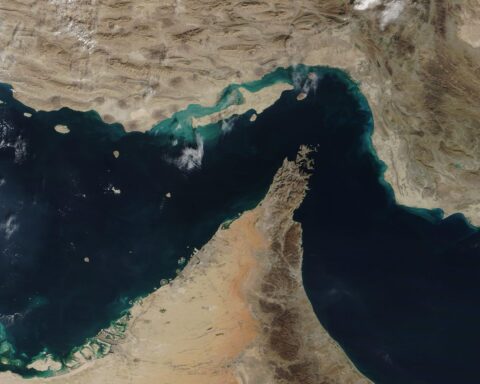

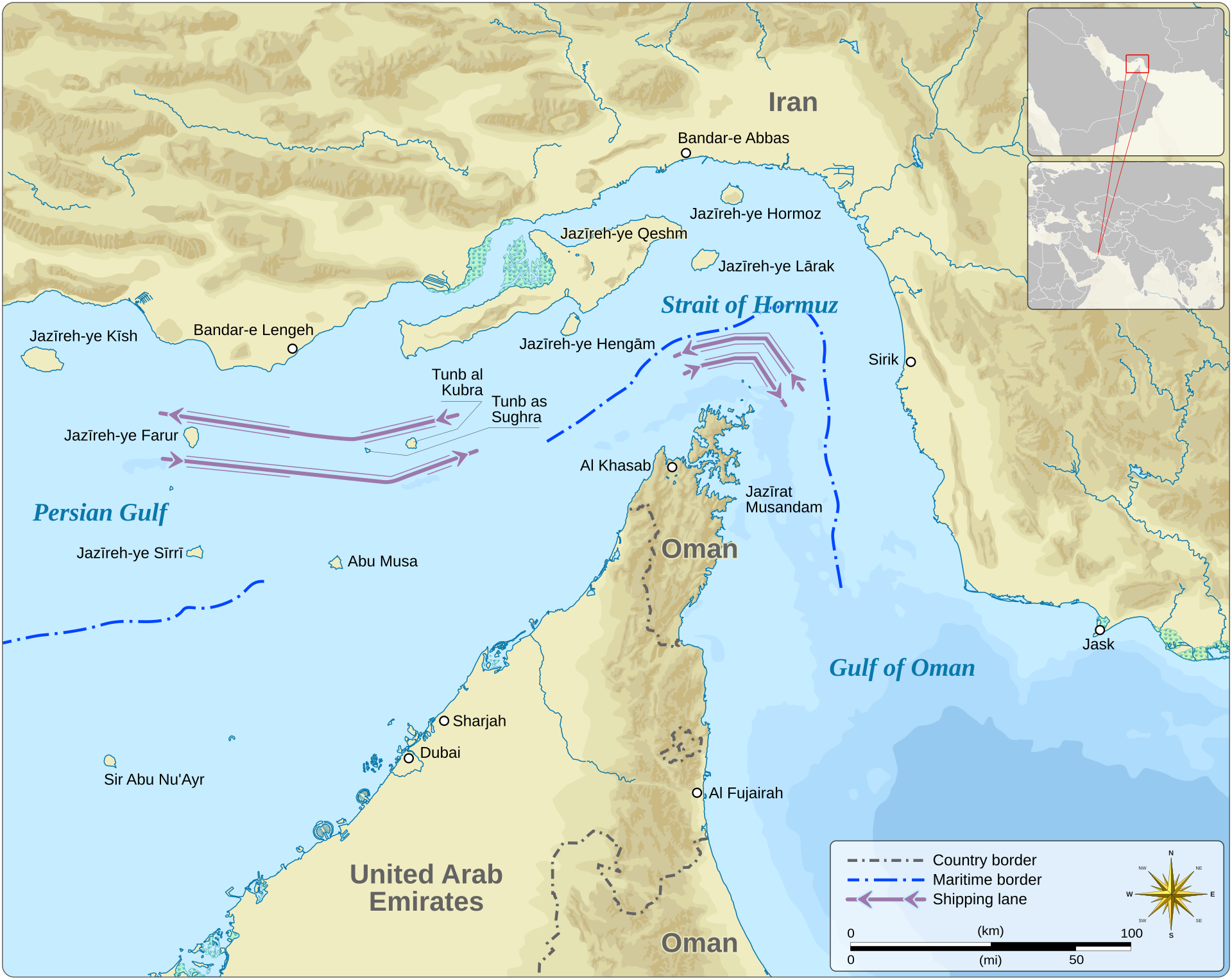
DUBAI — Iran’s Islamic Revolutionary Guard Corps Navy declared on Wednesday that all vessels must obtain Iranian permission before transiting the Strait of Hormuz, the narrow waterway through which approximately 20 million barrels of oil pass each day. IRGC naval commander Admiral Alireza Tangsiri said in a statement that ships entering the strait without approval would be targeted, hours after IRGC forces struck two commercial vessels that allegedly ignored Iranian warnings. The declaration, which international maritime lawyers say has no basis in international law, represents the most aggressive assertion of Iranian control over the strategic waterway since the 1980-1988 Tanker War and directly threatens Saudi Arabia’s primary oil export route.
The statement came on Day 12 of the US-Israel war on Iran, as Tehran continued to retaliate against Gulf states it accuses of facilitating the American and Israeli military campaign. Three commercial ships were damaged in attacks near the strait on Wednesday alone, according to the United Kingdom Maritime Trade Operations, bringing the total number of vessels struck since the war began on February 28 to more than a dozen. US Central Command responded with its own warning, telling Iranian civilians to immediately evacuate all port facilities being used for military operations along the strait.
Table of Contents
- What Did the IRGC Navy Commander Actually Say?
- Which Ships Were Attacked in the Strait of Hormuz?
- Does Iran Have a Legal Right to Demand Permission for Hormuz Transit?
- How Did the United States Respond?
- What Does This Mean for Saudi Arabia’s Oil Exports?
- The Insurance Market Has Already Made Its Verdict
- Echoes of the 1980s Tanker War
- What Comes Next for Hormuz Shipping?
- Frequently Asked Questions
What Did the IRGC Navy Commander Actually Say?
Admiral Alireza Tangsiri, commander of the IRGC Navy, posted a statement on social media on Wednesday, March 11, declaring that “every vessel intending to pass must obtain permission from Iran.” Tangsiri specifically referenced the two ships his forces had attacked earlier that day, saying the Express Room and the Mayuree Naree “ignored the warnings and attempted to pass through the strait — but ended up being caught,” according to a translation reported by Iran International.
The IRGC has since escalated its tactics beyond missiles and interdiction. On 12 March, Iran deployed kamikaze drone boats against six commercial vessels in a single day, introducing an unmanned weapon that strikes at the waterline and is far harder to detect than conventional projectiles.
The declaration goes beyond anything Iran has claimed in recent decades. While Tehran has periodically threatened to close the Strait of Hormuz during moments of geopolitical tension — most recently during the 2019 tanker crisis — this is the first time a senior IRGC commander has publicly articulated a formal requirement for ships to seek Iranian approval before transiting the waterway. The statement effectively transforms the IRGC Navy from a force that patrols the strait into one that claims to govern who may use it.
Tangsiri has led the IRGC Navy since 2018 and previously served as deputy commander of the force. His appointment was widely interpreted as a signal that Tehran intended to take a more confrontational posture in the Persian Gulf, according to analysts at the International Institute for Strategic Studies. The IRGC Navy, distinct from Iran’s regular navy (IRIN), operates primarily in the shallow waters of the Persian Gulf and the Strait of Hormuz, where its fleet of fast attack craft, armed speedboats, and shore-based anti-ship missiles give it asymmetric advantages over larger conventional navies.
The Middle East briefing 3,000+ readers start their day with.
One email. Every weekday morning. Free.
Which Ships Were Attacked in the Strait of Hormuz?
The IRGC announced on Wednesday that its naval forces struck two commercial vessels for allegedly violating its newly declared transit requirements. A third ship was also damaged in a separate incident, according to UK Maritime Trade Operations.
The Thai-flagged container ship Mayuree Naree sustained the most severe damage. Iranian projectiles struck the vessel approximately 11 nautical miles north of Oman, causing a severe fire in the stern engine room that forced all 23 Thai crew members to abandon ship, according to reporting by ABC News and CNBC. Omani authorities rescued most of the crew, but three crew members remained missing as of Wednesday evening. Thai officials confirmed the casualty figures and said they were coordinating with Omani maritime rescue services.
The Liberian-flagged container ship Express Room was also struck by Iranian projectiles after what the IRGC described as “ignoring warnings from the IRGC Navy.” The vessel reportedly came to a halt after being hit but did not sink. The IRGC spokesperson said both ships had been targeted for “unlawfully insisting on transiting the Strait of Hormuz” without Iranian approval.
A third vessel, the Japanese-flagged One Majesty, sustained damage to its stern while anchored in the Persian Gulf approximately 52 nautical miles from the Strait of Hormuz, according to the United States Naval Institute. The UK Maritime Trade Operations confirmed the incidents, noting that at least three commercial vessels were damaged on Wednesday alone.
| Vessel Name | Flag State | Type | Damage | Crew Status |
|---|---|---|---|---|
| Mayuree Naree | Thailand | Container ship | Stern engine-room fire; abandoned | 20 rescued, 3 missing |
| Express Room | Liberia | Container ship | Struck by projectiles; halted | Crew safe |
| One Majesty | Japan | Container ship | Stern damage while anchored | Crew safe |
The attacks bring the total number of commercial vessels struck near the Strait of Hormuz since the war began on February 28 to more than a dozen, according to maritime tracking data compiled by Windward AI. Iran’s forces have also laid approximately a dozen naval mines in the strait, adding to the hazards facing commercial shipping attempting to navigate the waterway. Yet maritime intelligence suggests that the enforcement is selective — Iran’s own shadow fleet tankers continue shipping oil to China through the very strait it claims to have closed.
Does Iran Have a Legal Right to Demand Permission for Hormuz Transit?
International maritime law is clear: Iran does not have the authority to require ships to obtain permission before passing through the Strait of Hormuz. The waterway is classified as an international strait under the United Nations Convention on the Law of the Sea (UNCLOS), which guarantees all vessels the right of “transit passage” — meaning continuous, expeditious navigation that cannot be impeded or suspended by coastal states for any reason, including during armed conflict.
UNCLOS Part III, Article 38 explicitly states that transit passage through international straits “shall not be impeded,” and Article 44 prohibits coastal states from suspending this right. The American Society of International Law noted in a 2012 analysis that the right of transit passage in Hormuz is considered a norm of customary international law, binding even on states that have not ratified the convention.
Iran’s legal position is more complicated. Tehran signed UNCLOS in 1982 but has never ratified the treaty. Iran has historically argued that the regime of transit passage applies only to states that are parties to the convention and that Iran retains the right to regulate passage through its territorial waters in the strait. Iranian officials have maintained that the narrower right of “innocent passage” — which allows coastal states greater regulatory authority — is the applicable legal standard, according to analysis published by the European Journal of International Law.
Most international legal scholars reject this interpretation. The Washington Institute for Near East Policy noted that even under the more restrictive innocent passage framework, a coastal state cannot require prior permission for passage and may only temporarily suspend passage in specific, non-discriminatory circumstances that do not include armed conflict with third parties. The International Court of Justice, in the 1949 Corfu Channel case, ruled that coastal states cannot prevent transit through straits used for international navigation — a principle that predates UNCLOS by decades.
The United Nations Security Council resolution passed on Tuesday condemning Iran’s attacks on Gulf states did not specifically address the Hormuz transit declaration, but diplomats told Reuters that the legal implications of Iran’s claim were expected to be raised in follow-up negotiations.
How Did the United States Respond?
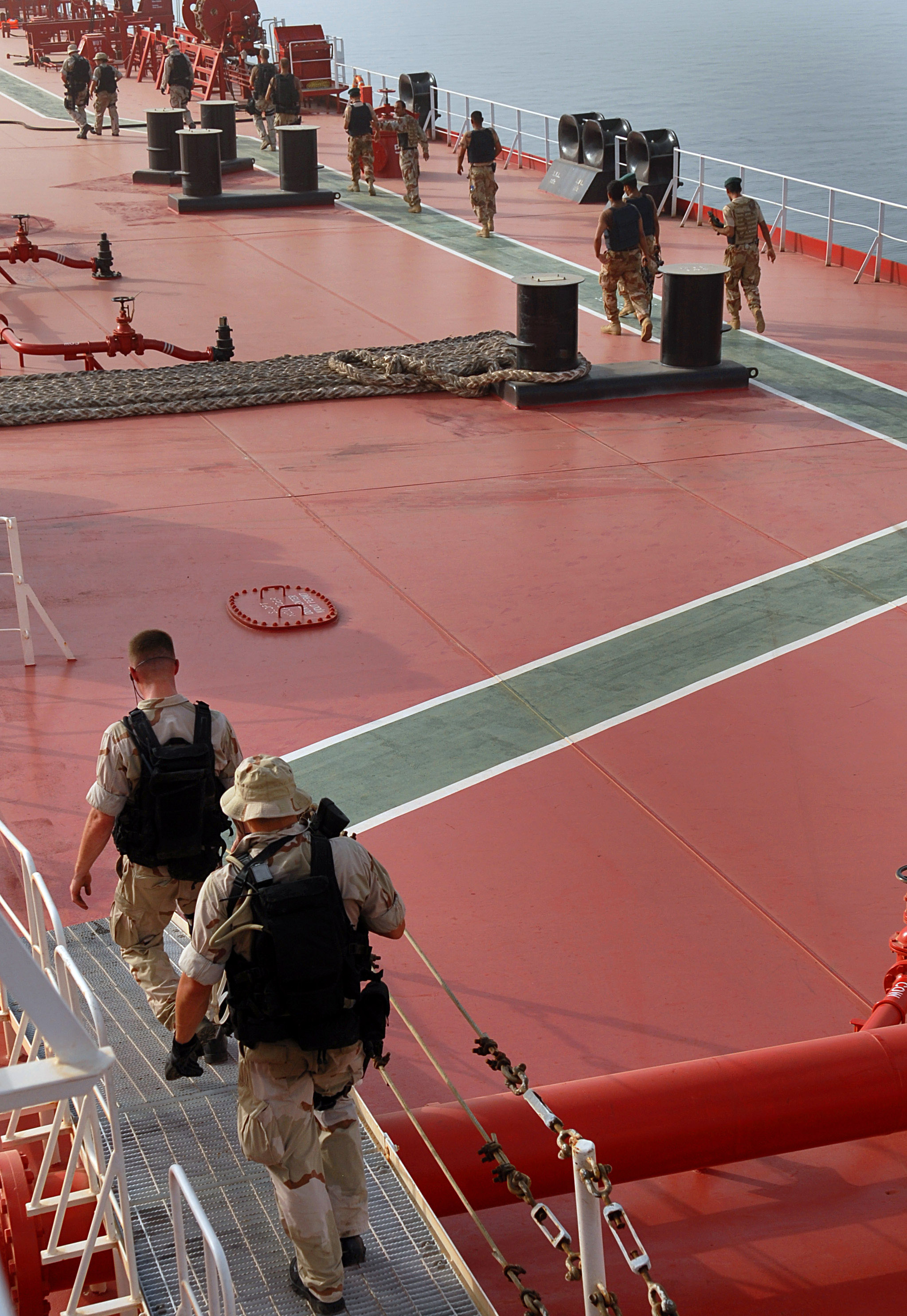
US Central Command issued a pointed response within hours of Tangsiri’s declaration. CENTCOM warned Iranian civilians to “immediately avoid all port facilities where Iranian naval forces are operating,” stating that the IRGC was using civilian ports along the Strait of Hormuz to conduct “military operations that threaten international shipping,” according to a statement reported by The Hill and The Jerusalem Post.
The warning carried an implicit military threat. CENTCOM stated that “civilian ports used for military purposes lose protected status and become legitimate military targets under international law.” The statement specifically urged Iranian dockworkers, administrative personnel, and commercial vessel crews to avoid Iranian naval vessels and military equipment at those facilities.
The warning represents a significant escalation in the confrontation between American and Iranian naval forces in the strait. CENTCOM commander General Michael Erik Kurilla told reporters on Wednesday that US forces had destroyed an “entire class” of Iranian warships since the war began, according to Military Times, a reference to the ongoing naval engagements between the US Fifth Fleet and IRGC naval units in the southern Persian Gulf.
President Donald Trump has previously warned of military consequences “at a level never seen before” if Iran attempts to mine or close the Strait of Hormuz, a statement he made during a press conference on March 10, according to Euronews. The US Navy currently has three carrier strike groups deployed to the region, the largest naval concentration in the Persian Gulf since the 2003 Iraq War.
What Does This Mean for Saudi Arabia’s Oil Exports?
Iran’s assertion of control over Hormuz strikes at the heart of Saudi Arabia’s economic lifeline. Before the war, approximately 6.3 million barrels per day of Saudi crude oil transited the Strait of Hormuz, according to data from the US Energy Information Administration. That figure represents the majority of Saudi Arabia’s roughly 10.9 million barrels per day of total production in February 2026, as reported by Bloomberg citing OPEC data.
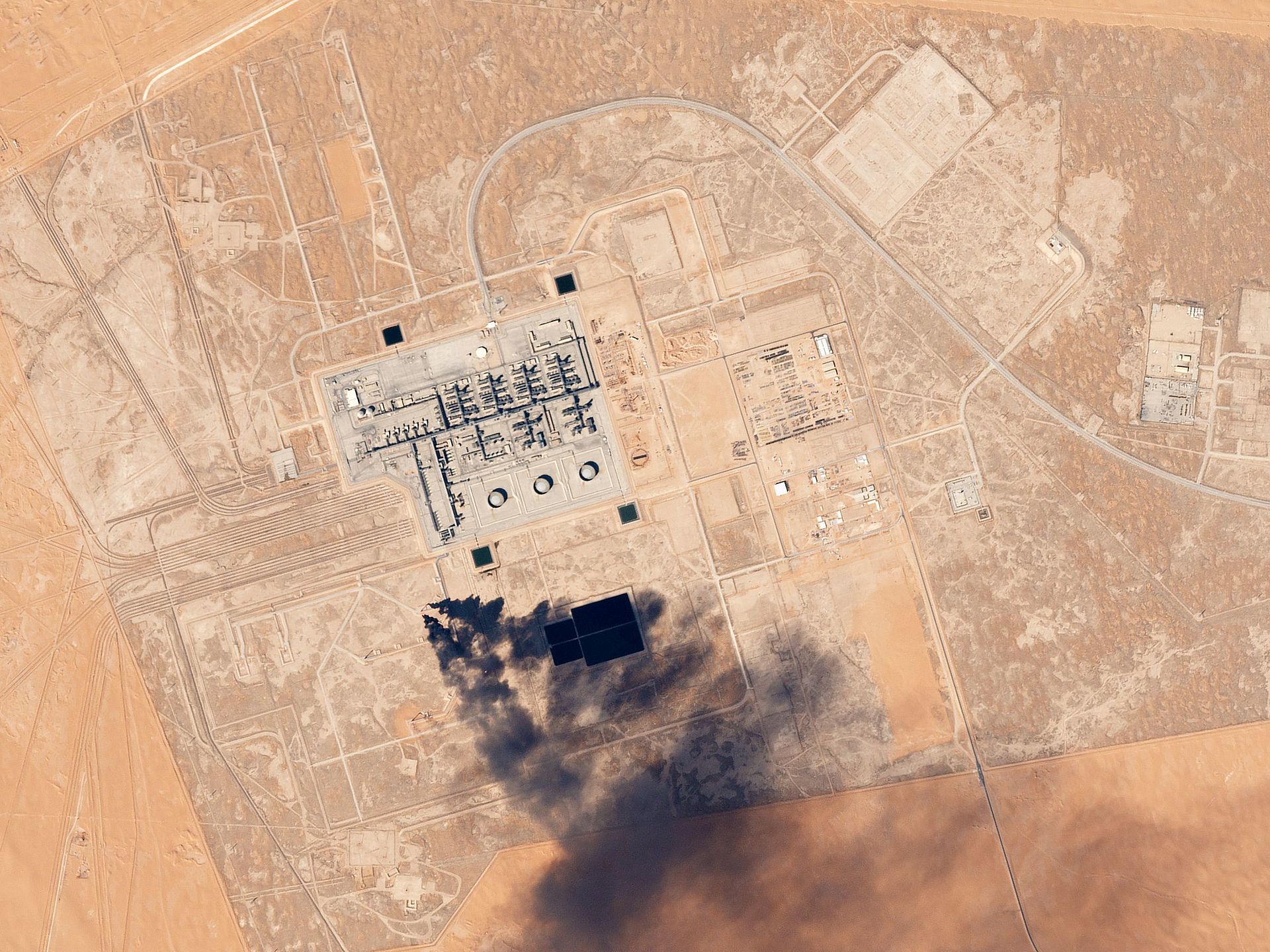
Saudi Arabia does maintain an alternative export route — the East-West Pipeline (Petroline), which connects the Eastern Province oil fields to the Red Sea terminal at Yanbu. The pipeline has a capacity of approximately 5 million barrels per day, according to Aramco’s public disclosures. But that capacity falls well short of Saudi Arabia’s total export volume, meaning a sustained closure of Hormuz would force Riyadh to cut production significantly regardless of alternative routing.
Oil flows through the Strait of Hormuz have already collapsed by 86 percent since the war began, according to Anadolu Agency, with more than 700 tankers queuing on either side of the waterway waiting for conditions to improve. Brent crude surged above $114 a barrel on Monday, approximately 60 percent higher than when the conflict began on February 28, Reuters reported.
| Metric | Value | Source |
|---|---|---|
| Saudi crude production, February 2026 | 10.882 million bpd | OPEC / Bloomberg |
| Saudi crude transiting Hormuz (pre-war) | ~6.3 million bpd | US EIA |
| East-West Pipeline (Yanbu) capacity | ~5 million bpd | Aramco |
| Hormuz oil flow decline since Feb 28 | 86% | Anadolu Agency |
| Tankers queuing at Hormuz | 700+ | Anadolu Agency |
| Brent crude price (March 10) | $114/barrel | Reuters |
| Global oil share through Hormuz | ~20% | US EIA |
Saudi Arabia’s Foreign Ministry condemned what it called “failed, cowardly Iranian attacks” targeting Riyadh and the Eastern regions in a statement issued on Wednesday, according to Asharq Al-Awsat. Prince Faisal bin Farhan, the foreign minister, held phone calls on the same day with his counterparts in Oman, Egypt, and Bahrain, as well as with a senior European Union official, in what Arab News described as an intensification of Saudi diplomatic coordination aimed at containing the conflict.
Secretary of State Marco Rubio spoke with Prince Faisal on March 11, according to a State Department readout, and the two discussed “how to reinforce Saudi Arabia’s defense as Iran continues its baseless aggression against civilian targets.” Rubio also expressed gratitude for Saudi Arabia’s response to the attack on the US Embassy in Riyadh, the readout stated.
The Insurance Market Has Already Made Its Verdict
Even before Tangsiri’s declaration, the global shipping insurance market had effectively priced the Strait of Hormuz as a war zone. War risk premiums for vessels transiting the strait jumped to 1 percent of a vessel’s hull replacement value, renewed every seven days — a fourfold increase from the pre-conflict rate of 0.25 percent, according to Bloomberg.
Ships with American, British, or Israeli connections face even steeper costs. Lloyd’s List reported that those vessels are being charged three times more than other tonnage for Middle East war risk coverage. The International Group of P&I Clubs announced that existing war risk coverage would become void at midnight on March 5, requiring new special coverage for any ship entering the zone.
For a typical Very Large Crude Carrier (VLCC) valued at approximately $120 million, the new war risk premium alone amounts to $1.2 million per week — costs that are ultimately passed through to oil buyers and consumers. The insurance crisis has become a de facto blockade in itself: many shipowners have concluded that the financial risk of transiting Hormuz now exceeds the commercial value of the cargo.
According to The Conversation, only so-called “shadow tankers” — vessels operating with opaque ownership structures and limited or no insurance — are still moving through the strait in significant numbers. These ships, many of which previously operated in sanctions-evasion trades for Iranian, Russian, and Venezuelan crude, are now among the only vessels willing to accept the risk.
Echoes of the 1980s Tanker War
Iran’s attempt to impose a transit permit system on the Strait of Hormuz has no direct precedent in modern maritime history, but the broader pattern of attacks on commercial shipping echoes the 1980-1988 Tanker War between Iran and Iraq. During that eight-year conflict, more than 500 ships were attacked in the Persian Gulf, and approximately 400 sailors were killed, according to data compiled by the International Institute for Strategic Studies.
Insurance premiums during the Tanker War rose approximately 300 percent at their peak, according to analysis published by the Strauss Center at the University of Texas. But shipping through Hormuz never ceased entirely because Lloyd’s of London maintained coverage through government-backed war risk facilities, and the US Navy’s Operation Earnest Will provided direct convoy escorts for Kuwaiti tankers reflagged under the American flag.
The current situation differs in several important respects. Iran’s military capabilities are far more advanced than they were in the 1980s, with precision-guided anti-ship missiles, naval mines, and armed drones that can target specific vessels with minimal warning. The IRGC Navy’s fleet of fast attack craft — small, heavily armed speedboats that can swarm larger vessels — has expanded significantly since the Tanker War era. And Iran’s shore-based anti-ship missile batteries, positioned on islands and along the coastline overlooking the strait, give Tehran the ability to threaten shipping from multiple directions simultaneously.
The 2019 tanker crisis, during which Iran’s IRGC seized the British-flagged Stena Impero and attacked several other commercial vessels in the Gulf of Oman, was widely viewed as a rehearsal for the kind of operations now being conducted at a much larger scale. The IRGC Navy’s ability to disrupt shipping through Hormuz was never seriously in doubt. The question was always whether Tehran would choose to exercise that capability — and at what cost.
What Comes Next for Hormuz Shipping?
The immediate question facing the international shipping industry is whether Iran’s declared permit system will be enforced consistently or selectively. Maritime analysts at Windward AI noted that Iran has not published any formal procedure for vessels to request transit permission, nor has it established a communication channel for such requests, suggesting the declaration may function more as a deterrent and propaganda tool than a functioning regulatory regime.
The UNCTAD, in a rapid assessment published this week, warned that the Strait of Hormuz disruption is already having cascading effects on global trade far beyond the oil market. Approximately one-fifth of the world’s liquefied natural gas trade — primarily from Qatar — also transits the strait, and the disruption has contributed to spiking gas prices across Asia and Europe.
The International Energy Agency’s decision to release a record 400 million barrels of oil from strategic reserves, announced on Tuesday, was explicitly framed as a response to the Hormuz disruption. But IEA Executive Director Fatih Birol acknowledged that reserve releases are a temporary measure that cannot substitute for the restoration of normal tanker traffic through the strait, Reuters reported.
For Saudi Arabia, the calculus is straightforward. Every day that the Strait of Hormuz remains effectively closed costs the Kingdom revenue on the millions of barrels it cannot export through its primary route. Saudi Arabia has urged its Gulf allies to avoid any steps that could further inflame tensions with Iran, according to Middle East Eye, reflecting Riyadh’s calculation that the economic costs of a prolonged Hormuz closure outweigh any military satisfaction from joining the US-Israeli campaign directly.
Pakistan, which shares a border with Iran, pledged on Tuesday to “be there before it is needed” for Saudi Arabia, Bloomberg reported — a statement widely interpreted as a signal that Islamabad is prepared to deploy additional military assets to the Gulf if the situation deteriorates further.
Every vessel intending to pass must obtain permission from Iran.
Admiral Alireza Tangsiri, IRGC Navy Commander, March 11, 2026
Whether that declaration survives contact with three US carrier strike groups and the world’s demand for Gulf oil remains the defining question of the war’s second week.
Frequently Asked Questions
Can Iran legally close the Strait of Hormuz?
No. Under the United Nations Convention on the Law of the Sea, the Strait of Hormuz is classified as an international strait where all vessels enjoy the right of transit passage. This right cannot be suspended or impeded by coastal states, including during armed conflict. Iran has signed but not ratified UNCLOS and disputes the applicability of transit passage, but most international legal scholars consider the right to be part of customary international law binding on all nations.
How much oil passes through the Strait of Hormuz?
Approximately 20 million barrels of oil per day transited the Strait of Hormuz before the current conflict began on February 28, 2026, according to the US Energy Information Administration. That volume represents roughly 20 percent of global petroleum consumption and about one-quarter of the world’s total seaborne oil trade. Flows have since collapsed by 86 percent.
Does Saudi Arabia have alternative oil export routes?
Saudi Arabia operates the East-West Pipeline (Petroline), which connects the Eastern Province oil fields to the Red Sea port of Yanbu, bypassing the Strait of Hormuz entirely. The pipeline has a capacity of approximately 5 million barrels per day. However, Saudi Arabia produced 10.882 million barrels per day in February 2026, meaning the pipeline can handle less than half of total output. Iran’s recent drone strikes on Oman’s Salalah Port have also eliminated the last major overland bypass alternative for other Gulf producers.
What happened to ships that tried to transit Hormuz without Iranian permission?
On March 11, 2026, the IRGC Navy struck two commercial vessels — the Thai-flagged Mayuree Naree and the Liberian-flagged Express Room — for allegedly transiting without permission. The Mayuree Naree suffered a severe engine-room fire that forced 23 crew to abandon ship, with three crew members still missing. A third vessel, the Japanese-flagged One Majesty, was also damaged while anchored nearby. The IRGC said the ships had “ignored warnings” from its naval forces.
How has the shipping insurance market responded?
War risk premiums for Hormuz transit have quadrupled to 1 percent of hull value per week, up from 0.25 percent before the conflict. For a typical supertanker valued at $120 million, that amounts to $1.2 million per week in additional insurance costs. Ships with American, British, or Israeli connections pay three times more. The International Group of P&I Clubs voided existing war risk coverage for the zone on March 5, and many shipowners have concluded the financial risk now exceeds the cargo’s commercial value.