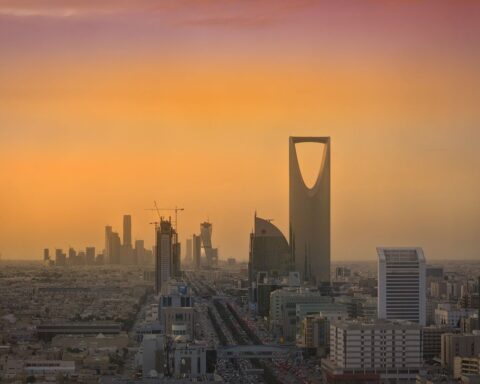

RIYADH — Saudi Arabia’s Cabinet has designated 2026 as the Year of Artificial Intelligence, formalizing the Kingdom’s accelerating drive to position itself as a global hub for AI development, deployment, and governance. The decision, announced by the Saudi Data and Artificial Intelligence Authority (SDAIA), comes as the Kingdom ranks first globally in public sector AI adoption and 14th in the 2025 Global AI Index, according to Tortoise Intelligence.
The designation arrives at a moment of striking contrast. While Iranian missiles and drones strike Saudi territory daily and the Iran war threatens to consume the Public Investment Fund’s fiscal reserves, Riyadh is simultaneously pressing ahead with a $9.1 billion AI investment pipeline, the world’s largest government data center, and a national workforce training program that has already reached more than one million citizens. The Cabinet’s move signals that Crown Prince Mohammed bin Salman‘s post-oil economic vision will not be derailed by the current regional crisis.
Table of Contents
- What Did the Saudi Cabinet Announce?
- $9.1 Billion in AI Investment and 664 Companies
- What Is the Hexagon Data Center?
- Where Does Saudi Arabia Rank in Global AI?
- The SAMAI Initiative and a Million Trained Citizens
- How Does This Fit Into Vision 2030?
- AI Ambitions Under Wartime Pressure
- What Challenges Does Saudi Arabia Face in AI?
- Frequently Asked Questions
What Did the Saudi Cabinet Announce?
The Saudi Cabinet approved the official designation of 2026 as the Year of Artificial Intelligence, placing AI at the center of the Kingdom’s development policies for the coming years. The decision reflects a strategic direction that elevates AI from a sectoral priority to a whole-of-government initiative touching every ministry, agency, and public service.
SDAIA, established in 2019 to lead Saudi Arabia’s National Strategy for Data and Artificial Intelligence (NSDAI), coordinated the designation. The authority operates under six strategic pillars: ambition, competencies, policies, investment, innovation, and ecosystem development. The Year of AI initiative effectively accelerates timelines across all six.
The designation also consolidates a series of achievements the Kingdom logged in 2025. Saudi Arabia became the first Arab nation to join the Global Partnership on AI (GPAI), the multilateral forum that includes the United States, the United Kingdom, France, Japan, and 24 other nations. Riyadh also secured hosting rights for the UNESCO-sponsored International Center for Artificial Intelligence Research and Ethics (ICAIRE), making the Saudi capital a permanent node in global AI governance.
Dr. Abdullah Alghamdi, president of SDAIA, said the designation would accelerate AI integration across government services, healthcare, education, transportation, and energy. The authority has already integrated more than 430 government systems into a National Data Lake, creating the unified data infrastructure that large-scale AI deployment requires.
The Middle East briefing 3,000+ readers start their day with.
One email. Every weekday morning. Free.
$9.1 Billion in AI Investment and 664 Companies
Saudi companies operating in the AI sector secured $9.1 billion in funding through 70 investment deals in 2025, according to SDAIA data cited by CXO Insight Middle East. The number of companies working in the Kingdom’s data and artificial intelligence sector has reached 664, a figure that reflects both domestic startups and international firms establishing Saudi operations.
Government spending on emerging technologies increased by more than 56 percent in 2024, according to Asharq Al-Awsat, establishing the fiscal foundation for the private sector growth that followed. The spending surge covered everything from cloud computing infrastructure to AI research grants administered through Saudi universities. The acceleration was deliberate: Riyadh identified 2024 as the year to build the public-sector digital backbone that would attract private capital the following year.
The most significant institutional development came in May 2025, when Crown Prince Mohammed bin Salman announced the launch of Humain, a company wholly owned by the Public Investment Fund. Humain is designed to develop and manage AI solutions and invest across the sector, giving Saudi Arabia’s $930 billion sovereign wealth fund a dedicated vehicle for AI bets. The company’s mandate spans AI infrastructure, model development, and commercial applications — a vertical integration strategy that mirrors the approach PIF has taken in other sectors such as entertainment, sports, and tourism.
International technology partnerships have expanded in parallel. Microsoft committed in February 2026 to helping three million people in Saudi Arabia acquire AI skills by 2030, according to the company’s EMEA division. Google has sponsored the Public Sector AI Adoption Index research that documented Saudi Arabia’s global leadership in government AI use. Oracle, SAP, and IBM all operate growing Saudi offices focused on AI services for government and enterprise clients.
The $9.1 billion figure positions Saudi Arabia as the largest AI investment market in the Middle East and North Africa, but SDAIA officials have indicated the pace is expected to increase sharply in 2026. The Year of AI designation creates a policy umbrella under which new incentives, regulatory fast-tracks, and public procurement preferences for AI-enabled solutions will be introduced across government agencies.
| Metric | Figure | Source |
|---|---|---|
| AI sector funding (2025) | $9.1 billion | SDAIA / CXO Insight |
| Investment deals | 70 | SDAIA |
| AI and data companies | 664 | SDAIA |
| Government tech spending growth (2024) | +56% | Asharq Al-Awsat |
| Microsoft AI skills target (by 2030) | 3 million people | Microsoft EMEA |
| PIF AI vehicle | Humain (launched May 2025) | Saudi Press Agency |
What Is the Hexagon Data Center?
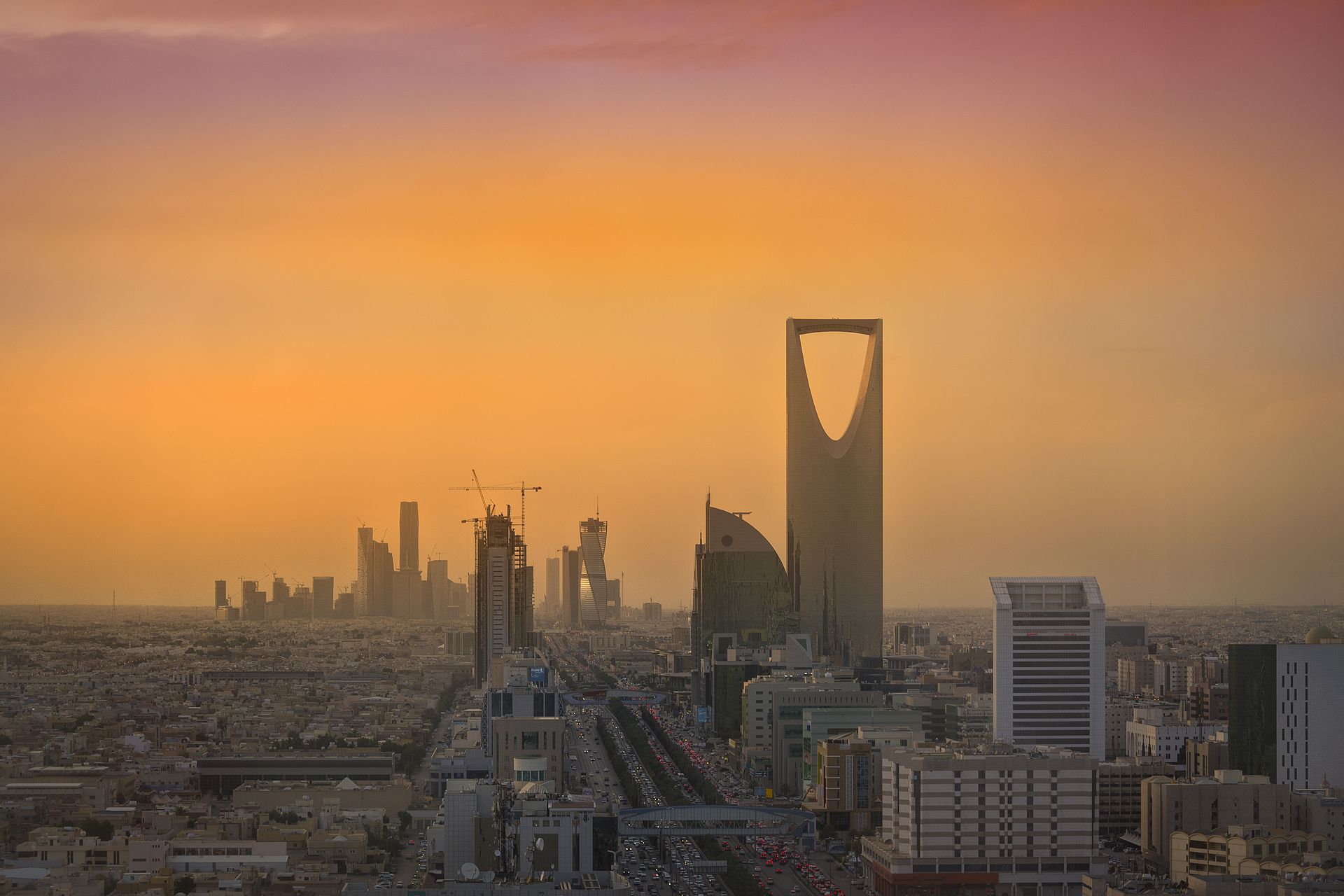
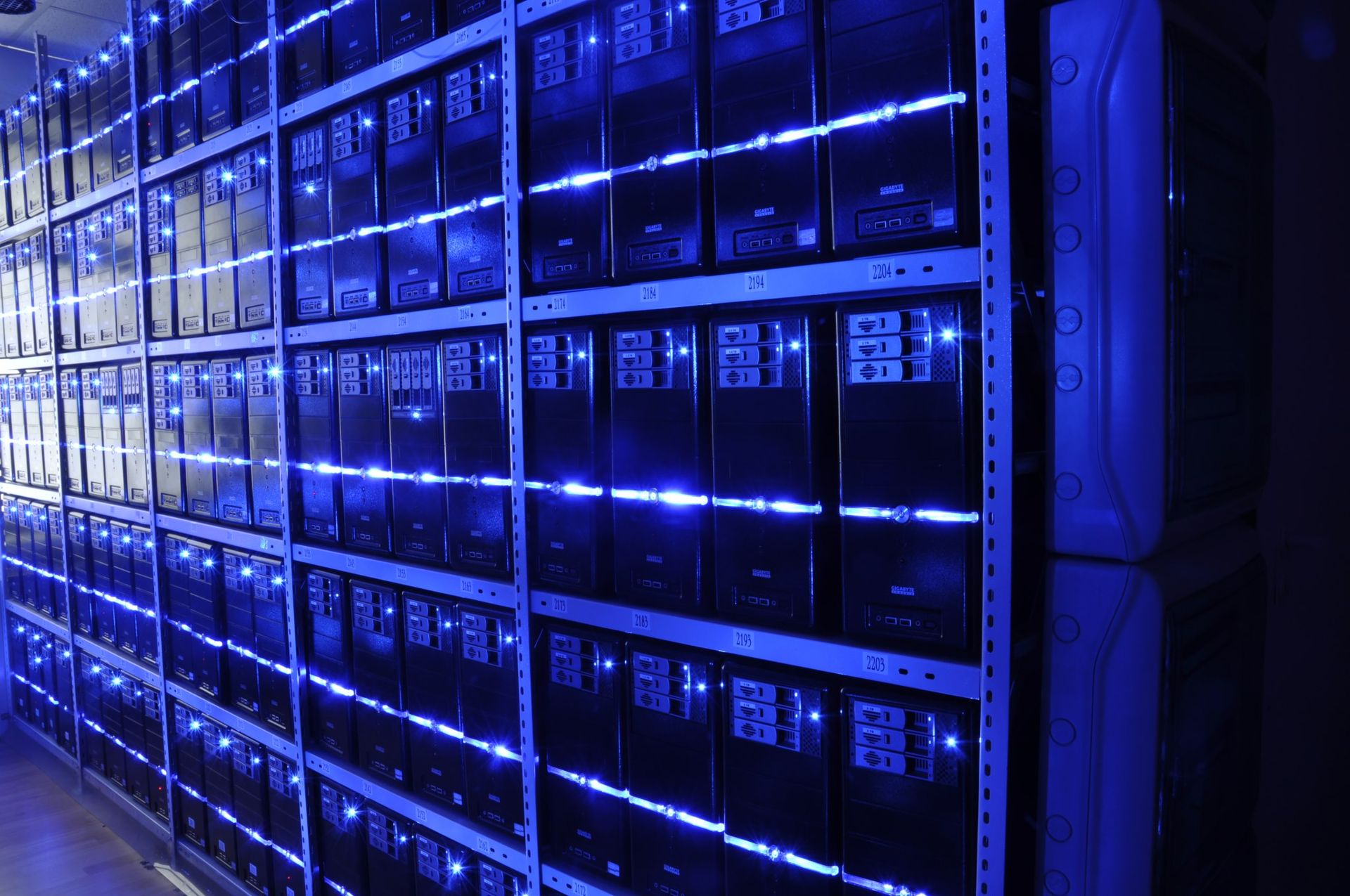
The Hexagon Data Center is the world’s largest government data center by megawatt capacity, and its foundation stone was laid in Riyadh in January 2026. The facility will have a total capacity of 480 megawatts and span more than 30 million square feet, making it among the largest single-site data infrastructure projects ever attempted by a national government.
Classified as Tier IV by the Uptime Institute — the highest rating for data center reliability, guaranteeing 99.995 percent availability — Hexagon is designed to meet the computing demands of Saudi Arabia’s entire government apparatus. The Riyadh-headquartered Albawani general contracting group was appointed as the main contractor, according to Gulf News, which reported the project as part of a $2.7 billion digital infrastructure push.
The facility incorporates advanced energy-efficiency technologies, including direct liquid cooling and hybrid cooling systems, to reduce its power usage effectiveness in Saudi Arabia’s extreme desert climate. Renewable energy sources are integrated into its operations, and the center has been certified under the U.S. Green Building Council’s LEED Gold standard, making it one of the world’s largest green data centers.
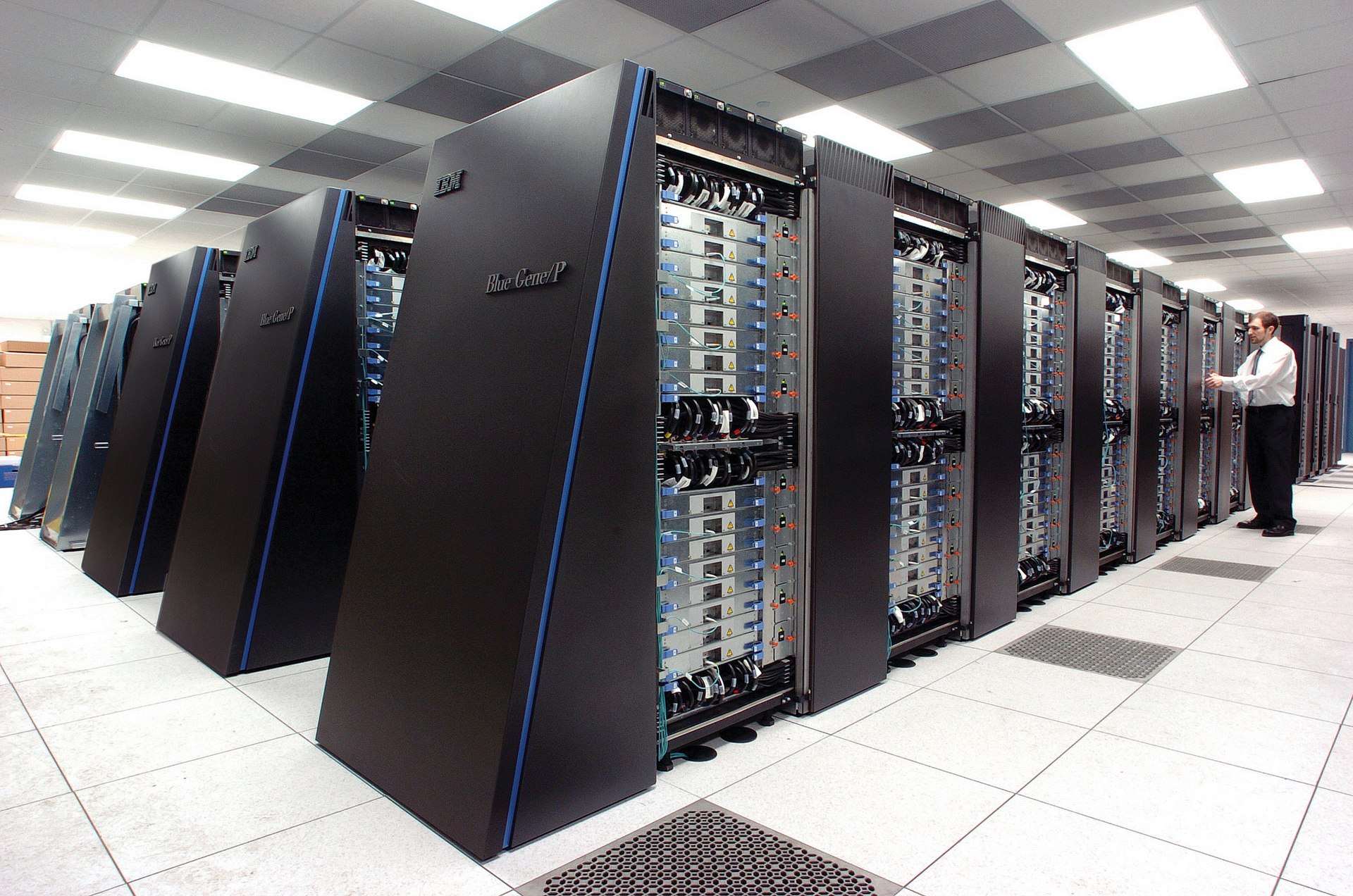
Hexagon joins the Shaheen III supercomputer as the second pillar of Saudi Arabia’s national computing infrastructure. Shaheen III, operated by the King Abdullah University of Science and Technology (KAUST), provides the high-performance computing capacity needed for large-scale AI model training and scientific research. Together, the two facilities give the Kingdom computing resources that rival those of nations with far longer histories in the technology sector.
Where Does Saudi Arabia Rank in Global AI?
Saudi Arabia holds the 14th position globally in the 2025 Global AI Index, published by Tortoise Intelligence. The ranking represents a 17-place jump from the Kingdom’s previous position and places Saudi Arabia first in the Arab world, surpassing the United Arab Emirates. The index evaluates 83 countries across 122 indicators grouped into three pillars: Implementation, Innovation, and Investment.
In a separate assessment, the Public Sector AI Adoption Index 2026, released by Public First for the Center for Data Innovation and sponsored by Google, ranked Saudi Arabia first globally by a significant margin. The Kingdom scored 66 out of 100, with Singapore and India tied for second at 58.
The public sector results were striking in their breadth. Saudi Arabia won on every dimension measured: enthusiasm (79 out of 100), education (68), empowerment (69), enablement (55), and embedding (60). No other country placed first across all five categories. Among Saudi public sector workers, 98 percent reported having used AI at work, two-thirds use it every day, 95 percent described themselves as optimistic about AI, and 89 percent said AI was empowering, according to the index.
The Government AI Readiness Index 2025, published by Oxford Insights, placed Saudi Arabia seventh globally and first in the Middle East and North Africa, reflecting the Kingdom’s progress in creating regulatory frameworks, digital infrastructure, and human capital for AI governance.
| Index | Global Rank | Regional Rank | Publisher |
|---|---|---|---|
| Global AI Index 2025 | 14th | 1st (Arab world) | Tortoise Intelligence |
| Public Sector AI Adoption Index 2026 | 1st | 1st (global) | Public First / CDI |
| Government AI Readiness Index 2025 | 7th | 1st (MENA) | Oxford Insights |
The SAMAI Initiative and a Million Trained Citizens
The SAMAI initiative, the largest AI upskilling program ever undertaken in Saudi Arabia, trained more than 1.1 million Saudi citizens with accredited certifications during 2025, according to Arab News. Female participation reached 52 percent, a figure that underscores the role of technology training in the Kingdom’s broader social reforms.
SAMAI operates under SDAIA in partnership with the Ministry of Education and the Ministry of Human Resources and Social Development. The program provides foundational AI knowledge alongside specialized tracks for government employees, private sector workers, and university students. A total of 11,000 specialists have been trained in advanced AI-related fields, forming the core of what the Kingdom intends to grow into a workforce of 20,000 AI and data specialists by 2030.
SDAIA President Dr. Abdullah Alghamdi and Minister of Education Yousef Al-Benyan launched SAMAI 2, an expanded iteration of the program, in partnership with 11 government ministries. The second phase targets deeper integration of AI competencies into existing government roles rather than creating new positions, effectively embedding AI skills across the public sector bureaucracy.
The workforce numbers are notable in the context of Saudi Arabia’s broader labor market transformation. The Kingdom’s Saudization policies have already pushed the nationalization rate in specialized professions above 70 percent, and AI training represents the next frontier in building a Saudi workforce capable of running a post-oil economy. The combination of mass AI literacy (1.1 million citizens) and deep specialist training (11,000 experts) mirrors the approach taken by nations such as Singapore and South Korea, which have paired broad digital literacy campaigns with elite technical academies.
How Does This Fit Into Vision 2030?
The Year of AI designation is the most explicit signal yet that artificial intelligence has moved to the center of Saudi Arabia’s Vision 2030 economic transformation. When Crown Prince Mohammed bin Salman launched the plan in 2016, its primary pillars were tourism, entertainment, mining, and financial services. A decade later, AI and data have emerged as the connective tissue running through every sector.
The National Strategy for Data and Artificial Intelligence, launched by SDAIA in 2020, set the institutional framework. The strategy focuses on positioning Saudi Arabia among the world’s leading nations in the data-driven economy, creating new revenue streams that reduce the Kingdom’s dependence on hydrocarbon exports, which still account for approximately 60 percent of government revenue.
Across other Vision 2030 megaprojects, AI is increasingly central to operations. NEOM’s plans for The Line, the 170-kilometer linear city, depend on AI-driven urban management systems. The Red Sea Global tourism development uses AI for environmental monitoring and guest services. The $38 billion Savvy Games Group investment rests on AI-powered game development and content moderation. Each of these projects requires the data infrastructure, workforce, and regulatory environment that the Year of AI initiative is designed to provide.
The PIF’s launch of Humain as a dedicated AI investment vehicle adds a financial dimension that connects sovereign wealth to technology development. With Humain, PIF can take direct equity stakes in AI companies, fund joint ventures with international technology firms, and develop proprietary AI applications for use across its portfolio of more than $930 billion in assets.
AI Ambitions Under Wartime Pressure
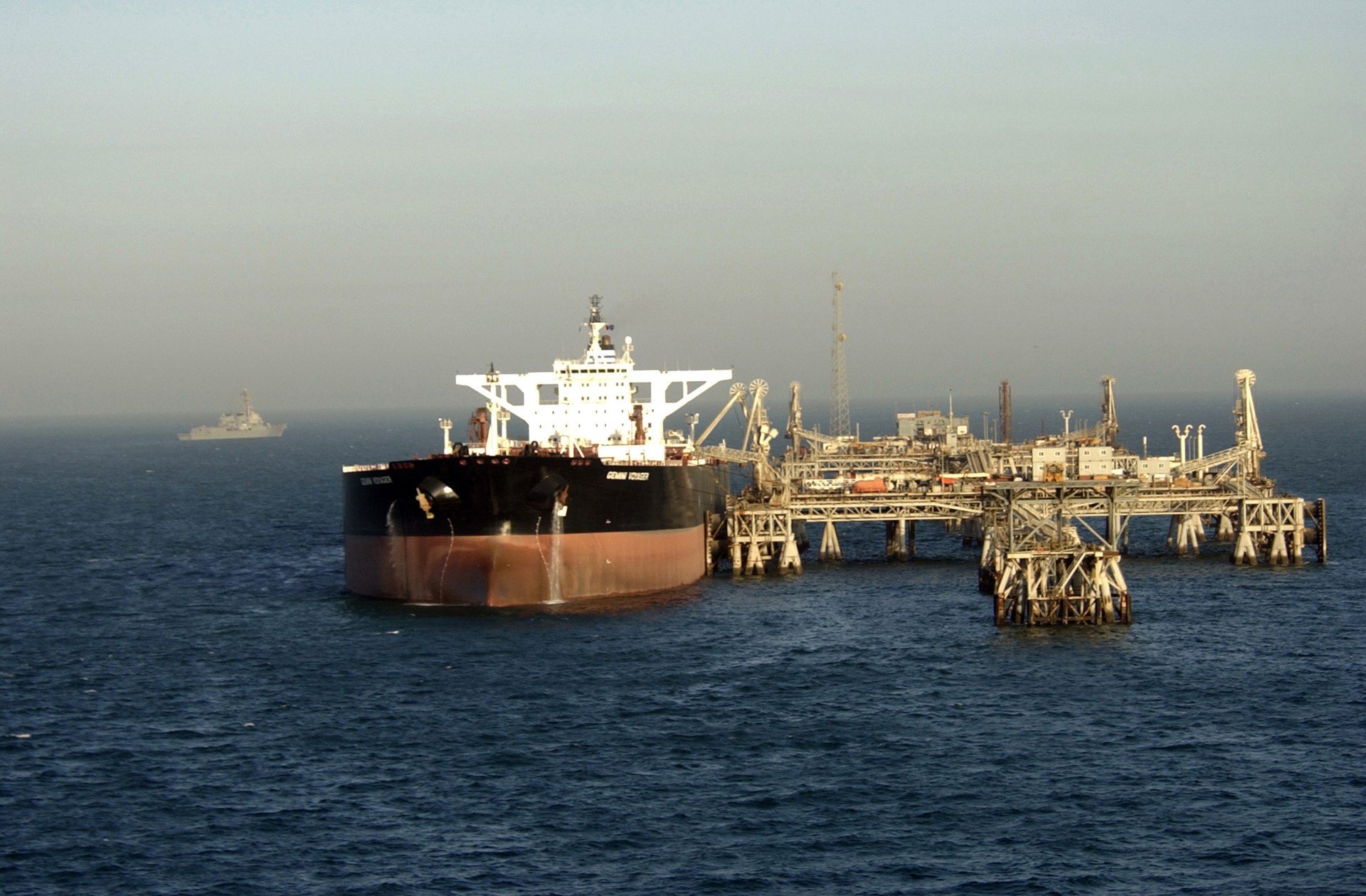
The Year of AI designation arrives as Saudi Arabia faces its most severe security crisis in decades. Since February 28, Iranian missiles and drones have struck Saudi territory repeatedly, the Strait of Hormuz has been effectively closed to commercial shipping, and the Kingdom’s military infrastructure — including cloud computing facilities hit by Iranian drones — has been under sustained attack.
The war has already exposed vulnerabilities in the Kingdom’s digital infrastructure. AWS data centers in the Gulf region were damaged by Iranian drone strikes earlier in March, disrupting cloud services that Saudi government agencies and private businesses depend on. The incident underscored precisely why the Kingdom is building sovereign data infrastructure such as Hexagon rather than relying entirely on foreign cloud providers. A government data center hardened against military threats and powered by domestic energy is more resilient than a commercial cloud service operated by a foreign company in a leased facility. The vulnerability extends below the surface as well: the digital infrastructure crisis beneath the Persian Gulf — where submarine cables carrying more than 95 percent of the region’s international internet traffic run through waters now contested by Iranian naval forces — threatens to sever the connectivity that every data centre in the Kingdom depends on.
Defense applications of AI have also moved from theoretical to urgent. Saudi Arabia’s air defense network, which has intercepted dozens of Iranian ballistic missiles and drones since the conflict began, relies increasingly on AI-assisted threat detection and targeting. The Saudi Ministry of Defense has reported successful intercepts of ballistic missiles aimed at Prince Sultan Air Base and drone swarms targeting the Shaybah oil field — operations where machine-speed decision-making provides a decisive advantage over human operators working alone.
The Kingdom’s $3.3 trillion economic transformation depends on demonstrating that it can simultaneously fight a war and build a technology economy — that security and economic diversification are not competing priorities but reinforcing ones. The wartime context has, paradoxically, strengthened the argument for AI investment: the more Saudi Arabia’s physical infrastructure comes under threat, the greater the strategic value of digital capabilities that can be distributed, hardened, and replicated.
The timing also carries a diplomatic message. By designating the Year of AI amid a regional conflict, Riyadh signals to international investors, technology partners, and potential talent that the Kingdom’s long-term economic trajectory remains intact. The war, in this framing, is a temporary disruption — not a fundamental obstacle to Saudi Arabia’s technology ambitions. Whether that framing holds will depend on the conflict’s duration and the scale of damage to the Kingdom’s economic infrastructure.
What Challenges Does Saudi Arabia Face in AI?
Despite the momentum, Saudi Arabia’s AI ambitions face significant structural challenges. The Kingdom’s ability to attract and retain top-tier AI talent remains constrained by competition from the United States, China, the United Kingdom, and Canada, which collectively produce the majority of the world’s leading AI researchers. Saudi Arabia’s 11,000 trained specialists represent a foundation, but the scale remains small compared with the hundreds of thousands of AI professionals in the United States and China.
Data governance presents another hurdle. The National Data Lake integrating 430 government systems creates a centralized resource of extraordinary power, but it also concentrates risk. Cybersecurity threats — demonstrated by Iran’s ongoing cyber campaign against Saudi infrastructure — make the protection of this data a national security priority that sits alongside its economic potential.
The Hexagon Data Center’s 480-megawatt capacity will consume significant energy in a Kingdom that already faces rising domestic electricity demand. Even with LEED Gold certification and renewable energy integration, powering AI infrastructure at scale requires energy resources that could otherwise be exported as revenue-generating hydrocarbons.
International perceptions of Saudi Arabia’s human rights record also affect the Kingdom’s ability to position itself as a global AI governance leader. Hosting ICAIRE and joining GPAI are institutional achievements, but they will face scrutiny from civil society organizations and some Western governments that question whether the Kingdom’s domestic surveillance capabilities and AI-powered monitoring systems are consistent with the ethical AI principles these bodies promote.
The $9.1 billion investment figure, while substantial, also requires context. Global AI investment reached approximately $200 billion in 2025, according to Goldman Sachs estimates. Saudi Arabia’s share, while growing rapidly, remains a fraction of the capital flowing into AI development in the United States, China, and Europe. Building a globally competitive AI ecosystem requires not just capital but sustained commitment over decades — and the Kingdom’s technology strategy is barely six years old.
Energy consumption may prove the most consequential constraint. Training a single large language model can consume as much electricity as 100 American homes use in a year. The Hexagon Data Center’s 480 megawatts could power a small city. As Saudi Arabia scales its AI infrastructure, the trade-off between domestic energy consumption and hydrocarbon export revenue will become increasingly visible in national budget discussions.
Frequently Asked Questions
What does Saudi Arabia’s Year of AI designation mean?
The Saudi Cabinet has officially designated 2026 as the Year of Artificial Intelligence, making AI the central priority across all government ministries, agencies, and public services. The designation accelerates existing AI programs under SDAIA and the National Strategy for Data and AI, and it formalizes the Kingdom’s commitment to becoming a global leader in AI development, adoption, and governance.
How much is Saudi Arabia investing in artificial intelligence?
Saudi companies in the AI sector secured $9.1 billion in funding through 70 investment deals in 2025, according to SDAIA. Government spending on emerging technologies increased by 56 percent in 2024. The Public Investment Fund also launched Humain, a dedicated AI investment vehicle, in May 2025, and the $2.7 billion Hexagon Data Center project broke ground in January 2026.
What is the Hexagon Data Center?
Hexagon is the world’s largest government data center by megawatt capacity, under construction in Riyadh. The Tier IV-rated facility will have 480 megawatts of capacity across 30 million square feet. Albawani group is the main contractor. The center uses direct liquid cooling, hybrid cooling systems, and renewable energy, and holds LEED Gold certification from the U.S. Green Building Council.
Where does Saudi Arabia rank globally in AI?
Saudi Arabia ranks 14th globally and first in the Arab world in the 2025 Global AI Index by Tortoise Intelligence. The Kingdom ranks first globally in public sector AI adoption according to the Public Sector AI Adoption Index 2026, and seventh globally in the Government AI Readiness Index 2025 by Oxford Insights. Saudi Arabia is the first Arab nation to join the Global Partnership on AI.
What is the SAMAI initiative?
SAMAI is the Kingdom’s largest AI upskilling program, operated by SDAIA in partnership with the Ministries of Education and Human Resources. The initiative trained more than 1.1 million Saudi citizens with accredited AI certifications in 2025, with 52 percent female participation. SAMAI 2, the expanded second phase, was launched in partnership with 11 government ministries.